

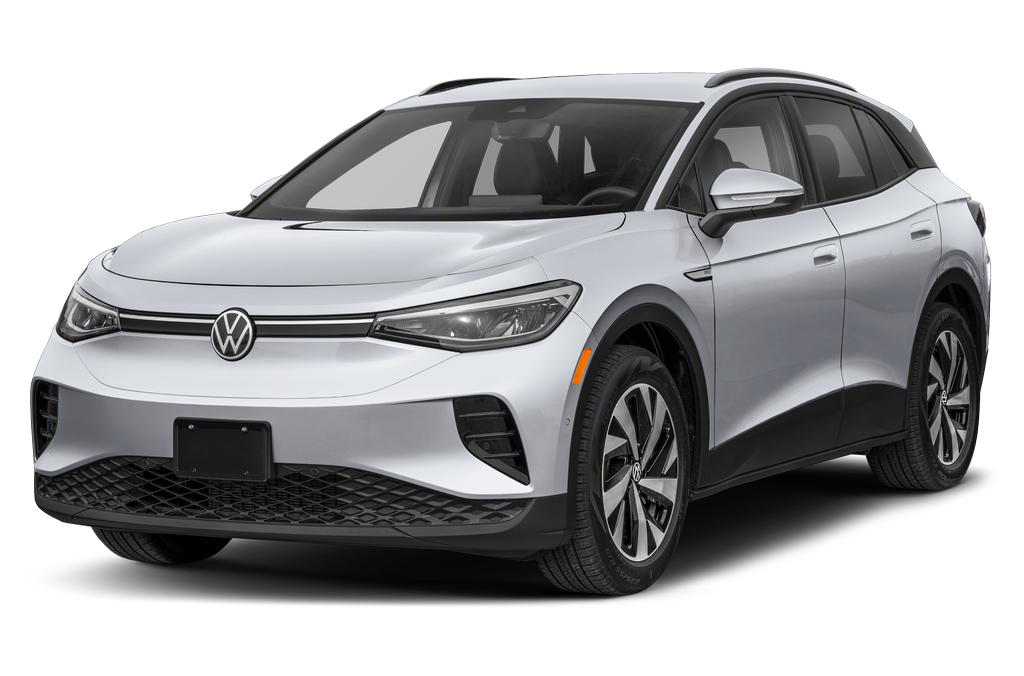
2026 Volkswagen ID.4 Review: The Electric SUV That Finally Gets It Right
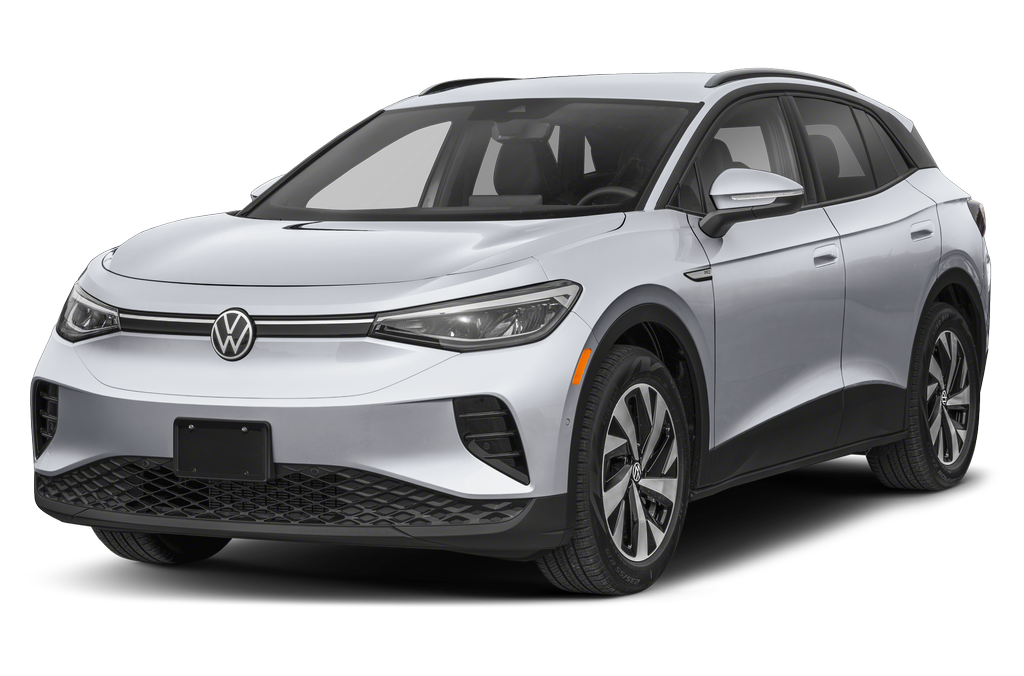
2026 Volkswagen ID.4 electric SUV front three-quarter
Price
$46,570
DC Charging Peak
175 kW
Power
282 hp
⚡ Quick Verdict
:
The 2026 Volkswagen ID.4 is a comfortable, quietly confident electric family SUV that trades outright pace and charging speed for everyday usability, build quality, and a genuinely pleasant cabin. It’s the EV for buyers who want something that feels like a normal car — just electric — and its new NACS port means you’re no longer locked out of America’s best charging network. If you value ride comfort and interior polish over software theatrics, it’s one of the smartest buys in the segment.
## Introduction
✓ The Good
- +Refined ride quality and composed handling for a family EV
- +82 kWh battery delivers strong real-world range
- +NACS port enables Tesla Supercharger access from day one
- +Physical buttons return — a welcome correction from VW
- +Generous 858-litre boot outspaces most direct rivals
✗ The Trade-offs
- −DC peak charge of 175 kW trails the Korean competition
- −Infotainment still lags behind Tesla’s slickness and app ecosystem
- −No frunk and no seven-seat option limits flexibility
- −AWD range drops noticeably compared to RWD variant
📑 In This Review
- Introduction
- Design and Exterior
- Interior, Tech and Practicality
- Powertrain, Range and Charging
- On-Road Manners
- 2026 Volkswagen ID.4 vs Tesla Model Y: Which Is Better?
- Callout box:
- At a Glance: Volkswagen ID.4 Specs and Rivals
- Safety and Warranty
- Who Should Buy the 2026 Volkswagen ID.4
- BUY IT IF:
- SKIP IT IF:
- Verdict
- Frequently Asked Questions
The 2026 Volkswagen ID.4 is a comfortable, quietly confident electric family SUV that trades outright pace and charging speed for everyday usability, build quality, and a genuinely pleasant cabin. It’s the EV for buyers who want something that feels like a normal car — just electric — and its new NACS port means you’re no longer locked out of America’s best charging network. If you value ride comfort and interior polish over software theatrics, it’s one of the smartest buys in the segment.
Introduction
Volkswagen’s ID.4 has quietly become the brand’s most important car worldwide. Since launching in 2021, it’s been the company’s big bet on electric volume — a five-seat mid-size crossover pitched squarely at buyers who’d otherwise default to a Toyota RAV4 Hybrid or, increasingly, a Tesla Model Y. For 2026, Volkswagen has given the ID.4 a proper mid-cycle update that tackles the criticisms lobbed at earlier models: sluggish infotainment, annoying capacitive-touch controls, and a charging port that left North American owners stranded at the wrong end of the Supercharger network.
The headline changes are straightforward enough. A NACS port is now standard fitment, which means you can rock up to a Tesla Supercharger without fumbling for an adapter. The cabin gets a revised 12.9-inch touchscreen running updated software, with a larger 15-inch display arriving alongside a mid-year production facelift. More importantly, Volkswagen has actually listened to customers and put physical buttons back on the steering wheel, plus a tactile climate-control strip below the display. These might sound minor on paper, but they transform how you interact with the car every single day.
This segment is packed now — Tesla Model Y, Kia EV6, Hyundai Ioniq 5, Ford Mustang Mach-E — and the 2026 ID.4 can’t just coast on badge recognition. It has to earn its spot on the shortlist. After spending considerable time with both the rear-wheel-drive Pro and the all-wheel-drive Pro S, we reckon Volkswagen has built a genuinely strong case. Here’s why.
Design and Exterior
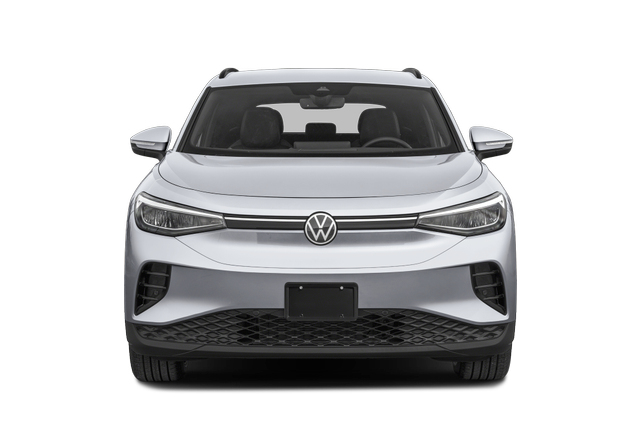
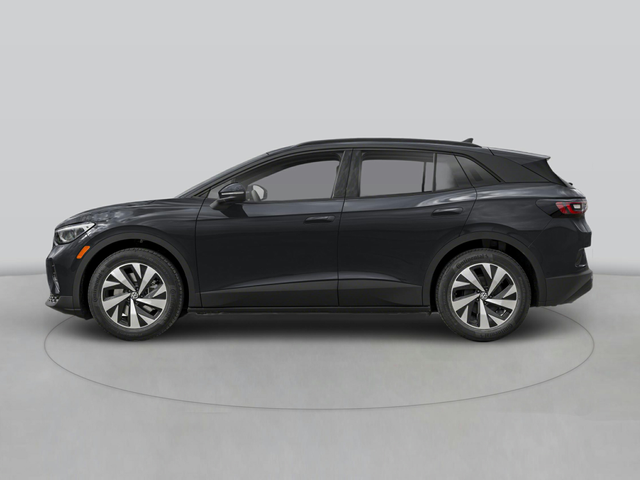
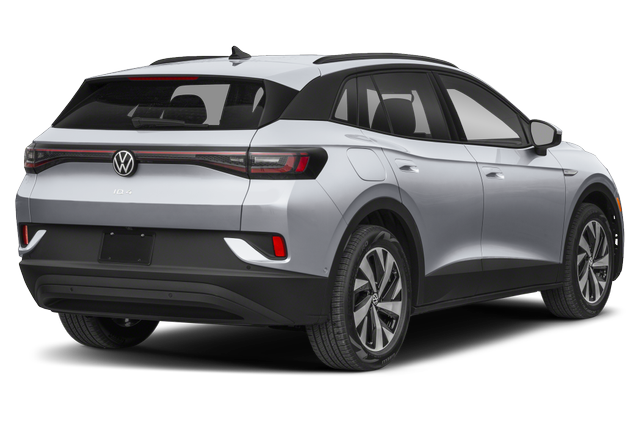
The 2026 ID.4’s exterior is best described as quietly handsome. Volkswagen hasn’t tried anything radical with the refresh, and honestly, that works fine. The silhouette stays a smooth, aerodynamic crossover shape — rounded edges, a gently sloping roofline, and flush door handles. Up front, a revised LED light signature stretches across a slim bar, tying the ID.4 into Volkswagen’s broader EV family look. It’s modern without being polarising, which is precisely what a family SUV should be.
Colour options include a spread of muted metallics and a couple of bolder shades, though this isn’t a car that screams for attention. Wheel sizes run from 19-inch alloys on the entry Pro to 20-inch items on the Pro S and AWD variants. Measuring 4,584 mm long, 1,852 mm wide, and 1,636 mm tall, the ID.4 sits squarely in the mid-size electric SUV bracket. The 2,765 mm wheelbase contributes to both its settled highway ride and generous rear legroom.
Park it next to a Tesla Model Y and the design philosophies diverge immediately. The Model Y is sleeker, more coupé-like, and arguably more futuristic. The ID.4 looks more like a traditional SUV that happens to run on electrons. It blends in rather than stands out, and for a lot of buyers — particularly those stepping out of a combustion-powered crossover — that’s a selling point. Build quality impressed us during our time with it, too; panel gaps are tight and the paint finish is consistent across the bodywork.
Interior, Tech and Practicality
Climb into the 2026 ID.4 and the first thing you’ll notice is the new steering wheel. Volkswagen’s old capacitive-touch buttons — widely panned for being imprecise and maddening to use — have been swapped for proper physical controls. That same thinking carries over to the climate strip beneath the centre display, which now has tactile buttons and sliders instead of the old touch-sensitive bar. It’s a small thing that makes a massive difference in daily use, especially when you’re tweaking the temperature at 80 km/h.
The 12.9-inch touchscreen is the standard display for 2026, with a 15-inch unit arriving alongside the mid-year production facelift. The updated infotainment system is noticeably quicker than before, with better menu logic and more responsive touch inputs. Apple CarPlay and Android Auto are both supported wirelessly — something Tesla still refuses to offer. The digital instrument cluster, VW’s ID.Cockpit, sits ahead of the driver and shows essential driving data in a clean, minimalist layout.
Material quality inside is a step above what you’ll find in the Model Y. The dashboard uses soft-touch plastics with textured inserts, and the seats — cloth on the Pro, leatherette on the Pro S — hold up well on longer drives. During our testing, the front chairs offered excellent lumbar support and a wide range of adjustment. Rear-seat space is generous thanks to the flat floor and long wheelbase; two adults fit comfortably back there, with adequate headroom even for those over six foot. Three across is tighter but manageable for shorter trips.
Boot capacity measures 858 litres with the rear seats up — comfortably more than the Model Y’s 854 litres and near the top of the class. Fold the 60/40-split rear bench and the space grows substantially. There’s no frunk, which is a minor letdown given that several rivals offer useful under-bonnet storage. And there’s no seven-seat option; the ID.4 is strictly a five-seater. If your family occasionally needs a third row, that’s a limitation worth thinking about.
Powertrain, Range and Charging
Every 2026 ID.4 uses an 82 kWh usable battery pack, available in two drivetrain configurations. The rear-wheel-drive Pro makes 282 hp (210 kW) and 402 lb-ft (545 Nm) of torque — more than enough for a family SUV. The all-wheel-drive Pro S adds a front motor, lifting combined output to 335 hp and chopping the 0–100 km/h time from 7.9 seconds to 5.4 seconds. In our testing, the AWD variant felt properly brisk off the mark, with the kind of effortless torque delivery that makes electric driving so satisfying.
Range is where the ID.4 puts forward a strong argument. The RWD model carries an EPA-estimated range of 291 miles (approximately 468 km), while the AWD drops to 263 miles (423 km). During our real-world driving — a blend of highway cruising, suburban commuting, and some spirited back-road work — we saw consumption figures hovering around 17.5 kWh/100 km in the RWD model. That works out to a realistic range of roughly 460–470 km in favourable conditions, which is impressive for a vehicle this size and weight.
Charging is where the 2026 update makes its most strategic move. The NACS port is now standard in North America, giving ID.4 owners direct access to Tesla’s Supercharger network — comfortably the largest and most reliable fast-charging infrastructure on the continent. DC fast charging peaks at 175 kW, allowing a 10–80% top-up in approximately 30 minutes. That’s competitive without being class-leading; the Kia EV6 and Hyundai Ioniq 5 both peak above 230 kW on their 800-volt architectures. At home, the ID.4’s 11 kW onboard AC charger will refill the battery from empty in roughly eight hours on a suitable wallbox — perfectly fine for overnight charging.
For Australian buyers, the CCS2 charging standard remains the norm, and the ID.4’s charging behaviour on the local DC network is consistent and predictable. We never ran into the sort of tapering or inconsistency that can frustrate owners of some competitors during extended fast-charging sessions.

On-Road Manners
The 2026 ID.4 is, above all else, a comfortable car. Volkswagen has tuned the suspension for compliance rather than corner-carving aggression, and the payoff is a ride quality that absorbs urban potholes and highway undulations with real composure. The steering is light and direct, making the ID.4 easy to park and relaxed to guide along a motorway. It’s not a car that begs you to hunt down twisty roads, but it handles them with more competence than the soft tuning might lead you to expect.
The rear-wheel-drive model delivers that natural, slightly tail-happy EV feel that enthusiasts enjoy. Power delivery is smooth and progressive, and the low centre of gravity — courtesy of the floor-mounted battery — keeps body roll in check through bends. The AWD variant, with its additional front motor, offers noticeably stronger traction in the wet and punchier off-the-line acceleration, but it’s the RWD that feels like the more engaging driver’s car. Regenerative braking is adjustable via the gear selector: pull back for stronger regen and a near-one-pedal experience, or push forward for coasting.
Brake feel is well-calibrated, with a smooth handover between regenerative and friction braking that avoids the wooden, inconsistent pedal feel that plagues some EVs. We’d put the ID.4’s braking system among the more natural-feeling setups in the segment. Compared to the Tesla Model Y, which runs a firmer, more performance-oriented tune, the ID.4 prioritises passenger comfort. Against the Hyundai Ioniq 5, it feels similarly composed but slightly more insulated from road noise. The overall impression is of a car that works with you rather than demanding constant attention — exactly what most family SUV buyers are after.
2026 Volkswagen ID.4 vs Tesla Model Y: Which Is Better?
This is the comparison every buyer in this segment wants to see, and it’s a tighter contest than you might expect. The Tesla Model Y remains the world’s best-selling electric vehicle for good reason: it delivers a compelling mix of range, performance, technology, and charging infrastructure that few rivals can match outright. But the 2026 ID.4 has closed the gap in several critical areas, and in some respects, it’s now the smarter buy.
Let’s start with price. The 2026 ID.4 Pro RWD kicks off at $46,570 USD including destination, which puts it roughly on par with the Tesla Model Y Long Range in the United States. In Australia, expect drive-away pricing around AU$59,990 for the RWD model. Tesla’s pricing shifts more often due to its dynamic strategy, but at the time of writing, the two are competitive on sticker price. Value depends on what you’re getting for your money, though — and that’s where things get interesting.
On performance, the Model Y Long Range holds a clear edge. It’s quicker in a straight line, with a 0–100 km/h time that undercuts even the ID.4 AWD. The ID.4 fights back with a more refined ride, better insulation from road and wind noise, and a cabin that, in our assessment, feels more premium. Volkswagen’s seats are more comfortable over distance, the materials are more tactile, and the overall ambience aligns better with what traditional SUV buyers expect at this price point.
Range and efficiency are close. The Model Y Long Range edges ahead on EPA-rated range in most configurations, but the gap has narrowed to the point where real-world differences are marginal. Both will comfortably cover 400-plus km on a single charge in mixed driving. Where Tesla pulls further ahead is charging infrastructure — even with the ID.4 now having NACS access, Tesla owners still benefit from the seamless plug-and-charge experience and the sheer density of Supercharger locations. That said, the ID.4’s 175 kW peak charge rate handles most road trips without fuss, and the 30-minute 10–80% time is perfectly respectable.
Interior quality is where the ID.4 genuinely shines against the Model Y. Tesla’s minimalist cabin has its fans, but the spartan dashboard, absence of physical controls, and reliance on a single touchscreen for nearly everything remain divisive. The ID.4 offers a more traditional layout with the welcome return of physical buttons, wireless Apple CarPlay and Android Auto, and a more conventional driving position. For buyers who want their electric SUV to feel like an evolution of their current car rather than a wholesale reinvention, the Volkswagen is the easier transition.
Infotainment is a mixed bag. Tesla’s system is faster, more feature-rich, and benefits from over-the-air updates that keep adding functionality. The ID.4’s updated 12.9-inch system has improved but still isn’t as fluid or intuitive. Here’s the thing, though — the ID.4 supports Apple CarPlay and Android Auto, which the Model Y does not. For millions of buyers who depend on their phone’s navigation, messaging, and music apps, that single feature could swing the decision.
Warranty coverage favours the ID.4 slightly. Volkswagen offers a 4-year/50,000-mile bumper-to-bumper warranty with an 8-year/100,000-mile battery guarantee. Tesla’s warranty structure is comparable but varies slightly by market and configuration. Neither brand is famous for after-sales service excellence, though Volkswagen’s dealer network is substantially larger and more established in Australia.
| Category | 2026 VW ID.4 Pro RWD | Tesla Model Y Long Range |
|---|---|---|
| Starting Price (USD) | $46,570 | ~$44,990 |
| Power | 282 hp | 340 hp |
| 0–100 km/h | 7.9s | ~5.0s |
| Range (EPA) | 291 mi | ~310 mi |
| DC Charging Peak | 175 kW | 250 kW |
| Touchscreen | 12.9 in | 15.4 in |
| Apple CarPlay | Yes (wireless) | No |
| Boot Space | 858 L | 854 L |
| Warranty (Battery) | 8 yr / 100k mi | 8 yr / 120k mi |

Callout box:
Buy the ID.4 if… you value ride comfort, interior quality, and wireless Apple CarPlay — or if you prefer a driving experience that feels more like a traditional SUV than a tech gadget.
Buy the Model Y if… you prioritise outright performance, maximum range, the largest charging network with seamless integration, and a tech-forward cabin that improves over time via OTA updates.
**Our pick is…** the Volkswagen ID.4 for everyday family duty. It’s the more comfortable, more refined, and more liveable car for the majority of buyers who aren’t chasing specs on a spreadsheet.

At a Glance: Volkswagen ID.4 Specs and Rivals
| Category | 2026 VW ID.4 Pro RWD | Tesla Model Y Long Range |
|---|---|---|
| Starting Price (USD) | $46,570 | ~$44,990 |
| Power | 282 hp | 340 hp |
| 0–100 km/h | 7.9s | ~5.0s |
| Range (EPA) | 291 mi | ~310 mi |
| DC Charging Peak | 175 kW | 250 kW |
| Touchscreen | 12.9 in | 15.4 in |
| Apple CarPlay | Yes (wireless) | No |
| Boot Space | 858 L | 854 L |
| Warranty (Battery) | 8 yr / 100k mi | 8 yr / 120k mi |
Tesla Model Y
Sleeker design, peerless Supercharger network, no Apple CarPlay
Kia EV6
800V architecture means 230+ kW DC charging, sportier feel
Hyundai Ioniq 5
Retro-futurist styling, 800V charging, vehicle-to-load power
Ford Mustang Mach-E
Sharper handling, available GT performance trim, BlueCruise
The electric SUV segment has never been more competitive. Here’s how the 2026 ID.4 stacks up against its key rivals on the specifications that matter most. Price (USD) Range (EPA mi) DC Peak (kW) ——— $46,570 291 175 ~$44,990 ~310 250 ~$48,700 ~310 240 ~$46,500 ~303 239 ~$42,995 ~250 150 The **Kia EV6** remains one of the ID.4’s toughest rivals, pairing striking design with an 800-volt architecture that enables some of the quickest DC charging in the segment. Its boot is noticeably smaller, though, and the ride can feel firmer over rough surfaces. The **Hyundai Ioniq 5** shares the EV6’s platform and charging capability but wraps it in a retro-futuristic body with a brilliantly spacious cabin. It’s the more visually distinctive choice, though its real-world efficiency trails the ID.4’s. The **Ford Mustang Mach-E** brings a sportier driving character and a punchier base motor, but its EPA range and charging speed both lag behind the ID.4 in standard configuration. Interior quality has improved with recent updates but still doesn’t match the Volkswagen’s consistency.
Safety and Warranty
Safety is a clear strength for the 2026 ID.4. Euro NCAP awarded it a full five-star rating, with scores of 93% for adult occupant protection and 89% for child occupant protection. In North America, the ID.4 has earned an IIHS Top Safety Pick designation and a five-star overall rating from NHTSA. Standard safety kit includes autonomous emergency braking with pedestrian and cyclist detection, lane-keeping assist, adaptive cruise control, blind-spot monitoring, rear cross-traffic alert, and a driver attention monitor. It’s a thorough suite that leaves little on the options list.
Warranty coverage is competitive. Volkswagen provides a 4-year/50,000-mile bumper-to-bumper warranty, backed by an 8-year/100,000-mile battery warranty covering defects and degradation below 70% capacity. That matches or exceeds most direct rivals, and Volkswagen’s extensive dealer network — particularly in Australia, where it has a strong presence — means servicing and support are rarely far away. For buyers who prioritise peace of mind, the warranty package is a genuine selling point.
Who Should Buy the 2026 Volkswagen ID.4
BUY IT IF:
– You want a comfortable, refined electric SUV that doesn’t try to reinvent the wheel – Apple CarPlay and Android Auto are non-negotiable features for you – You value interior quality, physical controls, and a premium cabin feel – You need a practical family hauler with a large boot and comfortable rear seats
SKIP IT IF:
– You need the fastest possible DC charging for frequent long-distance road trips – You want modern software features, a built-in app ecosystem, or over-the-air updates that add new functionality – You require a third row of seats or a frunk for additional storage
⚡ Our Verdict
Final Take
The 2026 Volkswagen ID.4 scores a strong 4.1 out of 5 in our assessment. It’s not the fastest, the longest-range, or the most tech-laden electric SUV on the market — it doesn’t need to be. What it is, at its core, is a well-executed, comfortable, and genuinely practical family vehicle that happens to run on electricity. The return of physical controls, the addition of the NACS port, and the improved infotainment system address the most significant criticisms of earlier models, while strong safety credentials and a competitive warranty provide reassurance for first-time EV buyers. For the majority of buyers cross-shopping in this segment — families stepping up from a combustion-powered crossover, commuters wanting a comfortable daily driver, or anyone who values substance over spectacle — the ID.4 deserves a spot at the top of the shortlist. It’s the electric SUV for people who want their car to work quietly and reliably in the background of their lives, and in 2026, that’s a more compelling pitch than ever.
Frequently Asked Questions
How much does the 2026 Volkswagen ID.4 cost?
The 2026 ID.4 Pro RWD starts at $46,570 USD including $1,475 destination. In Australia, drive-away pricing is approximately AU$59,990.
What is the 2026 ID.4’s range?
The rear-wheel-drive model has an EPA-estimated range of 291 miles (468 km), while the all-wheel-drive version manages 263 miles (423 km).
Does the 2026 ID.4 have Tesla Supercharger access?
Yes. The 2026 ID.4 comes standard with a NACS port in North America, giving you direct access to Tesla’s Supercharger network without an adapter.
How fast does the 2026 ID.4 charge?
DC fast charging peaks at 175 kW, allowing a 10–80% charge in approximately 30 minutes. Home charging via the 11 kW AC charger takes around 8 hours for a full top-up.
Is the 2026 ID.4 better than the Tesla Model Y?
It depends on your priorities. The Model Y offers more range, quicker acceleration, and superior charging infrastructure, but the ID.4 counters with a more comfortable ride, higher-quality interior, physical controls, and wireless Apple CarPlay.
Does the 2026 Volkswagen ID.4 come with Apple CarPlay?
Yes. Wireless Apple CarPlay and Android Auto are both standard on the 2026 ID.4 — a feature not available on the Tesla Model Y.
What is the warranty on the 2026 Volkswagen ID.4?
Volkswagen covers the ID.4 with a 4-year/50,000-mile bumper-to-bumper warranty and an 8-year/100,000-mile battery warranty.
