

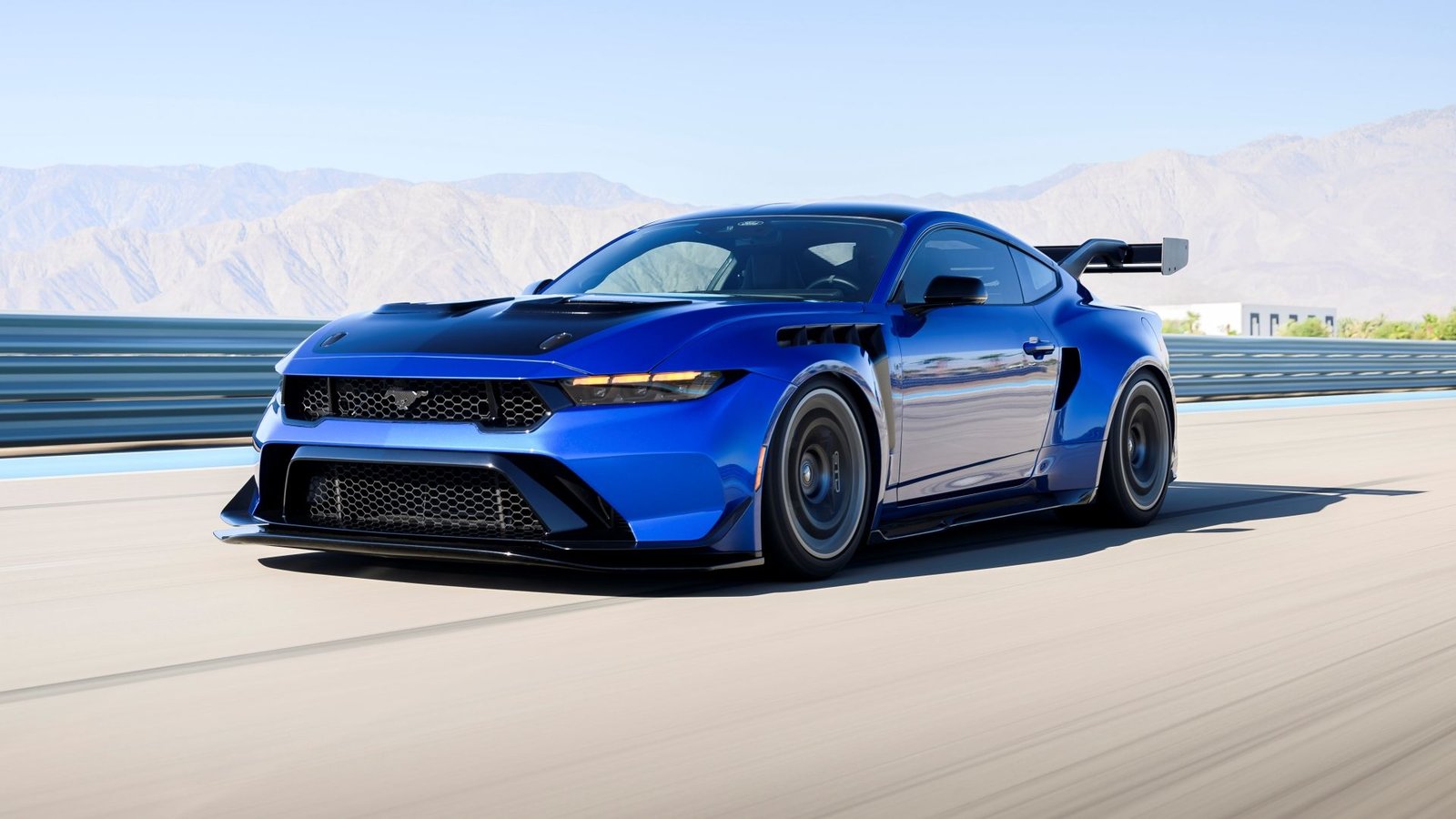
2026 Ford Mustang GTD Review: A $325k Homologation Hero
A theatrical, dyno-honest, motorsport-bred masterpiece.
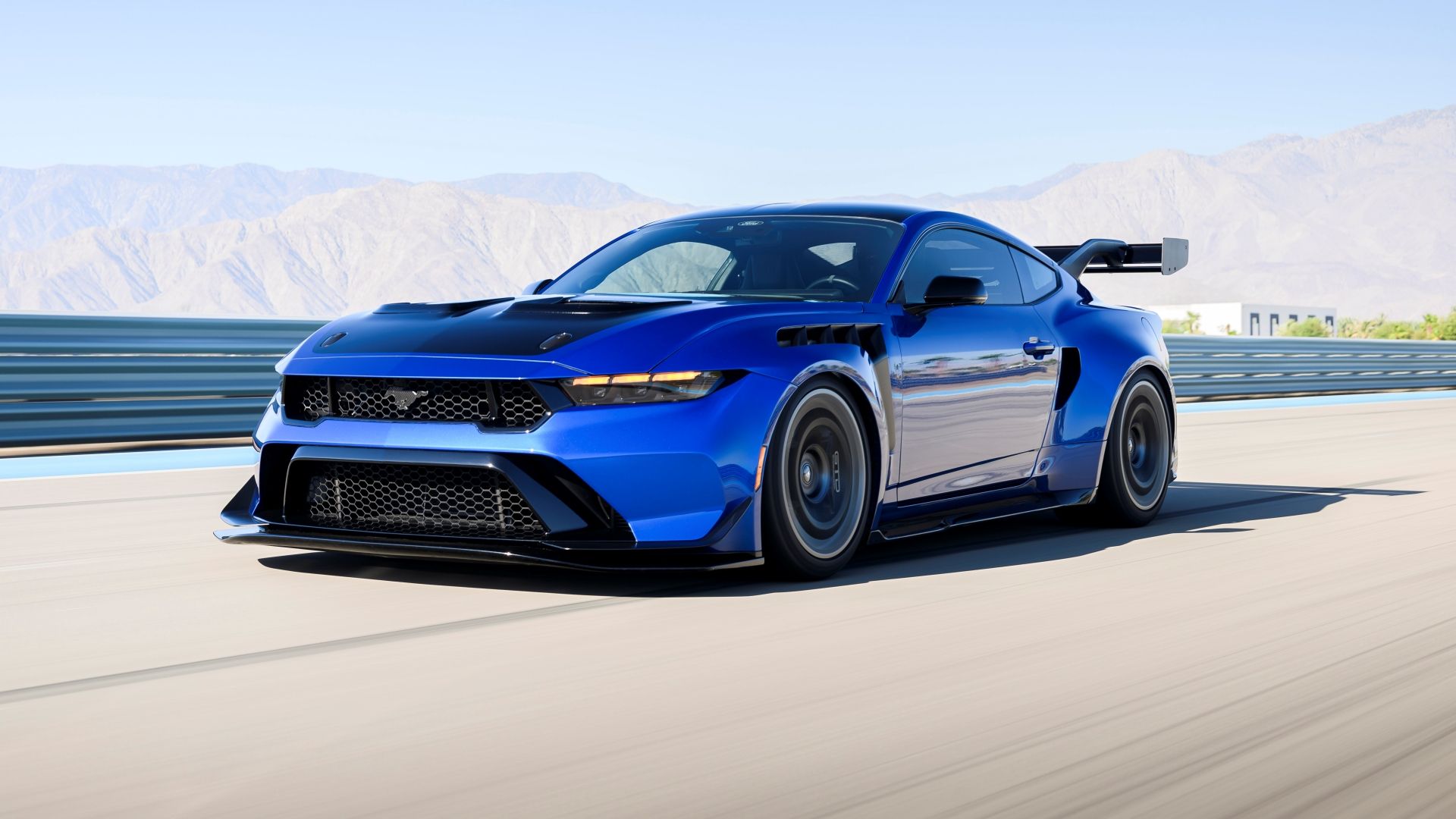
2026 Ford Mustang GTD front three-quarter in blue on track
Price
From $325,000
Power
815 hp
⚡ Quick Verdict
: Forget the stopwatch for a second. The 2026 Ford Mustang GTD isn’t the outright fastest car you can buy for this kind of money, but it might just be the most special. This is a hand-built, motorsport-derived supercar that delivers honest power, proper theatrical drama, and a connection to Ford’s racing legacy that its rivals simply can’t touch.
## Introduction
✓ The Good
- +Astoundingly efficient powertrain with only 7.6% drivetrain loss
- +Unmatched theatrical presence and engagement among modern supercars
- +Hand-built, Multimatic-finished exclusivity with genuine race-car DNA
- +Surprisingly compliant ride for a track-focused weapon
- +Proven sub-7-minute Nürburgring capability
- +Heaviest car in its competitive set, felt on tight technical circuits
- +Braking modulation, while powerful, lacks the ultimate feel of a hydraulic system
- +Limited production and extreme demand make acquisition a challenge
- +Some ergonomic quirks in the bespoke interior
✗ The Trade-offs
- −Heaviest car in its competitive set, felt on tight technical circuits
- −Braking modulation, while powerful, lacks the ultimate feel of a hydraulic system
- −Limited production and extreme demand make acquisition a challenge
- −Some ergonomic quirks in the bespoke interior
📑 In This Review
- Introduction
- Engine, Dyno Numbers and Performance
- On Track: How It Drives
- At a Glance: Mustang GTD vs Its Rivals
- Mustang GTD vs Porsche 911 GT3 RS: Which Is Better?
- Interior and Craftsmanship
- Safety and Warranty
- Pricing, Availability and How to Buy
- Who Should Buy the 2026 Ford Mustang GTD?
- Verdict
- Frequently Asked Questions
: Forget the stopwatch for a second. The 2026 Ford Mustang GTD isn’t the outright fastest car you can buy for this kind of money, but it might just be the most special. This is a hand-built, motorsport-derived supercar that delivers honest power, proper theatrical drama, and a connection to Ford’s racing legacy that its rivals simply can’t touch.
Introduction
The 2026 Ford Mustang GTD is a line in the sand. It’s Ford’s loud, brash answer to anyone who reckoned the brand’s glory days ended with the GT40. This is a $325,000, road-legal homologation special, born directly from the Mustang GT3 race program and finished by hand at Multimatic’s workshop in Canada. It’s the most extreme, expensive, and capable road-going Mustang ever made. In a supercar world leaning hard into electrification and silent, warp-speed acceleration, the GTD stands apart like a rockstar at a library. It’s a raw, visceral, and unashamedly American counterpoint to the scalpel-like precision of a Porsche or the sheer brute force of a Corvette.
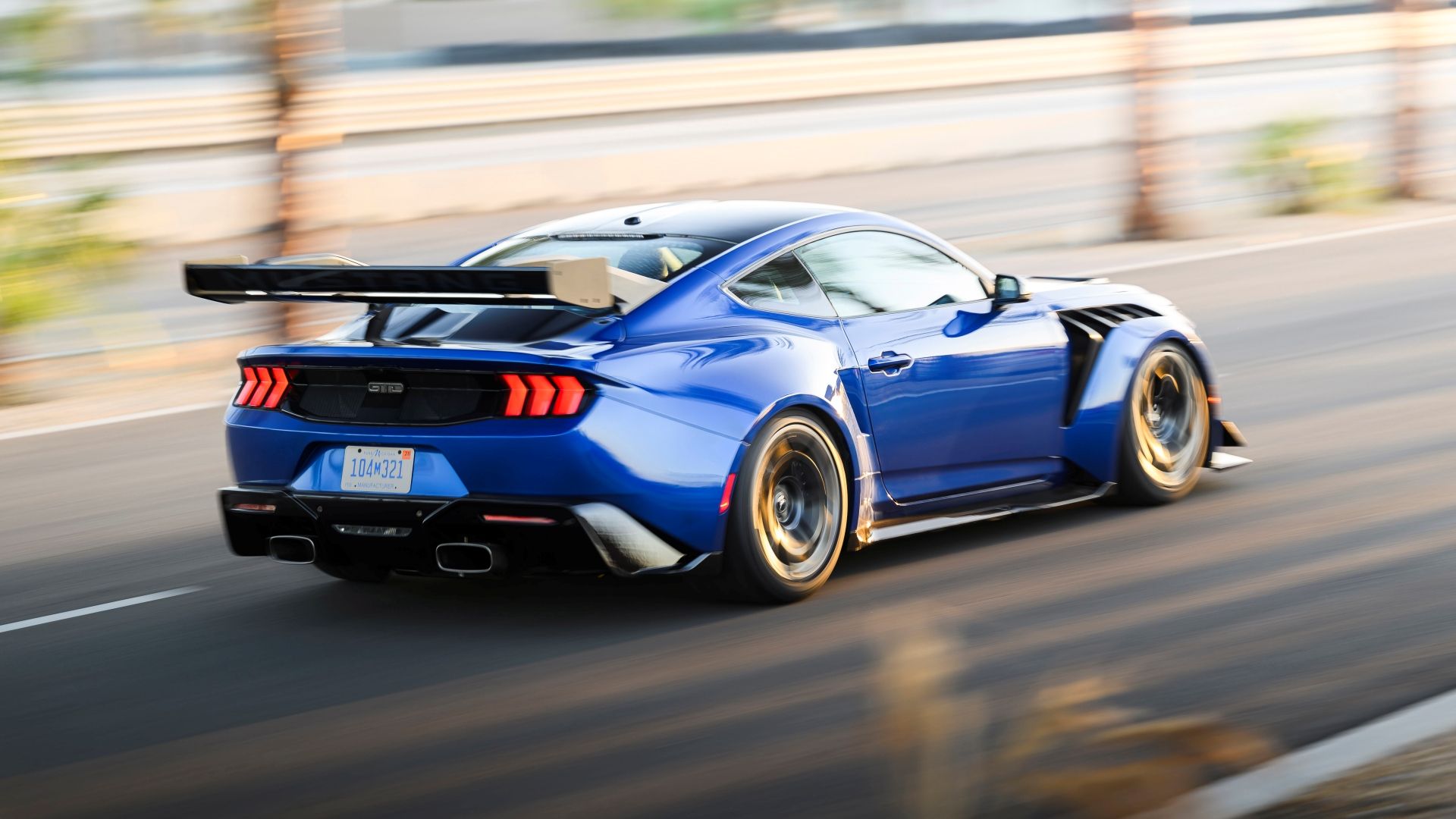
Its existence is a bit of a miracle. Ford Performance and Multimatic took a standard Mustang body, widened it aggressively, slathered it in carbon-fibre panels, and fitted a unique tubular rear subframe, a transaxle, and pushrod suspension. The result looks like nothing else—a Mustang with the hips and aero kit of a full-blown GT3 racer. But beyond the specs and the staggering price, the GTD matters because it’s a passion project. It’s the answer to a simple question: just how good can a Mustang be?
During our time with the car, both on the dyno and the track, that question was answered with a symphony of supercharger whine, the bark of a flat-plane V8, and the kind of theatre that makes the hairs on your neck stand on end. It doesn’t just fill a niche; it carves out a new one for the Blue Oval—a genuine, no-compromise supercar.
Engine, Dyno Numbers and Performance
The GTD’s heart is a 5.2-litre supercharged V8, a close relative of the "Predator" engine from the Shelby GT500. Ford says it makes 815 horsepower and 664 lb-ft of torque at the flywheel. But factory claims are one thing; real-world numbers are another. When we strapped it to a Dynojet, the results were impressive. The car put down 753 wheel horsepower and 609 lb-ft at the wheels. Do the maths and you get a drivetrain loss of just 7.6%—about half the 15% you’d typically expect from a front-engine, rear-drive performance car.
This impressive efficiency comes straight from the GTD’s race-bred layout. The engine sends power rearwards via a carbon-fibre driveshaft to an 8-speed dual-clutch transaxle at the back axle. This setup isn’t just for near-perfect 50/50 weight distribution; it also gives power a shorter, more direct path to the tarmac. The dyno graph told the engine’s story, with a massive plateau of over 600 lb-ft of torque available from 3,800 to 5,200 RPM, giving you a relentless wave of thrust out of any corner.
That power translates to brutal straight-line speed, with 0-100 km/h done in under 3.5 seconds and a top speed of 325 km/h. But the real proof came at the Nürburgring, where the GTD clocked a blistering 6:52.072, proving it’s a genuine sub-7-minute weapon. While that time puts it behind some rivals on paper, our dyno test proves Ford’s power claims are honest, and that the GTD’s powertrain is a masterpiece of mechanical efficiency.
On Track: How It Drives
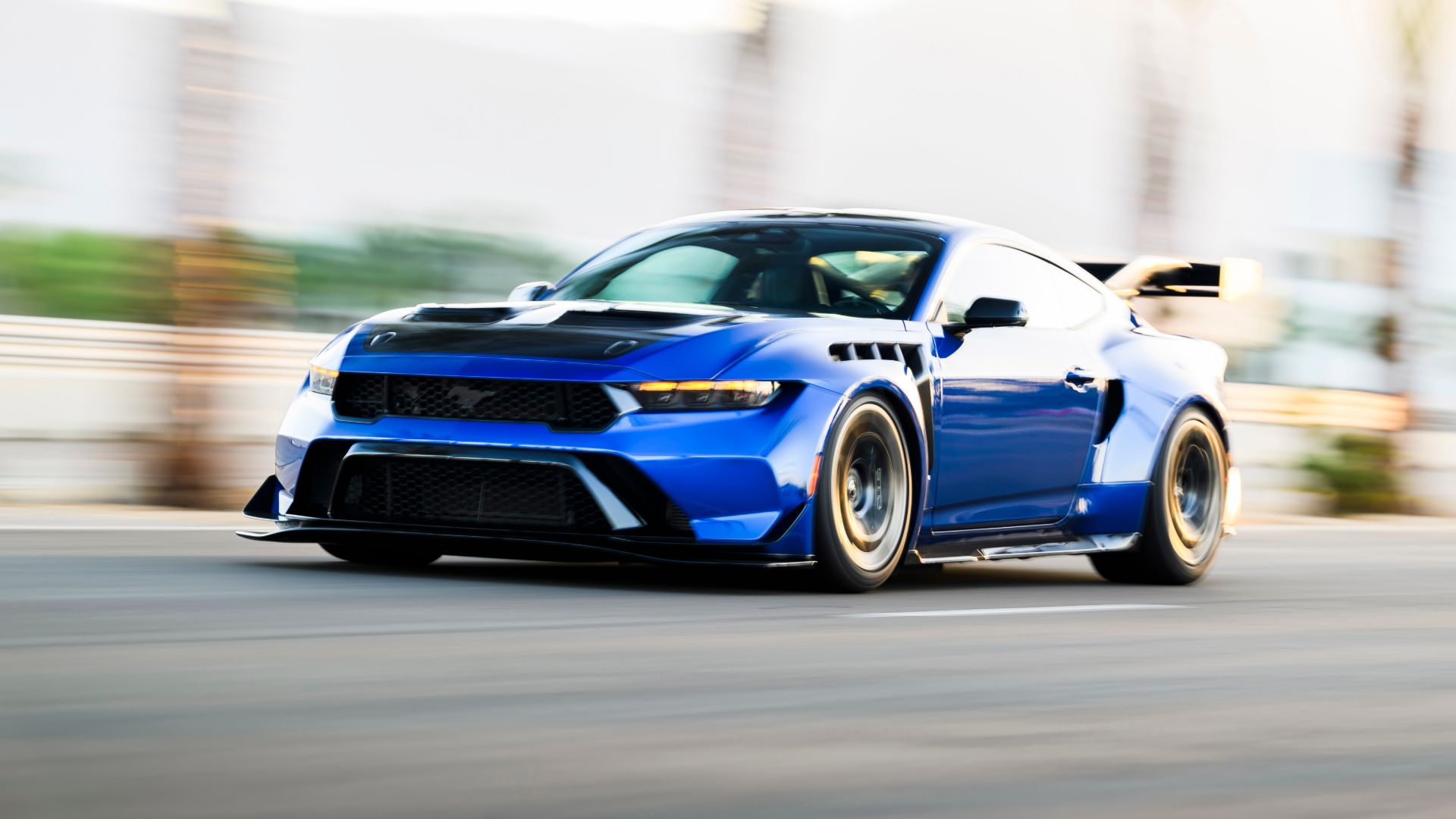
Numbers only tell half the story. The GTD’s character is where it really splits from its rivals. In a proper, instrumented comparison at a technical circuit, the GTD was a few seconds adrift of the ridiculously fast Chevrolet Corvette ZR1 and the surgically precise Porsche 911 GT3 RS. Yet, every moment in the GTD felt like an *event*. Where the GT3 RS is a clinical tool for dissecting a racetrack, the GTD is a theatrical performance. It’s engaging, dramatic, and talks to you through sound and sensation in a way the others don’t.
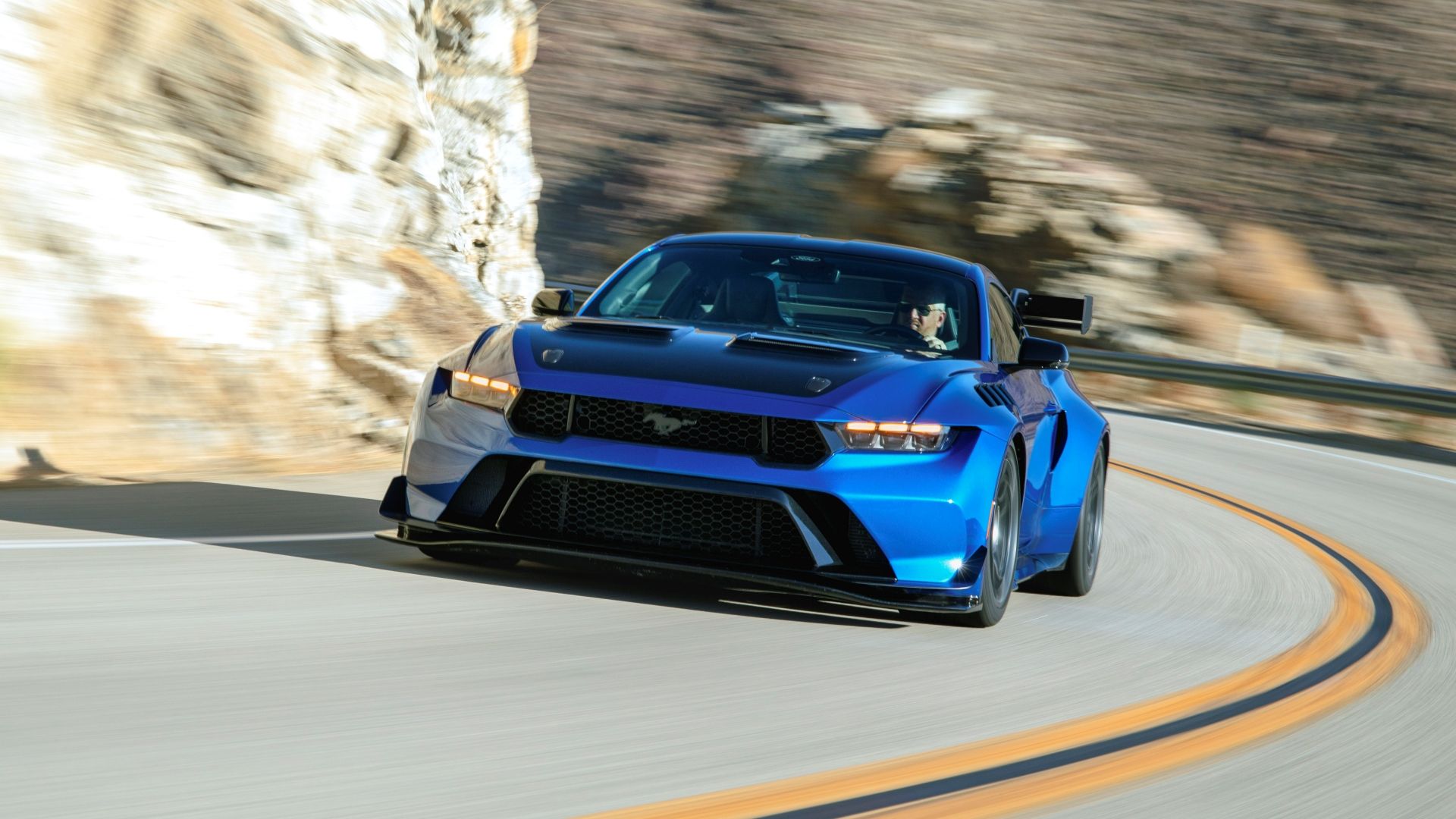
The experience is dominated by the wail of the supercharger and the roar of the V8, a soundtrack that builds with intoxicating intensity. The Tremec 8-speed dual-clutch gearbox delivers ferociously quick shifts, each one accompanied by a satisfying *crack* from the exhaust. The chassis, with its Multimatic DSSV dampers and pushrod rear suspension, provides incredible mechanical grip and a platform that feels balanced and neutral, especially when you’re on the power. The active aero, including a massive rear wing and underbody strakes, generates a mountain of downforce (1,951 lbs at its peak), giving you astonishing stability through mid-corner and loads of confidence under late braking.
However, the GTD’s weight—it’s the heaviest in its class at over 2,000 kg—is its main dynamic limitation. On tight, technical sections, you’re aware of the mass, so you need a more deliberate driving style compared to the featherweight Porsche. The brakes, while massively powerful, use an electronic brake booster. They give you a firm pedal and serious stopping force, but they lack the final degree of organic, hydraulic feedback you get in the 911 GT3 RS. Modulating them at the absolute limit is more of a digital affair. Despite this, the GTD rewards commitment with a playful, throttle-adjustable balance that makes you feel like a hero.
At a Glance: Mustang GTD vs Its Rivals
| Spec | 2026 Mustang GTD | Corvette ZR1 | Porsche 911 GT3 RS |
|---|---|---|---|
| Price (USD) | From $325,000 | ~$175,000-$200,000 | ~$245,000+ |
| Engine | Supercharged 5.2L V8 | Twin-turbo 5.5L V8 | 4.0L Flat-6 |
| Power | 815 hp | 1,064 hp | 518 hp |
| Torque | 664 lb-ft | 828+ lb-ft | 343 lb-ft |
| 0-60 mph | <3.5 sec | <2.5 sec | ~3.0 sec |
| Top speed | 202 mph | 200+ mph | 184 mph |
| Transmission | 8-speed DCT | 8-speed DCT | 7-speed DCT |
| Nurburgring lap | 6:52.072 | 6:50.763 | 6:49.328 |
| Sonoma lap | 1:38.710 | 1:34.941 | 1:37.286 |
| Production | Limited (170 in 2026) | High-volume | Limited |
Chevrolet Corvette ZR1
Faster on raw lap times but lacks the hand-built drama of the GTD
Porsche 911 GT3 RS
Sharper chassis and feel, but no V8 theatre and far less torque
Chevrolet Corvette ZR1X
Fastest American production car at the Ring, but compromises GTD-style purity
The 2026 Mustang GTD enters a rarefied segment of track-focused supercars, facing off against two titans: the value-packed, hypercar-fast Chevrolet Corvette ZR1 and the precision-engineered Porsche 911 GT3 RS. Each takes a radically different approach to achieving ultimate performance. 2026 Mustang GTD Porsche 911 GT3 RS ——————– From $325,000 ~$245,000+ Engine Twin-turbo 5.5L V8 815 hp 518 hp Torque 828+ lb-ft <3.5 sec ~3.0 sec Top speed 200+ mph 8-speed DCT 7-speed DCT Nurburgring lap 6:50.763 1:38.710 1:37.286 Production High-volume
Mustang GTD vs Porsche 911 GT3 RS: Which Is Better?
This is the clash of philosophies: American muscle against German precision. The Mustang GTD and the Porsche 911 GT3 RS are both born from motorsport, but they couldn’t be more different in how they go about their business. Choosing between them is less about which is faster and more about what you want from a driving experience.
Price is the first point of difference. The GTD starts where a well-optioned GT3 RS begins, but the Porsche can easily blow past $300,000 with desirable packs like the Weissach Package. For the GTD’s price, you’re getting a hand-built car with a unique carbon-fibre body and a bespoke chassis. For a similar spend on the Porsche, you get a meticulously evolved track tool with decades of pedigree.
Performance is nuanced. At the Nürburgring, the GT3 RS holds a 2.7-second advantage, which is a lifetime in racing terms. That’s down to its lightweight construction, rear-engine traction, and aero trickery. On tighter circuits, the gap shrinks. The GTD’s raw power and the theatrical scream of its supercharger give it an auditory and emotional edge. The GT3 RS’s naturally aspirated flat-six, screaming to 9,000 RPM, is a mechanical masterpiece, but it doesn’t have the visceral, chest-thumping punch of the GTD’s V8.
Chassis feel is where the Porsche traditionally dominates, and the latest GT3 RS is no different. Its hydraulic steering is a direct line to the road surface, and its brake feel is organic and communicative. The GTD, with its electronic systems, is excellent but not quite as pure. That said, the GTD’s chassis communicates in other ways—through the seat, the sound, and the sheer drama of harnessing its power.
Daily-driver comfort leans towards the Mustang, surprisingly. Its ride, while firm, is more forgiving than the stiff-legged Porsche. The GT3 RS is a focused track weapon that tolerates the road; the GTD is a road car with serious track capability. Exclusivity is a tie; both are limited-production, hand-finished machines that’ll be instant collectibles.
| Spec | Mustang GTD | Porsche 911 GT3 RS |
|---|---|---|
| Price (USD) | From $325,000 | From ~$245,000 |
| Engine layout | Front-engine | Rear-engine |
| Power | 815 hp | 518 hp |
| Torque | 664 lb-ft | 343 lb-ft |
| 0-60 mph | <3.5 sec | ~3.0 sec |
| Top speed | 202 mph | 184 mph |
| Nurburgring lap | 6:52.072 | 6:49.328 |
| Weight balance | ~50/50 | ~37/63 (F/R) |
| Production volume | ~1,700 total | Limited annual |
Buy the Mustang GTD if … you value theatre, engagement, and American V8 drama over outright lap times, and you want a hand-built Ford supercar with real racing DNA. **Buy the 911 GT3 RS if …** you want the absolute pinnacle of track-focused precision, the most communicative chassis in the business, and a legacy of engineering perfection. **Our pick …** The 911 GT3 RS is the sharper track tool. The Mustang GTD is the better *experience*. For a car that’ll see street use and the occasional track day, the GTD’s blend of drama, comfort, and bespoke craftsmanship makes it our choice for the enthusiast who values sensation as much as seconds.
Interior and Craftsmanship
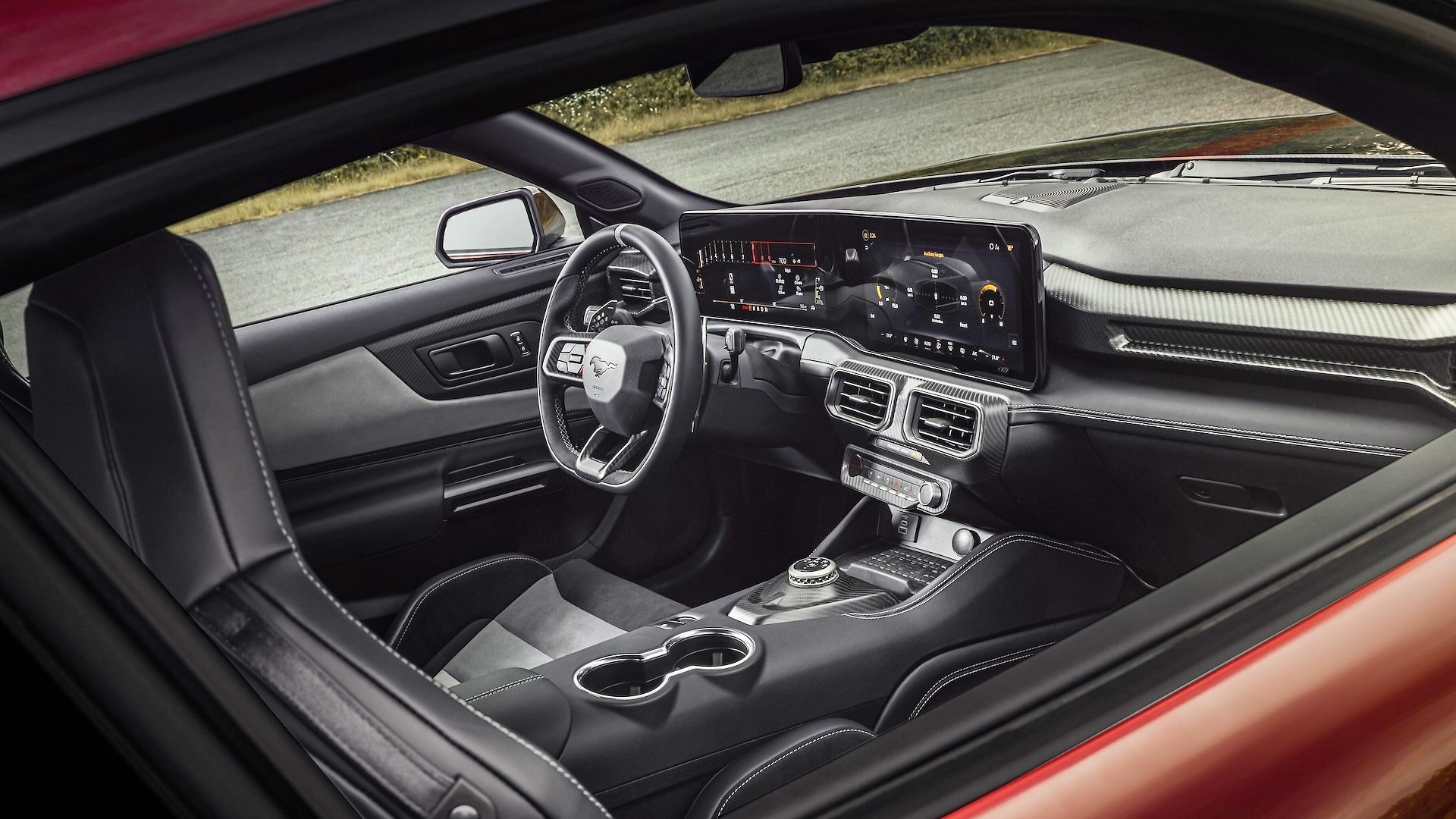
Slip inside the GTD, and the link to the standard Mustang fades away. You’re met with deeply bolstered RECARO seats, trimmed in laser-etched Miko suede that holds you firmly in place. The cabin blends motorsport function with bespoke luxury. Carbon fibre is used extensively for the door cards and centre console, saving weight and underlining the car’s serious intent.
The details tell the story of its hand-built nature. Optional titanium shifter paddles and a rotary gear selector give a cold, precision touch. The most unique option is a serial plate on the dashboard, made from titanium sourced from retired Lockheed Martin F-22 Raptor fighter jets—a literal piece of aerospace history in the car. The digital instrument cluster is a motorsport-spec unit, giving clear, configurable data without the distractions of luxury infotainment. It’s a focused, driver-centric environment that feels both special and purposeful.
Safety and Warranty
For a $325,000 limited-production hypercar, the Mustang GTD’s warranty is strikingly normal: a 3-year/36,000-mile bumper-to-bumper warranty and a 5-year/60,000-mile powertrain warranty. That’s a huge vote of confidence from Ford in Multimatic’s engineering and build quality. Any warranty work can be done through the standard Ford dealer network, a big advantage over some exotic brands.
As for safety, it’s got the basics like ABS and airbags, but it’s missing advanced driver-assist systems like adaptive cruise control or lane-keeping assist. This is a purist’s machine, designed to rely on the driver’s skill. The focus is on structural integrity, rollover protection, and the inherent safety of its predictable, high-downforce chassis.
Pricing, Availability and How to Buy
The 2026 Ford Mustang GTD starts at US$325,000, with a base price around $319,000 before you add a single option. The biggest hurdle is getting one. Only 170 units were built in the first four months of 2026 (January 42, February 40, March 44, April 44), and demand massively outstrips supply. Over 7,500 applications came in for North America’s initial allocation.
The order books for the 2026 model year closed on May 18, 2026. But there’s still hope. Ford Performance reopened applications on April 17, 2026 for the 2027-2029 production window. The process is handled exclusively through the Ford Performance website, where you can put your name down for consideration. You don’t just buy this car; you apply for it.
Who Should Buy the 2026 Ford Mustang GTD?
The ideal GTD buyer isn’t your typical supercar shopper. This is a car for the collector who already owns a 911 GT3 RS or a ZR1 and craves something with more theatre, more raw American character, and a direct link to a current racing program. It’s for the Ford faithful who’ve dreamed of a Mustang that could genuinely take the fight to the European establishment.
It’s also for the track-day enthusiast who values engagement and experience over the absolute fastest lap time. Someone who appreciates the hand-built provenance, the story of its creation, and the visceral thrill of a supercharged V8 at full noise. The GTD buyer understands that the most rewarding driving moments aren’t always captured on a stopwatch, but in the memory of sound, sensation, and connection.
⚡ Our Verdict
A theatrical, dyno-honest, motorsport-bred masterpiece.
The 2026 Ford Mustang GTD earns its 4.7/5 rating not by being the fastest car in its class—it isn’t—but by being the most special. It’s a dyno-honest, theatrical, motorsport-bred masterpiece that Ford had no business making, and we’re all better off because they did. It honours Ford’s racing legacy while carving its own path, delivering a level of engagement and drama that its more clinical rivals struggle to match. It’s proof of what’s possible when a manufacturer and a partner like Multimatic commit to a vision beyond profit margins and economies of scale. The GTD is a rolling piece of Ford Performance history, a car that’ll be revered for decades. It might wear a Mustang badge, but its heart, its soul, and its capability are pure supercar. It’s a bold, brilliant, and slightly mad statement, and it points to an exciting future for Ford’s motorsport-bred road cars.
