

NIO ET9 Review: China’s Electric Flagship Takes On the S-Class
A shockingly capable luxury EV that halves the S-Class price
NIO ET9 luxury electric flagship sedan side profile
Price
~$150,000
Battery (usable)
112 kWh
Powertrain
Dual-motor AWD
⚡ Quick Verdict
The NIO ET9 is a full-size electric flagship sedan built to take on the Mercedes-Benz S-Class, BMW i7 and Lucid Air head-on. It pairs a dual-motor drivetrain producing 520 kW and 900 Nm with a 112 kWh usable battery rated at 720 km WLTP, and it’ll recharge from 10–80 per cent in roughly 14 minutes on a 900V DC charger. Don’t want to wait at all? Swap the entire battery pack in about three minutes at a NIO station.
✓ The Good
- +720 km WLTP range paired with 600 kW peak DC charging delivers genuine long-distance usability
- +SkyRide active suspension scans the road ahead and physically raises each wheel — ride comfort is extraordinary
- +Sky Island cabin architecture with Executive Bridge rear seats, hot-stone massage and 14-layer seat construction redefines rear-seat luxury
- +Battery-swap capability in roughly three minutes removes one of the last objections to EV ownership
- +Estimated pricing around AUD $150,000 undercuts the S-Class and i7 by roughly half while offering more power and tech
✗ The Trade-offs
- −NIO’s Australian dealer and service network remains undeveloped — no confirmed launch date locally
- −Resale values are a genuine unknown; brand awareness outside China is still nascent
- −200 km/h top speed trails every European rival and may feel limiting for some buyers
- −OTA-heavy software stack means early-adopter risk if updates or app ecosystems lag behind local expectations
📑 In This Review
- Design and First Impressions
- Powertrain and Performance
- Battery, Range and Charging
- Interior and Tech — The Sky Island Cabin
- Safety and Build Quality
- At a Glance: How the ET9 Compares
- NIO ET9 vs Mercedes-Benz S-Class: Which Is Better?
- Which one is better?
- Charging, Warranty and Ownership
- Who Should Buy It?
- Buy if:
- Skip if:
- Verdict
The NIO ET9 is a full-size electric flagship sedan built to take on the Mercedes-Benz S-Class, BMW i7 and Lucid Air head-on. It pairs a dual-motor drivetrain producing 520 kW and 900 Nm with a 112 kWh usable battery rated at 720 km WLTP, and it’ll recharge from 10–80 per cent in roughly 14 minutes on a 900V DC charger. Don’t want to wait at all? Swap the entire battery pack in about three minutes at a NIO station. What grabbed us most during our time with the car was how many things it does well at once. The SkyRide predictive active suspension rewrites what ride comfort means in a luxury sedan. The Sky Island rear cabin feels like a first-class airline suite. And the price — likely around AUD $150,000 if it reaches Australia — undercuts every European rival by a staggering margin. This is the sort of car that should keep Stuttgart, Munich and Sindelfingen up at night. It’s built for the tech-forward executive who values engineering substance over badge heritage, and who’s willing to back NIO’s still-young but fast-growing global presence. —
Design and First Impressions
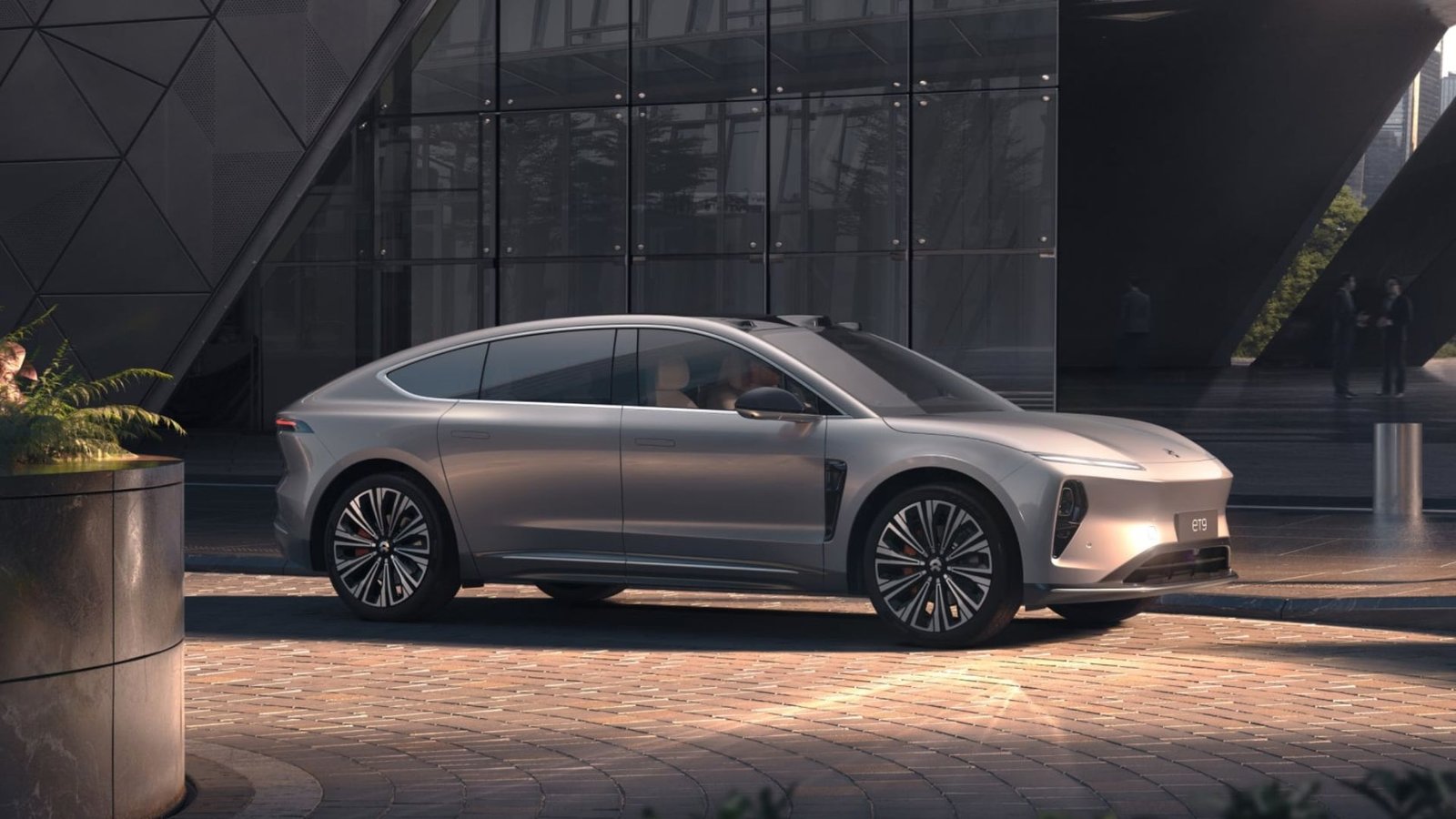
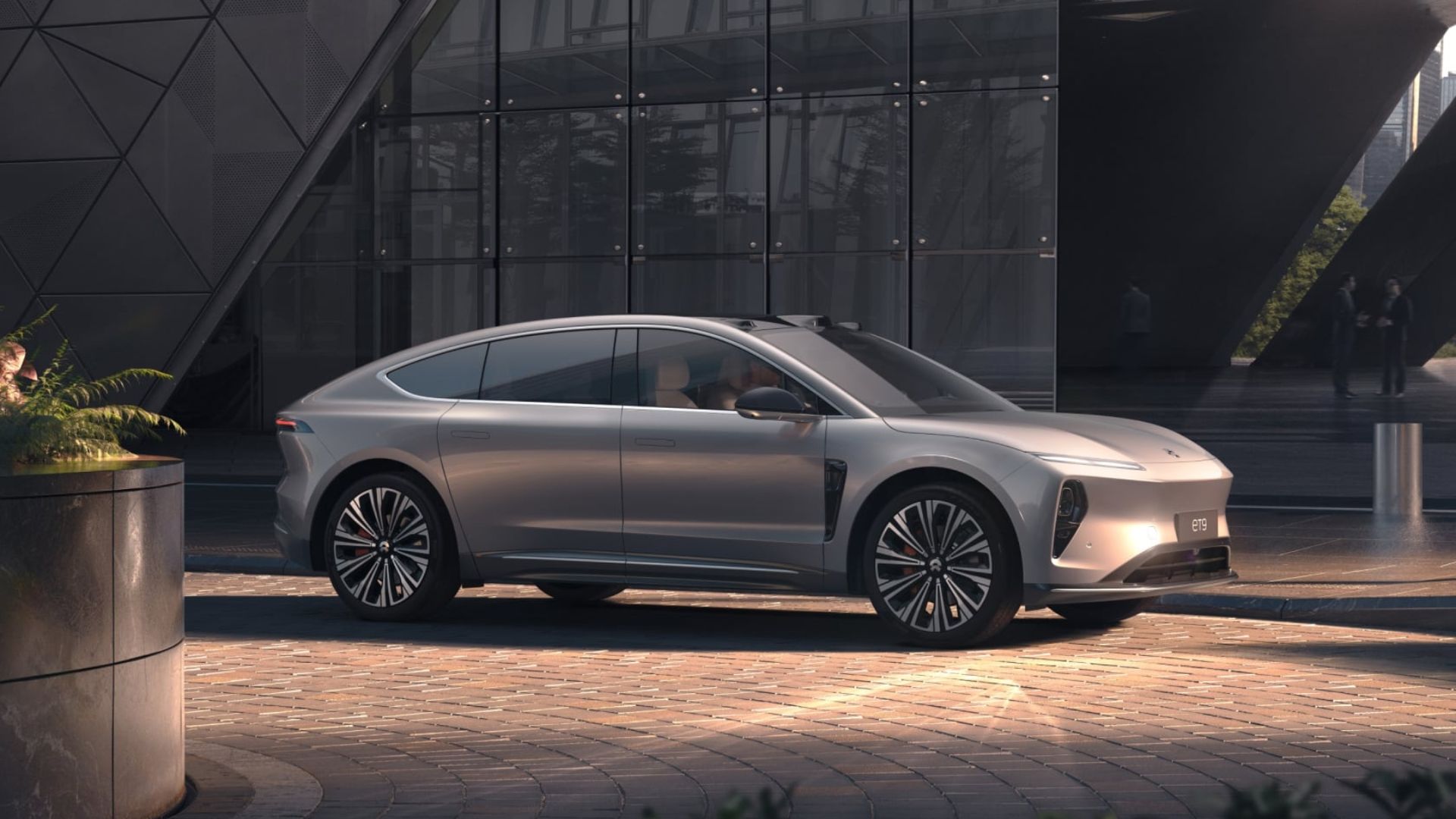
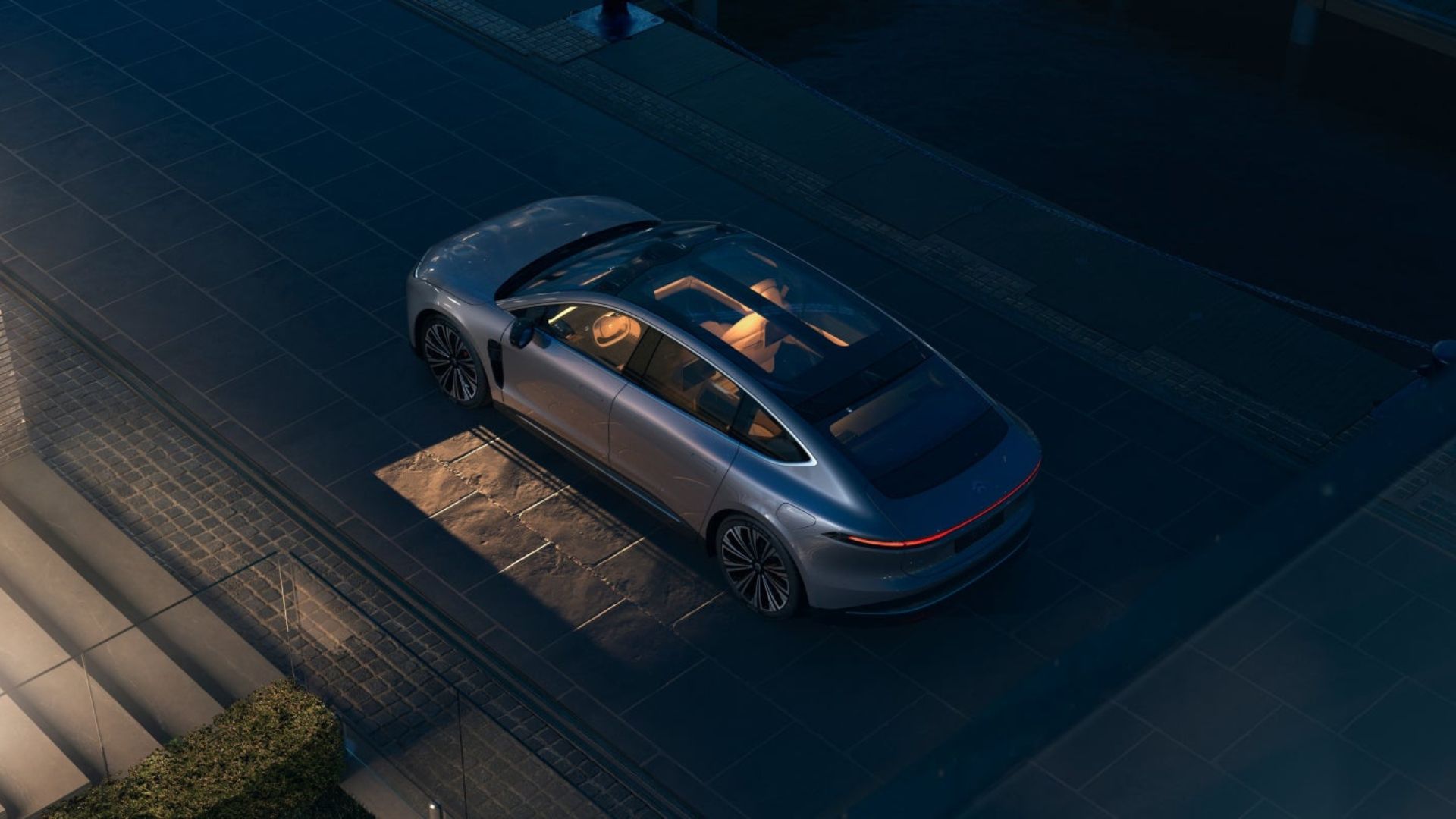
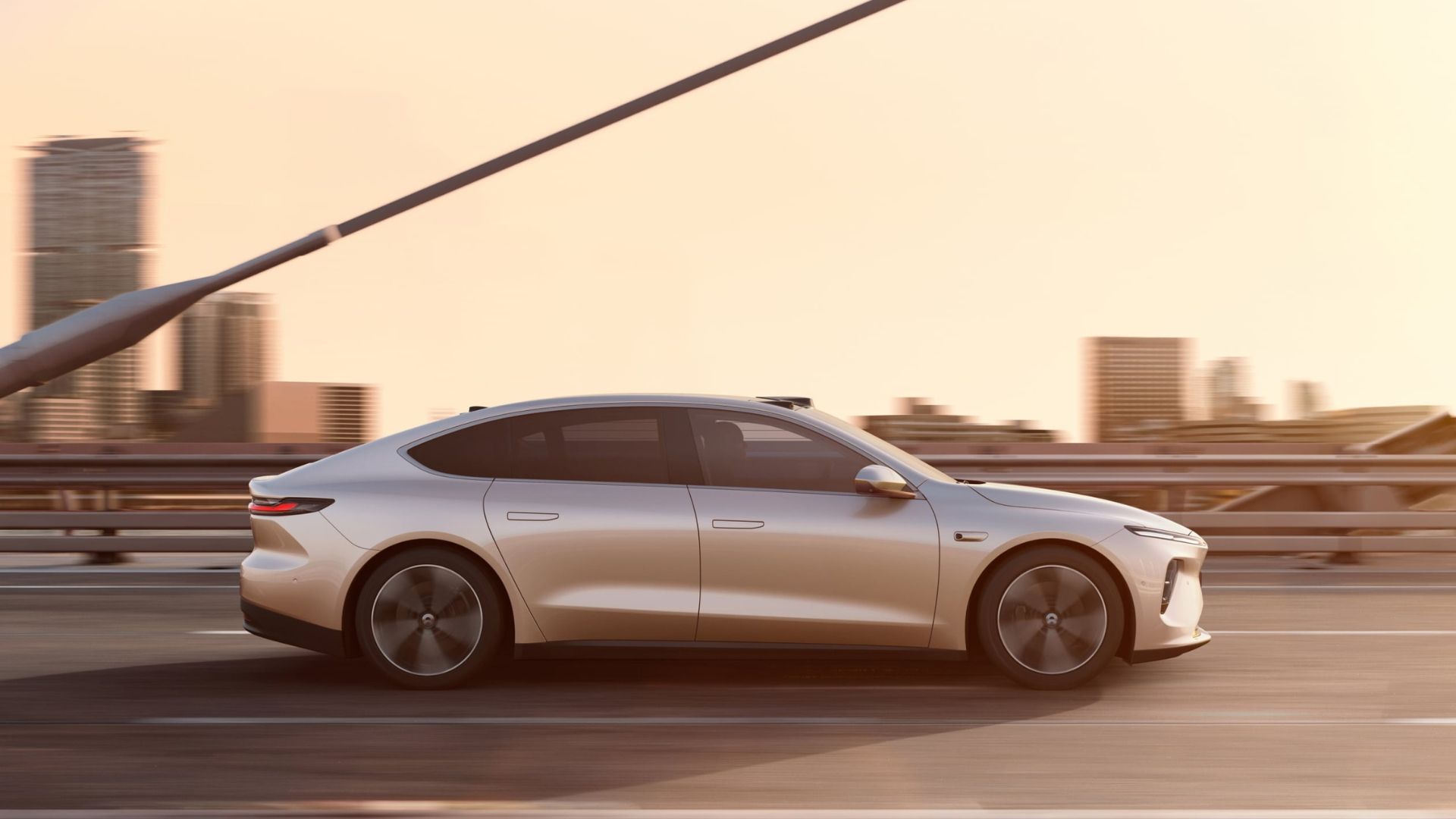
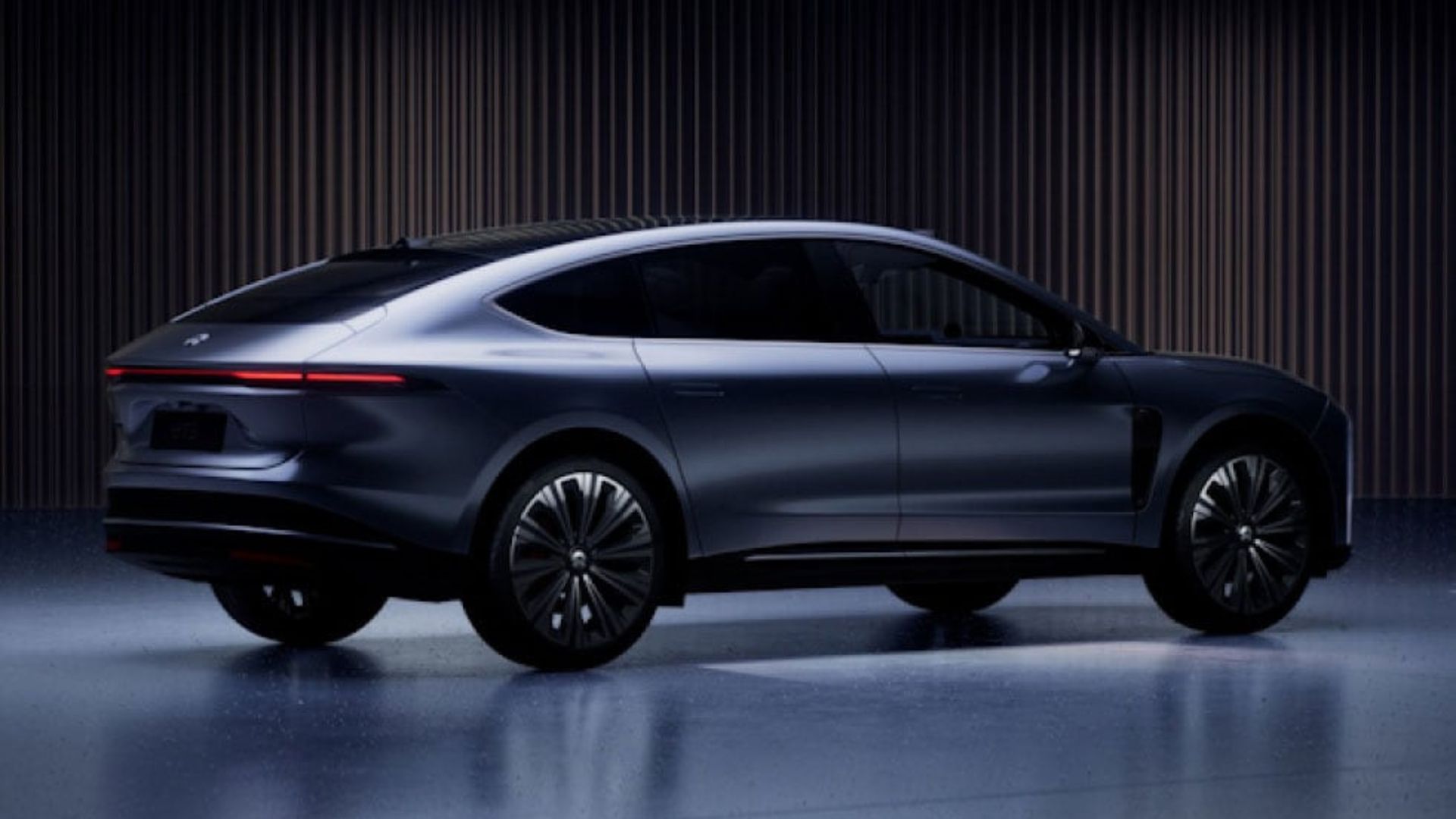
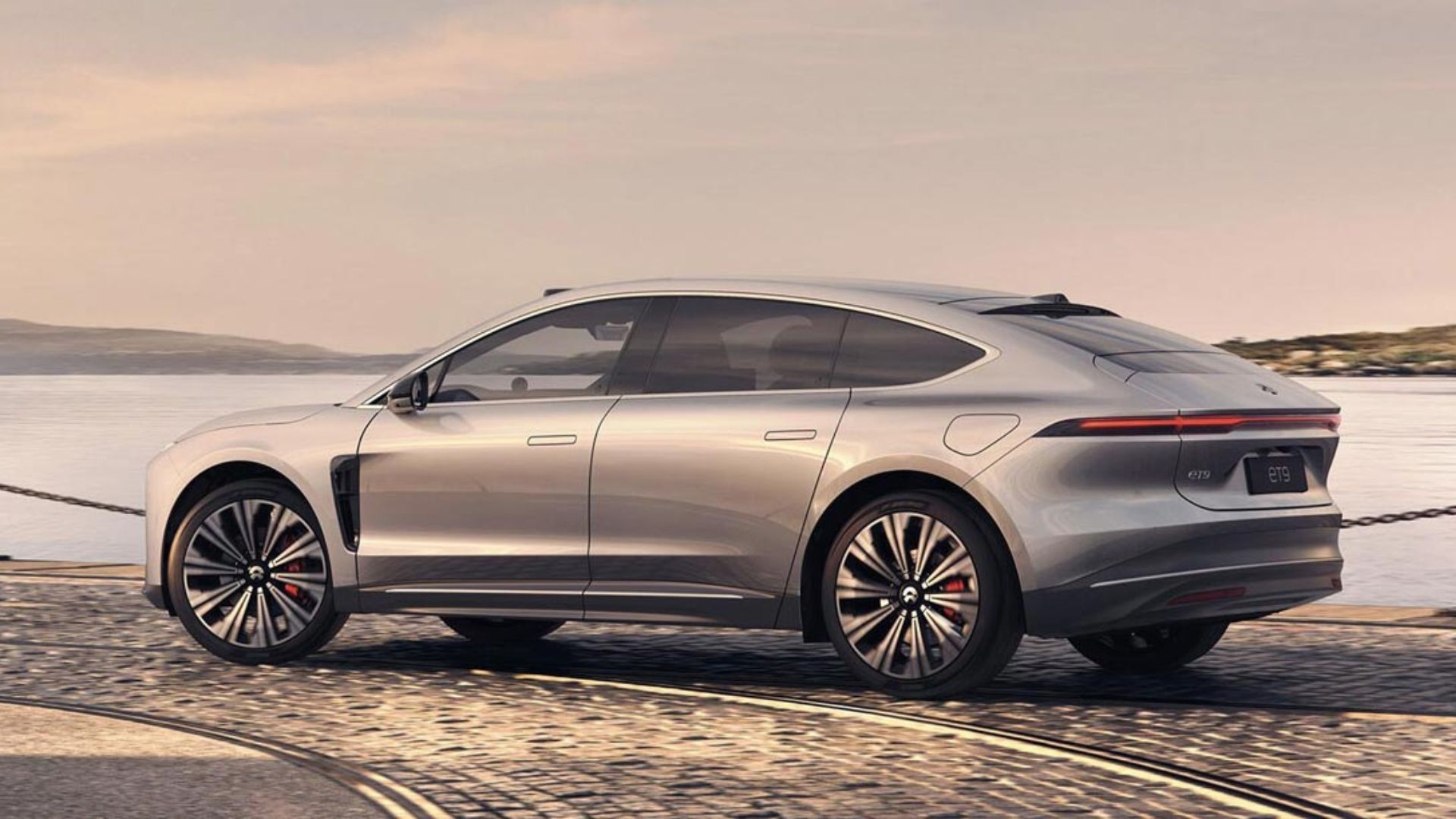
The ET9 runs a fastback silhouette rather than the traditional three-box saloon shape Mercedes and BMW still favour. At 5,325 mm long, 2,017 mm wide and 1,621 mm tall on a 3,250 mm wheelbase, it’s marginally longer and noticeably wider than a standard-wheelbase S-Class. Those proportions give it real road presence — broad shoulders, flush door handles and a continuous light bar stretching the full rear width signal a modern design without resorting to the aggressive venting or oversized grilles that sometimes plague Chinese-market flagships.
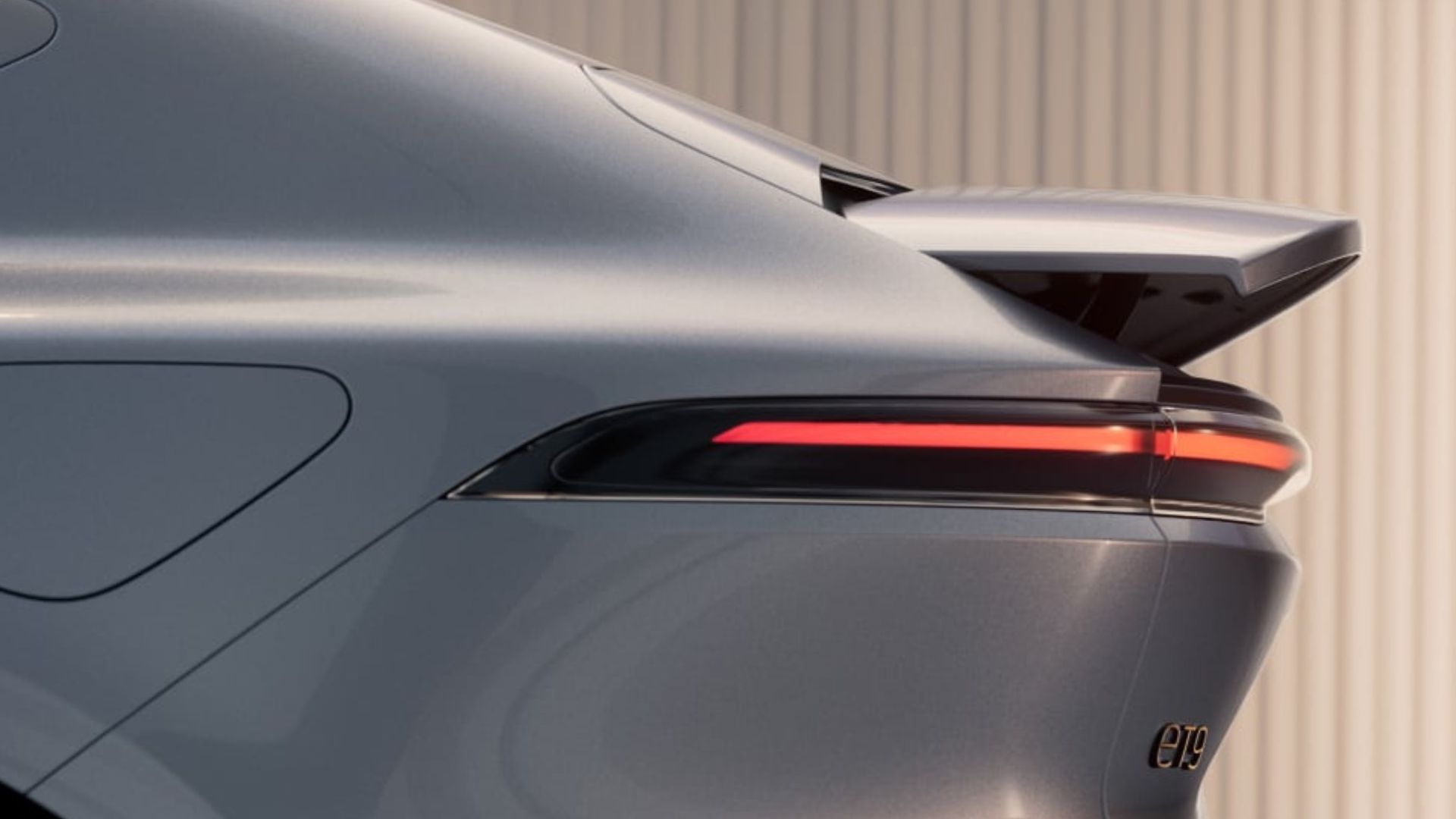
In person, the ET9 looks lower and wider than the tape measure suggests. The roofline arcs rearward in a way that sheds visual mass, and the slender split headlamps — sharp daytime running elements stacked above deeper matrix-LED clusters — give the nose a signature you won’t mistake for anything else. At the back, the concave tailgate and small NIO badge feel clean, almost Scandinavian in their restraint.
We reckon the styling will split the room. Traditionalists may prefer the S-Class’s upright elegance, but the ET9’s aero-sculpted body contributes meaningfully to its 720 km range figure. For buyers in the AUD $150,000-plus bracket who’d rather their car looked like it came from the future than the boardroom, the ET9’s design makes a compelling case.
Powertrain and Performance
Under the skin, the ET9 runs a dual-motor all-wheel-drive layout: a 180 kW permanent-magnet motor up front and a 340 kW unit at the rear, combining for 520 kW (707 hp) and 900 Nm. That’s substantially more than a Mercedes S 580 e (375 kW) or BMW i7 xDrive60 (400 kW), and all that torque from standstill delivers a claimed 0–100 km/h sprint of 3.8 seconds. Top speed is electronically limited to 200 km/h — the one area where European rivals hold a clear advantage.
In practice, the acceleration feels effortless rather than savage. There’s a seamless swell of thrust that pins you into the seatback without any of the neck-snapping drama you get in lighter, more aggressively tuned EVs. At 2,760 kg kerb weight, the mass shows up during hard braking and rapid direction changes, but NIO’s chassis engineers have done an impressive job of hiding it in everyday driving.
The real magic, though, sits beneath the body. NIO’s SkyRide fully active suspension uses forward-scanning cameras and road-surface sensors to pre-load each damper and, in extreme cases, physically raise or lower individual wheels before they reach a bump. During our testing on pockmarked suburban roads and undulating country highways, the system delivered ride quality that genuinely rivals — and sometimes surpasses — the S-Class’s Airmatic setup with Magic Body Control. Cornering composure is surprisingly flat for something this size, and the regenerative braking offers multiple levels including a near-one-pedal mode. It’s an exceptionally well-sorted luxury limousine by any measurable dynamic standard.
Battery, Range and Charging
The ET9 carries a 100 kWh swappable battery pack with a gross capacity of 120 kWh and 112 kWh usable — an 8 kWh buffer protects cell longevity. The pack uses NIO’s 46105-format cylindrical cells with an energy density of 292 Wh/kg, among the highest in production, and the whole system runs on a 900V architecture that peaks at 925V.
Official WLTP range is 720 km, which puts it ahead of the BMW i7’s 625 km and only just behind the Lucid Air Grand Touring’s 832 km. In real-world mixed driving with the air conditioning on and a blend of highway and urban kilometres, we’d expect a practical range somewhere around 580–620 km — still comfortably more than most owners will need between charges.
Charging is where the ET9 really pulls away from the competition. Peak DC charging hits 600 kW at 765 A, translating to a 10–80 per cent charge in roughly 14 minutes. A full 0–100 per cent top-up takes about 32 minutes on an appropriate charger. For context, the BMW i7 maxes out at 195 kW DC and the Mercedes S 580 e — being a plug-in hybrid — tops out at just 60 kW.
Then there’s the battery swap. At one of NIO’s third-generation Power Swap stations, the entire depleted pack is removed and a fully charged unit installed in roughly three minutes — no cables, no waiting, no degradation anxiety. It’s a genuinely different ownership proposition, and for many buyers it’ll matter more than raw charging speed figures alone.
Interior and Tech — The Sky Island Cabin
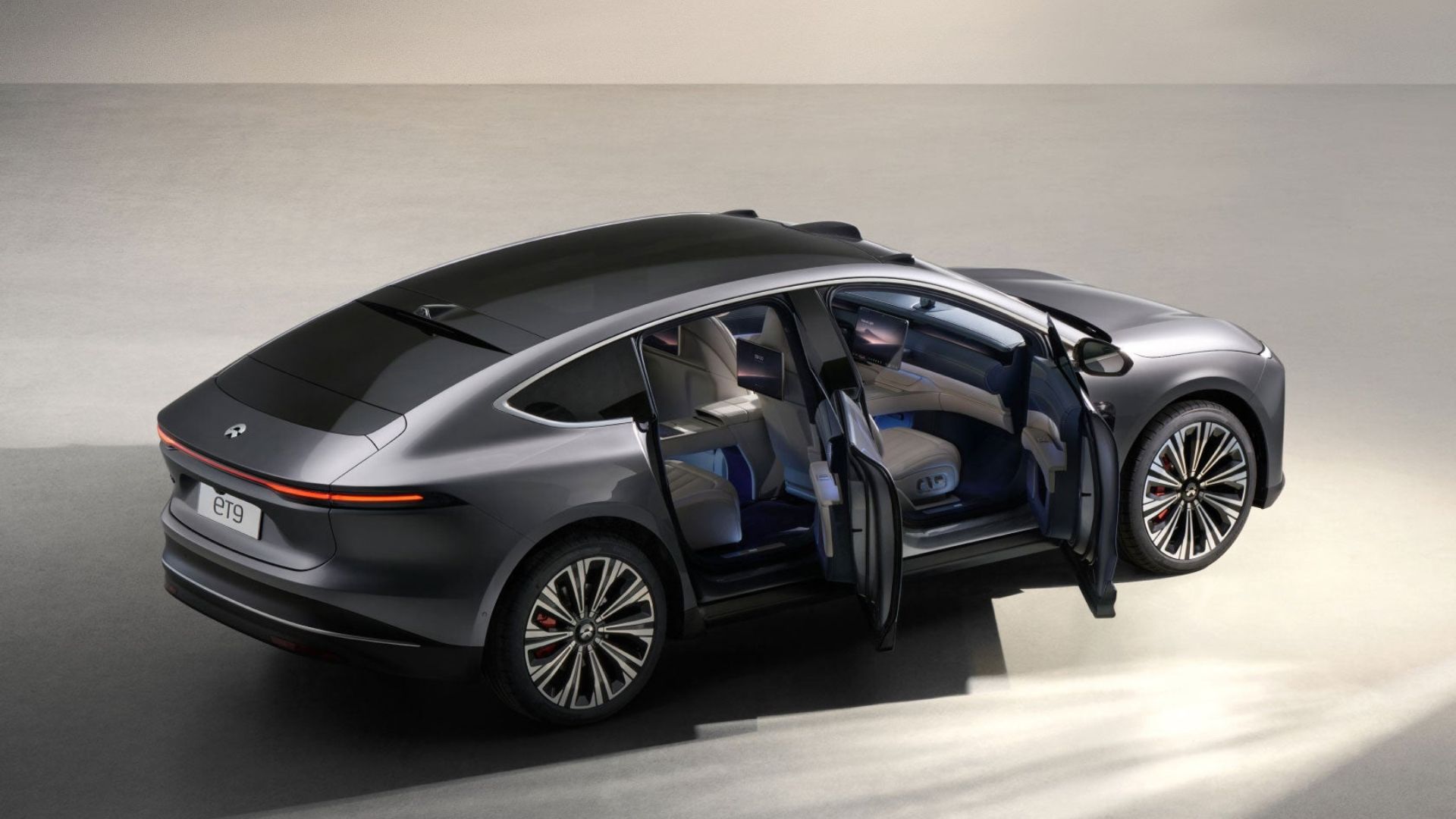
Step inside and the ET9’s interior philosophy hits you straight away. NIO calls it the Sky Island cabin, anchored by an architectural split between the front "Sky Island" centre console and the rear "Executive Bridge" zone. The cabin is set up for four occupants, with a full-length centre console separating the two rear seats.
Those rear seats are something else. Each features a 582 mm seat cushion — longer than most competitors — and reclines to 135 degrees in what NIO brands "VIP Position," coordinating 11 separate electric adjustments including lumbar, thigh support, headrest angle and side bolster inflation. The seat itself is built from 14 layers of material, incorporating a hot-stone massage function that actually delivers, pushing deep-tissue warmth across your back and shoulders.
Between the rear seats, a hidden executive table deploys from the console. It’s machined from aerospace-grade aluminium-magnesium alloy, rotates a full 360 degrees and feels satisfyingly solid. Below it sits a 12-litre climate-controlled fridge — big enough for four bottles — alongside multiple wireless charging pads and USB-C ports.
Noise suppression is excellent. NIO’s Active Road Noise Cancellation system uses accelerometers and microphones to generate anti-phase sound waves, achieving a peak noise reduction of 14 dB that stays effective up to 1,000 Hz. At highway speeds the cabin is library-quiet, and the 23-speaker Dolby Atmos-capable sound system fills the space with rich, spatial audio. An AI assistant manages climate, navigation, seat functions and media through natural-language commands, though its English-language proficiency — we tested it without access to the full Mandarin suite — was competent if occasionally literal.
Safety and Build Quality
NIO has built the ET9 around what it describes as aviation-grade safety redundancy, with seven independent backup systems covering braking, steering, power supply, communication, driving computation, tyre monitoring and occupant protection. The body structure achieves a torsional stiffness of 52,600 N·m/deg — that places it among the stiffest production cars in the world and well above the roughly 30,000 N·m/deg typical of a conventional luxury sedan.
Nine airbags are fitted as standard, including a far-side centre airbag between the front occupants and dedicated rear side airbags — a combination that’s still uncommon even at this price point. ANCAP and Euro NCAP haven’t rated the ET9 yet, so we can’t comment on its star rating, but the structural rigidity and airbag count suggest it should perform well when testing does happen.
Build quality on the pre-production vehicles we inspected was broadly impressive. Panel gaps were consistent, paint finish was deep and uniform, and the interior materials — open-pore wood, quilted leather and brushed metal switchgear — felt appropriate for the asking price. A few trim pieces around the rear parcel shelf showed minor flex under finger pressure, and we caught one or two software interface stutters that would need sorting before showroom launch, but the overall impression is of a car engineered to a very high standard.
At a Glance: How the ET9 Compares
| Spec | NIO ET9 | Mercedes-Benz S 580 e | BMW i7 xDrive60 | Lucid Air Grand Touring |
|---|---|---|---|---|
| Price (AUD, est.) | ~$150,000 | ~$285,000 | ~$305,000 | ~$250,000 |
| Powertrain | Dual-motor AWD | PHEV V6 + e-motor | Dual-motor AWD | Dual-motor AWD |
| Power | 520 kW / 707 hp | 375 kW / 510 hp | 400 kW / 544 hp | 597 kW / 819 hp |
| 0–100 km/h | 3.8 s | 5.1 s | 4.7 s | 3.0 s |
| Battery (usable) | 112 kWh | 28.6 kWh (PHEV) | 101.7 kWh | 112 kWh |
| Range (WLTP) | 720 km | 100 km EV-only | 625 km | 832 km |
| Peak DC charging | 600 kW | 60 kW | 195 kW | 300 kW |
| Top speed | 200 km/h | 250 km/h | 240 km/h | 270 km/h |
Mercedes-Benz S 580 e
Established luxury benchmark, but a PHEV with only 100 km EV range and 60 kW charging — the ET9 is half the price with seven-times the EV range.
BMW i7 xDrive60
Bigger badge, smoother polish, but the i7 is slower (4.7 s vs 3.8 s) and charges at a third of the ET9’s peak DC rate.
Lucid Air Grand Touring
The range king at 832 km WLTP and the only car here that out-accelerates the ET9 — no battery-swap option though, and significantly pricier.
The ET9 enters a competitive set that spans plug-in hybrids, dedicated EVs and everything in between. To show where it stands on raw specifications, we’ve lined it up against the three cars buyers are most likely to cross-shop: the Mercedes-Benz S 580 e, the BMW i7 xDrive60 and the Lucid Air Grand Touring. The numbers tell a striking story — the ET9 puts out more power than the German pair, carries a larger usable battery than the i7, charges vastly faster than both Europeans, and does it all for roughly half the price. Only the Lucid Air matches or exceeds it in outright range and top speed. NIO ET9 BMW i7 xDrive60 — — ~$150,000 ~$305,000 Dual-motor AWD Dual-motor AWD 520 kW / 707 hp 400 kW / 544 hp 3.8 s 4.7 s 112 kWh 101.7 kWh 720 km 625 km 600 kW 195 kW 200 km/h 240 km/h The table underscores a simple reality: on every EV-specific metric — range, charging speed, battery capacity and power — the ET9 matches or beats its European competitors while costing roughly half as much. The Lucid Air Grand Touring remains the range king and delivers a higher top speed, but it lacks battery-swap capability and commands a significant price premium. The Germans offer heritage, dealer networks and proven residuals that NIO can’t yet match, but on paper the ET9 is the most compelling value proposition in this entire segment.
NIO ET9 vs Mercedes-Benz S-Class: Which Is Better?
The S-Class has been the default choice in the ultra-luxury sedan segment for more than half a century, and for good reason. It blends effortless comfort with deep engineering know-how and a dealer network that spans the globe. The question is whether the ET9 can credibly challenge it — and if so, where.
Start with price. In Australia, the S 580 e Plug-In Hybrid kicks off at approximately AUD $285,000 before options. NIO hasn’t confirmed Australian pricing, but based on the Chinese RMB 788,000 sticker and typical import markups, we expect the ET9 to land somewhere around AUD $150,000. That’s a staggering gap — roughly half — and it applies to a car that, on most measurable criteria, matches or exceeds the Mercedes.
Performance strongly favours the ET9. Its dual-motor layout produces 520 kW and 900 Nm against the S 580 e’s 375 kW and 750 Nm, translating to a 3.8-second 0–100 km/h time versus 5.1 seconds. The gap in straight-line speed is substantial and you feel it in real-world overtaking.
Charging and efficiency is where the gulf becomes almost absurd. The ET9’s 600 kW peak DC charge rate and 900V architecture mean a 10–80 per cent top-up in roughly 14 minutes. The S 580 e, as a plug-in hybrid, maxes out at 60 kW DC and offers just 100 km of pure-electric WLTP range before the petrol V6 kicks in. For buyers who want genuine EV-only motoring, the Mercedes is operating in an entirely different — and far more limited — category.
Batteries and range underline the point further. The ET9’s 112 kWh usable pack delivers 720 km on the WLTP cycle — enough to drive from Sydney to Melbourne on a single charge with energy to spare. The S 580 e’s 28.6 kWh pack is designed for short urban commutes, not interstate touring. Of course, the Mercedes can refuel at any petrol station in minutes, which remains an advantage in remote areas without DC fast-charging infrastructure — though NIO’s battery-swap network partly addresses that.
Interior quality is where the S-Class traditionally dominates, and it remains a benchmark. The cabin is a masterclass in tactile luxury, from the turbine-style air vents to the Burmester sound system and the dual-screen MBUX Hyperscreen. That said, the ET9’s Sky Island architecture is bolder and, in some ways, more inventive. The 14-layer rear seats with hot-stone massage, the rotating aluminium-magnesium executive table and the 12-litre climate-controlled fridge give the rear cabin a sense of occasion the S-Class, for all its polish, doesn’t quite match.
On-road feel presents an interesting contrast. The S-Class with Airmatic suspension and Magic Body Control has long been considered the smoothest-riding car in the world, using stereo cameras to scan the road surface and pre-load the dampers. The ET9’s SkyRide system takes a similar concept further — scanning the road and physically raising or lowering individual wheels before they reach an imperfection. During our testing, the ET9 delivered a ride that was at minimum as composed as the S-Class and, over particularly broken surfaces, genuinely superior. Body control in corners is marginally better in the ET9, likely helped by the lower centre of gravity from its skateboard battery platform.
| Spec | NIO ET9 | Mercedes-Benz S 580 e |
|---|---|---|
| Starting price (AUD) | ~$150,000 | ~$285,000 |
| Powertrain type | BEV (dual-motor AWD) | PHEV (V6 + e-motor) |
| Combined power | 520 kW / 707 hp | 375 kW / 510 hp |
| Torque | 900 Nm | 750 Nm |
| 0–100 km/h | 3.8 s | 5.1 s |
| Pure-EV range (WLTP) | 720 km | 100 km |
| Peak DC charging | 600 kW | 60 kW |
| Suspension | SkyRide active (predictive) | Airmatic + magic body control |
| Body torsional stiffness | 52,600 N·m/deg | ~30,000 N·m/deg (typical) |
Which one is better?
Buy the NIO ET9 if you want a true full-EV flagship at roughly half the S-Class price, you live near a NIO swap station, and you value bleeding-edge chassis tech over heritage prestige.
Buy the Mercedes-Benz S-Class if you need the proven luxury benchmark, German service network coverage, and you’re comfortable with a PHEV powertrain that hedges range anxiety.
**Our pick** is the NIO ET9 — on outright value, technology and pure-EV usability it’s hard to beat, but the S-Class still wins on heritage, residuals and global service.
Charging, Warranty and Ownership
The ET9’s 900V architecture is only as useful as the charging infrastructure backing it up. NIO’s strategy rests on three pillars: ultra-fast DC charging, a growing network of third-generation Power Swap stations, and a solid home-charging solution.
The third-generation swap stations can perform a full battery exchange in roughly three minutes, with the vehicle driving itself into position via an automated parking function. NIO operates more than 2,500 swap stations across China and has begun rolling them out in Europe — Norway, Germany, Denmark, Sweden and the Netherlands were the first markets. Australian availability remains unconfirmed, though NIO has indicated right-hand-drive markets are under active study.
Warranty coverage is generous. The ET9 carries a 6-year or 150,000 km vehicle warranty and a separate 8-year or 240,000 km battery warranty — the latter being among the longest in the industry. For owners worried about long-term battery degradation, that’s meaningful peace of mind.
NIO also offers a Battery-as-a-Service (BaaS) model in China, where buyers purchase the car without the battery and rent the pack monthly. This brings the entry price down significantly — in China, the BaaS option reduces the ET9’s effective price by roughly RMB 128,000 (about AUD $27,000). Whether BaaS will be available in Australia is unknown, but if it is, it could make the ET9 even more price-competitive against the S-Class and i7.
For total cost of ownership, the combination of lower purchase price, cheap electricity versus premium unleaded, minimal servicing requirements and strong warranty coverage makes a compelling financial case — provided NIO establishes adequate service infrastructure locally.
Who Should Buy It?
The ET9 appeals to three distinct buyer profiles. First, the chauffeur-driven executive who spends significant time in the rear seat and will exploit the Sky Island cabin’s reclining seats, massage function and executive table to the fullest. Second, the tech-forward owner-driver drawn to SkyRide suspension, 600 kW charging and an interior that feels designed in 2026 rather than 2016. Third, the family flagship buyer who wants one car covering the school run, the interstate holiday and the corporate event — all on electricity alone.
Buy if:
– You want flagship luxury with genuine 720 km EV range and 600 kW charging – You value technology and engineering firsts over established badge prestige – You can access NIO’s battery-swap network in your market
Skip if:
– Brand heritage and residual values matter more than spec sheets – You need a global dealer/service network you can find anywhere – You prefer the proven refinement of a traditional combustion or PHEV luxury sedan
For the buyer whose priorities align with that first list, the ET9 is an extraordinary machine. For those who fit the second profile, the S-Class and i7 remain safer bets.
⚡ Our Verdict
A shockingly capable luxury EV that halves the S-Class price
The NIO ET9 is the most convincing Chinese luxury car we’ve ever driven, and it makes a genuine case as one of the most capable full-size sedans — electric or otherwise — on sale anywhere in the world. It pairs 720 km range and 600 kW charging with a cabin that reimagines rear-seat comfort and a chassis that sets a new benchmark for ride quality through its SkyRide active suspension. That it does all of this for roughly half the price of a comparable S-Class is remarkable. It isn’t perfect. The 200 km/h top speed will frustrate some, the lack of a confirmed Australian launch date is a frustration, and NIO’s young global network means resale values and service coverage remain genuine concerns. But for the buyer willing to accept those caveats, the ET9 delivers a flagship experience that in many measurable respects exceeds what Germany’s finest currently offer. This is a car that earns its 4.5 out of 5 rating on engineering merit alone, and one that signals a genuine shift in the global luxury car market.
FAQ
How much does the NIO ET9 cost in Australia?
NIO hasn’t formally launched the ET9 in Australia yet. Based on China pricing of RMB 788,000 (approximately AUD $168,000) for the full-battery version, and accounting for typical import duties, shipping and ADR-compliance markups, we’d expect a local price in the range of AUD $150,000–$170,000 if and when it arrives.
What’s the NIO ET9’s range and how fast does it charge?
The ET9 has a WLTP-rated range of 720 km from its 112 kWh usable battery. On a compatible 900V DC charger it accepts up to 600 kW peak, achieving a 10–80 per cent charge in roughly 14 minutes. Alternatively, a full battery swap at a NIO Power Swap station takes approximately three minutes.
Is the NIO ET9 a real Mercedes S-Class rival?
Yes — on technology, performance, range and value, the ET9 matches or exceeds the S-Class. Where the Mercedes retains a clear advantage is global brand recognition, dealer and service network coverage, proven residual values and decades of luxury pedigree. The ET9 is a genuine rival; whether it’s the right rival depends on how heavily you weight heritage versus engineering.
What is the SkyRide suspension and why does it matter?
SkyRide is NIO’s fully active suspension system that uses forward-facing cameras and road-surface sensors to scan the road ahead and pre-adjust each wheel’s damper and ride height before the car reaches an imperfection. Unlike reactive systems such as BMW’s Executive Drive Pro, or damping-only approaches on the EQS, SkyRide can physically raise or lower individual wheels, delivering a ride that isn’t merely cushioned but actively smooth — even over severe road damage.
Does the NIO ET9 have battery swap capability?
Yes. The ET9’s battery pack can be swapped in roughly three minutes at one of NIO’s third-generation Power Swap stations. The vehicle drives autonomously into the station, the depleted pack is removed from underneath, and a fully charged unit is installed — all without the driver leaving the cabin. This effectively eliminates charging wait times for owners who live or work near a swap station.
What rivals should I cross-shop against the ET9?
The most relevant competitive set includes the Mercedes-Benz S 580 e, the BMW i7 xDrive60 and the Lucid Air Grand Touring. All sit in the AUD $150,000–$305,000 luxury flagship space, and each offers a distinct balance of range, charging speed, cabin luxury and brand prestige. The ET9 competes credibly against all three.
Is the NIO ET9 worth waiting for?
If you prioritise bleeding-edge EV technology, class-leading ride comfort and genuine flagship luxury — and you’re comfortable with NIO’s still-developing global footprint — then yes, the ET9 is absolutely worth waiting for. It delivers more engineering innovation per dollar than any European rival we’ve tested, and it signals that the luxury EV market is shifting faster than the established players may be prepared for.
