

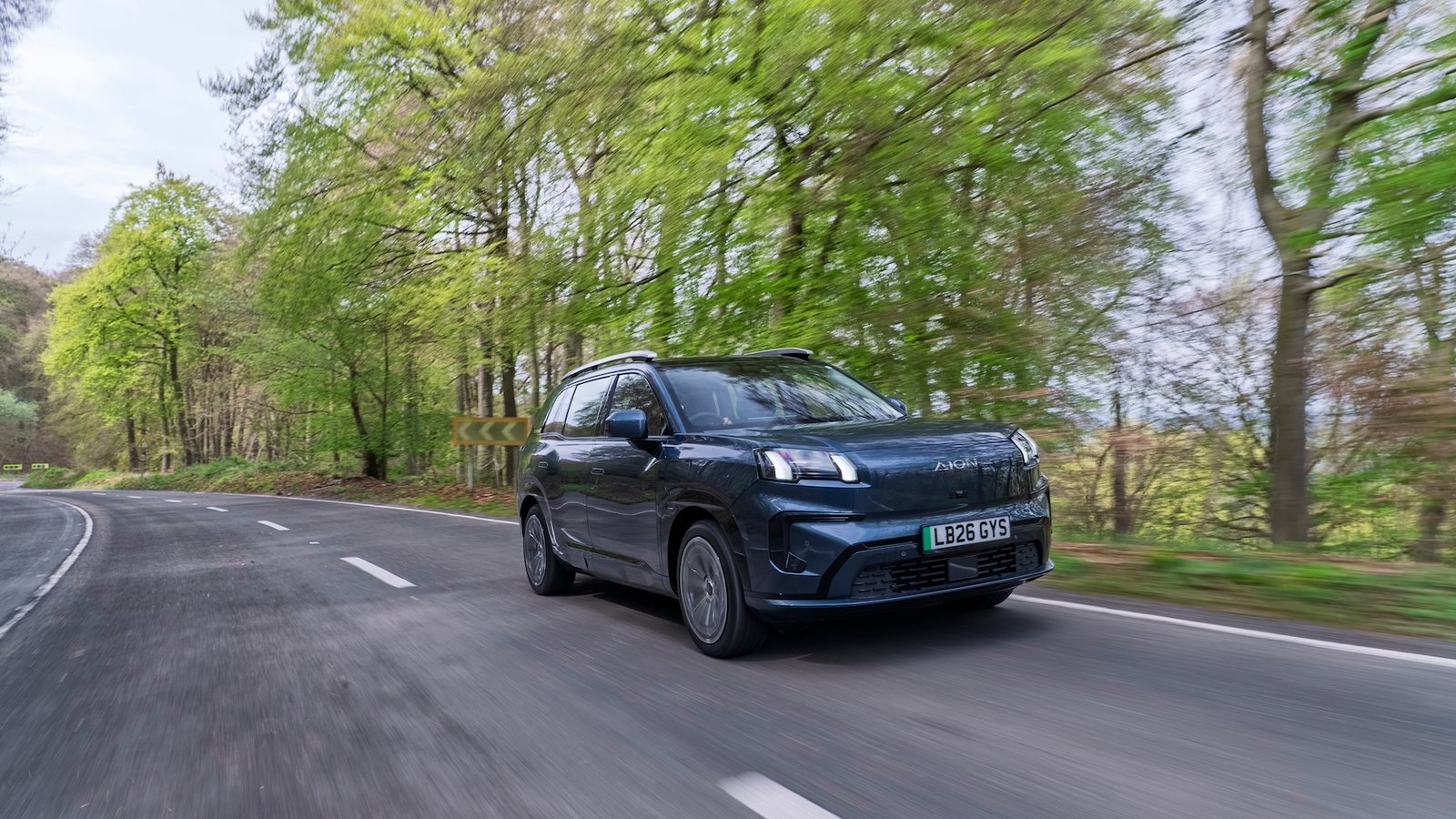
2026 Aion V Review: The Warranty King of Electric SUVs
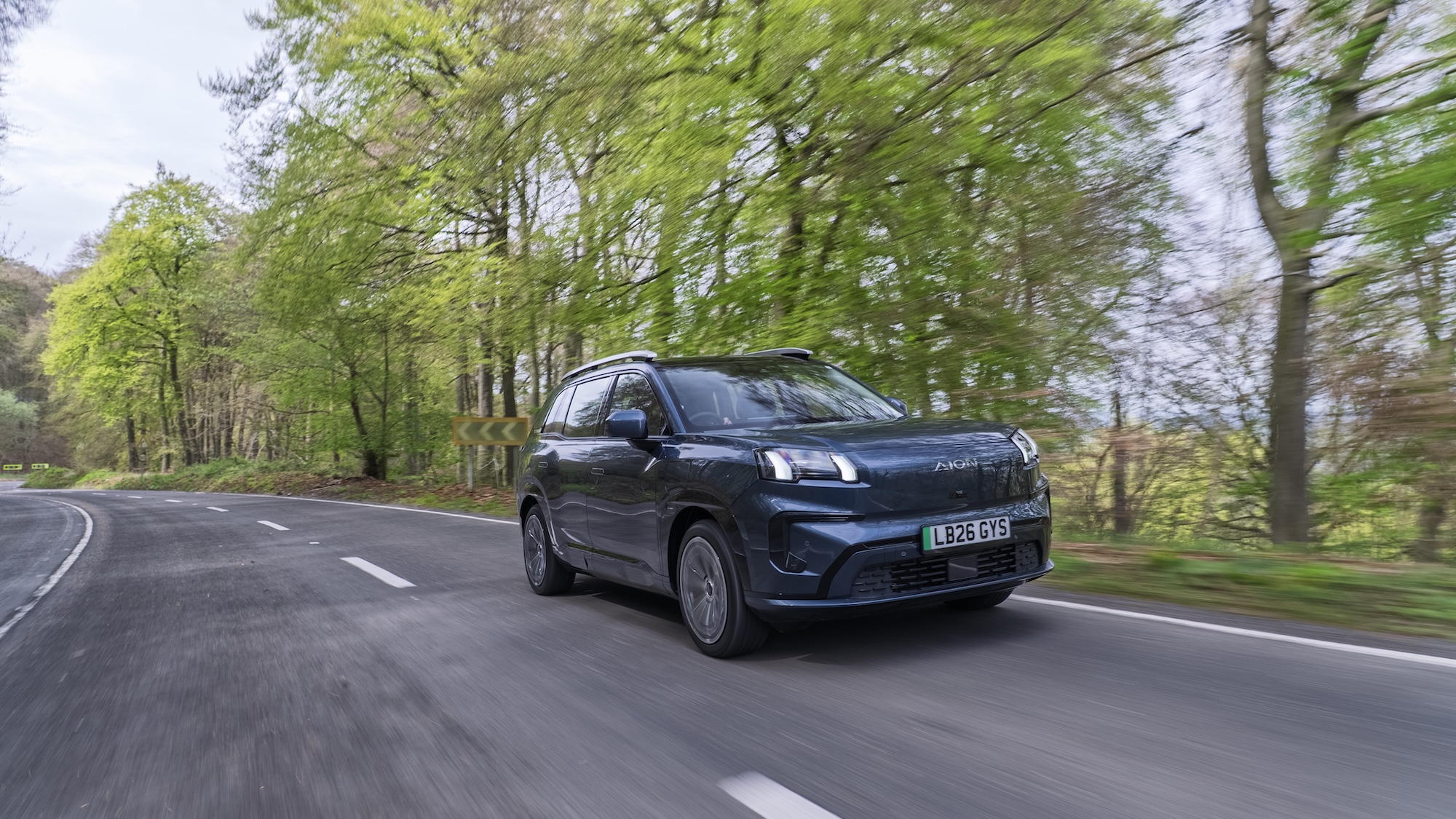
2026 Aion V electric SUV front three-quarter view
⚡ Quick Verdict
The Aion V arrives as a serious contender in the electric SUV market with a clear brief: maximum value for families. It pairs genuine long-range capability and quick charging with a warranty package that nothing in the class can touch. The result is a deeply sensible choice. Its on-road dynamics don’t quite match the polish of class leaders, mind you, but that’s a trade-off many buyers will happily accept.
## Introduction
✓ The Good
- +Industry-leading 8-year warranty, servicing, and roadside package
- +Generous standard equipment including heated/ventilated seats and heat pump
- +Exceptional rear passenger space and boot practicality
- +Strong real-world range and rapid charging capability
- +Comfortable, quiet ride for daily commuting and motorway cruising
✗ The Trade-offs
- −Underdamped body control and vague steering on twisting roads
- −Interior material quality, while good, trails some European rivals
- −No front trunk (frunk) for cable storage
- −Brand awareness in the UK is currently non-existent
- −ADiGO infotainment software has a slight learning curve
📑 In This Review
- Introduction
- Design and Exterior
- Interior, Tech and Practicality
- Performance and Driving
- Range, Efficiency and Charging
- How the Aion V Compares to Rivals
- Aion V vs BYD Atto 3: Which Is Better?
- [CALLOUT-WHICH-ONE-BETTER]
- [/CALLOUT-WHICH-ONE-BETTER]
- Safety and Warranty
- Who Should Buy the Aion V?
- Verdict
- Frequently Asked Questions
The Aion V arrives as a serious contender in the electric SUV market with a clear brief: maximum value for families. It pairs genuine long-range capability and quick charging with a warranty package that nothing in the class can touch. The result is a deeply sensible choice. Its on-road dynamics don’t quite match the polish of class leaders, mind you, but that’s a trade-off many buyers will happily accept.
Introduction
The electric vehicle market in the United Kingdom has moved well beyond Tesla and the traditional European and Korean players. A fresh wave of competent, keenly priced models from China is now landing on our shores, and the 2026 Aion V is one of the most convincing entries yet. Built by GAC Aion, a dedicated EV subsidiary of Chinese automotive giant GAC Group, the V is a mid-size, five-seat electric SUV launching in the UK this spring at £36,450. It enters a segment packed with alternatives, but it brings something no rival can match: the "Great 8" warranty promise.
During our first drive of the Aion V in the UK, we wanted to find out whether this newcomer could back up its bold warranty claims with genuine substance. For the modern family buyer, the decision involves more than just range and price. It’s about long-term peace of mind, everyday practicality, and what it actually costs to own the thing over several years. The Aion V aims to tick every box: 317 miles of WLTP range, a spacious cabin, and a guarantee that both the car and its battery will be looked after for the better part of a decade. Our early impressions suggest GAC Aion is playing a clever long game.
The question hanging over the Aion V is not whether it’s a good car, first impressions confirm it is, but whether it’s good enough to lure buyers away from more familiar names. Does its on-road character justify the hype generated by its spec sheet? Can a brand with zero UK heritage make an impact on value alone? We spent several days with the V to find out.
Design and Exterior
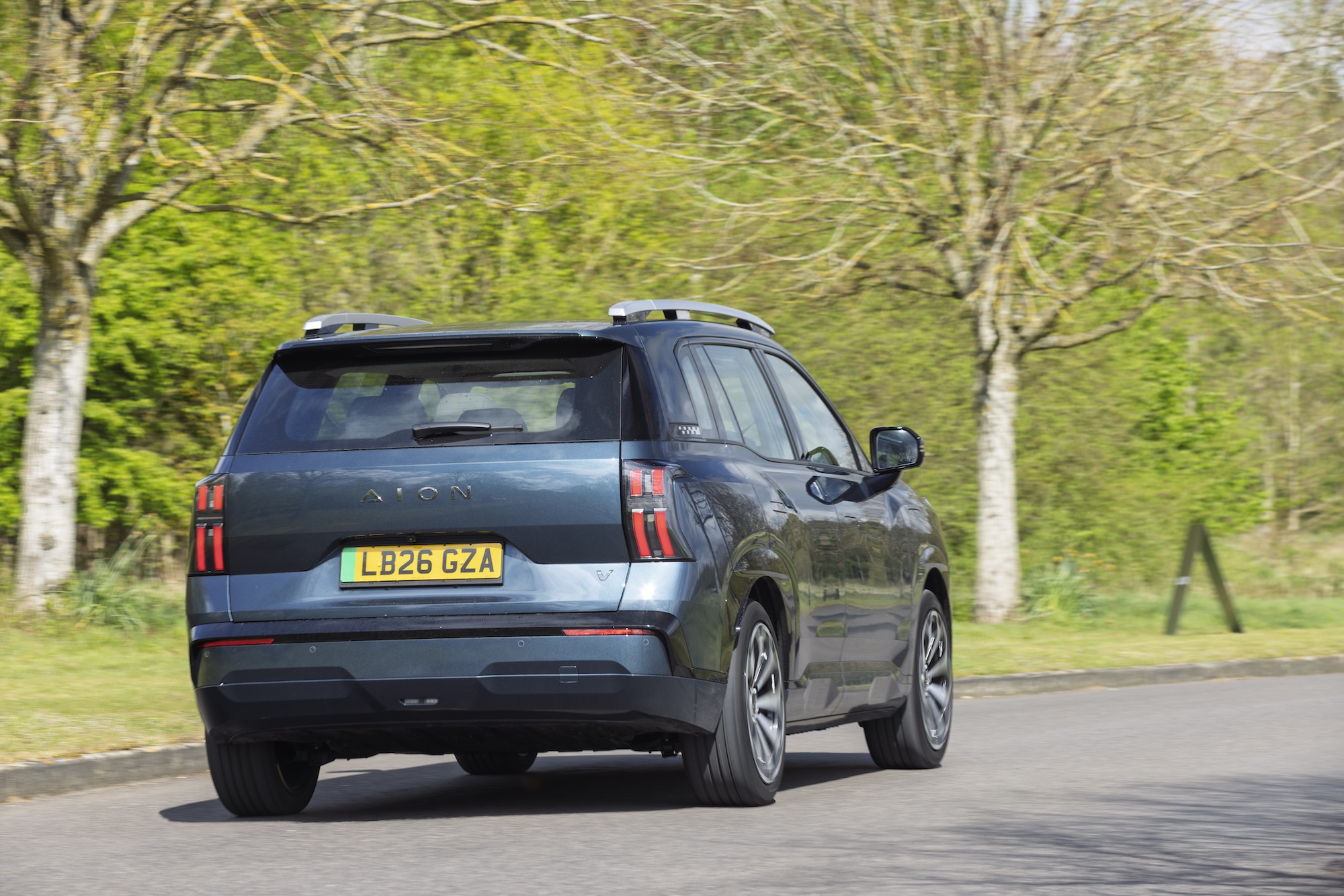
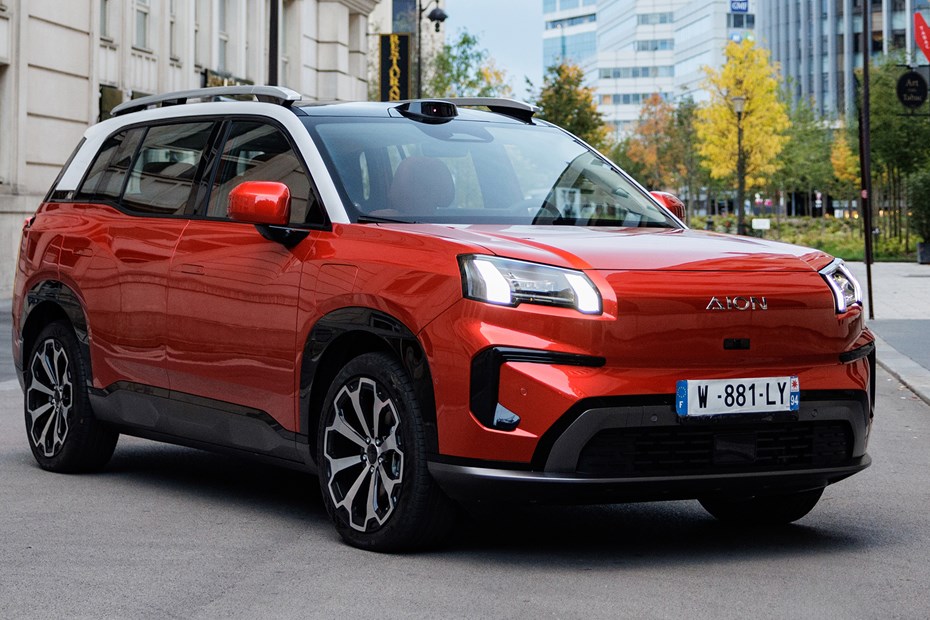
The Aion V takes a clean, contemporary SUV shape that sidesteps the aggressive futurism you’ll find on some rivals. It’s more approachable, almost friendly in its aesthetic. Proportions are well-judged, too. It doesn’t look awkwardly tall or overly coupe-like, presenting a balanced stance that should age well. Up front, a sleek closed-off grille sits between sharp full-LED headlights, giving it a clear identity without being polarising.
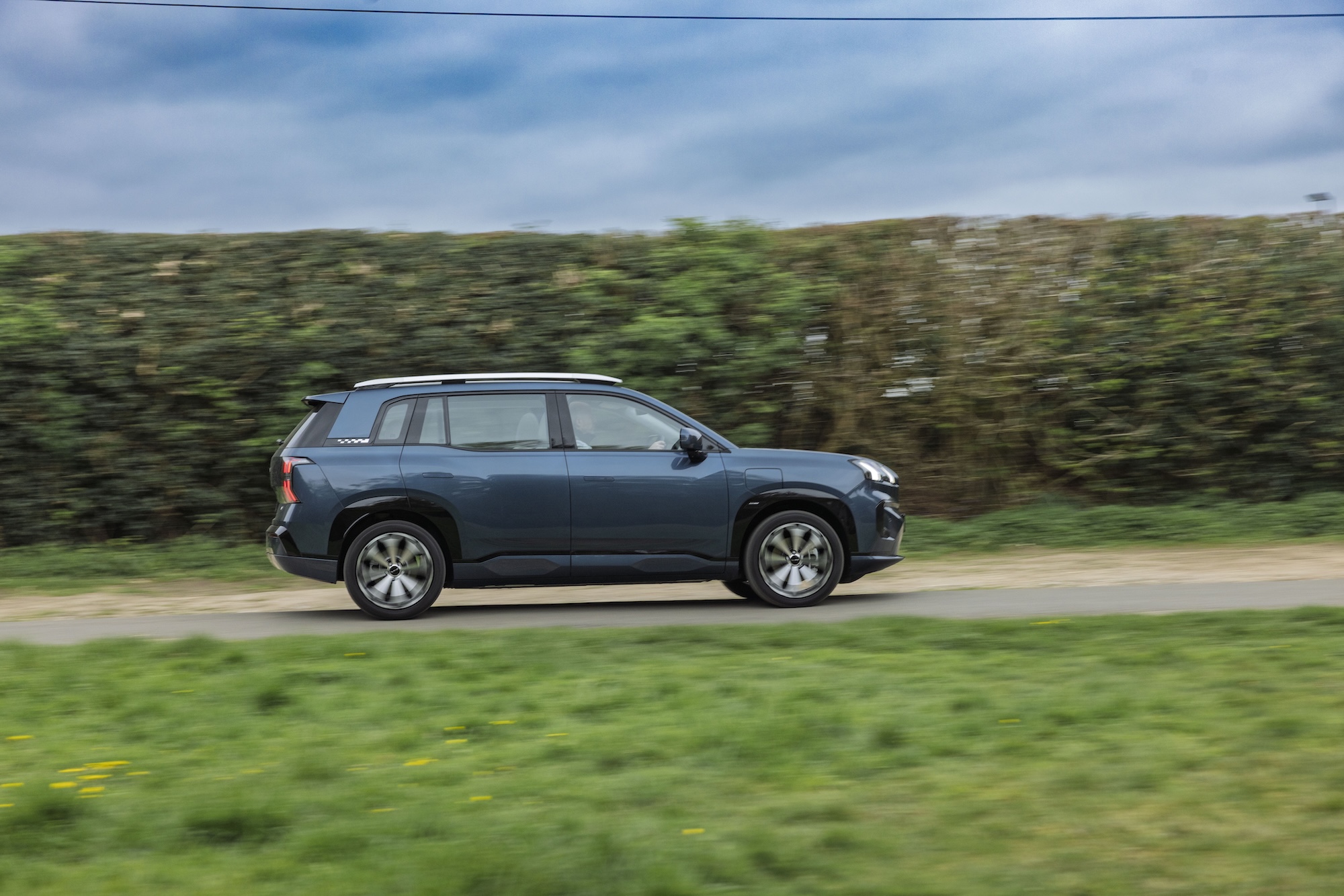
In profile, a rising window line and subtle creases along the doors catch the light rather well. The 19-inch alloys on our test car filled the arches adequately, though the overall look is more smart family transport than sporty crossover. It’s a handsome vehicle that blends into traffic without shouting, which should work nicely for its target buyers. Visibility from the driver’s seat is excellent, with slim A-pillars and a low window line making it easy to place on the road and in tight car parks. The near-90-degree opening of the rear doors is a practical touch that immediately impresses when you’re loading children or bulky items.
Interior, Tech and Practicality
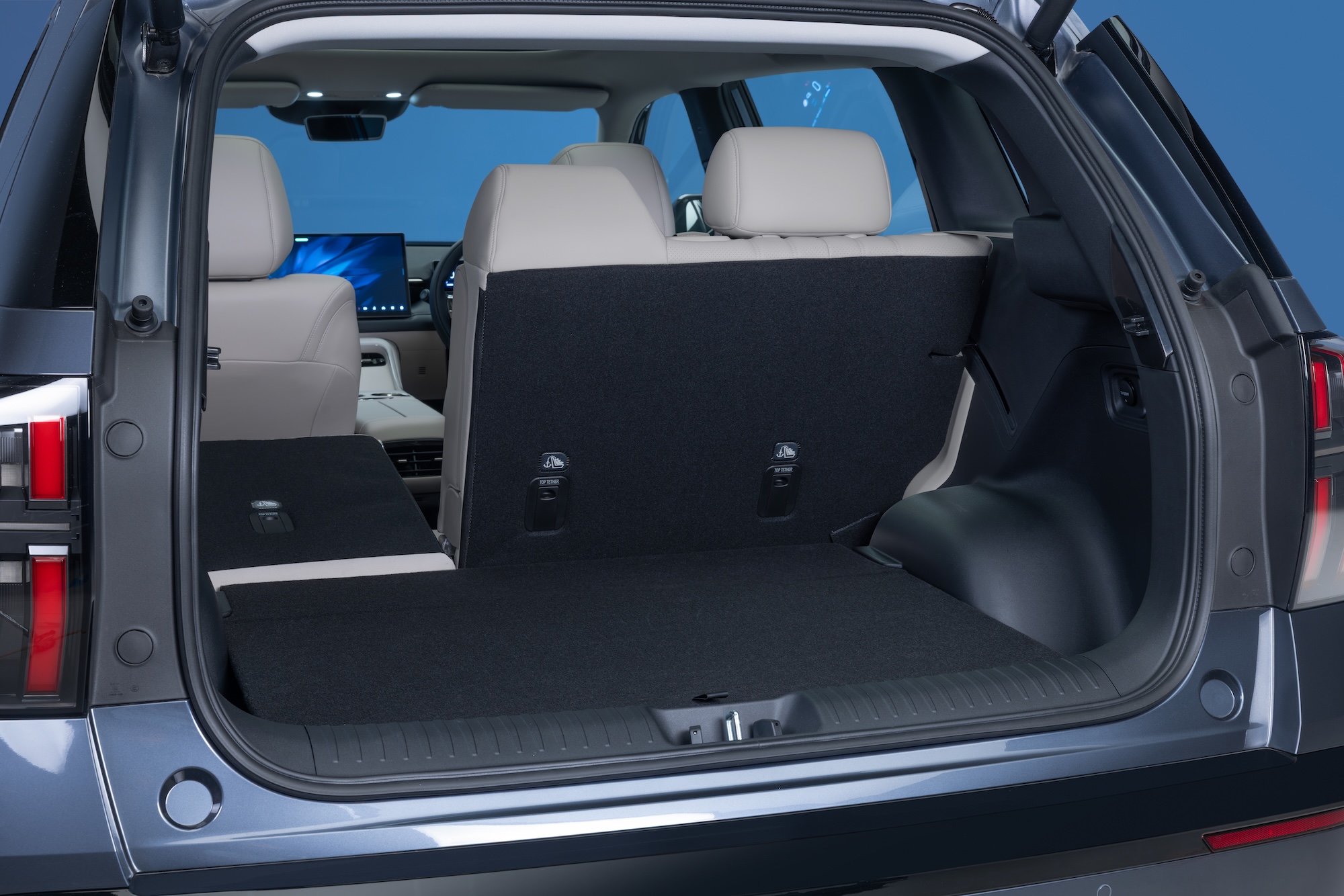
Step inside the Aion V and the first thing that strikes you is space. The cabin feels airy, helped along by the standard panoramic sunroof, and the rear legroom is nothing short of extraordinary. We sat over-six-foot passengers behind a similarly tall driver and there was still room to spare. Descriptions like "limo-like" are entirely justified. The rear seats are supportive and offer a useful recline function via silver levers on the side, though they don’t slide fore and aft. Boot space is a healthy 427 litres with the seats up, expanding to 1,638 litres when folded. A clever three-level boot floor adds versatility, but there’s no front trunk; instead, under-floor storage at the rear is designated for charging cables.
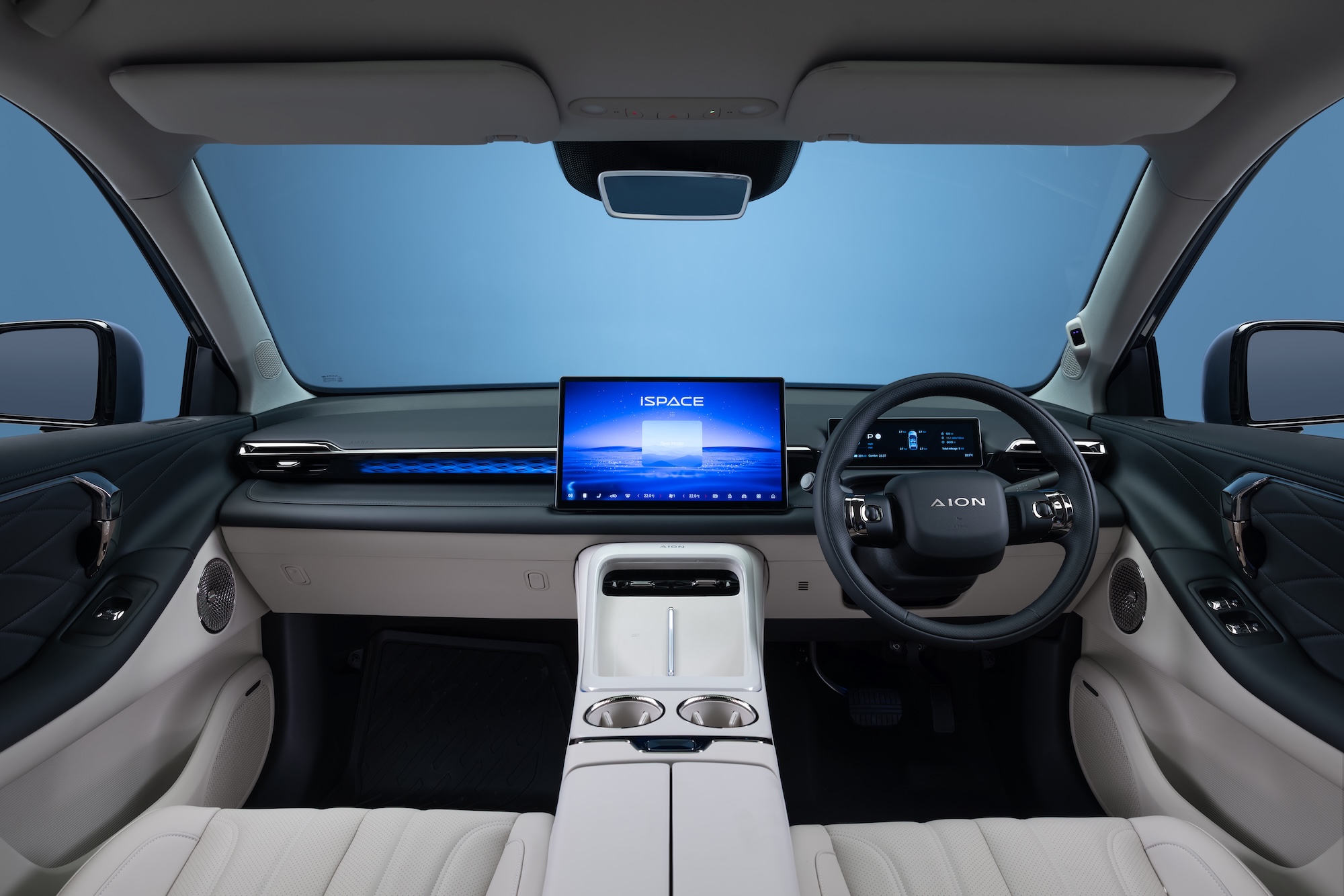
The centrepiece of the dashboard is a 14.6-inch touchscreen running GAC’s ADiGO infotainment software, powered by a Qualcomm Snapdragon SA8155P processor. In our testing the system proved generally responsive with sharp graphics. The software does present a steep learning curve, though. Menus are nested with a certain logic but require familiarisation. It’s a system you grow into rather than one you gel with instantly. Climate controls are thankfully managed by dedicated physical buttons below the screen, a welcome concession to usability. Material quality is competent, with soft-touch plastics on the dash and doors, but it doesn’t quite match the tactile richness you’ll find in the best European or even Korean alternatives. The Premium Pack brings a standout feature: the 6.6-litre "CoolHot Box" centre console that can chill to -15°C or heat to 50°C. During our time with the car it proved a genuine novelty, keeping drinks cold on a long motorway run. Standard kit is generous, covering dual-zone climate, heated and ventilated front seats, heated rear seats, plus a nine-speaker stereo.
Performance and Driving
The Aion V’s powertrain is straightforward and effective. A single 150 kW (204 bhp) electric motor drives the front wheels, producing 240 Nm of torque. That gives a 0-62 mph time of 7.9 seconds, brisk enough for merging and overtaking without being exhilarating. Performance is perfectly adequate for its role as family conveyance. Power delivery is smooth and linear, and the car feels willing enough in town and on dual carriageways. It’s not a hot SUV, and it doesn’t pretend to be. What it does offer is comfort.
The overriding dynamic character is one of comfort and ease. The steering is light and makes low-speed manoeuvring a doddle, but it offers little feedback or connection to the front wheels. We found it a bit lifeless on a winding B-road, lacking the precise weighting that encourages spirited driving. Ride quality, however, is a strong point. Over urban imperfections and at a steady motorway cruise it feels settled and composed, soaking up bumps with quiet competence. Where the chassis shows its limits is on more challenging, undulating roads. Body control gets a bit floaty and underdamped, with some secondary float over crests and through quicker direction changes. It’s never unsettling, but it lacks the tied-down, confident feel of a Niro EV or EX30. For the bulk of real-world driving, though, school runs, motorway commutes, and family holidays, the Aion V’s calm and comfortable manner is a genuine asset.
Range, Efficiency and Charging
Underpinning the Aion V is a 75.3 kWh lithium iron phosphate (LFP) battery pack, chosen for its longevity and safety characteristics. The official WLTP range is 317 miles, placing it near the top of the class at this price point. In our mixed testing, covering everything from urban crawling to motorway cruising, the car consistently returned 3.5 mi/kWh. That translates to a real-world range of approximately 260 miles, a highly usable figure for most families. The standard fitment of a heat pump is a significant boon for winter efficiency, helping to preserve range when the temperature drops.
Charging credentials are equally strong. The Aion V accepts DC rapid charging at up to 180 kW peak, allowing a 10-80% top-up in just 24 minutes. A more typical 30-80% session takes around 18 minutes, ideal for a quick stop on a long journey. For home charging, the 11 kW onboard AC charger will refill the battery from empty in approximately 8.5 hours on a compatible wallbox. The inclusion of vehicle-to-load (V2L) functionality as standard is a superb practical touch, letting the car power external appliances via an adapter.
How the Aion V Compares to Rivals
The mid-size electric SUV market is fiercely competitive. The Aion V’s value proposition is strong, but it faces stiff competition from both established players and fellow Chinese newcomers. Its blend of range, warranty, and standard equipment is compelling, yet rivals often counter with sharper dynamic polish, stronger brand cachet, or keen pricing of their own. Here’s how the Aion V stacks up on paper.
| Vehicle | Price | Battery | WLTP Range | Power | 0-62 | Peak DC Charge | Warranty |
|---|---|---|---|---|---|---|---|
| Aion V | £36,450 | 75.3 kWh | 317 mi | 204 bhp | 7.9 s | 180 kW | 8 yr / 100k mi |
| BYD Atto 3 | £38,990 | 60.5 kWh | 260 mi | 204 bhp | 7.3 s | 88 kW | 6 yr / 93k mi |
| Kia Niro EV | £37,295 | 64.8 kWh | 285 mi | 201 bhp | 7.8 s | ~85 kW | 7 yr / 100k mi |
| MG ZS EV LR | £32,495 | 72.6 kWh | 273 mi | 154 bhp | 8.0 s | ~92 kW | 7 yr / 80k mi |
| Volvo EX30 SMER | £37,895 | 69 kWh | 295 mi | 268 bhp | 5.3 s | 153 kW | 5 yr / 90k mi |
Aion V vs BYD Atto 3: Which Is Better?
This is the head-to-head many buyers will be considering. Both are Chinese-built electric SUVs aiming squarely at the heart of the market. The Aion V enters the fray with a clear numerical advantage. Priced from £36,450, it undercuts the Atto 3 by over £2,500 while packing a significantly larger 75.3 kWh battery against the BYD’s 60.5 kWh pack. That translates directly to a superior WLTP range of 317 miles versus the Atto 3’s 260 miles, a substantial 57-mile advantage.
The performance story is mixed. Both produce identical 204 bhp, but the lighter BYD edges the sprint to 62 mph by 0.6 seconds (7.3s vs 7.9s). Where the Aion V pulls decisively ahead is charging. Its 180 kW peak DC rate leaves the Atto 3’s 88 kW in the dust, managing a 10-80% charge in 24 minutes versus the BYD’s lengthy 36 minutes. On a long trip, this difference changes everything.
Inside, both offer tech-heavy cabins with large central screens. The Atto 3’s party piece is its unique guitar-string-inspired door trim and a rotating 12.8-inch display, which some may find gimmicky but others love. The Aion V counters with a larger, fixed 14.6-inch screen, more conventional but effective controls, and the option of the rather brilliant CoolHot Box fridge. Rear space is excellent in both, but the Aion V’s feels marginally more generous.
The warranty packages tell very different stories. BYD offers a competitive 6-year vehicle and 8-year battery warranty. The Aion V’s "Great 8" package sits in a different league: 8 years/100,000 miles on the vehicle, 8 years/125,000 miles on the battery, plus 8 years of servicing, MOT testing, and AA roadside assistance. All of it’s transferable to subsequent owners. For a buyer prioritising long-term cost of ownership and peace of mind, this is a powerful argument.
On the road, the BYD Atto 3 arguably has a more characterful, if slightly busier, ride and marginally more direct steering. The Aion V, as noted, prioritises comfort over engagement. Both are competent. They simply deliver that competence in different ways.
[CALLOUT-WHICH-ONE-BETTER]
Buy the Aion V if: You want the longest range, the fastest charging, and a warranty package that nothing in this segment can touch for the money. Buy the BYD Atto 3 if: You prefer a more established EV brand with a growing dealer network and a cabin that has more quirky, design-led flair. Our pick: For the rational, family-focused buyer, the Aion V’s combination of range, charging speed, and that phenomenal warranty makes it the smarter overall package.
[/CALLOUT-WHICH-ONE-BETTER]
Safety and Warranty
The Aion V has already proven its safety credentials, earning a full five-star rating from Euro NCAP in September 2025. That provides the baseline reassurance a family vehicle needs. It’s complemented by a full suite of Advanced Driver Assistance Systems (ADAS): Autonomous Emergency Braking (AEB), lane-keep assist, adaptive cruise control, blind-spot monitoring, and a 360-degree surround-view camera. In our experience, these systems operated unobtrusively and effectively.
The crown jewel of the Aion V’s proposition, though, is the "Great 8" warranty package. This isn’t merely a standard warranty. It’s a full ownership care programme covering the vehicle for 8 years or 100,000 miles and the battery for 8 years or 125,000 miles. More remarkably, it includes 8 years of scheduled servicing, 8 years of MOT testing, and 8 years of roadside assistance provided by the AA. Crucially, all these benefits are tied to the car, not the owner, and are fully transferable upon sale. That drastically reduces long-term ownership risk and strengthens the car’s residual value, making it a seriously compelling financial package.
Who Should Buy the Aion V?
The ideal Aion V buyer is a pragmatic family motorist for whom total cost of ownership over a lengthy period is a primary concern. This is a car for someone who wants to switch to electric with minimal risk, who needs ample space for children, buggies, and shopping, and who values a long list of standard comfort features. That combination of generous range, rapid charging, and a warranty nobody else can match will resonate with anyone who’s been stung by unexpected repair bills on an older vehicle.
Conversely, if your driving is predominantly short urban sprints and you rarely undertake long trips, the Aion V’s charging speed advantage may not matter much. Drivers who prioritise sharp handling and a sporty drive should look elsewhere. Cars like the Volvo EX30 or the Kia Niro EV offer a more engaging experience behind the wheel. But for the core family use case, the Aion V makes a strong and logical argument for itself.
⚡ Our Verdict
Final Take
The 2026 Aion V is a deeply impressive and strategically clever entrant into the UK market. It doesn’t try to be the sportiest or the most luxurious SUV. Instead, it aims to be the most rational, value-packed, and worry-free ownership proposition in its class, and on that front it succeeds handsomely. The core electric performance is solid, the practicality is superb, and the warranty package stands alone. We rate the Aion V 4.2 out of 5. It loses marks for a driving experience that prioritises comfort over engagement, resulting in a somewhat vague and underdamped feel on challenging roads, and for an infotainment system that requires some acclimatisation. But for the family buyer weighing up range, space, and long-term security, these are relatively minor quibbles. With its competitive pricing, strong range, and a warranty that rewrites the rules, the Aion V doesn’t just join the electric SUV conversation. It immediately becomes one of its most compelling voices. It’s the sensible choice that also happens to be a shrewd one.
Frequently Asked Questions
How far can the Aion V actually go on a a full charge?
In our real-world testing, the Aion V returned an average efficiency of 3.5 mi/kWh. With its 75.3 kWh usable battery capacity, that equates to a real-world range of roughly 255 to 260 miles. That’s more than enough for most daily routines and will comfortably cover a 200-mile trip with range to spare.
How quickly does the Aion V charge on a public DC rapid?
The Aion V supports DC rapid charging at a peak rate of 180 kW. That allows a 10% to 80% charge in approximately 24 minutes. A more typical 30% to 80% top-up, ideal for a quick stop on a long journey, takes around 18 minutes at a compatible charger.
What does the Aion "Great 8" package actually cover?
The "Great 8" is an ownership care package that includes: 8 years or 100,000 miles vehicle warranty; 8 years or 125,000 miles battery warranty; 8 years of scheduled servicing; 8 years of MOT testing; and 8 years of roadside assistance delivered by the AA. All these benefits are tied to the car itself and are fully transferable to subsequent owners.
Is the Aion V safe for families?
Yes. The Aion V achieved a maximum five-star safety rating in its Euro NCAP assessment in September 2025. It comes as standard with a full suite of Advanced Driver Assistance Systems, including Autonomous Emergency Braking, lane-keep assist, and a 360-degree camera, all designed to help prevent accidents before they happen.
How does the Aion V compare to the BYD Atto 3?
On paper, the Aion V is the more compelling package. It’s cheaper to buy, offers significantly more range (317 vs 260 miles WLTP), and charges much faster (180 kW vs 88 kW). Its "Great 8" warranty package also far exceeds the BYD’s coverage. The BYD counters with a slightly quicker 0-62 mph time and a more distinctive interior design.
Does the Aion V have a heat pump for winter range?
Yes, a heat pump is fitted as standard to every Aion V in the UK. That’s a significant advantage. Heat pumps are far more efficient than traditional resistive heaters for warming the cabin, which helps preserve driving range during the colder months.
What is the boot space of the Aion V?
The Aion V offers a boot capacity of 427 litres with the rear seats in place. Fold the 60:40 split rear seats down and that expands to a cavernous 1,638 litres. The boot also features a practical three-level adjustable floor for added versatility.
