

2026 BYD Atto 3 Review: Best-Value Family EV Under $50K?
The best-value electric SUV for Australian families in 2026
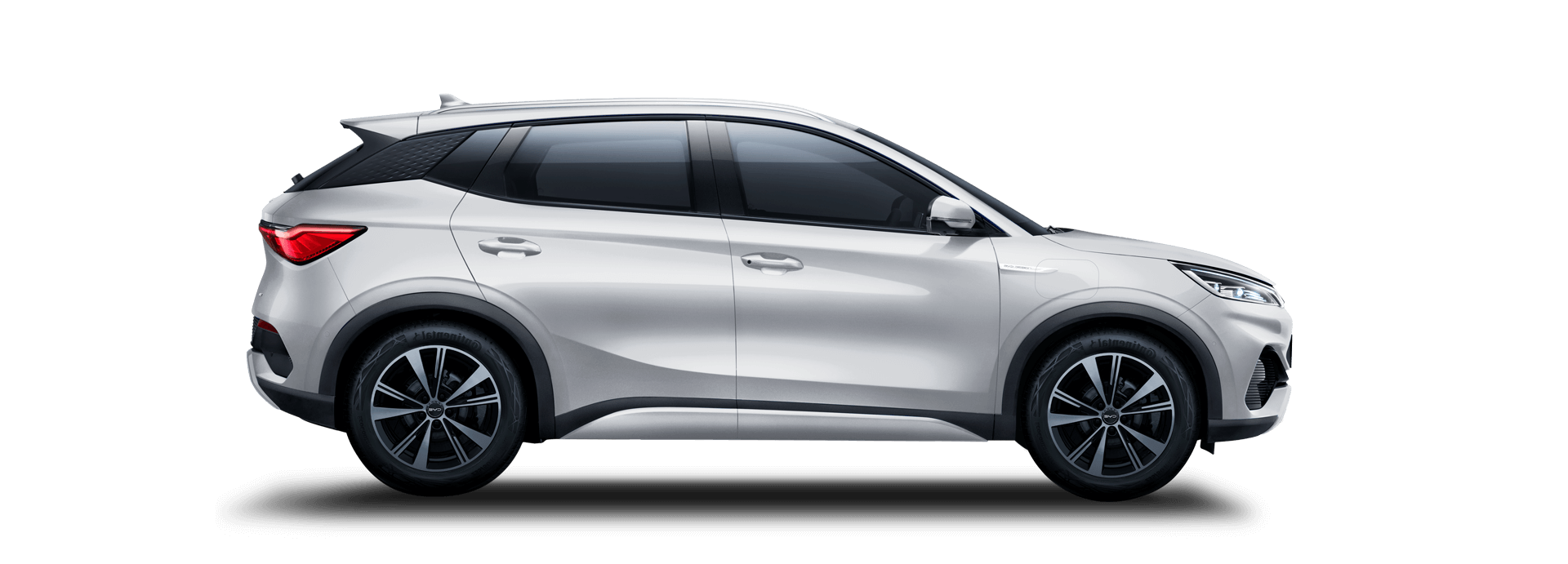
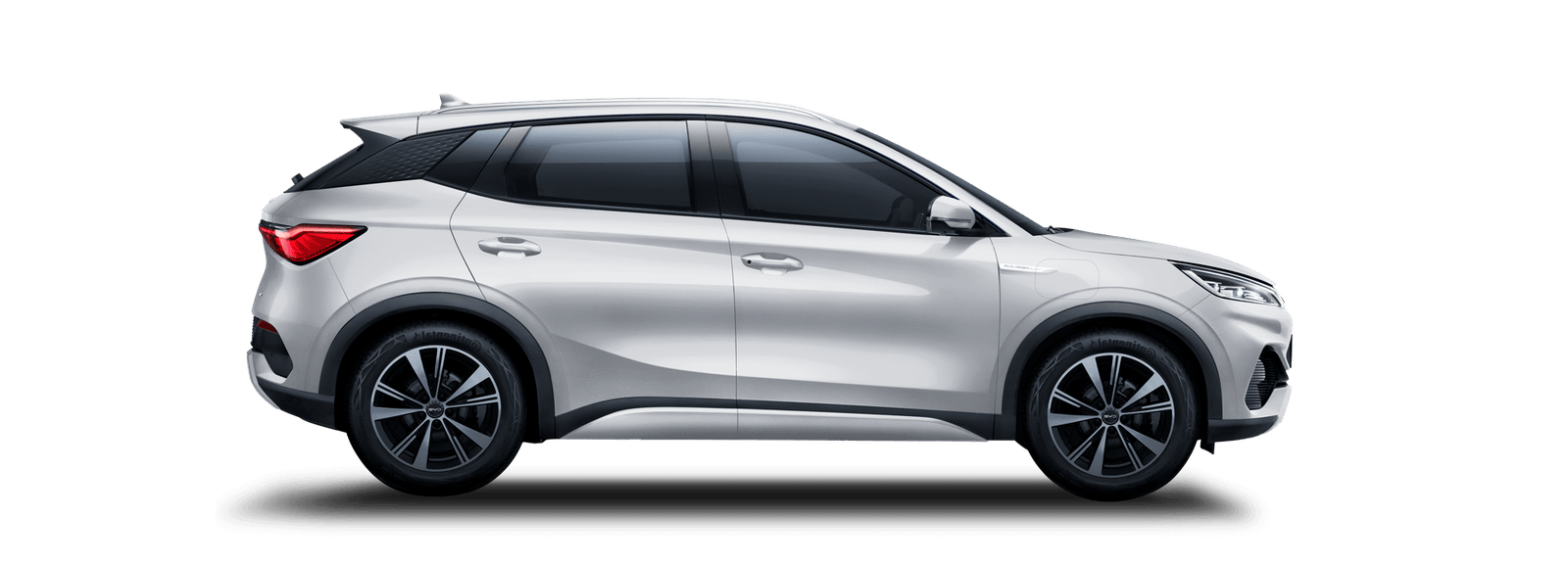
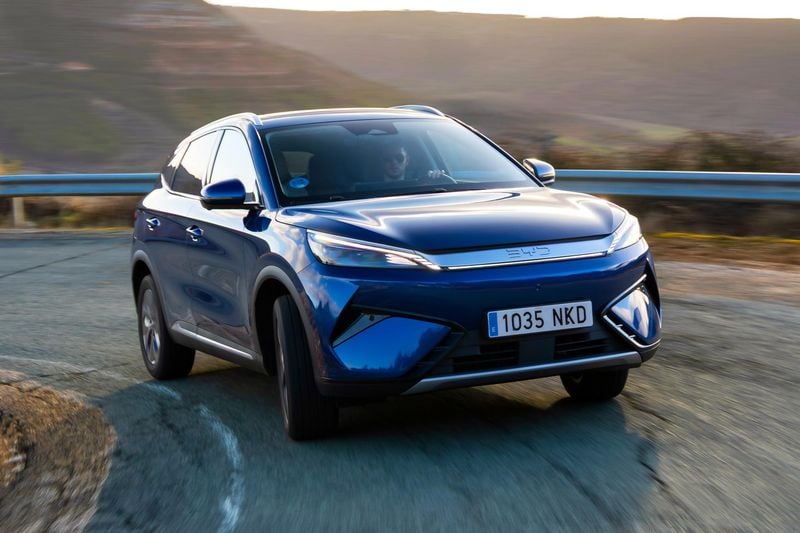
2026 BYD Atto 3 electric SUV in studio – clean three-quarter press shot
Price
~$48,174
0-100 km/h
7.3
Battery (kWh)
60.5
Power (kW)
150
⚡ Quick Verdict
The 2026 BYD Atto 3 Premium will set you back roughly $48,174 drive-away in NSW, and for that money you’re getting 420km of WLTP range, a cabin packed with gear, and one of the best warranty packages going. Yes, the 88kW DC charging is sluggish compared to newer 800-volt rivals, and the low-speed brake feel takes getting used to. But for most families, neither of those is a reason to walk away. If you’re after an electric SUV under $50k that just works, the Atto 3 Premium is genuinely hard to beat right now.
## Introduction
✓ The Good
- +Starting under $40k, it’s the most affordable name-brand EV crossover on sale in Australia
- +Premium variant’s 420km WLTP range is genuinely usable for family life — school runs, weekend trips, even the occasional regional drive
- +15.6-inch rotating touchscreen with wireless Apple CarPlay and Android Auto is one of the best infotainment setups at this price
- +Vehicle-to-load (V2L) capability turns the Atto 3 into a portable power source for camping, events, or blackouts
- +6-year vehicle warranty and 8-year battery warranty — both stronger than Tesla’s standard coverage
- +Comfortable ride and light steering make it an effortless daily driver around town
✗ The Trade-offs
- −Brake pedal feel is grabby at low speeds — the regenerative-to-friction handoff takes some acclimatising
- −88kW peak DC charging on the Premium is behind the curve for 2026; long road trips involve longer stops
- −Rear headroom is tight for adults over six feet, especially with the panoramic sunroof
- −Road and tyre noise is noticeable on coarse-chip Australian highway surfaces
📑 In This Review
- Introduction
- Pricing and Variants
- Performance and Drive Impressions
- Range, Battery and Charging
- Interior, Tech and Comfort
- Practicality and Family Use
- At a Glance: How It Stacks Up
- BYD Atto 3 vs Tesla Model Y: Which Is Better?
- Safety and Warranty
- Buy It If / Skip It If
- Buy it if:
- Skip it if:
- Verdict
- 4.1/5
- Frequently Asked Questions
The 2026 BYD Atto 3 Premium will set you back roughly $48,174 drive-away in NSW, and for that money you’re getting 420km of WLTP range, a cabin packed with gear, and one of the best warranty packages going. Yes, the 88kW DC charging is sluggish compared to newer 800-volt rivals, and the low-speed brake feel takes getting used to. But for most families, neither of those is a reason to walk away. If you’re after an electric SUV under $50k that just works, the Atto 3 Premium is genuinely hard to beat right now.
Introduction
BYD’s presence in Australia has shifted from something worth noting to something you can’t ignore. The Chinese brand has been one of the top-selling EV manufacturers in the country through 2025 and into 2026, and the Atto 3 has led that charge from the beginning. It was the first BYD to land on our shores, and years later it’s still the volume seller in the lineup. That shouldn’t surprise anyone. When you’re moving from petrol to electric and you want something affordable, practical, and fuss-free, the Atto 3 has become the default starting point.
The sub-$50,000 electric crossover segment is packed. The MG ZS EV, the incoming Kia EV3, the GWM Ora, and a growing roster of Chinese brands are all chasing the same buyer — a family that wants to go electric without blowing the budget. The 2026 Atto 3 isn’t a radical reinvention of what came before. It’s a polished version of a formula that’s already proven itself in showrooms across the country.
So what’s actually changed for 2026? BYD has tightened up pricing, added more standard kit across the range, and kept refining the software and driving calibration since launch. The fundamentals — LFP Blade battery, tech-heavy cabin, serious value — are exactly the same. The incoming Atto 3 Evo promises to fix our main complaints with quicker charging and more punch, but that’s still a few months away. If you want an electric SUV today, the current car is the one to look at.
Pricing and Variants
The 2026 BYD Atto 3 comes in two flavours. The Essential starts at $39,990 before on-road costs, while the Premium — the one we’d point most buyers towards — is $44,990 before on-road costs. Tick the Premium in New South Wales and you’re looking at approximately $48,174 drive-away with standard options. Both variants sit comfortably under the $50,000 luxury car tax threshold for fuel-efficient vehicles, which unlocks useful tax benefits if you’re eligible.
Stack the pricing against the competition and it’s a strong hand. The MG ZS EV Long Range lands at roughly $44,990 drive-away with a similar battery but less power and a less polished drive. Kia’s incoming EV3 Air is expected to come in around $48,990 drive-away. The Atto 3 Premium undercuts both and gives you a gutsier drivetrain plus a cabin that feels a class above inside.
There’s also the Atto 3 Evo on the horizon — expected at around $46,000 before on-road costs. That car runs an 800-volt electrical architecture, offers all-wheel drive as an option, packs a dual-motor setup with up to 330kW, pairs a 74.8kWh battery to 510km WLTP range, and — critically — charges at up to 220kW DC. If you can hold off, the Evo directly addresses the charging speed issue we have with the current car. If you need an EV now, the Atto 3 on sale today remains a seriously good deal.

Performance and Drive Impressions
The Atto 3 uses a single front-mounted electric motor. In Premium guise it makes 150kW and 310Nm, while the Essential puts out a touch less. The sprint to 100 km/h takes 7.3 seconds in the Premium and 7.9 in the base car. Those numbers won’t pin you to your seat, but they’re right in the sweet spot for a family crossover — plenty for confident overtaking on a country road or easy motorway merging.
We spent time with the Atto 3 across city streets, suburban arterials, and open highways, and it came away a genuinely pleasant thing to drive. Around town the suspension soaks up speed bumps, potholes, and rough surfaces without complaint. The steering is light and easy, which makes parking and tight manoeuvring simple work. On the highway it tracks straight and feels composed at 110 km/h, needing minimal steering input to hold its line.
There are a couple of real weaknesses, though. The brake pedal at low speed is our biggest gripe. The switch from regenerative to mechanical braking is grabby and sudden, especially when you’re crawling in traffic or easing up to a give-way sign. You do adapt over a week, but it never quite feels natural. Road and tyre noise also creeps into the cabin more than expected on coarse-chip bitumen at highway speeds — the standard Giti Eco tyres probably share some of the blame. It’s not dealbreaker territory, but it’s a step behind the best in class for refinement at speed, including the Tesla Model Y.
Range, Battery and Charging
Range and battery are where the Atto 3 splits into two quite different propositions. The Essential runs a 49.9kWh lithium iron phosphate (LFP) Blade battery with a WLTP-rated 345km of range. In the real world, with mixed driving and the air conditioning on, you’ll see roughly 260–280km. That covers a daily commute comfortably but gets tight for weekend trips if you’re not planning your charging stops.
The Premium is the one we’d steer you towards, and it’s the 60.5kWh Blade battery that seals the deal. BYD rates it at 420km WLTP, and during our testing across a range of Australian driving conditions we saw consumption of around 17–18 kWh/100km — translating to a genuinely usable real-world range of about 340–360km. Run it at highway speed with the air conditioning going and you’re closer to 300km. For the vast majority of Australian families who plug in at home overnight and cover less than 80km a day, that’s more than enough.
DC fast charging tops out at 88kW for the Premium and 70kW for the Essential. Put a number on it: a 30–80% top-up takes around 29 minutes in the Premium and roughly 32 minutes in the Essential at a compatible charger. That’s adequate and in line with much of what rivals offer at this money, but it’s not leading the pack. If you’re someone who drives Sydney–Melbourne regularly with multiple charging stops, you’ll notice the shortfall compared to newer 800-volt setups. On the flip side, the LFP Blade battery chemistry brings outstanding thermal stability and inherent safety — BYD has never recorded a thermal runaway incident with its Blade cells — and it handles regular charging to 100% without the degradation worries that come with NMC packs.
Interior, Tech and Comfort
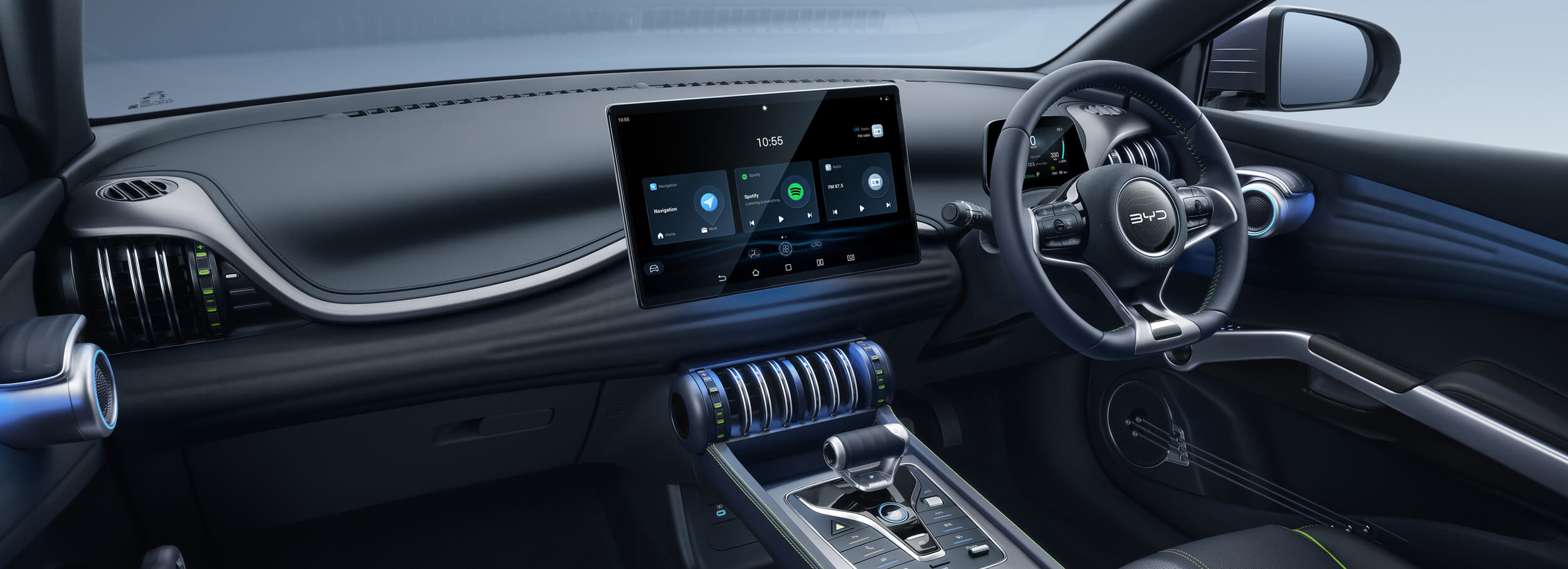
Climb inside and the first thing you’ll clock is the 15.6-inch rotating touchscreen — still a party trick that actually earns its keep. In portrait mode it’s perfect for maps and music; spin it to landscape for video or a wider camera feed. It’s responsive, sharp, and runs wireless Apple CarPlay and Android Auto without any hassle. The 5-inch instrument cluster ahead of the driver is compact but easy to read, delivering the key driving info cleanly.
BYD’s given the cabin real personality. The guitar-string door pulls are a love-them-or-hate-them touch that we found growing on us after a few days, and the configurable ambient lighting — across a full spectrum of colours — adds a premium feel at night. Standard kit includes seven airbags (including a centre front airbag), autonomous emergency braking, lane keep assist, blind spot monitoring, and adaptive cruise control on every variant.
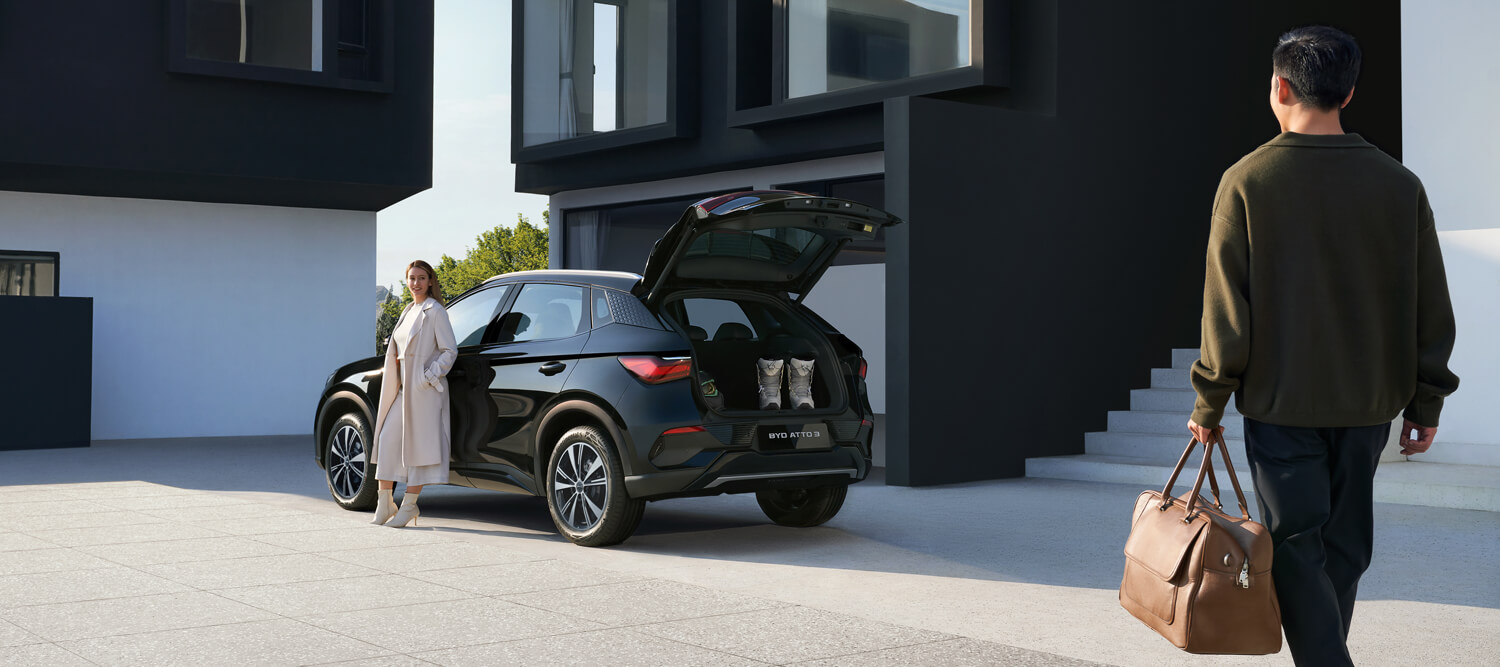
The Premium adds synthetic leather upholstery, heated and ventilated front seats with power adjustment, a wireless phone charger, and a panoramic glass roof that floods the cabin with natural light and makes the whole interior feel bigger. Boot space is 440 litres with the rear seats up and 1,340 litres with them folded — competitive for a compact SUV, if not the outright leader. The V2L capability, offering a 3.3kW outlet, is a feature we found genuinely handy. We used it to charge laptops and run a portable fridge over a weekend away and it worked without a hitch.
One packaging note: rear headroom gets tight for anyone over six feet, particularly with the panoramic sunroof. It’s fine for kids and average-height adults, but taller teenagers or grandparents might find themselves ducking on entry and brushing the headliner on longer drives.
.png)
Practicality and Family Use
For families, the Atto 3 nails the basics. The ISOFIX child seat anchors sit behind clearly marked flaps and are easy to reach, and the rear doors open wide enough that fitting a rear-facing infant seat doesn’t eat into front passenger legroom. The ride height is lower than many mid-size SUVs, which means kids can climb in and out on their own and loading heavy items like a stroller or a big shop doesn’t require back-breaking effort.
The boot handles a folded stroller and a week’s worth of groceries without fuss, and the flat-folding rear seats unlock a genuinely useful load space for hardware runs or weekend getaways. The 360-degree camera on the Premium makes squeezing into tight shopping-centre car parks surprisingly stress-free — it’s one of those features you don’t realise you need until you’ve lived with it. The base Essential gets rear parking sensors and a reversing camera, which does the job but doesn’t inspire the same confidence.
At a Glance: How It Stacks Up
| Spec | BYD Atto 3 Premium | Tesla Model Y RWD | MG ZS EV Long Range | Kia EV3 Air |
|---|---|---|---|---|
| Price (AUD, drive-away) | ~$48,174 | ~$72,000 | ~$44,990 | ~$48,990 |
| Battery (kWh) | 60.5 | 60 | 64 | 58.3 |
| Range (WLTP km) | 420 | 466 | 440 | 436 |
| 0-100 km/h (s) | 7.3 | 5.9 | 8.0 | 7.5 |
| Power (kW) | 150 | 220 | 130 | 150 |
| DC fast charge (kW) | 88 | 175 | 76 | 128 |
| Warranty (vehicle) | 6 yr / 150k km | 4 yr / 80k km | 7 yr / unlim | 7 yr / unlim |
| ANCAP | 5-star | 5-star | 5-star | 5-star |
Tesla Model Y RWD
Faster charging and bigger boot but $24k+ more.
MG ZS EV Long Range
Similar money with longer warranty but less polished cabin.
Kia EV3 Air
More refined interior and faster DC charging at a higher price.
The Atto 3 Premium punches well above its price in a segment that’s getting more competitive by the month. Here’s how it compares on paper against the key players Australian buyers are cross-shopping. BYD Atto 3 Premium MG ZS EV Long Range — — ~$48,174 ~$44,990 60.5 64 420 440 7.3 8.0 150 130 88 76 6 yr / 150k km 7 yr / unlim 5-star 5-star
BYD Atto 3 vs Tesla Model Y: Which Is Better?
This is the comparison that comes up every time someone’s weighing up an Atto 3. The Tesla Model Y is Australia’s best-selling electric vehicle, and there are solid reasons for that — strong range, punchy performance, a mature charging network, and serious brand pull. It also costs a whole lot more. Having driven both extensively on Australian roads, here’s how they stack up.
**Price.** The Atto 3 Premium at roughly $48,174 drive-away in NSW against the Model Y RWD’s approximately $72,000 is a gap of around $24,000. That’s not pocket change — it’s the kind of money that buys a home wallbox charger, a family holiday, and a year’s worth of rego. On price alone, the Atto 3 is playing a different game.
**Performance.** The Model Y RWD hits 100 km/h in 5.9 seconds. The Atto 3 Premium takes 7.3. That 1.4-second difference shows up when you want a burst of overtaking grunt — the Model Y feels noticeably more urgent. The Atto 3 is smooth and responsive, though, and for the stuff most of us actually do — school runs, commuting, sitting on cruise control at 110 — you won’t feel short-changed.
**Charging.** This is where the gap is widest. The Model Y RWD accepts up to 175kW DC; the Atto 3 Premium peaks at 88kW — less than half. At a highway fast-charger, the Model Y recovers range meaningfully quicker. If you charge at home every night, the difference barely registers. If you’re doing regular long-haul trips with multiple public charging stops, it matters a lot.
**Battery and range.** The Model Y uses a slightly smaller 60kWh battery but manages 466km WLTP against the Atto 3’s 420km — a sign of Tesla’s efficiency edge. The Atto 3’s LFP Blade battery is inherently more thermally stable and comes with a longer degradation warranty, but the Model Y gives you more usable range per charge. In practice, both comfortably cover 300–360km in real-world mixed driving.
**Interior and tech.** The Atto 3’s cabin has more personality and more kit — the rotating 15.6-inch screen, physical door handles, heated and ventilated seats, and panoramic roof make it feel special inside. The Model Y goes minimalist with a single 15-inch landscape display and almost no physical buttons. Both approaches work; it comes down to whether you want a conventional SUV interior or Tesla’s stripped-back philosophy. The Atto 3 also includes a centre front airbag, which the Model Y doesn’t have.
**On-road feel.** The Atto 3 rides more comfortably — its softer suspension copes better with rough Australian surfaces, and the light steering makes city driving easy. The Model Y is sportier, with tighter body control and more feedback through the wheel. Both are stable at highway speed, though the Model Y has a refinement advantage with less road and tyre noise filtering in. It’s a comfort-versus-engagement trade-off.
| Spec | BYD Atto 3 Premium | Tesla Model Y RWD |
|---|---|---|
| Price (AUD, drive-away) | ~$48,174 | ~$72,000 |
| Battery (kWh) | 60.5 | 60 |
| WLTP range (km) | 420 | 466 |
| 0–100 km/h (s) | 7.3 | 5.9 |
| Power (kW) | 150 | 220 |
| Torque (Nm) | 310 | 350 |
| DC charge peak (kW) | 88 | 175 |
| Warranty (vehicle) | 6 yr / 150k km | 4 yr / 80k km |
| Boot (litres) | 440 | 445 |
> **Buy the BYD Atto 3 Premium if…** you want the best-value electric SUV in Australia under $50k, you prioritise warranty coverage, and you don’t need ultra-fast DC charging for your daily routine. > > **Buy the Tesla Model Y if…** you regularly undertake long road trips with multiple fast-charging stops, you value strong resale, and you’re comfortable spending over $70k. > > **Our pick is the BYD Atto 3 Premium.** For the vast majority of Australian families — those who charge at home, drive under 100km a day, and want a comfortable, safe, well-equipped EV — it delivers everything the Model Y does at $24,000 less, with a longer warranty to boot. The Model Y is the better car for road-trip warriors and resale-focused buyers, but the Atto 3 is the smarter purchase for most.
Safety and Warranty
Both the Atto 3 and the Model Y carry a 5-star ANCAP safety rating, tested under the same 2023–2026 protocols. The Atto 3 scored 91 per cent for adult occupant protection and 84 per cent for child occupant protection, along with 69 per cent for vulnerable road users and 80 per cent for safety assist. Those are strong numbers, and on the road they translate to a full suite of active safety tech as standard — autonomous emergency braking, lane keep assist, blind spot monitoring, and adaptive cruise control across both variants.
Where BYD pulls ahead is warranty. You get a 6-year or 150,000km vehicle warranty and an 8-year battery warranty — both comfortably ahead of Tesla’s standard 4-year or 80,000km vehicle coverage. For families making their first jump into EV ownership, that extra peace of mind counts. The Atto 3 also comes with a centre front airbag as standard, adding another layer of protection in side-impact crashes — a feature the Model Y simply doesn’t offer.
Buy It If / Skip It If
Buy it if:
– You want a genuinely affordable EV crossover that doesn’t compromise on range, safety, or tech – You charge at home and rarely need public fast-charging for your daily driving routine – You value a long warranty and the proven thermal safety of BYD’s LFP Blade battery chemistry – You want Vehicle-to-Load capability for camping, tailgating, or emergency backup power
Skip it if:
– You regularly undertake road trips with multiple DC fast-charging stops and need 150kW-plus charging speeds – You’re taller than six feet and regularly carry rear-seat passengers of similar height — headroom is tight – You prioritise brand prestige, resale value, and the Supercharger network over outright value for money
⚡ Our Verdict
The best-value electric SUV for Australian families in 2026
The 2026 BYD Atto 3 won’t be the most thrilling electric SUV you can buy in Australia. It’s not the quickest, it doesn’t charge the fastest, and it won’t attract the same attention in a car park as a Tesla or a Polestar. But in the areas that count most for the average Australian family switching to electric — price, range, warranty, safety, and how easy it is to live with day to day — it’s an exceptionally well-rounded package. The Premium is the variant to pick. At roughly $48,174 drive-away in NSW, its 420km WLTP range, 15.6-inch rotating touchscreen with wireless phone mirroring, panoramic sunroof, ventilated seats, and V2L capability make it feel like a car that should carry a price tag $15,000 higher. The 88kW DC fast-charging cap and grabby low-speed brakes are real weaknesses, but they’re the kind of compromises that fade into the background when everything else works this well. For families hunting the best-value under-$50k EV in Australia in 2026, the Atto 3 Premium is our pick. It’s comfortable, safe, loaded with kit, and backed by one of the strongest warranty packages in the segment. The incoming Atto 3 Evo — with its 800-volt platform, up to 220kW DC charging, and available all-wheel drive — will be worth waiting for if charging speed and outright performance sit at the top of your priority list. But right now, today, the current Atto 3 Premium is the smartest electric SUV buy under $50,000.
4.1/5
Frequently Asked Questions
How much does the 2026 BYD Atto 3 cost in Australia?
The 2026 BYD Atto 3 starts at $39,990 before on-road costs for the Essential variant and $44,990 before on-road costs for the Premium. In New South Wales, the Premium works out to approximately $48,174 drive-away with standard options. Both variants sit comfortably under the $50,000 luxury car tax threshold for fuel-efficient vehicles, making them eligible for valuable tax concessions.
What is the real-world driving range of the BYD Atto 3?
The Atto 3 Essential has a 345km WLTP range with a real-world figure of approximately 260–280km in mixed driving. The Premium, with its larger 60.5kWh battery, is rated at 420km WLTP and delivered around 340–360km in our testing across a mix of urban, suburban, and highway conditions. Sustained highway driving with air conditioning active will reduce those figures to roughly 280–300km for the Premium.
How long does it take to fast-charge the BYD Atto 3?
The Premium’s 88kW peak DC fast-charging rate allows a 30–80% top-up in approximately 29 minutes at a compatible fast-charger. The Essential, with its 70kW peak, takes around 32 minutes for the same charge. Both models support 7kW AC home charging, with a full charge taking roughly 8–9 hours on a standard wallbox.
Is the BYD Atto 3 safer than the Tesla Model Y?
Both vehicles hold a 5-star ANCAP safety rating and come with a full suite of active safety tech. The Atto 3 scored 91 per cent for adult occupant protection against the Model Y’s comparable rating, and it includes a centre front airbag as standard. On the warranty front, BYD’s 6 years/150,000km vehicle coverage and 8-year battery warranty give it a clear edge over Tesla’s 4-year/80,000km vehicle warranty — meaningful reassurance for anyone buying their first EV.
Does the BYD Atto 3 qualify for the Australian EV instant asset write-off or FBT exemption?
Yes. Both the Essential and Premium variants fall below the luxury car tax threshold for fuel-efficient vehicles, making them eligible for the Fringe Benefits Tax (FBT) exemption for electric cars. Employees who salary-package an Atto 3 through their employer can access significant tax savings — potentially worth thousands of dollars a year. It’s worth chatting to your accountant or fleet provider to confirm whether you qualify.
How does the Atto 3 Evo differ from the regular Atto 3?
The upcoming Atto 3 Evo is built on an 800-volt electrical architecture, offering front-wheel or all-wheel drive with the dual-motor variant producing up to 330kW. It features a larger 74.8kWh battery for 510km WLTP range and DC fast-charging at up to 220kW — roughly 2.5 times faster than the current Premium. The Evo directly tackles the biggest criticism of the current Atto 3 — its charging speed — and is expected to arrive in Australian showrooms at around $46,000 before on-road costs.
What is the BYD Atto 3 battery warranty?
The Atto 3 comes with an 8-year battery warranty covering degradation below 70 per cent state of health, up to 160,000km — whichever comes first. The vehicle warranty itself runs for 6 years or 150,000km, which is longer than Tesla’s standard 4-year/80,000km vehicle warranty and offers real reassurance for first-time EV buyers who worry about long-term battery health.
