

2026 Suzuki eVitara Review: Suzuki’s First EV SUV Tested
A comfy, well-priced EV SUV let down by poor efficiency and charging.
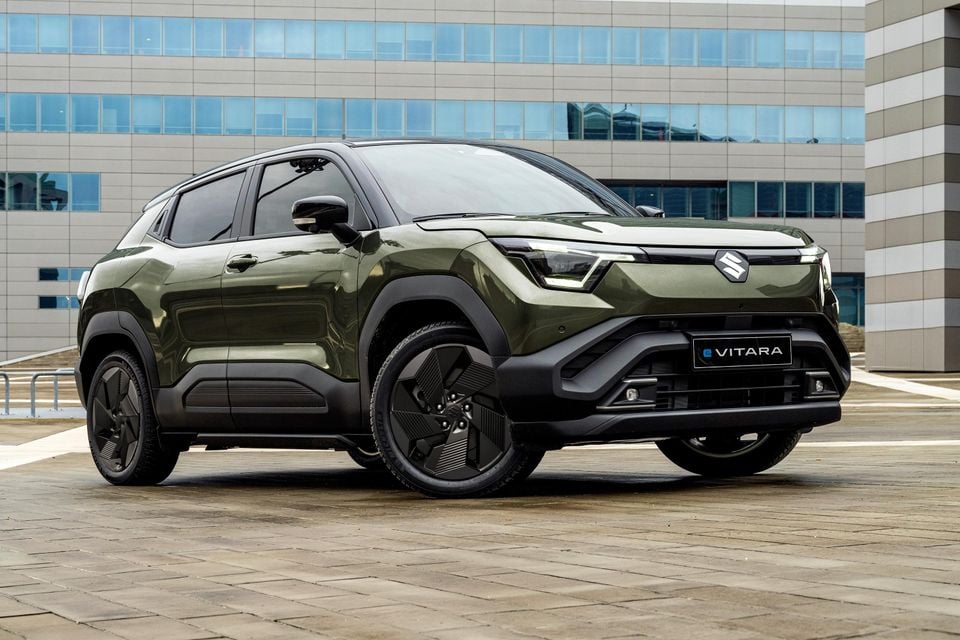
2026 Suzuki eVitara — exterior three-quarter press shot
Price
AUD $49,990 (Motion)
0-100 km/h
8.7 seconds
Battery
61 kWh (LFP)
Power
172 bhp
✓ The Good
- +Well-equipped base model with standard heat pump.
- +Genuinely capable Allgrip-e AWD off-road variant.
- +Comfortable, refined ride on smooth surfaces.
- +Clever sliding rear seats add practicality.
- +Unbeatable 10-year service-activated warranty.
- +Mediocre real-world efficiency and range.
- +Slow 70 kW DC fast charging peak.
- +Laggy infotainment and poor camera quality.
- +Interior materials, especially piano black, feel cheap.
✗ The Trade-offs
- −Mediocre real-world efficiency and range.
- −Slow 70 kW DC fast charging peak.
- −Laggy infotainment and poor camera quality.
- −Interior materials, especially piano black, feel cheap.
📑 In This Review
- Quick Verdict
- Pricing and Trim Levels
- Design and Exterior
- Interior, Tech and Practicality
- Battery, Range and Charging
- On the Road: Driving Impressions
- Off-Road and Allgrip-e Capability
- Suzuki eVitara vs Kia EV3: Which Is Better?
- Spec Comparison Table:
- How It Stacks Up: Rivals at a Glance
- Safety and Warranty
- Who Should Buy the Suzuki eVitara
- Final Verdict
- Frequently Asked Questions
META_DESC: Suzuki’s first EV SUV from $49,990. We test its 395km range, off-road ability & comfy ride. Is it a match for the Kia EV3? Full review. SLUG: 2026-suzuki-evitara-review RATING: 3.5/5 RATING_HEADLINE: A comfy, well-priced EV SUV let down by poor efficiency and charging. PROS: – Well-equipped base model with standard heat pump. – Genuinely capable Allgrip-e AWD off-road variant. – Comfortable, refined ride on smooth surfaces. – Clever sliding rear seats add practicality. – Unbeatable 10-year service-activated warranty. CONS: – Mediocre real-world efficiency and range. – Slow 70 kW DC fast charging peak. – Laggy infotainment and poor camera quality. – Interior materials, especially piano black, feel cheap.
Quick Verdict
The 2026 Suzuki eVitara is the brand’s first crack at a fully electric vehicle, and it arrives as a proper, boxy compact SUV with a sharp price tag and a real focus on getting dirty off-road. It’s aimed squarely at buyers who care more about comfort, a monster warranty, and Suzuki’s go-anywhere reputation than having the longest range or the flashiest tech. Its biggest win is the value-for-money kit list, but its Achilles’ heel is underwhelming real-world efficiency and painfully slow DC charging speeds.
Pricing and Trim Levels
Suzuki’s jumping into a crowded segment with a sharp pricing pencil. The value pitch is strong here. In Australia, the entry-level Motion model kicks off at AUD $49,990 drive-away (from July 1, 2026). Step up to the top-spec Ultra and you’re looking at AUD $56,990 on promo, rising to $58,990.
For that outlay, the base Motion is loaded. You get 18-inch alloys, twin 10.25-inch displays, adaptive cruise control, blind-spot monitoring, rear cross-traffic alert, keyless entry, and ambient lighting. The Ultra adds 19-inch wheels, a panoramic glass roof, an Infinity 8-speaker audio system, a 360-degree camera, and an electric driver’s seat.
This pricing puts it right in the thick of things. It’s above the budget-focused BYD Atto 2 (from ~$36k) and MG S5 EV (from ~$40k), but undercuts the Hyundai Kona Electric (~$54k). Its most direct rival on paper is the Kia EV3 (from ~$49k). It shares its platform with the Toyota Urban Cruiser EV, though Suzuki led the development. Built in India by Maruti Suzuki for global export, that’s a key reason it can be priced so sharply.
Design and Exterior
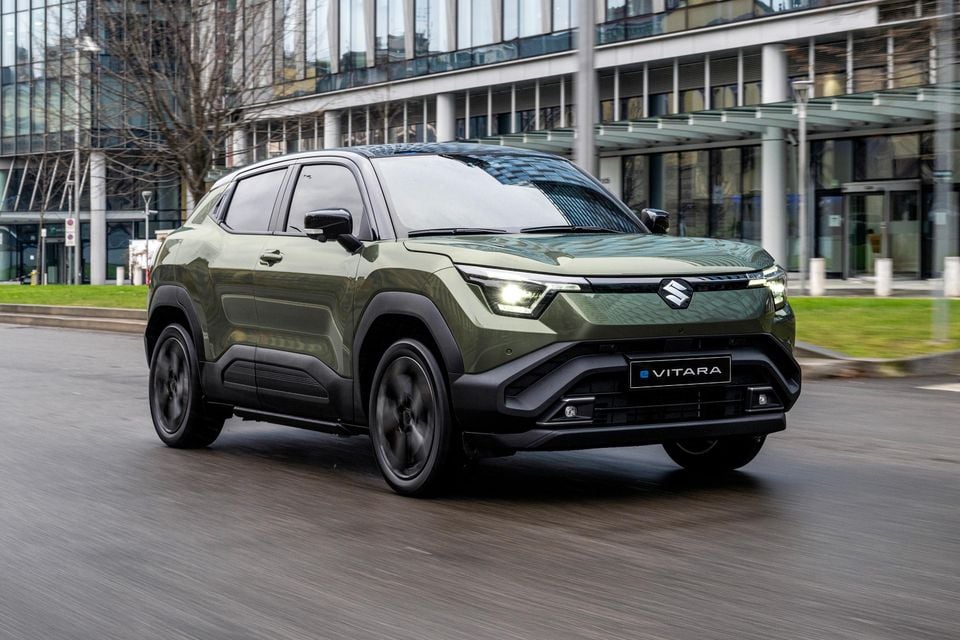
The eVitara stands out with a chunky, squared-off SUV shape that’s a welcome change from all the swoopy, jelly-mould designs in the EV space. It’s a handsome, rugged-looking thing with clear Vitara DNA in its upright stance, squared wheel arches, and bluff nose. Its compact dimensions make it a breeze to park in the city.
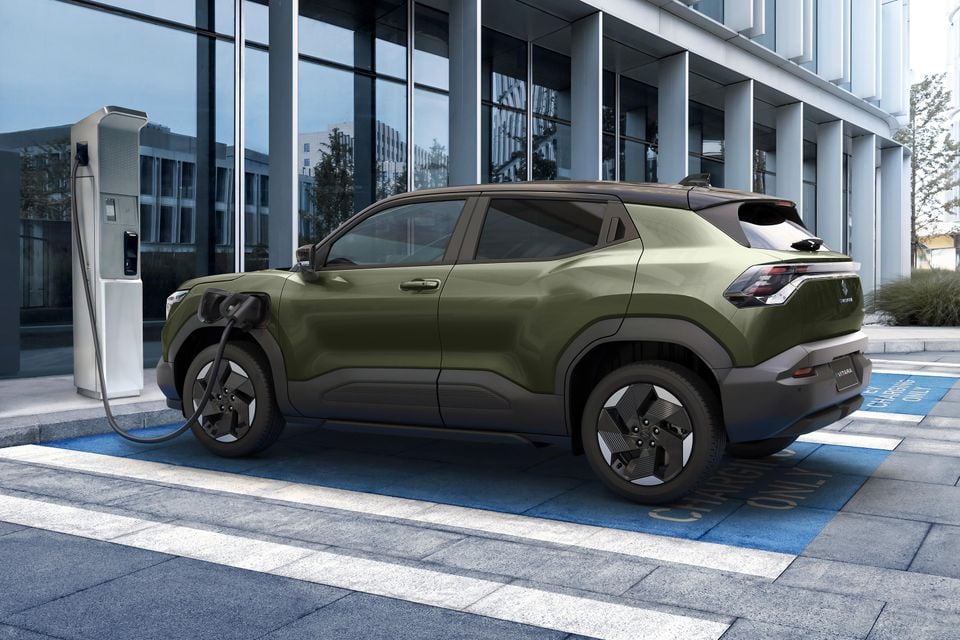
You get 18-inch wheels on the Motion and 19s on the Ultra, with two-tone paint options available. The charge port is smartly placed on the front left quarter panel. What we like most is that it doesn’t look like a science experiment. It looks like a traditional Suzuki SUV that just happens to be electric. That tough, almost Tonka-toy character will win over plenty of buyers sick of bland EV styling.
Interior, Tech and Practicality
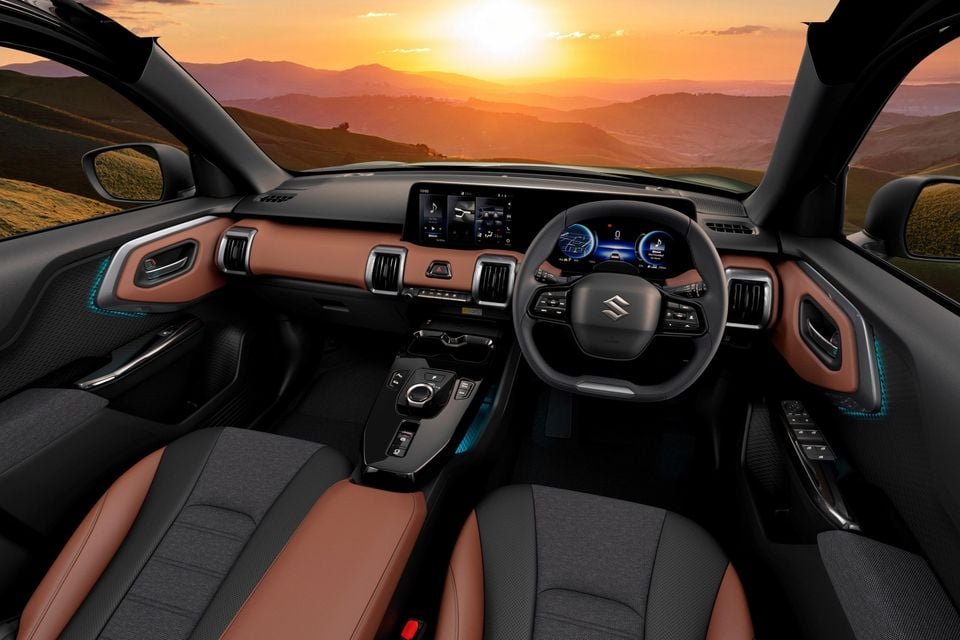
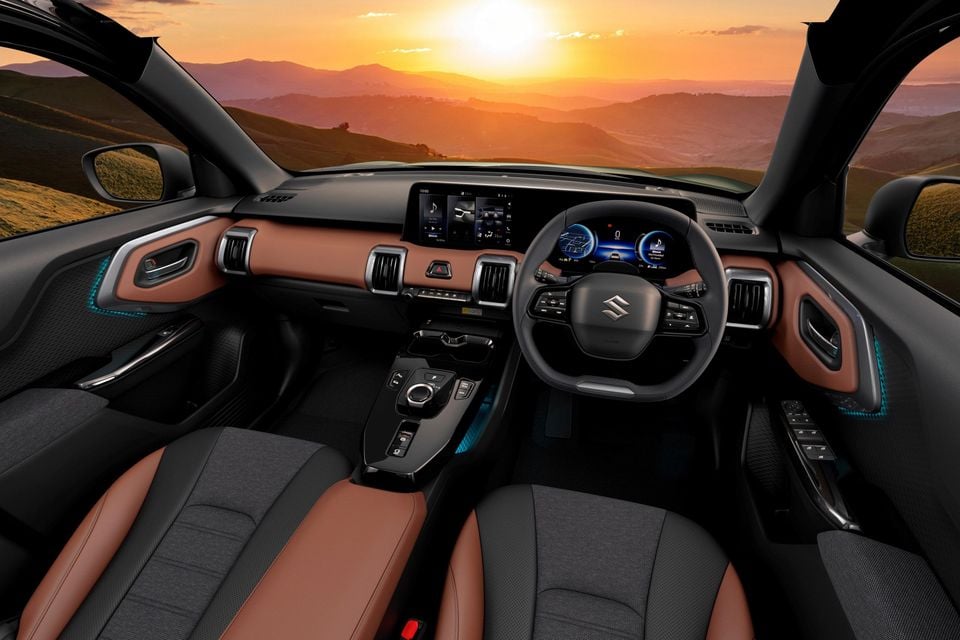
Slip inside and the cabin is all about function. The twin 10.25-inch screens are the main event—the driver’s display is clear and configurable, while the central touchscreen handles infotainment. It runs Apple CarPlay and Android Auto, but we found the wireless connection could be flaky and the system software itself was laggy with a low-res interface. The Ultra’s Infinity 8-speaker audio with a sub is a solid upgrade.
Ambient lighting with 12 colours and 7 brightness levels is a nice touch for the price. Materials are a mixed bag. There are soft-touch surfaces on the dash, but elsewhere you’ll find hard, scratch-prone piano black plastics that showed wear quickly on our test car. The leather-wrapped steering wheel has good, physical buttons.
Practicality is a real strength. The rear seats slide fore and aft, which is a clever trick. Shove them back for maximum legroom, or forward to liberate just over 300 litres of boot space (up from 244L). The 40:20:20 split-folding rear seats and flat floor add versatility. Rear room is fine for those under six foot, but not expansive. A heat pump is standard on every model, which is a big plus for efficiency in winter.
Battery, Range and Charging
You’ve got two battery choices: a 49 kWh pack and a 61 kWh pack. The smaller battery (142 bhp, 2WD) claims a WLTP range of 344 km. The larger 61 kWh (172 bhp, 2WD) claims up to 395 km. The Allgrip-e AWD version with the 61 kWh battery makes 181 bhp.
Here’s where the numbers get a bit sticky. In our mixed driving with mild weather, we averaged just 4.7 km/kWh. That gives the 61 kWh model a real-world range of about 285 km—well short of its official claim and a long way behind the Kia EV3 Long Range.
Charging is a clear weak point. It’ll do up to 11 kW on AC (a full charge takes about 6 hours). DC fast charging peaks at a pretty disappointing 70 kW in most markets. That means a 10-80% top-up takes around 45 minutes on the 61 kWh battery. That’s miles off the pace set by rivals like the Kia EV3 (up to 350 kW) or even the BYD Atto 2 (~80 kW).
On the Road: Driving Impressions
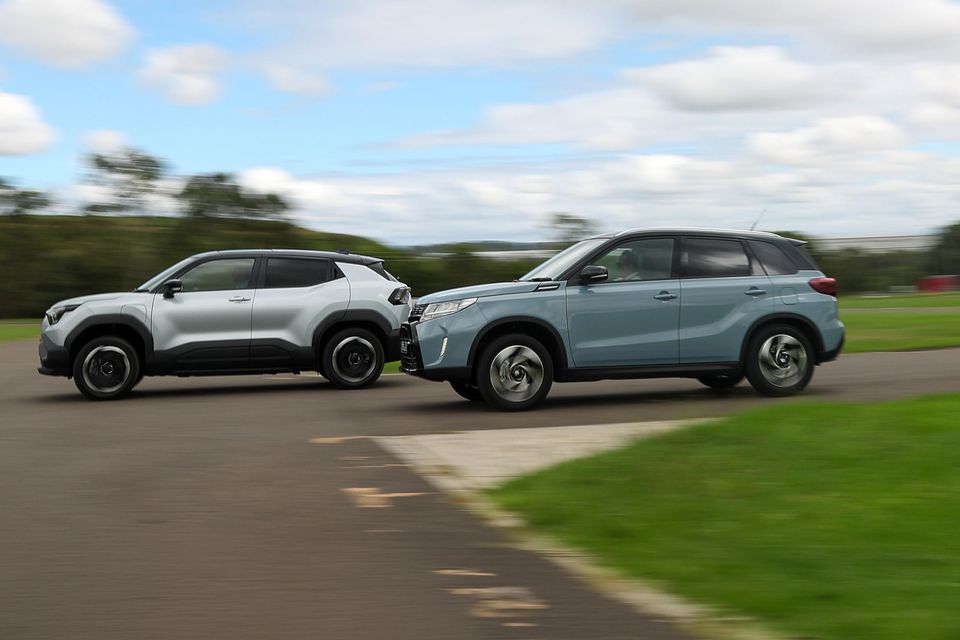
On the move, the eVitara is a bit of a mixed bag. The 172 bhp from the 2WD model we drove is plenty for easy city driving and confident highway merging, with a 0-100 km/h time of 8.7 seconds. The ride quality is its standout feature; it’s tuned for comfort and soaks up bumps beautifully on smooth roads, feeling settled and composed.
That said, on rougher Aussie tarmac, the suspension can feel a bit busy and crashy, sending more jolts into the cabin than you’d expect. The steering is noticeably heavier than most modern EVs. Some will like that solid feel; others will find it a bit of a workout at low speeds.
Refinement is good around town, but motorway cruising brings in more tyre rumble and some wind noise. The one-pedal driving mode is there, but annoyingly it won’t bring the car to a complete stop, and there’s a strong creep, which lessens its usefulness. The actual brake pedal feel, however, is natural and easy to use.

Off-Road and Allgrip-e Capability
This is the eVitara’s secret weapon. The Allgrip-e AWD system isn’t just for show. Suzuki, drawing on its Jimny and Vitara experience, has made it genuinely capable. It mimics a limited-slip diff to manage traction on loose stuff.
With proper off-road drive modes and more ground clearance than most rivals, the eVitara can handle trails, muddy tracks, and rutted paths that would stop other compact EV SUVs cold. It’s no ladder-frame 4×4 replacement, but it brings a rare level of all-weather and light off-road confidence to the affordable EV market, making it a smart pick for rural or adventure-minded buyers.
Suzuki eVitara vs Kia EV3: Which Is Better?
The Kia EV3 is the eVitara’s most direct competitor. Both are new-gen, compact electric SUVs in a similar price bracket. The EV3 starts a touch higher but offers dramatically better tech, range, and charging. Its 81.4 kWh Long Range battery delivers up to 605 km WLTP, nearly double the Suzuki’s real-world figure. The EV3’s 350 kW DC charging peak is five times faster than the Suzuki’s 70 kW.
On the road, the EV3 feels more modern and polished, with a quieter cabin and a better infotainment system. The eVitara fights back with a more comfortable ride on smooth roads, a standard heat pump, and the option of real all-wheel-drive off-road ability—features the EV3 doesn’t have. Interior space is similar, though the Suzuki’s sliding rear seats offer more flexibility.
Spec Comparison Table:
| Spec | Suzuki eVitara (61 kWh, 2WD) | Kia EV3 (Long Range, 2WD) |
|---|---|---|
| Price (from, AU) | AUD $49,990 (Motion) | ~AUD $48,990 (Air) |
| Battery | 61 kWh (LFP) | 81.4 kWh |
| Range (WLTP) | 395 km | 605 km |
| Power | 172 bhp | 201 bhp |
| 0-100 km/h | 8.7 seconds | 7.5 seconds |
| DC Fast Charging Peak | 70 kW | 350 kW |
| Boot Space | 244 L (up to 300+ L) | 460 L |
| Warranty (AU) | 10 years (service-activated) | 7 years / unlimited km |
| Safety Rating | 4-star ANCAP | 5-star ANCAP |
> **WHICH ONE IS BETTER?** > **Buy the Suzuki eVitara if** you prioritise a comfortable ride, need proven light off-road ability, and value the peace of mind from a 10-year warranty. > **Buy the Kia EV3 if** you want class-leading range, ultra-fast charging, a more modern tech suite, and a 5-star safety rating. > **Our pick** is the **Kia EV3**. Its colossal range and charging advantage fundamentally reduce EV ownership stress, making it the more compelling and future-proof all-rounder for most buyers.
How It Stacks Up: Rivals at a Glance
| Spec | Suzuki eVitara (61 kWh, 2WD) | Kia EV3 (Long Range, 2WD) |
|---|---|---|
| Price (from, AU) | AUD $49,990 (Motion) | ~AUD $48,990 (Air) |
| Battery | 61 kWh (LFP) | 81.4 kWh |
| Range (WLTP) | 395 km | 605 km |
| Power | 172 bhp | 201 bhp |
| 0-100 km/h | 8.7 seconds | 7.5 seconds |
| DC Fast Charging Peak | 70 kW | 350 kW |
| Boot Space | 244 L (up to 300+ L) | 460 L |
| Warranty (AU) | 10 years (service-activated) | 7 years / unlimited km |
| Safety Rating | 4-star ANCAP | 5-star ANCAP |
Kia EV3
Class-leading range and ultra-fast 350 kW charging make this the spec-sheet winner.
BYD Atto 2
Significantly cheaper but smaller battery and shorter real-world range.
Hyundai Kona Electric
Polished, premium feel and longer range but pricier than the eVitara.
The electric compact SUV segment is one of the most crowded in the market. The Suzuki eVitara enters with a focus on value and ruggedness, but faces established players with different strengths. Price (from, AU) WLTP Range 0–100 km/h :— :— :— $49,990 344/395 km 9.6-7.4s ~$48,990 435-605 km 7.5s ~$36,490 ~312 km 7.3s ~$54,000 367-514 km 8.5-7.8s ~$40,000 ~340/430 km 8.4-6.7s The BYD Atto 2 is the value king, with a lower entry price and decent tech. The Hyundai Kona Electric is a well-rounded, premium-feeling alternative with strong efficiency. The MG S5 EV strikes a balance between the Atto 2’s price and the eVitara’s size, often with more punch.
Safety and Warranty
The Suzuki eVitara has earned a 4-star safety rating from both Euro NCAP and ANCAP (2026). It missed the top mark partly due to the lack of a centre airbag to stop occupants hitting each other in side impacts. Standard safety kit is strong, including 7 airbags, Autonomous Emergency Braking (Car-to-Car, Vulnerable Road User, Junction, and Head-On), Lane Keep Assist, Emergency Lane Keep, Blind-Spot Monitoring, Rear Cross-Traffic Alert, and Adaptive Cruise Control. The Ultra adds a 360-degree camera.
Warranty details for Australia weren’t fully locked in at launch. But following its global plan, it’s expected to be covered by Suzuki’s 10-year, unlimited kilometre service-activated warranty, as long as you service it at a Suzuki dealer. That’s a massive selling point.
Who Should Buy the Suzuki eVitara
**BUY IT IF:** You want a comfy, well-kitted EV SUV without spending a fortune; you regularly drive on dirt roads or need all-weather confidence; you value long-term peace of mind from a 10-year warranty; your daily drive is within its real-world range and you can charge slowly at home.
**SKIP IT IF:** You’re always on long road trips needing fast, on-route charging; you want the latest in-car tech and crystal-clear cameras; maximum electric range is your main priority; you want a premium-feeling interior with top-notch materials.
⚡ Our Verdict
A comfy, well-priced EV SUV let down by poor efficiency and charging.
Rating it 3.5 out of 5, the 2026 Suzuki eVitara is a solid first attempt that plays to Suzuki’s traditional strengths. It delivers a comfy ride, genuine off-road chops (in Allgrip-e form), and great value with a killer warranty. However, it’s held back by its EV basics: disappointing real-world efficiency, a modest WLTP range, and painfully slow DC charging. In a market where the Kia EV3 offers over 500 km of real-world range and lightning-fast charging, the eVitara’s compromises are tough to ignore. It’s a smart choice for city or country buyers with a set routine and a soft spot for Suzuki’s rugged ethos, but it’s not the best all-rounder for the average EV buyer.
