

2026 BMW M3 Review: The Last Pure Petrol Super-Sedan Refuses to Go Quietly
An Iconic Driver’s Car, Masterfully Evolved

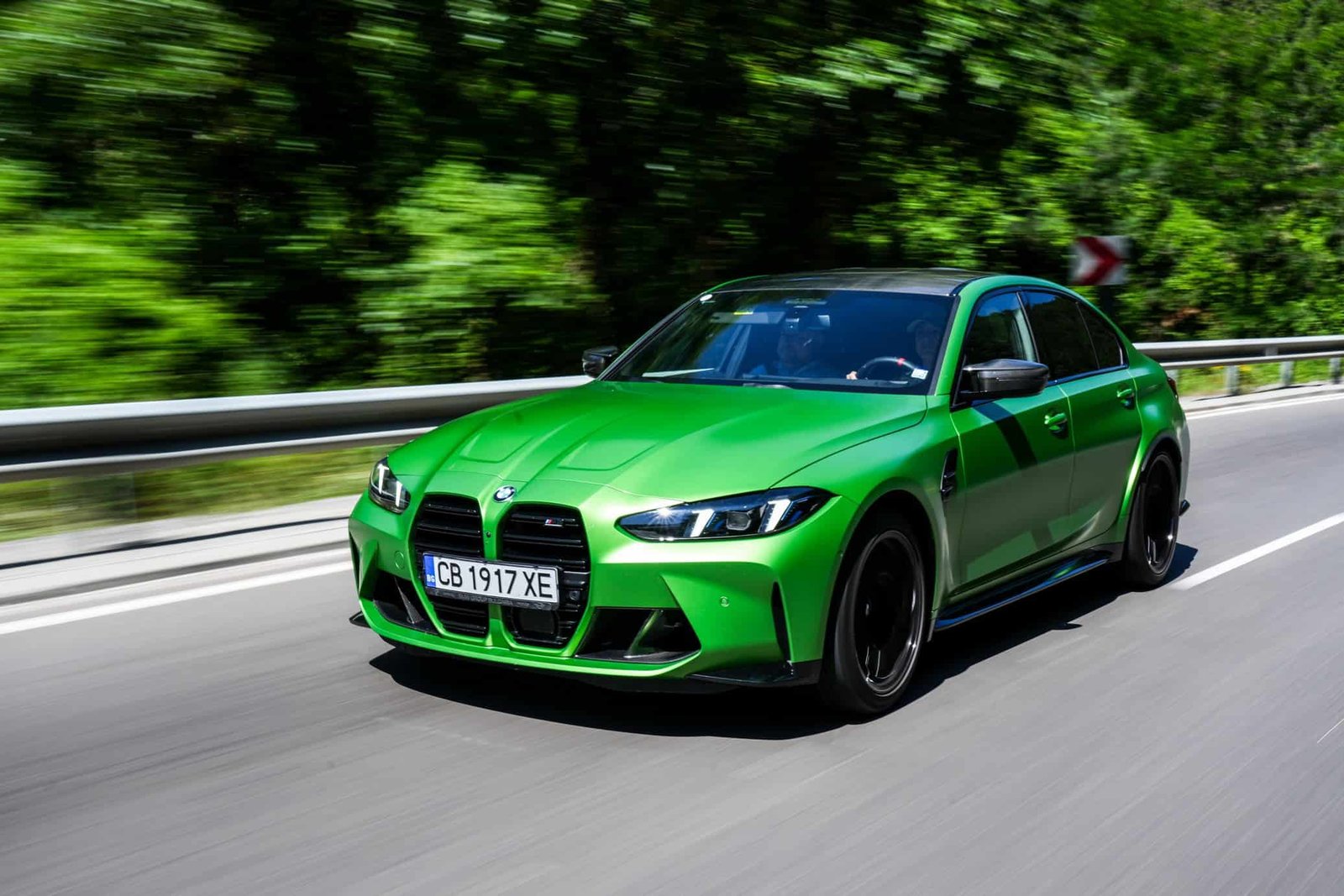
2026 BMW M3 Competition xDrive sedan front three-quarter exterior
Price
$179,900
0-100 km/h
3.5 s
Power
405 kW
⚡ Quick Verdict
: If you’re after a driver’s car that puts engagement above all else, the 2026 BMW M3 is it. Especially in Competition xDrive form, it’s a proper masterpiece of internal combustion. You get a spine-tingling inline-six, the choice of a manual ‘box in the base car, and a chassis that feels alive. It’s got the muscle for the track and the manners for daily duties, though the ride is firm and the infotainment can do your head in. As the world goes electric, this feels like a glorious, defiant last stand for the petrol-powered super-sedan.
## At a Glance: 2026 BMW M3 Specifications
✓ The Good
- +Soulful S58 inline-six engine delivers thrilling, naturally-aspirated-feel power
- +Engaging chassis and steering provide unmatched driver connection in class
- +Available manual gearbox and rear-wheel drive honour purist traditions
- +xDrive system’s rear-biased drift mode adds playful versatility
- +Lightest weight in its class translates to agile, confident handling
✗ The Trade-offs
- −Controversial large kidney grille remains a polarising design element
- −Interior tech can be distracting; iDrive menus are deeply layered
- −Firm ride quality may be taxing on rough Australian backroads
- −No plug-in hybrid option for those wanting electric-only commuting
📑 In This Review
- At a Glance: 2026 BMW M3 Specifications
- Design and First Impressions
- Inside the Cabin: Luxury Meets the Track
- Technology and Infotainment
- Performance and Driving Dynamics
- 2026 BMW M3 vs Mercedes-AMG C63 S E Performance: Which Is Better?
- Safety and Warranty
- Fuel Economy and Running Costs
- Who Should Buy the 2026 BMW M3?
- The Verdict
- Frequently Asked Questions
: If you’re after a driver’s car that puts engagement above all else, the 2026 BMW M3 is it. Especially in Competition xDrive form, it’s a proper masterpiece of internal combustion. You get a spine-tingling inline-six, the choice of a manual ‘box in the base car, and a chassis that feels alive. It’s got the muscle for the track and the manners for daily duties, though the ride is firm and the infotainment can do your head in. As the world goes electric, this feels like a glorious, defiant last stand for the petrol-powered super-sedan.
At a Glance: 2026 BMW M3 Specifications
| Spec | BMW M3 Competition xDrive | Mercedes-AMG C63 S E Perf | Audi RS5 | Alfa Romeo Giulia Quadrifoglio |
|---|---|---|---|---|
| Engine | 3.0L Twin-Turbo I6 | 2.0L Turbo I4 + PHEV | 2.9L Twin-Turbo V6 + PHEV | 2.9L Twin-Turbo V6 |
| Power | 405 kW | 500 kW (combined) | 470 kW (estimated) | 390 kW |
| Torque | 650 Nm | 752 Nm (combined) | 608 Nm (estimated) | 600 Nm |
| 0-100 km/h | 3.5 s | 3.3 s | 3.4 s (est) | 3.9 s |
| Transmission | 8-spd M Steptronic / 6-spd Manual (RWD) | 9-spd MCT | 8-spd auto | 8-spd auto |
| Drivetrain | M xDrive AWD (RWD mode) | 4MATIC+ AWD | Quattro AWD | RWD |
| Kerb Weight | ~1,765 kg | ~2,185 kg | ~2,326 kg | ~1,730 kg |
| Fuel Economy (L/100km) | 10.1 – 10.5 | ~6.8 (PHEV cycle) | ~8.0 (est) | 11.6 |
| Approx AUD Price | $179,900 | $190,000+ | $180,000+ | $155,000+ |
Mercedes-AMG C63 S E Performance
Brutal straight-line speed via PHEV, but 400+ kg heavier and less playful than the M3.
Audi RS5
Most comfortable and practical of the three, but lacks the M3’s chassis engagement.
Alfa Romeo Giulia Quadrifoglio
Lighter and more characterful than its German rivals, but lower volume and ageing tech.
The M3 has long been the yardstick for fast four-door fun, and this 2026 model doubles down on that legacy. It’s facing tougher competition than ever from electrified rivals, but it sticks to what it knows best: a brilliant inline-six, a chassis that talks to you, and the promise of rear-drive purity in its base form. The headline act here is the Competition xDrive, pumping out 405 kW through a clever all-wheel-drive system that’ll still let you hang the tail out for a laugh. Its main rival, the Mercedes-AMG C63 S, has gone down a completely different path, ditching the V8 for a complicated plug-in hybrid four-pot. The Audi RS5 has also gone electric-assist, while the Alfa Romeo Giulia Quadrifoglio remains the charismatic Italian outlier. Each has its own take on the super-sedan recipe, but the BMW is the one that feels most connected to the driver. BMW M3 Competition xDrive Audi RS5 :— :— 3.0L Twin-Turbo I6 2.9L Twin-Turbo V6 + PHEV 405 kW 470 kW (estimated) 650 Nm 608 Nm (estimated) 3.5 s 3.4 s (est) 8-spd M Steptronic / 6-spd Manual (RWD) 8-spd auto M xDrive AWD (RWD mode) Quattro AWD ~1,765 kg ~2,326 kg 10.1 – 10.5 ~8.0 (est) $179,900 $180,000+
Design and First Impressions
Let’s get the elephant in the room out of the way first: that grille. It’s massive, and it’s not going anywhere. You’ll get comments on it at every servo stop. Love it or hate it, it’s functional, feeding air to the ravenous S58 engine. Flanking it are sharp LED headlights that give the car a focused, almost angry look. The whole stance is low, wide, and seriously muscular, with those pumped-out arches hiding wheels up to 20 inches.
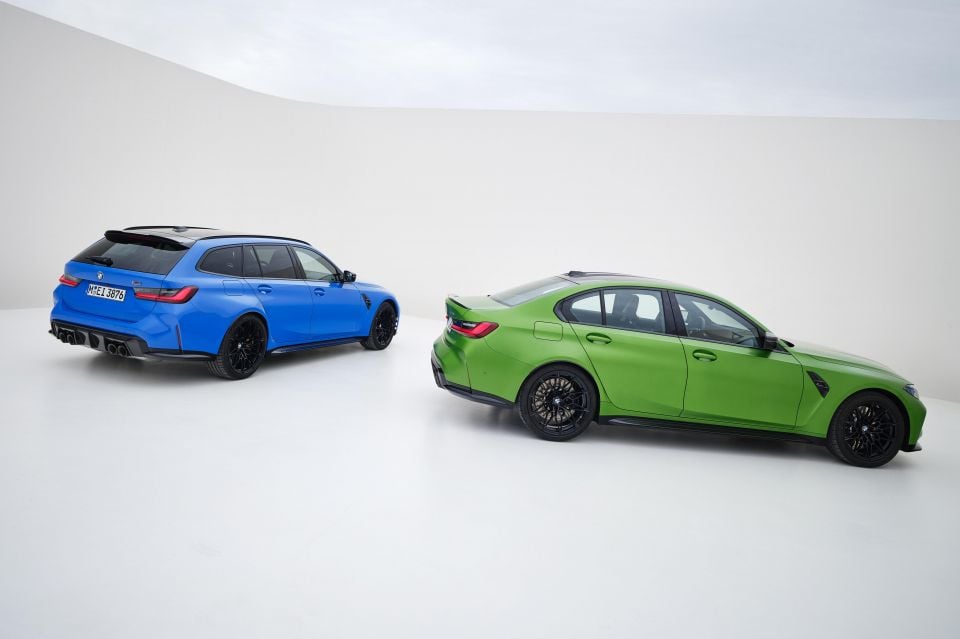
From the side, the proportions are classic sports sedan. There’s a long bonnet, short overhangs, and the cabin sits well back. The optional carbon-fibre roof isn’t just for looks or saving a few kilos; it lowers the centre of gravity and is a dead giveaway you’re looking at the real deal. The shape is clean and taut, without any fussy lines.
Around the back, it’s a bit more traditional, but no less aggressive. You get a lip spoiler on the boot, a chunky diffuser, and four fat, trapezoidal exhaust tips. Parked or moving, this thing has presence. It looks fast standing still and never fails to get a reaction, for better or worse. It’s a design that holds nothing back.
Inside the Cabin: Luxury Meets the Track
Hop in, and the M3 wraps around you. The standard M Sport seats are brilliant—deeply bolstered to hold you in corners but with enough padding for long hauls. If you’re serious about track days, the optional M Carbon buckets are next-level, gripping you like a vice, though they’re a bit more fiddly to adjust for daily use. The materials are top-shelf: lovely Merino leather, soft-touch surfaces, and Alcantara on the wheel and doors.
The dashboard is angled towards the driver, which is a proper BMW hallmark. The big curved screen dominates, but it’s neatly integrated. There aren’t many buttons, which is a double-edged sword. Climate control is buried in the touchscreen, but the physical iDrive rotary dial on the console is your saviour, letting you flick through menus without taking your eyes off the road.
Everything feels solidly built, with tight gaps and quality switchgear. You can set the ambient lighting to whatever colour suits your mood. For all its performance intent, it’s still a practical car, with enough room in the back for adults and a decent boot. It manages to feel both luxurious and purposeful at the same time.

Technology and Infotainment
The tech centre is that BMW Curved Display: a 12.3-inch digital dash and a 14.9-inch touchscreen under one glass panel. It runs on BMW Operating System 8.5, and the graphics are sharp, responses are quick, and the configurability, especially in the M modes, is impressive. You can set the driver’s display to show a huge tachometer, shift lights, or the map.
Wireless Apple CarPlay and Android Auto are standard and work a treat. The native navigation is solid too. The catch is the depth of the iDrive menus. Want to change the steering weight? That’s a few taps away. This is where that iDrive dial earns its keep. The red M1 and M2 buttons on the steering wheel are a highlight. You can programme two completely different drive profiles—from a soft daily setting to a full-attack track mode—and switch between them with one press. An optional head-up display puts a tachometer and shift lights right in your line of sight.
Performance and Driving Dynamics
This is what the M3 is all about, and it delivers. The 3.0-litre twin-turbo inline-six is a cracker. In the Competition xDrive, it makes a thumping 405 kW and 650 Nm. The power builds in a massive, linear surge that urges you to chase the redline. The exhaust note is a hard-edged snarl that crackles and pops when you back off.
The 8-speed auto is a gem, with lightning shifts when you’re on it and smooth changes when you’re cruising. For the purists, the base rear-wheel-drive model’s 6-speed manual is a joy, with a slick, mechanical action. On the road, the xDrive system gives you monster traction. Its best party trick? You can send 100 per cent of power to the rear wheels, turning it into a tyre-shredding, sideways-happy weapon.
The balance is unreal. It feels lighter than its 1,765 kg, with quick, talkative steering that lets you place it exactly where you want. The suspension is firm—properly firm on rough Aussie backroads—but it pays you back with flat, planted cornering. The brakes are strong and easy to modulate. It’s a car that eggs you on and makes you feel like a hero.

2026 BMW M3 vs Mercedes-AMG C63 S E Performance: Which Is Better?
This is the big one, a clash of philosophies. The BMW sticks to pure petrol power, while the Mercedes has gone all-in on a complex plug-in hybrid system. Both are stupidly quick in a straight line, but they feel worlds apart to drive.
Price-wise, the M3 Competition xDrive kicks off at about $179,900, undercutting the C63 S which starts at roughly $190,000. On paper, the AMG has the edge, with a combined 500 kW and 752 Nm getting it to 100 km/h in a claimed 3.3 seconds. But the M3’s 3.5-second sprint feels more raw and connected, with just the engine and no electric fill-in.
The biggest difference is heft. All that hybrid gear makes the AMG porky, weighing over 2,185 kg—more than 400 kg heavier than the BMW. That weight blunts its handling. While it has immense grip, it doesn’t have the BMW’s playfulness or agility on a twisty road. The M3 feels alive; the C63 feels brutally fast but a bit numb.
For daily use, both are comfy cruisers, but the AMG can glide along silently on electric power for short stints. Inside, both are high-tech and plush, but the BMW’s cabin is more focused on the driver. Long-term, the BMW’s simpler engine might also mean fewer headaches.
In the end, it’s about what you value. The C63 is a tech-heavy rocket ship. The M3 is a pure driver’s machine that talks to you and responds intuitively. For us, that 400 kg weight saving makes all the difference on a good road.
| Spec | BMW M3 Competition xDrive | Mercedes-AMG C63 S E Performance |
|---|---|---|
| Engine | 3.0L Twin-Turbo Inline-6 | 2.0L Turbo Inline-4 + Electric Motor |
| Power | 405 kW | 500 kW (combined) |
| Torque | 650 Nm | 752 Nm (combined) |
| 0-100 km/h | 3.5 s | 3.3 s |
| Transmission | 8-spd M Steptronic | 9-spd Multi-Clutch |
| Drivetrain | M xDrive AWD (RWD mode) | 4MATIC+ AWD |
| Kerb Weight | ~1,765 kg | ~2,185 kg |
| Fuel Economy (combined L/100km) | 10.1 – 10.5 | ~6.8 (PHEV cycle) |
| Approx AUD Price | $179,900 | $190,000+ |
<div style="background:linear-gradient(135deg,#f0f9ff,#e0f2fe); border-left:4px solid #2563eb; border-radius:12px; padding:24px 28px; margin:32px 0"> <p style="font-size:12px; font-weight:800; letter-spacing:0.14em; text-transform:uppercase; color:#1e40af; margin:0 0 10px">Which one is better?</p> <p><strong>Buy the BMW M3 if</strong> you want the lighter, more engaging driver’s car with a soulful inline-six, the option of a manual gearbox, and the iconic M3 lineage.</p> <p><strong>Buy the Mercedes-AMG C63 if</strong> you prefer brutal straight-line speed, modern plug-in hybrid tech, and a slightly more luxurious cabin experience.</p> <p><strong>Our pick</strong> is the BMW M3 — it remains the benchmark sport sedan because it puts driver engagement first, and that 400kg-plus weight advantage transforms the experience on a back road.</p> </div>

Safety and Warranty
BMW fits the 2026 M3 with a solid suite of safety gear as standard. You get Autonomous Emergency Braking (AEB) with pedestrian and cyclist detection, lane-departure warning and lane-keep assist, blind-spot monitoring, rear cross-traffic alert, and adaptive cruise control with stop-and-go. A surround-view camera and parking assistant make dealing with its wide body a lot easier.
While the regular 3 Series has a 5-star ANCAP rating, the M3 hasn’t been separately rated. Given it shares the same strong bones and safety kit, you can expect a high level of protection.
BMW Australia backs the M3 with a five-year, unlimited-kilometre warranty, which is up there with the best in the luxury game. You can also buy a five-year/80,000 km service plan to lock in maintenance costs. There’s a 12-year anti-corrosion warranty for long-term reassurance.
Fuel Economy and Running Costs
On paper, the M3 Competition xDrive uses between 10.1 and 10.5 litres of premium 98 RON per 100 kays. In the real world, especially if you’re enjoying yourself, expect closer to 12-14 L/100km. The base manual rear-driver is a touch more frugal.
Running costs go beyond fuel. Insurance will be sky-high. Tyre costs are no joke, particularly if you go for the wider rear rubber and track it. Services are based on conditions, but the available plan helps keep a lid on costs. It’s a car that demands a premium at every step.
Who Should Buy the 2026 BMW M3?
The perfect M3 owner is a driving enthusiast. They care about the connection, the engine note, the feedback through the wheel. They want a car that’s thrilling on a track day or a mountain pass, but still works as a daily driver. The manual gearbox is a huge draw for purists, while the xDrive system gives all-weather security without totally killing the fun.
It’s probably not for you if you want a silent, cushy luxury barge, or if you’re after a plug-in hybrid for quiet, efficient city commuting. The firm ride and focused nature make it less of a pure highway cruiser than an Audi RS5. If electrified performance is your absolute priority, the AMG C63 S is the more modern choice. The M3 is for those who think the petrol engine still has one last, brilliant song to sing.
⚡ Our Verdict
An Iconic Driver’s Car, Masterfully Evolved
The 2026 BMW M3, in Competition xDrive form, scores a 4.7 out of 5. It’s not perfect. The ride is firm, the grille is divisive, and the infotainment can be a maze. But it is a perfect *driver’s* car. While rivals have piled on kilos and complexity, the M3 has got lighter and sharper. It respects its history while pushing the mighty inline-six to new limits. Its closest rival, the Mercedes-AMG C63 S, might beat it on paper. But the M3 wins on the road. It feels more alive, more connected, and more rewarding to drive hard. For anyone who values the art of driving, the BMW M3 isn’t just the better choice—it’s the only choice. It’s still the benchmark.
Frequently Asked Questions
How much does the 2026 BMW M3 cost in Australia?
The range starts at around $159,900 before on-roads for the base rear-wheel-drive manual. The top-spec M3 Competition xDrive is priced from approximately $179,900 before on-roads.
Is the 2026 BMW M3 available with a manual transmission?
Yes, but only on the base M3 with rear-wheel drive. It gets a lovely 6-speed manual. The M3 Competition models, including the xDrive, come exclusively with the 8-speed M Steptronic automatic.
How fast is the 2026 BMW M3?
Properly fast. The M3 Competition xDrive nails 0-100 km/h in a claimed 3.5 seconds. The base manual rear-driver does it in about 4.1-4.2 seconds. Top speed is limited to 250 km/h, or 290 km/h with the optional M Driver’s Package.
How does the BMW M3 compare to the Mercedes-AMG C63?
The M3 is lighter, more engaging to drive, and offers a manual gearbox. The C63 S E Performance is heavier due to its hybrid tech, but has more combined power, is a fraction quicker off the line, and can drive short distances on electric power alone. The BMW is the driver’s choice.
Does the BMW M3 have all-wheel drive?
You can have it either way. The base M3 is rear-wheel drive. The M3 Competition xDrive gets BMW’s M xDrive system, which is rear-biased and even has a 2WD mode to send all power to the back for drifting.
What is the warranty on a new BMW M3 in Australia?
It comes with a five-year, unlimited-kilometre warranty. You can also purchase a five-year/80,000 km service plan, and there’s a 12-year anti-corrosion warranty.
