

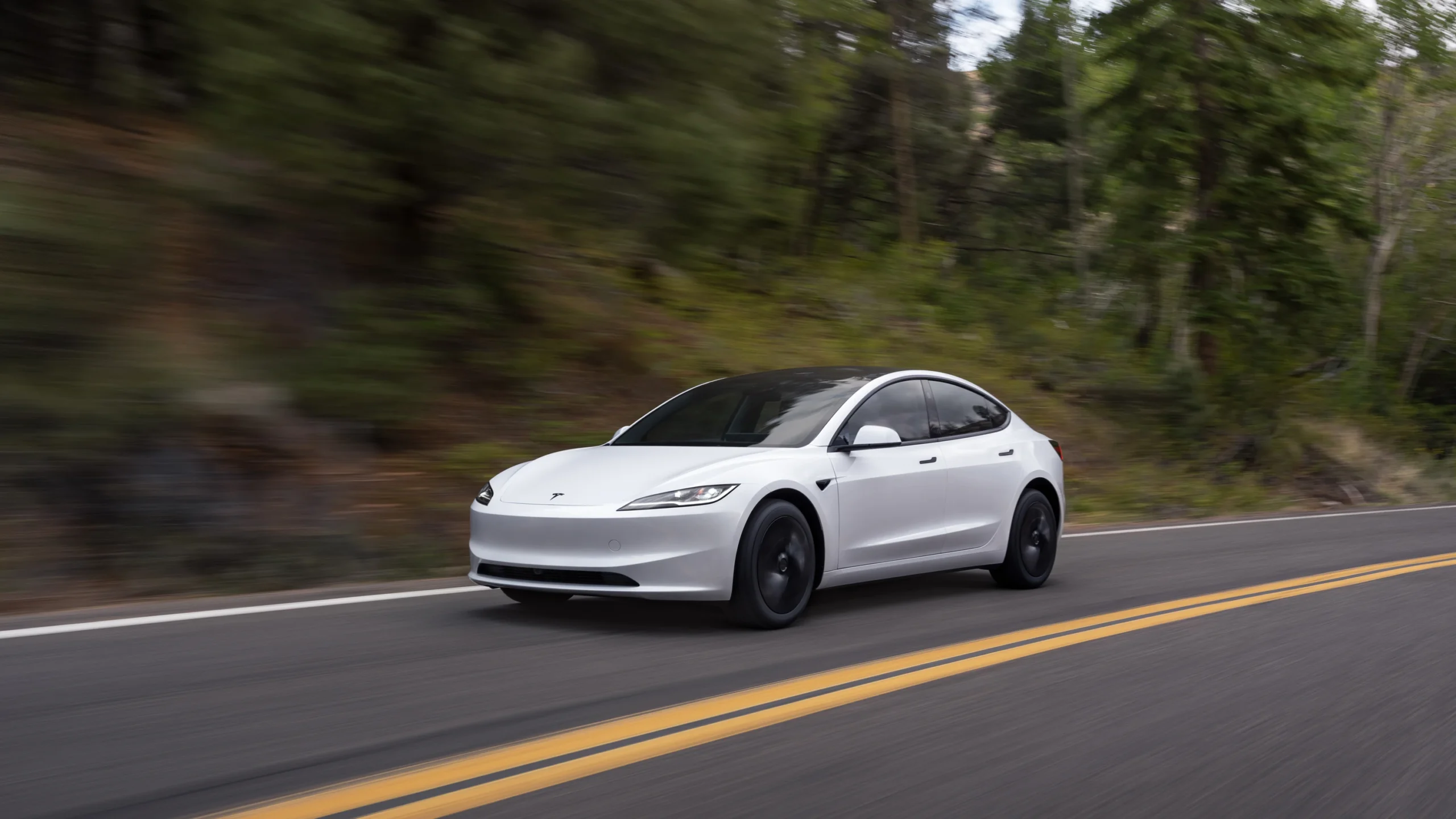
2026 Tesla Model 3 Standard Review: The $36,990 EV That Just Got Smarter
A compelling value EV undercut by a major driver-assist downgrade.
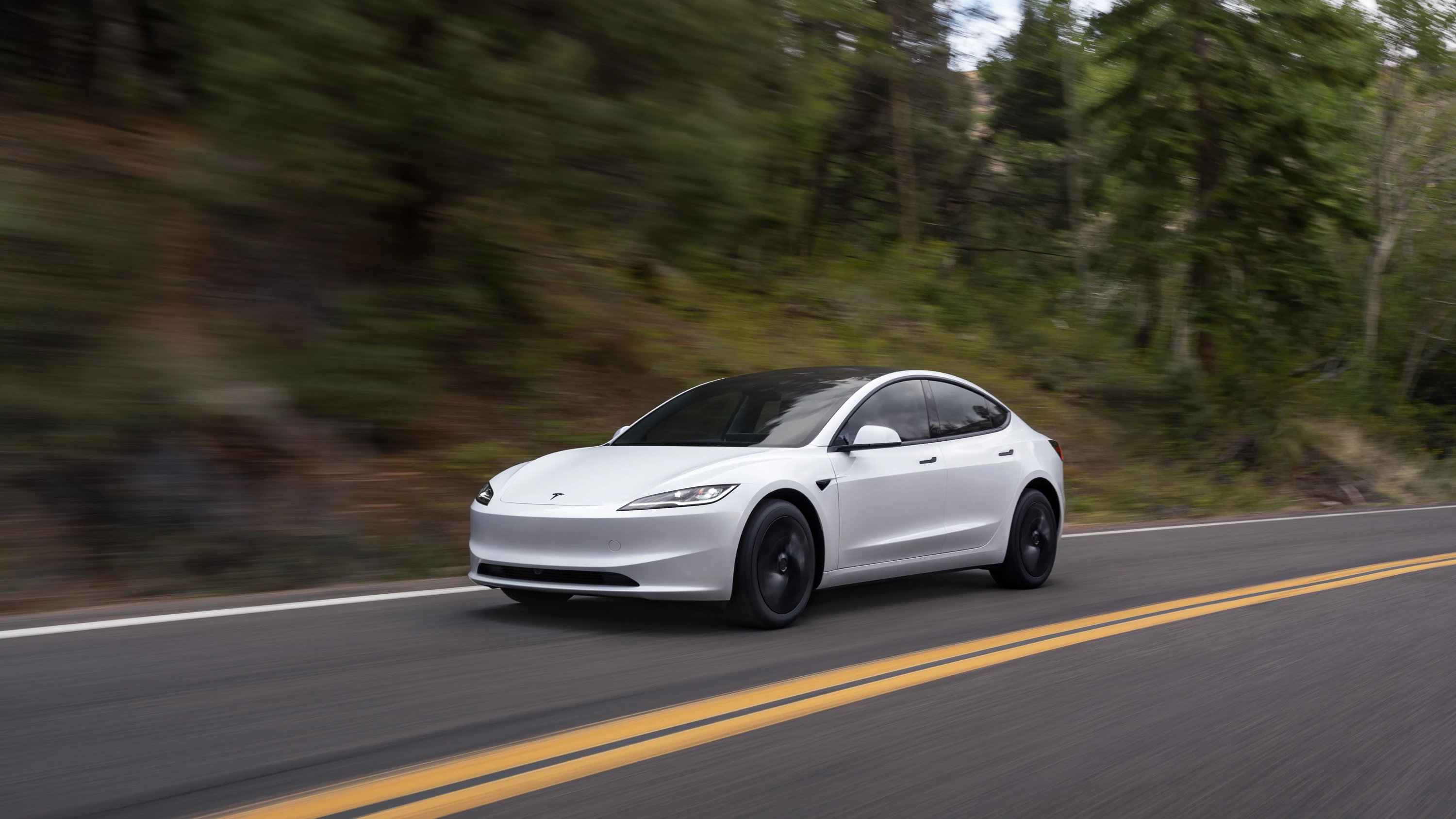
2026 Tesla Model 3 Standard front three-quarter studio shot
⚡ Quick Verdict
The 2026 Tesla Model 3 Standard kicks off at $36,990 with a claimed 321-mile EPA range, and on paper, it’s a cracker of a deal. You’re getting the heart of the Tesla experience—the slick software, the massive Supercharger network, and a surprisingly polished drive—with fewer compromises than its Model Y sibling. If you’re watching your budget but still want top-tier range, tech, and charging peace of mind, this is the one. Just know that the trade-off is a significant cut to standard driver-assist features and a few interior niceties.
## How the 2026 Model 3 Standard Drives
✓ The Good
- +Exceptional real-world highway efficiency observed at 4.46 mi/kWh.
- +Retains Tesla’s superior software, route planning, and charging network.
- +Glass roof, power trunk, and heated seats remain standard.
- +Ride quality matches more expensive Model 3 Premium trim.
- +Strong safety credentials with top global ratings.
✗ The Trade-offs
- −Basic Autopilot discontinued; lane-centring now requires FSD subscription.
- −Seat controls moved to touchscreen, manual steering column adjustment.
- −No FM radio tuner; downgraded audio system from Premium.
- −Frunk lacks weather sealing, unlike the Model Y Standard.
📑 In This Review
- How the 2026 Model 3 Standard Drives
- Range, Charging and Real-World Efficiency
- Interior, Tech and What Tesla Quietly Removed
- Practicality, Cargo and Daily Liveability
- What Happened to Basic Autopilot
- At a Glance: How the Tesla Model 3 Stacks Up
- 2026 Tesla Model 3 vs BYD Seal: Which Is Better?
- Safety, Warranty and Running Costs
- Who Should Buy the 2026 Model 3 Standard?
- Buy it if you:
- Skip it if you:
- Verdict
- Frequently Asked Questions
The 2026 Tesla Model 3 Standard kicks off at $36,990 with a claimed 321-mile EPA range, and on paper, it’s a cracker of a deal. You’re getting the heart of the Tesla experience—the slick software, the massive Supercharger network, and a surprisingly polished drive—with fewer compromises than its Model Y sibling. If you’re watching your budget but still want top-tier range, tech, and charging peace of mind, this is the one. Just know that the trade-off is a significant cut to standard driver-assist features and a few interior niceties.
How the 2026 Model 3 Standard Drives
Jump behind the wheel and you’ll find the driving feel is, thankfully, nearly identical to the pricier models. The rear-motor setup knocks off the 0-100 km/h sprint in around 6.1 seconds. It’s got plenty of zip for daily duties and merging onto the highway. That instant torque is satisfying without being violent, which fits perfectly with its role as a sensible daily driver.
During our time with the car, the suspension really stood out. It’s got the same well-damped tune as the refreshed Model 3 Premium, soaking up rough patches with a composure you wouldn’t expect at this price. That’s a big point of difference from the Model Y Standard, which rides on the older, less refined setup. In the sedan, the ride is firm but never harsh, and the low battery pack keeps it planted and confident through the bends.
Steering is direct and well-weighted, classic Tesla. It doesn’t feed back every pebble on the road, but it’s precise enough for threading through traffic or slotting into a car park. Noise levels are well contained for the class, with wind and road roar kept in check at highway speeds. It feels stable and relaxed on a long motorway stint.
But the real star is the efficiency. On a sustained run at 120 km/h, we recorded an outstanding 4.46 miles per kilowatt-hour. That means the real-world range often matches or even beats the official number, making range anxiety a thing of the past for daily use. The rear-drive layout also gives it a bit of playful character in the corners that the all-wheel-drive versions don’t quite have.
Range, Charging and Real-World Efficiency
Tesla says the Model 3 Standard will do 321 miles (517 km) on the EPA cycle, with a global WLTP figure around 436 km. This comes from a lithium iron phosphate (LFP) battery, probably about 60 kWh usable. LFP is chosen for its longevity, safety, and lower cost, though it doesn’t pack quite as much energy per kilo as some other types.
Out in the real world, that stellar efficiency we measured means you can genuinely rely on hitting the official range, even when cruising on the highway. That’s a huge tick and a major reason to pick the Model 3 over some rivals.
Peak DC fast charging sits at about 170-175 kW on Tesla’s V3 and V4 Superchargers, which is a bit down from the 250 kW you get in the Premium models. In practice, you’re looking at 25-30 minutes for a 10-80% top-up, and a 15-minute zap can add up to 270 km. For most people, that’s plenty quick, especially when the car’s brilliant route planner automatically picks the best charging stops and preps the battery on the way.
That combo of top-shelf efficiency and fast, reliable charging means the Model 3 Standard is ready for a road trip straight off the lot. Not every EV at this price can say that.
Interior, Tech and What Tesla Quietly Removed
Inside, it’s the same minimalist, tech-heavy cabin Tesla is known for. The 15.4-inch centre touchscreen controls almost everything. It’s still the best system in the game—fast, logical, and full of handy features like the built-in dashcam viewer and energy monitors. You get dual wireless phone chargers, heaps of USB-C ports, and that massive glass roof as standard. It’s worth noting the Model Y Standard ditched that roof, so it’s a nice win here.
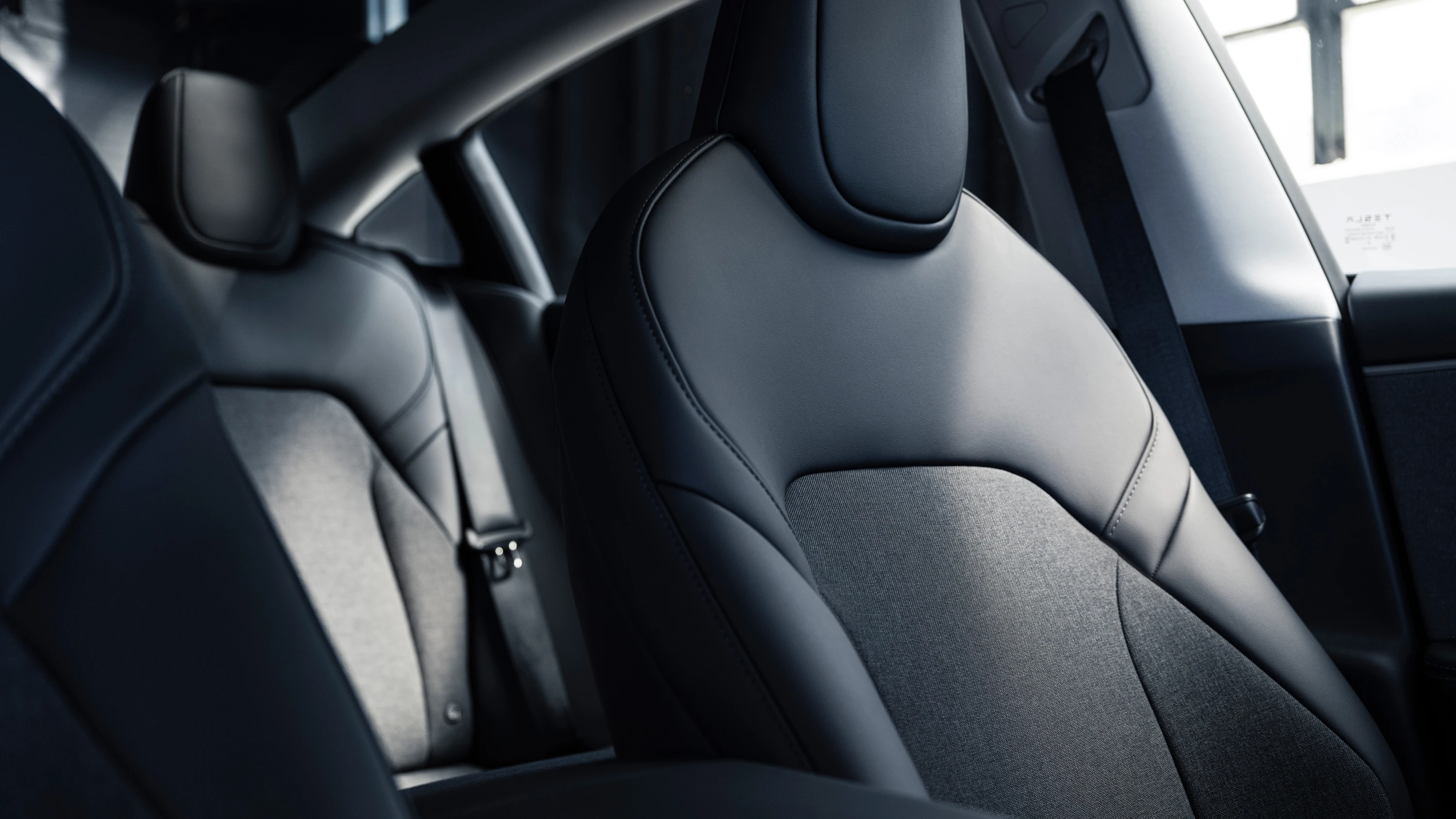
However, to hit that sharp $36,990 price, Tesla’s trimmed a few things. The seats are upholstered in a mix of vegan leather and textile, which is durable and looks alright, but isn’t as plush as the full vegan leather up-spec. More notably, the physical seat adjustment buttons are gone. Now you have to tap an icon on the touchscreen or use the scroll wheels on the steering wheel to move your seat. It works, but it’s not as quick or intuitive as having a button right there.
The steering column is now manually adjustable for reach and tilt, losing its electric motor. The FM radio tuner has been axed, though streaming apps cover most stations. The audio system is a step down from the Premium’s thumping 17-speaker setup, and the ambient lighting is replaced with simple silver trim. The rear passenger screen is also gone.
Jump up to the Premium and you’ll get ventilated seats, a rumoured upgraded 16-inch centre screen, a nicer Alcantara-style headliner, and that full premium audio. For a lot of buyers, though, the savings on the Standard will be worth missing out on those bits.
Practicality, Cargo and Daily Liveability
The Model 3 is still a very practical sedan. The boot gives you a generous 594 litres of space between the deep rear trunk and the handy front trunk (frunk). Unlike the cheap, unsealed frunk in the Model Y Standard, the Model 3’s front trunk is properly finished and weather-sealed, so it’s actually useful for chucking in charging cables or a small bag of shopping.
Back seat space is fine for adults on shorter trips, though some rivals offer more legroom. The dual-zone climate control, along with "Camp Mode" and "Dog Mode," remain standout features for day-to-day liveability. The navigation system is still the best in the business, intelligently planning Supercharger stops and adapting on the fly—and you get the full experience in this base model.
What Happened to Basic Autopilot
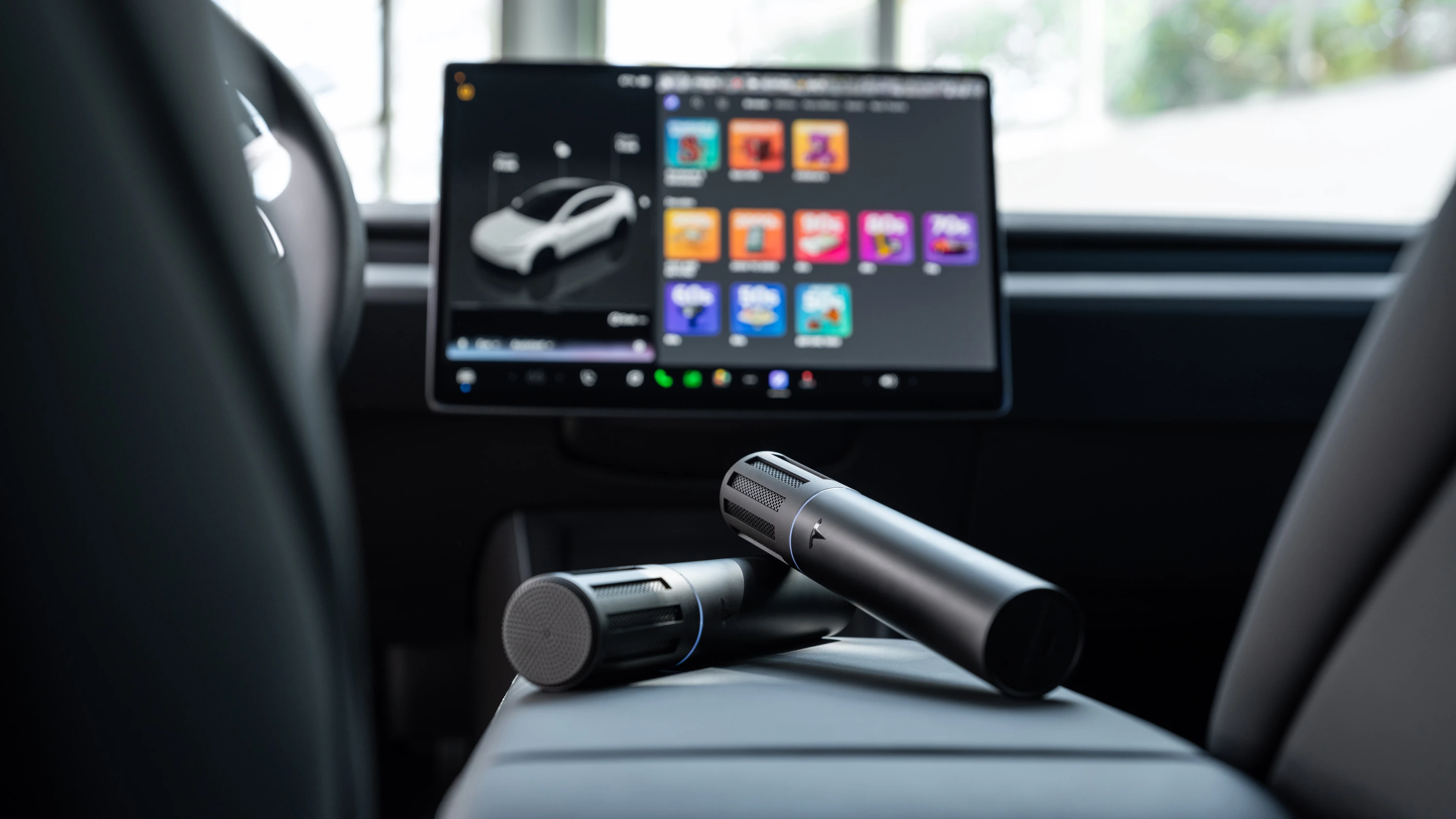
This is the biggest talking point for 2026. Basic Autopilot is gone. Before, every new Tesla came with Traffic-Aware Cruise Control *and* Autosteer (lane centring) as standard. Now, the Model 3 Standard only gets Traffic-Aware Cruise Control—it’s just adaptive cruise that keeps a set speed and distance from the car in front.
There’s no lane-centring included at all. To get any sort of steering help, you have to subscribe to the Full Self-Driving (FSD) Supervised package for $99 a month. You can’t buy it outright anymore. So, a feature many see as a basic driver’s aid, one that’s standard on cars like the Hyundai Ioniq 6 and Kia EV6, is now locked behind a monthly fee in the Tesla.
The in-cabin driver monitoring camera is still there and will be used to make sure you’re paying attention if you do subscribe to FSD. For buyers who expected a baseline of highway driving help, this is a big step backwards and the main reason the Model 3 Standard doesn’t score higher.
At a Glance: How the Tesla Model 3 Stacks Up
| Model | Price (USD) | Power (hp) | 0-100 km/h (s) | Range (EPA mi / WLTP km) | DC Charging Peak (kW) | Warranty |
|---|---|---|---|---|---|---|
| 2026 Tesla Model 3 Standard | $36,990 | ~271 | ~6.1 | 321 / 436 | 175 | 4 yr / 80k km |
| BYD Seal Premium | ~$45,000* | 308 | 5.9 | N/A / 421 | 150 | 6 yr / 150k km |
| Polestar 2 Long Range SM | ~$49,000* | 299 | 6.2 | 320 / 592 | 205 | 5 yr / 100k km |
| Hyundai Ioniq 6 RWD LR | ~$46,000* | 225 | 7.4 | 361 / 614 | 233 | 5 yr / 100k km |
BYD Seal Premium
Softer ride, longer warranty, CarPlay/Android Auto, but slower charging and shorter range than the Model 3.
Polestar 2 LR Single Motor
Beautiful Scandinavian cabin, Google built-in, but pricier and a touch less efficient than the Model 3.
Hyundai Ioniq 6 RWD LR
800-volt 233 kW DC charging is unbeatable, but the swoopy roofline costs you rear headroom.
The electric sedan segment is fiercely competitive. Here’s how the 2026 Model 3 Standard compares to three of its closest rivals on paper. Price (USD) 0-100 km/h (s) DC Charging Peak (kW) :— :— :— **$36,990** ~6.1 175 ~$45,000* 5.9 150 ~$49,000* 6.2 205 ~$46,000* 7.4 233 *Prices are approximate USD conversions for comparative purposes. Actual local pricing will vary.*
2026 Tesla Model 3 vs BYD Seal: Which Is Better?
The BYD Seal Premium is the Tesla’s most obvious rival. It’s a similar shape, packs a good feature list, and is priced aggressively. Here’s how they stack up.
**Price:** The Tesla has a clear advantage here, starting at $36,990 USD. The BYD Seal Premium usually costs a few grand more, though exact pricing depends on where you are. On pure value, the Tesla leads.
**Performance:** Both are rear-wheel-drive sedans with similar muscle. The Seal has a bit more power on paper, but the Tesla’s 0-100 km/h time is almost the same (6.1s vs 5.9s). On the road, they feel much of a muchness.
**Charging & Efficiency:** This is a win for Tesla. The Model 3 charges faster at its peak (175 kW vs 150 kW) and, going by our testing, is more efficient in the real world (4.46 mi/kWh). The Seal is good, but the Tesla’s combo of efficiency and faster charging makes it a better long-distance tourer.
**Battery & Range:** On the WLTP cycle, the Tesla claims 436 km versus the Seal’s 421 km. Close, but the Tesla’s real-world range, thanks to its better efficiency, often feels more usable.
**Interior Quality & Features:** The BYD fights back hard here. It usually comes with a head-up display, a clever rotating touchscreen, proper Apple CarPlay and Android Auto, and a longer standard warranty. The materials can feel a smidge more premium inside the BYD. The Tesla’s counterpunch is its vastly superior software and sat-nav system.
**On-Road Feel:** The Tesla Model 3 has a firmer, sportier ride that tells you more about the road. The BYD Seal is tuned for a softer, comfier ride that glides over bumps better. It comes down to what you prefer: a more engaging drive or plush comfort.
> WHICH ONE IS BETTER? > **Buy the Model 3 Standard if** you value range, charging speed, top-notch software, and resale value. > **Buy the BYD Seal if** you want a softer ride, a longer warranty, CarPlay/Android Auto, and a head-up display as standard. > **Our pick** is the Model 3 Standard for most buyers — but the Seal Premium is a very strong competitor in its own right.
Safety, Warranty and Running Costs
The Tesla Model 3 is a safety star. It picked up the Euro NCAP "Best in Class" award for a Large Family Car, including a record score for child occupant protection. It’s also got a 5-star ANCAP rating and is an IIHS Top Safety Pick+. The airbag suite and strong structure give you great peace of mind.
Warranty is solid: 4 years or 80,000 km for the car in most places (5 years, unlimited km in Australia and New Zealand). The battery and drivetrain are covered for 8 years or 160,000 km, with a guarantee it’ll hold at least 70% of its capacity. Running costs are super low, with electricity costing a fraction of petrol, and maintenance is minimal because there are fewer moving parts to service.
Who Should Buy the 2026 Model 3 Standard?
Buy it if you:
– Want the best possible range and efficiency for your money. – Value a slick, industry-leading software and infotainment setup. – Plan to use the Tesla Supercharger network for easy long-distance trips. – Are happy with a minimalist interior and controlling everything via the touchscreen. – See the FSD subscription as an optional extra, not a must-have.
Skip it if you:
– Think adaptive cruise control with lane centring should be standard. – Prefer physical buttons for seat adjustment and a powered steering wheel. – Want built-in Apple CarPlay or Android Auto. – Are after a softer, more comfort-focused ride from your sedan.
⚡ Our Verdict
A compelling value EV undercut by a major driver-assist downgrade.
The 2026 Tesla Model 3 Standard is a textbook case of smart cost-cutting. It keeps the bits that make a Tesla desirable—brilliant software, the Supercharger network, amazing efficiency, and a strong safety shell—while making calculated, sometimes frustrating, deletions to hit that stunning $36,990 price. Dropping Basic Autopilot is a clear misstep that hurts its value against a growing list of capable rivals. That said, for the buyer who wants the most range and the best tech ecosystem for the least cash, and who can live without built-in lane centring, the Model 3 Standard is a uniquely tempting package. It’s not the plushest or most feature-packed EV in its class, but it might just be the smartest. Our verdict: 8.4 out of 10.
Frequently Asked Questions
What is the starting price of the 2026 Tesla Model 3 Standard?
It starts at $36,990 USD. In Australia, the Model 3 RWD kicks off from around AU$54,900 before on-road costs.
What is the real-world range of the Model 3 Standard?
It’s rated for 321 miles (517 km) on the EPA cycle. During our testing, including sustained highway driving, its exceptional 4.46 mi/kWh efficiency means it can comfortably hit that number.
How fast does it charge?
On a Tesla V3/V4 Supercharger, it can DC fast charge at up to 170-175 kW. That gets you from 10-80% in about 25-30 minutes, and a quick 15-minute stop can add up to 270 km of range.
What’s the difference between Autopilot and FSD on this car?
For 2026, Basic Autopilot (which included lane centring) has been dropped. The Standard now only has Traffic-Aware Cruise Control. To get any lane-centring help, you need to subscribe to Full Self-Driving (FSD) Supervised for $99 a month.
How does it compare to the BYD Seal?
The Tesla is cheaper, charges faster, and has better software. The BYD Seal typically offers a softer ride, a longer warranty, and includes Apple CarPlay/Android Auto. The Tesla’s efficiency and charging network give it the edge for long trips.
What is the warranty coverage?
The vehicle warranty is 4 years/80,000 km in most markets (5 years/unlimited km in Australia/New Zealand). The battery and drive unit are covered for 8 years/160,000 km, guaranteeing at least 70% capacity retention.
How is the Standard trim different from the Premium?
Key differences are: Standard has a smaller battery (321 vs 363 mi EPA), textile/vegan leather seats (vs full vegan leather), a 15.4-inch screen (vs a rumoured 16-inch), no seat adjustment buttons, manual steering column, downgraded audio, no rear screen, and no FM tuner. The Premium also adds ventilated seats and an Alcantara headliner.
