

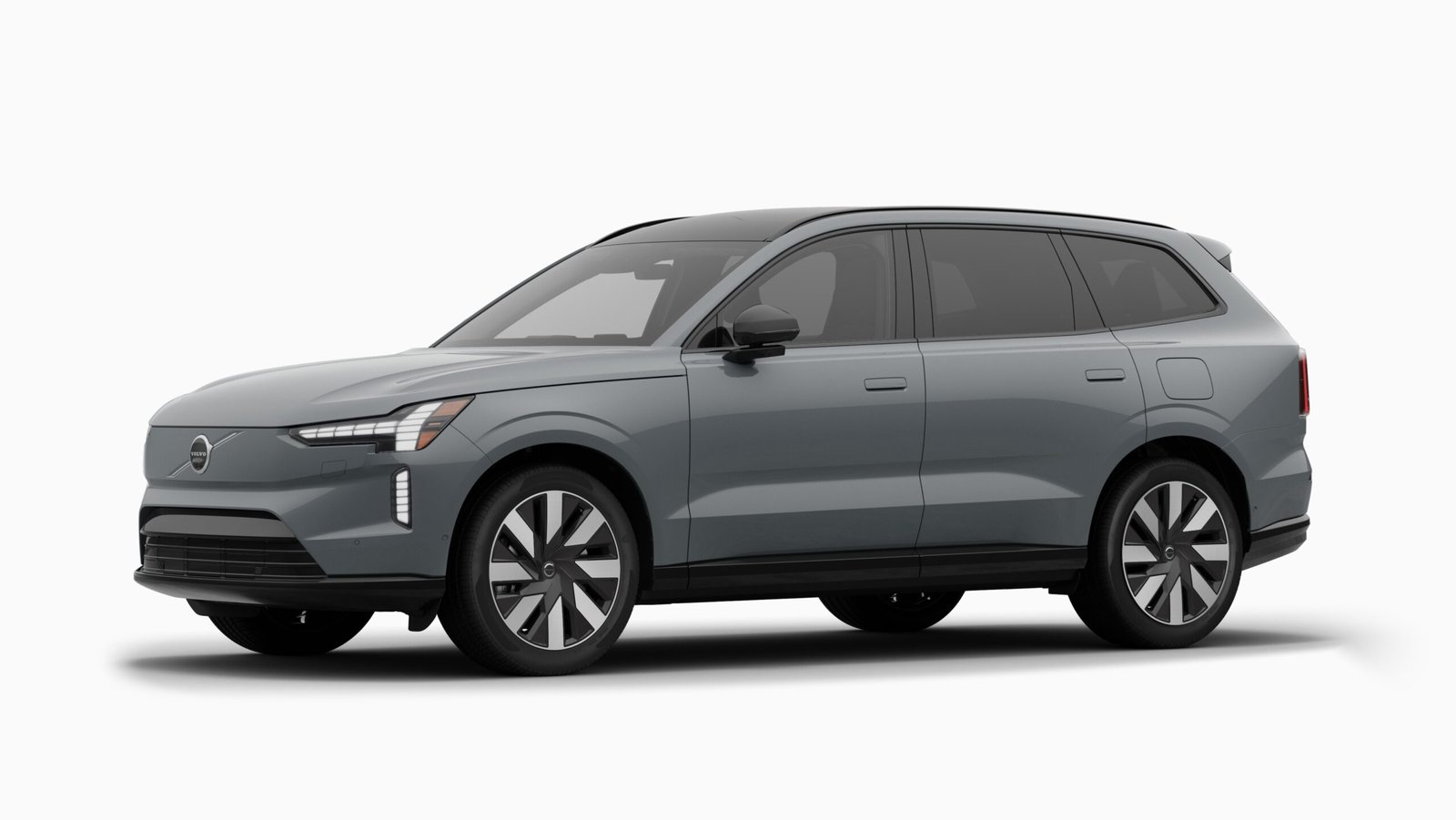
2026 Volvo EX90 Review: Scandinavian Luxury Meets 800V Power
Safe, serene and seriously quick, but not without compromise

2026 Volvo EX90 luxury 7-seat electric SUV
Price
$124,990
0-100 km/h
4.9 s
Battery (kWh)
106-111
Power (kW)
300-380
⚡ Quick Verdict
: Sweden’s all-electric flagship, the 2026 Volvo EX90, lands in Australia from AU$124,990. It pairs a 570 km WLTP range with a new 800V system that unlocks 350 kW DC charging—about 250 km of range added in 10 minutes. Inside, you’re treated to a beautifully calm Scandinavian cabin, anchored by an optional Bowers & Wilkins 25-speaker audio system and Google infotainment on a 14.5-inch screen. Volvo’s safety focus is clear with its five-star Euro NCAP score. That said, its 2.8-tonne mass is noticeable over bumps, the third row is better for kids, and the rechargeable key fob is an awkward piece of tech. If your priorities are serenity, design, and safety over ultimate practicality, the EX90 is a compelling family hauler.
✓ The Good
- +Class-leading five-star Euro NCAP safety rating
- +Stunning 25-speaker Bowers & Wilkins audio system
- +350 kW DC fast charging via new 800V architecture
- +Exceptionally quiet, refined cabin experience
- +Strong 570 km WLTP range for a seven-seater
- +Heavy 2.8-tonne kerb weight felt over bumps
- +Third row suits children better than adults
- +Rechargeable key fob is fiddly and easy to lose
- +Digital-only window controls require patience
✗ The Trade-offs
- −Heavy 2.8-tonne kerb weight felt over bumps
- −Third row suits children better than adults
- −Rechargeable key fob is fiddly and easy to lose
- −Digital-only window controls require patience
📑 In This Review
It’s not every day we get to drive a new Volvo that feels this significant. The 2026 EX90 is the Swedish brand’s all-electric, seven-seat flagship, and it arrives in Australia with a serious brief: blend Scandinavian calm with genuine long-distance EV capability. We spent a week with it to see if it delivers.
Pricing and Trim Walk
In Australia, the EX90 range is straightforward. You start with the Plus Twin Motor at AU$124,990 and step up to the Ultra Twin Motor Performance for AU$134,990. For context, in the US the range kicks off at US$77,990 and climbs to US$90,640, while in the UK you’re looking at around £85,000 to £100,000.
The Plus gives you the core package: dual-motor all-wheel drive, a 106 kWh battery, air suspension, the big 14.5-inch Google-powered infotainment screen, a 9-inch driver’s display, heated seats front and rear, a panoramic roof, and Volvo’s full suite of advanced driver assistance. Fork out for the Ultra and you get the Performance powertrain boost to 380 kW, bigger 22-inch wheels, the outstanding Bowers & Wilkins 25-speaker audio with Dolby Atmos, massaging front seats, and a head-up display.
Both trims let you choose between a six-seat layout with second-row captain’s chairs or a seven-seat setup. The seven-seat version even has a clever integrated booster cushion in the centre of the second row—a thoughtful touch for families with younger kids.
It’s positioned above mainstream three-row electric rivals like the Kia EV9 but undercuts German luxury options like the BMW iX. Given its standard equipment and Volvo’s safety rep, the pricing feels fair for the premium electric SUV class.
Design and Presence
The EX90 clearly marks Volvo’s design shift into its electric era. It’s about 10 centimetres longer than the old XC90 but slightly lower and narrower, giving it a sleeker, more aerodynamic shape. Gone is the boxy ruggedness; this is pure luxury.
Up front, the signature Thor’s Hammer LED daytime running lights have a new trick. As you approach, the headlight units perform a subtle mechanical wink before the main beams light up—a little theatrical touch that feels properly premium. The rest of the nose is clean and mostly closed off, since there’s no engine to cool, giving it a calm, solid look.
The flush door handles sit perfectly level with the bodywork. They glide out automatically when the car detects the key, or you can slide a finger underneath. It’s a genuinely satisfying bit of daily interaction and helps the EX90 cut through the air efficiently, which is crucial for maximising range.
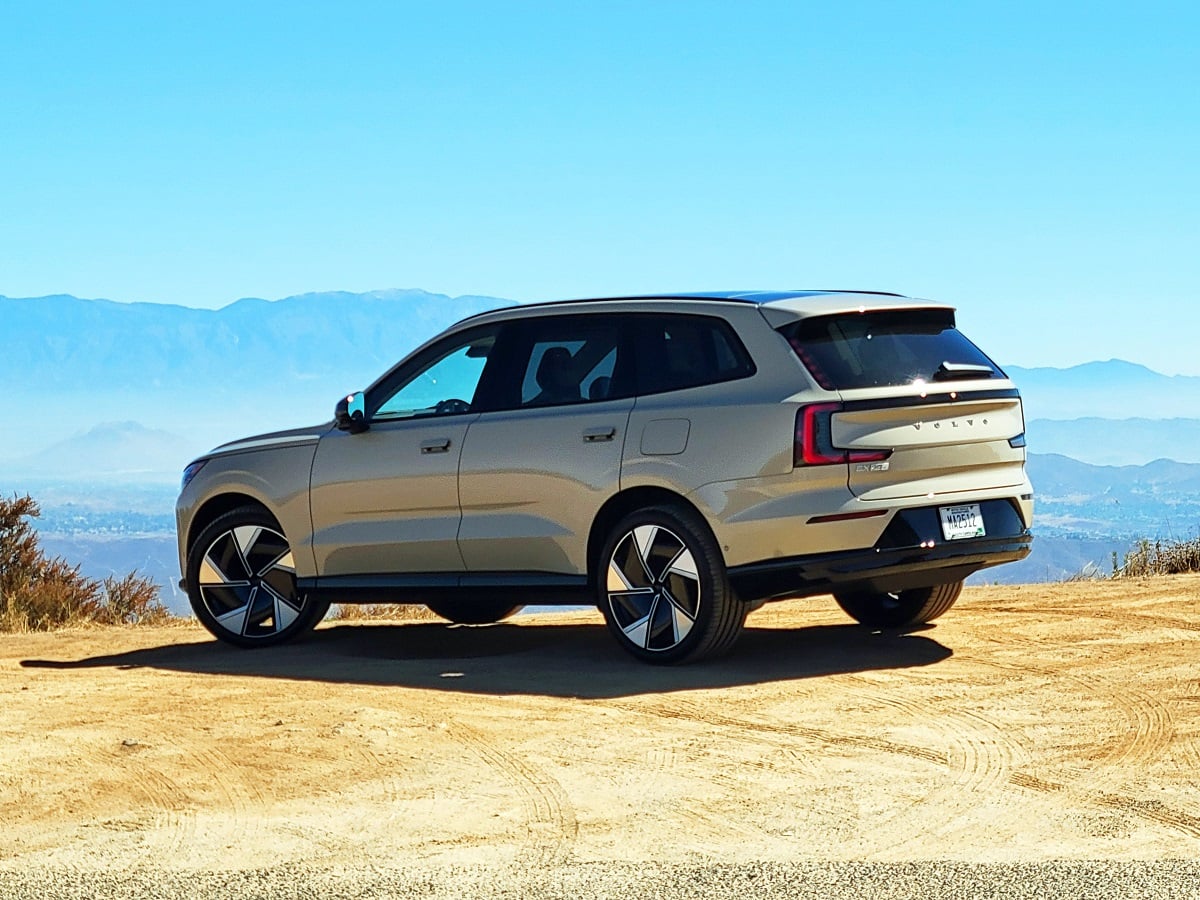
Our test car rode on 22-inch alloys with no rugged plastic cladding. This is a luxury vehicle through and through, and it makes no pretence about going off-road. At the back, a full-width light bar ties the design together neatly. There’s also a noticeable sensor pod on the roofline, though its role has changed for 2026, which we’ll get to in the safety section.
Overall, the EX90’s design is restrained but handsome. It doesn’t shout for your attention; it earns it through its proportions and meticulous details. Parked next to its German rivals, the Volvo looks lighter and more contemporary—a genuinely fresh presence in a segment that can sometimes feel a bit conservative.

Inside the Cabin
Climb into the EX90 and Volvo’s Scandinavian minimalism hits you straight away. The dash is clean and uncluttered, dominated by a portrait-oriented 14.5-inch touchscreen running Google’s Android Automotive OS. It’s powered by the Unreal Engine, which means buttery-smooth animations and quick responses. Google Maps, Assistant, and the Play Store are all baked in, and wireless Apple CarPlay is there for iPhone users.
Nearly 50 kilograms of recycled or bio-based materials are used in the cabin. The overall feel is undeniably premium, though some of the birch wood trim on the dash and doors feels a bit thinner than the rich slabs you might remember from older Volvos. The crystal Orrefors gear selector, though, is a beautiful centrepiece that adds real Scandinavian craft to the console. It’s a small thing, but it lifts the sense of occasion every time you drive.
Volvo’s gone digital-only with the window controls, replacing physical switches with touch-sensitive pads. There are just two switches for the front windows, and you need to hit a toggle to switch to the rears. It prioritises clean aesthetics over ease of use, and we found it took genuine muscle memory to master while driving—a frustration we hope Volvo rethinks down the track.
With all three rows up, the boot offers 310 litres of space plus a deep underfloor area. Drop the electrically folding third row and that grows to 665 litres; fold the second row flat and you’ve got nearly 1,900 litres. There’s a handy button in the boot that lowers the rear air suspension to reduce the load lip height—a small but genuinely helpful feature for heavy items or getting pets in and out.
For music lovers, the optional Bowers & Wilkins 25-speaker system with Dolby Atmos and 1,610 watts is simply outstanding. It’s, without exaggeration, one of the finest in-car audio systems money can buy at any price.

Range, Battery and 800V Charging
The big news for the 2026 model year is Volvo’s new 800-volt electrical architecture. Previously capped at 250 kW on the 2025 car, the EX90 now accepts up to 350 kW DC, making it one of the fastest-charging seven-seat electric SUVs you can get.
Battery size depends on the spec. The single-motor, rear-drive version uses a 92 kWh pack, good for up to 291 miles (about 470 km) on the EPA cycle. The dual-motor all-wheel-drive models get 106 kWh in the US and 111 kWh in Australia, delivering up to 305 miles of EPA range or 570 km on the more generous WLTP cycle.
In the real world, you should expect somewhere between 350 and 450 kilometres depending on how you drive, the terrain, climate, and how many people are on board. That’s a reasonable figure for a 2.8-tonne, three-row SUV, though the gap between claimed and real-world range is bigger than in smaller, lighter EVs. Worth factoring into your ownership thinking.
Where the EX90 really shines is at the charger. Plug into a suitably powerful DC station and Volvo claims you can add roughly 250 kilometres of range in just 10 minutes. The 10-to-80-percent sprint takes about 22 minutes under ideal conditions—a figure that fundamentally changes the long-distance ownership case for a vehicle this size.
For home charging, an 11 kW onboard AC charger handles overnight top-ups without drama. The jump from 400V to 800V isn’t just a spec-sheet upgrade; it’s a genuine quality-of-life improvement for families who regularly hit the highway.

Performance and On-Road Manners
The Twin Motor Performance variant produces 380 kW and 910 Nm of torque, firing the EX90 from zero to 100 km/h in 4.9 seconds. For a seven-seat luxury SUV weighing about 2.8 tonnes, that’s properly brisk—enough to pin you back in your seat during a quick merge or overtaking move. The lesser Twin Motor Plus still gives you a healthy 300 kW and 700 Nm, which is more than enough for daily driving.
On the road, the EX90’s defining characteristic is refinement. The cabin is exceptionally quiet—among the hushiest electric vehicles we’ve tested. Volvo’s added an extra acoustic layer to the side glass, and the result is near-total suppression of wind noise at highway speeds. Paired with the dual-chamber air suspension, the ride is genuinely serene. It floats over undulations with a cloud-like composure that fits its luxury billing perfectly.
That said, the air suspension can’t completely hide the vehicle’s mass. Over sharper bumps, potholes, and low-speed imperfections, the 2.8-tonne kerb weight makes itself known in a way that lighter rivals don’t. Hard braking also shows a tendency for the nose to dive more than we’d like. With no traditional anti-roll bars, there’s a degree of body roll through corners—noticeable given the EX90’s considerable length.
These aren’t dealbreakers. This is a luxury family transporter, not a sports car, and judging it through a performance lens would miss the point. For the vast majority of driving—urban errands, school runs, highway cruising—the EX90 delivers an experience that’s quiet, comfortable, and effortlessly composed. It excels exactly where its target buyers need it to.

How the 2026 Volvo EX90 Compares
| Spec | 2026 Volvo EX90 | Kia EV9 | Rivian R1S | BMW iX |
|---|---|---|---|---|
| Starting price (AUD) | $124,990 | $97,000 | n/a | $169,900 |
| Battery (kWh) | 106-111 | 99.8 | 109-141 | 105 |
| Power (kW) | 300-380 | 150-283 | 250-625 | 230-455 |
| WLTP/EPA range | 570 km / 305 mi | 512 km / 304 mi | up to 410 mi | 600 km / 380 mi |
| DC peak (kW) | 350 | 233 | 220 | 195 |
| 0-100 km/h | 4.9 s | 5.3 s | 3.0 s | 4.6 s |
| Seats | 6/7 | 6/7 | 7 | 5 |
| Drive | RWD/AWD | RWD/AWD | AWD | AWD |
| NCAP | 5 stars | 5 stars | 5 stars | 5 stars |
The EX90 enters a rapidly maturing segment of large electric SUVs, and the competition is tough. Its closest rival by body type and purpose is the Kia EV9, which undercuts it on price while offering a more spacious third row. The EV9 is the pragmatic choice; the EX90 is the premium one.
The Rivian R1S, which isn’t available here, swaps Scandinavian restraint for American adventure. It offers genuine off-road ability and blistering straight-line speed in its quad-motor form, but its cabin materials and overall refinement trail the Volvo’s. It also lacks the EX90’s sense of calm sophistication.
The BMW iX, meanwhile, matches the EX90 on badge prestige and beats it in a sprint to 100 km/h with 4.6 seconds. But it only seats five—a immediate disqualifier for bigger families. Its range of up to 600 km WLTP is competitive, but its 195 kW DC peak charging rate now looks dated next to the Volvo’s 350 kW.
What makes the EX90 stand out here is its blend of charging speed, cabin serenity, and safety credentials. The new 350 kW DC peak comfortably leads the field, and its five-star Euro NCAP score—achieved without the LiDAR sensor that was previously part of the spec—highlights the depth of Volvo’s safety engineering.
For buyers shopping this segment, the choice comes down to priorities: value and space (EV9), performance and adventure (R1S), badge and dynamism (iX), or safety, refinement, and charging speed (EX90).
2026 Volvo EX90 vs Kia EV9: Which Is Better?
This is the comparison that matters most for three-row electric SUV buyers. The Kia EV9 and Volvo EX90 occupy the same fundamental niche—a large, premium, fully electric seven-seater—yet they come at it from very different starting points.
On price, the EV9 has a clear win. Starting at AU$97,000 here, it undercuts the EX90 by nearly AU$28,000. In the US, the gap’s even wider, with the EV9 opening at roughly US$54,900 against the Volvo’s US$77,990. That’s a big chunk of cash that could cover years of charging costs or a solid home charger setup.
Performance goes to the Volvo. The EX90 Twin Motor Performance makes 380 kW and hits 100 km/h in 4.9 seconds, comfortably quicker than the EV9’s best of 283 kW and 5.3 seconds. The Volvo also has a larger battery—up to 111 kWh versus the EV9’s 99.8 kWh—and delivers a longer WLTP range of 570 km compared to 512 km.
Charging is where the EX90 pulls further ahead. Its new 800V system allows 350 kW DC peak charging—over 50 percent faster than the EV9’s 233 kW. For families who drive long distances often, this difference is real and tangible at the charger.
Inside, the philosophies differ further. The Volvo gives you a serene, Scandinavian cabin with premium materials, a stunning Bowers & Wilkins audio option, and Google Built-in infotainment. The Kia goes for a more futuristic, tech-forward look with dual curved screens and a slightly more intuitive physical control layout. Importantly, the EV9 offers genuinely usable third-row space for adults, whereas the EX90’s third row is tighter and better suited to kids. For a seven-seat family vehicle, this distinction matters a lot.
On the road, the Volvo is quieter and rides more smoothly, befitting its premium positioning. The Kia, despite its lower price, handles its weight more transparently and feels slightly more composed over sharp bumps—a surprising result that speaks to Kia’s chassis tuning skills.
| Metric | Volvo EX90 | Kia EV9 |
|---|---|---|
| Starting price (AUD) | $124,990 | $97,000 |
| Battery | 106-111 kWh | 99.8 kWh |
| WLTP range | 570 km | 512 km |
| DC peak | 350 kW | 233 kW |
| Peak power | 300-380 kW | 150-283 kW |
| 0-100 km/h | 4.9 s | 5.3 s |
| Third-row room | Tight for adults | Genuinely adult-sized |
| Cabin feel | Scandinavian calm, premium materials | Futuristic, tech-forward |
| Warranty | 5 yr / unlimited km | 7 yr / unlimited km |
Buy the EX90 if you value cabin refinement, safety pedigree, premium audio, and the fastest possible charging in this class. It’s the luxury choice, and it genuinely feels like one every time you open the door.
Buy the EV9 if you need a genuinely usable third row for adults, want to save nearly AU$30,000, and value Kia’s industry-leading seven-year warranty. It’s the smarter family buy by a comfortable margin.
**Our pick** is the Kia EV9 for most families. Its combination of space, value, and warranty coverage is extremely hard to overlook. But if the budget allows and you prioritise serenity, Scandinavian luxury, and class-leading charging speed, the EX90 is the more special vehicle to live with day to day.
Safety and Warranty
Safety has always been Volvo’s reason for being, and the EX90 keeps that going strong. It earned a full five-star Euro NCAP rating, scoring 92 percent for adult occupant protection, 93 percent for child occupants, and 86 percent for safety assist. In Australia, ANCAP shares data with Euro NCAP and has confirmed the five-star rating for local buyers.
Standard safety kit includes a comprehensive camera and radar array, driver monitoring that spots fatigue and distraction, and an internal radar that won’t let the car be locked if it detects a heartbeat from a child or pet left inside. That last feature alone could be a lifesaver, and it’s exactly the kind of thoughtful, real-world safety innovation that defines Volvo’s approach.
Notably, Volvo’s dropped the roof-mounted LiDAR sensor for 2026 and ended the supplier contract. While the sensor pod was a headline feature before—marketed as prep for future autonomous driving—its removal simplifies the spec and suggests Volvo might be rethinking its approach to self-driving hardware. The EX90 still has a full sensor suite without it, and its five-star safety score was achieved in this configuration.
Warranty coverage is five years with unlimited kilometres for the car and eight years for the battery pack. While this is competitive, it falls noticeably short of Kia’s seven-year unlimited-kilometre warranty on the EV9—a point worth weighing if long-term ownership certainty matters to you.
Who Should Buy the 2026 Volvo EX90?
The EX90 is a great fit for families who put safety, refinement, and Scandinavian design above all else. If your life revolves around school runs, weekend errands, and the occasional longer trip, and you want a car that makes every journey feel like a small retreat from the outside world, the EX90 delivers. It’s especially suited to buyers who prioritise interior quality, audio fidelity, and the peace of mind that comes with Volvo’s safety reputation. If you rarely use the third row for adults—or your kids are still young enough to appreciate the integrated booster seat—the packaging works well. The new 350 kW charging also makes it a genuinely viable long-distance tourer, fixing a barrier that was harder to justify on the 2025 model.
On the flip side, the EX90 isn’t for everyone. If you regularly carry adults in the third row, the Kia EV9 offers meaningfully more space at a substantially lower price. Buyers who prefer physical controls and straightforward ergonomics might find the all-digital interface frustrating daily. If pure value for money is your main driver, the EV9 is still very hard to beat. And if weekend adventures on dirt roads are part of your life, the Rivian R1S—where available—is a better tool for that job. The EX90 is a luxury urban and highway companion, and it should be judged on those terms.
⚡ Our Verdict
Safe, serene and seriously quick, but not without compromise
The 2026 Volvo EX90 is a deeply impressive electric SUV that delivers on Volvo’s core promises of safety, refinement, and Scandinavian design. The new 800V architecture and 350 kW charging ability transform the ownership case, making it one of the fastest-charging seven-seat electric vehicles on sale. The cabin is serene, the Bowers & Wilkins audio system is nothing short of exceptional, and the driving experience prioritises comfort over sportiness in a way that suits its family-first mission perfectly. Its weaknesses—the heavy kerb weight, tight third row, and fiddly digital controls—are real but manageable for its target audience. At AU$124,990, it’s not cheap, but it undercuts the BMW iX while offering more seats, more range, and faster charging. The EX90 is the best Volvo has ever made, and for the right family, it’s one of the finest electric SUVs on sale today. Safe, serene and seriously quick, but not without compromise.
Frequently Asked Questions
What is the price of the 2026 Volvo EX90?
In Australia, the 2026 Volvo EX90 starts at AU$124,990 for the Plus Twin Motor and rises to AU$134,990 for the Ultra Twin Motor Performance. In the United States, pricing ranges from US$77,990 to US$90,640 depending on specification. UK buyers should budget from approximately £85,000 upwards.
What is the range of the 2026 Volvo EX90?
The Twin Motor variants offer up to 570 km on the WLTP cycle or up to 305 miles on the EPA cycle. The single-motor rear-wheel-drive model achieves up to 291 miles (approximately 470 km) on the EPA cycle. Real-world range will vary between roughly 350 and 450 km depending on conditions, driving style, and passenger load.
How fast does the 2026 Volvo EX90 charge?
Thanks to a new 800-volt architecture for 2026, the EX90 accepts up to 350 kW DC — up from 250 kW on the previous model year. Under ideal conditions, it can charge from 10 to 80 percent in approximately 22 minutes, or add around 250 km of range in just 10 minutes on a suitable DC charger.
Is the 2026 Volvo EX90 a 7 seater?
Yes. The EX90 is available with either a six-seat layout featuring second-row captain’s chairs or a seven-seat configuration with a three-person second-row bench. The third row is best suited to children or shorter adults, with 310 litres of boot space remaining when all seats are in use.
Does the 2026 Volvo EX90 still have LiDAR?
No. Volvo has dropped the roof-mounted LiDAR sensor for the 2026 model year and ended the supplier contract. The EX90 retains a comprehensive suite of cameras, radar, and driver monitoring systems, and its five-star Euro NCAP safety rating was achieved without the LiDAR sensor.
How safe is the 2026 Volvo EX90?
The EX90 earned a five-star Euro NCAP rating with scores of 92 percent for adult protection, 93 percent for child protection, and 86 percent for safety assist. ANCAP has confirmed the rating for Australian buyers. Standard safety features include driver fatigue detection, an internal child and pet radar that prevents accidental lock-ins, and a full suite of advanced driver assistance systems.
2026 Volvo EX90 vs Kia EV9: which is better?
It depends on your priorities. The Kia EV9 is more affordable (from AU$97,000), offers a genuinely adult-sized third row, and comes with a seven-year warranty. The Volvo EX90 delivers a more premium cabin, faster 350 kW charging, longer range, and stronger performance. For most families, the EV9 is the smarter buy; for those who prioritise luxury and refinement, the EX90 is the more special vehicle.
