

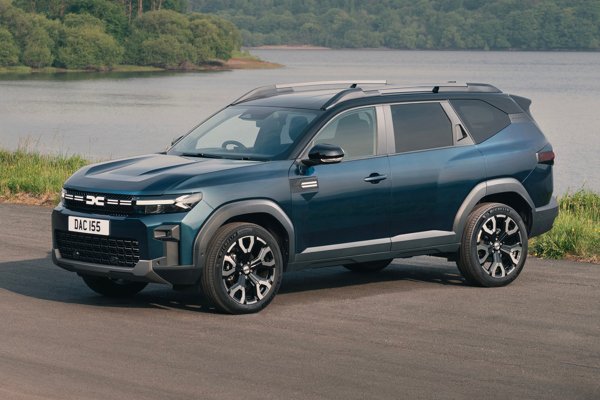
2025 Dacia Bigster Review: The Family SUV Undercut
Brilliant value, compromised safety
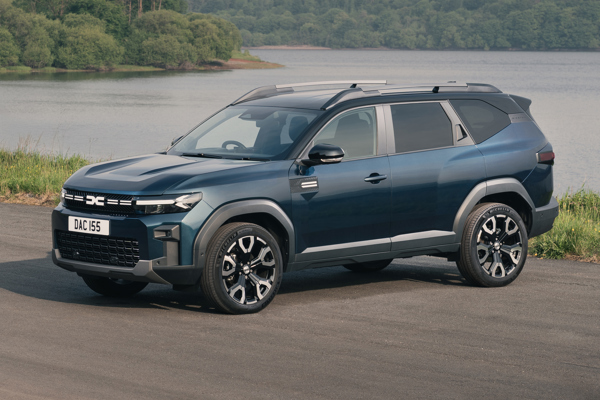
2025 Dacia Bigster front three-quarter view
⚡ Quick Verdict
The 2025 Dacia Bigster starts at £25,215, which makes it the most affordable mid-size family SUV you can buy in the UK right now. With a class-leading 677-litre boot, the 1.8 Hybrid 155 powertrain returning 60.1 mpg on the WLTP cycle and a surprisingly generous equipment list, it makes a strong case on paper. The catch? A 3-star Euro NCAP safety rating. It’s acceptable, but it’s a long way from the five-star scores the Qashqai, Tucson and Sportage all picked up. For families who care most about value and space, the Bigster is a genuinely smart buy.
—
## What Is the 2025 Dacia Bigster?
✓ The Good
- +Class-leading 677-litre boot — bigger than a Tiguan, Sportage or Qashqai
- +Genuinely efficient Hybrid 155 returns 50+ mpg in real-world driving
- +Undercuts rivals by £5,000 or more without feeling like a penalty box
- +Electric tailgate and optional panoramic roof at this price point
- +Comfortable, settled motorway ride that absorbs poor surfaces well
✗ The Trade-offs
- −3-star Euro NCAP rating — a significant concern for family buyers
- −Hard plastics throughout the cabin with no soft-touch materials
- −Hybrid brakes poorly calibrated with abrupt regen-to-friction transition
- −Over-assisted steering lacking feel and progressive weight build-up
📑 In This Review
- What Is the 2025 Dacia Bigster?
- Price, Trims and Value
- Design and Practicality
- Interior and Technology
- Powertrains: Mild Hybrid vs Full Hybrid
- How It Drives
- At a Glance: How the Bigster Stacks Up
- Dacia Bigster vs Skoda Karoq: Which Is Better?
- Safety and Warranty
- Who Should Buy the Dacia Bigster?
- Final Verdict
- Frequently Asked Questions
The 2025 Dacia Bigster starts at £25,215, which makes it the most affordable mid-size family SUV you can buy in the UK right now. With a class-leading 677-litre boot, the 1.8 Hybrid 155 powertrain returning 60.1 mpg on the WLTP cycle and a surprisingly generous equipment list, it makes a strong case on paper. The catch? A 3-star Euro NCAP safety rating. It’s acceptable, but it’s a long way from the five-star scores the Qashqai, Tucson and Sportage all picked up. For families who care most about value and space, the Bigster is a genuinely smart buy. —
What Is the 2025 Dacia Bigster?
Dacia’s spent the past decade quietly rewriting what affordable motoring looks like. The Sandero is still Europe’s best-selling retail car, the Duster has become the go-to recommendation for anyone after rugged utility without a painful price tag, and the brand’s sales keep climbing across the continent. The Bigster is Dacia’s most ambitious move yet — a proper mid-size family SUV that pitches the Romanian brand into a segment it’s never contested before.
At 4.57 metres long, the Bigster is the largest car Dacia has ever built. It sits on a stretched version of the CMF-B platform that underpins the smaller Duster, picking up meaningful rear legroom and a dramatically bigger boot in the process. Where the Duster is a compact crossover best suited to couples or young families, the Bigster targets buyers who need room for prams, dogs, luggage and all the gear that comes with family life.
The competition is stiff. We’re talking Skoda Karoq, Nissan Qashqai, Hyundai Tucson, Kia Sportage, even the Volkswagen Tiguan. Every one of those costs thousands more in equivalent specification, and that pricing gap is the Bigster’s central proposition. Dacia’s betting that plenty of buyers will happily accept harder cabin plastics and a shorter warranty in exchange for a car that does the core job — hauling people and their stuff — better than anything else at the price.
What sets the Bigster apart from the Duster beyond the obvious size advantage is a genuine step up in equipment. An electric tailgate, a 10.1-inch infotainment screen, a digital instrument cluster and an optional panoramic sunroof are all features Dacia’s never offered before. Whether that combination of space, kit and value is enough to overcome the brand’s budget image is the question we set out to answer.
—
Price, Trims and Value
This is where the Bigster makes its strongest impression. In the UK, the range opens at £25,215 for the Essential trim with the 1.2-litre mild-hybrid petrol engine, a six-speed manual gearbox and front-wheel drive. That figure is striking when you consider that a base Nissan Qashqai starts north of £30,000 and a Hyundai Tucson from around £33,000.
The trim ladder runs through four levels: Essential, Expression, Journey and Extreme. Essential covers the basics — air conditioning, cruise control, the 10.1-inch touchscreen with smartphone mirroring and 17-inch steel wheels. Expression adds dual-zone climate control, rear parking sensors and 17-inch alloys. Journey brings the 10.1-inch digital instrument cluster, the Arkamys 3D six-speaker audio system and keyless entry. Range-topping Extreme adds the electric tailgate, heated front seats, the panoramic sunroof and part-synthetic leather upholstery.
The Hybrid 155 — the powertrain we’d recommend to most buyers — starts at £28,190 in Expression trim. Even in fully loaded Extreme specification it stays below £30,000. To put that in perspective, a mid-spec Skoda Karoq with the 1.5 TSI engine and a comparable level of equipment sits around £32,000–£34,000. The Hyundai Tucson Hybrid, meanwhile, doesn’t even begin below £33,895.
That £5,000-plus saving isn’t an illusion born of missing equipment. The Bigster genuinely offers features — electric tailgate, panoramic roof, full hybrid powertrain — that some rivals charge extra for or simply don’t offer at this price point. The trade-off is interior material quality and a shorter warranty, which we’ll get to shortly. But on the pure maths, the Bigster’s value argument is difficult to argue with.
—
Design and Practicality
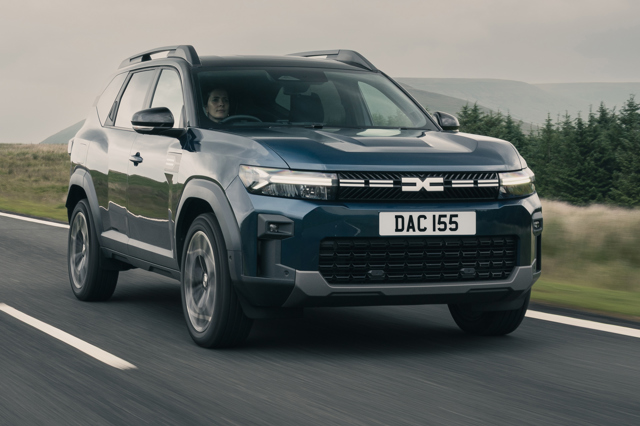
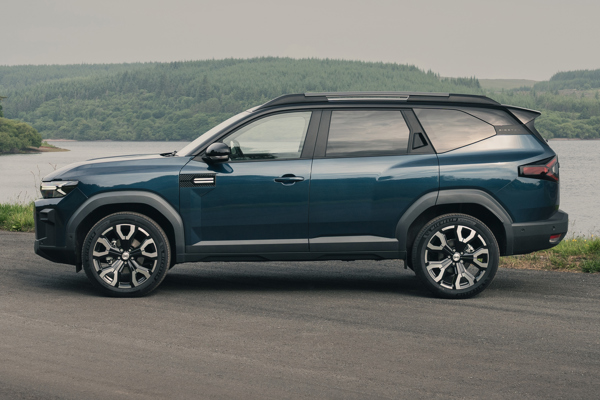
Dacia’s design language has matured considerably in recent years, and the Bigster is its best expression yet. The front end borrows heavily from the Duster, with slim LED daytime running lights sitting above a broad grille and chunky lower bumper. Along the sides, generous plastic cladding wraps the wheel arches and runs along the sill line, giving the car a rugged, outdoorsy character that suits the segment. The silhouette is clean and purposeful. Parked next to a Qashqai or Karoq, it holds its own visually. This doesn’t look like a budget car.
The real story, though, is at the back. Pop the electric tailgate — a Dacia first, standard on Extreme trim — and you’re staring at a 677-litre boot in the mild-hybrid front-wheel-drive model. That figure leads the class by a comfortable margin: 25 litres more than a Volkswagen Tiguan, 90 litres more than a Kia Sportage, 156 litres more than a Skoda Karoq and 173 litres more than the Nissan Qashqai. The full hybrid drops to 612 litres courtesy of its battery pack, but that still comfortably leads the class. A 40:20:40 split-folding rear bench is standard, and pulling the release handles from within the boot drops the seats flat to create a genuinely van-like load area.
Rear passenger space is good rather than exceptional. Legroom is perfectly adequate for adults, but the platform’s Duster origins mean the cabin isn’t quite as wide as some rivals. Three adults across the back bench will feel the squeeze on longer journeys. For two adults and a child seat, though, the Bigster is entirely comfortable. The optional panoramic sunroof adds an airy feel to the cabin, though it does eat slightly into headroom for taller passengers.
Overall, we found the packaging impressive for the money. A genuinely large boot, usable rear space and features like the electric tailgate and panoramic roof mean the Bigster delivers on its core promise: it’s a practical family SUV that happens to cost thousands less than the competition.
—
Interior and Technology
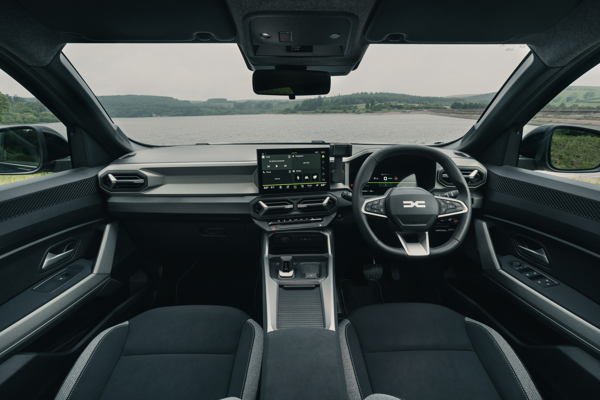
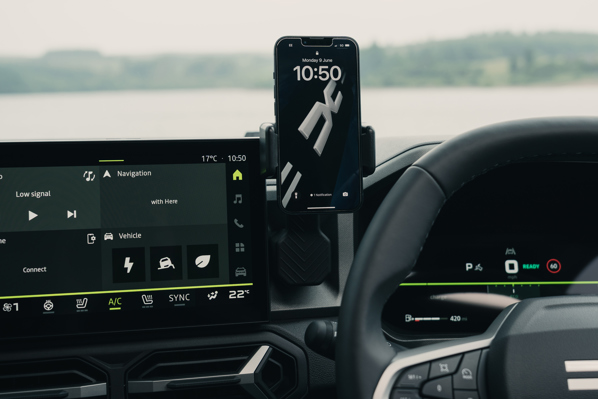
Step inside and the value-first philosophy hits you straight away. The dashboard layout is clean and functional, with the 10.1-inch touchscreen front and centre. It runs Dacia’s latest infotainment system, which supports wireless Apple CarPlay and Android Auto, and the graphics are sharp enough. Menu transitions can be sluggish, though — moving between the navigation, media and vehicle settings screens produces noticeable pauses that faster processors in rival systems avoid.
The 10.1-inch digital instrument cluster, available from Journey trim upwards, is a welcome inclusion at this price point. It’s configurable to a degree, showing navigation prompts, trip data and driver-assistance information in a clear, readable format. The Arkamys 3D six-speaker audio system delivers reasonable sound quality. It won’t trouble a premium Harman Kardon or Bang & Olufsen setup, but for everyday listening it’s perfectly fine.
The elephant in the room is material quality. Hard plastics dominate every surface you touch — the dashboard top, the door cards, the centre console. There’s almost no soft-touch material to speak of. While everything feels solidly screwed together, the tactile experience is a world apart from the squidgy, textured plastics you’ll find in a Karoq or Tucson. Dacia has been upfront about this being a deliberate trade-off to keep costs down, and it’s one that some buyers will accept readily while others will find off-putting.
Rear-seat occupants get their own air vents and a pair of USB-C charging ports, which is a thoughtful inclusion. Dual-zone climate control features from Expression trim upwards. The Bigster’s interior does the job it needs to do without pretending to be anything it isn’t. It’s honest, functional and spacious, if not particularly pleasant to touch.
—
Powertrains: Mild Hybrid vs Full Hybrid
Dacia offers three distinct powertrain options for the Bigster, and picking the right one makes a meaningful difference to the ownership experience.
The entry point is a 1.2-litre turbocharged mild-hybrid petrol engine producing 138 horsepower, paired with a six-speed manual gearbox and front-wheel drive. It hits 0–62 mph in 9.8 seconds and returns a claimed 51.4 mpg on the WLTP cycle. It’s a solid, straightforward setup that’ll suit buyers who prefer a manual gearbox and have no need for all-wheel drive. For the money, it’s hard to criticise.
Next up is the same 1.2-litre mild-hybrid unit detuned to 128 horsepower and paired with a six-speed manual and four-wheel drive. The 0–62 mph time stretches to 11.2 seconds and claimed economy drops to 46.3 mpg. Unless you genuinely need the security of four-wheel drive for rural lanes or occasional unpaved surfaces, this variant is difficult to recommend. It’s slower, thirstier and pricier than the front-drive alternative, and the Bigster’s soft suspension and road-biased tyres mean it’s not a serious off-roader.
The powertrain we’d recommend to the vast majority of buyers is the Hybrid 155. It pairs a 1.8-litre petrol engine with an electric motor for a combined 153 horsepower and a healthy 280 Nm of torque. Drive goes through a multi-mode automatic transmission to the front wheels only. The 0–62 mph time is 9.5 seconds and Dacia claims 60.1 mpg on the WLTP cycle.
In real-world driving, we found the Hybrid 155 comfortably returns over 50 mpg — a figure backed up by numerous owner reports across Europe. The system can run on electric power alone at speeds up to around 40 mph, which makes town driving impressively quiet and efficient. The hybrid system was co-developed with HORSE, a powertrain joint venture between Renault and Geely, and uses technology derived from Renault’s established E-Tech hybrid architecture.
Starting at £28,190 in Expression trim, the Hybrid 155 represents a modest step up from the entry-level car but delivers a substantially better driving experience, superior fuel economy and the convenience of an automatic gearbox. For the majority of UK buyers, it’s the engine to have.
—
How It Drives
Comfort. That’s the word that defines the Bigster’s dynamic character. The suspension is tuned softly, and on motorway journeys it does an excellent job of absorbing imperfections that would send shudders through sportier rivals. Road surface changes, expansion joints and undulations are dispatched with a calmness that makes the Bigster a genuinely relaxing long-distance companion. For a family SUV at this price point, it’s exactly the right approach.
Around town, the Hybrid 155 impresses with its ability to creep along silently on electric power. Pulling away from traffic lights, manoeuvring in car parks and trundling through 30 mph zones all happen with minimal engine intervention. When the petrol engine does fire up, it does so smoothly, and the transition between electric and hybrid modes is largely seamless in everyday driving.
There are dynamic shortcomings worth flagging, though. The brakes on the hybrid model are poorly calibrated. The transition from regenerative braking to friction braking is abrupt and inconsistent. In stop-start traffic it can catch you off guard with a sudden bite that requires recalibrating your foot. We found this to be the single most frustrating aspect of the driving experience, and it’s an area where rival hybrid systems from Toyota and Hyundai are significantly more polished.
The steering is another weak point. There’s too much power assistance and insufficient progressive weight build-up as you turn the wheel. At low speeds this makes the Bigster easy to manoeuvre, but on faster roads it robs the driver of confidence and connection. The multi-mode automatic gearbox can also feel strained under hard acceleration, with noticeable pauses between ratio changes. At higher motorway speeds, wind noise does creep into the cabin — a reminder of the cost savings made elsewhere in the package.
None of these issues are deal-breakers in isolation, and buyers choosing the Bigster for its comfort, space and value will find the driving experience broadly satisfactory. But it’s important to set expectations: this is a car that prioritises ease over engagement, and it doesn’t mask its budget origins when pushed.
—
At a Glance: How the Bigster Stacks Up
| Model | Starting Price (UK) | Power | Boot Space | Euro NCAP | Warranty |
|---|---|---|---|---|---|
| 2025 Dacia Bigster Hybrid 155 | £28,190 | 153 hp | 612 L | 3 stars | 3 yr/60k |
| Skoda Karoq 1.5 TSI | from £30,500 | 148 hp | 521 L | 5 stars | 3 yr/60k |
| Nissan Qashqai e-Power | from £32,135 | 187 hp | 504 L | 5 stars | 3 yr/60k |
| Hyundai Tucson Hybrid | from £33,895 | 215 hp | 577 L | 5 stars | 5 yr/unlim |
Skoda Karoq
More polished cabin and a 5-star NCAP, but the boot is 156 litres smaller and there is no full-hybrid option
Nissan Qashqai e-Power
Smoother e-Power drivetrain and a quieter cabin, but the 504-litre boot trails the Bigster by 173 litres and the price climbs roughly £4,000 higher
Hyundai Tucson Hybrid
Best warranty in the class (5 years) and a five-star NCAP, but you pay roughly £5,700 more for a similarly sized car
The family SUV segment is one of the most hotly contested in the UK, and the Bigster enters the ring against established heavyweights. On price, it starts thousands below its closest competitors. On boot space, it leads the class outright. The question is whether those headline figures are enough to offset the areas where the Bigster concedes ground — safety, cabin refinement and warranty coverage. Here’s how the numbers compare against three of the cars most likely to appear on a Bigster buyer’s shortlist. Starting Price (UK) Boot Space Warranty ——— £28,190 612 L 3 yr/60k Skoda Karoq 1.5 TSI 148 hp 5 stars from £32,135 504 L 3 yr/60k Hyundai Tucson Hybrid 215 hp 5 stars The Bigster’s strengths are immediately visible: nothing at this price offers comparable boot space or a full hybrid powertrain this efficient. Its weaknesses — safety rating, refinement and warranty — are equally apparent when viewed alongside the opposition. The right choice depends entirely on how you weight those factors. —
Dacia Bigster vs Skoda Karoq: Which Is Better?
If there’s one rival the Bigster must beat, it’s the Skoda Karoq. The two cars occupy adjacent territory: both are five-seat family SUVs that prioritise practicality, and the Karoq has long been the sensible default in this segment. The question is whether the Bigster’s substantial price advantage and larger boot are enough to overcome the Czech car’s superior refinement and safety credentials.
On price, the gap is real. The Bigster Hybrid 155 starts at £28,190 in Expression trim. A comparably equipped Karoq with the 1.5 TSI 150 petrol engine sits around £30,500 at entry level, and once you add the options needed to match the Dacia’s specification — dual-zone climate, digital instruments, keyless entry — the difference stretches to roughly £3,000–£4,000. In a segment where many buyers are budget-conscious, that’s not a trivial sum.
Boot space is where the Bigster pulls decisively ahead. At 677 litres in mild-hybrid form (612 litres for the Hybrid 155), it dwarfs the Karoq’s 521 litres. That 156-litre advantage in the mild hybrid translates to real-world difference — an extra large suitcase, a folded pushchair, or a week’s worth of shopping. For families who regularly fill their boots, this alone could tip the decision.
Powertrain availability is another area where the Bigster has an edge. Its Hybrid 155 offers the efficiency and smoothness of a full self-charging hybrid — 60.1 mpg claimed, 50+ mpg real-world — a configuration the Karoq simply can’t match. The Skoda offers petrol and diesel options, both conventional, neither able to replicate the Dacia’s electric-only town running or its headline economy figures.
Where the Karoq pulls clearly ahead is in refinement and cabin quality. The Skoda’s interior is a class above — soft-touch plastics, tactile switchgear, a more responsive infotainment system and a general sense of solidity the Bigster can’t match. On the road, the Karoq’s steering is better weighted and more communicative, its brakes are more consistently calibrated, and wind and road noise are better suppressed at motorway speeds. These aren’t marginal differences. Sit in both cars back-to-back and the quality gap is immediately apparent.
Safety is the most significant differentiator for family buyers. The Karoq holds a five-star Euro NCAP rating; the Bigster earned three stars. For parents comparing safety credentials, that gap isn’t a rounding error — it reflects genuine differences in occupant protection and active safety technology. Dacia’s score was dragged down by weak driver chest protection in the frontal offset test and a notably low safety-assist score of 57 per cent.
Ultimately, the choice comes down to priorities. The Bigster offers more space, an efficient hybrid and a lower price. The Karoq offers a more polished, safer and more refined product. Neither is the wrong answer — they simply serve buyers with different weighting of those factors.
| Specification | Dacia Bigster Hybrid 155 | Skoda Karoq 1.5 TSI |
|---|---|---|
| Starting Price | £28,190 | from £30,500 |
| Power | 153 hp | 148 hp |
| 0–62 mph | 9.5 s | ~8.9 s |
| Combined Economy | 60.1 mpg | ~45 mpg |
| Boot (seats up) | 612 L | 521 L |
| Drive Wheels | FWD | FWD |
| Transmission | 6-spd auto | 6-spd manual / 7-spd DSG |
| Euro NCAP | 3 stars | 5 stars |
| Length | 4.57 m | 4.39 m |
<div style="background:linear-gradient(135deg,#f0f9ff,#e0f2fe); border-left:4px solid #2563eb; border-radius:12px; padding:24px 28px; margin:32px 0"> <p style="font-size:12px; font-weight:800; letter-spacing:0.14em; text-transform:uppercase; color:#1e40af; margin:0 0 10px">Which one is better?</p> <p><strong>Buy the Dacia Bigster if</strong> you want the biggest boot in the class, the most efficient hybrid powertrain at this price, and you can live with a 3-star Euro NCAP rating and harder cabin plastics.</p> <p><strong>Buy the Skoda Karoq if</strong> safety, refinement and cabin quality matter most, and you can stretch to roughly 2,500-4,000 pounds more for a similarly equipped car.</p> <p><strong>Our pick</strong> is the Bigster for value-led families who do the maths; the Karoq for buyers who simply want the more polished product.</p> </div>
—
Safety and Warranty
The Bigster’s Euro NCAP performance is the part of this review we approach with the most caution, because it matters directly to families. Tested in May 2025, the Bigster was awarded three stars out of five — a result that falls well short of the five-star ratings earned by the Qashqai, Tucson, Sportage and Karoq.
The breakdown shows where the score was lost. Adult occupant protection rated 69 per cent, with Euro NCAP noting weak protection for the driver’s chest in the frontal offset test. Child occupant protection scored a more respectable 85 per cent, and pedestrian and cyclist protection came in at 60 per cent. The most concerning figure is the safety-assist score of just 57 per cent, driven in part by the absence of a rear-seatbelt reminder for all occupants — a feature most rivals include as standard.
Context matters here. A three-star rating doesn’t mean the Bigster is unsafe. It still meets all mandatory European crash-safety standards and includes a suite of driver-assistance systems including autonomous emergency braking and lane-keep assist. But in a segment where families are the primary audience and every major competitor holds five stars, the shortfall is a genuine consideration that prospective buyers should weigh carefully. Both Auto Express and What Car? have flagged the rating as the Bigster’s most significant weakness.
On warranty, the Bigster inherits Dacia’s standard three-year, 60,000-mile coverage. While this matches the Skoda Karoq and the Nissan Qashqai, it falls short of the five-year, unlimited-mileage warranty offered by Hyundai and the remarkable seven-year coverage from Kia. For buyers planning to keep their car beyond three years — and many family SUV owners do — the shorter warranty is a factor worth including in long-term running-cost calculations.
—
Who Should Buy the Dacia Bigster?
The Bigster makes a clear case for itself to a specific buyer: the value-led family. If your priorities are space, efficiency and keeping the total purchase price as low as possible, this car delivers where it matters most. The 677-litre boot swallows prams, pushchairs, dog crates and weekly shops without breaking a sweat. The Hybrid 155 powertrain returns real-world economy that most diesel owners would envy. And the price — thousands less than every major rival — means the money saved can go towards family holidays, school fees or simply staying within budget.
We’d recommend the Bigster unreservedly to buyers who do mainly motorway and town driving, who value a comfortable ride over sharp handling, and who are happy to accept that the interior will be functional rather than luxurious. If you lease or finance your cars and care most about the monthly cost, the Bigster’s pricing advantage translates directly into lower payments — a tangible benefit that compounds over a typical three-year contract.
On the other hand, if safety is a non-negotiable priority for your family — and for many buyers it is — the three-star Euro NCAP rating is a legitimate reason to look elsewhere. The Karoq, Qashqai and Tucson all offer five-star protection and more comprehensive active safety systems. Similarly, if you value the tactile pleasure of a well-finished cabin — soft-touch surfaces, premium switchgear and a sense of solidity — the Bigster’s hard plastics will disappoint every time you climb aboard.
We’d steer twisty-road enthusiasts elsewhere, too. The over-assisted steering and soft suspension mean the Bigster doesn’t reward enthusiastic driving on B-roads. A Karoq or a Mazda CX-5 would serve you better there. But for the buyer whose daily reality is the school run, the commute and the occasional motorway trip to visit family, the Bigster does the job with genuine competence.
—
⚡ Our Verdict
Brilliant value, compromised safety
The 2025 Dacia Bigster isn’t pretending to be a premium product, and that honesty is its greatest strength. It’s a big, comfortable, efficient family SUV that undercuts every major rival by £5,000 or more while offering the largest boot in its class and a genuinely impressive hybrid powertrain. In a market where SUV prices have climbed relentlessly, the Bigster offers something increasingly rare: a car that delivers on its core promise without asking buyers to pay for features they don’t need. The 3-star Euro NCAP rating is the price of admission — the trade-off Dacia makes, and asks its buyers to make, in pursuit of that headline price. Whether that trade-off is acceptable is a decision only you can make, but it should be made with eyes open. For families who run the numbers, prioritise space and efficiency, and can live with harder plastics and a shorter warranty, the Bigster is one of the smartest purchases in the segment. We scored it 4.1 out of 5 — a strong rating tempered by the safety shortfall and the dynamic rough edges. It’s not a car for everyone. But for the right buyer, it’s an exceptional amount of car for the money, and proof that Dacia’s value-first formula scales up to the family class better than anyone had a right to expect. —
Frequently Asked Questions
How much does the 2025 Dacia Bigster cost in the UK?
The range starts at £25,215 for the Essential trim with the 1.2-litre mild-hybrid petrol engine. The recommended Hybrid 155 starts from £28,190 in Expression trim, and even the range-topping Extreme stays below £30,000.
Is the Dacia Bigster a 7-seater?
No. The European-market Bigster is a five-seat SUV only. The seven-seat version sold in India is based on the Renault Duster and is a different vehicle with a longer wheelbase and a third row of seats. It’s not available in the UK or Europe.
What is the Dacia Bigster’s real-world fuel economy?
The Hybrid 155 claims 60.1 mpg on the WLTP cycle, and in real-world driving it consistently returns over 50 mpg. The mild-hybrid petrol models return around 44–48 mpg in everyday use, depending on driving style and conditions.
Why did the Dacia Bigster only get 3 stars from Euro NCAP?
The score was held back by weak driver chest protection in the frontal offset crash test, a low safety-assist score of 57 per cent and the absence of a rear-seatbelt reminder for all occupants. It meets mandatory European safety standards but falls short of the five-star benchmarks set by its main rivals.
How does the Dacia Bigster compare to the Skoda Karoq?
The Bigster wins on price (roughly £3,000–£4,000 less for equivalent specification) and boot space (677 litres vs 521 litres). The Karoq wins on refinement, cabin quality, steering feel and safety, with a five-star Euro NCAP rating to the Dacia’s three stars.
Which Dacia Bigster engine should I buy?
The 1.8 Hybrid 155 is the pick for most buyers. It delivers the best fuel economy (60.1 mpg WLTP, 50+ mpg real-world), the smoothest driving experience thanks to its automatic gearbox and electric running capability, and represents a modest price premium over the entry-level car.
Is the Dacia Bigster reliable?
The Bigster is built on the proven Renault–Dacia CMF-B platform shared with the Duster and Sandero. The HORSE-developed hybrid system is relatively new but draws heavily on Renault’s established E-Tech hybrid architecture, which has a reasonable track record across the Renault range. Long-term reliability data will emerge as the car matures, but the fundamentals are sound.
