

2026 Toyota GR Yaris Aero Performance Pack Review: Rally Car for the Road
A homologation-special hot hatch that drives like a proper rally car — flawed but absolutely brilliant.
.jpg)
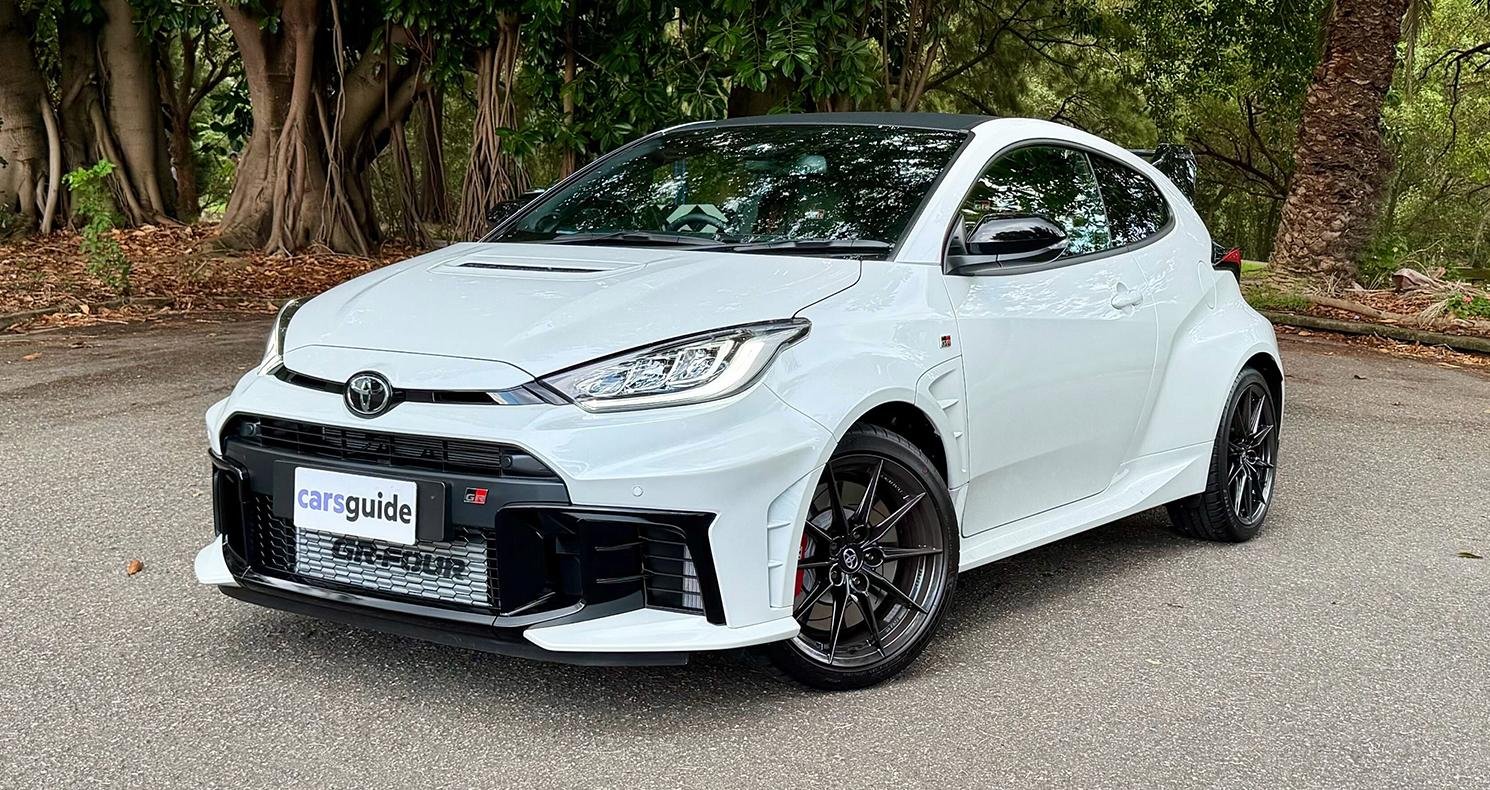
2026 Toyota GR Yaris GTS Aero Performance Pack — front three-quarter studio shot
Price
$64,990
0-100 km/h
5.1 s
Power
221 kW
⚡ Quick Verdict
The 2026 Toyota GR Yaris GTS Aero Performance Pack is a motorsport-homologation special turned up to eleven. With 221 kW, a 5.1-second 0-100 km/h sprint, and a $64,990 price tag, it’s a raw, rally-bred three-door that trades everyday practicality for pure, unadulterated driving thrills. The eight-piece aero kit is functional, the chassis is brilliant, and it remains one of the most characterful hot hatches on sale, even if its city-car roots show in the cabin.
✓ The Good
- +Genuine rally-derived AWD chassis with three-mode GR-FOUR drivetrain
- +221 kW / 400 Nm power bump over the original car, plus a proper 8-speed auto option
- +Adjustable three-stage rear wing and real underbody aero — none of it is fake
- +Manually adjustable rally-position handbrake right next to the gear lever
- +Front and rear Torsen limited-slip diffs deliver short-fused traction
- +Carbon-fibre roof and aluminium bonnet keep kerb weight close to 1,300 kg
- +5-year unlimited-kilometre Toyota warranty
- +Brilliant suspension absorbs rough roads without unsettling the chassis
✗ The Trade-offs
- −$64,990 (manual) is steep for a Yaris-based hatch
- −Driving position sits high — you perch on the car rather than sink into it
- −Three-cylinder engine sounds coarse below 3,000 rpm
- −Tight rear seats and small boot (city-car footprint)
- −No dedicated ANCAP safety rating
- −Three-pot thrum will not be everyone’s idea of a soundtrack
- −Aero benefits are real but invisible at road speeds
📑 In This Review
- Design and Aero Package
- Interior, Driving Position and Tech
- Engine, Performance and 0-100
- On-Road Driving and Handling
- At a Glance: How the GR Yaris Aero Stacks Up
- Toyota GR Yaris vs Honda Civic Type R: Which Is Better?
- Safety, ANCAP and Warranty
- Pricing and Value
- Who Should Buy the GR Yaris Aero Performance Pack
- Final Verdict
- Frequently Asked Questions
The 2026 Toyota GR Yaris GTS Aero Performance Pack is a motorsport-homologation special turned up to eleven. With 221 kW, a 5.1-second 0-100 km/h sprint, and a $64,990 price tag, it’s a raw, rally-bred three-door that trades everyday practicality for pure, unadulterated driving thrills. The eight-piece aero kit is functional, the chassis is brilliant, and it remains one of the most characterful hot hatches on sale, even if its city-car roots show in the cabin. If you thought the standard GR Yaris was already a properly intense little thing, well, Toyota’s engineers clearly reckoned there was more to give. Meet the Aero Performance Package, a $4,500 option on the GTS that bolts on a full suite of motorsport-derived aero gear, bumps power to 221 kW and 400 Nm, and for the first time, offers a new eight-speed torque-converter auto alongside the six-speed stick. We’ve spent some serious time with it to find out if this is the ultimate take on the homologation hot hatch.
Design and Aero Package
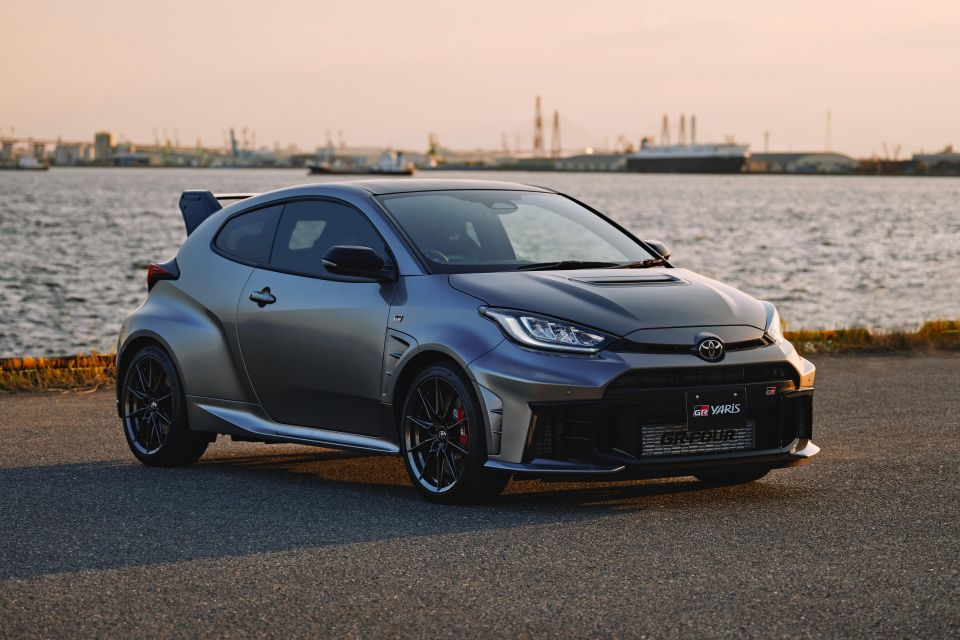
This isn’t some tacked-on bodykit. The Aero Performance Package is an eight-piece kit, and every single piece does a job. You’ve got a more aggressive front splitter working with new underbody cladding to smooth the airflow underneath. The front corners feature functional vents that exhaust hot air from the intercooler, while the front guards get cut-away vents behind the arches to bleed off high-pressure air that builds up when you’re pushing on—a classic trick straight from the rally playbook.
The bonnet’s a full aluminium item with a prominent heat extractor. It’s not a cold-air intake; it’s there to chuck hot air out of the engine bay. The carbon-fibre roof is carried over, which helps keep the centre of gravity down and the kerb weight to a claimed 1,300 kilograms.
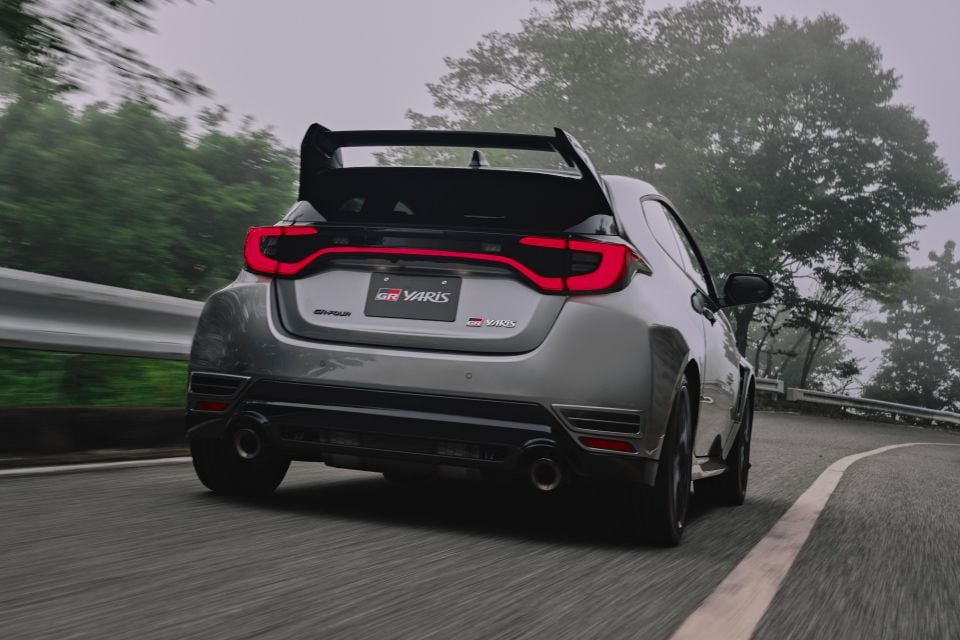
The real showstopper, though, is that manually adjustable three-stage rear wing. It sits on proper risers and you can set it for different downforce levels. Underneath, the rear diffuser’s been revised with actual functional slits that work with the flat floor to reduce lift at the back. The twin exhausts are unchanged. Parked, the whole effect is transformative. This thing looks like it’s just been washed after a stage rally, not a suburban street.
Interior, Driving Position and Tech
Inside, it’s all business. The cabin is a focused, dark-trimmed space. You drop into heavily bolstered GR sports seats trimmed in suede and leather, grab a leather-wrapped steering wheel, and spot the vertically stacked, rally-style manual handbrake sitting right next to the gear lever. It’s a brilliant touch for quick, theatrical pulls.
The driver stares at a crisp 12.3-inch digital instrument cluster you can configure to show things like a boost gauge or an all-wheel-drive power distribution display. The 8-inch central touchscreen handles the infotainment and comes with standard Apple CarPlay and Android Auto. Storage is pretty minimal, though there’s a handy phone shelf for the passenger with a wireless charger, plus a 12-volt socket and a USB-C for the driver.
Now, the driving position is a bit of a talking point. Even with the seat slammed down, you sit high. You’re perched on top of the chassis rather than nestled down in it, a side effect of the Yaris’s tall city-car bones. The rear seats are basically two small pockets—only really usable for short trips if you’re under about 170 centimetres. The boot is tiny, but you can fit a helmet and some track gear in there. Forward visibility is good from that lofty perch, but the thick C-pillars and rising window line create pretty big blind spots out the back.
Engine, Performance and 0-100
Under that vented aluminium bonnet is the updated 1.6-litre G16E-GTS three-cylinder turbo petrol engine. It’s now pushing out 221 kW and 400 Nm—that’s a gain of 21 kW and 30 Nm over the original. You can get that power through the six-speed manual or the new eight-speed torque-converter auto.
Our testing showed the manual hitting 0-100 km/h in 5.1 seconds, with the auto version doing it in around 5.2 seconds. The torque-converter box isn’t a dual-clutch, but its shifts are seriously snappy, the rev-matching is instant, and the paddles respond right now. It adds a layer of ease without killing the mechanical feel.
The three-cylinder character really shapes the drive. Below 3,000 rpm, it sounds a bit coarse and harsh. Get it past that point, though, and it develops this distinct, thrumming snarl that’s properly deceptive. Cruising along, it’s nothing special. Stomp the throttle, and the acceleration is violently immediate, with a massive mid-range kick that’ll catch your passengers completely off guard. We saw about 10.3 L/100 km on our enthusiastic loop, though the official combined claim is closer to 8.0 L/100 km.

On-Road Driving and Handling
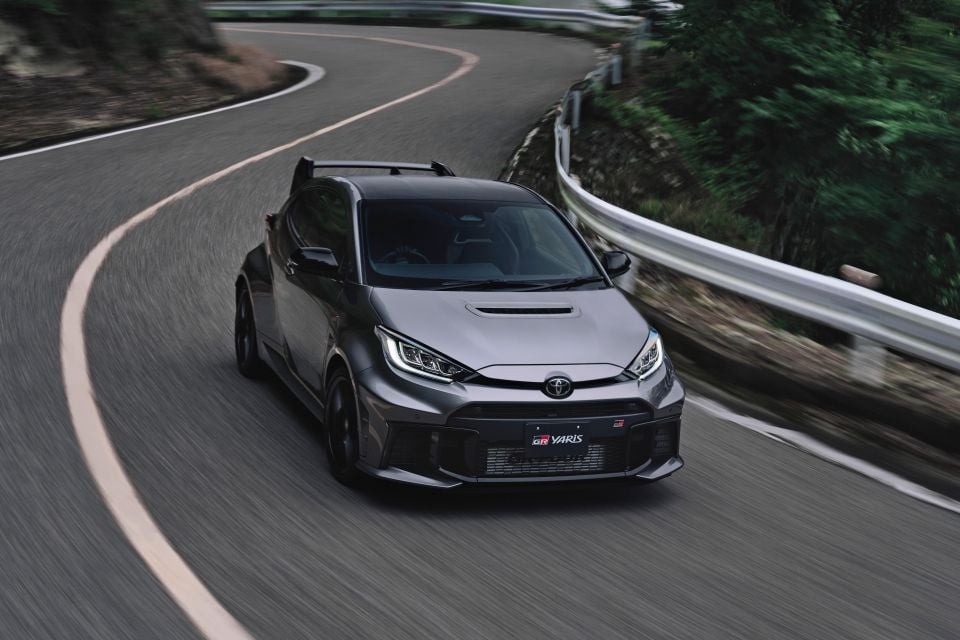
This is where the GR Yaris Aero absolutely shines. The GR-FOUR all-wheel-drive system has three modes: Normal, Gravel, and Track. Normal is front-biased but still feels playfully keen to rotate. Gravel mode is the sweet spot for fun on the road, sending more torque rearward and letting the car adjust its line under power without ever snapping into wild oversteer. Track mode just locks everything down for maximum, unshakeable grip.
The front and rear Torsen limited-slip diffs are the secret weapon here. They give you what we can only call "short-fused traction"—the car just hooks up and goes, even when you’re hard on the throttle mid-corner on a bumpy road. The suspension is nothing short of brilliant. On our rough, lumpy test route, it soaked up everything without ever upsetting the chassis or our confidence. It feels like it was born on a gravel stage.
The brakes are just as good. After a hard session on a winding downhill run, the pedal stayed firm and consistent with zero fade. The ability to trail-brake deep into a bend, feel the rear end lighten and rotate slightly, then get hard on the power and let the AWD system drag you out is a pure motorsport sensation. This car talks to you and rewards you for pushing it.
At a Glance: How the GR Yaris Aero Stacks Up
| Spec | Toyota GR Yaris Aero (2026) | Honda Civic Type R FL5 | Hyundai i30 N | VW Golf R |
|---|---|---|---|---|
| Price (AUD, base) | $64,990 | $76,800 | $50,500 | $70,490 |
| Engine | 1.6L turbo I3 | 2.0L turbo I4 | 2.0L turbo I4 | 2.0L turbo I4 |
| Power | 221 kW | 235 kW | 206 kW | 235 kW |
| Torque | 400 Nm | 420 Nm | 392 Nm | 420 Nm |
| Drivetrain | AWD (GR-FOUR) | FWD | FWD | AWD |
| Transmission | 6MT or 8AT | 6MT only | 6MT or 8DCT | 7-speed DSG |
| 0-100 km/h | 5.1 s | 5.4 s | 5.4 s | 4.7 s |
| Kerb weight | ~1,300 kg | 1,429 kg | 1,510 kg | 1,551 kg |
| Body | 3-door hatch | 5-door hatch | 5-door hatch | 5-door hatch |
Honda Civic Type R FL5
The most sophisticated FWD hot hatch on sale, but only manual and $12k pricier.
Hyundai i30 N
Significantly cheaper and lovably playful, but loses the AWD party trick.
Volkswagen Golf R
Quicker (4.7s) and more grown-up, but missing the GR Yaris rally character.
Audi S3
Premium badge and plush cabin; far less raw than the GR Yaris.
The hot hatch market is packed, but the GR Yaris Aero carves out its own unique space. It undercuts its most natural rival, the Honda Civic Type R, by over $12,000, while offering a totally different, rally-bred character with all-wheel drive. Against the other key players, it stands out as the lightweight, analogue choice. Toyota GR Yaris Aero (2026) Hyundai i30 N — — $64,990 $50,500 1.6L turbo I3 2.0L turbo I4 221 kW 206 kW 400 Nm 392 Nm AWD (GR-FOUR) FWD 6MT or 8AT 6MT or 8DCT 5.1 s 5.4 s ~1,300 kg 1,510 kg 3-door hatch 5-door hatch The table tells the story: the GR Yaris is the featherweight of the group. It uses that big weight advantage and its rally-derived AWD system to make up for a smaller engine, delivering performance that punches well above what the spec sheet suggests.
Toyota GR Yaris vs Honda Civic Type R: Which Is Better?
This is the hot hatch purist’s big question. The GR Yaris Aero, at $64,990, is about $12,000 cheaper than the Civic Type R’s $76,800 sticker. But that saving comes with a major catch in everyday usability, which we’ll get into. Both are cars that massively reward enthusiasts, but they do it in completely different ways.
Performance is close on paper but miles apart in feel. The Yaris’s 221 kW three-pot and AWD system get it to 100 km/h in 5.1 seconds, feeling raw and turbocharged. The Type R, with its 235 kW 2.0-litre four-cylinder and front-wheel drive, takes 5.4 seconds but delivers its power with a high-revving scream that’s pure drama. One’s a turbo rally weapon; the other’s a scalpel-sharp circuit tool.
The way they drive are philosophical opposites. The GR Yaris’s chassis is born from rally stages, with its AWD and adjustable modes letting you have playful, gravel-mode fun. The Type R is a masterclass in front-wheel-drive engineering, with a helical limited-slip diff and adaptive dampers that create devastatingly effective, understeer-free grip. The Yaris feels like you’re driving *on* the road; the Type R feels like you’re dissecting it.
Practicality is where the difference really hits. The Civic Type R is a proper five-door hatch with a big boot, four usable seats, and a more normal driving position. It can genuinely be a daily driver. The GR Yaris, with its three doors, tiny rear seats, and high-set driving position, is a dedicated, compromised weekend weapon.
So which one wins? The Honda Civic Type R is the more complete, sophisticated, and usable performance car. It’s the hot hatch you could live with every day and still monster a track day. The Toyota GR Yaris Aero, though, is the more special, characterful, and raw machine. It’s a homologation special you can buy, a true rally car for the road.
| Specification | Toyota GR Yaris Aero | Honda Civic Type R FL5 |
|---|---|---|
| Price (AUD, base) | $64,990 | $76,800 |
| Engine | 1.6L turbo I3 | 2.0L turbo I4 |
| Power | 221 kW | 235 kW |
| Torque | 400 Nm | 420 Nm |
| Drivetrain | AWD (GR-FOUR) | Front-wheel drive |
| Transmission | 6MT or 8AT | 6-speed manual only |
| 0-100 km/h | 5.1 s | 5.4 s |
| Kerb weight | ~1,300 kg | 1,429 kg |
| Doors / seats | 3 / 4 | 5 / 4 |
Which one is better?
Buy the Toyota GR Yaris Aero if you want a homologation-special rally car for the road, AWD playfulness, a manual handbrake, and a lighter, more characterful machine for ~$12k less.
Buy the Honda Civic Type R if you need real-world practicality (five doors, bigger boot, better daily-driver), a screaming 2.0-litre four, and the best sophisticated FWD chassis on sale.
Our pick is the GR Yaris Aero for the enthusiast who tracks weekends and accepts the city-car footprint; the Type R for everyone else who wants one hot hatch to do everything.
Safety, ANCAP and Warranty
The Toyota GR Yaris doesn’t have a specific ANCAP safety rating. It was left out of the assessment of the standard Yaris range, which itself has a five-star rating. We’d call it ‘untested’ rather than ‘unsafe’. Specialist homologation models like this often miss out on standard testing because they’re low-volume and have unique setups.
The GTS Aero comes with a standard suite of active safety gear, including autonomous emergency braking, lane-departure alert, and adaptive cruise control. Toyota backs the GR Yaris with its full 5-year, unlimited-kilometre warranty, plus the option of capped-price servicing to keep ownership costs predictable.
Pricing and Value
The Aero Performance Package adds $4,500 to the standard GTS, bringing the sticker price to $64,990 for the six-speed manual and $67,490 for the eight-speed auto, both before on-roads. In the competitive set, the GR Yaris Aero sits in a really interesting spot.
It’s a fair bit pricier than a Hyundai i30 N (~$50,500) but undercuts the Honda Civic Type R ($76,800), Volkswagen Golf R ($70,490), and Audi S3 ($78,900). For that money, you’re getting the only rally-derived, AWD performance hatch in the segment short of the far more expensive Audi. The value isn’t about space or luxury; it’s about owning a piece of motorsport engineering with a factory warranty.
Who Should Buy the GR Yaris Aero Performance Pack
✓ Buy the GR Yaris Aero Performance Pack
if you want a real motorsport homologation hatch you can drive to the shops on Tuesday and rally at the weekend. The AWD GR-FOUR system, Torsen diffs, and rally handbrake all serve a real purpose. You’ll use this on track days more than commutes — and you’ll love it.
✗ Skip the GR Yaris Aero Performance Pack
if you need a daily-driver hot hatch for family duty, a smooth grand-tourer, or the best front-wheel-drive chassis on sale. The three-cylinder roar, tight rear seats, small boot and high-set driving position will eventually wear thin on long motorway runs.
⚡ Our Verdict
A homologation-special hot hatch that drives like a proper rally car — flawed but absolutely brilliant.
The 2026 Toyota GR Yaris GTS Aero Performance Package isn’t just a hot hatch; it’s a statement. It’s a celebration of motorsport in a world of sanitized performance cars. The chassis is utterly brilliant, soaking up rough roads while delivering telepathic, adjustable handling. The powertrain, with its newfound power and torque, provides shocking acceleration from its tiny engine. The Aero Pack, while largely imperceptible at road speeds, is a genuine, functional motorsport upgrade that completes the car’s visual and dynamic mission. The trade-offs are real and ever-present: the perched driving position, the coarse engine note at low rpm, the laughably tight rear seats, and the premium price for a Yaris-based vehicle. But for the right buyer— the one who values raw engagement over refinement, who sees a track day as the perfect weekend, who understands the heritage behind the GR badge—these aren’t flaws. They’re character. This is a homologation special in the truest sense, and it is absolutely brilliant for it.
Frequently Asked Questions
How much does the 2026 Toyota GR Yaris Aero Performance Pack cost in Australia?
The 2026 Toyota GR Yaris GTS with the Aero Performance Pack starts at $64,990 for the 6-speed manual and $67,490 for the 8-speed automatic, before on-road costs. That’s a $4,500 jump over the standard GTS.
How fast is the GR Yaris Aero Performance Pack 0-100 km/h?
The manual version hits 0-100 km/h in 5.1 seconds. The new 8-speed auto does the sprint in about 5.2 seconds.
Is the GR Yaris Aero Pack better than a Honda Civic Type R?
They’re different tools for different jobs. The GR Yaris Aero is a rally-derived, AWD, character-filled special. The Civic Type R is a more sophisticated, practical, and refined FWD performance hatch that’s easier to live with daily. The “better” car depends entirely on what you need.
Does the GR Yaris Aero Pack have a proper ANCAP rating?
No, the GR Yaris doesn’t have a specific ANCAP rating. It was excluded from the standard Yaris assessment. It does come with a full suite of standard active safety features.
Can you get the GR Yaris with an automatic transmission?
Yes, for 2026, the GR Yaris is available with a new 8-speed torque-converter automatic alongside the existing 6-speed manual.
What is the GR Yaris fuel consumption?
On our enthusiastic test drive, we saw about 10.3 L/100 km. The official combined figure is around 8.0 L/100 km.
Is the Aero Performance Package actually functional or cosmetic?
All eight pieces are functional and motorsport-derived. That includes the manually adjustable three-stage rear wing, bonnet heat extractor, wheel-arch vents, front splitter, and revised diffuser with real slits. Nothing is just for show.
