

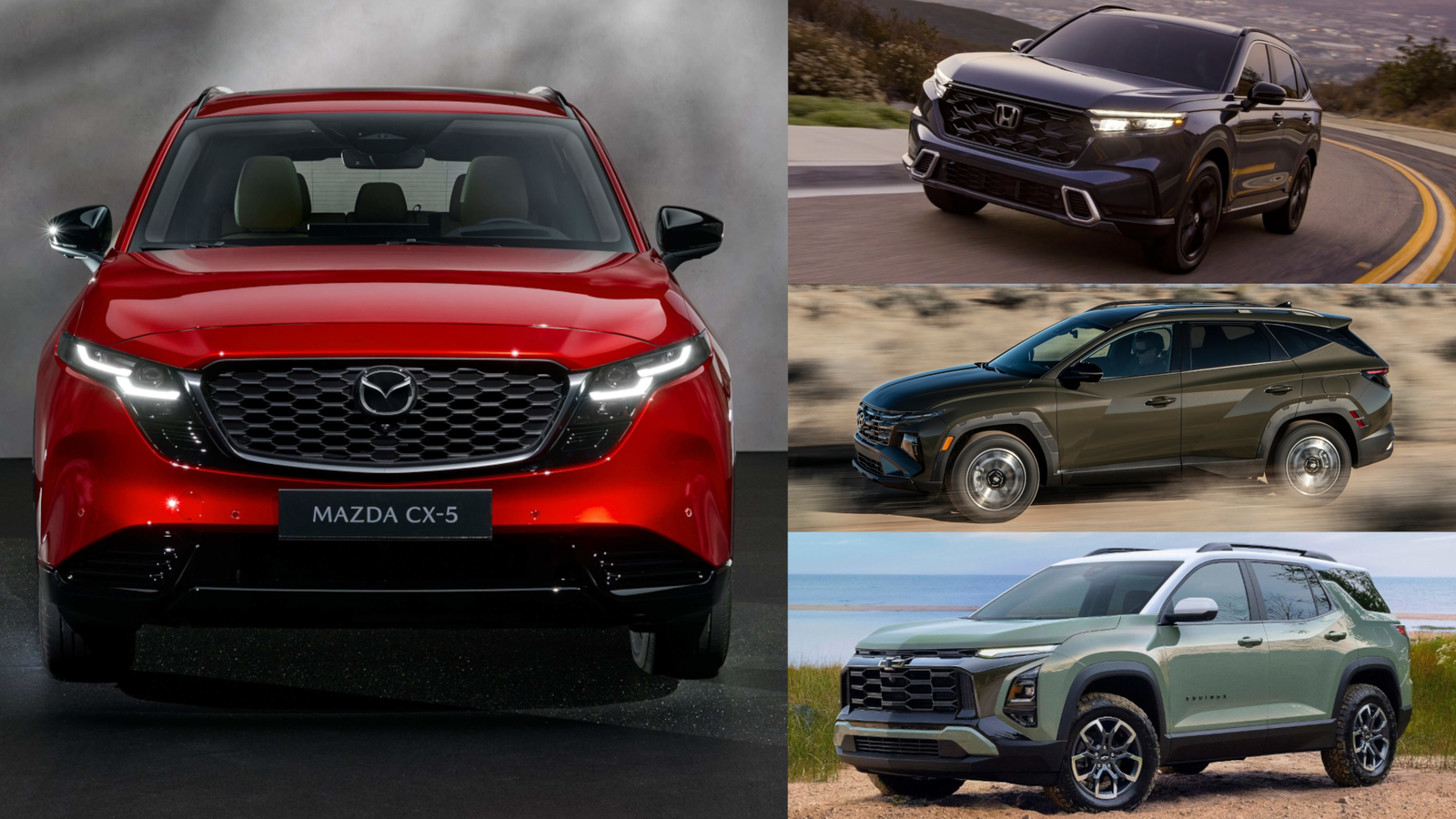
2026 Mazda CX-5 Review: Bold Moves & A Baffling Screen
A brilliant driver SUV hamstrung by frustrating tech.
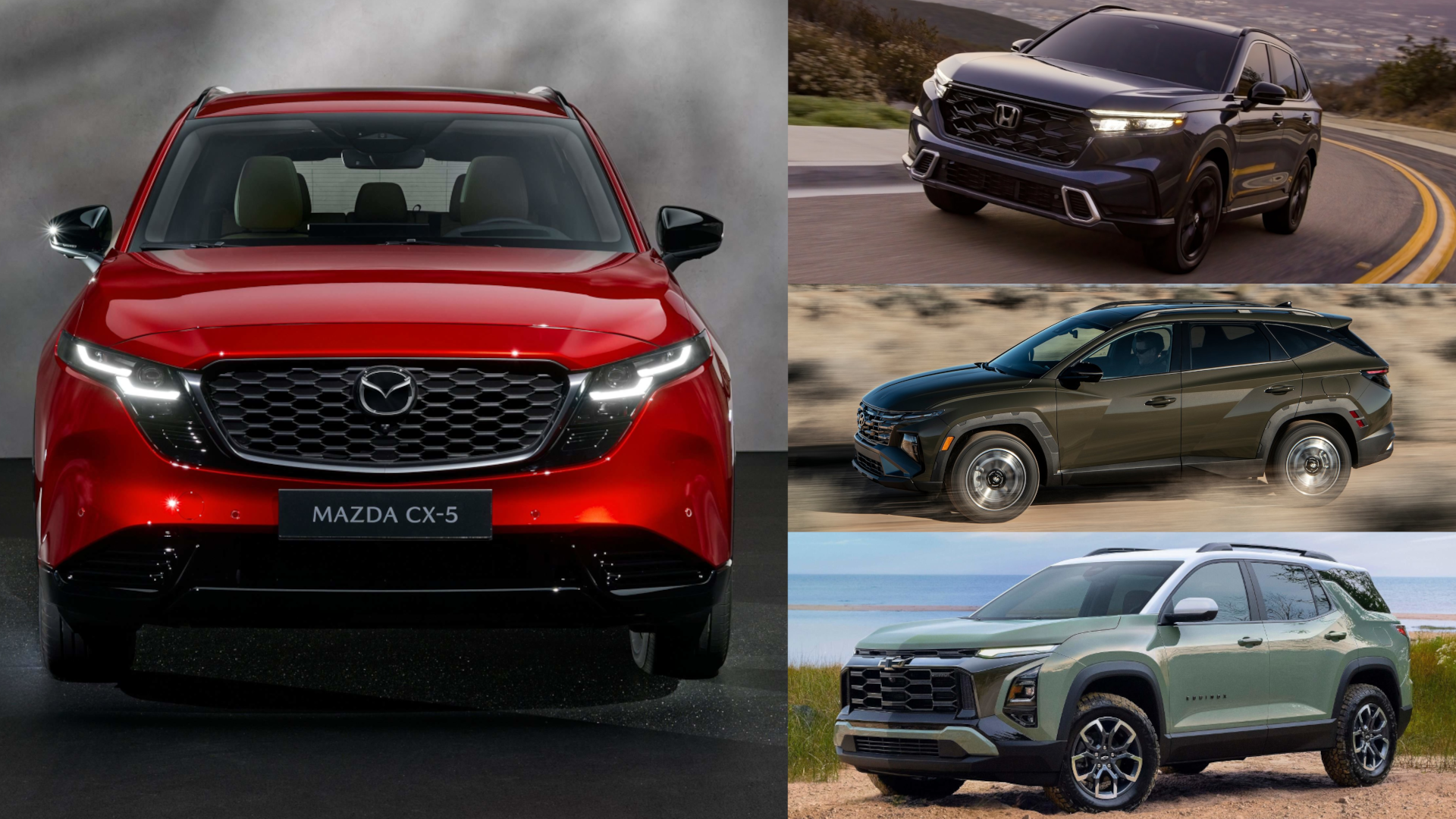
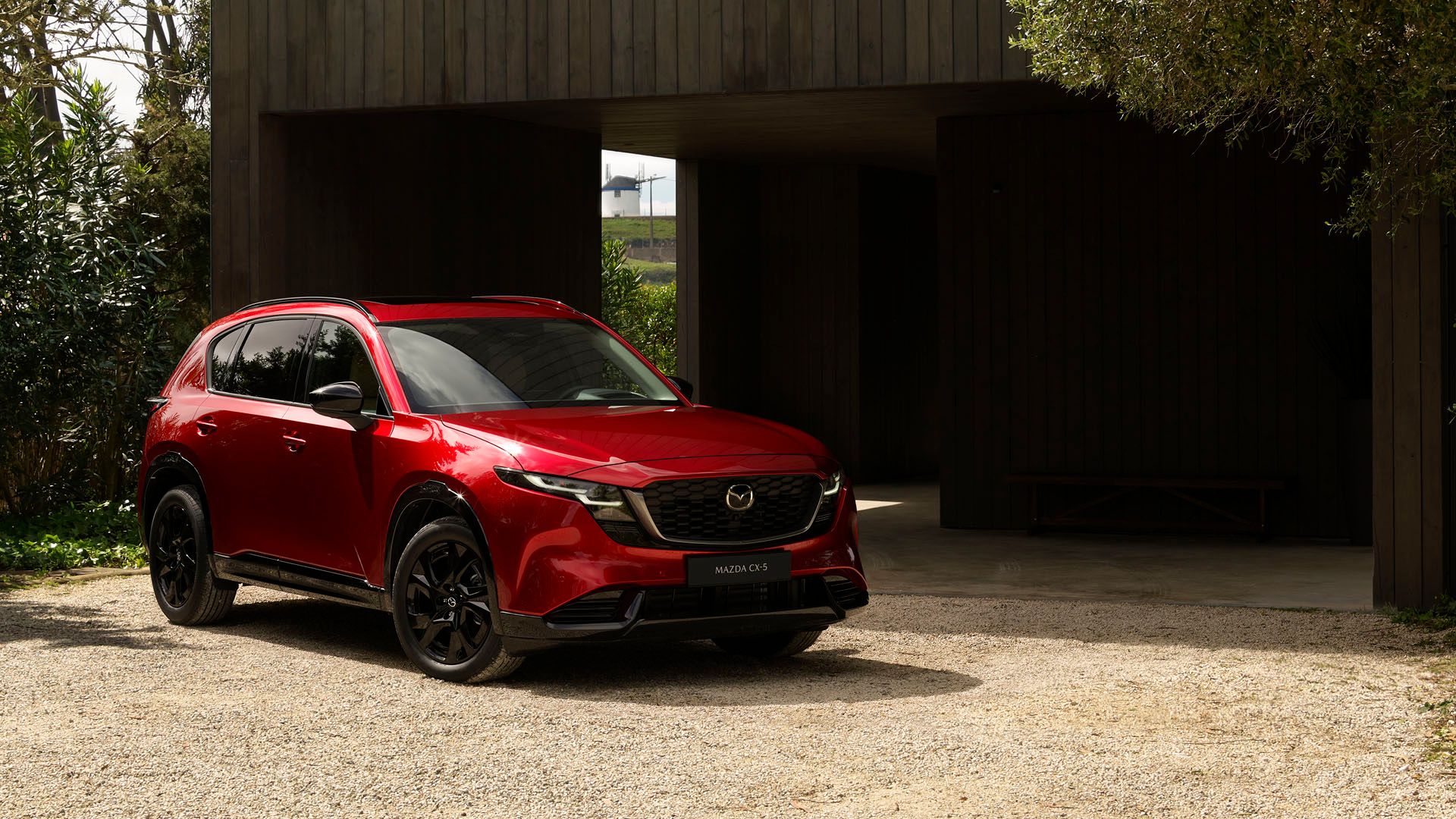
2026 Mazda CX-5 front three-quarter press shot, no people
Price
$38,900
0-100 km/h
Mid-8 sec
Power
187 hp
⚡ Quick Verdict
:
Mazda’s gambled big with its best-seller, and it hasn’t entirely paid off. The new CX-5 delivers a class-leading ride and a cabin that feels genuinely premium. But those wins are undermined by a baffling decision to ditch physical controls for almost everything, and an engine that’s well past its use-by date. It’s a superb car to drive, but living with its tech will test your patience.
## Introduction
Mazda’s taken a huge gamble with the car that pays the bills. The all-new, third-gen 2026 CX-5 isn’t a gentle nip-and-tuck; it’s a declaration of intent that brings some real head-scratchers. On one hand, it’s a longer, more practical SUV with a beautifully crafted interior that punches way above its weight class. On the other, it makes a controversial leap to a touchscreen-only cabin and soldiers on with a carryover engine while the segment charges ahead with hybrids. It’s a bold cocktail of progress and stubbornness. We’ve spent time behind the wheel to see where this new CX-5 soars, where it stumbles, and whether its brilliant chassis can outweigh its divisive tech.
## At a Glance: 2026 Mazda CX-5 Specs
The 2026 CX-5 grows in all the right directions, offering more space and standard kit, but its powertrain story is one of continuity rather than revolution. Here’s how the top-spec CX-5 Premium Plus stacks up against its key hybrid-heavy rivals.
| Spec | 2026 Mazda CX-5 Premium Plus | 2026 Toyota RAV4 GR Sport Hybrid AWD | 2026 Honda CR-V Sport Touring Hybrid | 2026 Hyundai Tucson Hybrid N Line |
| :— | :— | :— | :— | :— |
| Starting Price (USD) | $38,900 | $38,380 | $39,500 | $38,350 |
| Approx AUD Price | ~AU$58,000 | ~AU$57,000 | ~AU$59,000 | ~AU$57,000 |
| Engine | 2.5L NA I4 | 2.5L I4 + Hybrid | 2.0L I4 + Hybrid | 1.6L Turbo I4 + Hybrid |
| Power | 187 hp | 219 hp (combined) | 204 hp (combined) | 231 hp (combined) |
| Torque | 186 lb-ft | 163 lb-ft (engine) | 247 lb-ft (combined) | 258 lb-ft (combined) |
| 0-100 km/h (est.) | Mid-8 sec | ~7.5 sec | ~7.5 sec | ~7.0 sec |
| Combined Fuel Use | 26 mpg / 9.0 L/100km | 41 mpg / 5.7 L/100km | 40 mpg / 5.9 L/100km | 38 mpg / 6.2 L/100km |
| Drive | Standard AWD | AWD | AWD | AWD |
| Cargo (behind 2nd row) | 33.7 cu ft / 954 L | 37.6 cu ft / 1,065 L | 36.3 cu ft / 1,028 L | 38.7 cu ft / 1,096 L |
| Screen Size | 15.6 in (optional) | 10.5 in | 9.0 in | 12.3 in |
| Warranty (AU) | 5-yr unlimited km | 5-yr unlimited km | 5-yr unlimited km | 10-yr/160,000 km |
| Safety Rating | 5-star Euro NCAP | 5-star ANCAP | 5-star ANCAP | 5-star ANCAP |
## Design and Dimensions
The 2026 CX-5 is instantly recognisable yet clearly new. Its most significant change is a 115mm stretch in overall length to 4,690mm, which directly translates to more interior space. The front wears a redesigned grille with a contrasting grey surround, flanked by sharp LED headlights. Look closely in the headlight housing and you’ll spot a neat Easter egg: a tiny red "5" emblem. The side profile is clean, with our Premium Plus test car riding on smart 19-inch black alloy wheels.
✓ The Good
- +Segment-best ride quality that is genuinely smooth and composed.
- +Interior materials and two-tone trim feel premium, punching above the price.
- +Significant gains in rear-seat legroom and cargo space over the old model.
- +Standard all-wheel drive and an impressive suite of safety tech.
- +Google Built-In integration is responsive and deeply useful.
✗ The Trade-offs
- −Controversial move to an all-screen interface for climate and volume controls.
- −Carryover 2.5-litre engine feels a decade behind rivals’ hybrid powertrains.
- −The optional 15.6-inch screen dominates the cabin and isn’t elegant.
- −Piano-black rear bumper will scratch and look worn in no time.
📑 In This Review
- Introduction
- At a Glance: 2026 Mazda CX-5 Specs
- Design and Dimensions
- Cabin, Tech and That 15.6-Inch Screen
- Practicality and Rear-Seat Space
- On the Road: How It Drives
- Mazda CX-5 vs Toyota RAV4: Which Is Better?
- Other Rivals: Honda CR-V and Hyundai Tucson
- Safety and Warranty
- Pricing, Trims and Value
- Who Should Buy the 2026 Mazda CX-5
- Verdict
- Frequently Asked Questions
Mazda’s gambled big with its best-seller, and it hasn’t entirely paid off. The new CX-5 delivers a class-leading ride and a cabin that feels genuinely premium. But those wins are undermined by a baffling decision to ditch physical controls for almost everything, and an engine that’s well past its use-by date. It’s a superb car to drive, but living with its tech will test your patience.
Introduction
Mazda’s taken a huge gamble with the car that pays the bills. The all-new, third-gen 2026 CX-5 isn’t a gentle nip-and-tuck; it’s a declaration of intent that brings some real head-scratchers. On one hand, it’s a longer, more practical SUV with a beautifully crafted interior that punches way above its weight class. On the other, it makes a controversial leap to a touchscreen-only cabin and soldiers on with a carryover engine while the segment charges ahead with hybrids. It’s a bold cocktail of progress and stubbornness. We’ve spent time behind the wheel to see where this new CX-5 soars, where it stumbles, and whether its brilliant chassis can outweigh its divisive tech.
At a Glance: 2026 Mazda CX-5 Specs
| Spec | 2026 Mazda CX-5 Premium Plus | 2026 Toyota RAV4 GR Sport Hybrid AWD | 2026 Honda CR-V Sport Touring Hybrid | 2026 Hyundai Tucson Hybrid N Line |
|---|---|---|---|---|
| Starting Price (USD) | $38,900 | $38,380 | $39,500 | $38,350 |
| Approx AUD Price | ~AU$58,000 | ~AU$57,000 | ~AU$59,000 | ~AU$57,000 |
| Engine | 2.5L NA I4 | 2.5L I4 + Hybrid | 2.0L I4 + Hybrid | 1.6L Turbo I4 + Hybrid |
| Power | 187 hp | 219 hp (combined) | 204 hp (combined) | 231 hp (combined) |
| Torque | 186 lb-ft | 163 lb-ft (engine) | 247 lb-ft (combined) | 258 lb-ft (combined) |
| 0-100 km/h (est.) | Mid-8 sec | ~7.5 sec | ~7.5 sec | ~7.0 sec |
| Combined Fuel Use | 26 mpg / 9.0 L/100km | 41 mpg / 5.7 L/100km | 40 mpg / 5.9 L/100km | 38 mpg / 6.2 L/100km |
| Drive | Standard AWD | AWD | AWD | AWD |
| Cargo (behind 2nd row) | 33.7 cu ft / 954 L | 37.6 cu ft / 1,065 L | 36.3 cu ft / 1,028 L | 38.7 cu ft / 1,096 L |
| Screen Size | 15.6 in (optional) | 10.5 in | 9.0 in | 12.3 in |
| Warranty (AU) | 5-yr unlimited km | 5-yr unlimited km | 5-yr unlimited km | 10-yr/160,000 km |
| Safety Rating | 5-star Euro NCAP | 5-star ANCAP | 5-star ANCAP | 5-star ANCAP |
Toyota RAV4 Hybrid
The fuel economy benchmark and the safer resale bet — but the CX-5 outclasses it for ride and interior feel.
Honda CR-V Hybrid
Sportier styling and more standard buttons, though the CX-5 rides better and feels plusher inside.
Hyundai Tucson Hybrid
The value play with a 10-year US warranty and the strongest hybrid horsepower of the four.
The 2026 CX-5 grows in all the right directions, offering more space and standard kit, but its powertrain story is one of continuity rather than revolution. Here’s how the top-spec CX-5 Premium Plus stacks up against its key hybrid-heavy rivals. 2026 Mazda CX-5 Premium Plus 2026 Honda CR-V Sport Touring Hybrid :— :— $38,900 $39,500 ~AU$58,000 ~AU$59,000 2.5L NA I4 2.0L I4 + Hybrid 187 hp 204 hp (combined) 186 lb-ft 247 lb-ft (combined) Mid-8 sec ~7.5 sec 26 mpg / 9.0 L/100km 40 mpg / 5.9 L/100km Standard AWD AWD 33.7 cu ft / 954 L 36.3 cu ft / 1,028 L 15.6 in (optional) 9.0 in 5-yr unlimited km 5-yr unlimited km 5-star Euro NCAP 5-star ANCAP
Design and Dimensions
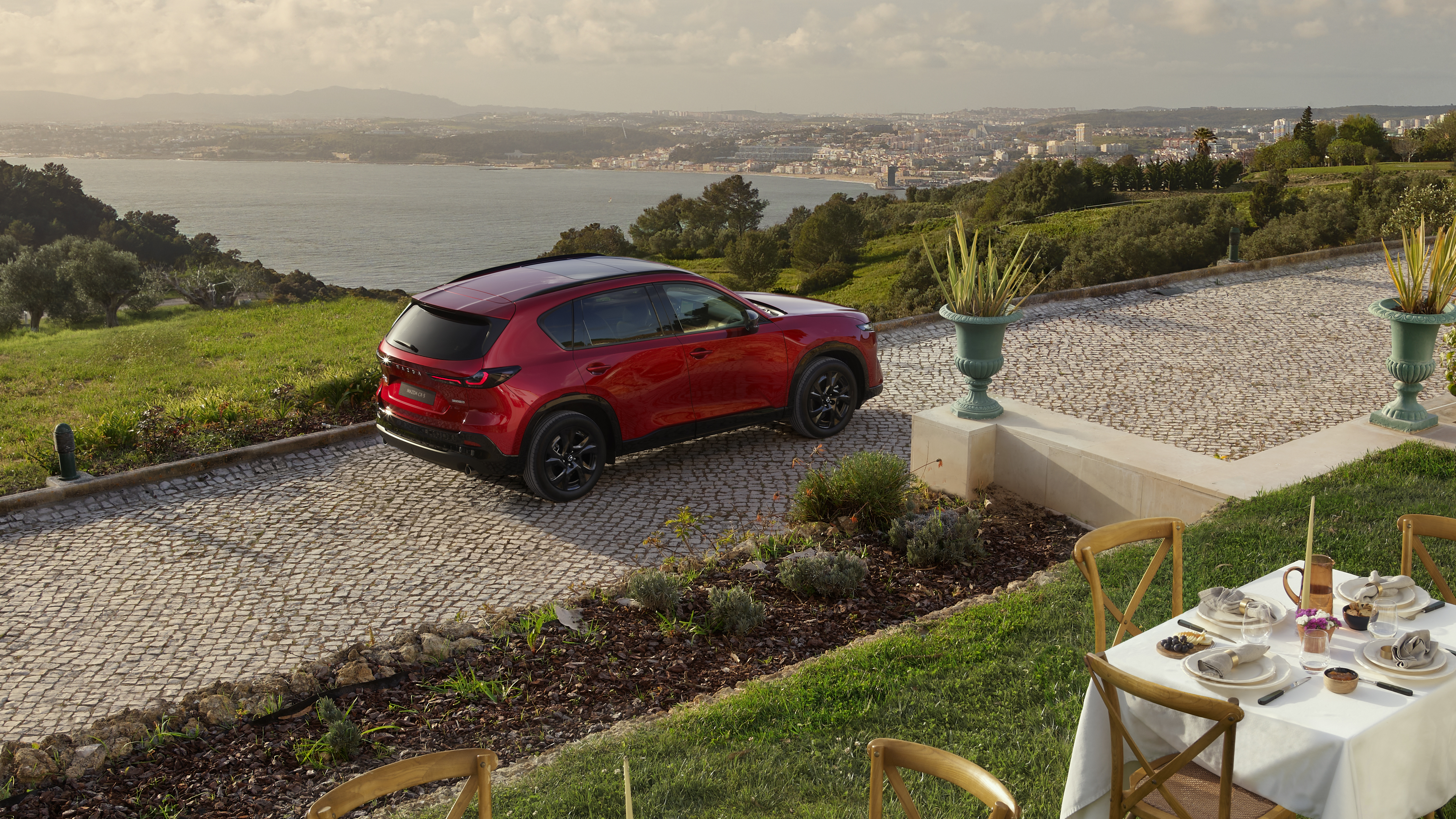
The 2026 CX-5 is instantly recognisable yet clearly new. Its most significant change is a 115mm stretch in overall length to 4,690mm, which directly translates to more interior space. The front wears a redesigned grille with a contrasting grey surround, flanked by sharp LED headlights. Look closely in the headlight housing and you’ll spot a neat Easter egg: a tiny red "5" emblem. The side profile is clean, with our Premium Plus test car riding on smart 19-inch black alloy wheels.
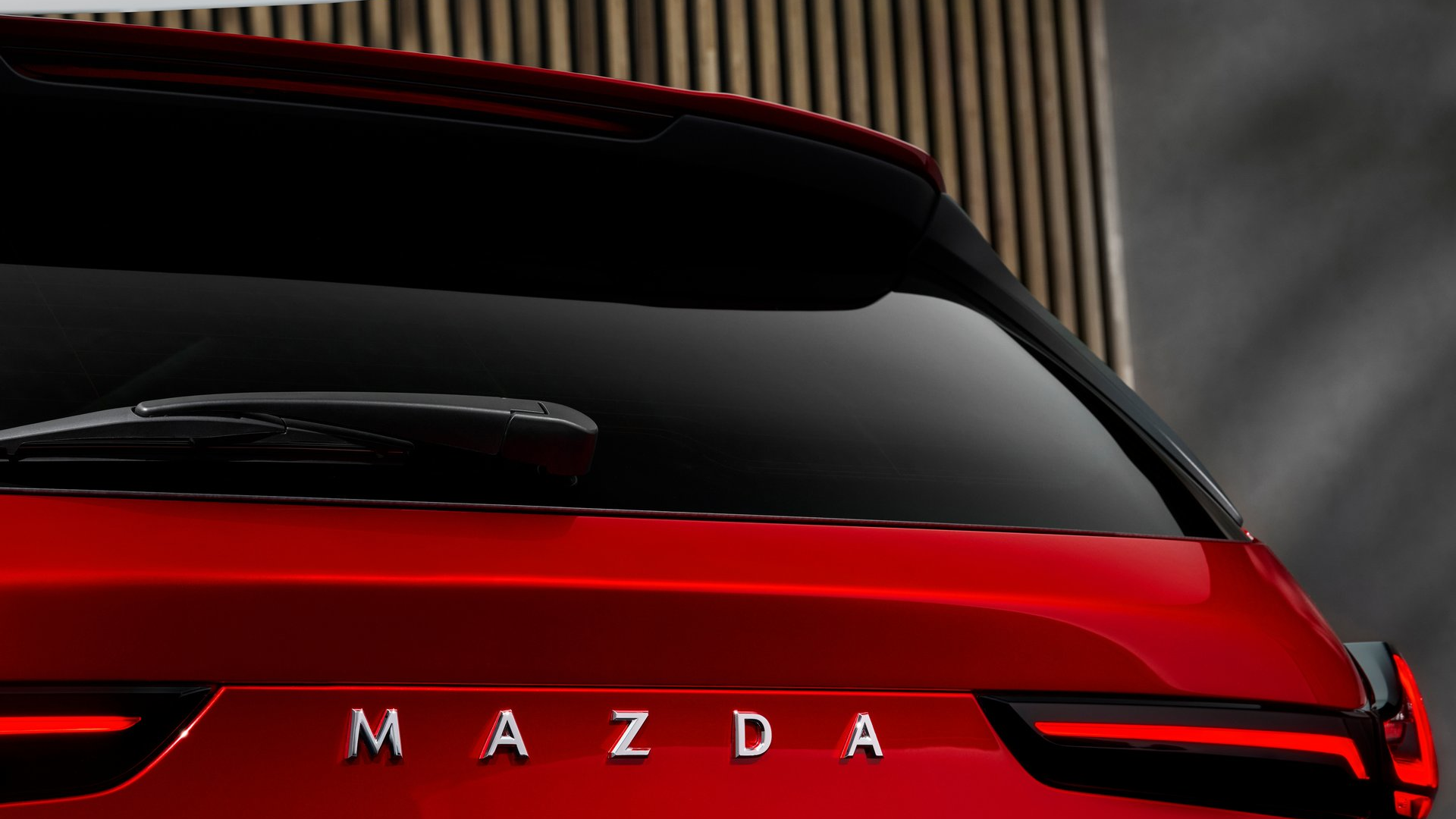
The rear is arguably the most striking angle, with sleek new tail-lights connected by a thin, gloss-black bar. It’s here we find our first major gripe. The lower rear bumper is a vast panel of piano-black plastic. It looks sharp enough in photos, but it sits in one of the most high-traffic areas of any car. We’ve got no doubt that after a few years of loading groceries, strollers, and luggage, this surface will be a scratched mess, dating the car’s appearance quickly.
Cabin, Tech and That 15.6-Inch Screen
Slide inside and the CX-5 makes a strong first impression. The material quality is exceptional for the class, with soft-touch surfaces, convincing faux leather, and neat contrast stitching. Our test car’s two-tone terracotta and black trim felt genuinely premium. Even base models get thoughtful touches, like darker, more durable fabric on the seat bottoms.
Then your eyes hit the dashboard. The 2026 CX-5 has gone through a radical digital overhaul, and it’s here Mazda’s gamble is most obvious. The standard 12.9-inch and optional 15.6-inch centre touchscreens run a new Google Built-In system. The integration is spot-on—Google Maps for nav, Google Assistant for voice commands (which can control climate and heated seats), plus native YouTube, Chrome, and the Play Store. Wireless Apple CarPlay and Android Auto are also standard.
The controversy is in the interface philosophy. Nearly all vehicle functions—from climate control and fan speed to audio volume—are now buried in the touchscreen. A persistent bottom bar helps, but losing physical knobs and switches is a big step backwards in usability. The steering wheel has a single, oddly loud-clicking panel for controls, and its airbag hub sticks out in a clumsy, bulbous way that interrupts the otherwise elegant design. On a lighter note, we found a pre-installed game, Beach Buggy Racing 2, which is a fun (if mostly useless) distraction when you’re parked up.
Practicality and Rear-Seat Space
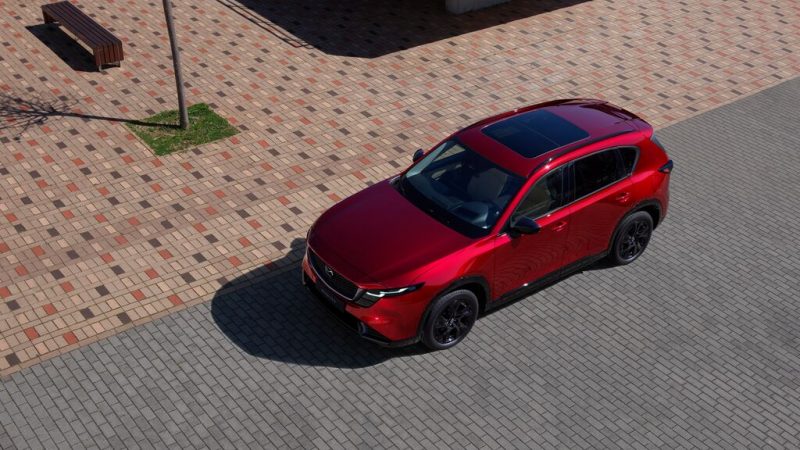
The dimensional growth pays big dividends in practicality. Cargo space behind the second row jumps to 33.7 cubic feet (954 litres), a solid increase over the old model’s 29.1 cu ft. The 40-20-40 split-fold rear seat is standard, giving you a long, flat load floor and a centre pass-through for skis. The rear door now swings open to almost 90 degrees, making child-seat installation dead easy.
Rear-seat passengers gain over two inches of legroom, creating a genuinely roomy environment. The features list is generous: heated outboard seats, rear air vents, and two USB-C ports. The only downside is a tall centre tunnel that makes the middle seat a bit tight for a fifth adult. For a family of four, though, the CX-5’s back seat is now a very comfortable place to be.
On the Road: How It Drives
This is where the 2026 CX-5 justifies its existence. During our drive, we confirmed that its ride quality is, hands down, the best in the segment. The fully independent rear suspension irons out bumps with a silky composure that rivals like the RAV4 and CR-V just can’t match. It’s buttery smooth on the highway yet stays engaging and precise on a winding road. The steering is communicative and well-weighted, a real rarity in this class.
The powertrain tells a different story. Under the bonnet sits the same naturally-aspirated 2.5-litre SkyActiv-G four-cylinder engine, making 187 hp. It’s paired with a smooth 6-speed auto and standard i-Activ AWD. In our testing, performance is adequate, with a 0-100 km/h time in the mid-eight-second range, but it feels noticeably breathless next to the turbocharged or hybrid-assisted urgency of its key rivals. Fuel economy, at an EPA-estimated 26 mpg combined, is at the back of the pack. The engine’s proven reliability is a plus, but in 2026, it simply lacks the pep or efficiency of modern alternatives. Mazda has confirmed an in-house hybrid system for the CX-5 arriving in 2027, which can’t come soon enough.

Mazda CX-5 vs Toyota RAV4: Which Is Better?
This is the core comparison for most buyers. The 2026 Toyota RAV4, now exclusively hybrid in many markets, represents a more forward-thinking approach, while the CX-5 doubles down on driving purity and cabin tactility.
The RAV4’s hybrid powertrain is its trump card. It delivers stronger acceleration and vastly superior fuel economy—41 mpg combined for AWD versus the CX-5’s 26 mpg. The Toyota also offers a bit more cargo space and enjoys an unmatched reputation for reliability and resale value. Its interior, while more utilitarian, is packed with physical buttons and knobs for intuitive control.
The CX-5 fights back with its sublime driving dynamics. Its ride is plusher, its handling is sharper, and its interior materials are a clear cut above. It feels more expensive than it is. The trade-off is that older engine and the frustrating all-screen control interface.
| Spec | 2026 Mazda CX-5 Premium Plus | 2026 Toyota RAV4 GR Sport Hybrid AWD |
|---|---|---|
| Starting Price (USD) | $38,900 | $38,380 |
| Powertrain | 2.5L 187hp I4, 6-spd auto | 2.5L I4 Hybrid, 219hp combined |
| 0-100 km/h (est.) | Mid-8 sec | ~7.5 sec |
| Combined Fuel Economy | 26 mpg / 9.0 L/100km | 41 mpg / 5.7 L/100km |
| Drive | Standard AWD | AWD |
| Cargo (seats up/down) | 33.7 / 66.5 cu ft | 37.6 / 69.8 cu ft |
| Suspension (rear) | Multi-link | Multi-link |
| Standard Screen | 12.9 in | 10.5 in |
| Physical Climate Controls | No (screen only) | Yes |
| Warranty (AU) | 5-yr unlimited km | 5-yr unlimited km |
CALLOUT: Buy the CX-5 if — you prioritise a premium feel, segment-best ride quality, and engaging driving dynamics above all else. Buy the RAV4 if — fuel economy, proven hybrid reliability, and intuitive controls are your top concerns. Our pick — the RAV4 for its smarter, more efficient overall package, but we’d miss the CX-5’s steering feel every day.
Other Rivals: Honda CR-V and Hyundai Tucson
Beyond the RAV4, the field is strong. The Honda CR-V Hybrid offers a spacious interior and a refined 204-hp powertrain from $30,920 USD. The Hyundai Tucson is the value play, starting at $29,450 USD for its base 2.5L petrol (which uses a nearly identical 187-hp engine to the Mazda) or $36,950 for the potent 231-hp hybrid. The Tucson’s headline act is its industry-leading 10-year/160,000 km powertrain warranty in the US, a compelling peace-of-mind argument.

Safety and Warranty
The CX-5’s safety credentials are impeccable. It earned a 5-star Euro NCAP rating with a standout 93% score for Vulnerable Road User protection, surpassing even the Volvo EX30. This is achieved through 10 airbags (including a driver’s knee bag and far-side front airbag) and the unusual inclusion of pretensioners and load limiters on both front *and* rear seatbelts.
The full i-Activsense suite includes advanced AEB with junction assist, blind-spot monitoring with cyclist detection, and adaptive cruise control with lane-centreing assist. It’s a solid Level 2 system, though it remains hands-on—no hands-free highway driving is available. In Australia, the CX-5 is covered by Mazda’s standard 5-year, unlimited-kilometre warranty with 5-years of roadside assistance.
Pricing, Trims and Value
In the US, the 2026 CX-5 range starts at $29,990 for the 2.5 S and tops out at $38,900 for the Premium Plus we tested, before a ~$1,400 destination charge. Standard AWD across the line adds value. Australian pricing is yet to be finalised, but we expect it to land between AU$45,000 for a base model and AU$55,000 for a top-spec variant.
This positions the CX-5 right in the heart of the segment, slightly undercutting the RAV4 Hybrid and CR-V Hybrid on entry price but facing fierce competition from the Tucson and others. The value proposition hinges on how much you value its superior driving experience and interior quality over the RAV4’s hybrid efficiency or the Tucson’s warranty.
Who Should Buy the 2026 Mazda CX-5
✓ Buy the CX-5
if you are a driving enthusiast at heart who needs a practical family SUV. You appreciate fine materials, a quiet cabin, and a chassis that communicates with you. You’re willing to adapt to a touchscreen-centric interface and forgo a hybrid powertrain—for now.
✗ Skip the CX-5
if maximum fuel efficiency, the latest hands-free driving tech, or the absolute lowest running costs are your primary goals. The carryover engine and all-screen controls are genuine deal-breakers for some, and rivals like the RAV4 Hybrid address those needs more convincingly.
⚡ Our Verdict
A brilliant driver SUV hamstrung by frustrating tech.
The 2026 Mazda CX-5 is a conundrum. In many ways, it’s the best-driving, most premium-feeling compact SUV you can buy. Its ride and handling are in a league of their own, and its interior is a lovely place to spend time. Yet, it’s held back by decisions that feel out of step with the times: a frustrating reliance on touchscreens for basic functions and an engine that belongs in 2016, not 2026. We can’t give it our unqualified recommendation while the Toyota RAV4 Hybrid exists. However, for the right buyer, the CX-5’s dynamic excellence will be worth the compromises. It earns a strong 7.8/10. If fuel economy is paramount, wait for the 2027 hybrid model. If driving joy is your priority, put this on your shortlist and take it for a drive. You might just forgive the screen.
