

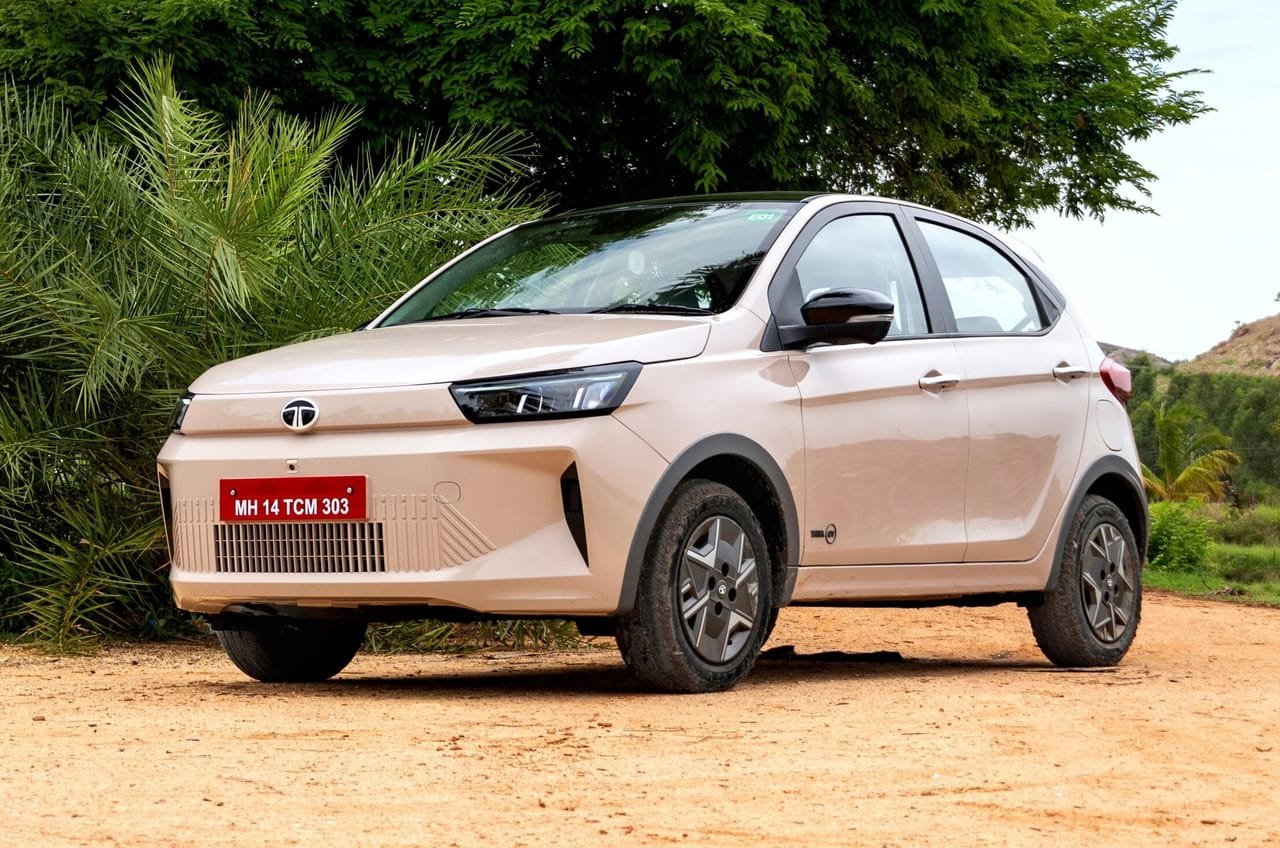
2026 Tata Tiago EV Review: Sharper, Faster, Still India’s Best Budget EV
India’s most affordable EV gets sharper looks, faster charging and a much better cabin
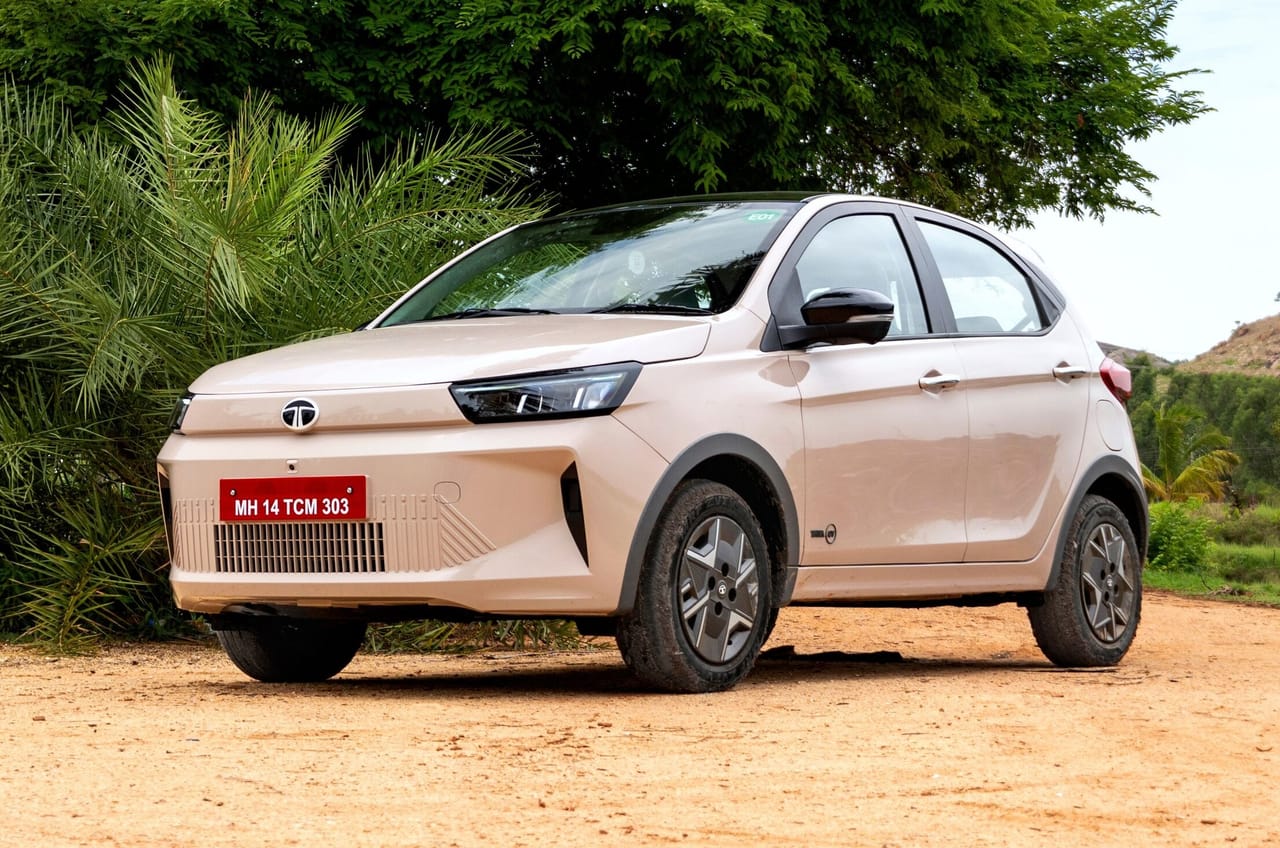
2026 Tata Tiago EV facelift front three-quarter studio shot
Price
Rs 6.99 lakh
Battery (largest pack)
24 kWh
Peak power
75 hp
⚡ Quick Verdict
The 2026 Tata Tiago EV update makes it India’s most convincing cheap electric car. It looks sharper, gets a proper modern screen and much faster charging, all while sticking to a Rs 6.99 lakh starting price. If your daily drive is under 150 kilometres and you can charge at home, nothing else in the electric hatchback class comes close to this kind of value.
✓ The Good
- +Sharp new styling looks genuinely premium for the price
- +30 kW DC fast charging is a game-changer at this budget
- +New 10.25-inch touchscreen and digital cluster transform the cabin
- +4-star Global NCAP rating provides genuine peace of mind
- +Battery-as-a-Service option makes EV ownership truly accessible
- +Real-world range of 180-220 km covers most urban commutes comfortably
✗ The Trade-offs
- −Rear seat remains tight for three adults on longer trips
- −Highway range drops noticeably above 80 km/h constant cruise
- −No rear disc brakes even on the top variant
- −Ride quality still fidgety over sharp-edged potholes at low speeds
📑 In This Review
- What’s New for 2026
- Design and Exterior
- Interior, Tech and Practicality
- Battery, Range and Charging
- Performance and Driving Impressions
- At a Glance: 2026 Tata Tiago EV vs Rivals
- 2026 Tata Tiago EV vs MG Comet EV: Which Is Better?
- Safety and Warranty
- Pricing, Variants and Value
- Who Should Buy It — And Who Shouldn’t
- Final Verdict
- Frequently Asked Questions
The 2026 Tata Tiago EV update makes it India’s most convincing cheap electric car. It looks sharper, gets a proper modern screen and much faster charging, all while sticking to a Rs 6.99 lakh starting price. If your daily drive is under 150 kilometres and you can charge at home, nothing else in the electric hatchback class comes close to this kind of value. India’s EV market has grown up fast. What felt like a fringe idea just a few years ago is now a genuine option for thousands of buyers, and the Tata Tiago EV has been right in the thick of it. It showed people you didn’t need to spend a fortune to go electric. With this 2026 update, Tata Motors has focused on the things that matter most to everyday users: how it looks, how you use it, and how quickly you can top it up. The sub-Rs 10 lakh electric hatchback space is getting busy. You’ve got the tiny MG Comet EV, the bigger Citroen eC3, and Tata’s own larger models like the Punch EV. But the Tiago EV is still the obvious starting point for most families. This update acknowledges that, fixing the sore spots with a sharper design, a much better interior tech package, and seriously improved charging speeds. We’ve spent a good amount of time with the new Tiago EV, tackling city traffic, suburban runs and even a few highway stints. It’s addressed almost every criticism of the old car. It’s not flawless—no car this cheap can be—but the bang-for-buck equation has never been better. Here’s the full picture.
What’s New for 2026
The biggest news isn’t a new colour or a trim tweak. It’s the price. Tata Motors has dropped the Tiago EV’s entry point to Rs 6.99 lakh (ex-showroom), making it India’s cheapest four-door electric car. That undercuts the old model and puts serious pressure on petrol hatchbacks. For anyone who’s been waiting for the right moment to go electric, this might be it.
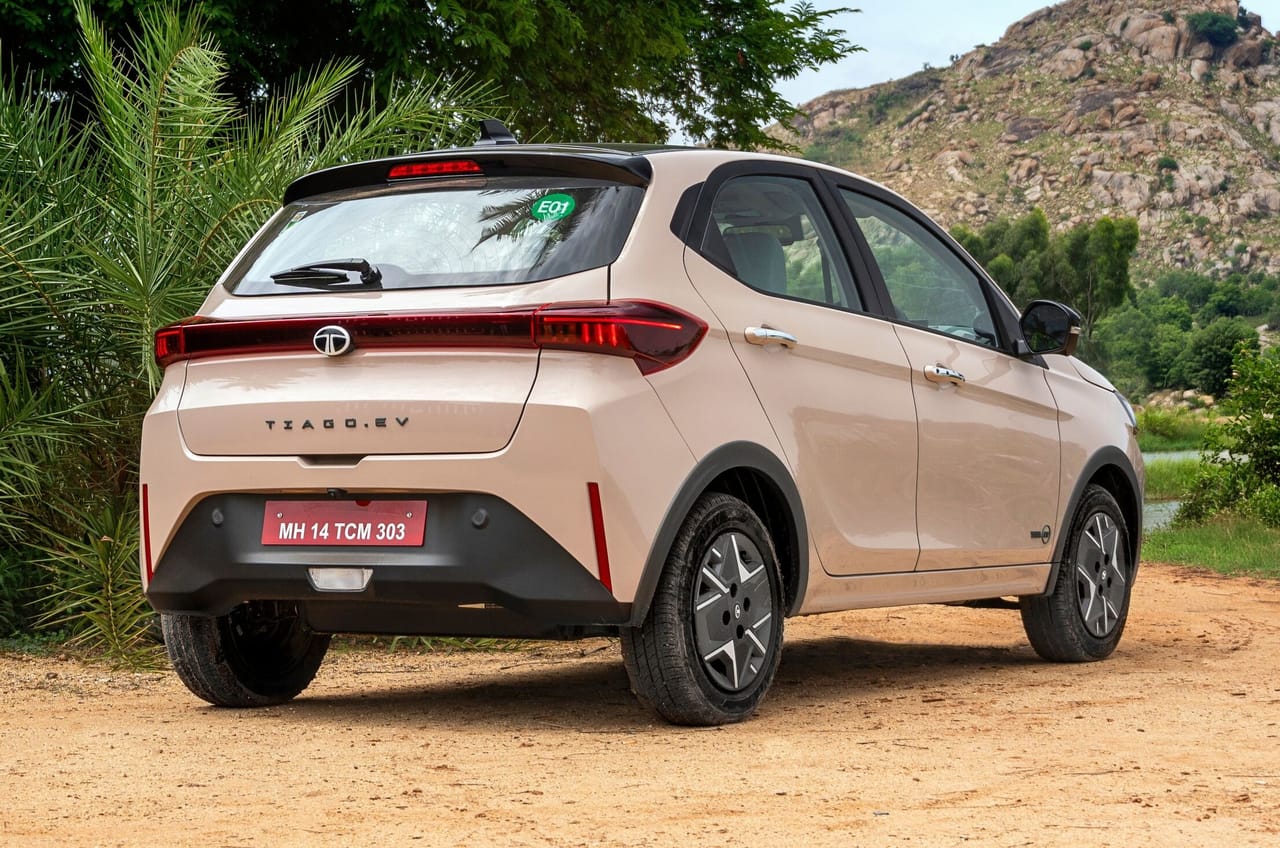
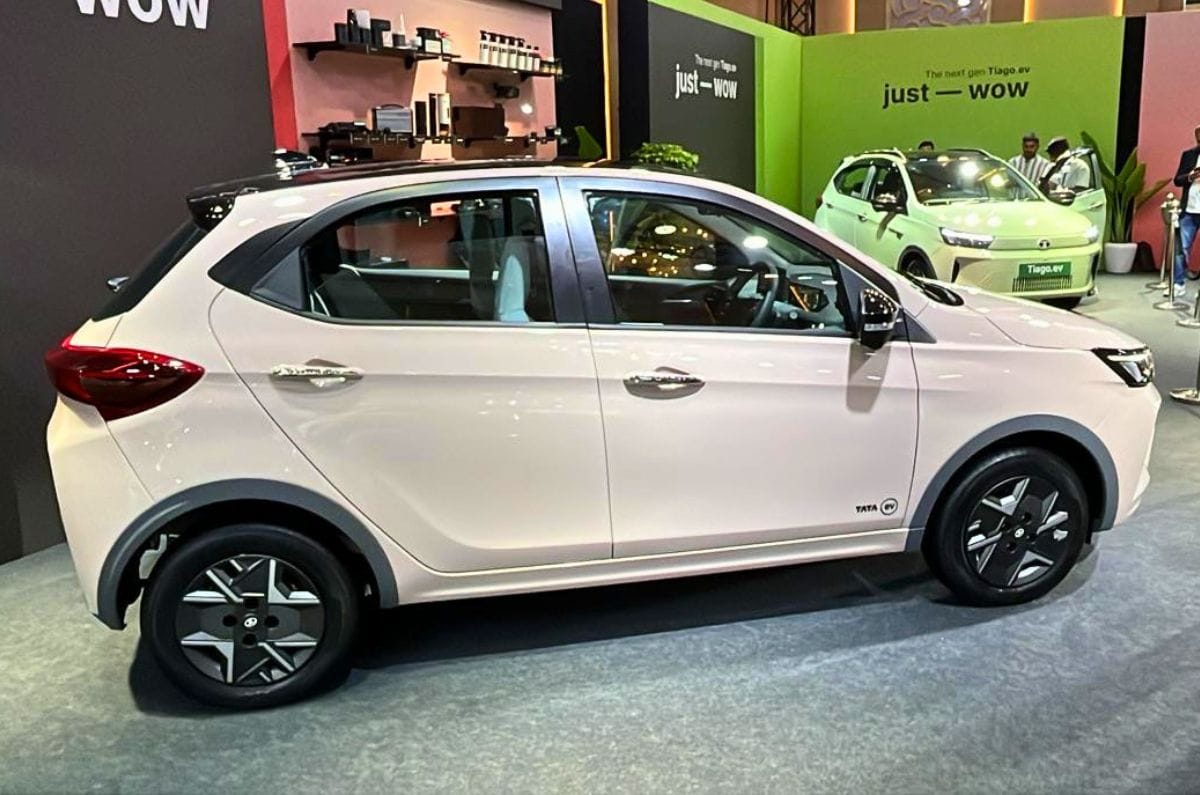
Outside, the 2026 car gets a proper facelift inspired by Tata’s newer EVs. The headlamps are now full-LED units with integrated daytime running lights, giving the face a much more modern look. The closed grille is cleaner, and the front bumper has sharper lines. The rear gets a tweaked bumper and new tail lamp details. The core shape is the same, but the whole car looks a generation newer.
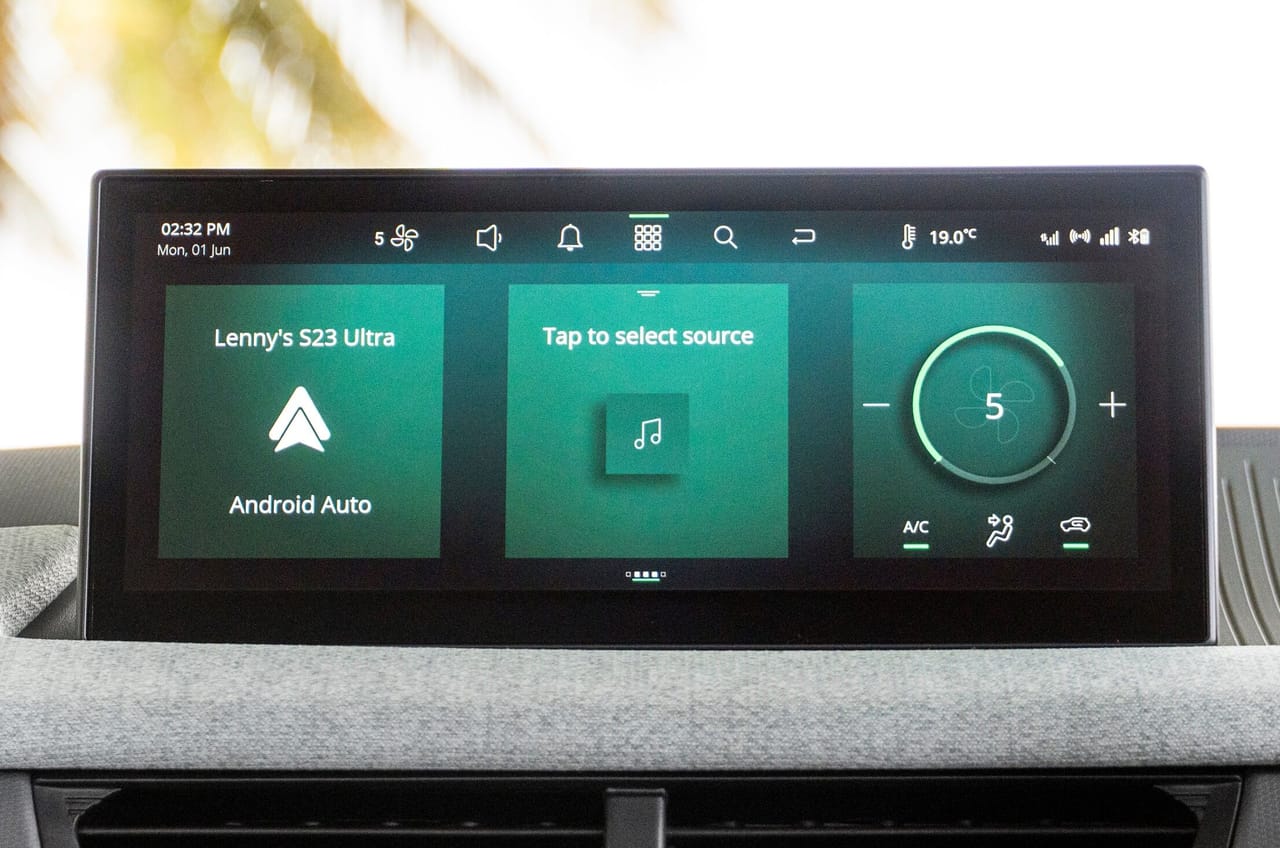
Inside is where you’ll notice the biggest leap. The old 7-inch screen is gone, replaced by a 10.25-inch unit with a much better system. There’s now a full digital instrument cluster, and the dashboard has a new two-tone finish that boosts perceived quality. You also get wireless phone connectivity, a wireless charger, rear AC vents and a rotary gear selector. Together, these changes lift the cabin from feeling basic to feeling properly contemporary.
The charging story is also majorly improved. The 2026 Tiago EV now accepts 30 kW DC fast charging, double the old 15 kW limit. Tata says you can go from 10% to 80% in 35 minutes, or add 100 km of range in just 18 minutes. For anyone who needs to plug in during the workday, this changes the game completely.
Design and Exterior
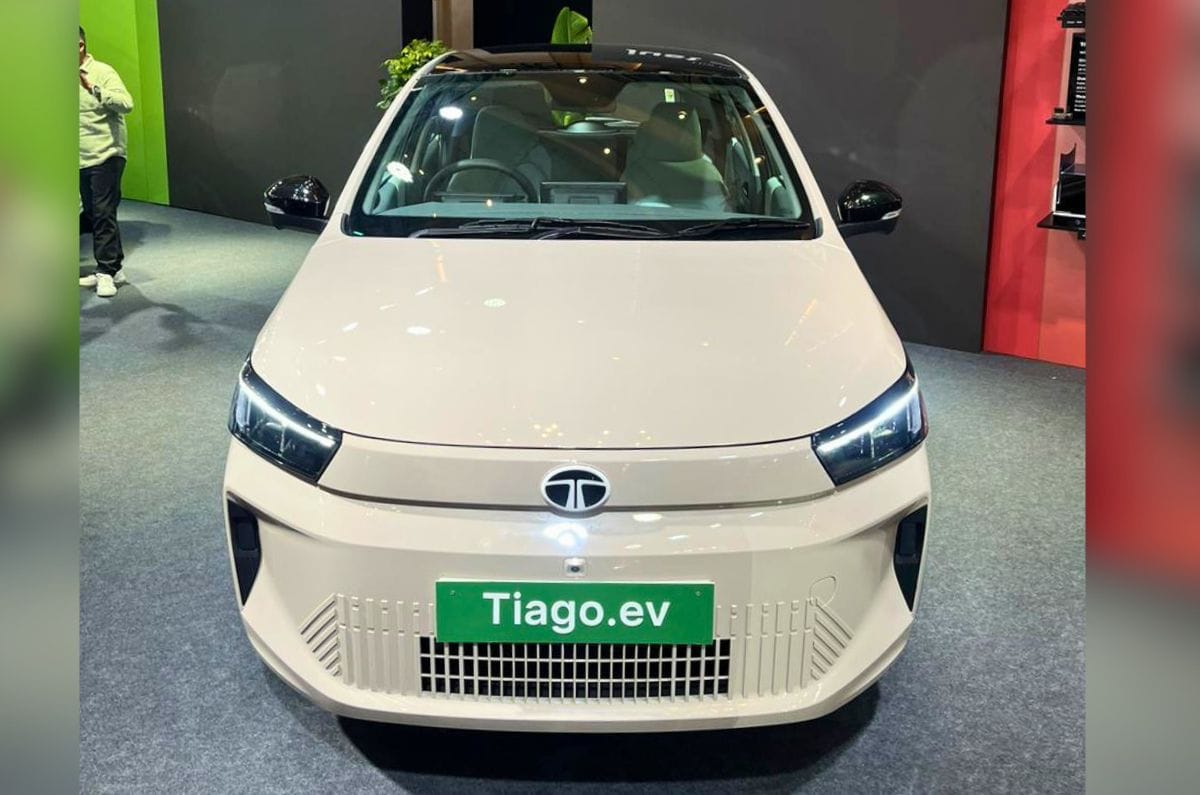
This mid-life update genuinely transforms the Tiago EV’s look. The new LED headlamps are slimmer and more angular, with a distinct light signature that makes it instantly recognisable. The daytime running lights are now part of the headlamp cluster, not stuck in the bumper, so the face looks cleaner. At night, the LEDs throw a strong, focused beam that worked well on dark roads.
The closed-off front grille—an EV design cue that tells you there’s no petrol engine—has been reshaped with a smoother, more sculpted surface. Tata’s added subtle textures for visual interest without going overboard. The front bumper now has "aero-efficient" air curtains on the sides and a revised lower section that looks more purposeful. Overall, the front end comes across as substantially more premium.
From the side, the changes are more subtle. The 14-inch alloys get a new two-tone design that looks smarter. The silhouette is still unmistakably Tiago: a compact, upright hatchback with a rising window line and a short rear overhang. There are new colour options, including a standout blue that fits the electric vibe. The shape is unchanged, but the new details stop it looking dated.
The rear is cleaner and more contemporary. Revised tail lamp graphics, a fresh bumper design and new badges round out the updates. Parked next to its key rivals, the Tiago EV now holds its own—it looks noticeably more modern than the quirky MG Comet EV and is arguably more cohesive than the split-headlamp Citroen eC3.
Interior, Tech and Practicality
Climb inside the 2026 Tiago EV and the changes hit you straight away. The new two-tone dashboard, in light grey and black, makes the cabin feel airier and more upmarket. The top of the dash is soft-touch where it counts, while the lower sections use harder but well-textured plastics that don’t feel cheap. The layout is clean and logical, with physical climate controls—a big plus, as jabbing at touchscreen HVAC buttons on the move is a pain.
The highlight is the new 10.25-inch touchscreen. It’s a huge step up from the old 7-inch unit in every way: sharper, quicker to respond, with a better menu layout. It runs wireless Android Auto and Apple CarPlay, which saves you fumbling with cables on short trips. The screen is legible in bright sun, the interface is straightforward and the overall feel is competitive with cars from the class above. The standard speakers are decent for the price, though keen listeners might still want an upgrade.
The digital instrument cluster swaps the old part-analog setup for a full-colour display showing speed, battery level, range, drive mode, energy flow and trip data. It’s clear, well-organised and doesn’t bombard you with pointless info. The steering wheel has buttons for audio, phone and cruise control, and the driving position is comfortable for most shapes. A height-adjustable driver’s seat on higher trims makes a real difference for taller folks who struggled with the old fixed chair.
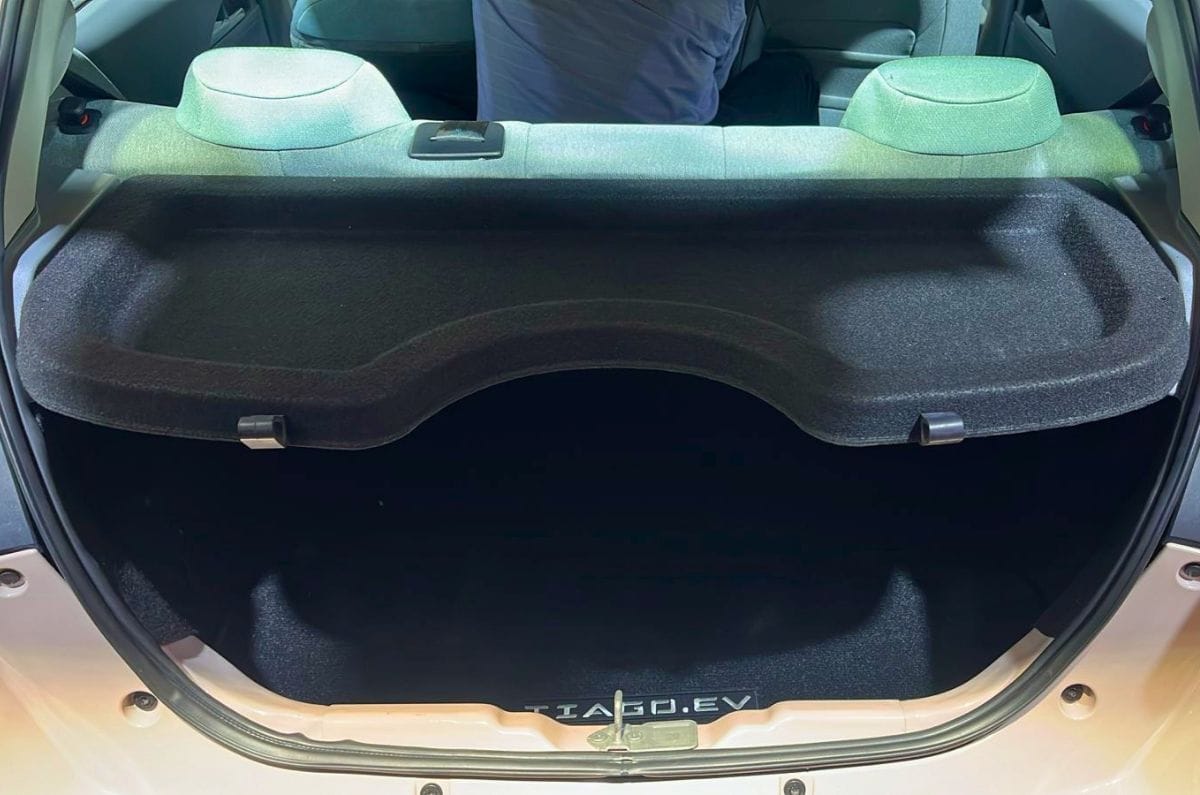
Practicality-wise, it’s still a proper five-door, five-seat hatchback, which matters hugely at this price. The boot holds 240 litres—fine for the weekly shop and a couple of cabin bags. The back seat is fine for two adults but tight for three on anything longer than a quick hop. Rear AC vents are a welcome addition for Indian summers, and Tata’s fitted both USB-C ports and a 12V socket. There’s a wireless charger ahead of the gear selector on higher trims, and top-spec cars get a 360-degree camera that makes tight parking much easier. The rotary gear selector frees up console space and adds a modern EV touch.
One area we’d have liked more improvement is rear legroom. The front seats are comfortable and supportive, but the back bench sits at a height that leaves knees raised and thigh support lacking for adults over about 172 cm. For a family of four doing daily commutes and school runs, it’s perfectly fine. For five-up weekend trips, the constraints show.
Battery, Range and Charging
The 2026 Tata Tiago EV sticks with two battery choices: a 19.2 kWh unit and a larger 24 kWh unit. The smaller pack claims an ARAI-rated range of 226 km, while the 24 kWh pack claims 285 km. Like all ARAI numbers, these are optimistic. In our mixed driving of city traffic, suburban roads and some highway time, the 24 kWh version consistently delivered 180 to 220 km depending on how you drive, how much you use the air-con and the terrain.
In city driving with the AC set to 24 degrees and the car in City mode, we regularly saw efficiency that translated to about 190-200 km from a full charge. Switch to Eco, drive gently and keep the climate control moderate, and 220 km is achievable. Cruising on the highway at a steady 80-90 km/h, however, knocks range down noticeably—we saw closer to 170-180 km in those conditions. For context, the average Indian city commute is under 40 km a day, so the 24 kWh Tiago EV can easily cover a full work week on a single charge for most people.
The real headline of this update, though, is the charging upgrade. The new 30 kW DC fast charging capability changes ownership for anyone who needs to top up during the day. Tata’s 10-80% claim of 35 minutes held up in our testing. The "100 km in 18 minutes" figure works reasonably well in practice, as long as you’re using a decent charger. On a 7.2 kW AC home unit—the kind you’d have installed in your parking spot—a full charge of the 24 kWh pack takes about 3 hours 36 minutes. Plugged into a standard 15A household socket, expect roughly 8-9 hours for a full charge, so overnight top-ups are the norm.
Performance and Driving Impressions
The 19.2 kWh model makes 62 hp and 114 Nm of torque, while the 24 kWh model produces 75 hp with the same 114 Nm. Both drive the front wheels through a single-speed gearbox. The electric motor’s instant torque makes the Tiago EV feel zippy in traffic no matter which battery you pick. The 75 hp version, though, has a stronger mid-range shove that makes highway merging and overtaking feel more assured.
Three drive modes—Eco, City and Sport—change the power delivery and regen intensity. Eco limits power and cranks up regen, perfect for stop-start traffic where you want to maximise range. City is the best all-rounder for daily use. Sport unleashes all 75 hp and sharpens the throttle—it’s genuinely fun for short bursts, though it does eat range faster. We spent 90% of our time in City mode, only flicking to Sport when we needed a quick squirt of acceleration.
The Tiago EV’s urban refinement is a strong point. The motor is nearly silent at low speeds, and even at higher speeds, wind and road noise are better controlled than you’d expect for the money. The suspension is on the firmer side, which keeps body roll tight in corners but can feel jittery over sharp potholes and broken surfaces—common on Indian roads. At highway speeds past 80 km/h, it feels stable but not glued down; crosswinds and road undulations can cause some sway that needs minor steering tweaks. The top speed is limited to around 120 km/h, which is fine for expressways but leaves little in reserve for extended high-speed runs.
The steering is light and direct at city speeds, making U-turns and parking a doddle. It weights up as you go faster, but the feedback feels artificial—you don’t get that connected feel you’d find in a sorted petrol hatch. That said, for the buyer who spends most of their time in city traffic, the steering is well calibrated.
At a Glance: 2026 Tata Tiago EV vs Rivals
| Spec | 2026 Tata Tiago EV | MG Comet EV | Citroen eC3 EV |
|---|---|---|---|
| Starting price (ex-showroom) | Rs 6.99 lakh | Rs 7.00 lakh | Rs 12.04 lakh |
| Battery (largest pack) | 24 kWh | 17.3 kWh | 29.2 kWh |
| Claimed range (ARAI) | 285 km | 230 km | 320 km |
| Real-world range | 180-200 km | 190-210 km | 220-230 km |
| Peak power | 75 hp | 41 hp | 56 hp |
| Peak torque | 114 Nm | 110 Nm | 143 Nm |
| DC fast charging | Yes (30 kW) | No (AC only) | Yes |
| 10-80% DC | 35 minutes | n/a | 50-57 minutes |
| Boot space | 240 L | n/a (4-seater micro) | 315 L |
| NCAP rating | 4 stars (Global NCAP) | Not rated | Not rated |
MG Comet EV
City-only micro EV — wins on parking, loses on charging and safety
Citroen eC3 EV
Bigger battery and boot but Rs 5 lakh dearer and far fewer features
Tata Punch EV
Step-up SUV body, much longer range — the natural upgrade path
Here’s how the 2026 Tata Tiago EV compares to its closest rivals on paper. 2026 Tata Tiago EV Citroen eC3 EV — — Rs 6.99 lakh Rs 12.04 lakh Battery (largest pack) 17.3 kWh 285 km 320 km Real-world range 190-210 km 75 hp 56 hp Peak torque 110 Nm Yes (30 kW) Yes 10-80% DC n/a 240 L 315 L NCAP rating Not rated The MG Comet EV suits single occupants or couples in dense cities who value a tiny footprint. The Citroen eC3 is for buyers who want more space and a bigger battery, and are willing to pay a premium for it.
2026 Tata Tiago EV vs MG Comet EV: Which Is Better?
The MG Comet EV and Tata Tiago EV are the two most common electric choices for first-time EV buyers in India. They sit in a similar price bracket, aim at the same urban buyer and promise affordable electric motoring. But that’s where the similarities end. These are fundamentally different cars.
The Tiago EV is a proper five-door, five-seat hatchback. It has a real boot, a back seat that can actually fit adults and a body that feels substantial on the road. The Comet EV is a three-door, four-seat city quadricycle—a smartly packaged urban runabout that prioritises a tiny footprint over passenger flexibility. In crowded cities like Mumbai, Delhi or Bengaluru where parking is a nightmare, the Comet’s 2,974 mm length is a genuine advantage. You can squeeze into spots that would have a Tiago driver circling the block.
But that compactness comes with real trade-offs. The Comet EV’s 17.3 kWh battery is smaller than even the Tiago EV’s base pack, and its 41 hp motor makes less than half the power of the Tiago’s 24 kWh variant. In traffic, the Comet feels adequate, but it struggles when the road opens up. The Tiago EV, with 75 hp and 114 Nm, has a clear edge in outright pace and, more importantly, confidence for merging and overtaking.
The charging difference is where the Tiago EV pulls way ahead. The Comet EV doesn’t do DC fast charging at all—it’s AC only, which means even a top-up at a public station takes hours. The Tiago EV’s 30 kW DC fast charging, with its 35-minute 10-80% time, is in a different league. For anyone who occasionally needs to charge away from home, this isn’t a small upgrade. It’s a game-changer.
Inside, the Tiago EV also wins. Its new 10.25-inch screen is bigger, sharper and more feature-packed than the Comet’s. The cabin feels roomier, the boot is usefully bigger and the overall quality is a step up. The Comet fights back with its quirky, modern interior design—it has a charm the Tiago’s more conventional layout can’t quite match—and its sheer ease of parking and manoeuvring.
On safety, the Tiago EV’s 4-star Global NCAP rating gives it a credibility the unrated Comet simply can’t match. For family buyers, especially those with kids, this is a non-negotiable. The Tiago EV also rides better over rough roads, handles highway speeds with more composure and offers a more reassuring drive overall.
| Spec | 2026 Tata Tiago EV (24 kWh) | MG Comet EV |
|---|---|---|
| Ex-showroom price | Rs 8.49 lakh (mid-spec) | Rs 8.50 lakh (mid-spec) |
| Length | 3,769 mm | 2,974 mm |
| Battery | 24 kWh | 17.3 kWh |
| Claimed range | 285 km | 230 km |
| Power | 75 hp | 41 hp |
| Torque | 114 Nm | 110 Nm |
| 0-60 km/h | 5.7 s | 7.0 s |
| DC fast charging | Yes (30 kW, 35 min 10-80%) | No |
| Seats / doors | 5 / 5 | 4 / 3 |
| Safety rating | 4-star Global NCAP | Not crash-tested |
<div style="background:linear-gradient(135deg,#f0f9ff,#e0f2fe); border-left:4px solid #2563eb; border-radius:12px; padding:24px 28px; margin:32px 0"> <p style="font-size:12px; font-weight:800; letter-spacing:0.14em; text-transform:uppercase; color:#1e40af; margin:0 0 10px">Which one is better?</p> <p><strong>Buy the Tata Tiago EV if</strong> you want a proper five-seat family hatch, DC fast charging on long commutes, and a Global NCAP safety record.</p> <p><strong>Buy the MG Comet EV if</strong> you live in a dense metro, park in tiny gaps, and never drive beyond 50 km in a day.</p> <p><strong>Our pick</strong> is the Tata Tiago EV — it does 90% of what the Comet does, plus everything the Comet can’t.</p> </div>
Safety and Warranty
The Tata Tiago EV’s 4-star Global NCAP crash test rating is still one of its biggest selling points. In a segment where most rivals either haven’t been tested or scored lower, that rating gives real peace of mind. The body structure performed well in both adult and child occupant protection tests, and Tata has shown a consistent focus on safety across its range that sets it apart from several competitors.
Standard safety gear includes dual front airbags, ABS with EBD, electronic stability control (ESC), hill-hold assist and rear parking sensors. Higher trims add a rear camera, and the top-spec version gets the 360-degree camera system we found genuinely useful in tight spots. Tyre pressure monitoring (TPMS) is also on upper trims, which is something we think EV buyers should prioritise—wrong tyre pressure has a bigger impact on electric range than it does in petrol cars.
The warranty package is solid for a car at this price. Tata offers an 8-year or 1,60,000 km warranty on the battery pack, whichever comes first, plus a standard 3-year or 1,25,000 km vehicle warranty. The battery warranty specifically covers capacity loss below 70%, so if your battery drops under 70% of its original capacity within the period, Tata will sort it. This level of cover helps tackle the range anxiety and battery life worries that still put many Indian buyers off EVs.
One thing to note: the Tiago EV’s safety kit, while competitive, doesn’t include side and curtain airbags—a feature that’s becoming more common even in cheap hatchbacks. For a car that’s been crash-tested and scored well, adding more airbags in future would make the safety package really complete.
Pricing, Variants and Value
The 2026 Tata Tiago EV range kicks off at Rs 6.99 lakh for the base XE variant with the 19.2 kWh battery and goes up to about Rs 11.49 lakh for the top-spec XZ+ Tech Lux with the 24 kWh pack (all prices ex-showroom). The mid-range XT and XZ variants with the 24 kWh battery hit the sweet spot for most buyers, offering the longer range and better performance at a price that undercuts many well-equipped petrol hatchbacks.
At the base level, you get the essentials: dual airbags, ABS, the 19.2 kWh battery with 226 km of claimed range and the core EV driving experience. Move up to the XT and you add the 10.25-inch touchscreen, wireless phone connectivity, rear AC vents and nicer interior trim. The XZ brings the digital instrument cluster, 14-inch alloys, the wireless charger and extra convenience features. The XZ+ Tech Lux tops it off with the 360-degree camera, leatherette upholstery, cruise control and every tech feature available.
For buyers who find even Rs 6.99 lakh a stretch, Tata’s Battery-as-a-Service (BaaS) programme is a clever solution. Under BaaS, you can buy the Tiago EV for as low as Rs 4.69 lakh and pay a per-kilometre charge of about Rs 2.60 for battery use. For low-mileage city users doing 500-800 km a month, this can slash the upfront cost of going electric while keeping monthly running costs predictable and low.
Compare the total cost of ownership to a petrol Tiago and the maths makes sense. Even accounting for electricity, the per-kilometre cost of the Tiago EV is roughly a third of its petrol sibling. Over a typical five years and 60,000 km, the EV makes up its price premium and then some—and that’s before lower maintenance costs (no oil changes, fewer brake pad swaps thanks to regen) and any state subsidies or road tax breaks.
Who Should Buy It — And Who Shouldn’t
<div style="display:grid;grid-template-columns:repeat(auto-fit,minmax(260px,1fr));gap:18px;margin:24px 0"> <div style="background:#ecfdf5;border-left:4px solid #10b981;border-radius:10px;padding:18px 20px"> <p style="font-size:12px;font-weight:800;letter-spacing:0.12em;text-transform:uppercase;color:#047857;margin:0 0 8px">Buy if</p> <p>You’re a first-time EV buyer in a tier-1 or tier-2 Indian city wanting a no-nonsense, sub-Rs 10 lakh electric hatch with proper safety credentials and DC fast charging.</p> </div> <div style="background:#fef2f2;border-left:4px solid #ef4444;border-radius:10px;padding:18px 20px"> <p style="font-size:12px;font-weight:800;letter-spacing:0.12em;text-transform:uppercase;color:#b91c1c;margin:0 0 8px">Skip if</p> <p>Your daily commute is regularly over 200 km, or you frequently take 400 km road trips — the bigger battery in the Citroen eC3 or stepping up to the Nexon EV will serve you better.</p> </div> </div>
⚡ Our Verdict
India’s most affordable EV gets sharper looks, faster charging and a much better cabin
The 2026 Tata Tiago EV update isn’t a radical reinvention. It’s the right kind of improvement—the sort that fixes real-world niggles without losing the value-for-money formula that made the original a hit. The design is sharper, the cabin is way more contemporary, the DC fast charging is a genuine breakthrough at this price and the driving experience stays as refined and easy as ever. For first-time EV buyers, it knocks out almost every reasonable objection to going electric. It’s not without its flaws. The back seat is still tight for taller adults, highway range is noticeably shorter than city range and the ride can be fidgety over India’s less-than-perfect roads. The missing side airbags are a gap in an otherwise strong safety package. These aren’t deal-breakers for the target buyer, but they’re worth knowing about. At Rs 6.99 lakh to Rs 11.49 lakh, the 2026 Tiago EV is the most sensible, well-rounded and honestly-priced electric car you can buy in India today. It doesn’t pretend to be something it’s not—it’s a compact city hatchback that runs on electricity, and in that role, it’s brilliant. We give it 4.0 out of 5, and wouldn’t hesitate to recommend it to any Indian family ready to make the switch. If your daily commute is under 150 km, you can charge at home and your budget is under Rs 10 lakh, the 2026 Tata Tiago EV should be first on your list.
Frequently Asked Questions
How much does the 2026 Tata Tiago EV cost in India?
The 2026 Tata Tiago EV starts at Rs 6.99 lakh (ex-showroom) for the base XE variant with the 19.2 kWh battery. The top-spec XZ+ Tech Lux with the 24 kWh battery is priced at approximately Rs 11.49 lakh. The Battery-as-a-Service option brings the entry price down to Rs 4.69 lakh with a per-kilometre battery usage charge of around Rs 2.60.
What is the real-world range of the Tata Tiago EV 24 kWh?
In our testing, the 24 kWh Tata Tiago EV delivered a real-world range of 180-220 km depending on driving conditions. City driving with moderate climate control usage returned around 190-200 km, while more efficient driving in Eco mode could push it closer to 220 km. Highway driving at sustained speeds above 80 km/h brought the range down to 170-180 km.
How fast does the 2026 Tata Tiago EV charge?
Using a 30 kW DC fast charger, the 2026 Tiago EV can charge from 10% to 80% in approximately 35 minutes. Tata claims this adds around 100 km of range in 18 minutes. On a 7.2 kW AC home charger, a full charge of the 24 kWh pack takes roughly 3 hours 36 minutes, while a standard 15A domestic socket will take approximately 8-9 hours.
Is the Tata Tiago EV safe?
Yes. The Tata Tiago EV has received a 4-star rating from Global NCAP for both adult and child occupant protection. Standard safety features include dual front airbags, ABS with EBD, electronic stability control, hill-hold assist and rear parking sensors. Higher trims add a rear camera or 360-degree camera system.
Tata Tiago EV vs MG Comet EV — which should I buy?
The Tata Tiago EV is the better all-rounder. It offers more power, longer range, DC fast charging, five proper seats, a larger boot and a 4-star Global NCAP safety rating. The MG Comet EV’s only meaningful advantage is its tiny footprint, which makes it easier to park in extremely congested urban environments. For most buyers, the Tiago EV is the smarter choice.
What is the warranty on the Tiago EV battery?
Tata Motors offers an 8-year or 1,60,000 km warranty (whichever comes first) on the Tiago EV’s battery pack. The warranty covers capacity degradation below 70% of original capacity. The standard vehicle warranty is 3 years or 1,25,000 km.
Does the Tata Tiago EV have a sunroof?
No, the 2026 Tata Tiago EV does not offer a sunroof on any variant. This is a feature typically found in segments above, and at the Tiago EV’s price point, it is not expected or commonly offered by competitors either.
