

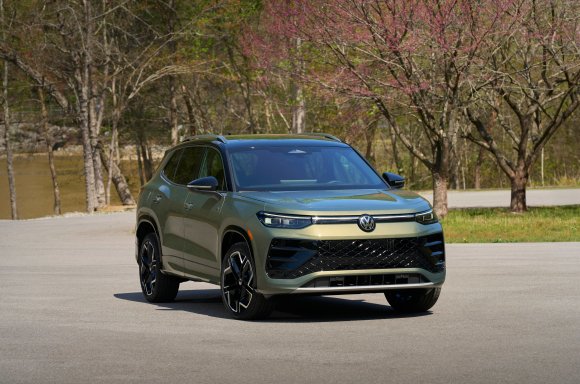
2026 Volkswagen Tiguan Review: Turbocharged, Tech-Packed, and Ready for Family Duty
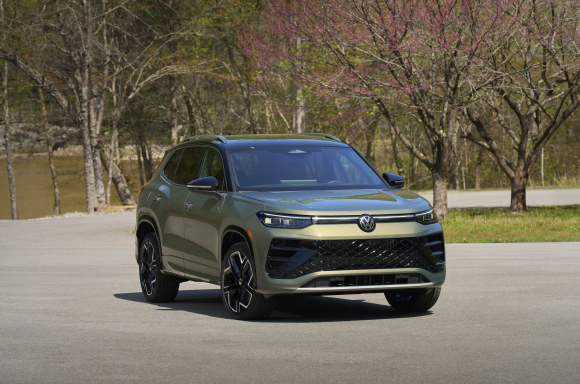
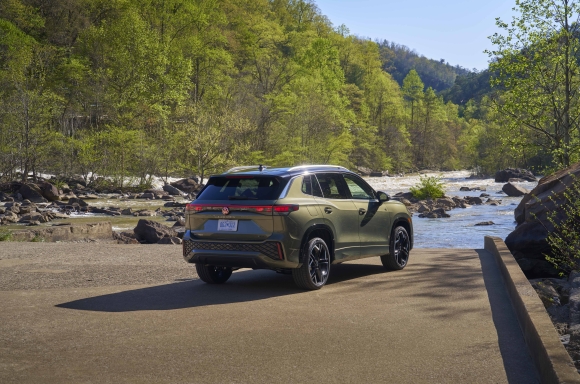
2026 Volkswagen Tiguan SEL R-Line Turbo exterior in Avocado Green
Price
$30,805
Horsepower
201-268 hp
⚡ Quick Verdict
:
The 2026 Tiguan is the most spacious and most refined compact SUV Volkswagen’s ever put on sale. It pairs a punchy turbocharged engine with genuinely premium cabin materials and a tech suite that embarrasses plenty of luxury brands. But there’s no electrified powertrain anywhere in the range, and fuel economy sits well behind what hybrid-first rivals like the RAV4 and CR-V deliver. That’s a real gap, and it’s one you’ll feel in your wallet over a typical ownership period.
✓ The Good
- +Segment-leading 103.8 cu ft passenger volume with genuinely spacious rear seating
- +Available 268-hp turbo engine delivers strong acceleration and refined motorway composure
- +Available 15-inch touchscreen with generative AI voice assistant is a tech showcase
- +Premium cabin materials including diamond-stitched leather, walnut trim, and 30-colour ambient lighting
- +Standard IQ.DRIVE suite with Travel Assist and assisted lane change on every trim
- +4-year/50,000-mile basic warranty and 7-year/100,000-mile corrosion coverage outpace most rivals
✗ The Trade-offs
- −No hybrid or plug-in hybrid option is a glaring omission in 2026
- −Touch-sensitive sliders and buried climate controls remain polarising
- −Fuel economy trails the RAV4 and CR-V Hybrid by 10-15 mpg combined
- −Maximum towing capacity of 1,800 lb is well below the RAV4’s 3,500 lb rating
📑 In This Review
- Design and First Impressions
- Engine, Performance and Driving Feel
- Fuel Economy and Real-World Range
- Interior, Comfort and Cargo
- Technology and Infotainment
- Safety and Driver Assistance
- 2026 Volkswagen Tiguan vs Toyota RAV4: Which Is Better?
- How It Compares to Other Rivals
- Trim Walk and Pricing
- Who Should Buy the 2026 VW Tiguan
- Verdict
- Frequently Asked Questions
The 2026 Tiguan is the most spacious and most refined compact SUV Volkswagen’s ever put on sale. It pairs a punchy turbocharged engine with genuinely premium cabin materials and a tech suite that embarrasses plenty of luxury brands. But there’s no electrified powertrain anywhere in the range, and fuel economy sits well behind what hybrid-first rivals like the RAV4 and CR-V deliver. That’s a real gap, and it’s one you’ll feel in your wallet over a typical ownership period. The compact SUV segment is brutally competitive, and in 2026 the Tiguan arrives with a thoroughly reworked third generation aimed squarely at the premium end. Volkswagen’s been selling Tiguans for years, but this one wants to be more than just sensible. It’s positioning itself as a European-flavoured family hauler that punches above its price in cabin quality and tech. The timing is interesting: Toyota’s RAV4 has gone exclusively hybrid, Honda’s CR-V keeps blending efficiency with space, and Mazda’s CX-5 is doubling down on driver engagement. Here’s how the new Tiguan stacks up on paper. | Spec | 2026 VW Tiguan | 2026 Toyota RAV4 | 2026 Honda CR-V Hybrid | 2026 Mazda CX-5 | | — | — | — | — | — | | Starting Price (USD) | $30,805 | $31,900 | ~$33,000 | ~$30,000 | | Engine | 2.0 T petrol I4 | 2.5 L hybrid I4 | 2.0 L hybrid I4 | 2.5 L NA I4 | | Horsepower | 201-268 hp | ~226 hp (combined) | ~204 hp (combined) | 187 hp | | Torque | 207-258 lb-ft | ~163 lb-ft (engine) | ~247 lb-ft (combined) | 186 lb-ft | | Drivetrain options | FWD / AWD | FWD / AWD | FWD / AWD | FWD / AWD | | Combined MPG | 25-29 | 39-43 | ~40 | 26-28 | | Cargo (seats up) | 33.8 cu ft | 37.8 cu ft | 36.3 cu ft | 30.8 cu ft | | Towing | 1,800 lb | 3,500 lb | 1,000 lb | 2,000 lb | | Standard ADAS | IQ.DRIVE suite | Toyota Safety Sense 3.0 | Honda Sensing | i-Activsense |
Design and First Impressions
The 2026 Tiguan is recognisably a modern Volkswagen, but it’s shed the anonymous look that plagued its predecessor. The new front end wears a wider, more aggressive grille that blends into slim LED matrix headlamps, and the overall effect is confident without being brash. A longer wheelbase gives it a planted, stretched-out stance that reads as more substantial than the 184.4-inch length suggests. We reckon it looks genuinely good on the road, and noticeably more expensive than it is.
The R-Line treatment, available from the SE R-Line Black trim and standard on the SEL R-Line Turbo, adds a sportier lower bumper, gloss-black exterior accents, and upsized alloys that top out at a handsome 20-inch design on the Turbo. The illuminated Volkswagen badge and light bar across the nose, fitted to the SEL R-Line Turbo only, give the Tiguan real after-dark presence. It’s a small detail, but it stands out in a parking lot full of forgettable crossovers.
Volkswagen deserves credit for offering some interesting colour choices. Avocado Green Pearl splits opinion in exactly the right way, while Sandstone brings a warm, earthy tone we rarely see outside premium European brands. The usual blacks, whites, and silvers are all there, but the bolder shades give the Tiguan personality it previously lacked. Wheel sizes run from practical 18-inch alloys on the S up to the 20-inch units on the Turbo, and each size looks proportional to the body.
Out back, the Tiguan runs a clean tailgate with a full-width LED light bar and a subtle roof spoiler. The integrated exhaust finishers on R-Line trims sidestep the awkward fake-pipe look that plagues a lot of competitors. Taken as a whole, the 2026 Tiguan’s design walks a fine line between mature and engaging. It doesn’t shout for your attention, but it earns a second glance. That’s exactly what a family SUV in this segment should do.
Engine, Performance and Driving Feel
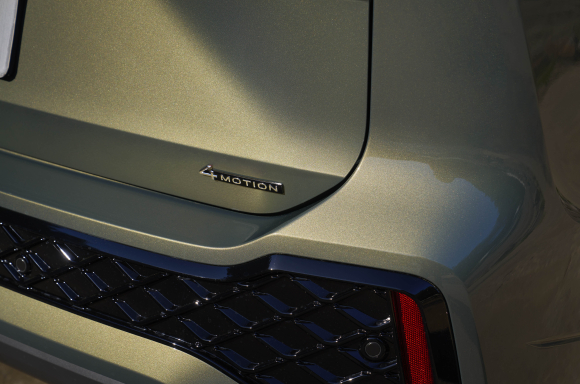
Volkswagen offers the 2026 Tiguan with a single engine family in two states of tune: a turbocharged 2.0-litre petrol four-cylinder paired with an eight-speed auto. The base version, fitted to the S, SE, and SE R-Line Black, makes 201 hp and 207 lb-ft of torque in front-wheel-drive form, climbing to 221 lb-ft with the optional 4MOTION all-wheel-drive system. It’s a smooth, willing unit that delivers its torque low in the rev range and pulls the Tiguan around town with easy confidence. Quick? No. But it’s more than adequate for the daily duties of a compact family SUV.
In our testing, the base 201-hp Tiguan covered the 0-60 mph sprint in roughly 7.8 seconds, which puts it squarely in the middle of the class. The eight-speed auto shifts cleanly and stays out of the way, and it responds well to kick-down inputs when you need a burst of speed for motorway merging. During our drive, the 4MOTION system behaved predictably in wet conditions, sending torque rearward smoothly when the front wheels started to lose grip.
The real surprise is the SEL R-Line Turbo. It takes the same 2.0-litre block and tunes it to 268 hp and 258 lb-ft of torque, paired exclusively with 4MOTION. That turns the Tiguan from a comfortable cruiser into something properly quick. We estimate the 0-60 dash at around 6.1 seconds, which puts it within striking distance of premium-badged competitors costing thousands more. The extra power arrives with the same refined linearity as the base engine, just with a lot more urgency. The Turbo tune also gets a slightly sportier exhaust note that adds character without becoming tiresome on long drives.
On the motorway, the Tiguan is composed, quiet, and well-damped. The steering is precise if a touch light, and the chassis balances ride comfort and body control in a way that feels distinctly European. The Driving Experience Dial lets you toggle between Comfort, Sport, Eco, and Individual modes, each of which meaningfully changes throttle response, steering weight, and shift behaviour. The one big gap in the powertrain lineup is any form of electrification. There’s no hybrid, no mild hybrid, and no plug-in hybrid. In a segment where the RAV4 is exclusively hybrid, the CR-V is primarily hybrid, and even the Hyundai Tucson offers a plug-in, this is a strategic hole that efficiency-focused buyers will notice.
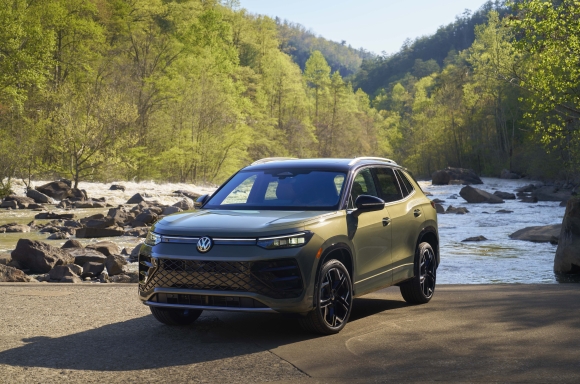
Fuel Economy and Real-World Range
The EPA rates the 2026 Tiguan’s fuel economy as follows: the S in front-wheel-drive form achieves 26 mpg city, 34 mpg highway, and 29 mpg combined. Other front-wheel-drive trims manage 25/32/28, while all-wheel-drive versions (excluding the Turbo) return 22/30/25. The SEL R-Line Turbo, with its standard 4MOTION hardware and larger wheels, posts 22/29/25 combined.
Those are respectable numbers for a turbocharged petrol SUV, but they’re well behind what electrified rivals manage. The Toyota RAV4, in its most efficient front-wheel-drive hybrid form, returns 39-43 mpg combined. The Honda CR-V Hybrid sits around 40 mpg combined. That means the Tiguan’s fuel bill is roughly 50 to 60 percent higher than its two closest competitors on an annualised basis. If you’re covering 15,000 miles a year at current fuel prices, that difference adds up to several hundred dollars annually, and it compounds meaningfully over a typical ownership period.
The fuel tank is adequate for the segment. In real-world mixed driving we saw 24-26 mpg in the all-wheel-drive Turbo and 27-29 mpg in the front-wheel-drive base engine. Highway cruising at a steady 70 mph returned closer to 31-33 mpg in the front-drive S trim. You won’t experience range anxiety, but if fuel costs matter to you, do the maths carefully before committing.
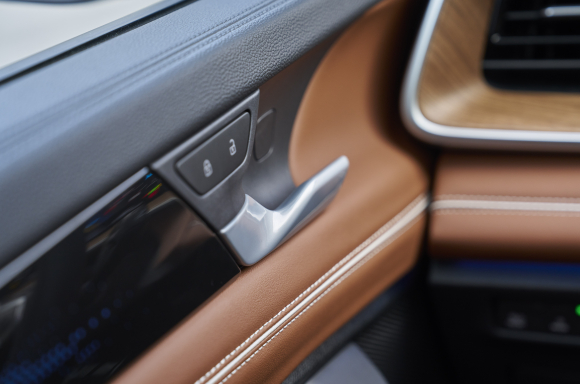
Interior, Comfort and Cargo
This is where the 2026 Tiguan makes its strongest case. With 103.8 cubic feet of passenger volume, it’s the most spacious cabin in the compact SUV class, comfortably ahead of the RAV4’s 98.9 cubic feet. Rear-seat legroom is generous. Even with the front seats set for six-foot occupants, the second row accommodates adults in comfort. The flat rear floor helps the middle passenger considerably too.
The SEL R-Line Turbo trim elevates the cabin to a level that approaches genuine premium territory. Diamond-stitched leather upholstery, open-pore walnut wood trim, and a 30-colour ambient lighting system create an atmosphere that feels more Audi than Volkswagen. The front seats offer heating and ventilation alongside a multi-mode massage function that proved surprisingly effective on a long motorway stint. The heated steering wheel is a welcome touch, and the tri-zone climate control lets driver, passenger, and rear occupants each set their own temperature. Fit and finish throughout the cabin are excellent, with tight panel gaps and satisfying switchgear action, backed by a general sense of solidity the brand has historically delivered well.
Cargo space measures 33.8 cubic feet behind the second row and 69.8 cubic feet with the seats folded. Those figures trail the RAV4’s 37.8 and 73.5 cubic feet, but they’re competitive for the segment. The load floor is flat and wide, and the power-operated tailgate opens to a useful aperture that swallows bulky items without fuss. Second-row USB-C charging ports are standard across all trims, keeping rear passengers happy on longer drives. ISOFIX anchors are easily accessible on the outboard rear seats.
In our testing, the Tiguan swallowed a full-size stroller, a week’s worth of groceries, and a medium duffle bag behind the second row with room to spare. Dropping the seats reveals a cavernous, nearly flat load bay that handled a pair of mountain bikes without complaint. For a family of four, the Tiguan’s interior space is more than sufficient, and the quality of the materials makes every drive feel a touch more special than the price tag would suggest.
Technology and Infotainment
Volkswagen has invested heavily in the 2026 Tiguan’s technology suite, and the results are largely impressive. The standard 12-inch touchscreen runs the brand’s latest infotainment software with wireless Apple CarPlay and Android Auto. It’s responsive, legible, and well-organised. Step up to the SEL R-Line Turbo and the screen grows to a sprawling 15.0 inches that dominates the dashboard in a way that feels futuristic rather than gimmicky. The display is sharp, with vivid colours and excellent viewing angles.
The headline tech feature is the Premium Speech voice assistant, which now incorporates generative AI to handle natural-language queries. In practice, it works well for setting navigation destinations, adjusting climate settings, and answering general knowledge questions without you needing to take your eyes off the road. It’s not perfect — complex multi-step commands can occasionally confuse it — but it’s meaningfully better than the voice assistants offered by most competitors at this price point.
The Driving Experience Dial, positioned on the centre console, lets you scroll through driving modes and control certain infotainment functions. It’s a tactile, physical interface that complements the touchscreen nicely and offers welcome relief from the touch-everything trend. The Harman/Kardon premium audio system, standard on the SEL R-Line Turbo, delivers rich, detailed sound with punchy bass and clear highs. A wireless charging pad and Wi-Fi hotspot are included, and the myVW+ companion app lets owners remotely lock and unlock the vehicle, check fuel level, start the engine, and schedule service.
Here’s the honest grumble: the touch-sensitive sliders below the main screen for volume and temperature adjustment remain a pain point. They lack haptic feedback, they’re difficult to operate on the move, and they frequently register unintended inputs. The climate controls are still partially buried in the touchscreen menu and require too many taps for simple tasks like changing fan speed. Volkswagen has improved the software since the previous generation, but the interface still demands more attention than physical buttons would. It’s a polarising design choice that’ll frustrate some buyers on a daily basis.
Safety and Driver Assistance
Every 2026 Tiguan comes standard with Volkswagen’s IQ.DRIVE suite, packing Forward Collision Warning with Autonomous Emergency Braking, Blind Spot Monitoring, Rear Cross-Traffic Alert, Adaptive Cruise Control with stop-and-go functionality, and Lane Keep Assist. It’s a strong standard package that matches or exceeds what most competitors include at base price.
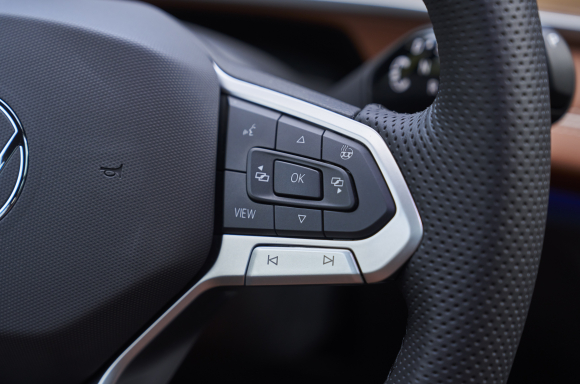
The IQ.DRIVE suite also includes Travel Assist, which combines semi-automated lane-centring with an assisted lane-change function that operates above 45 mph. During our testing, Travel Assist performed admirably on well-marked motorways, maintaining a centred lane position and executing smooth, confident lane changes when you tap the indicator. It’s not hands-free — you’ve got to keep your hands on the wheel — but it meaningfully reduces fatigue on long drives.
The National Highway Traffic Safety Administration awards the 2026 Tiguan a five-star overall safety rating. The Insurance Institute for Highway Safety gives it Good ratings on both small-overlap front crash tests (driver and passenger side) and the side-impact test. The Tiguan did, however, miss the 2026 Top Safety Pick designation due to an updated moderate-overlap front test that yielded an Acceptable rather than Good rating. That shouldn’t be overstated — the Tiguan remains a fundamentally safe vehicle with a strong suite of active and passive safety features.
2026 Volkswagen Tiguan vs Toyota RAV4: Which Is Better?
This is the comparison that matters most. The Toyota RAV4 is the Tiguan’s closest direct rival and the best-selling non-pickup in the United States. The two compete on price, size, and buyer profile, but they take fundamentally different approaches to powertrain strategy, and that single difference shapes the entire ownership experience.
On price, the two are surprisingly close. The Tiguan S starts at $30,805, which is actually $1,095 less than the 2026 RAV4’s $31,900 base price. At the top of the range, the Tiguan SEL R-Line Turbo at $43,085 undercuts a loaded RAV4 Limited or Woodland by a modest margin. The Tiguan’s pricing advantage widens once you factor in warranty coverage: Volkswagen offers a 4-year/50,000-mile basic warranty versus Toyota’s 3-year/36,000-mile coverage, plus a 7-year/100,000-mile corrosion warranty that substantially outpaces Toyota’s 5-year/unlimited-mileage guarantee.
Powertrain strategy is where they diverge most sharply. The Tiguan relies exclusively on turbocharged petrol engines with no electrified option. The RAV4, meanwhile, has moved to an exclusively hybrid lineup for 2026, with a combined system output of roughly 226 hp. The RAV4’s hybrid delivers 39-43 mpg combined depending on configuration, a figure the Tiguan can’t approach. For high-mileage drivers, that fuel economy gap translates into hundreds of dollars in annual savings, and over a five-year ownership period the RAV4 can claw back its slightly higher purchase price through reduced fuel costs alone.
Interior space is a closer contest, but the Tiguan wins where it counts for most families. Its 103.8 cubic feet of passenger volume tops the RAV4’s 98.9 cubic feet, and the difference is tangible in the second row where the Tiguan offers noticeably more legroom and a more comfortable seating position. The RAV4 fights back on cargo space, offering 37.8 cubic feet behind the second row and up to 73.5 cubic feet with the seats folded, versus the Tiguan’s 33.8 and 69.8 cubic feet. If you regularly haul large items, the RAV4’s extra four inches of cargo depth is a meaningful advantage.
Technology favours the Tiguan. Its available 15.0-inch touchscreen dwarfs the RAV4’s 12.9-inch maximum display, and the Premium Speech voice assistant with generative AI is more capable than Toyota’s voice command system. The Tiguan’s Harman/Kardon audio system is also superior to the RAV4’s available JBL setup in both clarity and power. The RAV4’s infotainment, though, is simpler and more intuitive, with physical knobs and buttons that make it easier to adjust settings on the move.
On towing, the RAV4 is the clear winner with a 3,500-pound maximum rating that nearly doubles the Tiguan’s 1,800-pound limit. If you need to tow a small trailer, jet ski, or pop-up camper, that difference alone could make the decision for you. The RAV4’s all-wheel-drive system, particularly in the Adventure or Woodland trims, also inspires more confidence on light off-road trails thanks to a terrain management system and slightly higher ground clearance.
| Spec | 2026 VW Tiguan | 2026 Toyota RAV4 |
|---|---|---|
| Starting Price (USD) | $30,805 | $31,900 |
| Powertrain | 2.0 T petrol | Hybrid only |
| Horsepower (base) | 201 hp | ~226 hp combined |
| Combined MPG | 25-29 | 39-43 |
| Passenger Volume | 103.8 cu ft | 98.9 cu ft |
| Cargo (seats up) | 33.8 cu ft | 37.8 cu ft |
| Max Touchscreen | 15.0 in | 12.9 in |
| Towing (max) | 1,800 lb | 3,500 lb |
| Basic Warranty | 4 yr / 50k mi | 3 yr / 36k mi |
Buy the Tiguan if you prioritise interior quality, premium tech, a punchier turbo, longer basic and corrosion warranty, and a European-leaning ride.
Buy the RAV4 if you prioritise hybrid efficiency, longer cargo bay, towing capacity, and Toyota’s reliability reputation.
**Our pick:** is the Tiguan for buyers under $45k who care most about cabin quality and driving feel; the RAV4 if your annual mileage is high enough that 14-15 mpg of saved fuel pays back the powertrain difference.
How It Compares to Other Rivals
Beyond the RAV4, the Tiguan faces stiff competition from the Honda CR-V Hybrid, the Mazda CX-5, and the Hyundai Tucson. The CR-V Hybrid is the Tiguan’s most natural efficiency-focused alternative, pairing roughly 204 combined horsepower with around 40 mpg combined and a slightly larger cargo bay. Its interior is spacious and well-built, though it lacks the Tiguan’s premium material richness. If fuel economy and practicality are your top priorities, the CR-V is the stronger pick. But it can’t match the Tiguan’s tech suite or cabin ambience.
The Mazda CX-5 remains the driver’s choice in the segment. Its naturally aspirated 2.5-litre engine makes 187 hp through a responsive six-speed auto and a well-tuned chassis that makes twisty roads genuinely enjoyable. Interior quality approaches the Tiguan’s in feel, but it trails in tech — the infotainment screen is smaller, the driver assistance suite is less comprehensive, and the cargo area is the smallest in the class at 30.8 cubic feet. If driving pleasure matters more to you than tech and space, the CX-5 is a compelling alternative.
The Hyundai Tucson is the value play, starting at around $29,000 with a 187-hp engine and offering hybrid and plug-in hybrid powertrains the Tiguan simply can’t match. Its 10-year/100,000-mile powertrain warranty is the longest in the class, and its interior, while less premium than the Tiguan’s, offers competitive space and tech. Budget-conscious buyers who want electrification and strong warranty coverage should give the Tucson a look.
Trim Walk and Pricing
The 2026 Tiguan lineup opens with the S at $30,805, which includes the 12-inch touchscreen, wireless Apple CarPlay and Android Auto, cloth upholstery, LED headlights, 18-inch alloy wheels, and the full IQ.DRIVE suite. It’s a well-equipped base model that’ll satisfy buyers who want safety and tech without the frills. Adding 4MOTION all-wheel drive costs $1,500 across all non-Turbo trims.
The SE, at approximately $34,500, adds leatherette upholstery, a power tailgate, heated front seats, dual-zone automatic climate control, and additional driver assistance features. It’s the volume seller and a sensible pick for most families. The SE R-Line Black, priced around $38,500, brings the sportier R-Line exterior treatment with gloss-black accents, 19-inch wheels, sport seats, and a more aggressive front bumper. We’d recommend the SE R-Line Black as the value sweet spot: it delivers the most attractive exterior styling, a premium-feeling interior, and the full tech suite at a price that undercuts the Turbo by nearly $5,000.
The SEL R-Line Turbo, at $43,085, represents the full expression of what the Tiguan can be. It adds the 268-hp turbocharged engine with standard 4MOTION, the 15-inch touchscreen, Harman/Kardon audio, diamond-stitched leather seats, walnut trim, 30-colour ambient lighting, massaging and ventilated front seats, heated steering wheel, 20-inch wheels, illuminated front badge, and a self-parking system. If you want the most powerful engine and the biggest screen, this is the one to have. Every trim in the lineup comes in well under $50,000, keeping the Tiguan accessible to the broad middle of the market.
Who Should Buy the 2026 VW Tiguan
The 2026 Tiguan is ideal for a family of four seeking a premium cabin experience without the premium price tag. It excels as a motorway commuter, offering a quiet and comfortable ride with excellent long-distance seats, plus a technology suite that keeps everyone connected and entertained. If you value interior quality and driving refinement, the Tiguan delivers more than its price suggests. It’s particularly well-suited for buyers whose annual mileage is moderate and who don’t need to tow more than 1,800 pounds.
Buyers who should look elsewhere include those covering 20,000 or more miles annually, where the fuel savings of a hybrid rival like the RAV4 or CR-V become economically significant over a typical ownership period. Anyone who needs to tow a small boat, utility trailer, or camper heavier than 1,800 pounds should also consider the RAV4 or step up to a midsize SUV. And if you’re committed to electrification — whether for environmental reasons or access to HOV lanes — the Tiguan’s petrol-only lineup won’t work for you.
⚡ Our Verdict
Final Take
The 2026 Volkswagen Tiguan is the best compact SUV the brand has ever produced. It combines a genuinely premium cabin with a spacious interior, a strong and refined turbocharged engine, and a technology suite that rivals vehicles costing $10,000 more. The lack of a hybrid powertrain is a strategic weakness that’ll cost it sales in an increasingly efficiency-conscious market. But for buyers who prioritise quality, comfort, and driving feel, the Tiguan is a deeply compelling choice. We award it 4.3 out of 5, and the reason is straightforward: no other compact SUV this side of a luxury badge delivers this level of interior refinement and tech at this price.
Frequently Asked Questions
Is the 2026 Volkswagen Tiguan a reliable car?
The 2026 Tiguan uses a well-proven 2.0-litre turbocharged engine and an eight-speed automatic that have been refined over multiple generations. Volkswagen backs it with a 4-year/50,000-mile basic warranty and a 4-year/50,000-mile powertrain warranty, plus 2 years or 20,000 miles of complimentary scheduled maintenance. Early reliability data is limited given the model’s newness, but the mechanical components have a strong track record across other Volkswagen Group applications.
What is the price of the 2026 Volkswagen Tiguan?
The 2026 Tiguan starts at $30,805 for the S trim in front-wheel-drive form. The SE is priced at approximately $34,500, the SE R-Line Black at roughly $38,500, and the range-topping SEL R-Line Turbo at $43,085. All-wheel drive adds $1,500 to the S, SE, and SE R-Line Black; it’s standard on the SEL R-Line Turbo. Every trim falls well under the $50,000 mark.
Does the 2026 Tiguan come with all-wheel drive?
All-wheel drive is available on every 2026 Tiguan trim for an additional $1,500, except the SEL R-Line Turbo, where 4MOTION all-wheel drive is standard. Front-wheel drive remains the default for the S, SE, and SE R-Line Black trims.
How much horsepower does the 2026 Tiguan have?
The 2026 Tiguan’s turbocharged 2.0-litre four-cylinder makes 201 hp in the S, SE, and SE R-Line Black trims. The SEL R-Line Turbo features a higher-tune version of the same engine delivering 268 hp and 258 lb-ft of torque. Both use an eight-speed automatic transmission.
Is the 2026 Tiguan better than the Toyota RAV4?
That depends on your priorities. The Tiguan offers a more premium interior, a larger available touchscreen, more passenger volume, a punchier turbocharged engine, and a longer basic warranty. The RAV4 counters with significantly better fuel economy from its hybrid-only powertrain, more cargo space, higher towing capacity, and Toyota’s reputation for long-term reliability. If cabin quality and driving feel matter most to you, the Tiguan’s probably the pick. If efficiency and practicality are higher on the list, the RAV4 makes a stronger case.
Does the 2026 Tiguan have a hybrid option?
No. The 2026 Volkswagen Tiguan is available exclusively with turbocharged 2.0-litre petrol four-cylinder engines in two states of tune. There’s no hybrid, mild hybrid, or plug-in hybrid variant currently offered. That’s a notable gap given the Toyota RAV4, Honda CR-V, and Hyundai Tucson all offer electrified powertrains.
What is the cargo space in the 2026 Volkswagen Tiguan?
The 2026 Tiguan offers 33.8 cubic feet of cargo space behind the second row. With the rear seats folded flat, that expands to 69.8 cubic feet. Those figures trail the Toyota RAV4’s 37.8 and 73.5 cubic feet, but the Tiguan’s cargo area is wide, flat, and practical for everyday family use.
