

2026 Audi Q3 Review: A Complete Redesign That Raises the Bar
A seriously compelling compact luxury SUV that nails tech, refinement, and value — only minor missteps hold it back.

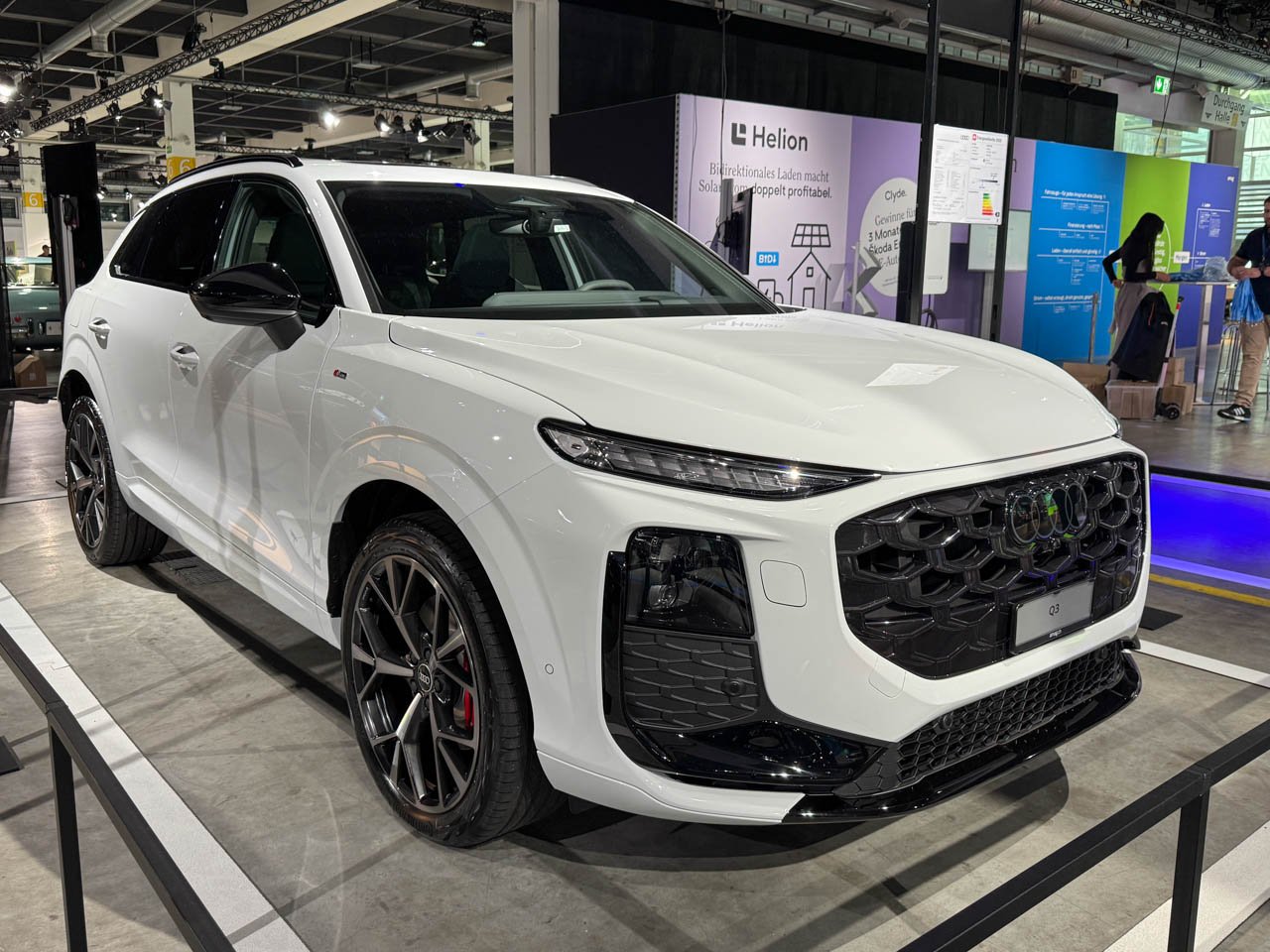
2026 Audi Q3 front three-quarter view showing redesigned Singleframe grille and Matrix LED headlights
Price
$44,995
Power
255 hp
⚡ Quick Verdict
/ Quick Verdict
✓ The Good
- +Exceptionally quick dual-clutch paddle shifters with near-instant response
- +Impressively serene cabin thanks to standard acoustic laminated glass
- +Quattro AWD standard at a price that undercuts most comparably equipped rivals
- +Runs on regular unleaded fuel — a rarity in the luxury segment
- +Strong 255-hp turbo engine delivers genuine 5.5-second 0-60 punch
✗ The Trade-offs
- −No ventilated front seats available at any price
- −Brake pedal feel is softer than the performance credentials suggest
- −No adaptive damping suspension option for ride/handling tuning
- −Some driver-assist system software quirks observed on our test vehicle
📑 In This Review
- At a Glance — Key Specs and Pricing
- Design and Exterior Styling
- Inside the Cabin — Tech, Comfort and Cargo
- On the Road — Performance and Driving Impressions
- 2026 Audi Q3 vs BMW X1: Which Is Better?
- Safety, Driver Assist and Warranty
- Fuel Economy and Everyday Running Costs
- Who Should Buy the 2026 Audi Q3?
- Verdict
- Frequently Asked Questions
Audi’s completely reworked the Q3 from scratch, and it’s gone from being the forgettable placeholder in the lineup to something we’d genuinely put on your shortlist. You get 255 horsepower, standard Quattro all-wheel drive, a cabin loaded with screens, and a $44,995 asking price that includes destination. That’s serious value for a luxury badge. Provided you can overlook the absence of ventilated front seats and a brake pedal that could do with more bite, the Q3 is right near the top of the compact luxury SUV class.
At a Glance — Key Specs and Pricing
| Spec | 2026 Audi Q3 | BMW X1 xDrive28i | Mercedes GLB 250 | Volvo XC40 B5 |
|---|---|---|---|---|
| Starting price | $44,995 | ~$40,500 | ~$40,500 | ~$38,500 |
| Engine | 2.0L turbo I-4 | 2.0L turbo I-4 | 2.0L turbo I-4 | 2.0L turbo I-4 MHEV |
| Power | 255 hp | 241 hp | 221 hp | 247 hp |
| Torque | 273 lb-ft | 295 lb-ft | 258 lb-ft | 258 lb-ft |
| 0-60 mph | ~5.5 s | ~6.2 s | ~6.9 s | ~6.1 s |
| Top speed | 130 mph | 130 mph | 130 mph | 130 mph |
| Fuel economy (combined) | 25 mpg | ~28 mpg | ~27 mpg | ~28 mpg |
| Cargo behind 2nd row | 24.97 cu ft | ~25.7 cu ft | ~24 cu ft | ~25 cu ft |
| Warranty | 4 yr / 50,000 mi | 4 yr / 50,000 mi | 4 yr / 50,000 mi | 4 yr / 50,000 mi |
BMW X1 xDrive28i
Sharper handling, more rear room, but slower than the Q3
Mercedes GLB 250
Optional third row but down on power and pace versus the Q3
Volvo XC40 B5
Scandinavian style and value, but a less refined drivetrain
There’s one trim level for the 2026 Q3 — the Quattro S Tronic — and it starts at $43,700 before destination, or $44,995 all-in once you add the $1,295 delivery charge. Every single one comes with Audi’s Quattro all-wheel drive, a 2.0-litre turbocharged four-cylinder producing 255 horsepower and 273 lb-ft of torque, and a seven-speed dual-clutch automatic gearbox with paddle shifters. The sprint to 60 mph takes around 5.5 seconds, top speed is limited to 130 mph, and the EPA rates it at 22 mpg city, 29 highway, and 25 combined. Here’s the thing, though: it runs on regular unleaded fuel. In a class where virtually every rival demands premium, that’s a welcome exception. Measuring 178.4 inches long, 73.2 inches wide, and 64.1 inches tall on a 105.6-inch wheelbase, the Q3 is right-sized for the segment. Behind the second row you’ve got 24.97 cubic feet of cargo space, expanding to 29.03 with the sliding rear bench pushed forward and maxing out at 49.95 cubic feet with seats folded. Towing capacity is rated at 1,500 pounds. Standard kit is generous — leather upholstery, a panoramic sunroof, heated front seats, tri-zone climate control, a 12.8-inch MMI touchscreen, an 11.9-inch digital instrument cluster, and wireless phone charging are all included. 2026 Audi Q3 Mercedes GLB 250 —— $44,995 ~$40,500 2.0L turbo I-4 2.0L turbo I-4 255 hp 221 hp 273 lb-ft 258 lb-ft ~5.5 s ~6.9 s 130 mph 130 mph 25 mpg ~27 mpg 24.97 cu ft ~24 cu ft 4 yr / 50,000 mi 4 yr / 50,000 mi
Design and Exterior Styling
The Q3’s been redesigned from the ground up, and you can tell the moment you set eyes on it. Audi’s Singleframe grille sits up front with a bolder, more sculpted surround that flows neatly into the reshaped front fascia. Either side of it sit new Matrix LED headlights with three switchable daytime running light signatures — a feature we first saw on the new A6 that lets you put your own stamp on the car’s face. Automatic high beams are standard and react quickly when oncoming traffic appears.
The proportions work well — nothing looks stretched or stunted. Standard 18-inch multi-spoke alloys fill the guards properly, with 19-inch and 20-inch options available if you want something larger. Our test car had the optional Black Optic package ($750), which replaces the chrome rings, roof rails, mirror caps, and trim with gloss black. It gives the Q3 a monochromatic look that really suits its compact footprint. The side mirrors are fully loaded as standard — power-adjustable, heated, auto-dimming, power-folding, with integrated indicators. Rear privacy glass comes on every model, too.
Around the back, new LED taillights mirror the horizontal light-bar styling seen across the broader Audi range. Tick the optional Technology Package ($1,400) and you get digital OLED units instead, with crisper illumination and a bit more visual punch. A body-coloured antenna, integrated rear spoiler, and twin exhaust outlets tucked beneath the bumper round out a design that looks more expensive than it is. Paint quality on our Mythos Black Metallic test car was outstanding — the Q3 is built in Germany, and it shows. Arcona White is the only no-cost colour; every other shade adds $595.
Inside the Cabin — Tech, Comfort and Cargo
Climb inside and the generational jump hits you straightaway. Two screens dominate the dashboard: a 12.8-inch MMI touchscreen perched high on the centre stack and an 11.9-inch Audi Virtual Cockpit Plus behind the steering wheel. The MMI display is the largest Audi’s ever fitted to a Q3, and it’s responsive, sharp, and logically arranged. Apple CarPlay and Android Auto are both supported, navigation is built in, and you can customise the ambient lighting through the touchscreen across a wide colour palette. At night, it genuinely lifts the cabin atmosphere.
The Virtual Cockpit is capable but slightly divisive. The 11.9-inch screen stretches across a narrow horizontal band in the instrument binnacle, and the content itself — configurable gauges, full-map navigation, safety overlays — is excellent, accessed via the steering-wheel "View" button. Our gripe is the physical aspect ratio. It feels compressed, and we’d have liked the display to fill more of the available binnacle space. It’s a minor ergonomic quibble in what’s otherwise a well-executed digital setup.
The materials and equipment level are impressive for the money. Leather upholstery comes standard in black, beige, or brown. The front seats are power-adjustable with power lumbar support and stayed comfortable on longer drives. Heated seats are included; ventilated seats, however, aren’t available at all — an omission that’ll frustrate buyers in warmer climates. A panoramic sunroof stretches across both rows, aluminium accents feature throughout, and our test car had an attractive open-pore wood trim on the dashboard and centre console. A wireless phone charger sits in front of the engine start button, flanked by USB-C ports. Tri-zone climate control is standard, so rear passengers can dial in their own temperature. The second row offers 36.1 inches of legroom — enough for a six-footer — plus a folding centre armrest with cupholders, rear vents, and two USB-C charging ports.
Behind the second row, you’ve got 24.97 cubic feet of cargo space in its default position. Slide the rear bench forward and that grows to 29.03; fold the seats flat and the floor opens up to 49.95 cubic feet. The powered liftgate is standard, and the boot area itself is well sorted — LED lighting, a cargo cover, chrome-plated tie-downs, grocery bag hooks on both sides, a full-size spare under the load floor, and a small in-floor storage compartment behind it. One change worth flagging for 2026: Audi’s switched from Bang & Olufsen to Sonos for the optional premium audio system. The 12-speaker, 420-watt setup delivers rich bass and clear mids, with enough volume to fill the cabin cleanly. It’s not the best system in the class, but it’s thoroughly enjoyable and a clear step up from the base audio.

On the Road — Performance and Driving Impressions
Every 2026 Q3 runs a 2.0-litre turbocharged four-cylinder making 255 horsepower and 273 lb-ft of torque. That feeds through a seven-speed dual-clutch S Tronic gearbox to all four wheels via standard Quattro all-wheel drive. There’s a brief moment of turbo lag below around 2,000 rpm, but once the boost builds, the Q3 punches forward with real conviction. The 5.5-second zero-to-60 time is properly quick for the class — quicker than a BMW X1 xDrive28i and comfortably ahead of the Mercedes GLB 250. And it runs on regular unleaded fuel, which we’ll cover further down. Most luxury rivals demand premium.
The dual-clutch transmission and its paddle shifters are the real highlight. In manual mode, pulling the left paddle delivers a near-instantaneous downshift with a precision that caught us off guard. There’s none of the frustrating delay you get with most SUV paddle-shift setups. Tap the gear selector down once and you’re in full manual mode — the transmission won’t upshift on you. Tap again to hand control back. Our only complaint: the paddles themselves are finished in matte black plastic rather than aluminium, which feels like a missed opportunity given how satisfying they are to use.
Four drive modes — Balanced, Dynamic, Comfort, and Off-Road — adjust throttle response, shift mapping, and steering weighting. The steering sits on the heavier side with immediate turn-in and no slop around centre. It’s not the most talkative rack in the class, but it’s accurate and inspires confidence. The MacPherson strut front and four-link rear suspension impressed us: broken pavement and expansion joints are absorbed with composure, and body roll stays well contained. There’s no adaptive damping option, so you can’t toggle between firmer and softer settings, but the standard tune sits in a sweet spot. Braking, handled by 13.4-inch ventilated front discs and 12.2-inch rears, is adequate. The pedal feel is softer than we expected given the Q3’s sporty character, though — a firmer, more progressive action would suit it better.
Where the Q3 really stands out is cabin refinement. The acoustic laminated windscreen is expected at this price. The acoustic laminated front door glass isn’t. The result is one of the quietest cabins we’ve experienced in the compact luxury SUV class. Wind noise, tyre roar, and road imperfections are dialled back to a level that makes the Q3 feel like something from the segment above. On longer drives, that hushed atmosphere pays off — less fatigue and a stronger sense of premium quality.

2026 Audi Q3 vs BMW X1: Which Is Better?
The BMW X1 xDrive28i is the Q3’s closest rival, and picking between them really comes down to your priorities. Here’s how they stack up.
On pricing, the Q3 starts at $44,995 with destination and Quattro all-wheel drive included. The BMW X1 xDrive28i comes in at roughly $40,500, so it’s about $4,500 cheaper at the entry point. But the Q3 rolls in generously equipped — leather seats, panoramic sunroof, heated front chairs, tri-zone climate, and a 12.8-inch touchscreen are all standard. Option up an X1 to match that spec and the price gap tightens fast.
Under the bonnet, the Q3 makes 255 hp and 273 lb-ft against the X1’s 241 hp and 295 lb-ft. The BMW produces a bit more torque, but the Audi converts its output into a meaningfully quicker zero-to-60 sprint — roughly 5.5 seconds versus about 6.2 for the X1. That three-quarter-second gap is noticeable when you’re merging onto a freeway or pulling away from the lights. The Q3 simply feels punchier.
Both use seven-speed dual-clutch transmissions, but the Q3’s paddle-shift response is noticeably sharper. During our testing, the Audi’s shifts were near-instantaneous in manual mode. The X1’s box is smooth enough, but it doesn’t carry the same urgency. Both offer permanent all-wheel-drive systems — Quattro and xDrive — and both feel planted in poor weather. The Q3 gains an edge with a dedicated Off-Road drive mode for light trail work, giving it a touch more versatility.
Interior tech is where the Q3 pulls ahead most convincingly. Its 12.8-inch MMI screen is larger and more visually striking than the X1’s curved display, and the optional Sonos 420-watt audio system is a strong upgrade. The X1 fights back with BMW’s iDrive, which remains one of the most intuitive interfaces in the business after years of iterative refinement. The Virtual Cockpit’s content is rich, though its narrow physical shape is a minor ergonomic compromise.
Rear-seat space is one area where the BMW claws back ground. The X1 offers roughly 37 inches of rear legroom against the Q3’s 36.1 inches, and the BMW’s rear bench feels slightly more accommodating for taller adults. Cargo capacity is broadly similar — both sit around 25 cubic feet behind the second row.
Fuel economy tells an interesting story. The X1 returns roughly 28 mpg combined to the Q3’s 25, but the Audi runs on regular unleaded while the BMW needs premium. Over a typical year of driving, that fuel-cost difference largely cancels out the X1’s efficiency advantage, making the Q3 surprisingly competitive on total running costs. Both carry identical four-year, 50,000-mile basic warranties.
The X1 also offers a hotter M35i-baiting performance variant in its broader range. Audi, for now, sticks with the single 255-hp tune for the Q3. Keen drivers who want the option of a sportier factory variant might find the X1 lineup more appealing on that front alone.
<div style="background:linear-gradient(135deg,#f0f9ff,#e0f2fe); border-left:4px solid #2563eb; border-radius:12px; padding:24px 28px; margin:32px 0"> <p style="font-size:12px; font-weight:800; letter-spacing:0.14em; text-transform:uppercase; color:#1e40af; margin:0 0 10px">Which one is better?</p> <p><strong>Buy the Audi Q3 if</strong> you want sharper styling, stronger cabin tech, standard Quattro AWD, and a 5.5-second 0-60 that’s seriously quick for the segment.</p> <p><strong>Buy the BMW X1 if</strong> you care most about steering and chassis feel, want slightly more rear-seat room, or like the idea of a sportier M35i variant.</p> <p><strong>Our pick</strong> is the 2026 Audi Q3 for buyers who prioritise interior technology and value; the BMW X1 still takes it for keen drivers.</p> </div>

Safety, Driver Assist and Warranty
Every 2026 Q3 comes with Audi’s Pre Sense suite as standard. You get forward collision warning with automatic emergency braking, adaptive cruise control, lane departure prevention, blind-spot monitoring, rear cross-traffic alert, and front and rear parking sensors. Traffic Jam Assist is part of the package too, offering semi-automated help in slow-moving congestion. A rear-view camera with a 360-degree surround-view monitor is standard, and rearward visibility through the glass is perfectly fine.
If parking stresses you out, there’s an optional Remote Park Assist Plus system that can memorise up to five parking manoeuvres at distances of up to 164 feet, triggered via the key fob. Handy for tight garages or narrow driveways. The 2026 Q3 hasn’t been rated by IIHS or NHTSA at the time of writing, so official crash-test scores are still pending. The previous model earned a five-star overall NHTSA rating, and the new one’s reinforced structure and expanded airbag coverage — front, side, curtain, and rear side airbags are all standard — point to strong results once testing wraps up. Warranty coverage runs four years or 50,000 miles bumper-to-bumper, topped up by three years or 30,000 miles of complimentary scheduled maintenance covering routine oil changes and inspections during early ownership.

Fuel Economy and Everyday Running Costs
The EPA rates the 2026 Q3 at 22 mpg city, 29 highway, and 25 combined. Those figures trail some competitors — the BMW X1 and Volvo XC40 both manage roughly 28 mpg combined — but the Q3 has a serious card to play: regular unleaded fuel. In a class where nearly every rival demands premium, that’s a real, month-after-month saving. Over 15,000 miles of annual driving at current fuel prices, the regular-versus-premium gap adds up to several hundred dollars a year, which largely cancels out the Q3’s thirstier appetite.
Towing capacity is rated at 1,500 pounds — modest, but enough for a small trailer or lightweight gear. Factor in the complimentary maintenance programme and competitive service intervals, and the Q3 is one of the more affordable compact luxury SUVs to run day-to-day.

Who Should Buy the 2026 Audi Q3?
The Q3 is ideal for anyone who wants a genuinely premium compact SUV without stretching to Q5 pricing. Small families will value the flexible cargo area, standard Quattro all-wheel drive, and strong active-safety suite. If you’re downsizing from a larger SUV, the Q3 doesn’t feel like a compromise — the cabin is hushed, the tech is current, and it’s engaging enough to make the daily commute something you actually look forward to.
Urban professionals and first-time luxury buyers are equally well catered for. The compact footprint makes city parking straightforward, the upgraded MMI infotainment and Sonos audio deliver the kind of tech-forward experience younger buyers expect, and Quattro comes standard rather than as an expensive option tick. If you want Audi badge cachet, genuine substance, and serious technology in a package starting under $45,000, the Q3 is well worth a look.
⚡ Our Verdict
A seriously compelling compact luxury SUV that nails tech, refinement, and value — only minor missteps hold it back.
The 2026 Audi Q3 is a better vehicle than the one it replaces in every way that matters. The redesign covers exterior styling, cabin technology, powertrain performance, ride refinement, and acoustic comfort, and the result is a compact luxury SUV that punches well above its price. With standard Quattro, a 5.5-second zero-to-60 time, class-leading infotainment, and the ability to run on regular unleaded fuel, the Q3 packages things no direct rival can fully match at this money. It’s not perfect. No ventilated front seats, no adaptive damping, a brake pedal that’s softer than the performance credentials suggest, and a few software teething issues with the driver-assist systems stop it from claiming a top-of-class score. But those are relatively minor complaints stacked against an otherwise excellent package. For buyers who put interior tech, refinement, all-weather capability, and badge prestige high on the priority list, the 2026 Audi Q3 is one of the strongest options in the class and a genuine step forward for the nameplate.
Frequently Asked Questions
How much does the 2026 Audi Q3 cost?
The 2026 Audi Q3 starts at $43,700 before destination in its sole Quattro S Tronic trim, or $44,995 once you include the $1,295 destination charge. For that money, you get Quattro all-wheel drive, leather seats, a panoramic sunroof, heated front seats, a 12.8-inch MMI touchscreen, and an 11.9-inch digital instrument cluster.
Is the 2026 Audi Q3 all-wheel drive?
Yes. Every 2026 Q3 comes standard with Audi’s Quattro all-wheel-drive system. There’s no front-wheel-drive variant on offer.
How fast is the 2026 Audi Q3 0-60 mph?
The 2026 Q3 hits 60 mph from a standstill in roughly 5.5 seconds, putting it among the quickest in the compact luxury SUV class.
What fuel does the 2026 Audi Q3 take?
The 2026 Q3 runs on regular unleaded fuel. That’s unusual and welcome in the luxury segment, where most competitors require more expensive premium petrol.
What sound system does the 2026 Audi Q3 use?
Audi offers an optional 12-speaker, 420-watt Sonos premium audio system. The brand has moved from Bang & Olufsen to Sonos for the Q3’s upgraded audio option.
What is the warranty on the 2026 Audi Q3?
The basic bumper-to-bumper warranty covers four years or 50,000 miles. On top of that, Audi includes three years or 30,000 miles of complimentary scheduled maintenance.
How much cargo space does the 2026 Audi Q3 have?
Behind the second row, you’re looking at 24.97 cubic feet in the default seat position, growing to 29.03 cubic feet with the sliding rear bench pushed forward. Fold the second row flat and maximum cargo capacity reaches 49.95 cubic feet.
