

Zeekr 8X Review: 1381hp PHEV SUV Set to Shred the Rulebook
Outrageous power and value, but expect a long wait
Zeekr 8X plug-in hybrid luxury SUV
Price
$90,000 – $135,000
0-100 km/h
2.96 – 3.7 s
Battery (kWh)
55 / 70
Power (combined kW)
660 – 1,030 kW
⚡ Quick Verdict
Imagine a plug-in hybrid luxury SUV with the power of a supercar – that’s the Zeekr 8X. With a tri-motor setup making 1,030kW (1,381hp), it’ll hit 100km/h in under three seconds. You get a claimed 240-410km of pure electric driving, meaning many of you could commute without using a drop of petrol. All this, for an estimated $90,000-$135,000 when it lands here mid-2027, massively undercutting the European establishment. It’s a staggering proposition.
✓ The Good
- +Supercar-rivalling tri-motor power in a luxury SUV
- +240-410km EV range crushes every PHEV rival
- +Tech-loaded interior with four screens and Naim audio
- +Potentially undercuts German rivals by $50,000+
- +Comfortable air-sprung ride and spacious cabin
✗ The Trade-offs
- −Australian price and specs unconfirmed
- −Unproven premium service network at this price
- −ANCAP safety rating still pending
- −Firm ride on large wheels in sport mode
- −Long wait until mid-2027 for local launch
📑 In This Review
- Price and Where the 8X Will Land in the Australian Market
- Powertrain: 660 kW Dual-Motor, 1,030 kW Tri-Motor
- Battery, EV Range and 900V Charging
- Interior: A Four-Screen Tech Showcase
- Driving Impressions: Premium Air-Sprung Plug-in Hybrid
- How It Compares to the BMW X5 xDrive50e, Range Rover Sport P440e and Porsche Cayenne E-Hybrid
- Zeekr 8X vs Its PHEV Rivals — At a Glance
- Australian Launch: What We Know, What We Don’t
- Who Should Buy the Zeekr 8X (and Who Should Hold Off)
- Our Verdict
Imagine a plug-in hybrid luxury SUV with the power of a supercar – that’s the Zeekr 8X. With a tri-motor setup making 1,030kW (1,381hp), it’ll hit 100km/h in under three seconds. You get a claimed 240-410km of pure electric driving, meaning many of you could commute without using a drop of petrol. All this, for an estimated $90,000-$135,000 when it lands here mid-2027, massively undercutting the European establishment. It’s a staggering proposition. A 1,381 horsepower plug-in hybrid for potentially less than $135k. Read that again. That’s the core promise of the Zeekr 8X, the Chinese brand’s boldest move yet and its first step away from pure-electric power. While the all-electric 7X impressed us with its sharp value, the bigger 8X has its sights set on the big players. It aims to fuse neck-snapping acceleration with a genuinely usable electric range, all wrapped in a cabin overflowing with tech that’d make a top-tier Mercedes feel a bit behind the times. We had a steer in a pre-production model overseas, and from what we experienced, this 5.1-metre, five-seat behemoth could seriously shake up the luxury SUV segment when it arrives here in mid-2027.
Price and Where the 8X Will Land in the Australian Market
Nailing down the exact local sticker price is a bit of a guessing game for now, but we can make a solid call. In China, it kicks off from ¥376,800, which is about A$78,600. Over in the UK, it starts at £54,300, or roughly A$100,000. Our best bet for Australia is a starting price in the low $90,000s for the dual-motor, with the flagship tri-motor probably landing somewhere between $110,000 and $135,000 depending on spec.
If that holds, it’s a seismic shift. The BMW X5 xDrive50e plug-in hybrid starts around $160,000, the Range Rover Sport P440e is over $200k, and a Porsche Cayenne E-Hybrid is circa $180,000. Even at $135k, the 8X would undercut its main European rivals by $45,000 to $85,000. That’s not chump change; it’s enough cash to buy another very decent car outright. This aggressive value play is straight from the 7X playbook, and Zeekr has told us they’re sticking to that strategy for our market.
Powertrain: 660 kW Dual-Motor, 1,030 kW Tri-Motor
The 8X isn’t just one car; it’s two distinct flavours of performance. The entry point pairs a 2.0-litre turbo petrol engine with two electric motors for a combined 660 kW. That’s already a heap of power, good for a claimed 3.7-second dash to 100km/h. The main event, though, is the tri-motor flagship. Here, the petrol engine works with three motors to produce a frankly ridiculous 1,030 kW (1,381 hp) and 1,410 Nm. That chops the 0-100 time down to a hypercar-bothering 2.96 seconds.
For some context, the BMW X5 xDrive50e makes 360 kW. The Range Rover Sport P440e has 324 kW. The Zeekr’s tri-motor variant has nearly three times their output. In daily driving, the petrol engine’s main job is as a generator—a range extender—so the experience is overwhelmingly electric: smooth, quiet, and instant. The engine fires up seamlessly for highway stints or when you mash the throttle, but you’re seldom aware of it thrashing away like a traditional engine.
Battery, EV Range and 900V Charging
Zeekr hasn’t held back on the battery tech. You can choose a 55 kWh or a 70 kWh pack, both hooked up to a 900-volt electrical system. That’s a headline feature, enabling seriously quick DC charging. On the Chinese CLTC test cycle, the claimed electric-only range is 240 km for the smaller battery and up to 410 km for the larger one. Translate that to a WLTP-like figure for Australia, and you’re looking at roughly 200-330 km of silent, pure-EV driving.
That absolutely schools the competition. The BMW X5 PHEV does about 110 km, the Range Rover Sport PHEV around 88 km, and the Porsche Cayenne E-Hybrid a measly 67 km. For most Aussie commuters, the 8X could easily run as a pure electric during the week, only sipping fuel on longer weekend trips. Total hybrid range is a claimed 1,416 km. When you do need to top up, that 900V system can add over 200 km of range in less than 15 minutes on a compatible ultra-rapid charger.

Interior: A Four-Screen Tech Showcase
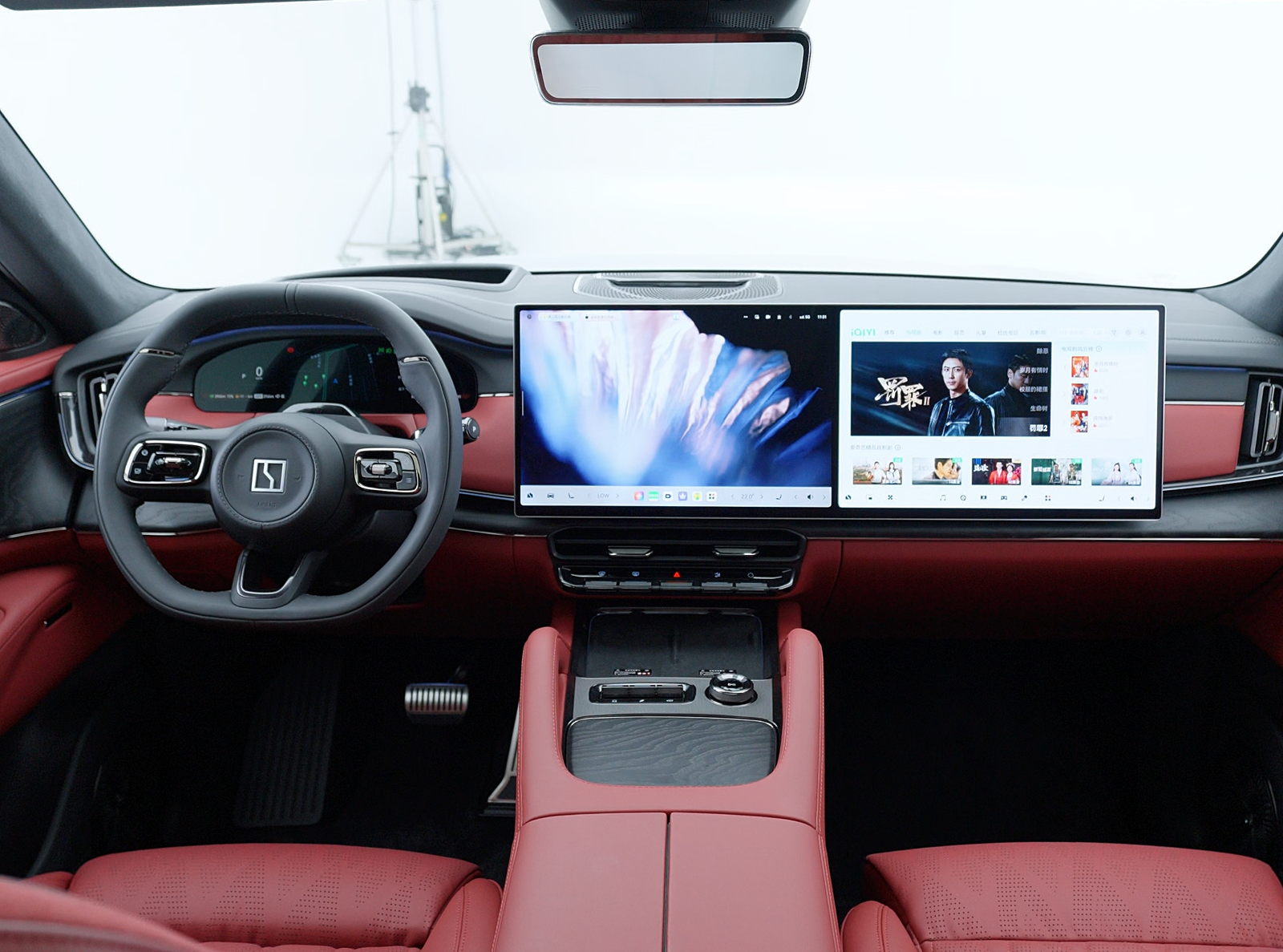
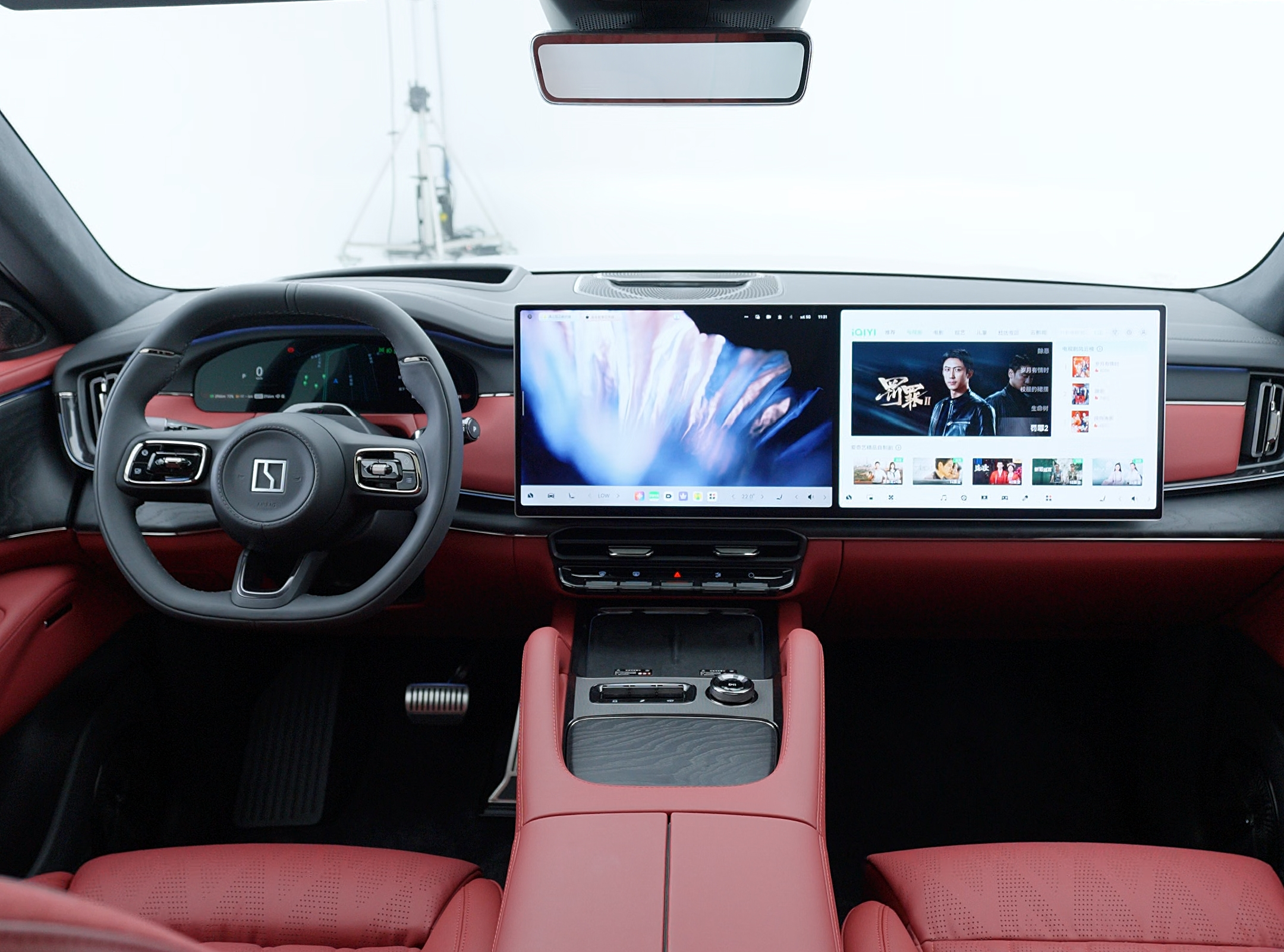
Climb inside and it’s immediately obvious this is a tech statement. It’s the kind of cabin that makes established luxury brands look like they’re dragging their feet. The focal point is a stunning 16-inch, 3.5K OLED central touchscreen, backed by a 13.02-inch digital driver’s display. An 8-inch screen on the centre console manages vehicle settings, and a matching 16-inch OLED screen keeps the front passenger happy. The real showstopper, however, is the 17-inch, 3K OLED screen mounted in the ceiling for rear-seat entertainment.
Then there’s the colossal 44-inch augmented-reality head-up display, the biggest we’ve seen, projecting info onto the windscreen. The audio is a 29-speaker Naim Palace system—a brand you’d normally find in a Bentley—with speakers built into the headrests. Our time inside revealed heated, ventilated, *and* massaging Nappa leather seats, a 9.5-litre chilled compartment between the rear seats, electrically folding third-row seats (for extra boot space, not people), and dual wireless phone chargers with active cooling. And yes, for Australia, wireless Apple CarPlay and Android Auto will be standard.

Driving Impressions: Premium Air-Sprung Plug-in Hybrid
The 8X feels like a different animal to the sportier 7X. At over 5.1 metres long and nearly 2 metres wide, it’s a substantial unit. Our preview drive showed a chassis tuned for comfort and isolation, not B-road thrills. The single-chamber adaptive air suspension does a great job of rounding off bumps, especially in its softer modes. It feels more like a luxurious Range Rover than a focused Tesla—it wafts along with a sense of premium calm.
The electric motors do the heavy lifting most of the time, delivering that instant, silent shove we’ve come to love from EVs. When the petrol engine does chime in, it’s with impressive smoothness. The body stays surprisingly level in corners thanks to active anti-roll bars and clever torque vectoring from the multiple motors, but the overall vibe is relaxed. On optional big wheels, the ride can get a bit firm in sport mode, but the standard setup should be pliant enough for our pockmarked roads.

How It Compares to the BMW X5 xDrive50e, Range Rover Sport P440e and Porsche Cayenne E-Hybrid
This fight isn’t really about badge snobbery—it’s about numbers and value for money. The 8X steps into the ring with a power advantage of up to 300%, an EV range advantage of 200-400%, and a potential price discount of 40-50%. It’s delivering more of what plug-in hybrid buyers actually need: serious electric range for daily duties and effortless performance when you want it. The established players rely on decades of brand prestige and a proven, widespread service network—areas where Zeekr is still building its credentials.

Zeekr 8X vs Its PHEV Rivals — At a Glance
| Feature | Zeekr 8X (Est.) | BMW X5 xDrive50e | Range Rover Sport P440e | Porsche Cayenne E-Hybrid |
|---|---|---|---|---|
| Starting price (AUD est) | $90,000 – $135,000 | ~$160,000 | ~$200,000 | ~$180,000 |
| Power (combined kW) | 660 – 1,030 kW | 360 kW | 324 kW | 346 kW |
| 0-100 km/h | 2.96 – 3.7 s | ~4.8 s | ~5.4 s | ~5.0 s |
| EV-only range (WLTP/equiv) | ~200-330 km | ~110 km | ~88 km | ~67 km |
| Battery (kWh) | 55 / 70 | 25.7 | 31.8 | 25.9 |
| Body length (mm) | 5,100 | 4,922 | 4,879 | 4,930 |
| Wireless CarPlay | Yes | Yes | Yes | Yes |
BMW X5 xDrive50e
3x less power and 3x less EV range. German prestige and service network — for now
Range Rover Sport P440e
Luxury benchmark, but the 8X has triple the EV range and likely half the price
Porsche Cayenne E-Hybrid
Sharper driving feel, but the 8X eclipses it on EV range and outright power
Audi Q7 60 TFSI e
Three-row option and solid build, but the 8X is faster, more electric, and cheaper
Zeekr 8X (Est.) Range Rover Sport P440e —————————————— $90,000 – $135,000 ~$200,000 660 – 1,030 kW 324 kW 2.96 – 3.7 s ~5.4 s ~200-330 km ~88 km 55 / 70 31.8 5,100 4,879 Yes Yes
Australian Launch: What We Know, What We Don’t
Zeekr has officially locked in the 8X for an Australian launch in the first half of 2027, likely around the middle of the year. Final local pricing and specs are still being worked out, but the brand’s commitment to aggressive value is clear. The ANCAP safety rating isn’t available yet and will be a big deal for buyer confidence. Warranty details are unconfirmed, but we’d expect them to mirror the 7X’s solid package: a 5-year/unlimited kilometre vehicle warranty and an 8-year/160,000 km battery warranty, maybe sweetened with a 7-year promo for early birds. The biggest unknown is the service network. At this price, buyers will expect a premium, hassle-free ownership experience, and Zeekr is still growing its dealer footprint.
Who Should Buy the Zeekr 8X (and Who Should Hold Off)
Consider the 8X if you want flagship luxury, tech, and performance for the price of a mid-spec German SUV. It’s perfect if your driving mixes city commutes—where you can use its long EV range—with regular long trips that justify the hybrid system. If you’re an early adopter who’s excited by modern tech and don’t mind being among the first with a Chinese luxury brand, the value is impossible to ignore.
Hold off if a proven, widespread service network is a must for your peace of mind. If you mainly drive short distances and can charge at home, the all-electric Zeekr 7X might be a simpler, more efficient choice. If you need a car before mid-2027, this isn’t it. And if you genuinely need a third row for people, remember the 8X is a five-seater—the seven-seat Zeekr 9X will come later.
⚡ Our Verdict
Outrageous power and value, but expect a long wait
Based on our international preview drive, the Zeekr 8X is the most disruptive luxury SUV announced for Australia in years. It blends supercar-shaming straight-line speed with a usable electric range that makes its plug-in hybrid rivals look a bit silly, all packaged in a cabin dripping with tech and genuine luxury. If it lands here at around $100,000 with a strong warranty, it’ll force every competitor in the segment to have a serious rethink about their pricing and what they offer. The caveats are real and shouldn’t be ignored: the untested local service experience, the pending safety rating, and the long wait until mid-2027. We’re rating the car’s immense potential and the brilliance of its engineering as we witnessed it overseas. The final verdict on its suitability for Australia will have to wait until we drive the finished, locally-tuned product on our own roads. For now, though, the 8X is a stunning statement of intent.
FAQ
When does the Zeekr 8X arrive in Australia?
The Zeekr 8X is confirmed for an Australian launch in the first half of 2027, most likely around the middle of the year. Exact on-sale dates will be revealed closer to the time.
How much will the Zeekr 8X cost?
Official Australian pricing hasn’t been announced. Based on overseas pricing and Zeekr’s strategy, we’re expecting it to start in the low $90,000s for the dual-motor and rise to between $110,000-$135,000 for the flagship tri-motor variant.
What’s the difference between the Zeekr 7X and 8X?
The 7X is a fully electric, mid-size SUV. The 8X is a larger, plug-in hybrid (PHEV) luxury SUV with a petrol engine and electric motors. The 8X delivers more power, a more luxurious interior, and a longer range between refuelling/recharging stops, but it’ll come at a higher expected price.
Is the Zeekr 8X a 7-seater?
No, the Zeekr 8X is a five-seat SUV. The electrically folding third-row seats are designed to expand cargo space, not for passenger use. The upcoming Zeekr 9X will be the brand’s seven-seat flagship.
How does the Zeekr 8X compare to a BMW X5 PHEV?
The Zeekr 8X promises dramatically more power (up to 1,030 kW vs 360 kW), roughly double the electric-only driving range, and a significantly lower estimated starting price. The BMW counters with established brand prestige and a proven nationwide service network.
What is the electric-only range of the Zeekr 8X?
On the Chinese CLTC test cycle, the range is 240-410 km depending on battery size. The WLTP-equivalent figure for Australia is estimated to be 200-330 km, which is still 2-4 times greater than key European plug-in hybrid rivals.
Will the Zeekr 8X have Apple CarPlay in Australia?
Yes. Zeekr has confirmed that wireless Apple CarPlay and Android Auto will be included in the Australian-specification 8X.
