

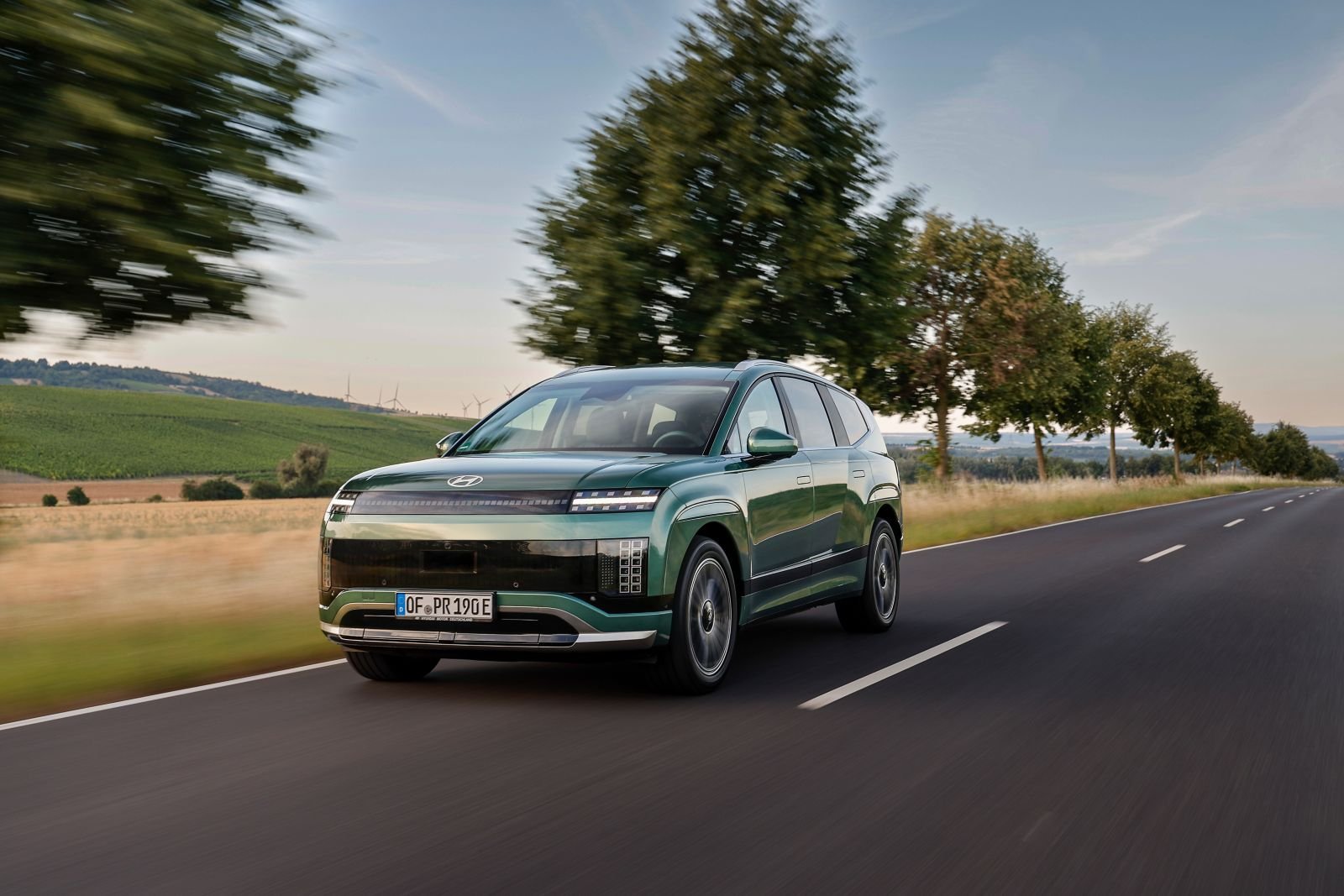
2026 Hyundai IONIQ 9 Review: The 800V Family EV King?
A supremely quiet, long-range, and spacious flagship electric SUV.
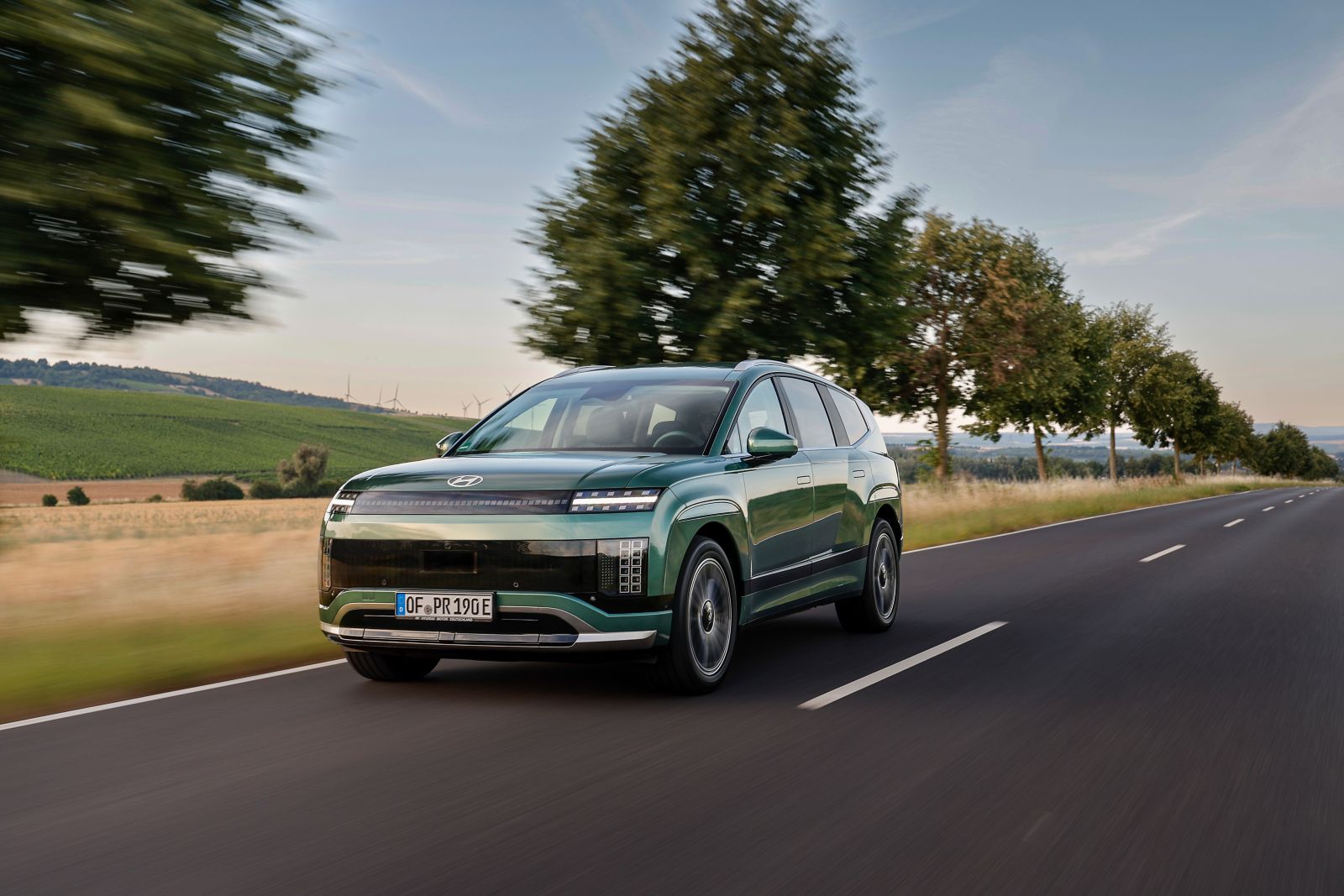
2026 Hyundai IONIQ 9 — three-row 800V family electric SUV
Price
$58,955
Battery (kWh)
110.3
Power (hp, top trim)
422
⚡ Quick Verdict
If your family needs three rows and you’re committed to electric, the 2026 Hyundai IONIQ 9 is the one to beat. It nails the brief with a whisper-quiet ride, a third row that adults can actually use, and charging speeds that’ll get you back on the road in the time it takes for a coffee stop. The Kia EV9 is a strong contender with a lower sticker price and a bonkers GT variant, but for us, the IONIQ 9’s bigger battery and more refined character make it the more polished and complete package for everyday family life.
## What Is the Hyundai IONIQ 9 2026?
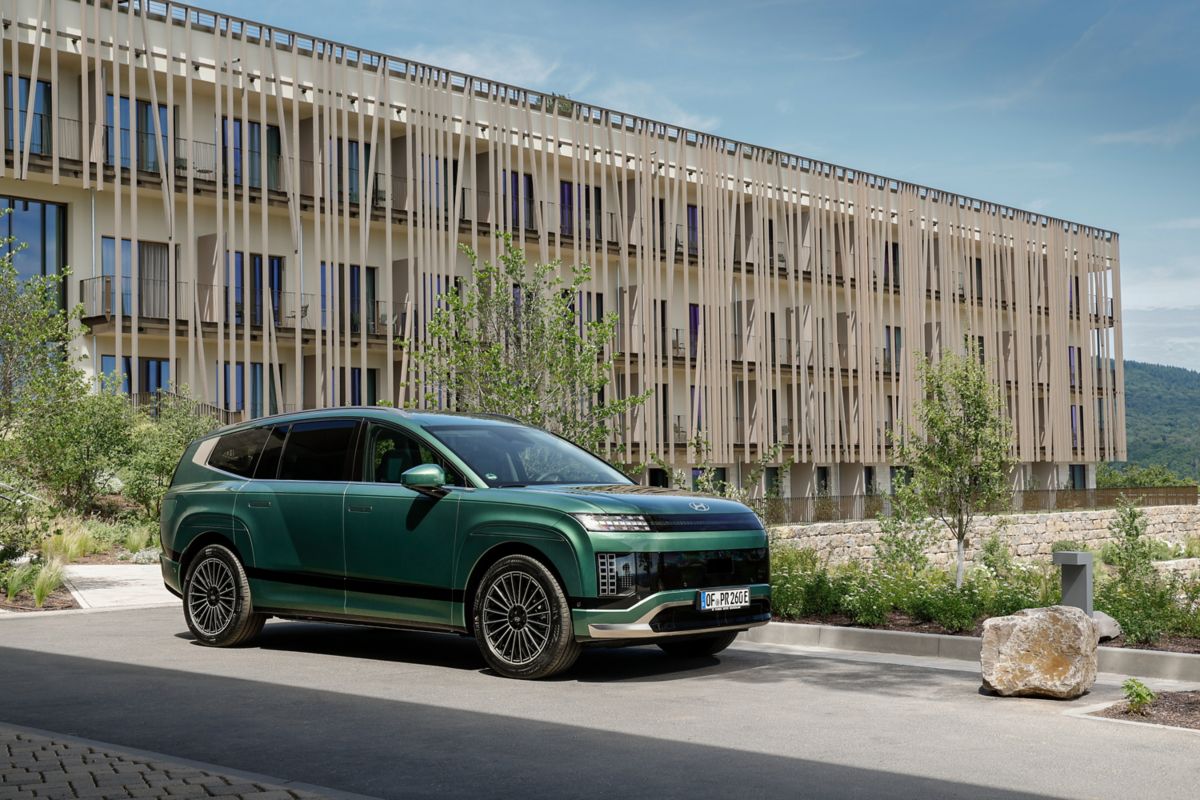
The 2026 IONIQ 9 is Hyundai’s statement in the full-size electric SUV segment. It’s a three-row family hauler built on the same clever E-GMP platform as the Kia EV9 and the smaller IONIQ 5. This isn’t just a scaled-up model; it’s a dedicated answer to families wanting space, premium feel, long range, and quick top-ups without compromise. The headline stats tell the story: a hefty 110.3 kWh battery, an official range of up to 335 miles, and the ability to juice up from 10 to 80 percent in about 24 minutes on a powerful 350 kW charger. With seating for six or seven, a super-slippery 0.269 drag coefficient, and that distinctive pixel lighting design, the IONIQ 9 is built to be the smart, comfortable hub for your family’s electric future.
## On the Road: How It Drives
From the moment you pull away, the IONIQ 9’s core character is obvious: this is a sanctuary on wheels. The cabin is impressively hushed, a result of laminated glass, triple-sealed doors, and active noise cancellation working together. It soaks up bumps with a settled, controlled composure, never feeling floaty or vague. The steering is direct and reassuring at speed, favouring stability over any hint of sportiness. The dual-motor AWD model we drove has plenty of punch for daily duties—merging onto the freeway is effortless. Flick it into Sport mode and the throttle sharpens, but it’s the Performance AWD trim that delivers a proper hit, reaching 0-100 km/h in 4.6 seconds. The regen braking is a highlight, with handy paddle shifters and a proper one-pedal ‘i-Pedal’ mode. Our only real gripe is a slight woodenness in the brake pedal during light, around-town braking. Parking is a breeze thanks to the flush door handles that pop out automatically and a crisp 360-degree camera, standard from the SEL trim up.
## Range, Charging and Efficiency
The big 110.3 kWh battery is central to the IONIQ 9’s appeal. The most efficient rear-wheel drive S trim gets an official range of 335 miles, but in independent real-world testing, it actually covered 349 miles. The all-wheel drive models are rated at 320 miles. Charging is where this car really shines, thanks to its 800V architecture. Hook it up to a 350 kW hyper-rapid charger and you’ll see peak speeds around 237 kW, getting you from 10 to 80 percent in roughly 24 minutes. A massive advantage is the standard NACS port, so you can plug straight into Tesla Superchargers without an adapter. Just note that on Tesla’s 400V V3 units, speeds are limited to about 126 kW, stretching the 10-80% time to around 40 minutes. A home wall box will fully charge it in about 10 hours. It also has Vehicle-to-Load (V2L) to power your gear and a handy 120V outlet inside. Towing capacity is 3,500 lb for rear-drive models and a healthier 5,000 lb for all-wheel drive versions.
## Design, Interior and Tech
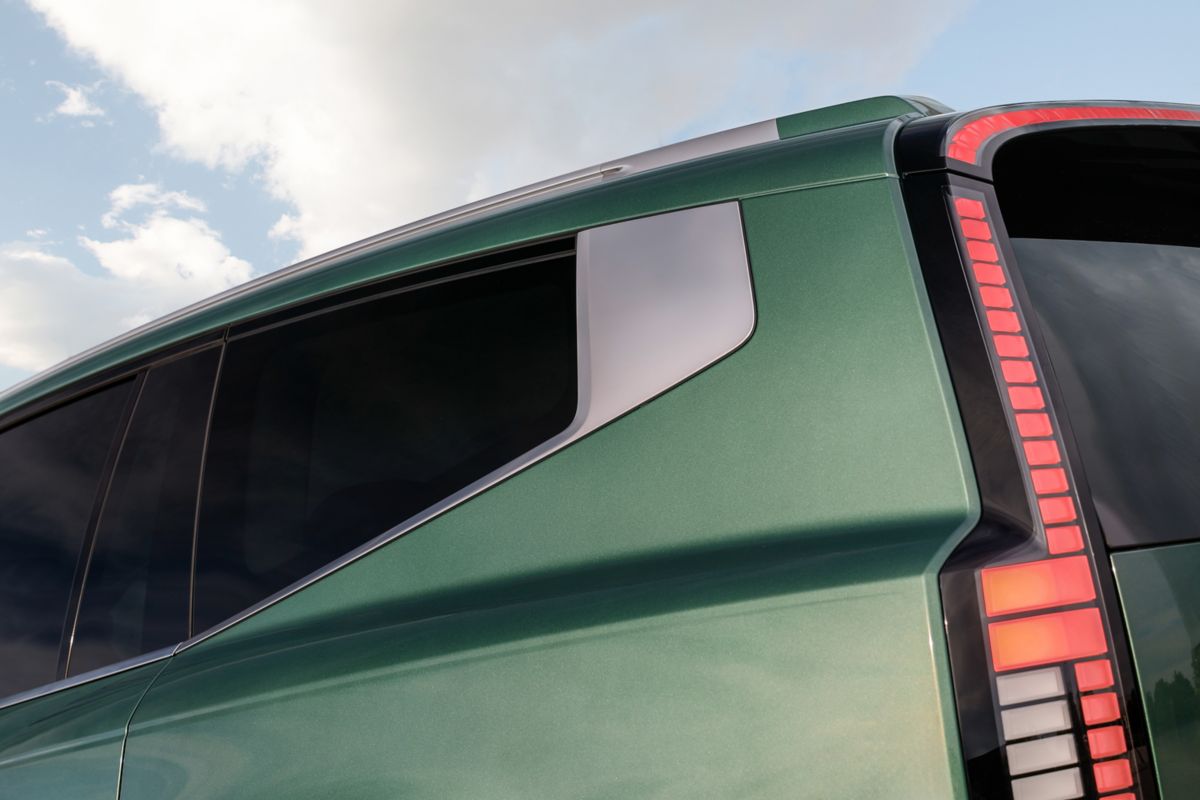
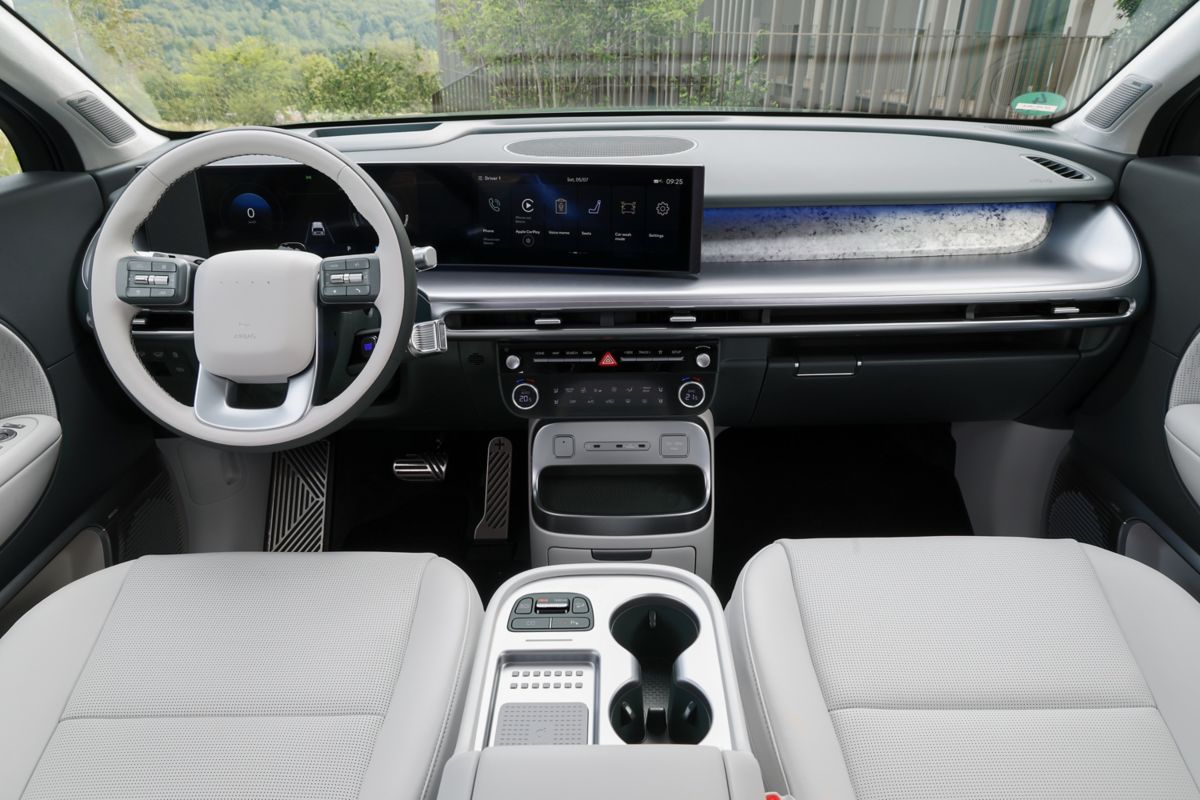
The IONIQ 9’s shape is all about cheating the wind, with a drag coefficient of just 0.269 despite its size. Inside and out, it’s full of Hyundai’s cool "Parametric Pixel" lights, giving it a unique, techy vibe. The dash is dominated by a curved panel with two crisp 12.3-inch screens for the instruments and infotainment, running Hyundai’s latest software with standard wireless Apple CarPlay and Android Auto. Best of all, they’ve kept proper buttons and a dial for the air-con—a huge win for not having to jab at a screen while driving. The sliding centre console is a neat trick, letting second-row passengers grab a drink from the fridge. You can have it as a seven-seater with a middle bench or a six-seater with captain’s chairs on higher trims. The third row offers a genuine 32.0 inches of legroom, and ceiling vents keep everyone in rows two and three comfortable. Boot space is a generous 21.9 cu ft behind the third row, expanding to a massive 86.9 cu ft with everything folded flat. The one miss? There’s no spare tyre, just a repair kit.
## At a Glance: How It Compares
The IONIQ 9 enters a growing class of three-row electric rigs. Its closest rival is its platform sibling, the Kia EV9, which has a boxier look and a cheaper starting price. For those wanting more adventure, the Rivian R1S offers serious off-road cred and mind-bending power, while the Volkswagen ID. Buzz trades maximum range for iconic style. Here’s how the key numbers compare.
| Spec | Hyundai IONIQ 9 2026 | Kia EV9 | Rivian R1S | VW ID. Buzz |
| Price (USD, base) | $58,955 | $54,900 | $77,700 | $61,545 |
| Battery (kWh) | 110.3 | 99.8 | ~135 | 91 |
| EPA range (mi, top) | 335 | 304 | 410 | 234 |
| Power (hp, top trim) | 422 | 501 | 1,025 | 335 |
| 0-60 mph (top trim) | 4.6 s | 4.3 s (GT) | ~3.0 s | ~6.0 s |
| Seats | 6 or 7 | 6 or 7 | 7 | 6 or 7 |
| DC fast charge (peak kW) | 237 | 240 | 220 | 200 |
| 10-80% charge time | ~24 min | ~24 min | ~40 min | ~30 min |
| Towing (lb, max) | 5,000 | 5,000 | 7,700 | 2,200 |
## Hyundai IONIQ 9 vs Kia EV9: Which Is Better?
This is the big question for most buyers. Both use the same fantastic 800V E-GMP platform, so their charging speeds on the right hardware are neck and neck. The key difference is under the floor: the IONIQ 9 packs a larger 110.3 kWh battery versus the EV9’s 99.8 kWh unit. That extra capacity pays off on the road—in real-world testing, the Hyundai went 349 miles, a 43-mile advantage over the Kia’s 306 miles.
✓ The Good
- +Exceptionally quiet, refined cabin with laminated glass and active noise cancellation.
- +Genuine adult-friendly third-row legroom (32.0 inches).
- +Blistering 800V DC fast charging (10-80% in ~24 min) with standard NACS port.
- +Excellent real-world range (349 miles in Edmunds’ test).
- +Clever sliding center console and retained physical controls.
✗ The Trade-offs
- −No spare tire, only a repair kit.
- −Performance AWD trim is quick, but not class-leading fast.
- −Top-trim second-row power seats operate slowly.
- −Certain advanced features are locked to higher, pricier trims.
📑 In This Review
- What Is the Hyundai IONIQ 9 2026?
- On the Road: How It Drives
- Range, Charging and Efficiency
- Design, Interior and Tech
- At a Glance: How It Compares
- Hyundai IONIQ 9 vs Kia EV9: Which Is Better?
- Rivals at a Glance
- Safety and Warranty
- Running Costs and Real-World Ownership
- Who Should Buy the Hyundai IONIQ 9 2026?
- Verdict
If your family needs three rows and you’re committed to electric, the 2026 Hyundai IONIQ 9 is the one to beat. It nails the brief with a whisper-quiet ride, a third row that adults can actually use, and charging speeds that’ll get you back on the road in the time it takes for a coffee stop. The Kia EV9 is a strong contender with a lower sticker price and a bonkers GT variant, but for us, the IONIQ 9’s bigger battery and more refined character make it the more polished and complete package for everyday family life.
What Is the Hyundai IONIQ 9 2026?
The 2026 IONIQ 9 is Hyundai’s statement in the full-size electric SUV segment. It’s a three-row family hauler built on the same clever E-GMP platform as the Kia EV9 and the smaller IONIQ 5. This isn’t just a scaled-up model; it’s a dedicated answer to families wanting space, premium feel, long range, and quick top-ups without compromise. The headline stats tell the story: a hefty 110.3 kWh battery, an official range of up to 335 miles, and the ability to juice up from 10 to 80 percent in about 24 minutes on a powerful 350 kW charger. With seating for six or seven, a super-slippery 0.269 drag coefficient, and that distinctive pixel lighting design, the IONIQ 9 is built to be the smart, comfortable hub for your family’s electric future.
On the Road: How It Drives
From the moment you pull away, the IONIQ 9’s core character is obvious: this is a sanctuary on wheels. The cabin is impressively hushed, a result of laminated glass, triple-sealed doors, and active noise cancellation working together. It soaks up bumps with a settled, controlled composure, never feeling floaty or vague. The steering is direct and reassuring at speed, favouring stability over any hint of sportiness. The dual-motor AWD model we drove has plenty of punch for daily duties—merging onto the freeway is effortless. Flick it into Sport mode and the throttle sharpens, but it’s the Performance AWD trim that delivers a proper hit, reaching 0-100 km/h in 4.6 seconds. The regen braking is a highlight, with handy paddle shifters and a proper one-pedal ‘i-Pedal’ mode. Our only real gripe is a slight woodenness in the brake pedal during light, around-town braking. Parking is a breeze thanks to the flush door handles that pop out automatically and a crisp 360-degree camera, standard from the SEL trim up.
Range, Charging and Efficiency
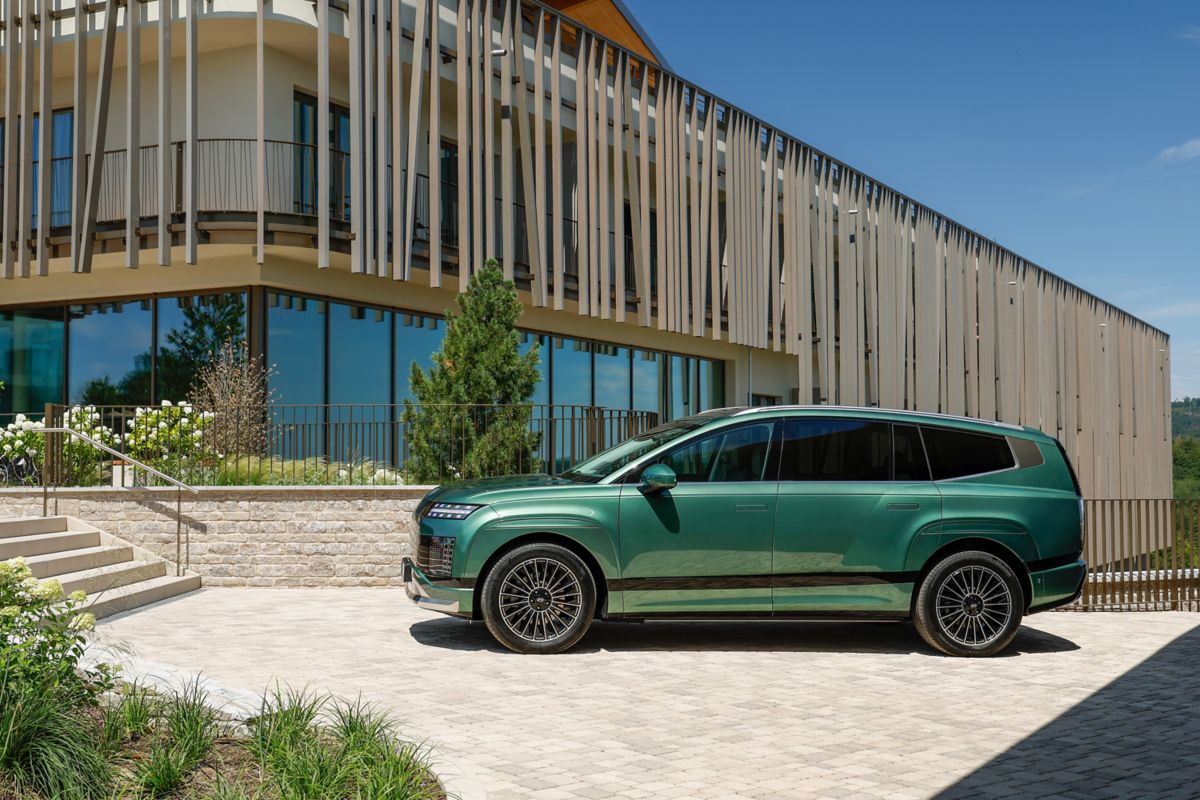
The big 110.3 kWh battery is central to the IONIQ 9’s appeal. The most efficient rear-wheel drive S trim gets an official range of 335 miles, but in independent real-world testing, it actually covered 349 miles. The all-wheel drive models are rated at 320 miles. Charging is where this car really shines, thanks to its 800V architecture. Hook it up to a 350 kW hyper-rapid charger and you’ll see peak speeds around 237 kW, getting you from 10 to 80 percent in roughly 24 minutes. A massive advantage is the standard NACS port, so you can plug straight into Tesla Superchargers without an adapter. Just note that on Tesla’s 400V V3 units, speeds are limited to about 126 kW, stretching the 10-80% time to around 40 minutes. A home wall box will fully charge it in about 10 hours. It also has Vehicle-to-Load (V2L) to power your gear and a handy 120V outlet inside. Towing capacity is 3,500 lb for rear-drive models and a healthier 5,000 lb for all-wheel drive versions.
Design, Interior and Tech
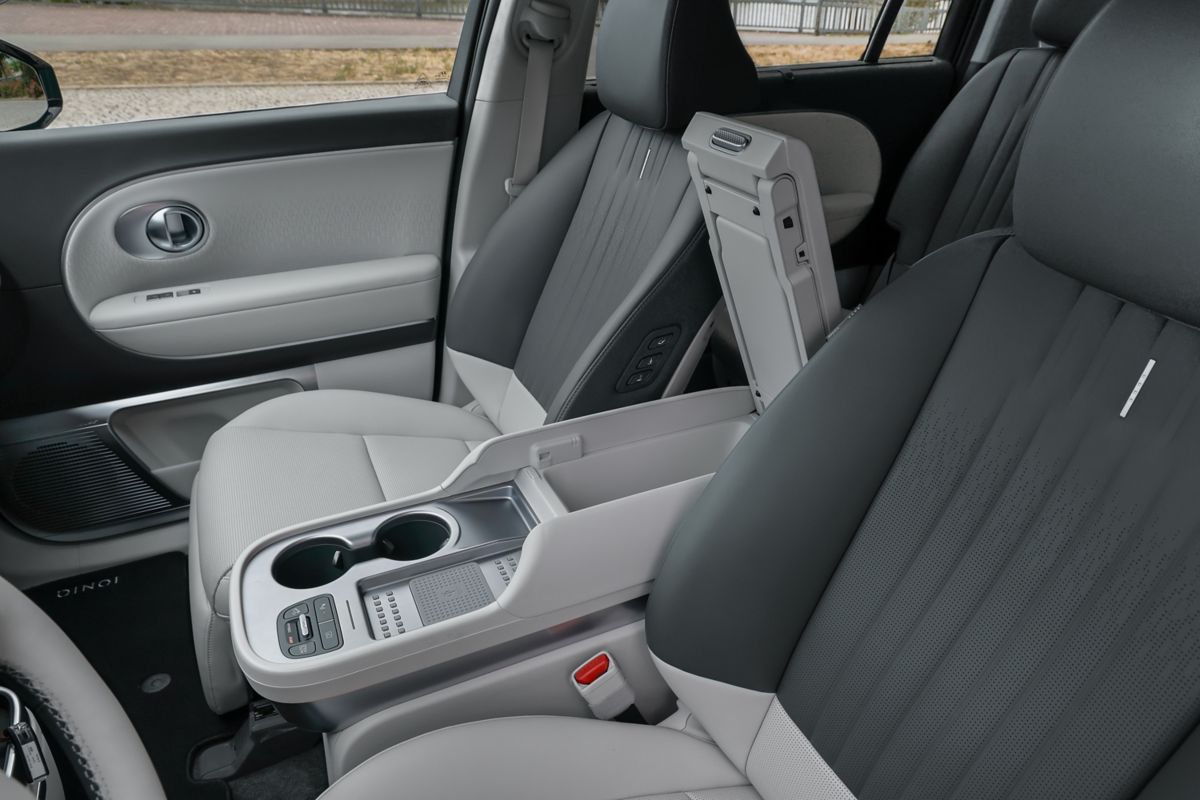
The IONIQ 9’s shape is all about cheating the wind, with a drag coefficient of just 0.269 despite its size. Inside and out, it’s full of Hyundai’s cool "Parametric Pixel" lights, giving it a unique, techy vibe. The dash is dominated by a curved panel with two crisp 12.3-inch screens for the instruments and infotainment, running Hyundai’s latest software with standard wireless Apple CarPlay and Android Auto. Best of all, they’ve kept proper buttons and a dial for the air-con—a huge win for not having to jab at a screen while driving. The sliding centre console is a neat trick, letting second-row passengers grab a drink from the fridge. You can have it as a seven-seater with a middle bench or a six-seater with captain’s chairs on higher trims. The third row offers a genuine 32.0 inches of legroom, and ceiling vents keep everyone in rows two and three comfortable. Boot space is a generous 21.9 cu ft behind the third row, expanding to a massive 86.9 cu ft with everything folded flat. The one miss? There’s no spare tyre, just a repair kit.
At a Glance: How It Compares
| Spec | Hyundai IONIQ 9 2026 | Kia EV9 | Rivian R1S | VW ID. Buzz |
|---|---|---|---|---|
| Price (USD, base) | $58,955 | $54,900 | $77,700 | $61,545 |
| Battery (kWh) | 110.3 | 99.8 | ~135 | 91 |
| EPA range (mi, top) | 335 | 304 | 410 | 234 |
| Power (hp, top trim) | 422 | 501 | 1,025 | 335 |
| 0-60 mph (top trim) | 4.6 s | 4.3 s (GT) | ~3.0 s | ~6.0 s |
| Seats | 6 or 7 | 6 or 7 | 7 | 6 or 7 |
| DC fast charge (peak kW) | 237 | 240 | 220 | 200 |
| 10-80% charge time | ~24 min | ~24 min | ~40 min | ~30 min |
| Towing (lb, max) | 5,000 | 5,000 | 7,700 | 2,200 |
Kia EV9
Boxier platform-mate with a faster GT variant and a lower entry price; less real-world range.
Volvo EX90
Scandinavian luxury three-row with LiDAR-based safety; pricier and slower to charge.
Rivian R1S
Adventure-ready three-row with brutal power and proper off-road chops; smaller cabin, pricier.
Tesla Model X
Iconic Falcon Wing doors and Supercharger network; ageing interior and no NACS advantage for Hyundai owners.
The IONIQ 9 enters a growing class of three-row electric rigs. Its closest rival is its platform sibling, the Kia EV9, which has a boxier look and a cheaper starting price. For those wanting more adventure, the Rivian R1S offers serious off-road cred and mind-bending power, while the Volkswagen ID. Buzz trades maximum range for iconic style. Here’s how the key numbers compare. Hyundai IONIQ 9 2026 Rivian R1S $58,955 $77,700 110.3 ~135 335 410 422 1,025 4.6 s ~3.0 s 6 or 7 7 237 220 ~24 min ~40 min 5,000 7,700
Hyundai IONIQ 9 vs Kia EV9: Which Is Better?
This is the big question for most buyers. Both use the same fantastic 800V E-GMP platform, so their charging speeds on the right hardware are neck and neck. The key difference is under the floor: the IONIQ 9 packs a larger 110.3 kWh battery versus the EV9’s 99.8 kWh unit. That extra capacity pays off on the road—in real-world testing, the Hyundai went 349 miles, a 43-mile advantage over the Kia’s 306 miles.
Performance is an interesting split. The top IONIQ 9 Performance AWD makes 422 hp and does 0-100 km/h in 4.6 seconds. Kia fights back with the GT’s 501 hp and a quicker 4.3-second dash, making it the straight-line king. Inside, both offer six or seven seats, but the Hyundai’s sleeker shape gives it a bit more cargo space (86.9 vs 81.7 cu ft max) and a slightly longer wheelbase. The IONIQ 9’s cabin feels more cocooning and car-like, while the EV9’s boxier design gives a more traditional, upright SUV feel. On the move, the Hyundai focuses on quiet isolation; the Kia feels a touch more connected.
| Spec | Hyundai IONIQ 9 2026 | Kia EV9 |
|---|---|---|
| Price (USD, base) | $58,955 | $54,900 |
| Battery | 110.3 kWh | 99.8 kWh |
| EPA range (mi, top) | 335 | 304 |
| Real-world range (Edmunds) | 349 mi | 306 mi |
| Power (hp, top trim) | 422 hp Performance | 501 hp GT |
| 0-60 mph (top trim) | 4.6 s | 4.3 s (GT) |
| Cargo (cu ft, max) | 86.9 | 81.7 |
| Seats | 6 or 7 | 6 or 7 |
| Length (in) | 199.2 | 197.2 |
CALLOUT: Which one is better? Buy the Hyundai IONIQ 9 if you want the longer real-world range, bigger battery, more cargo room, and the slightly more spacious cabin with the slicker pixel-design aesthetic. Buy the Kia EV9 if you want the boxier, more SUV-shaped silhouette, a more affordable entry price, and the option of the genuinely fast 501 hp GT performance flagship. Our pick is the IONIQ 9 for most family buyers — the bigger battery, longer range and quieter cabin make it the more complete three-row family EV in 2026.
Rivals at a Glance
| Spec | Hyundai IONIQ 9 2026 | Kia EV9 | Rivian R1S | VW ID. Buzz |
|---|---|---|---|---|
| Price (USD, base) | $58,955 | $54,900 | $77,700 | $61,545 |
| Battery (kWh) | 110.3 | 99.8 | ~135 | 91 |
| EPA range (mi, top) | 335 | 304 | 410 | 234 |
| Power (hp, top trim) | 422 | 501 | 1,025 | 335 |
| 0-60 mph (top trim) | 4.6 s | 4.3 s (GT) | ~3.0 s | ~6.0 s |
| Seats | 6 or 7 | 6 or 7 | 7 | 6 or 7 |
| DC fast charge (peak kW) | 237 | 240 | 220 | 200 |
| 10-80% charge time | ~24 min | ~24 min | ~40 min | ~30 min |
| Towing (lb, max) | 5,000 | 5,000 | 7,700 | 2,200 |
Kia EV9
Boxier platform-mate with a faster GT variant and a lower entry price; less real-world range.
Volvo EX90
Scandinavian luxury three-row with LiDAR-based safety; pricier and slower to charge.
Rivian R1S
Adventure-ready three-row with brutal power and proper off-road chops; smaller cabin, pricier.
Tesla Model X
Iconic Falcon Wing doors and Supercharger network; ageing interior and no NACS advantage for Hyundai owners.
Beyond the Kia EV9, the IONIQ 9 faces competition from the premium Rivian R1S, which prioritizes all-terrain adventure and explosive power, and the style-driven Volkswagen ID. Buzz, a charming but less efficient people-mover. Detailed cards for each rival follow.
Safety and Warranty
The IONIQ 9 has aced its safety tests. It’s a 2025 IIHS TOP SAFETY PICK+ winner, the highest award that body gives, and it scored a full five stars from Euro NCAP. NHTSA hasn’t rated it yet. You get nine airbags as standard, including a front centre one. The Hyundai SmartSense suite is loaded with kit, including Forward Collision-Avoidance Assist 2, Highway Driving Assist 2 with lane-centering, Blind-Spot Collision-Avoidance Assist, and Safe Exit Assist. Warranty coverage is a strong point: in Australia, you’re looking at a 5-year/unlimited km vehicle warranty and an 8-year/160,000 km high-voltage battery warranty. Hyundai has also extended global coverage for the Integrated Charging Control Unit (ICCU) to 15 years, which is a big reassurance for long-term owners.
Running Costs and Real-World Ownership
With an efficiency rating of 103 MPGe city and 81 MPGe highway for the RWD model, the IONIQ 9 will cost you far less in energy than a petrol-powered three-row SUV. Charging it up overnight at home is cheap and convenient. That long battery warranty provides peace of mind against degradation. Just remember there’s no spare tyre, so you’ll be relying on the repair kit or roadside assistance if you get a puncture. As a flagship from a strong brand with sought-after tech, it should hold its value well. The 15-year ICCU warranty extension is a huge tick for anyone worried about long-term reliability.
Who Should Buy the Hyundai IONIQ 9 2026?
This is the car for families who need three rows but won’t settle for a compromised EV experience. It’s for those who want a serene, tech-packed cabin for school runs and road trips, and who see the value in minimising charging time with 800V technology. If you appreciate thoughtful details like physical buttons, a flexible interior, and a comprehensive warranty, the IONIQ 9 makes a compelling case. It’s a standout choice if you’re weighing up the Kia EV9 but want the longest possible range and a more premium feel.
BUY IF: – You need a truly quiet and refined electric family hauler. – Real-world range and 800V charging speed are top priorities. – A usable third row for adults or teens is a must-have. – You value a long, comprehensive warranty package.
SKIP IF: – You require a spare tire for complete peace of mind. – Maximum acceleration performance is your primary goal. – You prefer a more rugged, off-road-capable SUV aesthetic. – Your budget is firmly under $58,000.
⚡ Our Verdict
A supremely quiet, long-range, and spacious flagship electric SUV.
The 2026 Hyundai IONIQ 9 raises the bar for three-row electric SUVs. It brilliantly combines a silent ride, a spacious and cleverly designed interior, and today’s fastest charging tech into one desirable package. Its Kia EV9 sibling offers great value and a hotter performance model, but for us, the IONIQ 9’s longer real-world range and more refined personality make it the more satisfying and complete flagship for the average family. It earns a strong 4.5-star rating and our highest recommendation.
FAQs
How much does the 2026 Hyundai IONIQ 9 cost?
Pricing for the 2026 IONIQ 9 kicks off at $58,955 (including on-road costs) for the base S RWD trim. From there, it moves through SE AWD ($62,795), SEL AWD ($66,320), and Limited ($71,250), maxing out at $76,490 for the top Calligraphy Design trim.
How far can the Hyundai IONIQ 9 go on a full charge?
Officially, the most efficient RWD S trim is rated for up to 335 miles. In independent real-world testing, it actually beat that figure, covering an impressive 349 miles on a single charge.
How fast does the Hyundai IONIQ 9 charge?
Thanks to its 800V setup, you can take the IONIQ 9 from 10 to 80 percent charge in about 24 minutes on a suitable 350 kW DC fast charger, with peak charging speeds around 237 kW. It comes standard with a NACS port for direct Tesla Supercharger access, though speeds on older V3 Superchargers are limited to around 126 kW.
Hyundai IONIQ 9 vs Kia EV9: which should I buy?
Go for the IONIQ 9 if you prioritise the longer real-world range, bigger battery, and a quieter, more refined cabin. Choose the Kia EV9 if you prefer its boxier SUV styling, its lower starting price, or want the option of the super-quick 501 hp GT model.
Does the Hyundai IONIQ 9 have a third row?
Absolutely. It has a genuinely spacious third row with 32.0 inches of legroom, so even adults can sit there in reasonable comfort. You can choose between a seven-seat configuration with a middle bench or a six-seat layout with second-row captain’s chairs.
Is the Hyundai IONIQ 9 safe?
No question. It’s earned the highest possible rating from the IIHS (TOP SAFETY PICK+) and a five-star score from Euro NCAP. Standard safety kit includes nine airbags and a full suite of Hyundai’s SmartSense driver-assistance features.
Can the Hyundai IONIQ 9 tow?
Yes. Rear-wheel drive models can tow up to 3,500 pounds, while all-wheel drive versions increase that capacity to a maximum of 5,000 pounds.
