

Kia EV5 2026 Review: The Comfy Family Electric SUV Benchmark
Exceptionally comfortable, practical, and tech-rich mid-size electric SUV.

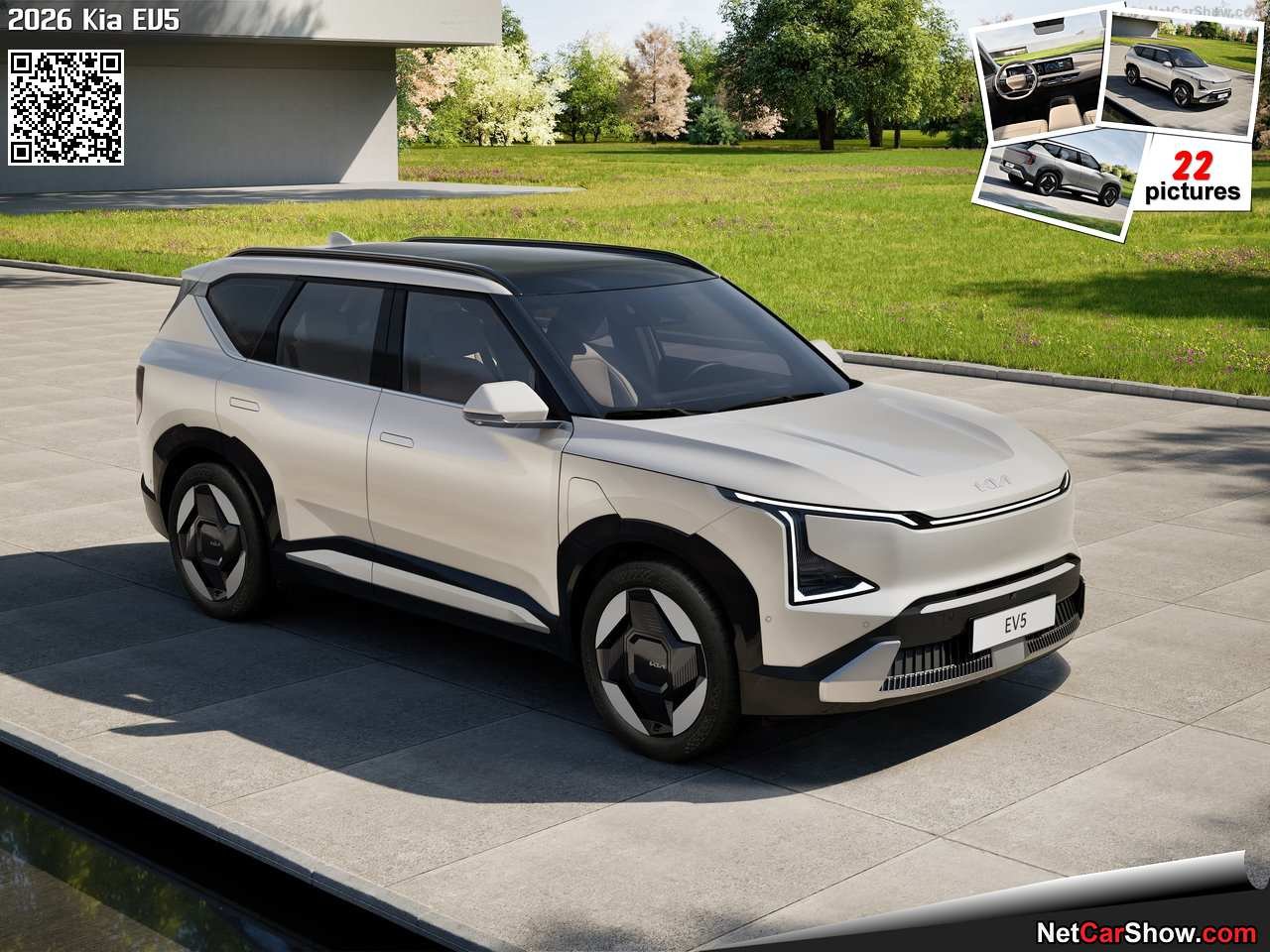
Kia EV5 2026 front three-quarter press shot in Iceberg Green
Price
~£47,000
0-100 km/h
8.4
Battery (kWh, usable)
78
Power (hp)
218
⚡ Quick Verdict
Priced from around AUD 56,770 to over AUD 75,000, the Kia EV5 is the brand’s vital mid-size electric SUV for families. It carves out its niche with a supremely relaxed ride, a cabin built around family life, and plenty of user-friendly tech. The 7-year warranty is a massive drawcard. It might not be the most efficient or the fastest charger in its class, but as a complete family package, it’s a hugely sensible and appealing choice.
## What Is the Kia EV5 2026?
The 2026 Kia EV5 is the brand’s important mid-size electric SUV, sitting between the smaller EV3 and the flagship EV9. It’s built on the dedicated E-GMP platform but uses a 400-volt electrical system, a cost-saving move that prioritises value and wide charger access over the blistering charge speeds of Kia’s 800V models.
✓ The Good
- +Exceptionally quiet and comfortable ride, perfectly judged for daily family duties.
- +Brilliantly practical interior with deep rear seat recline and a useful 250V boot socket.
- +Intuitive, button-rich tech cabin with a superb 360-degree camera system.
- +Industry-leading 7-year/150,000 km warranty covers the EV battery.
- +Strong standard ADAS suite and a 5-star Euro NCAP safety rating.
✗ The Trade-offs
- −Real-world efficiency lags behind segment leaders like the Tesla Model Y.
- −DC fast charging peaks at 150 kW, which is merely adequate, not class-leading.
- −Base FWD model is relaxed rather than quick (8.4s 0-100 km/h).
- −Double-glazed front windows are great, but rear windows are single-pane.
📑 In This Review
- What Is the Kia EV5 2026?
- On the Road: How It Drives
- Range, Charging and Real-World Efficiency
- Design, Interior and Tech
- Practicality and Family Use
- At a Glance: How It Compares
- Kia EV5 vs Tesla Model Y: Which Is Better?
- Rivals at a Glance
- Safety and Warranty
- Running Costs, Fuel Use and Real-World Ownership
- Who Should Buy the Kia EV5 2026?
- Verdict
Priced from around AUD 56,770 to over AUD 75,000, the Kia EV5 is the brand’s vital mid-size electric SUV for families. It carves out its niche with a supremely relaxed ride, a cabin built around family life, and plenty of user-friendly tech. The 7-year warranty is a massive drawcard. It might not be the most efficient or the fastest charger in its class, but as a complete family package, it’s a hugely sensible and appealing choice.
What Is the Kia EV5 2026?
The 2026 Kia EV5 is the brand’s important mid-size electric SUV, sitting between the smaller EV3 and the flagship EV9. It’s built on the dedicated E-GMP platform but uses a 400-volt electrical system, a cost-saving move that prioritises value and wide charger access over the blistering charge speeds of Kia’s 800V models.
You can get it with two powertrains. The entry-level is a front-wheel drive model with a single motor making 218 hp and 295 Nm. For more traction, there’s an all-wheel drive version with a second motor, bumping combined output to 256 hp. Both draw power from an 81.4 kWh battery (78 kWh usable). A spicier GT with over 300 hp is coming later. At 4,615 mm long with a 2,750 mm wheelbase, it’s a proper mid-sizer, offering heaps of interior space without being a nightmare to park.
On the Road: How It Drives
Kia’s engineers weren’t trying to build a backroad bomber here. The EV5 is all about being quiet, unflustered, and dead-set comfortable—and it nails that brief. The steering is light and precise, making city driving and parking a doddle, though you don’t get much feel through the wheel. Point it, and it goes, no drama.
The real magic is in the suspension. Over our patchwork of road surfaces, the independent front and multi-link rear setup soaks up bumps with a composure that feels like it belongs in a more expensive car. You know the bumps are there, but they’re rounded off and never crash through into the cabin. This calm is helped by a genuinely hushed interior; the double-glazed front windows keep wind and road noise at bay, so you can chat easily. The single-pane rear windows are a bit of a miss, but they don’t spoil the overall peace.
Performance from the 218 hp front-driver is best described as adequate. The 0-100 km/h dash takes 8.4 seconds, which is fine for getting up to speed or merging, but it won’t shove you back in your seat. The brakes, though, are a highlight—they feel natural and progressive, without that grabby, on/off sensation you get in some EVs. You get three drive modes (Eco, Normal, Sport) that tweak the throttle response, and the regenerative braking is fully adjustable via paddles on the wheel. There are four levels, an Auto mode that reads the traffic, and a one-pedal driving setting. A small but brilliant touch: you can mute the annoying speed-limit bong by holding a button on the steering wheel, instead of hunting through touchscreen menus like other brands make you do.

Range, Charging and Real-World Efficiency
Kia claims a WLTP range of up to 530 km for the FWD on 18-inch wheels. In our hands, during a chilly 0°C UK winter, we saw about 386 km (240 miles) on a full charge—that’s roughly 73% of the official number, which is a typical cold-weather drop. On a mixed drive, we recorded an energy use of 20.7 kWh per 100 km. That’s higher than Kia’s combined claim of around 17 kWh/100 km, but still reasonable for a big, boxy SUV.
The 400-volt system handles charging. A DC fast charger will give you a 10-80% top-up in about 27-30 minutes at a peak rate of 150 kW. That’s decent, but it’s not leading the pack anymore. A big plus, though, is its ability to work with both 400V and 800V public chargers without any adapter. Plugged into an 11 kW home AC charger, you’re looking at around 7 hours and 20 minutes for a full charge.
The EV5 also has serious vehicle-to-load (V2L) tricks. It can pump out up to 3.6 kW of power, with a proper 250V three-pin socket in the boot. It even supports vehicle-to-home and vehicle-to-grid functions, so it could play a role in your home’s energy setup. We also rate Kia’s range estimator; it gives you realistic minimum and maximum range figures based on how you’re driving and what the climate control is doing, which is dead handy for trip planning.

Design, Interior and Tech
The EV5 looks bold, upright, and properly SUV-like, sticking to Kia’s "Opposites United" design theme. The front has a closed-off "electric tiger nose" with sharp, three-dimensional daytime running lights. Out back, a full-width light bar wraps around the tailgate. Gloss-black trim and flush door handles give it a modern, clean look. The signature Iceberg Green, in either gloss or matte, is a real head-turner. It’s a big car, but it doesn’t look aggressive.
Inside, the dash is dominated by a wide display panel. It neatly combines two 12.3-inch screens—one for the instruments, one for infotainment—with a 5-inch touchscreen for the climate controls sandwiched in between. The system runs Kia’s latest software, with wireless Apple CarPlay and Android Auto, over-the-air updates, and apps like YouTube for when you’re parked up. The climate panel, with its permanent physical shortcut buttons, is an absolute win for usability.
Materials feel solid throughout, with soft-touch plastics in the key places. The GT-Line adds nice ecological leather in a white-and-black mix, plus aluminium pedals and sill plates. The gear selector is a simple stalk behind the wheel, and a fingerprint sensor on the centre console can start the car and load your driver profile. The 360-degree camera is one of the best we’ve used, giving a crisp bird’s-eye view and a brilliant blind-spot camera that pops up in the instrument cluster when you indicate. For chilling out while charging, the "Relax mode" fully reclines the front seats—a feature every EV should have.

Practicality and Family Use
This is the EV5’s party piece. The boot is a generous 566 litres with the rear seats up, swelling to a massive 1,650 litres when you fold the 60/40 split rear bench down. There’s also a 44-litre front trunk (frunk) that’s perfect for stashing charging cables.
The rear seat is a standout. It offers one of the deepest ranges of recline in its class, going from upright to nearly flat—brilliant for kipping kids or adults on a long haul. The floor is completely flat, which helps the middle passenger, and you get two ISOFIX points on the outer seats. The door pockets are huge, and there are three USB-C ports dotted around the cabin. Despite its boxy shape, it’s easy to place on the road thanks to a good driving position and big mirrors, helped by an 11.7-metre turning circle.

At a Glance: How It Compares
| Spec | Kia EV5 GT-Line FWD | Tesla Model Y RWD | Xpeng G6 Long Range | Skoda Enyaq 85 |
|---|---|---|---|---|
| Price (GBP, indicative) | ~£47,000 | ~£44,990 | ~£39,990 | ~£39,000 |
| Battery (kWh, usable) | 78 | 57 (60 nominal) | ~84.5 (87.5 nominal) | 77 |
| Power (hp) | 218 | 295 | 286 | 282 |
| Drivetrain | FWD | RWD | RWD | RWD |
| 0-100 km/h (s) | 8.4 | 5.9 | 6.2 | 6.7 |
| Range WLTP (km) | 504 (313 mi) | 466 (290 mi) | 570 (354 mi) | 510 (317 mi) |
| DC charge peak (kW) | 150 | 250 | 280 | 135 |
| Boot (L) | 566 + 44 frunk | 854 (total) | 571 + 53 frunk | 585 |
| Warranty (yr) | 7 / 150,000 km | 4 / 80,000 km | 5 / 120,000 km | 6 / 150,000 km |
Tesla Model Y RWD
Sharper, more efficient, Supercharger access — but minimalist cabin.
Xpeng G6 Long Range
Faster 280 kW DC charging on 800V — but quirky software.
Skoda Enyaq 85
Familiar MEB cabin and strong residuals — but slower DC charging.
The Kia EV5 jumps into a crowded segment. Its strength is blending old-school SUV comfort and space with modern EV tech. Here’s how the key models stack up. Kia EV5 GT-Line FWD Xpeng G6 Long Range — — ~£47,000 ~£39,990 78 ~84.5 (87.5 nominal) 218 286 FWD RWD 8.4 6.2 504 (313 mi) 570 (354 mi) 150 280 566 + 44 frunk 571 + 53 frunk 7 / 150,000 km 5 / 120,000 km
Kia EV5 vs Tesla Model Y: Which Is Better?
This is the big one for family EV shoppers. The Kia and the Tesla take very different approaches.
Price-wise, they’re close. The Model Y RWD starts at about AUD 64,900, while the EV5 GT-Line FWD is around AUD 64,770. The Tesla, though, is in another league for pace, hitting 0-100 km/h in 5.9 seconds to the Kia’s 8.4 seconds. It’s also far more efficient; the Model Y regularly sips around 14 kWh/100 km, while we saw 20-21 kWh/100 km in the EV5. So, the Tesla goes further on each kilowatt-hour.
Charging follows the same pattern. The Tesla’s 250 kW peak charging is much quicker than the Kia’s 150 kW, meaning shorter stops on a road trip. Plus, Tesla owners get the reliable and expansive Supercharger network. The Kia uses the standard CCS plug, which has lots of third-party support but can be hit or miss.
Where the EV5 fights back is in the cabin. It’s a masterclass in usability, with a panoramic display, a dedicated climate screen, physical buttons, and quality materials. The Tesla’s minimalist, single-screen layout is a bit polarising. The Kia also wins on family-focused details. Those deeply reclining rear seats and the 250V socket in the boot are things you just don’t get in the Tesla. That said, the Model Y’s total cargo space, at 854 litres, dwarfs the Kia’s 610 litres (boot plus frunk).
On the road, the Tesla feels sharper and more eager, while the Kia majors on a softer, quieter ride. Finally, warranty is a Kia trump card: 7 years and 150,000 km against Tesla’s 4 years and 80,000 km.
| Spec | Kia EV5 GT-Line FWD | Tesla Model Y RWD |
|---|---|---|
| Price (GBP) | ~£47,000 | ~£44,990 |
| Battery (kWh, usable) | 78 | 57 (60 nominal) |
| Power | 218 hp (FWD) | 295 hp (RWD) |
| 0-100 km/h | 8.4 s | 5.9 s |
| Range (WLTP) | 313 mi (504 km) | 290 mi (466 km) |
| DC charge peak | 150 kW | 250 kW |
| Cargo (boot + frunk) | 610 L | 854 L |
| Real-world efficiency | ~20 kWh/100 km | ~14 kWh/100 km |
| Warranty | 7 yr / 150,000 km | 4 yr / 80,000 km |
CALLOUT: Which one is better? Buy the Kia EV5 if you want a quiet, button-rich family cabin with deep rear-seat recline, a 250V household socket in the boot, double-glazed front windows, a 7-year warranty, and the freedom to use any public DC charger. Buy the Tesla Model Y if you want sharper performance, far better real-world efficiency, the Supercharger network, and the biggest total cargo volume in the segment — even if you can live with a minimalist cabin and no instrument cluster. Our pick is the Kia for family-EV buyers — the warranty, the seating comfort, the cabin tech and the better material quality outweigh the Tesla’s pace and charging-network advantages.

Rivals at a Glance
| Spec | Kia EV5 GT-Line FWD | Tesla Model Y RWD | Xpeng G6 Long Range | Skoda Enyaq 85 |
|---|---|---|---|---|
| Price (GBP, indicative) | ~£47,000 | ~£44,990 | ~£39,990 | ~£39,000 |
| Battery (kWh, usable) | 78 | 57 (60 nominal) | ~84.5 (87.5 nominal) | 77 |
| Power (hp) | 218 | 295 | 286 | 282 |
| Drivetrain | FWD | RWD | RWD | RWD |
| 0-100 km/h (s) | 8.4 | 5.9 | 6.2 | 6.7 |
| Range WLTP (km) | 504 (313 mi) | 466 (290 mi) | 570 (354 mi) | 510 (317 mi) |
| DC charge peak (kW) | 150 | 250 | 280 | 135 |
| Boot (L) | 566 + 44 frunk | 854 (total) | 571 + 53 frunk | 585 |
| Warranty (yr) | 7 / 150,000 km | 4 / 80,000 km | 5 / 120,000 km | 6 / 150,000 km |
Tesla Model Y RWD
Sharper, more efficient, Supercharger access — but minimalist cabin.
Xpeng G6 Long Range
Faster 280 kW DC charging on 800V — but quirky software.
Skoda Enyaq 85
Familiar MEB cabin and strong residuals — but slower DC charging.
Beyond the Tesla, the EV5 has tough competition from the value-packed Xpeng G6 with its 800V system and faster charging, and the well-regarded Skoda Enyaq, which feels like a traditional car inside and holds its value well.
Safety and Warranty
The Kia EV5 earned a full 5-star Euro NCAP rating (tested 2025), scoring 83% for adult occupant protection, 85% for children, 74% for vulnerable road users, and 80% for safety assist. It comes with a comprehensive standard safety kit, including autonomous emergency braking, lane-keep assist, adaptive cruise control with stop-and-go, blind-spot monitoring (with that clever camera view), rear cross-traffic alert, and driver attention warning. It was also introduced to the Australian market by ANCAP in October 2024.
Kia’s warranty is a massive selling point. You get a 7-year/150,000 km warranty that also covers the battery. That’s exceptional long-term peace of mind. It includes 12 months of roadside assistance, too.
Running Costs, Fuel Use and Real-World Ownership
Officially, the EV5 claims a combined energy use of around 17 kWh/100 km. We saw 20.7 kWh/100 km in the real world, and cold weather will hit the range further. The GT-Line’s 235/50 R19 tyres will play a part in that.
Kia usually offers competitive capped-price servicing plans to keep a lid on long-term costs. Insurance should be in line with the segment. A big ownership perk is the V2L capability. Being able to power tools, a campsite, or appliances from that 250V boot socket turns your EV5 into a mobile power bank. While EV resale values have been up and down, Kia’s strong reputation and that lengthy warranty should help the EV5 hold its value well.
Who Should Buy the Kia EV5 2026?
The perfect EV5 buyer is a family of four looking for a comfy, spacious, and tech-savvy electric SUV to swap out of something like a Sportage or Tucson. It’s for people who value a serene cabin, easy-to-use controls, and clever family tricks like the reclining rear seats and a power outlet over neck-snapping acceleration. If you’re downsizing from a bigger, premium SUV, the EV5’s ride quality and materials will feel right at home.
If you want face-melting speed, wait for the GT. If you need the absolute biggest boot or the fastest charging, look at a Tesla Model Y or Xpeng G6. But for most families, the EV5’s mix of talents is spot-on.
BUY IF: – You prioritise a quiet, comfortable ride for family trips above all else. – You want a deeply practical interior with clever seating and power solutions. – A long, transferable warranty and strong resale value are high on your priority list. – You appreciate having intuitive physical controls alongside modern touchscreens.
SKIP IF: – Your top priority is the lowest possible energy costs and maximum efficiency. – You require the fastest possible DC charging for frequent, very long journeys. – You need the quickest acceleration in the class and sporty handling. – You want the largest possible total cargo volume above all other considerations.
⚡ Our Verdict
Exceptionally comfortable, practical, and tech-rich mid-size electric SUV.
The 2026 Kia EV5 is a brilliantly sorted family electric SUV. It doesn’t bother chasing headline stats for charging speed or acceleration. Instead, it gets the important stuff spot-on: ride comfort, cabin quietness, intuitive tech, and clever everyday practicality. Its efficiency and charging speed are good, not great, but that’s a fair trade for a car that feels so thoughtfully designed for family life. Backed by Kia’s outstanding 7-year warranty, it’s a sensible, comfortable, and highly recommendable choice that earns a solid 4.5 stars.
FAQs
How much does the 2026 Kia EV5 cost?
It depends on where you are. In the UK, the Air FWD starts at about £39,345, going up to roughly £47,000 for the GT-Line FWD. Down under in Australia, you’re looking at around AUD 56,770 for the entry model, with the GT-Line FWD at approximately AUD 64,770.
What is the range of the Kia EV5 2026?
Kia says up to 530 km on the WLTP test for the FWD on 18-inch wheels. In our real-world winter testing, we managed about 386 km. Your actual range will depend on the weather, how you drive, and what size wheels you’ve got.
How fast does the Kia EV5 charge?
On a DC fast charger, you can go from 10-80% in about 27-30 minutes, peaking at 150 kW. Using an 11 kW home charger, a full charge from empty takes around 7 hours and 20 minutes.
Is the Kia EV5 better than the Tesla Model Y?
It comes down to what you value more. The Tesla is quicker, more efficient, and has the brilliant Supercharger network. The Kia gives you a comfier ride, a more user-friendly cabin with better materials, family-friendly features like those reclining rear seats and a boot power outlet, and a much longer 7-year warranty.
Does the Kia EV5 have all-wheel drive?
Yep. You can get it with front-wheel drive, or you can opt for an all-wheel drive model with a second motor for a total of 256 hp. There’s also a high-performance GT AWD with over 300 hp coming later.
What is the warranty on the Kia EV5?
It comes with Kia’s 7-year/150,000 km warranty, and that includes the battery. It’s one of the longest in the business and gives you real peace of mind as an owner.
Does the Kia EV5 support vehicle-to-load?
Absolutely. It has Vehicle-to-Load (V2L) with up to 3.6 kW of output, and there’s a standard 250V three-pin power socket right in the boot. It can also do Vehicle-to-Home and Vehicle-to-Grid stuff.
