

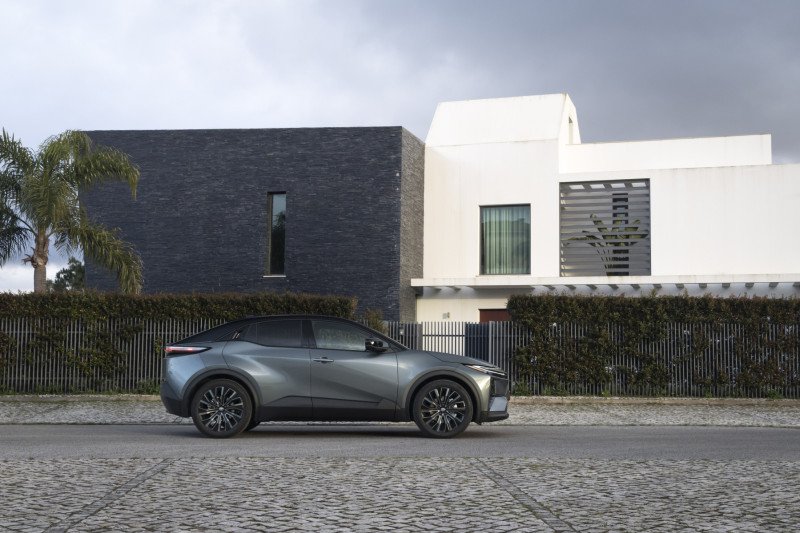
2026 Toyota C-HR+ Electric Review: Toyota’s Stylish EV Return
A sharp-looking, long-range EV with a killer warranty, but some tech gaps.
2026 Toyota C-HR+ Electric in Mineral, front three-quarter studio shot
Price
£32,995
Battery (top)
77 kWh
Power (top)
338 hp (AWD)
⚡ Quick Verdict
This is the stylish, sensible EV many of us have been waiting for from Toyota. It pairs head-turning coupé-SUV looks with a reassuring 10-year warranty and a compelling 378-mile WLTP range from its larger battery. It mightn’t have the fastest charging or all the clever tech its rivals boast, but its blend of design, Toyota reliability and sharp pricing makes it a serious new player in the busy electric crossover field.
## Toyota’s EV Comeback Starts Here
✓ The Good
- +Stand-out coupé-SUV design
- +Class-leading 10-year/100,000-mile warranty
- +Strong WLTP range up to 378 miles
- +Punchy AWD performance option
- +Standard battery preconditioning and heat pump
- +No native EV route-planning in sat-nav
- +No glovebox or vehicle-to-load capability
- +Tight rear headroom for taller adults
- +DC charging speed not class-leading
- +Cheaper entry model has shorter range
✗ The Trade-offs
- −No native EV route-planning in sat-nav
- −No glovebox or vehicle-to-load capability
- −Tight rear headroom for taller adults
- −DC charging speed not class-leading
- −Cheaper entry model has shorter range
📑 In This Review
- Toyota’s EV Comeback Starts Here
- Design and Exterior
- Interior, Cabin Quality and Practicality
- Battery, Range and Charging
- On the Road: Performance and Ride
- At a Glance: How the C-HR+ Stacks Up
- Toyota C-HR+ vs Kia EV3: Which Is Better?
- Safety and Warranty
- Pricing, Trims and Running Costs
- Should You Buy the Toyota C-HR+?
- The Verdict
- Frequently Asked Questions
This is the stylish, sensible EV many of us have been waiting for from Toyota. It pairs head-turning coupé-SUV looks with a reassuring 10-year warranty and a compelling 378-mile WLTP range from its larger battery. It mightn’t have the fastest charging or all the clever tech its rivals boast, but its blend of design, Toyota reliability and sharp pricing makes it a serious new player in the busy electric crossover field.
Toyota’s EV Comeback Starts Here
Toyota’s first proper crack at a dedicated EV, the bZ4X, was… a bit of a rough start. People knocked its modest range, slow DC charging and a few ergonomic oddities. It didn’t quite land the punch you’d expect from the world’s biggest carmaker. The 2026 C-HR+ Electric is the crucial second go, built on the lessons learned from that debut.
This isn’t a half-hearted conversion. The C-HR+ is a ground-up EV, sharing its advanced e-TNGA platform with the updated bZ4X but wrapped in a far more appealing body. Toyota’s addressed the bZ4X’s weak points head-on: charging speed is now a competitive 150 kW, battery preconditioning is standard across the board, and the design is genuinely desirable. It’s the car that shows Toyota’s serious about the electric era, taking its famed reliability and packaging it in something that finally has the substance to match the style.
Design and Exterior
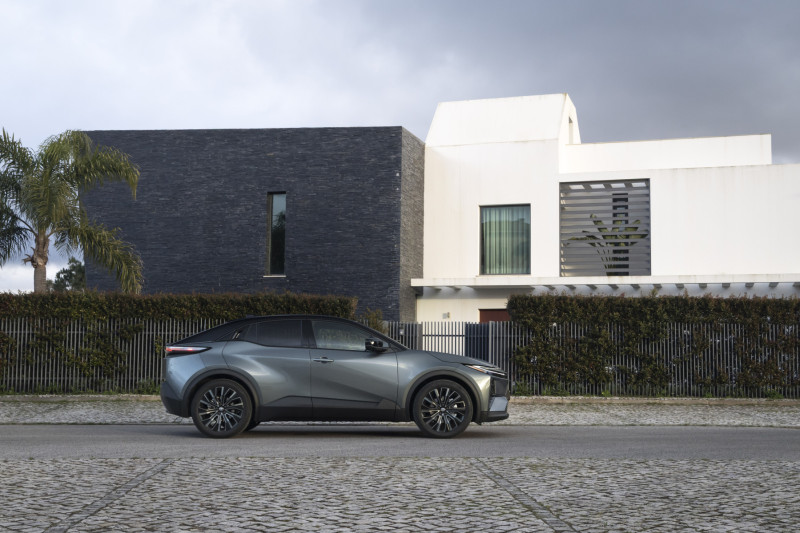
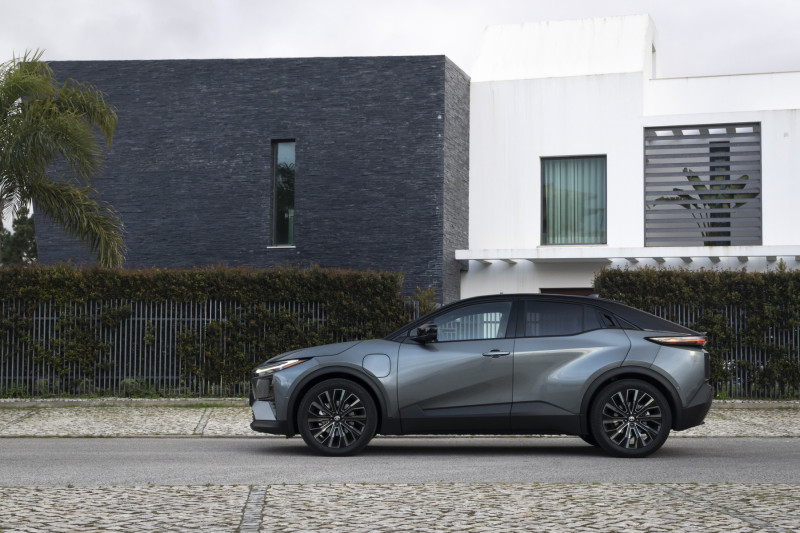
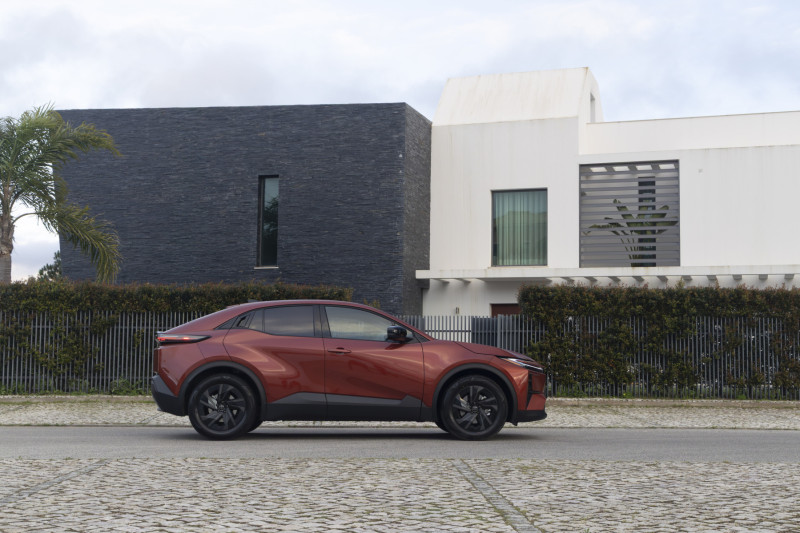
The C-HR+ pulls off the trick of bringing those dramatic concept-car lines from the hybrid model into a compelling electric form. Its signature is that steeply raked, coupé-style roofline that sweeps down into a pronounced rear spoiler, justifying the "Coupé High Rider" name. The front wears Toyota’s new ‘hammerhead’ design, with slim LED headlights and a smooth, closed-off panel where a grille would be, giving it a sleek, modern face.
Along the side, the hidden rear door handles, tucked into the C-pillar, keep the two-door coupé illusion alive. Sharp, angular creases down the doors catch the light brilliantly. The overall effect is a car that looks more agile and athletic than your average compact SUV. At 4,520 mm long, it’s sized between a supermini and a family SUV—a footprint that should be easy enough on UK roads and in tight car parks.
Interior, Cabin Quality and Practicality
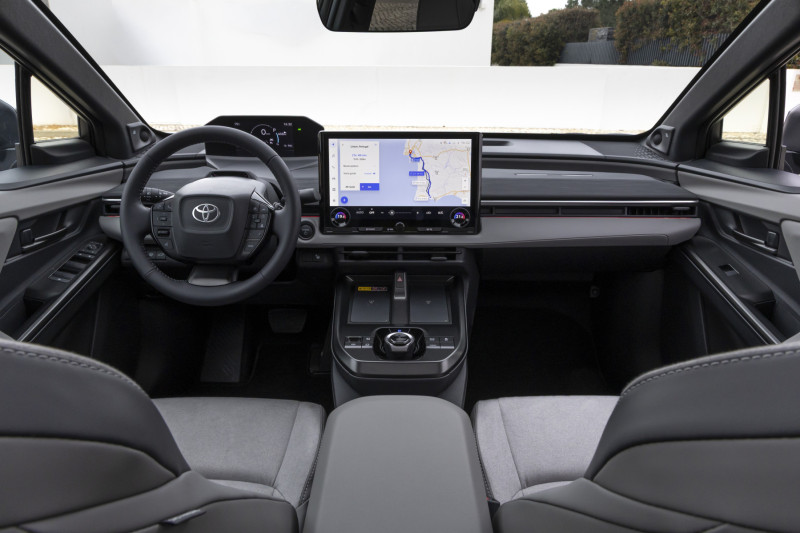
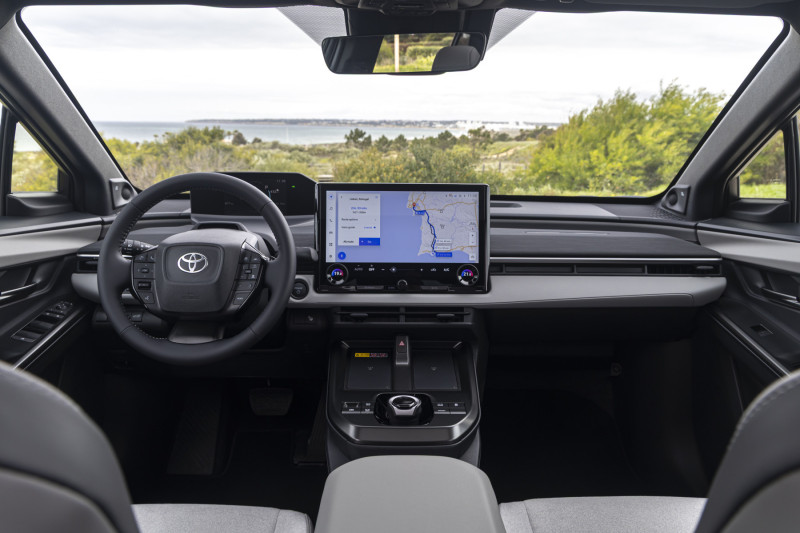
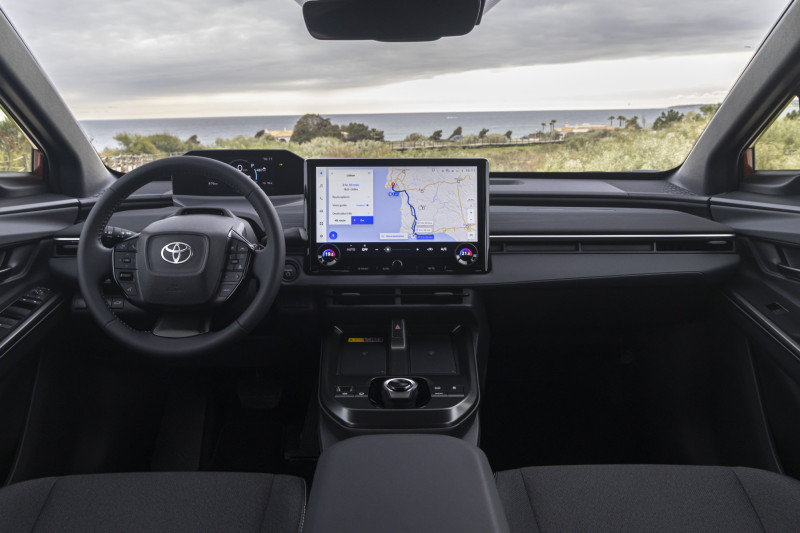
Inside, the C-HR+ greets you with a clean, driver-focused cabin dominated by a standard 14-inch central touchscreen. The system is responsive and includes wireless Apple CarPlay and Android Auto as standard, which is a big win. Material quality is a bit of a mixed bag; there are nice soft-touch surfaces and textured accents like the faux-suede trim on higher grades, but you’ll also find areas of hard, shiny black plastic that feel a bit cheap, especially on the base Icon trim.
Practicality is a mixed story too. The front cabin has good storage with a sizeable centre console bin and twin wireless charging pads on Design grade and above, but the total lack of a glovebox is a real head-scratcher. The 416-litre boot is fine for a couple’s bags or the weekly shop, but it’s smaller than most rivals, and there’s no front trunk (frunk). Rear headroom is the biggest compromise; that stylish sloping roof means anyone over six foot will need to duck to get in and might find space tight. Legroom is okay though, and the flat rear floor is a plus.
Battery, Range and Charging
Toyota’s giving you two battery options for the C-HR+. The entry Icon trim uses a 57.7 kWh unit, good for a WLTP range of up to 283 miles. The more popular pick will be the 77 kWh battery, available on Design and Excel trims, which bumps the official range up to a very competitive 378 miles in single-motor, front-wheel-drive form.
All versions support DC rapid charging at up to 150 kW, letting you get from 10-80% in around 30 minutes—a massive improvement on the original bZ4X. AC charging is 11 kW as standard, but you can option a 22 kW onboard charger on higher grades, which is handy if you’ve got access to faster home or public chargers. Battery preconditioning, which warms the pack for optimal charging in the cold, is fitted to every model. A notable miss, though, is a native EV route-planner in the built-in sat-nav; you’ll need to use Apple Maps via CarPlay for smart charging stop suggestions on a long trip.
On the Road: Performance and Ride
Out on the road, the C-HR+ feels polished and capable. The single-motor 77 kWh front-wheel-drive model we spent most of our time with puts out 221 hp and does the 0–62 mph dash in a perfectly adequate 7.4 seconds. If you want more, the dual-motor all-wheel-drive version with 338 hp cuts that to a brisk ~5.2 seconds, giving you genuinely quick getaways.
The ride strikes a good balance, soaking up most bumps without feeling sloppy, and the steering is accurate. Regenerative braking is adjustable via paddles on the steering wheel, with four levels to pick from, allowing for near one-pedal driving in its strongest setting. Despite that coupé roofline, rearward visibility is surprisingly good through the relatively large rear window. That sloping roof also helps give it a slippery aerodynamic profile, which undoubtedly helps with that impressive range figure.
At a Glance: How the C-HR+ Stacks Up
| Spec | Toyota C-HR+ | Kia EV3 | Skoda Elroq | Renault Scenic E-Tech | Volvo EX30 |
|---|---|---|---|---|---|
| Price (from) | £32,995 | £33,005 | £31,510 | £37,495 | £32,950 |
| Battery (top) | 77 kWh | 81 kWh | 85 kWh | 87 kWh | 69 kWh |
| Range (top, WLTP) | 378 mi | 375 mi | 360 mi | 379 mi | 296 mi |
| Power (top) | 338 hp (AWD) | 201 hp | 282 hp | 215 hp | 422 hp (twin) |
| 0–62 mph (top) | ~5.2 s | 7.5 s | 6.6 s | 7.9 s | 3.6 s |
| DC charging | 150 kW | 135 kW | 175 kW | 150 kW | 175 kW |
| Boot | 416 L | 460 L | 470 L | 545 L | 318 L |
| Warranty | 10 yr / 100k | 7 yr / 100k | 4 yr | 3 yr / 60k | 5 yr / 60k |
Kia EV3
Closest direct rival — bigger boot and rear seat, slower 135 kW charging.
Skoda Elroq
Roomier and faster-charging at 175 kW, but design less distinctive.
Renault Scenic E-Tech
Bigger family-oriented EV with the longest WLTP figure here.
Volvo EX30
Fastest of the bunch, but smaller boot and divisive minimalist UI.
Toyota C-HR+ Skoda Elroq Volvo EX30 — — — £32,995 £31,510 £32,950 Battery (top) 81 kWh 87 kWh 378 mi 360 mi 296 mi Power (top) 201 hp 215 hp ~5.2 s 6.6 s 3.6 s DC charging 135 kW 150 kW 416 L 470 L 318 L Warranty 7 yr / 100k 3 yr / 60k This table highlights the C-HR+’s core strengths: it leads on warranty and matches the class-best on range, while offering competitive pricing and strong performance in its AWD guise. However, it concedes ground in outright practicality, with the smallest boot here and no available frunk. Charging speed is good but not exceptional, bested by the Skoda and Volvo.
Toyota C-HR+ vs Kia EV3: Which Is Better?
Choosing between the Toyota C-HR+ and the Kia EV3 is perhaps the most common dilemma for buyers in this segment. Both are electric crossovers starting just over £33,000, offer long-range battery options, and come from brands with strong reputations. The decision ultimately hinges on what you prioritise: style and warranty or space and tech.
On price, they are virtually identical at entry level. The Kia EV3 Air 58 kWh starts at £33,005, just £10 more than the Toyota C-HR+ Icon 57.7 kWh. Step up to the long-range models, and the Kia EV3 Long Range 81 kWh at £36,005 slightly undercuts the Toyota C-HR+ Design 77 kWh at £35,495. For that money, the Toyota offers more power (221 hp vs 201 hp) and a longer warranty.
Performance is closely matched in single-motor form, with both feeling brisk enough for daily driving. The C-HR+ feels perhaps a touch more agile thanks to its lower, coupé-like stance. The EV3, with its more upright, boxy shape, prioritises interior space. Charging is a win for the Toyota: its 150 kW DC capability beats the EV3’s 135 kW, meaning slightly shorter stops on a long journey.
Range is virtually neck-and-neck. The C-HR+ 77 kWh claims 378 miles WLTP, while the EV3 Long Range claims 375 miles. Real-world performance will likely see both comfortably exceed 300 miles in summer. Interior space is where the Kia fights back decisively. The EV3’s more conventional shape liberates significantly more rear headroom and a larger, more useful 460-litre boot compared to the C-HR+’s 416 litres. The Kia’s infotainment is also slicker, with native EV route-planning—a feature the Toyota lacks.
### Which one is better? **Buy the Toyota C-HR+ if** you value Toyota’s 10-year warranty, faster DC charging (150 kW vs 135 kW), sharper looks and the long-range single-motor 378-mile WLTP figure. **Buy the Kia EV3 if** you want a bigger boot, roomier rear seats, a more conventional crossover shape and Kia’s slick infotainment with native EV route-planning. **Our pick** is the Toyota C-HR+ Design 77 kWh for buyers who can live with the coupé roofline; the EV3 Long Range Air still wins on practicality.
Safety and Warranty
While the C-HR+ hasn’t been tested by Euro NCAP yet, it’s built on the same platform as the bZ4X, which earned a maximum five-star rating in 2022. Every model comes with Toyota Safety Sense as standard, including adaptive cruise control, lane departure alert with steering assist, a pre-collision system with pedestrian and cyclist detection, and intersection turn assistance.
The warranty package is a real standout. Toyota gives you a 10-year or 100,000-mile vehicle warranty, subject to annual servicing. That’s industry-leading and provides immense peace of mind for EV early adopters. The battery gets its own separate 10-year or 1,000,000-mile warranty, underlining Toyota’s confidence in its longevity.
Pricing, Trims and Running Costs
The UK range kicks off with the Icon 57.7 kWh at £32,995. The mid-tier Design 77 kWh, which we reckon will be the big seller, costs £35,495. The top-spec Excel 77 kWh ranges from £39,495 to £41,650, depending on options like the two-tone roof.
For company car drivers, the C-HR+ is a compelling proposition. Its zero-emissions status means a Benefit-in-Kind (BiK) tax rate of just 2% for 2025/26, making it exceptionally cheap to run as a fleet vehicle. Insurance groups aren’t confirmed yet but should land in the mid-30s. Given Toyota’s reputation for strong resale values, we expect the C-HR+ will hold onto its money better than many rivals, which helps lower your overall ownership costs.
Should You Buy the Toyota C-HR+?
**You should buy the C-HR+ if** you’ve been hanging out for a stylish, dependable electric car from a brand you trust. Its combination of head-turning design, a range that kills range anxiety for most, and an unbeatable 10-year warranty makes it a very safe bet. It’s particularly ideal for couples or small families who prioritise style and long-term ownership security over maximum rear-seat space.
**You should probably skip it if** you regularly carry tall passengers in the back or need the biggest boot for pushchairs and sports gear. Tech fans who want the most advanced infotainment with built-in EV routing might also find it a bit lacking. If outright charging speed is your top priority, rivals like the Skoda Elroq offer faster DC rates.
⚡ Our Verdict
A sharp-looking, long-range EV with a killer warranty, but some tech gaps.
The 2026 Toyota C-HR+ Electric is a big and welcome step forward for Toyota’s EV ambitions. It successfully combines desirable design with the practicality of a long-range electric powertrain, all backed by the most reassuring warranty in the business. While it gives up some practicality and modern tech to the best in class, its overall package is deeply compelling. For the UK buyer after a stylish, reliable and efficient electric crossover, the C-HR+ absolutely deserves a spot at the very top of your shortlist.
Frequently Asked Questions
What is the real-world range of the Toyota C-HR+ in the UK?
From our driving, expect the 77 kWh model to do between 280 and 320 miles in mixed UK conditions, dropping to around 240-260 miles in a cold winter. The 57.7 kWh model will manage proportionally less.
How fast does it charge at home compared to a DC charger?
On a typical 7 kW home wallbox, the 11 kW AC version will take roughly 8-9 hours for a full charge. The optional 22 kW AC charger halves that time on compatible public points. A 150 kW DC rapid can take it from 10-80% in around 30 minutes.
Should I choose the 57.7 kWh or the 77 kWh battery?
Go for the 57.7 kWh (Icon) if your daily kays are low and you want the lowest entry price. For most buyers, the 77 kWh battery is the smarter pick, giving you heaps more range for a modest price jump.
How does it compare to the hybrid Toyota C-HR?
The C-HR+ is a dedicated EV—quieter, smoother, and cheaper to run if you charge at home. The hybrid C-HR is still a solid choice if you’re not ready for full electric or don’t have home charging.
Can the Toyota C-HR+ tow?
Towing capacity hasn’t been officially confirmed for the UK market. It’s probably not going to be a strong point for this style-focused crossover, so check with your dealer if that’s a priority for you.
What is the expected lease cost?
Early estimates suggest monthly lease rates for a mid-spec Design model will kick off from around £350-£400 per month on a typical 36-month contract with a moderate initial rental. Competitive PCP finance deals should also be available.
