

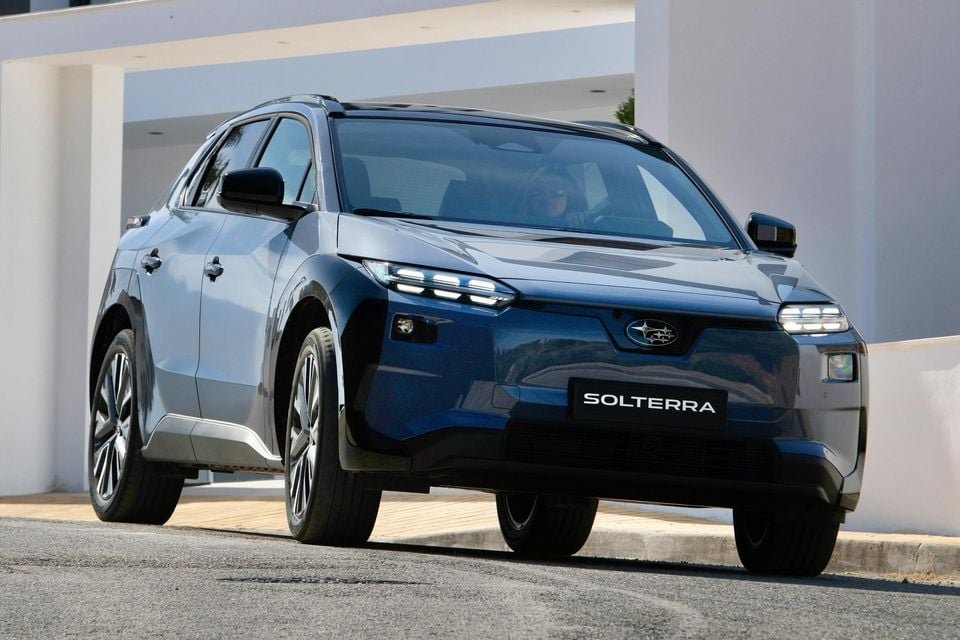
2026 Subaru Solterra Review: The Electric SUV Subaru Actually Needed
A genuine improvement that makes the Solterra a credible electric SUV
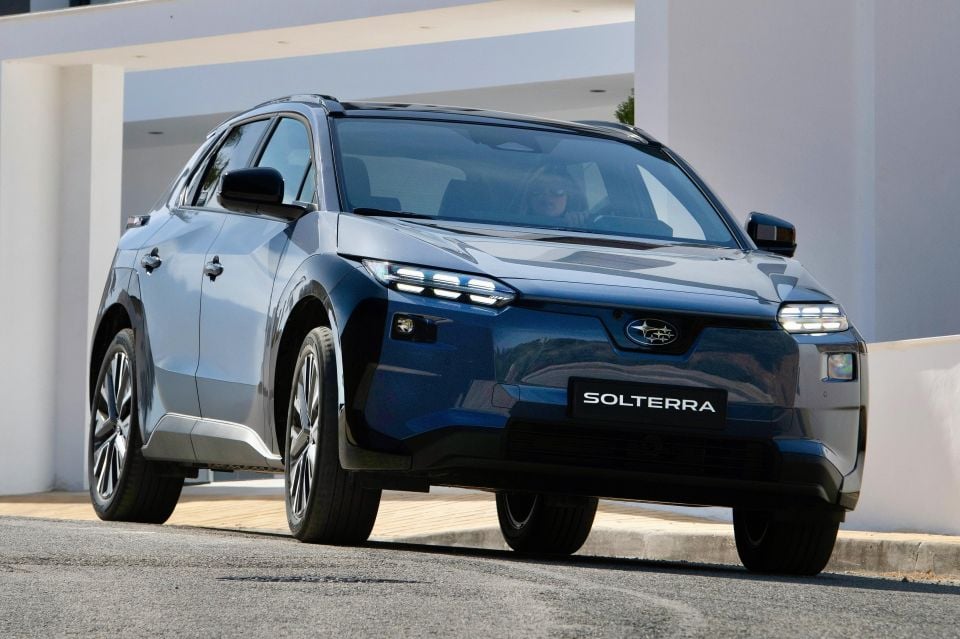
2026 Subaru Solterra electric SUV hero studio shot
Price
AUD 63,990 (USD ~38,495)
Battery
74.7 kWh
Peak power
252 kW (XT)
⚡ Quick Verdict
: The 2026 Solterra mid-cycle refresh fixes nearly everything we criticised about the original. The bigger 74.7 kWh battery pushes real-world range close to 300 miles, the new 338 hp XT variant gives buyers the shove they were asking for, and Australian pricing has dropped by up to AUD 7,000. It still can’t match an 800V rival for charging speed, but as a daily-drive electric SUV with proper all-terrain credentials, the Solterra now makes a genuinely strong case for itself.
## Introduction
✓ The Good
- +Real-world range near 300 miles thanks to a larger 74.7 kWh battery
- +Standard Symmetrical AWD on every trim with dual-mode X-Mode
- +Revised pricing is significantly cheaper than the outgoing model
- +Surprisingly engaging to drive, especially in Power mode
- +14-inch touchscreen and wireless Apple CarPlay/Android Auto on every variant
- +150 kW DC fast charging lags behind 800V rivals
- +Square steering wheel feels awkward in tight manoeuvres
- +Brake-pedal response after regen has a noticeable delay
- +No glove box, no front trunk and limited clever interior storage
✗ The Trade-offs
- −150 kW DC fast charging lags behind 800V rivals
- −Square steering wheel feels awkward in tight manoeuvres
- −Brake-pedal response after regen has a noticeable delay
- −No glove box, no front trunk and limited clever interior storage
📑 In This Review
- Introduction
- Design and First Impressions
- Interior, Tech and Cabin Quality
- Performance, Range and Charging
- On the Road
- At a Glance: Solterra vs Key Rivals
- 2026 Subaru Solterra vs Toyota bZ4X: Which Is Better?
- Which one is better?
- Safety and Warranty
- Pricing, Variants and Value
- Should You Buy the 2026 Subaru Solterra?
- Buy the 2026 Subaru Solterra if:
- Skip the 2026 Subaru Solterra if:
- Verdict
- Frequently Asked Questions
: The 2026 Solterra mid-cycle refresh fixes nearly everything we criticised about the original. The bigger 74.7 kWh battery pushes real-world range close to 300 miles, the new 338 hp XT variant gives buyers the shove they were asking for, and Australian pricing has dropped by up to AUD 7,000. It still can’t match an 800V rival for charging speed, but as a daily-drive electric SUV with proper all-terrain credentials, the Solterra now makes a genuinely strong case for itself.
Introduction
When Subaru launched the Solterra back in 2022, it landed with a bit of a thud. The battery was too small, the range was underwhelming, and the pricing didn’t line up with what buyers expected from a brand that’s built its reputation on affordable, capable all-wheel-drive vehicles. The 2026 mid-cycle refresh is Subaru’s attempt to fix all of that in one go.
And the changes are substantial. A new 74.7 kWh CATL lithium-ion battery replaces the old 71.4 kWh unit, lifting WLTP range to 566 kilometres on the base AWD model — an improvement of over 150 kilometres. The dual-motor powertrain gets a meaningful bump, with the new XT variant producing 338 combined horsepower. Enough for a sub-five-second sprint to 60 mph. Pricing across every market has dropped too, in Australia by as much as AUD 7,000.
There are cosmetic and tech revisions as well. A 14-inch centre touchscreen replaces the old infotainment display, the front fascia has been redrawn, and buyers can now spec body-colour fender flares to break up the wall of black plastic that defined the original. In the US, the Solterra switches to a NACS charging port, giving native access to Tesla’s Supercharger network without an adapter.
Taken on their own, none of these changes is revolutionary. But together they represent a genuine rethink of where the Solterra sits in the market. The question is whether that’s enough to put Subaru’s electric SUV into serious contention against the Tesla Model Y, Kia EV6 and its own mechanical twin, the Toyota bZ4X. We spent time with the refreshed base model to find out.
Design and First Impressions
The 2026 Solterra’s exterior is an exercise in incremental improvement. The overall silhouette carries over — that vaguely soap-bar aerodynamic shape that Subaru has committed to for this generation. That’s a deliberate choice: drag coefficient matters more for electric range than it ever did for internal combustion, and a slippery body is worth more than a pretty one if you need every last kilometre.
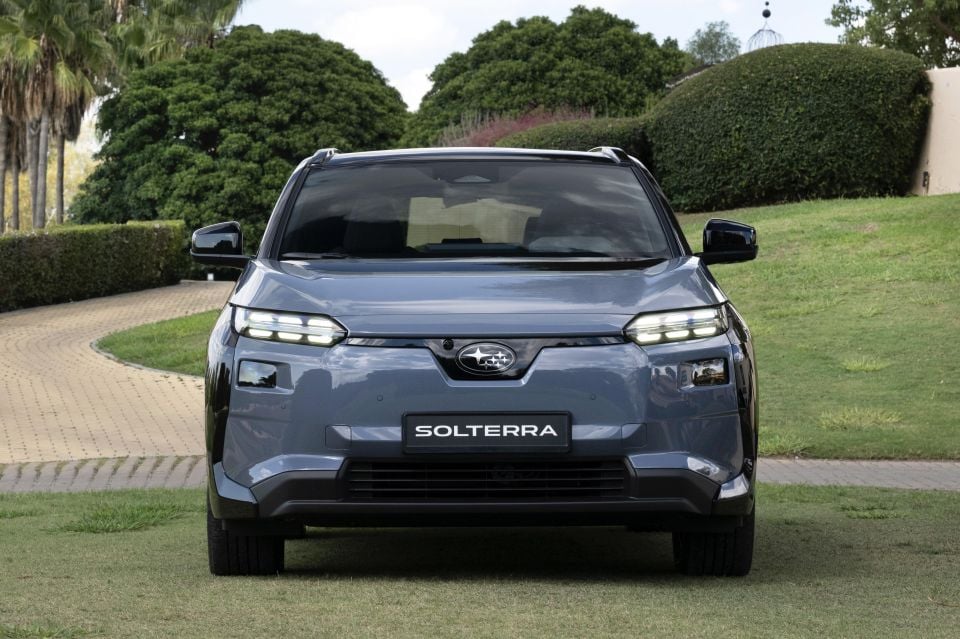
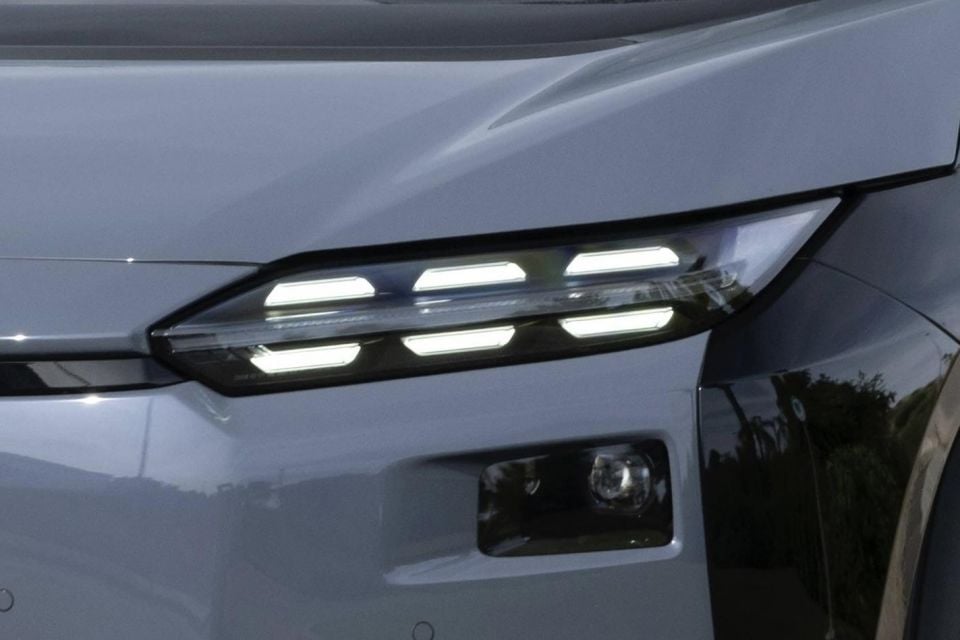
What’s changed is the detail work. The front fascia gets a redesigned bumper with six LED daytime running lights positioned above a set of detached lower headlamps, giving the face a more contemporary and slightly more aggressive look. Active grille shutters sit behind the bumper and close at highway speeds to reduce drag. The lower air intake incorporates functional aero elements, and there’s a pair of active vents flanking the nose that appear designed for battery and motor cooling.
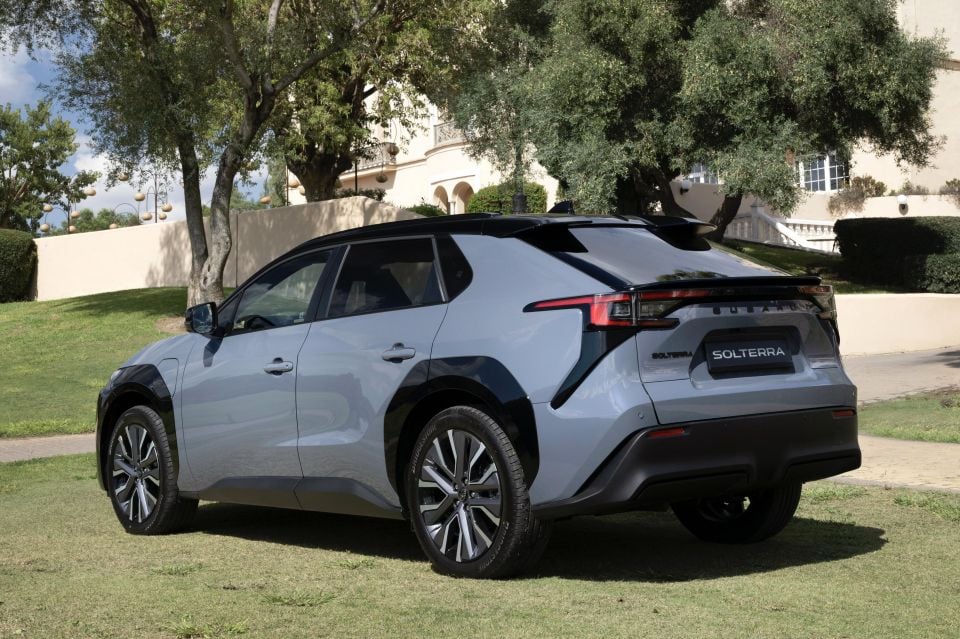
The fender flares are now available in body colour, and the difference is considerable. On the outgoing car, the contrast between painted steel and matte-black plastic cladding made the Solterra look cheap. Body-coloured flares integrate the wheel arches into the overall design, making the vehicle appear more cohesive and, frankly, more expensive. We’d specify this option without hesitation. The side skirts, lower bumper cladding and rear diffuser remain plastic, but the diffuser is functional and incorporates a pair of canards at the rear corners for aero management.
The base model rides on 18-inch alloy wheels wearing 235/60 R18 Toyo Open Country HT tyres — a generous sidewall that does wonders for ride comfort. There’s no driveshaft tunnel underneath, and the underbody is protected by a steel skid plate at the leading edge of the battery pack, with an aluminium panel covering the battery tray. The rest of the undertray is a more modest material, but the key hardware is protected. Ground clearance sits at 210 millimetres, which is generous for this class and positions the Solterra as a genuine light-duty off-road proposition rather than a token effort.
Interior, Tech and Cabin Quality
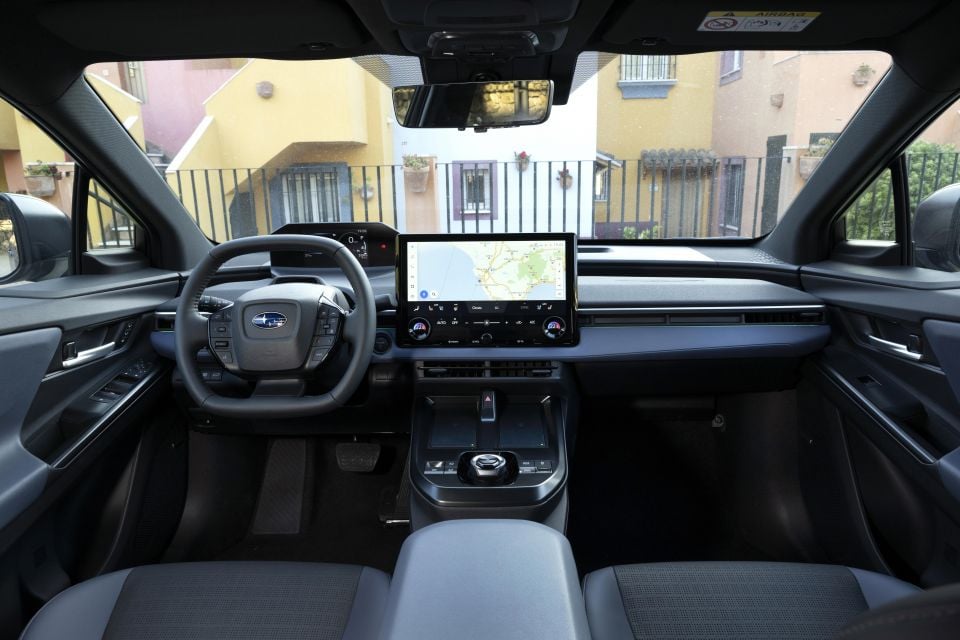
The single most important interior change for 2026 is the 14-inch centre touchscreen. It replaces the smaller unit from the outgoing model and, on the base model at least, is the primary interface for nearly all vehicle functions including climate control and drive mode selection. The screen is responsive, the graphics are clear, and wireless Apple CarPlay and Android Auto come standard. It’s unmistakably a Toyota-developed interface — the menu structure, fonts and logic will be familiar to anyone who’s recently sat in a bZ4X or a RAV4 — but it works well and is a dramatic improvement over the old system.
Physical controls have been retained for the essentials: rotary dials for temperature adjustment, a physical volume knob, and dedicated defrost buttons. The steering wheel controls are real, clicky buttons rather than touch-sensitive pads, which we vastly prefer. The digital instrument cluster is positioned high on the dash, shifting the speedometer to the driver’s side edge of the display in a layout reminiscent of Lexus. It’s unusual but effective, keeping the driver’s eyes closer to the road.
The square steering wheel remains an acquired taste, though. It looks modern in photographs, but in practice it feels odd during tight manoeuvres like parking. The flat bottom and top create a yoke-like sensation that takes some adjustment, particularly in situations where you’d normally shuffle the wheel through your hands. We got used to it, but we wouldn’t choose it over a conventional round wheel if given the option.
Storage is a mixed bag. Subaru has removed the glove box entirely, replacing it with a small hidden shelf above the driver’s knees that incorporates USB-C charge ports. Registration documents will fit; much else won’t. The bridge-style centre console has a storage tray underneath, but it’s open and lacks a lid, leaving items visible and unsecured. Dual wireless charging pads sit ahead of the drive selector for the front occupants, and rear passengers get their own USB-C ports. There’s no front trunk — the under-bonnet space is occupied by the motor, inverter, 12-volt battery and two separate cooling circuits.
Rear-seat space is genuinely generous. The flat floor, a benefit of the skateboard platform, allows three adults to sit abreast without a raised centre tunnel. Headroom is adequate, and the rear seats recline — though doing so brings heads closer to the C-pillar. The panoramic glass roof, available on higher trims, opens up the cabin considerably. Materials on the base model are honest: perforated leatherette seats with heating, a soft-touch dashboard top with some foam padding, and door cards with textured fabric inserts and shaped speaker grilles. It’s not luxurious, but it’s a clear step above what you’d expect at this price.
Performance, Range and Charging
The 2026 Solterra offers two powertrain configurations, both using permanent-magnet synchronous motors with single-speed reduction gears sourced from Blue Nexus, a Denso-Toyota-Aisin partnership. The base and Limited trims produce a combined 233 horsepower and 249 lb-ft of torque from their dual-motor setup. The XT variants — Limited XT and Touring XT — use the same physical hardware but are tuned to deliver 338 combined horsepower. Enough for a 0-60 mph time under five seconds. Subaru quotes 252 kW peak power for the Australian market, making the Solterra XT the most powerful mainstream Subaru ever produced.
The 74.7 kWh CATL lithium-ion battery is a meaningful step up from the old 71.4 kWh unit. WLTP range in Australia reaches 566 kilometres for the base AWD and 517 kilometres for the heavier, better-equipped Touring. The US EPA rates the most efficient variant at 288 miles. In our testing with climate control disabled, the trip computer showed 301 miles at a full charge. With the air conditioning running, that figure dropped to 277 miles — still a comfortable margin for most daily routines.
Charging remains the Solterra’s weakest spec against 800-volt competitors. The DC fast-charge peak is 150 kW, and Subaru quotes a 10-to-80-percent time of approximately 28 to 35 minutes depending on conditions. Our own measurement on a high-power charger returned a figure of roughly 28 minutes. That’s competitive within the 400-volt class but roughly ten minutes longer than a Kia EV6 or Hyundai Ioniq 5 achieve on their 350-kW-capable architecture. Battery preconditioning is now standard, which helps the car reach peak charge rates in cold weather rather than spending the first ten minutes warming the pack.
AC charging is 11 kW in the United States and 22 kW in Australia, the latter being the faster option and more practical for overnight home charging. The US-market Solterra gains a native NACS port for 2026, allowing direct connection to Tesla Supercharger stations without an adapter — a significant practical advantage for American buyers. The port on the test vehicle is located on the passenger side and requires removing a cap to access.
The dual-mode X-Mode system offers Snow/Dirt and Deep Snow/Mud settings, automatically disabling stability control to allow the motors to manage traction through software. The all-wheel-drive system has no mechanical linkage between front and rear axles; torque distribution is handled entirely electronically through the independent front and rear motors, each with a 13.8:1 final drive ratio in its single-speed gearbox.
On the Road
Our drive of the base 233-horsepower Solterra exceeded expectations. Launch the car in Power mode and there’s a satisfying, linear shove of torque that feels quicker than the on-paper figures suggest. The delivery is smooth and progressive rather than jarring, which makes it easy to modulate in traffic. Switching to Eco mode dulls the response for more efficient cruising, and a pair of paddle shifters behind the square steering wheel allows on-the-fly adjustment of regenerative braking intensity.
The chassis is more entertaining than we anticipated. The combination of McPherson struts up front and a multi-link rear suspension — both with KYB dampers — delivers a ride that’s firm but well-damped. On the standard 18-inch wheels with their generous 235/60 sidewall, the Solterra absorbs bumps and imperfections with real composure. The sidewall flex from the taller tyre profile provides a layer of compliance over rough surfaces that low-profile options wouldn’t offer.
Through bends, the Solterra is surprisingly agile. The weight distribution sits at roughly 54:46 front-to-rear, and the low-mounted battery keeps the centre of gravity close to the ground. Push into a corner at moderate speed and the car rotates with a playful willingness that belies its 1,993-kilogram kerb weight. There’s body roll, certainly — this isn’t a sports car — but the roll is progressive and predictable, and the electronic torque-vectoring system works unobtrusively to send power where it’s needed.
The steering feel is accurate but light, with a somewhat artificial, video-game-like quality that’s common in electric vehicles with electrically assisted racks. The 14.2:1 ratio and 2.8 turns lock-to-lock are quick enough for responsive turn-in without feeling darty.
The one notable dynamic weakness is the brake pedal. After decelerating under regenerative braking, applying the brake pedal reveals a brief delay before the friction brakes engage. The transition isn’t seamless, and it takes conscious adjustment to anticipate. Once the two-piston front calipers and single-piston rears are on task, stopping power is reassuring — the ABS intervention is decisive if somewhat aggressive — but the initial hesitation is something we noticed consistently.
At a Glance: Solterra vs Key Rivals
| Specification | 2026 Subaru Solterra AWD | Toyota bZ4X AWD | Tesla Model Y Long Range AWD | Kia EV6 GT-Line AWD |
|---|---|---|---|---|
| Starting price (AUD) | AUD 63,990 (USD ~38,495) | AUD ~58,990 (USD ~36,000) | AUD 58,900 (USD 44,990) | AUD 67,590 (USD 41,930) |
| Battery | 74.7 kWh | 74.7 kWh | 75 kWh (approx.) | 77.4 kWh |
| WLTP range | 566 km (base) / 517 km (Touring) | ~516–567 km | 533 km | 528 km (LR RWD) |
| Peak power | 252 kW (XT) | 252 kW (AWD) | ~340 kW | 239 kW |
| 0–100 km/h | ~5.0 s (XT, est.) | ~6.9 s | ~4.8 s | ~5.2 s |
| DC fast charging | 150 kW | 150 kW | 250 kW | 350 kW |
| AC charging | 22 kW | 22 kW | 11 kW | 11 kW |
| Drivetrain | Dual-motor AWD (standard) | Single or dual-motor | Dual-motor AWD | RWD or AWD |
| Warranty (AU) | 5yr/100,000 km + 8yr/160,000 km battery | 5yr/unlimited km + 8yr/160,000 km battery | 4yr/80,000 km + 8yr/192,000 km battery | 7yr/unlimited km + 7yr/150,000 km battery |
Toyota bZ4X
Mechanical twin; lower entry price but no standard AWD on every trim and softer suspension tune.
Tesla Model Y Long Range AWD
Faster, better software and 250 kW charging, but no off-road modes and lower ground clearance.
Kia EV6 GT-Line AWD
800V architecture charges 10-80 percent in 18 minutes, longer warranty, sportier dynamics.
The electric SUV segment is crowded and competitive. The Solterra’s most direct rival is the Toyota bZ4X, with which it shares a platform, battery, motors and manufacturing plant. Beyond that, it must contend with the Tesla Model Y — the global volume benchmark — and the Kia EV6, which sets the pace for charging performance. Each of these vehicles has distinct strengths, and the right choice depends heavily on which compromises you’re willing to accept. What the Solterra offers that most competitors don’t is standard all-wheel drive on every trim, genuine off-road credentials through its X-Mode system, and 210 millimetres of ground clearance. If you need an electric vehicle that can handle unsealed roads, light trails and rough weather with confidence, the Subaru is the natural choice. If outright range efficiency, charging speed or software sophistication are your priorities, the Tesla and Kia pull ahead. The table below compares key specifications and pricing across these four contenders, all using Australian-market figures and metric units for consistency. US pricing and imperial equivalents are noted in parentheses where relevant. 2026 Subaru Solterra AWD Tesla Model Y Long Range AWD —— AUD 63,990 (USD ~38,495) AUD 58,900 (USD 44,990) 74.7 kWh 75 kWh (approx.) 566 km (base) / 517 km (Touring) 533 km 252 kW (XT) ~340 kW ~5.0 s (XT, est.) ~4.8 s 150 kW 250 kW 22 kW 11 kW Dual-motor AWD (standard) Dual-motor AWD 5yr/100,000 km + 8yr/160,000 km battery 4yr/80,000 km + 8yr/192,000 km battery
2026 Subaru Solterra vs Toyota bZ4X: Which Is Better?
This is the comparison that matters most, because the Solterra and bZ4X are mechanical twins. They share the e-TNGA platform, the same 74.7 kWh CATL battery for 2026, the same Blue Nexus electric motors and the same Motomachi factory in Japan. The bones are identical. What differs is how Subaru and Toyota have dressed and tuned those bones.
Starting with pricing, there’s meaningful overlap. In Australia, the bZ4X undercuts the Solterra by roughly AUD 5,000 at the entry level, starting around AUD 58,990 compared to the Solterra’s AUD 63,990. The gap narrows further up the range, and on the US side the pricing difference is similarly modest. Toyota also offers a single-motor front-drive option in some markets, allowing a lower entry point. Subaru doesn’t: every Solterra sold in the United States and Australia gets Symmetrical All-Wheel Drive as standard. That’s a fundamental philosophical difference — Subaru is betting that its buyers want AWD as a baseline, not an upgrade.
Dimensionally, the two are near-identical in wheelbase and overall length. Ground clearance, however, tells a different story. The Solterra sits at 210 millimetres, matching or slightly exceeding the bZ4X, and Subaru’s dual-mode X-Mode system with Snow/Dirt and Deep Snow/Mud settings gives it more sophisticated off-road traction management than Toyota’s simpler AWD tuning. For buyers who regularly encounter unsealed roads, steep driveways or winter conditions, this is a genuine advantage.
Ride and handling differ more than the shared platform might suggest. Subaru has applied a slightly firmer suspension tune through the same KYB damper hardware, which gives the Solterra a more planted, engaged feel through corners. The bZ4X leans toward comfort. Neither approach is wrong — they reflect each brand’s character. Subaru buyers tend to expect a sense of connection to the road; Toyota buyers tend to prioritise a quiet, undemanding experience.
Technology and features are converging for 2026. Both models now share the 14-inch touchscreen, battery preconditioning and similar driver-assistance suites. In the US, the Solterra’s adoption of the NACS port gives it a small practical edge over the bZ4X for buyers who rely on Tesla Superchargers, though Toyota is expected to follow suit shortly.
Warranty coverage is comparable. Subaru offers five years or 100,000 kilometres on the vehicle and eight years or 160,000 kilometres on the battery in Australia and the UK. Toyota’s bZ4X carries a five-year/unlimited-kilometre vehicle warranty and the same eight-year battery term. Toyota’s unlimited-kilometre vehicle warranty is arguably stronger, but the practical difference is small for most owners.
Design is perhaps the clearest differentiator. The Solterra’s front end is busier and more aggressive, with its six-LED DRL signature and pronounced cladding giving it a rugged, distinctly Subaru character. The bZ4X is cleaner and more conservative, reflecting Toyota’s safer design language. Which you prefer is a matter of taste, but the body-coloured fender flare option on the Solterra goes a long way toward making it look more premium and resolved than the Toyota.
| Specification | 2026 Subaru Solterra AWD | 2026 Toyota bZ4X AWD |
|---|---|---|
| Starting price (AUD) | AUD 63,990 | AUD ~58,990 |
| Battery | 74.7 kWh CATL | 74.7 kWh CATL |
| WLTP range | 566 km | ~516–567 km |
| Peak power | 252 kW | 252 kW |
| DC fast charging | 150 kW | 150 kW |
| Ground clearance | 210 mm | ~210 mm |
| Off-road modes | Dual-mode X-Mode | Basic AWD modes |
| Drivetrain (standard) | AWD on every trim | FWD or AWD |
| NACS port (US) | Yes | No (adapter required) |
| Vehicle warranty (AU) | 5yr/100,000 km | 5yr/unlimited km |
| Battery warranty (AU) | 8yr/160,000 km | 8yr/160,000 km |

Which one is better?
– **Buy the 2026 Subaru Solterra if** you want standard all-wheel drive on every trim, more capable off-road traction modes, NACS port access in the United States or you simply prefer Subaru’s design language and dealer experience. – **Buy the Toyota bZ4X if** you want the lowest possible entry price, Toyota’s unlimited-kilometre warranty, or you prefer a softer, comfort-oriented suspension tune. – **Our pick** is the 2026 Subaru Solterra. The standard AWD, X-Mode capability and NACS port justify the modest price premium over the bZ4X, and for most buyers the differences that matter most — capability, convenience and equipment — tip in Subaru’s favour.
Safety and Warranty
The 2026 Solterra inherits a strong safety record. Euro NCAP awarded the related platform a full five-star rating in its 2025 testing, with high scores across adult occupant protection, child occupant protection, vulnerable road user protection and safety assist. The IIHS has designated the Solterra a Top Safety Pick Plus, the highest tier available, and the five-star ANCAP rating follows by extension from the Toyota bZ4X’s independent assessment.
Subaru’s EyeSight driver-assistance suite for 2026 is well-equipped. Autonomous emergency braking covers car-to-car, pedestrian, cyclist and junction scenarios, including reverse AEB. Lane-keep assist, lane-departure warning and emergency lane-keeping are standard. A blind-spot monitor with rear cross-traffic alert is included on every variant, and a centre airbag between the front occupants supplements the standard front, side and curtain airbag array.
Warranty coverage in Australia and the United Kingdom runs to five years or 100,000 kilometres on the vehicle and eight years or 160,000 kilometres on the traction battery. Roadside assistance is included for three years. This is competitive with the segment standard, though Kia and Hyundai offer longer vehicle warranties of seven years with unlimited kilometres. Toyota’s unlimited-kilometre vehicle warranty also has an edge in flexibility. For most private owners who drive an average of 15,000 to 20,000 kilometres per year, though, the Subaru’s warranty provides adequate coverage.
Pricing, Variants and Value
The 2026 Solterra’s pricing represents a significant correction from the outgoing model. In Australia, the base AWD starts at AUD 63,990 before on-road costs — a reduction of AUD 6,000 — while the Touring drops to AUD 69,990, down AUD 7,000. In the United States, the Premium starts at USD 38,495, with the Touring XT topping the range at approximately USD 47,885. UK pricing hasn’t been confirmed at launch but is expected to sit in the mid-GBP 40,000 bracket.
There are four US-market trims: Premium, Limited, Limited XT and Touring XT. The Premium and Limited use the 233-horsepower dual-motor setup; the XT variants upgrade to 338 horsepower. All four get standard Symmetrical AWD. The Australian market offers just two trims — AWD and AWD Touring — both with the full 252 kW powertrain.
Against the competition, the Solterra is well-positioned on price. The Tesla Model Y Long Range AWD starts at AUD 58,900 in Australia, undercutting the Solterra by roughly AUD 5,000, but it lacks the Subaru’s off-road modes and ground clearance. The Kia EV6 GT-Line AWD starts higher at AUD 67,590, though it compensates with 800-volt charging architecture and longer warranty coverage. The Toyota bZ4X undercuts the Solterra by a similar margin to the Tesla, but without standard AWD in all configurations.
Our recommendation for value-conscious buyers is to target the base model. The Premium in the US or the entry AWD in Australia comes with the same 74.7 kWh battery, standard AWD, the 14-inch screen, wireless smartphone mirroring, dual wireless chargers and the full EyeSight safety suite. Electric vehicles depreciate faster than their combustion equivalents in the first three years, and the lower your initial outlay, the less absolute value you lose. The base Solterra is the smartest financial play in the range.
Should You Buy the 2026 Subaru Solterra?
Buy the 2026 Subaru Solterra if:
– You need genuine all-wheel-drive capability in an electric SUV. – You regularly drive on unsealed roads, through snow or in conditions where X-Mode’s terrain management is a real advantage. – You are a loyal Subaru owner ready to make the switch to electric. – You want standard AWD without paying for a higher trim. – You are in the United States and value native NACS charging access at Tesla Supercharger stations. – You prioritise ride comfort and real-world usability over outright charging speed.
Skip the 2026 Subaru Solterra if:
– Fastest-possible DC charging is a priority — the Kia EV6 and Hyundai Ioniq 5 charge nearly twice as quickly. – You need a larger cargo area or a front trunk for additional storage. – Software quality and infotainment polish are high on your list — the Tesla Model Y remains the benchmark. – You want a conventional round steering wheel and find the square design distracting. – You are primarily a city driver who will never use off-road modes — the premium for AWD may not be justified. – Maximum resale value matters — the Tesla Model Y holds its value better at this stage.
⚡ Our Verdict
A genuine improvement that makes the Solterra a credible electric SUV
The 2026 Subaru Solterra is the vehicle the original should have been. A larger battery delivering real-world range close to 300 miles, a meaningful power increase on the XT variant, significantly lower pricing and a cabin that now includes a modern 14-inch touchscreen — Subaru has addressed the most pressing criticisms without losing any of the Solterra’s existing strengths. Standard Symmetrical All-Wheel Drive on every trim, 210 millimetres of ground clearance and dual-mode X-Mode remain unique selling points that no direct rival can match. We rate the refreshed Solterra at 7.6 out of 10. It’s a genuinely improved electric SUV that finally earns a recommendation, particularly for buyers who value all-weather and light off-road capability in their daily driver. The compromises — 150 kW peak charging, the square steering wheel, a brake pedal that stumbles on regen-to-friction transitions, and limited clever storage — are real, but they’re no longer deal-breakers. For Subaru loyalists making the transition to electric, and for anyone who wants an electric SUV that can handle more than just tarmac, the 2026 Solterra is worth serious consideration. It’s the most complete electric vehicle Subaru has ever built, and the first one we’d genuinely recommend.
Frequently Asked Questions
What is the real-world range of the 2026 Subaru Solterra?
With climate control off, the Solterra displayed approximately 301 miles of estimated range at a full charge. In normal driving with the air conditioning engaged, expect around 275 to 285 miles depending on conditions and driving style.
How long does the 10-to-80-percent DC fast charge take?
Subaru quotes 28 to 35 minutes on a 150 kW DC fast charger. Our own measurement on a high-power charger returned approximately 28 minutes, which is competitive within the 400-volt architecture class.
Can the 2026 Solterra tow?
Subaru doesn’t officially rate the Solterra for towing in most markets. Unlike some competitors that offer modest tow ratings, the Solterra isn’t designed or recommended for pulling trailers.
What is the ground clearance?
The Solterra offers 210 millimetres (8.3 inches) of ground clearance, which is among the best in the electric SUV segment and positions it well for unpaved roads and light off-road use.
Is the Solterra just a rebadged Toyota bZ4X?
Not exactly. The two vehicles share the e-TNGA platform, battery, motors and factory, but Subaru applies its own suspension tuning, standard AWD across all trims, X-Mode off-road system, distinct exterior styling, and unique warranty terms. The character of each vehicle is different even if the hardware underneath is closely related.
Should I buy the base model or the XT?
We recommend the base model for most buyers. It offers the same 74.7 kWh battery, standard AWD and the full technology suite at a significantly lower price. The XT’s extra power is enjoyable but not essential for everyday driving, and the lower initial outlay protects against the faster depreciation typical of electric vehicles.
Does the US model get access to Tesla Superchargers?
Yes. The 2026 US-market Solterra comes with a native NACS charging port, allowing direct connection to Tesla Supercharger stations without an adapter. This is a significant convenience advantage for American buyers.
How long is the battery warranty?
The traction battery is covered for eight years or 160,000 kilometres (whichever comes first) in Australia and the United Kingdom. The vehicle warranty itself runs five years or 100,000 kilometres.
