

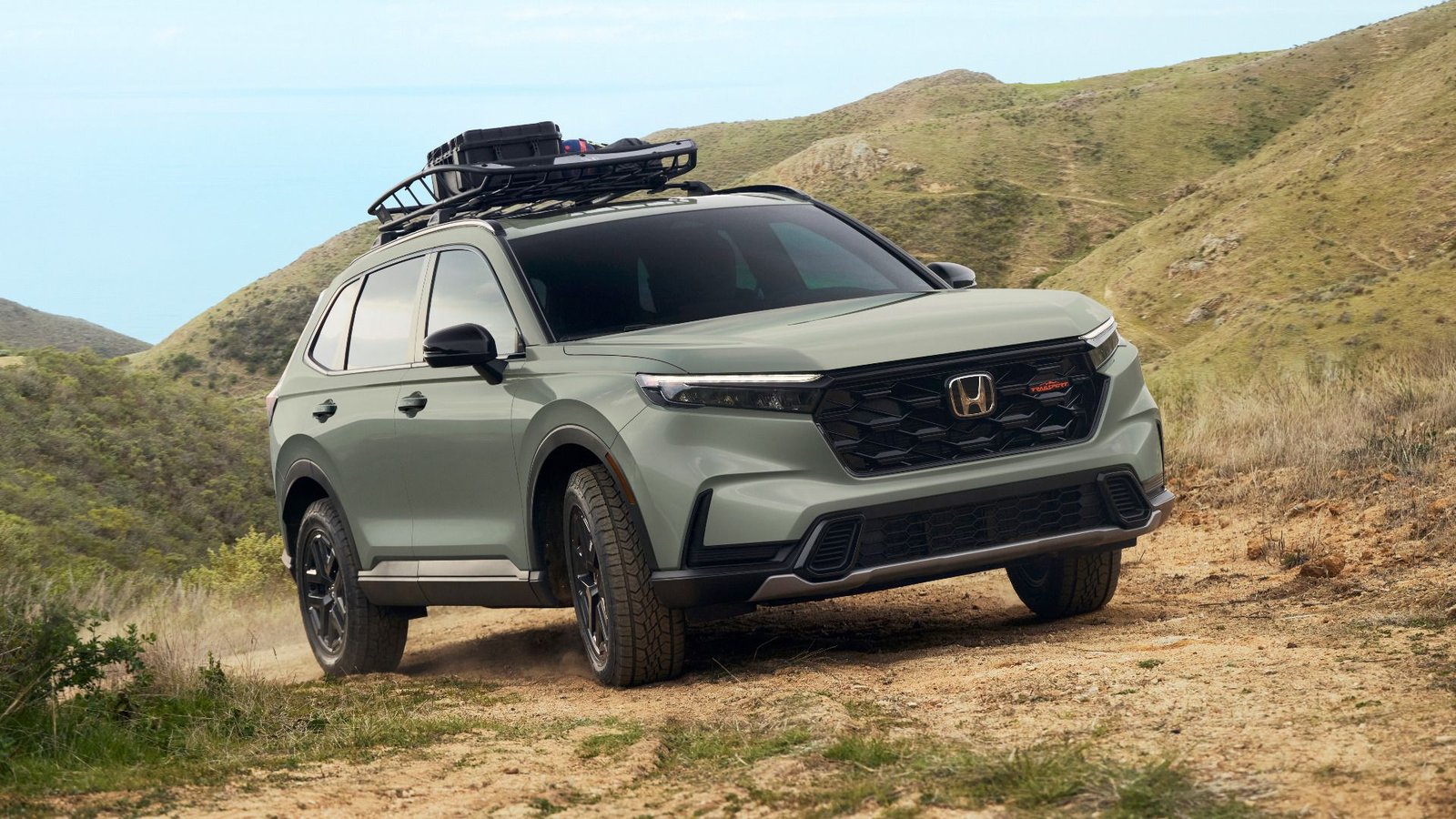
2026 Honda CR-V Hybrid Review: The Ride-Quality King Gets Refined
A near-flawless all-rounder held back by a few feature omissions at its price.
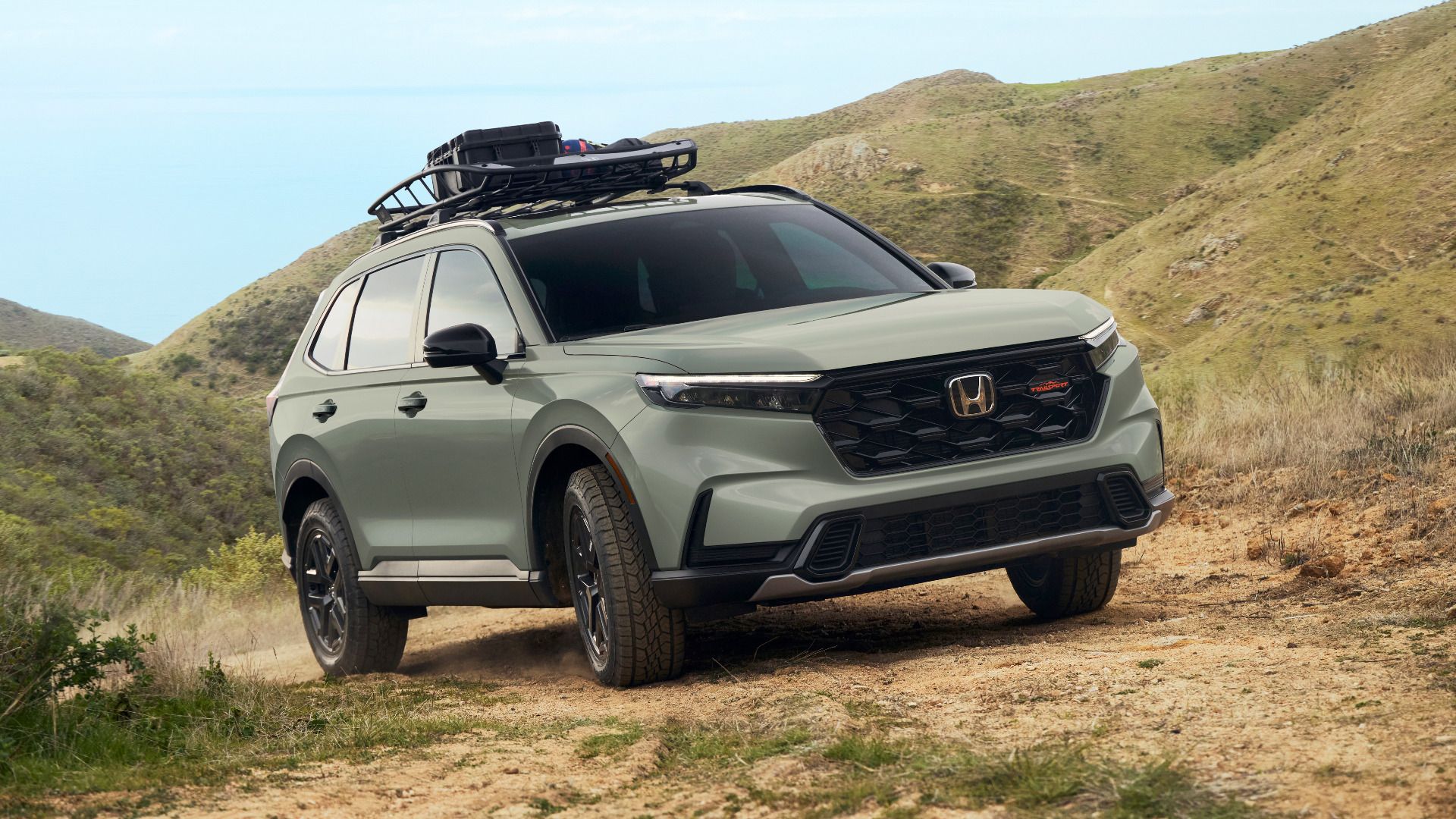
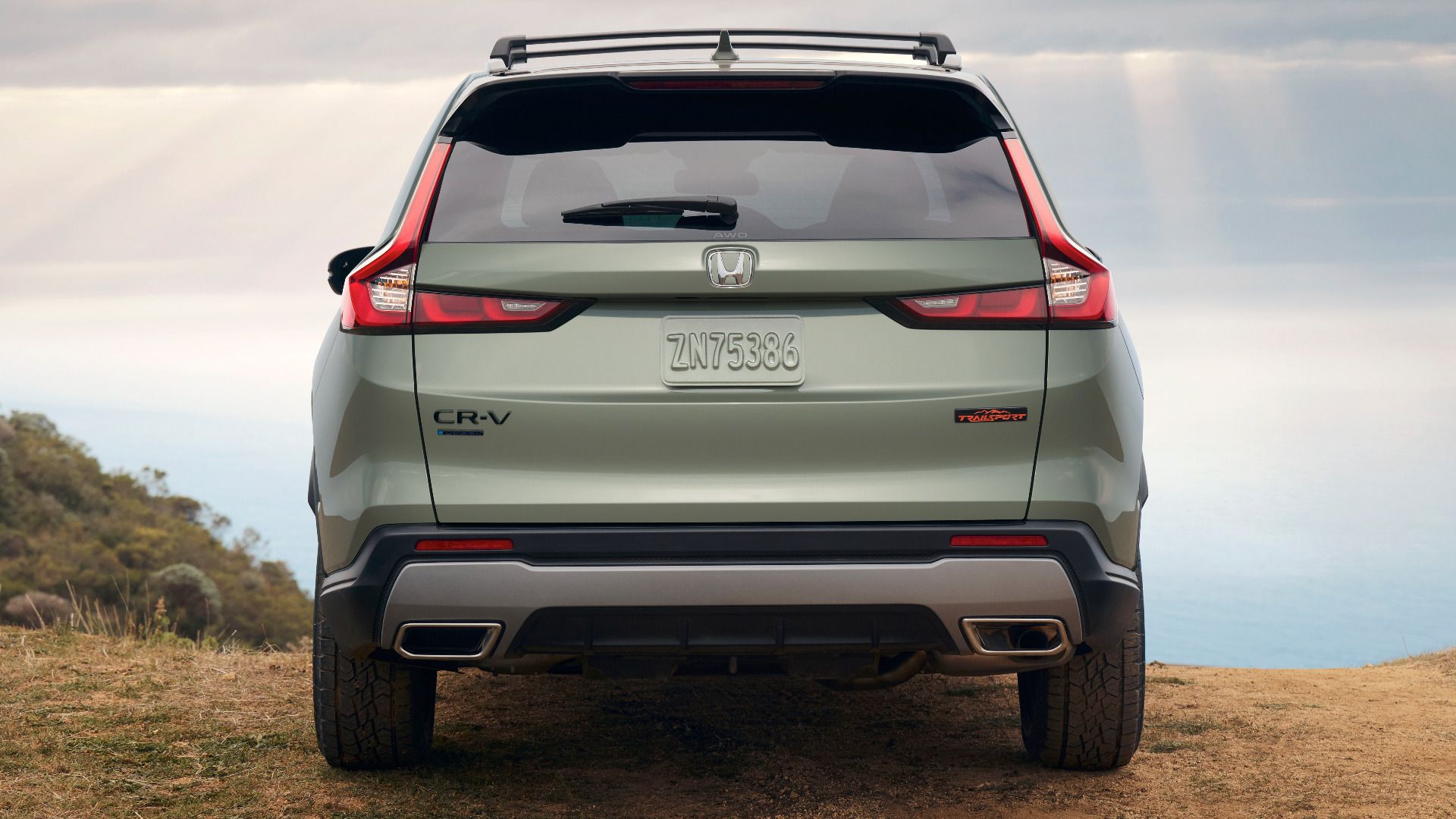
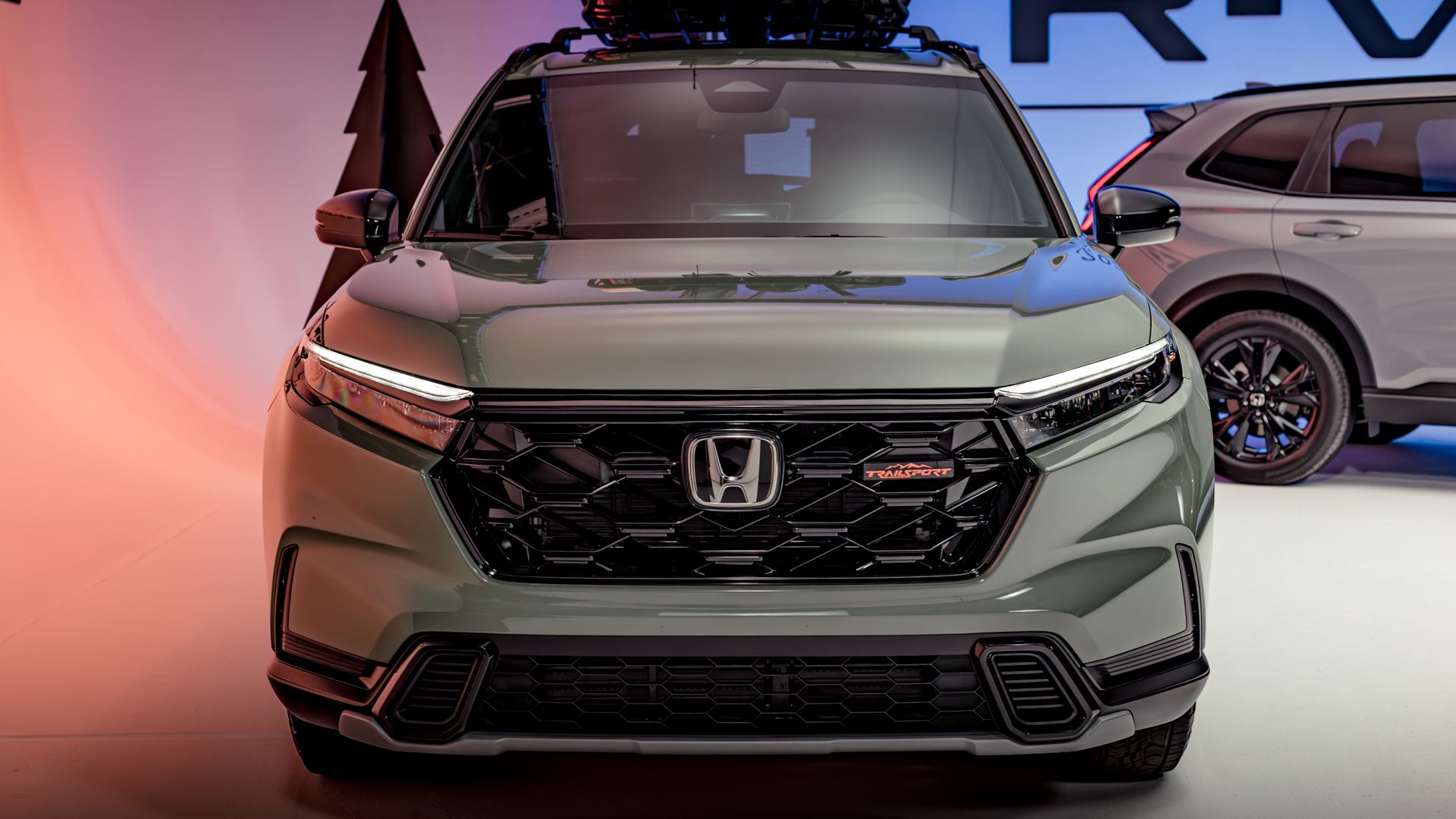
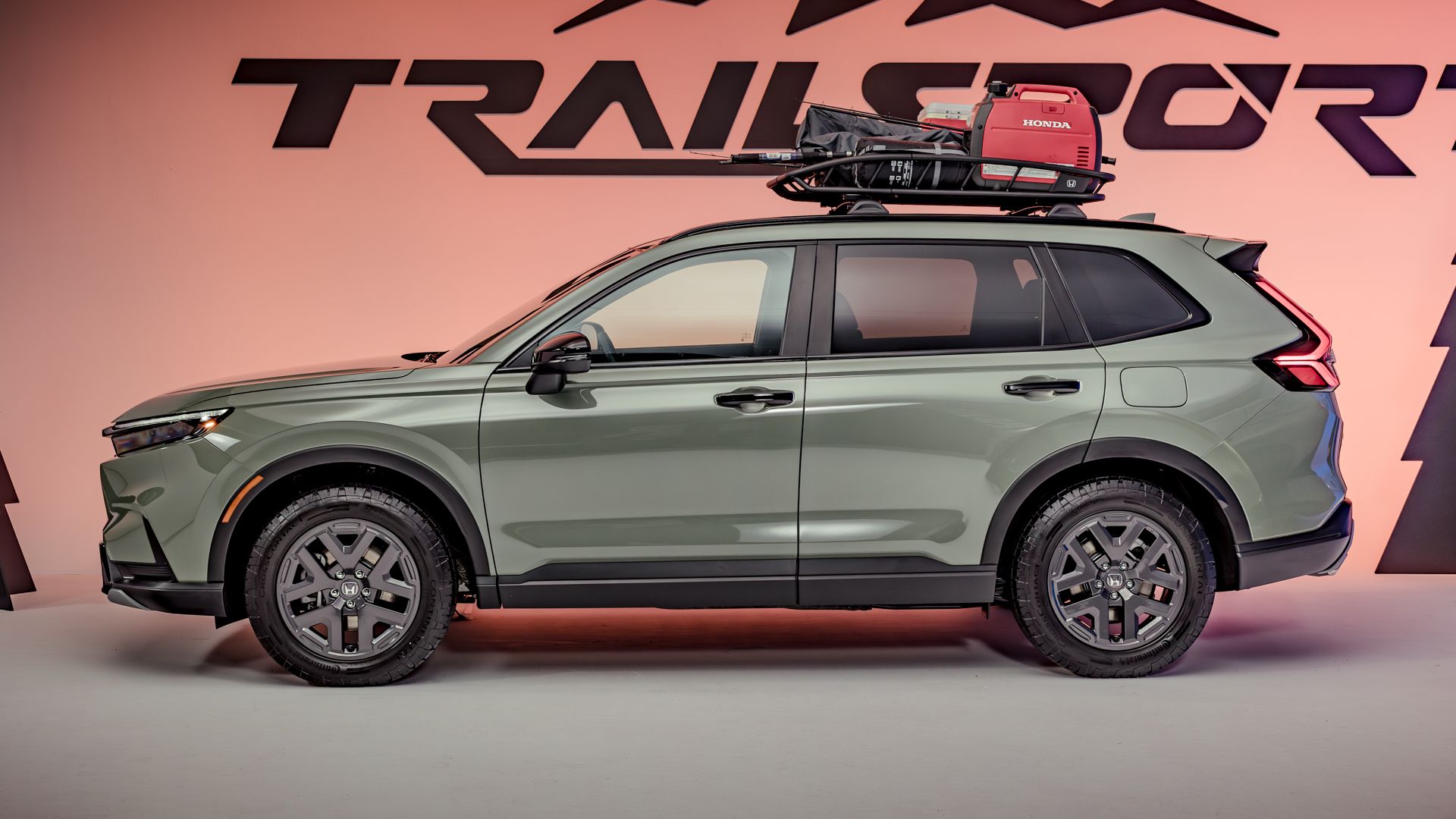
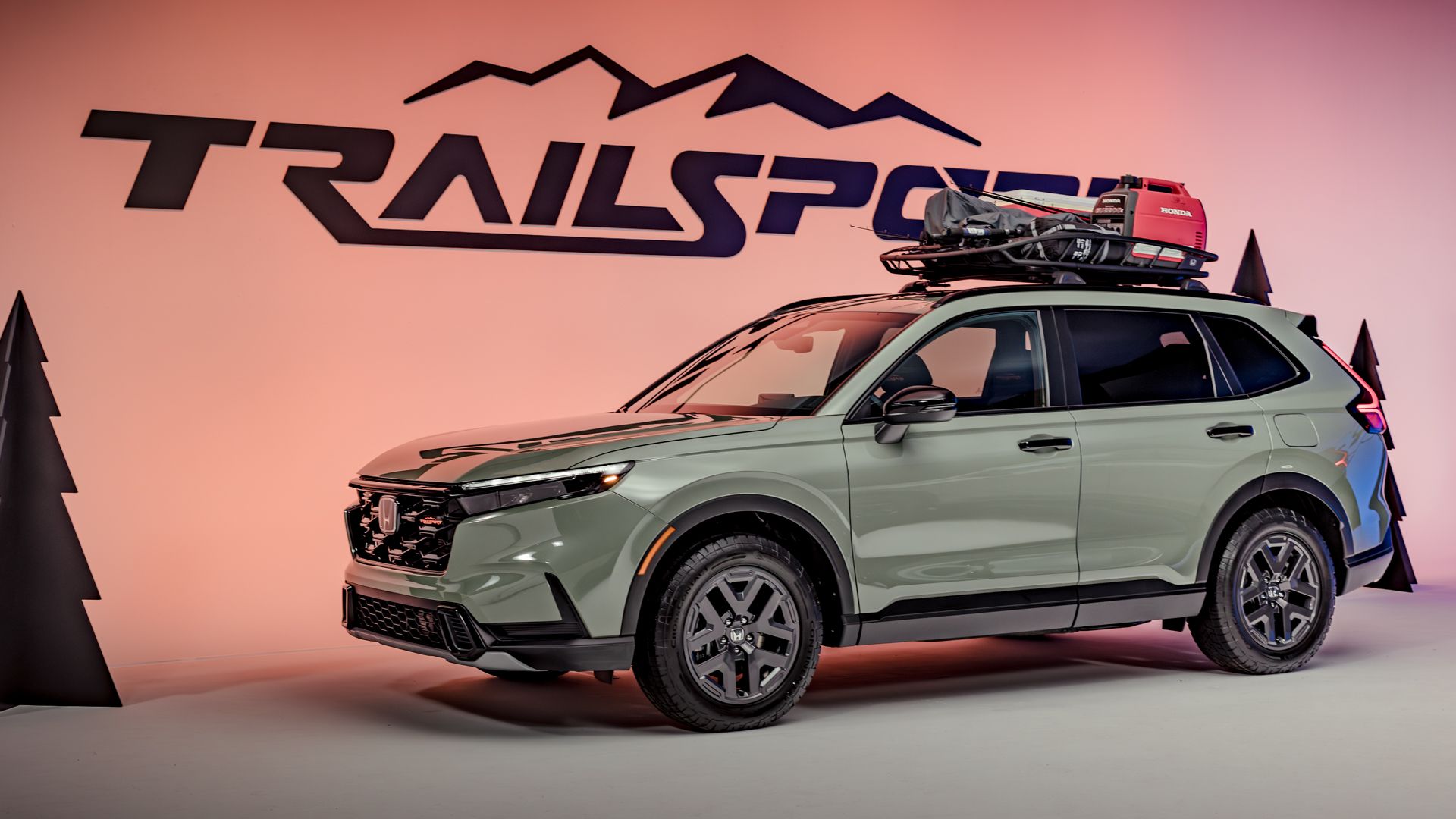
2026 Honda CR-V Hybrid Sport Touring AWD exterior three-quarter front view
Price
~$42,500
Hybrid battery warranty
8 yr / 100,000 mi
Combined power
204 hp
⚡ Quick Verdict
: If you want a compact SUV that genuinely does it all, the 2026 CR-V Hybrid Sport Touring AWD is hard to beat. The 204-hp hybrid drivetrain returns 37 mpg combined on the EPA cycle — we saw 34.4 mpg in our real-world mixed loop — and the ride quality is the best in the segment. The 34.7 cu ft cargo bay swallows real-world loads without complaint. There’s a catch, though: at nearly $45,000, you don’t get a 360-degree camera, head-up display, or ventilated seats, and cheaper rivals tick those boxes. Provided you can overlook those gaps and you care most about everyday comfort and refinement, it’s one of the most complete compact SUVs you can buy.
—
## A Compact-SUV Veteran Doubles Down on Hybrid
✓ The Good
- +Class-leading ride comfort across city, highway, and twisting roads
- +Strong real-world fuel economy at 34.4 mpg observed; 37 mpg combined EPA AWD
- +Spacious 34.7 cu ft cargo bay (71.8 cu ft seats folded)
- +Honda Sensing safety suite standard with stop-and-go adaptive cruise
- +8-year / 100,000-mile hybrid battery warranty
- +Build quality and material feel approaching premium-segment cars
- +Wireless CarPlay, Google Built-In, Bose audio standard on Sport Touring
✗ The Trade-offs
- −No 360-degree camera at a near-$45k sticker
- −No head-up display
- −No ventilated seats — rivals at this price include them
- −AWD trims trail FWD on EPA efficiency (37 vs 40 mpg combined)
- −Cabin design less plush than Volkswagen Tiguan at similar money
- −Tight throttle tuning can feel busy under hard acceleration
📑 In This Review
- A Compact-SUV Veteran Doubles Down on Hybrid
- Powertrain and On-Road Manners
- Real-World Fuel Economy
- Interior, Cargo, and Day-to-Day Usability
- Technology and Connectivity
- 2026 Honda CR-V Hybrid vs Toyota RAV4 Hybrid: Which Is Better?
- At a Glance: Broader Rivals Comparison
- Safety and Warranty
- What Could Be Better
- Who Should Buy the 2026 Honda CR-V Hybrid?
- Verdict
- Frequently Asked Questions
: If you want a compact SUV that genuinely does it all, the 2026 CR-V Hybrid Sport Touring AWD is hard to beat. The 204-hp hybrid drivetrain returns 37 mpg combined on the EPA cycle — we saw 34.4 mpg in our real-world mixed loop — and the ride quality is the best in the segment. The 34.7 cu ft cargo bay swallows real-world loads without complaint. There’s a catch, though: at nearly $45,000, you don’t get a 360-degree camera, head-up display, or ventilated seats, and cheaper rivals tick those boxes. Provided you can overlook those gaps and you care most about everyday comfort and refinement, it’s one of the most complete compact SUVs you can buy. —
A Compact-SUV Veteran Doubles Down on Hybrid
The compact SUV space is brutally competitive right now. Nearly every mainstream brand sells a hybrid in this class, and fuel economy, tech, and day-to-day usability have all climbed sharply over the past two model years. Honda’s CR-V has sat near the top of sales charts for decades, and for 2026 the hybrid version isn’t just an alternative powertrain — it’s the volume seller, built to square up against electrified entries from Toyota, Hyundai, Ford, and Kia.
For 2026, the CR-V Hybrid carries over largely unchanged from its sixth-generation refresh. That’s a good thing, not a complaint. The styling is still clean and current, the powertrain hasn’t been touched, and the packaging — roomy interior, generous cargo hold, and now-standard 9-inch touchscreen across the range — feels as relevant as it did at launch. The Sport Touring AWD sits at the top of the tree, bundling leather seating, Bose premium audio, Google Built-In, a heated steering wheel, and a hands-free power tailgate into one well-equipped package.
We included the CR-V Hybrid in our eight-vehicle compact SUV comparison test for the second year running, and once again it finished second overall. It earned top marks for ride quality, tied for first in outward visibility, and posted the second-best observed fuel economy behind only the Toyota RAV4 Hybrid. That kind of consistency tells you Honda has refined a platform carefully rather than reinventing it in a rush. The company knows its audience, and the CR-V Hybrid is engineered for the family buyer who values comfort, efficiency, and quiet competence.
What stops the CR-V from taking the outright win isn’t a single glaring flaw. It’s a cluster of feature omissions that feel conspicuous at a near-$45,000 sticker. No 360-degree camera. No head-up display. No ventilated seats. On their own, each is forgivable. Taken together, they hand rivals an opening and give shoppers a reason to cross-shop. Whether those gaps are deal-breakers comes down to what matters most to you.
—
Powertrain and On-Road Manners
Under the bonnet of the 2026 CR-V Hybrid Sport Touring AWD sits Honda’s familiar 2.0-litre Atkinson-cycle four-cylinder, paired with a two-motor hybrid system. Combined output is 204 hp, sent to all four wheels through an electronically controlled continuously variable transmission. On paper, those numbers look modest — the Toyota RAV4 Hybrid AWD makes 236 hp and the Hyundai Tucson Hybrid puts out 231 hp. In practice, though, the CR-V Hybrid never feels underdone in daily driving. The electric motors deliver torque almost immediately off the line, and the switch between EV-only and hybrid modes happens without any drama during a normal commute. We’d estimate the 0–60 mph sprint at roughly 7.6 to 7.8 seconds, which is adequate for the class even if it won’t set your pulse racing.
Where the CR-V Hybrid really separates itself from the pack is ride quality. Across city streets, open highways, and winding back roads, the Honda delivered the most composed, most comfortable ride of any compact SUV in our eight-vehicle field. Honda tends to tune its suspensions on the firmer side, but the CR-V’s chassis absorbs impacts with a maturity that belies its price. Expansion joints disappear under the tyres. Rough pavement gets muffled rather than channelled into the cabin. Body roll through corners is well controlled — the CR-V doesn’t wallow — yet there’s a suppleness to the damping that keeps everyone relaxed on longer trips.
Highway manners are equally impressive. Wind noise stays low, road noise is well suppressed, and the hybrid system slips into a quiet, low-rpm cruise mode that makes the CR-V feel like it belongs in a more expensive class. We pushed it through a series of undulating back roads and found the steering precise if not particularly chatty, the brake pedal natural in feel despite the regenerative braking underneath, and the overall chassis balance predictable and confidence-inspiring. This isn’t a sporty SUV, and it doesn’t pretend to be one. It’s the ride-quality king of the compact hybrid SUV segment, and that distinction matters far more to most buyers than an extra 30 hp.
One minor note on the throttle: plant your right foot from low speed and the calibration can feel busy. The eCVT holds engine revs high, the powertrain works hard to marshal its 204 hp, and you get a burst of noise and urgency that sits at odds with the otherwise serene character of the vehicle. In normal driving — part-throttle merging, gentle highway on-ramps, stop-and-go traffic — it’s a non-issue. But if you’re expecting a surge of turbo-like thrust when you floor it, the CR-V gently reminds you it’s a hybrid first and foremost.
—
Real-World Fuel Economy
The EPA rates the 2026 CR-V Hybrid Sport Touring AWD at 40 mpg city, 34 mpg highway, and 37 mpg combined. Drop to a front-wheel-drive hybrid trim and the combined figure rises to 40 mpg. Those are strong numbers, though the 3 mpg AWD penalty is worth weighing if you live somewhere all-wheel drive is optional rather than essential.
On our mixed driving loop — a blend of urban stop-and-go, suburban boulevards, and steady-state highway cruising — the CR-V Hybrid returned 34.4 mpg. That placed it second among the eight SUVs in our comparison, trailing only the Toyota RAV4 Hybrid. For a vehicle of this size, weight, and capability, 34.4 mpg in the real world is commendable. Plenty of owners who commute mainly in urban or suburban settings will see figures closer to the EPA city number of 40 mpg, since the hybrid system is particularly efficient at low-speed electric-only running.
Honda’s regenerative braking calibration deserves a callout. The handover from coasting to regen to friction braking is nearly imperceptible, and the CR-V can creep in EV-only mode at low speeds in traffic, sipping fuel sparingly. The dashboard energy-flow display is straightforward, and the "EV" indicator encourages efficient driving without being preachy. If maximum fuel economy is your top priority, the FWD model is the sharper pick. The AWD version gives up a few mpg for the security of all-weather traction — a trade-off most buyers in colder climates will happily make.
—
Interior, Cargo, and Day-to-Day Usability
Drop into the driver’s seat of the 2026 CR-V Hybrid Sport Touring and you’re met with a cabin that punches above its price in material quality. Leather-trimmed seats come standard on this trim, the dashboard plastics have a dense, soft-touch finish, and the switchgear operates with a satisfying precision. We should note that this interior isn’t quite as plush as the Volkswagen Tiguan SEL R-Line — the Tiguan’s cabin has a slightly more design-forward aesthetic and a more luxurious feel — but the CR-V is every bit as well-built. Panel gaps are tight, surfaces feel durable, and the overall impression is of a vehicle pushing toward the premium segment without the premium price tag.
The 9-inch touchscreen, now standard across the 2026 CR-V range, sits high on the dashboard for easy line-of-sight access. Below it, a physical volume knob and hard buttons for climate control cut down on menu-diving — a welcome ergonomic touch in an era of touchscreen-only interfaces. The wireless charging tray is well-positioned, the centre console is deep, and there are cupholders and storage cubbies in all the right places. Honda has always been good at interior packaging, and the CR-V continues that tradition.
Cargo space measures 34.7 cubic feet behind the second row and 71.8 cubic feet with the rear seats folded. In our test configuration, we recorded over 20 cubic feet behind the second row with the hybrid’s larger battery pack factored in — the third-largest in our eight-SUV field. The hybrid battery does eat into volume compared with the petrol-only CR-V and eliminates the spare tyre in favour of a tyre repair kit, but the space remains genuinely usable for family duties. Strollers, weekly groceries, sports equipment, and weekend luggage all fit without fuss. The hands-free power tailgate is a handy convenience when your arms are full.
Rear-seat space is generous. Legroom and headroom are competitive for the class, and the bench is comfortable enough for adults on longer trips. Heated outboard rear seats come on the Sport Touring, and the flat rear floor means a third passenger in the middle isn’t unduly punished. Honda has clearly thought about how families actually use this vehicle, and the result is an interior that works hard without feeling utilitarian.
—
Technology and Connectivity
The 2026 CR-V Hybrid Sport Touring comes with a 9-inch touchscreen running Honda’s latest infotainment software. Wireless Apple CarPlay and Android Auto are both standard, as is a wireless charging pad — a combination that eliminates cable clutter entirely if you’re a smartphone-first driver. The standout inclusion on the Sport Touring trim is Google Built-In, which integrates Google Maps and Google Assistant directly into the vehicle’s native system. If you rely on Google’s ecosystem, this is a genuine convenience: voice-activated navigation, real-time traffic updates, and hands-free queries all work without a connected phone.
The Bose premium audio system, also standard on the Sport Touring, delivers clear, well-balanced sound that sits a cut above the base systems in most rivals. It’s not audiophile-grade, but for a compact SUV at this price, it’s more than satisfying.
Honda Sensing — the brand’s standard driver-assist suite — comes on every CR-V. It includes adaptive cruise control with stop-and-go capability, forward collision warning with automatic emergency braking, lane keeping assist, blind-spot monitoring, and rear cross-traffic alert. In our testing, the adaptive cruise handled highway traffic smoothly, and the lane-keeping function was unobtrusive rather than overbearing. Between Google Built-In, Bose audio, wireless connectivity, and a solid safety suite, the Sport Touring’s technology package feels complete — with one notable caveat addressed below.
—
2026 Honda CR-V Hybrid vs Toyota RAV4 Hybrid: Which Is Better?
The comparison every compact SUV shopper makes is Honda versus Toyota, and in 2026 the CR-V Hybrid and RAV4 Hybrid remain the two strongest all-rounders in the class. Both are now hybrid-only in their most popular configurations, both carry sterling reliability reputations, and both offer all-wheel drive for buyers in colder climates. The differences between them are nuanced rather than dramatic, which makes the choice genuinely interesting.
**Power and Performance.** The Toyota RAV4 Hybrid AWD produces 236 hp from its 2.5-litre four-cylinder and dual-motor setup — a 32-hp advantage over the CR-V Hybrid’s 204 hp. In practice, the RAV4 feels a touch quicker in passing manoeuvres and highway merging, though neither vehicle is slow. The CR-V counters with superior ride quality, a consistent finding in our comparison testing, and a more polished driving experience overall. Where the RAV4 can feel a little firm and busy over broken pavement, the CR-V glides with a composure that makes long drives genuinely relaxing.
**Fuel Economy.** The RAV4 Hybrid AWD earns a 39 mpg combined EPA rating, edging the CR-V Hybrid AWD’s 37 mpg combined. In our real-world loop, both vehicles returned strong numbers, with the RAV4 narrowly ahead. If fuel economy is your single most important metric, the RAV4 holds a small but consistent edge — though 37 mpg combined is still excellent by any measure.
**Interior and Build Quality.** Here the CR-V pulls ahead. Its cabin materials feel denser, its switchgear operates with greater precision, and the overall ambiance skews closer to near-premium. The RAV4’s interior is functional and durable but lacks the tactile richness of the Honda’s cabin. The CR-V’s leather-trimmed seats, Bose audio, and Google Built-In give the Sport Touring a tech-luxury edge that the RAV4 XSE matches on paper but not always in feel.
**Cargo and Space.** The RAV4 Hybrid offers 37.5 cubic feet behind the second row — roughly 3 cubic feet more than the CR-V’s 34.7 cu ft. With seats folded, the gap narrows, and both vehicles swallow large loads easily. The RAV4 also keeps a spare tyre, while the CR-V’s hybrid battery necessitates a repair kit only. If you need every last cubic foot, the RAV4 has a slight packaging advantage.
**Warranty and Reliability.** Toyota backs its hybrid battery for 10 years or 150,000 miles — two years and 50,000 miles longer than Honda’s 8-year / 100,000-mile hybrid battery warranty. Both brands have excellent long-term reliability track records and strong resale values. The Toyota warranty is objectively more generous, and for buyers who plan to keep their vehicle well past the eight-year mark, it offers additional peace of mind.
**Pricing.** The 2026 CR-V Hybrid Sport Touring AWD stickers at approximately $42,500, while the 2026 RAV4 Hybrid XSE AWD comes in around $40,500. The Honda costs roughly $2,000 more and lacks a 360-degree camera and ventilated seats — features available on the RAV4 at the XSE level. On a spreadsheet, the RAV4 offers more kit for less money, which is a compelling argument.
| Spec | 2026 Honda CR-V Hybrid Sport Touring AWD | 2026 Toyota RAV4 Hybrid XSE AWD |
|---|---|---|
| Starting price (USD) | ~$42,500 | ~$40,500 |
| Combined power | 204 hp | 236 hp |
| Drivetrain | AWD | AWD |
| EPA combined (AWD) | 37 mpg | 39 mpg |
| Cargo behind 2nd row | 34.7 cu ft | 37.5 cu ft |
| Touchscreen | 9.0 in | 10.5 in |
| Standard safety | Honda Sensing | Toyota Safety Sense 3.0 |
| Hybrid battery warranty | 8 yr / 100,000 mi | 10 yr / 150,000 mi |
| Comparison test rank | 2nd | 1st (efficiency) |
**The Verdict Between Them.** We’ve tested both vehicles back-to-back, and the choice ultimately comes down to what you value most. The RAV4 Hybrid is more efficient, more powerful, and more affordable on paper, with a longer warranty to boot. The CR-V Hybrid delivers a meaningfully better ride, a more premium cabin feel, and a more refined driving experience. Neither has a fatal flaw. Both are excellent. The margins between them are measured in degrees, not miles.
<div style="background:linear-gradient(135deg,#f0f9ff,#e0f2fe); border-left:4px solid #2563eb; border-radius:12px; padding:24px 28px; margin:32px 0"> <p style="font-size:12px; font-weight:800; letter-spacing:0.14em; text-transform:uppercase; color:#1e40af; margin:0 0 10px">Which one is better?</p> <p><strong>Buy the Honda CR-V Hybrid if</strong> you value ride composure, near-premium cabin feel, and a balanced everyday driving experience.</p> <p><strong>Buy the Toyota RAV4 Hybrid if</strong> outright fuel economy, more horsepower, and Toyota’s longer hybrid battery warranty matter most.</p> <p><strong>Our pick</strong> is the Honda CR-V Hybrid Sport Touring for buyers who prioritise comfort and refinement; the RAV4 still wins on pure efficiency.</p> </div>
—
At a Glance: Broader Rivals Comparison
| Spec | 2026 Honda CR-V Hybrid Sport Touring AWD | 2026 Toyota RAV4 Hybrid XSE AWD |
|---|---|---|
| Starting price (USD) | ~$42,500 | ~$40,500 |
| Combined power | 204 hp | 236 hp |
| Drivetrain | AWD | AWD |
| EPA combined (AWD) | 37 mpg | 39 mpg |
| Cargo behind 2nd row | 34.7 cu ft | 37.5 cu ft |
| Touchscreen | 9.0 in | 10.5 in |
| Standard safety | Honda Sensing | Toyota Safety Sense 3.0 |
| Hybrid battery warranty | 8 yr / 100,000 mi | 10 yr / 150,000 mi |
| Comparison test rank | 2nd | 1st (efficiency) |
Toyota RAV4 Hybrid XSE AWD
MPG king, 10-yr battery warranty — beats CR-V on efficiency and value but trails on ride.
Hyundai Tucson Hybrid Limited AWD
Best tech and real shift feel via 6-speed auto, but CR-V wins ride composure.
Volkswagen Tiguan SEL R-Line
Plushest cabin in segment but no hybrid option — fuel economy lags badly.
The compact hybrid SUV segment extends well beyond Honda and Toyota. Strong entries from Hyundai, Kia, Ford, and even Volkswagen (in non-hybrid form) offer compelling alternatives. Here’s how the CR-V Hybrid Sport Touring stacks up against its most relevant competitors. Power Starting Price —— 204 hp ~$42,500 236 hp ~$40,500 231 hp ~$40,000 201 hp (turbo) ~$40,500 The CR-V Hybrid sits in a sweet spot within this competitive field. It’s not the most powerful, not the most efficient, and not the cheapest, but it’s the most refined to drive and arguably the best-built. The Hyundai Tucson Hybrid offers a stronger tech suite and a conventional six-speed automatic with real shift feel — a welcome alternative to the eCVT — but it can’t match the Honda’s ride composure. The Volkswagen Tiguan has the most luxurious cabin in the segment but comes only with a conventional turbocharged engine, returning just 25 mpg combined and leaving it a generation behind on electrification. For the buyer who wants a single compact SUV that handles commuting, road trips, family hauling, and bad weather with equal ease — and who values the journey as much as the destination — the CR-V Hybrid remains one of the smartest picks in the class. —
Safety and Warranty
Safety is a core strength of the 2026 Honda CR-V Hybrid. The 2025 model earned an IIHS Top Safety Pick and a five-star overall NHTSA rating, and while the 2026 model hasn’t yet been independently retested at the time of writing, Honda has confirmed that its safety structure and equipment are unchanged. Four 2026 Honda models have already earned IIHS Top Safety designations, so the CR-V’s strong showing should carry forward.
Standard Honda Sensing equipment includes adaptive cruise control with low-speed follow and stop-and-go functionality, forward collision warning with automatic emergency braking, lane departure warning with lane keeping assist, blind-spot monitoring, and rear cross-traffic alert. In our testing, the adaptive cruise system managed highway traffic smoothly, maintaining appropriate following distances and reacting naturally to vehicles cutting in and out of the lane.
Warranty coverage follows Honda’s standard schedule: three years / 36,000 miles limited, five years / 60,000 miles powertrain, and eight years / 100,000 miles on the hybrid battery and electric drive components. The hybrid battery warranty trails Toyota’s 10-year / 150,000-mile coverage, but it still provides solid long-term protection. Honda’s reliability track record, paired with strong resale values, means the CR-V Hybrid should hold its value well into the ownership period.
—
What Could Be Better
For all its strengths, the 2026 CR-V Hybrid Sport Touring has a handful of omissions that are tough to excuse at a near-$45,000 asking price. The biggest is the lack of a 360-degree surround-view camera. At this price, in 2026, it’s a feature most competitors offer and many buyers expect. Honda includes a standard rearview camera, but without a bird’s-eye view, tight parking manoeuvres and low-speed trailering are more fiddly than they should be.
A head-up display is also absent from the equipment list, as are ventilated front seats. The Tucson Hybrid Limited and RAV4 XSE both offer ventilated seats at comparable or lower pricing, making the CR-V’s omission feel more like a cost-cutting move than a deliberate packaging choice. If you live somewhere hot, that’s a meaningful gap.
We also noticed the throttle calibration under hard acceleration. The eCVT holds revs high, producing more noise than the acceleration warrants. In everyday driving it’s rarely an issue, but in moments that call for quick merging or passing, the powertrain’s eagerness can feel more frantic than fast. Lastly, the AWD efficiency penalty — 37 mpg combined versus 40 mpg for the FWD model — is worth noting if you don’t strictly need all-wheel drive.
—
Who Should Buy the 2026 Honda CR-V Hybrid?
### BUY IT IF – You care most about ride comfort and cabin refinement in a compact SUV – You want strong real-world fuel economy without sacrificing space or drivability – You value build quality and materials that approach premium-segment standards – You need a spacious, versatile cargo area for family and lifestyle duties – You want a solid standard safety suite with stop-and-go adaptive cruise
### SKIP IT IF – A 360-degree camera or head-up display is non-negotiable at this price – You want ventilated seats for hot-weather comfort – Outright horsepower and maximum fuel efficiency top your priority list (the RAV4 Hybrid wins both) – You plan to keep the vehicle well past eight years and want the longest hybrid battery warranty available – You prefer a conventional automatic’s shift feel over an eCVT
—
⚡ Our Verdict
A near-flawless all-rounder held back by a few feature omissions at its price.
The 2026 Honda CR-V Hybrid Sport Touring AWD is, in many ways, the most well-rounded compact SUV we’ve tested this year. It delivers a driving experience that’s genuinely pleasant — composed, comfortable, and quiet in a way that makes every mile feel effortless. Its 204-hp hybrid system returns 37 mpg combined on the EPA cycle and 34.4 mpg in our real-world mixed driving, putting it among the most efficient vehicles in the segment. The 34.7 cu ft cargo hold handles real family life without complaint, and the build quality and material feel push what a $42,500 compact SUV should be able to offer. We rated it 8.4 out of 10 — a score that reflects its extraordinary breadth of competence tempered by the features it lacks at its price ceiling. The missing 360-degree camera, head-up display, and ventilated seats are real omissions, not hypothetical ones, and they leave an opening that the Toyota RAV4 Hybrid, Hyundai Tucson Hybrid, and others are happy to exploit. Yet in an industry obsessed with spec-sheet victories, the CR-V Hybrid wins where it matters most: in the seat of your pants. It’s the ride-quality king of the compact SUV segment, and for the millions of buyers who spend their driving lives commuting, shuttling kids, and running errands, that’s worth more than a handful of extra horsepower or a slightly longer warranty. The CR-V Hybrid isn’t perfect, but it’s the compact SUV we’d happily recommend to anyone who asks, "What should I buy?" —
Frequently Asked Questions
How much does the 2026 Honda CR-V Hybrid Sport Touring AWD cost?
The 2026 CR-V Hybrid Sport Touring AWD starts at approximately $42,500 USD. That puts it near the top of the compact hybrid SUV segment, above the Toyota RAV4 Hybrid XSE AWD (~$40,500) and the Hyundai Tucson Hybrid Limited AWD (~$40,000). Destination charges and any dealer-fitted accessories will push the final transaction price higher.
What is the fuel economy of the 2026 Honda CR-V Hybrid AWD?
The EPA rates the 2026 CR-V Hybrid Sport Touring AWD at 40 mpg city, 34 mpg highway, and 37 mpg combined. In our real-world mixed driving loop, the vehicle returned 34.4 mpg — the second-best figure in our eight-vehicle comparison, behind only the Toyota RAV4 Hybrid. Front-wheel-drive hybrid trims achieve up to 40 mpg combined.
Is the 2026 Honda CR-V Hybrid better than the Toyota RAV4 Hybrid?
It depends on what matters to you. The CR-V Hybrid offers a noticeably more comfortable ride, a more premium cabin feel, and near-best-in-class build quality. The RAV4 Hybrid counters with more power (236 vs 204 hp), better fuel economy (39 vs 37 mpg combined AWD), a lower starting price, and a longer hybrid battery warranty (10 yr / 150,000 mi vs 8 yr / 100,000 mi). Both are excellent. The CR-V wins on refinement; the RAV4 wins on efficiency and value.
How much cargo space does the 2026 Honda CR-V Hybrid have?
The CR-V Hybrid offers 34.7 cubic feet behind the second row and 71.8 cubic feet with the rear seats folded flat. The hybrid’s larger battery reduces cargo volume slightly compared with the petrol-only CR-V and swaps the spare tyre for a tyre repair kit. In our testing, the cargo area proved more than adequate for family duties.
What is the warranty on the Honda CR-V Hybrid battery?
Honda covers the CR-V Hybrid’s battery and electric drive components for 8 years or 100,000 miles, whichever comes first. The standard limited warranty runs 3 years / 36,000 miles and the powertrain warranty covers 5 years / 60,000 miles. The hybrid battery warranty is two years shorter than Toyota’s 10-year / 150,000-mile coverage, but Honda’s reliability track record provides extra reassurance.
Does the 2026 Honda CR-V Hybrid have all-wheel drive?
Yes. The Sport Touring trim comes standard with all-wheel drive. The CR-V Hybrid’s AWD system uses an electric rear motor to provide additional traction when needed, without a traditional mechanical driveshaft to the rear axle. Front-wheel-drive hybrid trims are also available for buyers who prioritise maximum fuel economy (40 mpg combined vs 37 mpg combined).
What safety features are standard on the 2026 CR-V Hybrid?
Every 2026 CR-V Hybrid comes standard with Honda Sensing, which includes adaptive cruise control with stop-and-go and low-speed follow, forward collision warning with automatic emergency braking, lane keeping assist, lane departure warning, blind-spot monitoring, and rear cross-traffic alert. The 2025 CR-V Hybrid earned an IIHS Top Safety Pick and a five-star NHTSA overall rating; the 2026 model carries the same safety structure and equipment.
