

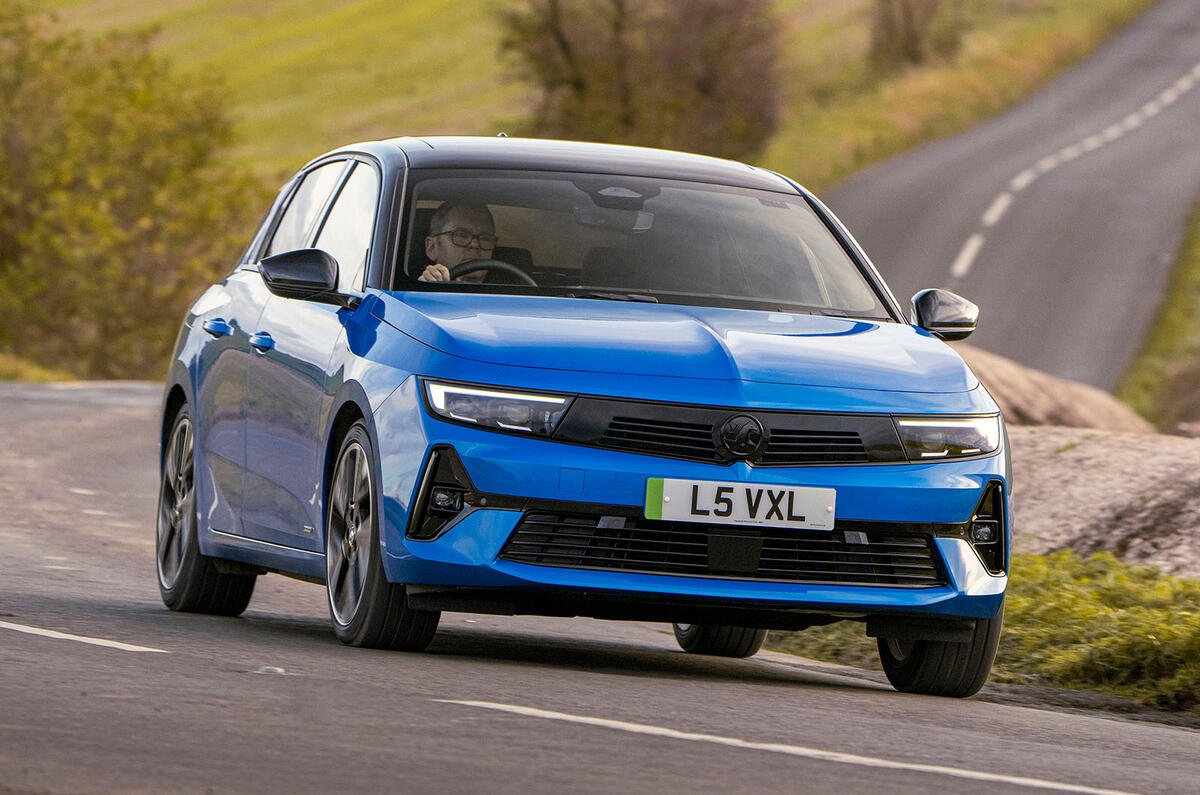
2026 Vauxhall Astra Electric Review: The Smart Sub-£30k EV Hatch
Sharper value, quieter cabin, and zero-cost estate make it hard to ignore.
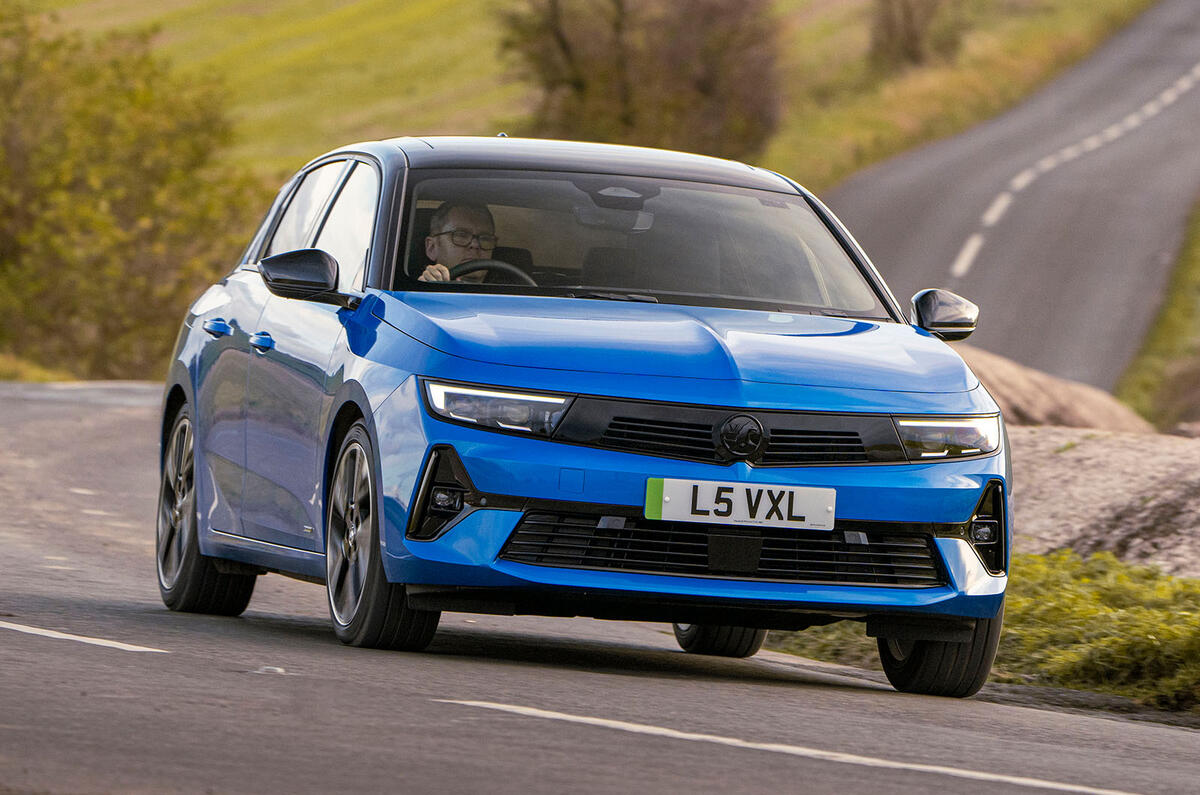
2026 Vauxhall Astra Electric in Clover Green — front three-quarter view
Price
£29,995
Battery
54 kWh
Power
154 hp
⚡ Quick Verdict
:
Vauxhall hasn’t gone overboard with the styling updates for 2026, but the substance underneath tells a different story. A £5,000 price cut, a bigger 54 kWh battery good for 281 miles of WLTP range, a standard heat pump, and new V2L capability have turned a middling EV into something genuinely compelling. It’s now the most affordable electric family hatch on sale in the UK, and the Sports Tourer estate costs the same as the hatchback — a huge win for families. It won’t set your pulse racing to drive, and the infotainment still lags behind the best, but as a value proposition it’s tough to argue against.
—
## Pricing and Trims: What the 2026 Astra Electric Costs
✓ The Good
- +£5,000 price cut brings entry cost under £30k — and the estate costs the same
- +WLTP range climbs to 281 miles; real-world efficiency of ~5 mi/kWh is excellent
- +Heat pump now standard across every trim, improving cold-weather range
- +First Astra with V2L (vehicle-to-load) capability
- +Sports Tourer estate at no extra cost is a genuine family car advantage
✗ The Trade-offs
- −Infotainment remains slow and clunky compared to rivals
- −Firm ride over potholed British roads
- −No one-pedal driving mode despite three regen levels
- −IntelliSeat coccyx cut-out is more marketing than comfort breakthrough
📑 In This Review
- Pricing and Trims: What the 2026 Astra Electric Costs
- Battery, Range and Real-World Efficiency
- Charging: 100 kW DC, V2L and Home Top-Ups
- On the Road: How It Drives
- Interior, Tech and Practicality
- 2026 Vauxhall Astra Electric vs Peugeot e-308: Which Is Better?
- How It Compares to the Wider Field
- Safety and Warranty
- Who Should Buy the 2026 Astra Electric?
- BUY IF:
- SKIP IF:
- Verdict
- Frequently Asked Questions
Vauxhall hasn’t gone overboard with the styling updates for 2026, but the substance underneath tells a different story. A £5,000 price cut, a bigger 54 kWh battery good for 281 miles of WLTP range, a standard heat pump, and new V2L capability have turned a middling EV into something genuinely compelling. It’s now the most affordable electric family hatch on sale in the UK, and the Sports Tourer estate costs the same as the hatchback — a huge win for families. It won’t set your pulse racing to drive, and the infotainment still lags behind the best, but as a value proposition it’s tough to argue against. —
Pricing and Trims: What the 2026 Astra Electric Costs
The biggest change to the 2026 Astra Electric isn’t the new bumper or the revised grille — it’s the sticker price. Vauxhall has cut £5,000 from the entry cost, bringing the range opener down to £29,995. Factor in the £1,500 UK Electric Car Grant (assuming Vauxhall’s pricing qualifies at time of purchase) and you’re looking at a sub-£29,000 electric family hatchback. That’s a serious statement from a brand that wants to own the sensible end of the EV market.
There are three trims. Griffin starts at £29,995, GS sits in the middle at £31,495, and Ultimate tops out at £33,995. Even in Ultimate spec, the Astra Electric undercuts plenty of rivals in their base configurations. The Griffin comes well-equipped for the money, too — 17-inch alloys, dual 10-inch screens, wireless CarPlay and Android Auto, and the full ADAS suite are all standard from the get-go.
Step up to GS and you get 18-inch alloys plus a handful of convenience and styling extras. Ultimate brings the headline IntelliLux pixel LED matrix headlights with over 50,000 individually controlled light elements, a powered tailgate, heated seats and steering wheel, and the IntelliSeat massage function. For most buyers, the GS at £31,495 is the sweet spot.
The smartest family-oriented decision Vauxhall has made, though, is pricing the Sports Tourer estate identically to the hatchback at every trim level. No premium for the extra boot space and more practical load bay. If you need that additional luggage capacity, the estate is effectively the default choice, and it gives the Astra Electric a unique edge in its class.
—
Battery, Range and Real-World Efficiency
Under the skin, the 2026 Astra Electric runs a new 54 kWh battery, up from the outgoing car’s 51 kWh unit. That modest bump translates to a claimed WLTP range of 281 miles — roughly a 10% improvement over the previous car’s 260-mile figure. At this price point, 281 miles is competitive, even if some crossover rivals now push past 300.
The official WLTP efficiency figure works out to just under 4 mi/kWh, which looks respectable on paper rather than exceptional. During our real-world testing, though, the Astra Electric consistently returned closer to 5 mi/kWh in mixed driving conditions — a figure the outgoing model was recognised for by Electrifying in its 2024 Efficiency Award. Drive predominantly in town and on A-roads rather than motorways, and you could realistically see 250 to 260 miles of usable range. That’s strong for a car of this size and price.
A critical change for UK buyers is that every 2026 Astra Electric now comes with a heat pump as standard, regardless of trim. Previously an option or reserved for higher trims, the heat pump cuts the range penalty in cold weather by using waste heat from the motor and battery to warm the cabin instead of relying solely on resistive heating. In British winters, where temperatures typically sit between 2°C and 8°C, this could easily mean the difference between 200 and 230 miles of real-world range — a meaningful improvement for daily commuters and school-run parents.
—
Charging: 100 kW DC, V2L and Home Top-Ups
DC fast charging tops out at 100 kW — adequate, if not class-leading. A 20-to-80% top-up takes roughly 32 minutes at a compatible rapid charger, so you’ll have time for a motorway services coffee, but don’t count on being back on the road in under 20 minutes. For the vast majority of Astra Electric owners who charge at home overnight, this won’t matter one bit, but it’s useful to know if you’re planning longer trips.
The 11 kW AC onboard charger means a full recharge from empty on a 7 kW wallbox takes around eight hours — spot-on for an overnight plug-in. If your daily commute sits within the 50 to 60 mile bracket, you’ll rarely need to visit a public rapid charger at all. The 281-mile WLTP range swallows that kind of mileage several times over.
New for 2026 is vehicle-to-load (V2L) capability, fitted to the Astra for the first time. It lets you draw power from the car’s battery to run external devices — camping gear, power tools on a job site, or even charging another EV in an emergency. A V2L adapter plugs into the Type 2 charging port and delivers up to 3.6 kW of external power. It’s a feature that used to be the preserve of pricier EVs, and it’s a welcome addition that broadens the Astra Electric’s utility.
—
On the Road: How It Drives
The powertrain carries over largely unchanged: a front-mounted electric motor producing 154 hp and 270 Nm of torque drives the front wheels through a single-speed transmission. The 0-62 mph sprint takes 9.3 seconds, which sounds modest on paper. In practice, though, the Astra Electric feels considerably nippier than that number suggests. The instant torque delivery and the car’s relatively light kerb weight mean pulling away from junctions, merging onto dual carriageways, and overtaking slower traffic all happen without fuss.
Vauxhall has reworked the steering for 2026, and the improvement is noticeable. The rack feels sharper and more directional, giving you more confidence through bends. Body roll has been dialled back too, so the Astra Electric feels more composed on twisty B-roads than its relaxed hatchback silhouette might suggest. In Sport mode, the steering weights up pleasingly and the throttle response sharpens. It’s the mode we found ourselves defaulting to on flowing country roads.
The trade-off is ride quality. The suspension is firm, and on potholed or poorly surfaced British roads — which, let’s be honest, is most of them — the Astra can feel unsettled. Sharp-edged ruts thud through the cabin in a way the softer-riding Renault Megane E-Tech doesn’t replicate. It’s not uncomfortable, but it lacks the pliancy family buyers tend to prioritise.
Regenerative braking is controlled via steering-wheel-mounted paddles across three intensity levels. Level 1 offers light coasting, Level 2 hits a sweet spot for everyday driving, and Level 3 delivers meaningful deceleration — ideal for urban stop-start traffic. There’s no B-mode button and no full one-pedal driving capability, though. The car won’t come to a complete stop on regen alone, which is a missed opportunity given that many rivals now offer it. The three drive modes — Eco, Normal and Sport — adjust throttle mapping and displayed range, with Eco gently nudging the predicted range upward on the dashboard.
One of the quieter improvements is the thicker glass now fitted to the Astra Electric. At 70-75 mph on the motorway, wind and road noise are impressively well-suppressed — noticeably quieter than the outgoing car. It makes the Astra Electric a relaxed long-distance cruiser, even if the motorway range means you’ll want to plan charging stops every 170-200 miles or so in real-world conditions.
—
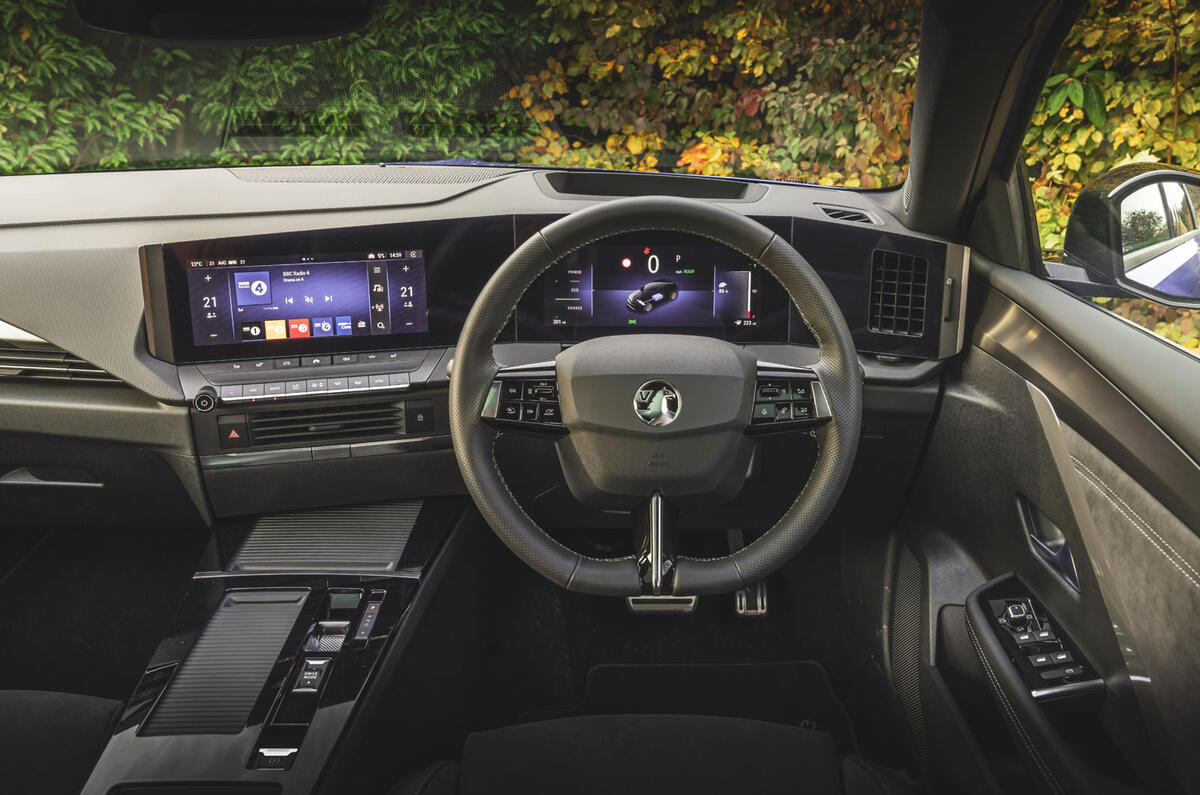
Interior, Tech and Practicality
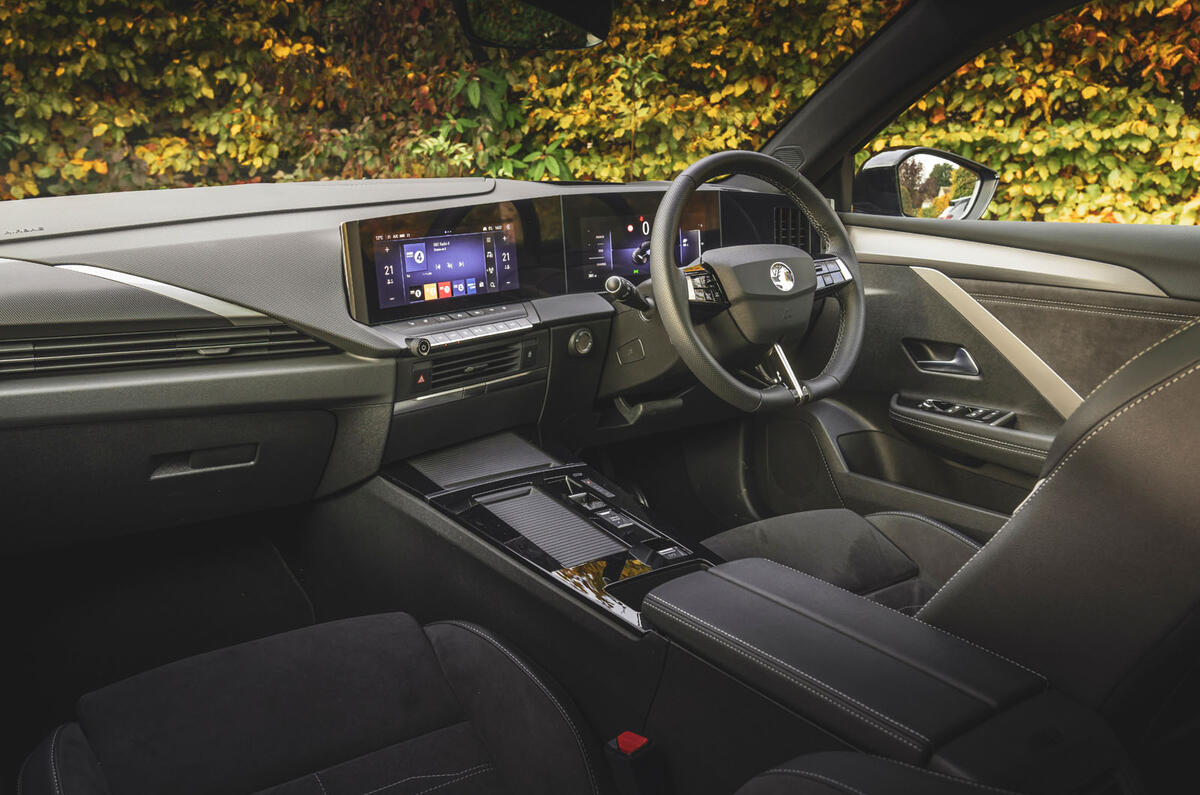
Climb inside the 2026 Astra Electric and the cabin is largely carried over from before, but a few welcome tweaks make it a more pleasant place to spend time. The dual 10-inch screens — one for instruments, one for infotainment — still angle slightly towards the driver in a cockpit-style layout. Crucially, Vauxhall has kept physical climate control buttons below the touchscreen, saving you from the frustration of prodding through sub-menus to adjust the temperature. In an era where some manufacturers have gone entirely to touch-sensitive controls, this is a sensible, family-friendly call.
The vegan leather steering wheel is new and feels pleasant in the hands. More importantly, the glossy piano-black plastic that used to cover the steering wheel spokes and centre console has been replaced with a matte grey finish that resists fingerprints. It’s a small change, but it makes the cabin feel tidier day-to-day. Door cards are a mix of soft-touch fabric and harder plastics — even on the Ultimate trim, which at £33,995 we’d have expected a more uniformly premium finish.
Wireless Apple CarPlay and Android Auto come as standard, alongside wireless phone charging, two USB-C ports and a 12V socket. The infotainment system, though, remains the Astra Electric’s weakest link. Navigation mapping is slow to load, swipe gestures are laggy, and the overall user interface feels a generation behind what Kia, Hyundai and even Volkswagen are offering. It functions, but it frustrates — and in a car you’ll use every day, that matters.
The IntelliSeat is a new addition. The centre of the driver’s seat cushion is carved out to relieve pressure on the coccyx, which Vauxhall says makes long drives more comfortable. In practice, the improvement is marginal — you’d notice it in a back-to-back comparison but probably not in daily use. Where the IntelliSeat does shine is when paired with the massage function (GS and Ultimate trims). The "cat paw" mode delivers a firm, kneading massage that eases tension on longer drives, and yes, the pulsing rhythm does sound faintly like a purring cat.
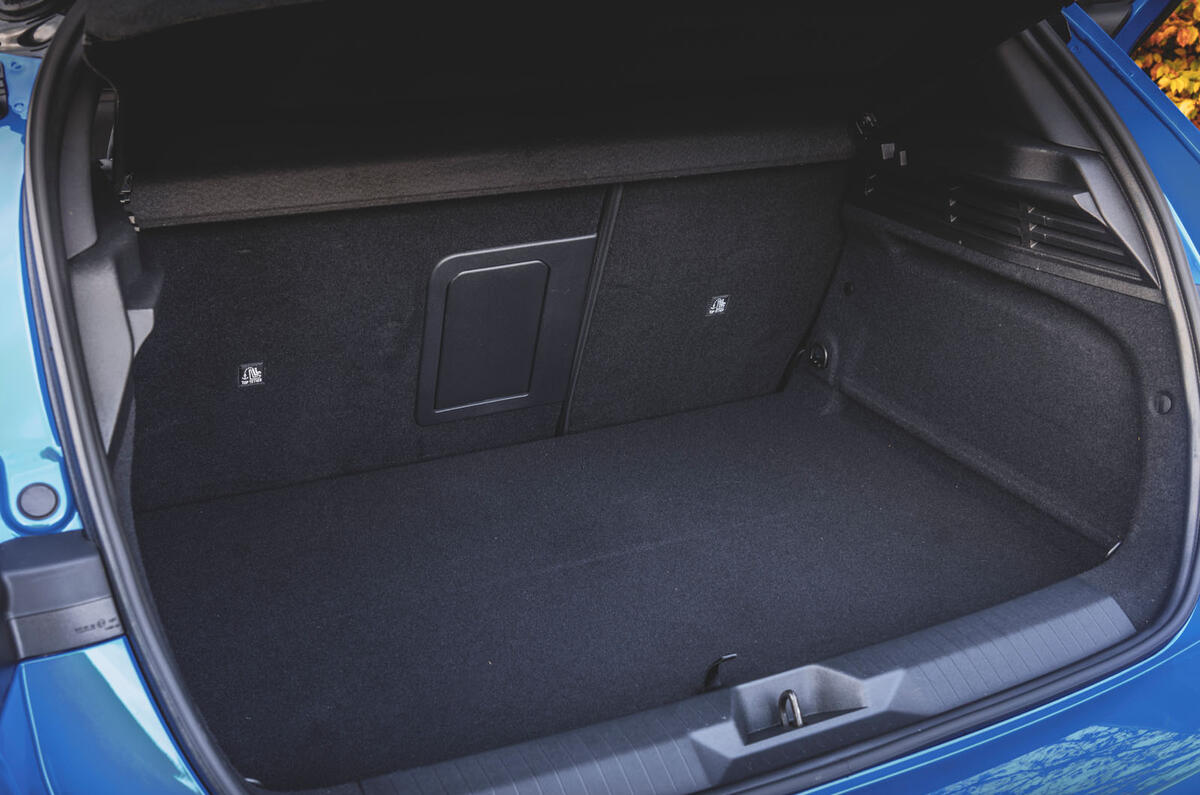
Boot space in the hatchback measures 352 litres — adequate for a weekly shop or a couple of suitcases, but not class-leading. The Sports Tourer estate opens up to 516 litres, which is a genuinely family-friendly figure and a strong reason to pick the estate over the hatchback — especially since it costs nothing extra.
—
2026 Vauxhall Astra Electric vs Peugeot e-308: Which Is Better?
The closest rival to the Astra Electric isn’t a Volkswagen or a Kia — it’s the Peugeot e-308. Both ride on the Stellantis EMP2/STLA Medium platform, share the same 54 kWh battery, and use a near-identical electric motor. In many respects, they’re the same car in different clothes. So which one should you pick?
On pricing, the Astra Electric pulls ahead straight away. At £29,995 in Griffin trim, it undercuts the e-308 by roughly £2,000 — and that gap widens to nearly £2,500 once you factor in the £1,500 government EV grant. For budget-conscious buyers and fleet operators, that’s a meaningful difference. The Astra also offers the Sports Tourer estate at zero additional cost, which Peugeot can’t match — the e-308 is hatchback-only in the UK.
Performance is virtually neck-and-neck. The Astra produces 154 hp and 270 Nm of torque; the e-308 makes 156 hp and 260 Nm. The 0-62 mph times differ by just two tenths — 9.3 seconds for the Astra, 9.5 for the Peugeot. In the real world, you’d never notice the difference. Both are front-wheel drive, both feel brisk enough around town, and both lack the outright punch of the Cupra Born or VW ID.3.
Where the Peugeot claws back ground is perceived cabin quality. The e-308’s i-Cockpit — with its compact steering wheel, raised instrument binnacle, and more cohesive use of materials — feels a touch more upmarket. The infotainment is also marginally quicker and more intuitive. That said, the i-Cockpit layout is divisive: some drivers love the small-wheel-over-dials arrangement, while others find it awkward to get comfortable. The Astra’s more conventional dashboard and steering wheel will suit the majority of buyers without any adjustment period.
Range is another area where the Astra edges ahead. With 281 miles of WLTP range versus the e-308’s 256 miles, the Vauxhall offers around 25 extra miles per charge. In real-world terms, that translates to roughly 15 to 20 miles more usable range — not transformative, but a welcome buffer, especially in winter. Both cars charge at 100 kW DC and 11 kW AC, and both now feature V2L capability.
On the road, the driving experience is remarkably similar — as you’d expect from platform-sharing siblings. The Astra’s steering felt slightly sharper to us, while the Peugeot’s ride was fractionally more composed on rough surfaces. Neither is a driver’s car in the traditional sense, but both are competent, quiet, and easy to live with. The Astra’s thicker glass gives it a slight edge in motorway refinement.
Resale value is harder to predict for the 2026 model year, but Peugeot’s brand perception in the UK has been trending upward, while Vauxhall’s historically strong fleet presence gives it a broad dealer and service network that benefits private and business buyers alike. For company car drivers, the Astra Electric’s lower BiK band (due to its lower list price) and Vauxhall’s fleet-friendly infrastructure are practical advantages.
<div style="background:linear-gradient(135deg,#f0f9ff,#e0f2fe); border-left:4px solid #2563eb; border-radius:12px; padding:24px 28px; margin:32px 0"> <p style="font-size:12px; font-weight:800; letter-spacing:0.14em; text-transform:uppercase; color:#1e40af; margin:0 0 10px">Which one is better?</p> <p><strong>Buy the Astra Electric if</strong> you want simpler ergonomics, a conventional steering wheel, an estate option at no extra cost, and a friendlier dealer network for fleet buyers.</p> <p><strong>Buy the Peugeot e-308 if</strong> you prefer the i-Cockpit’s small-wheel-over-dials layout, want a slightly more upmarket cabin feel, and don’t mind paying a small premium.</p> <p><strong>Our pick</strong> is the Astra Electric — at £29,995 it undercuts the e-308 on price, the Sports Tourer estate adds zero cost, and the cabin is more conventional for the family hatch buyer.</p> </div>
| Spec | 2026 Vauxhall Astra Electric | 2026 Peugeot e-308 |
|---|---|---|
| Starting price | £29,995 | ~£32,000 |
| Battery | 54 kWh | 54 kWh |
| Power | 154 hp | 156 hp |
| Torque | 270 Nm | 260 Nm |
| WLTP range | 281 miles | 256 miles |
| 0-62 mph | 9.3 s | 9.5 s |
| DC fast charging | 100 kW | 100 kW |
| Boot (hatch) | 352 L | 361 L |
| Estate boot | 516 L | 548 L |
—
How It Compares to the Wider Field
Step outside the Stellantis family and the competition gets fiercer. The Cupra Born, built on Volkswagen Group’s bespoke MEB EV platform, is sharper to drive, punchier at 201 hp in 58 kWh guise, and offers a more engaging experience on a twisting road. It starts at roughly £36,475, though — over £6,000 more than the Astra Electric — and doesn’t offer an estate variant. If you prioritise driving pleasure over value, the Born remains the benchmark in this class, but you’ll pay a significant premium for it.
The Kia EV3 is arguably the most threatening newcomer. With up to 375 miles of WLTP range from its 81.4 kWh Long Range battery, a genuinely premium interior, and Autocar’s 2025 Best Electric Car award already in its trophy cabinet, it sets a high bar. Prices start at around £36,005, though, which puts it in a different financial bracket. The refreshed VW ID.3 continues to improve its proposition with prices from roughly £37,000 and 266 miles of range, while the Renault Megane E-Tech remains a stylish alternative with a comfortable ride — though its 220-mile range is starting to look dated.
Against this field, the Astra Electric’s strongest card is its price. At £29,995, it sits in a gap few rivals occupy — a proper electric family hatchback from an established brand, with a real-world range that comfortably exceeds 200 miles, for under thirty thousand quid. Add the estate option at no cost, and the value proposition only gets stronger.
| Model | Starting price | WLTP range | Power | 0-62 mph |
|---|---|---|---|---|
| 2026 Vauxhall Astra Electric | £29,995 | 281 mi | 154 hp | 9.3 s |
| 2026 Peugeot e-308 | ~£32,000 | 256 mi | 156 hp | 9.5 s |
| Cupra Born (58 kWh) | ~£36,475 | 264 mi | 201 hp | 7.3 s |
| Kia EV3 (81.4 kWh Long Range) | ~£36,005 | 375 mi | 201 hp | 7.5 s |
| VW ID.3 Pro | ~£37,000 | 266 mi | 201 hp | 7.4 s |
—
Safety and Warranty
The Astra Electric sits on a platform that Euro NCAP tested back in 2022, earning a four-star safety rating. Occupant protection scored well, but pedestrian safety and some of the driver-assistance systems were weaker areas. The 2026 car comes with a standard ADAS suite that includes autonomous emergency braking (AEB), lane departure warning with steering assist, adaptive cruise control, traffic sign recognition, and forward collision alert. For most everyday driving scenarios, the safety kit is perfectly adequate.
The Ultimate trim adds Vauxhall’s IntelliLux pixel LED matrix headlights with over 50,000 individually controlled light elements. These automatically adjust the beam pattern to illuminate the road ahead without dazzling oncoming traffic, and Vauxhall claims they let drivers spot objects 30 to 40 metres earlier at 50 mph — roughly two extra seconds of reaction time. Ultimate also gains lane change assist with blind-spot monitoring and rear cross-traffic alert, which are genuinely useful for motorway driving and supermarket car parks.
Vauxhall’s warranty package is solid if unspectacular: three years or 60,000 miles of full vehicle coverage, with the battery separately warranted for eight years or 100,000 miles, guaranteed to retain at least 70% of its original capacity. That’s in line with the industry standard for EVs and should provide peace of mind for both private buyers and fleet operators planning to run the car for a typical three-to-four-year lease cycle.
—
Who Should Buy the 2026 Astra Electric?
BUY IF:
– You want the most affordable electric family hatchback from an established brand — at £29,995, it’s hard to argue against – You need estate-car practicality without the estate-car price premium — the Sports Tourer costs the same as the hatch – You value real-world efficiency — 5 mi/kWh in everyday driving keeps running costs low – You prefer a conventional, fuss-free cabin with physical climate controls and no quirky steering wheel ergonomics
SKIP IF:
– You demand a responsive, modern infotainment system — the Astra’s is slow and clunky – You want one-pedal driving — the Astra Electric doesn’t offer it, even on the strongest regen setting – You prioritise ride comfort on rough roads — the firm suspension gets unsettled on Britain’s potholed surfaces
—
⚡ Our Verdict
Sharper value, quieter cabin, and zero-cost estate make it hard to ignore.
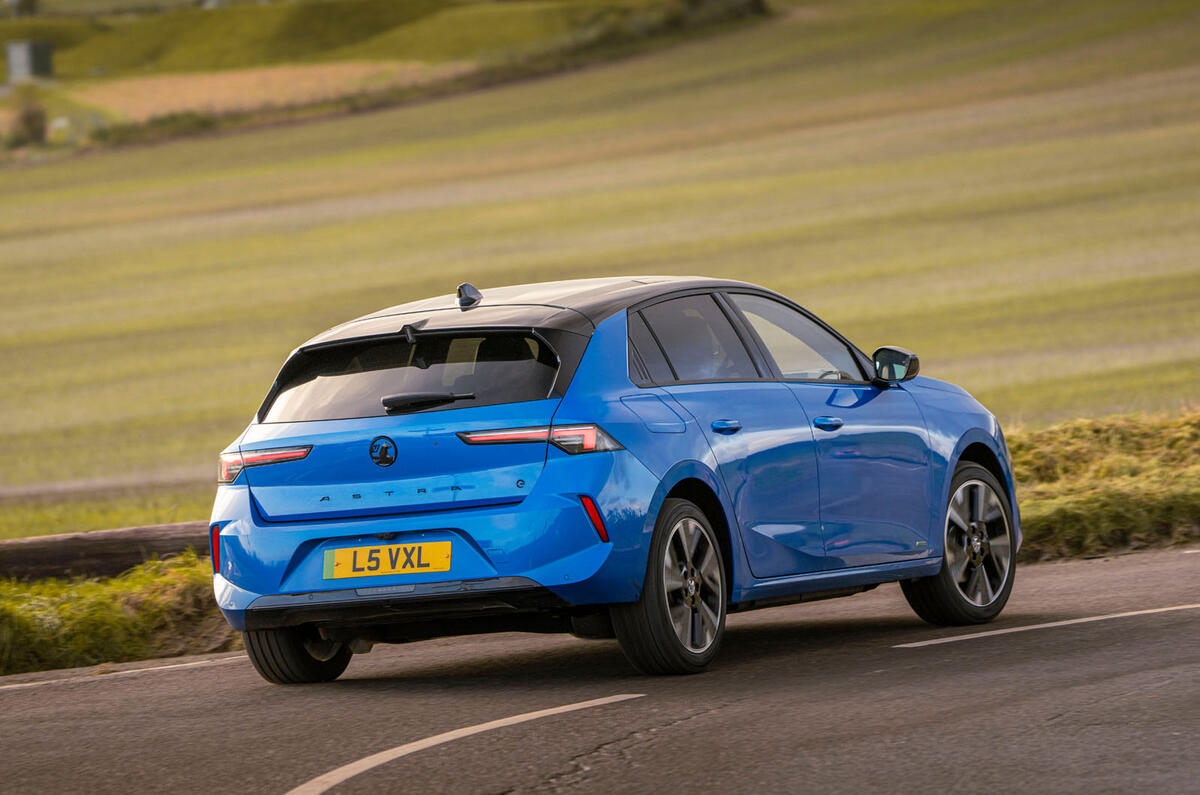
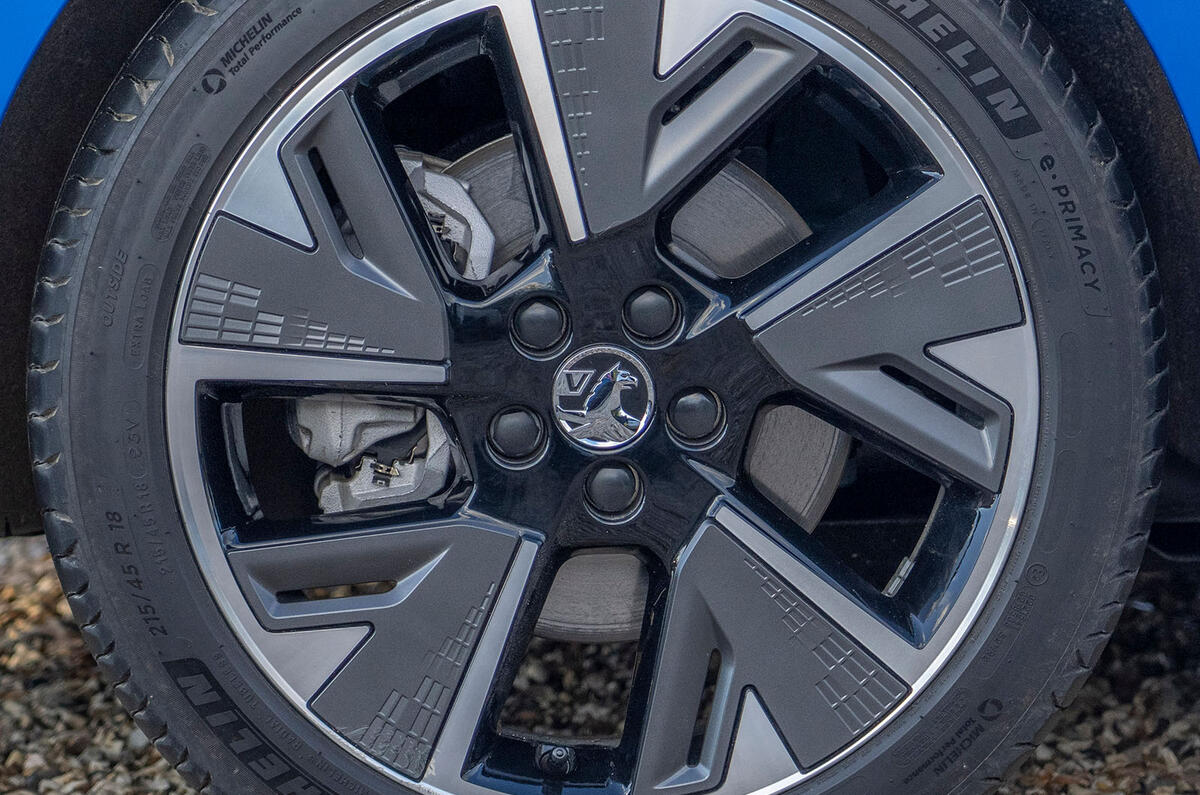
The 2026 Vauxhall Astra Electric isn’t a dramatic reinvention. Visually, the changes are subtle — a new illuminated badge, a light bar, some fresh alloy wheels, and reworked rear lights. Inside, it’s even more incremental. Park the 2025 and 2026 cars side by side and most casual observers would struggle to tell them apart. Look beyond the cosmetic updates, though, and the facelift reshapes the Astra Electric’s value equation. The £5,000 price cut is the single most significant change, bringing the entry point to £29,995 and making this the most affordable electric family hatch on the UK market from a mainstream manufacturer. The larger 54 kWh battery extends WLTP range to 281 miles. The standard heat pump means winter range is less of a worry. V2L charging adds genuine practicality. And the zero-cost Sports Tourer estate option gives families something no direct rival can match at this price point. Is it exciting? Not particularly. The infotainment needs a generation leap, the ride is too firm for broken British roads, and the lack of one-pedal driving feels like an oversight in 2026. But for the buyer who wants an electric family car that simply does the job — quietly, efficiently, and affordably — the Astra Electric now makes a stronger case than ever. It’s the most sensible electric hatch under £30,000, and sometimes sensible is exactly what you need. —
Frequently Asked Questions
What is the range of the 2026 Vauxhall Astra Electric?
The 2026 Astra Electric has a WLTP-rated range of 281 miles on a full charge, up from 260 miles on the outgoing model thanks to a larger 54 kWh battery. In our real-world testing, expect around 220-260 miles depending on your driving style and conditions, with the standard heat pump helping to maintain efficiency in cold weather.
How fast can the 2026 Astra Electric charge?
DC fast charging peaks at 100 kW, taking the battery from 20% to 80% in roughly 32 minutes at a compatible rapid charger. At home on an 11 kW AC wallbox, a full charge takes around eight hours.
How much does the 2026 Vauxhall Astra Electric cost in the UK?
Prices kick off at £29,995 for the Griffin trim, rising to £31,495 for GS and £33,995 for Ultimate. The Sports Tourer estate costs exactly the same as the hatchback at every trim level. Factor in the £1,500 UK Electric Car Grant and the effective starting price drops to £28,495.
Does the 2026 Astra Electric qualify for the UK Electric Car Grant?
Yes. The Astra Electric’s starting price of £29,995 sits within the eligibility threshold for the UK’s £1,500 Electric Car Grant, bringing the effective entry price down to £28,495.
Is the Astra Electric better than the Peugeot e-308?
Both cars share the same platform, battery, and near-identical motors, so the differences are marginal. The Astra is cheaper by roughly £2,000 to £2,500, offers 25 more miles of WLTP range (281 vs 256), and comes in an estate variant at no extra cost. The Peugeot counters with a slightly more upmarket cabin and the distinctive i-Cockpit layout. On balance, we’d pick the Astra for its value, range, and estate option.
What’s the warranty on the 2026 Astra Electric?
You get a three-year/60,000-mile full vehicle warranty. The battery is separately covered for eight years or 100,000 miles, guaranteed to retain at least 70% of its original capacity.
Does the Astra Electric have one-pedal driving?
No. The Astra Electric offers three regenerative braking levels via steering-wheel paddles, with the strongest setting providing meaningful deceleration. It won’t come to a complete stop on regen alone, though, and there’s no dedicated one-pedal driving mode.
