

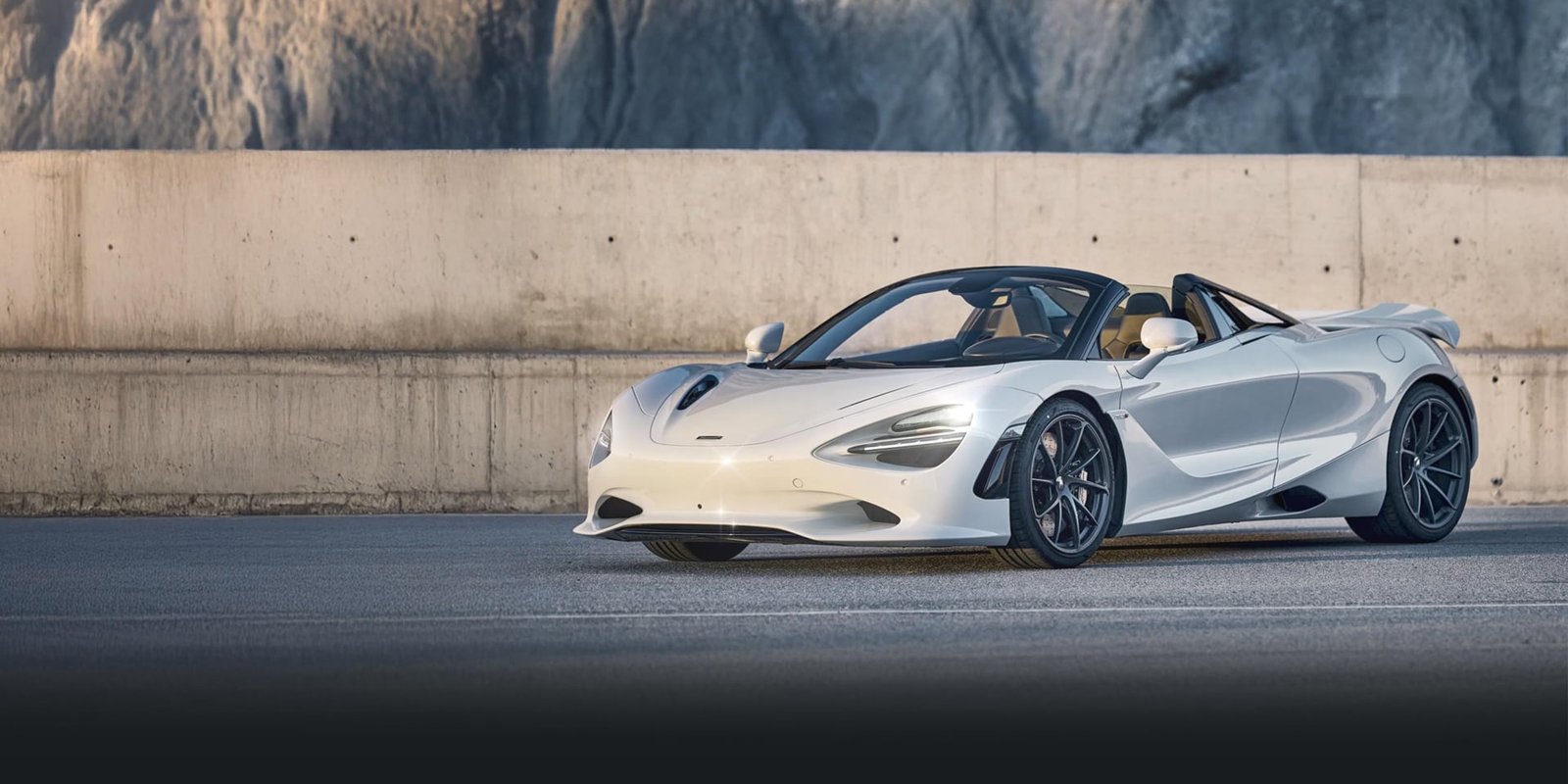
2026 McLaren 750S Spider Review — The Last Analogue Supercar Standing
An analogue-feeling supercar that defies the electric age
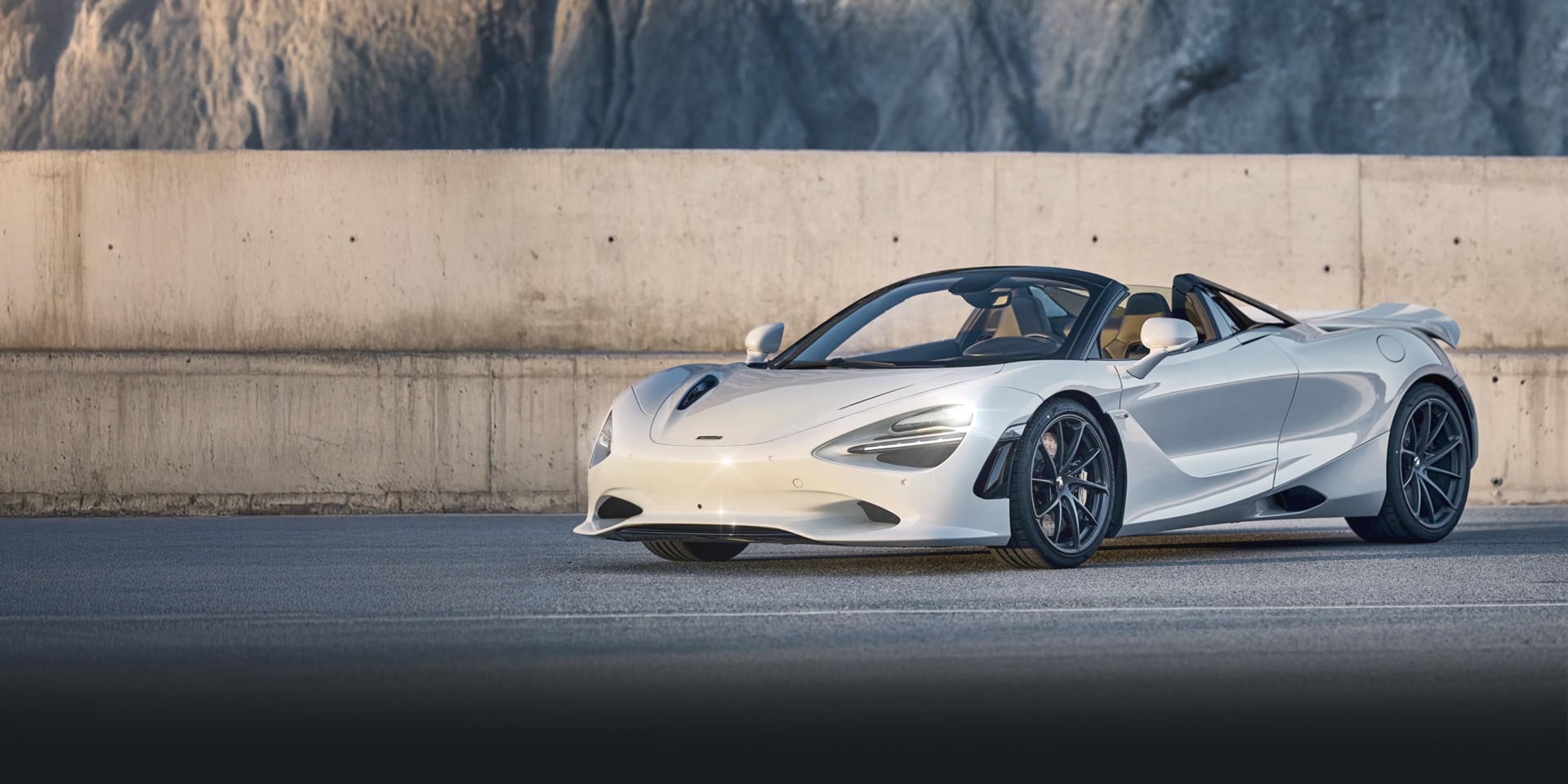
2026 McLaren 750S Spider in white with roof retracted on a mountain road
Price
$386,700
Power
740 hp
⚡ Quick Verdict
: The 2026 McLaren 750S Spider is a love letter to combustion — a mid-engine, rear-drive, twin-turbo V8 convertible that trades hybrid complexity for mechanical purity and delivers one of the most involving driving experiences money can buy. It is, quite possibly, the last great analogue supercar.
—
## Introduction
✓ The Good
- +Extraordinarily communicative steering with telepathic front-end feedback
- +Hydraulic Proactive Chassis Control III delivers flat, composed handling without anti-roll bars
- +Remarkably compliant ride quality that borders on luxury-car comfort over rough roads
- +Pure 740 hp twin-turbo V8 with no hybrid complexity or added mass
- +Retractable hard top transforms the car in 11 seconds without compromising structural rigidity
✗ The Trade-offs
- −No active driver-assist suite — no AEB, no lane-keep, no adaptive cruise control
- −Open differential means traction management relies entirely on electronics and driver skill
- −Touchscreen infotainment feels a generation behind rivals from Ferrari and Porsche
- −At $386,700 before options, the price is steep relative to the more powerful hybrid competition
📑 In This Review
: The 2026 McLaren 750S Spider is a love letter to combustion — a mid-engine, rear-drive, twin-turbo V8 convertible that trades hybrid complexity for mechanical purity and delivers one of the most involving driving experiences money can buy. It is, quite possibly, the last great analogue supercar. —
Introduction
The McLaren 750S Spider arrives at a crossroads for the supercar world. Ferrari has committed to hybrid powertrains across its range, Lamborghini’s Temerario pairs its V8 with electric motors, and even Porsche is flirting with electrification in its next-generation sports cars. Against this backdrop, the 750S stands apart: it is an unapologetically combustion-only, rear-wheel-drive, mid-engine drop-top that asks the simple question — what if we just made the car better, without making it more complicated?
The answer, as we discovered during our time with the car, is deeply satisfying. The 750S Spider is not an all-new platform. It is, by McLaren’s own admission, an evolution of the 720S — the car that *evo* once called "the best supercar on sale." But as Porsche has proved across nine generations of the 911, small incremental improvements can compound into something genuinely transformative. A retuned suspension, a shorter final drive, more power, more downforce, and a simplified interior conspire to create a car that feels both familiar and meaningfully improved.
Priced from $386,700 in the United States (plus $5,500 destination), the 750S Spider slots between the more accessible Artura and McLaren’s limited-production hypercars. It competes directly with the Ferrari 296 GTS, the Lamborghini Temerario Spyder, and a handful of other six-figure convertibles. But its true competition may be time itself — with emissions regulations tightening globally, the window for cars like this is closing fast.
This, then, is not just a review of a supercar. It is a consideration of what we stand to lose.
—
Design and Exterior
The 750S Spider’s silhouette will be familiar to anyone who’s spent time with the 720S, and that’s entirely by design. The teardrop-shaped cabin, the sculpted haunches, and the aggressive front splitter all carry over, but McLaren has sharpened every surface. The active rear wing is larger than the 720S unit, generating additional downforce at speed. It deploys dynamically under braking to aid stability — a theatrical flourish that doubles as functional engineering.
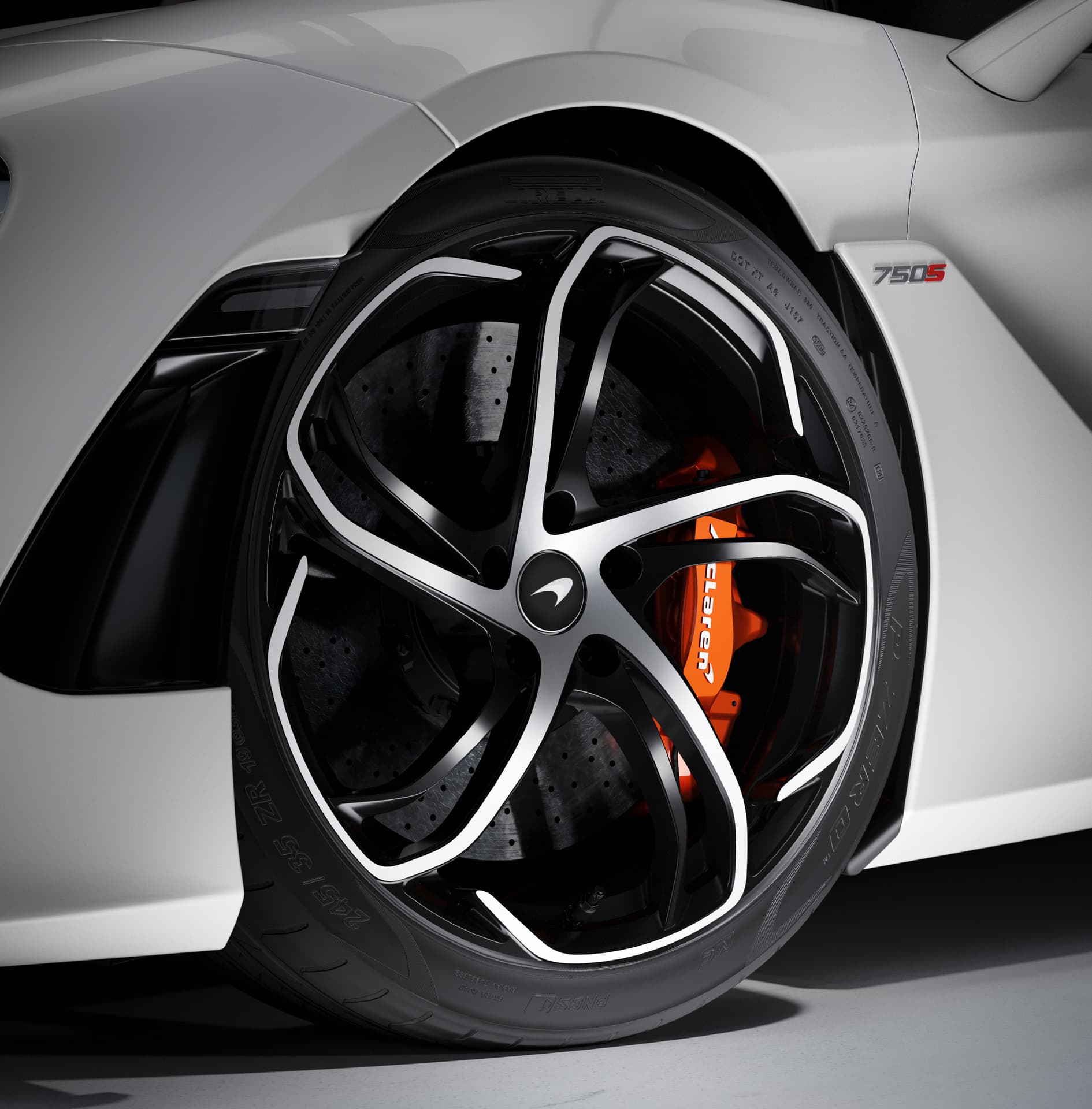
The dihedral doors remain the car’s signature party trick. Open them and the Carbon Monocage II-S monocoque is visible at the sill, a structural exoskeleton of woven carbon fibre that forms the car’s spine. In our test car, finished in McLaren Orange — a vivid, gloss Papaya hue distinct from the metallic Papaya Spark option — the effect is arresting. The matched orange brake calipers sit behind lightweight forged wheels, tying the colour palette together neatly.
The Spider’s retractable hard top (RHT) is the defining feature that separates it from the Coupé. It opens or closes in 11 seconds at speeds up to 50 km/h (approximately 31 mph), folding neatly into the rear deck. With the roof stowed, the car’s profile transforms. The glass flying buttresses — structural elements either side of the engine bay that are, unusually, transparent — give the driver a clear rearward sightline that most mid-engine cars simply can’t match. It’s a design detail that serves both aesthetics and practicality.
With the roof raised, the 750S Spider looks nearly identical to the Coupé. The folding mechanism adds approximately 49 kg (108 lb), but at a kerb weight of roughly 1,438 kg dry, the Spider remains one of the lightest cars in its competitive set. In an era where hybrid supercars routinely crest 1,500 kg, that figure matters.
—
Performance and Powertrain
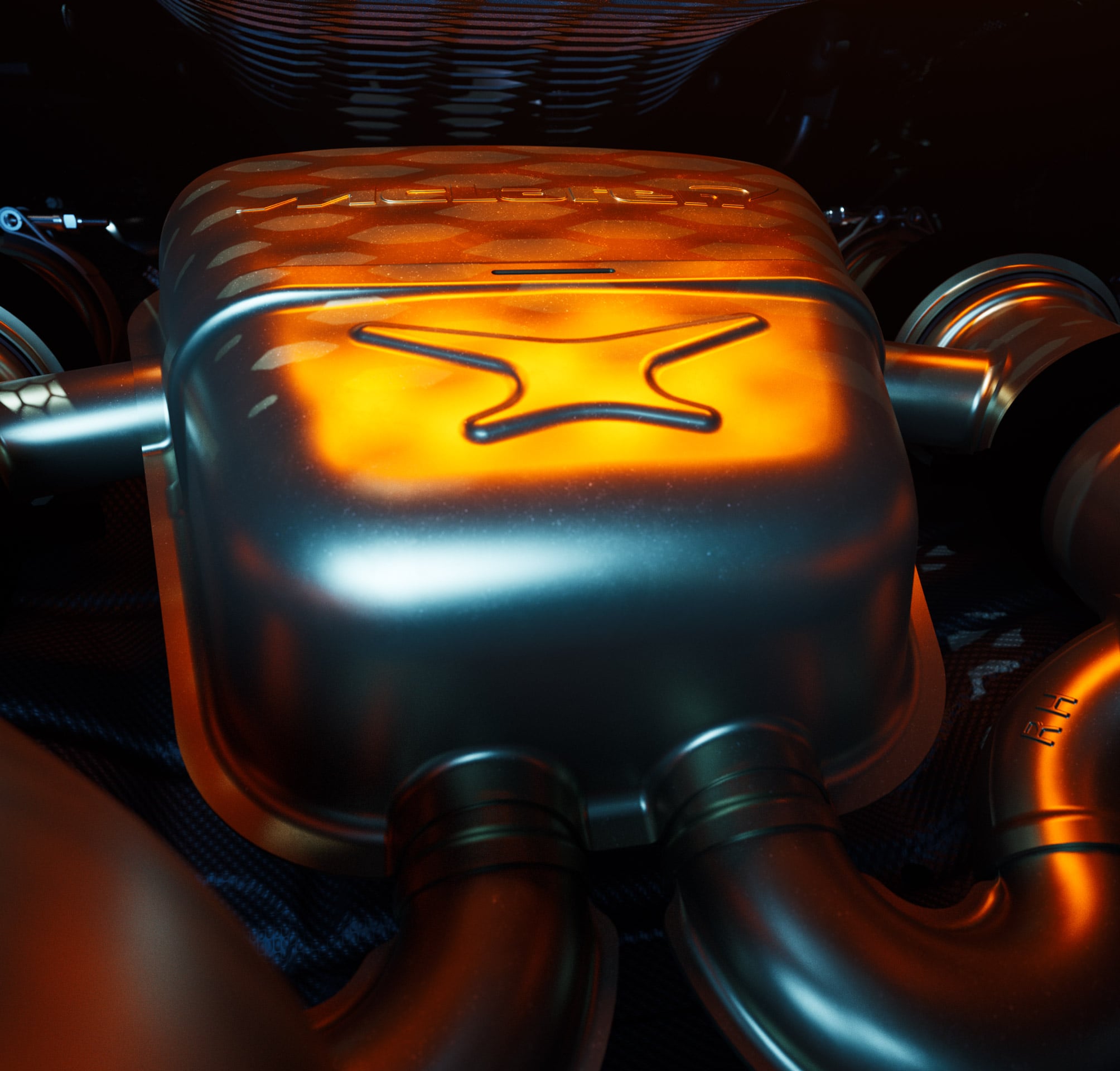
At the heart of the 750S Spider sits a 4.0-litre twin-turbocharged flat-plane crank V8 producing 740 hp and 590 lb-ft of torque. The engine’s lineage is a piece of motorsport trivia worth knowing: the M840T architecture was originally derived from the Nissan VRH35 race V8, a design McLaren licensed and subsequently evolved through the MP4-12C, 650S, 720S, and now the 750S. The twin-scroll turbochargers have been tuned for faster spool, and the result is a power delivery that feels both immediate and relentlessly linear.
Drive is sent to the rear wheels through a seven-speed SSG dual-clutch gearbox. There’s no limited-slip differential — an open diff sits at the rear axle, with traction managed electronically through the stability control system. It’s a deliberate engineering choice: McLaren has long argued that a well-calibrated open diff, paired with a sophisticated chassis, delivers a more natural and communicative driving experience. In practice, the results are remarkable — though it does mean the driver’s right foot must remain honest.
A 15 per cent shorter final drive ratio versus the 720S means the 750S revs slightly higher in each gear, trading a fraction of cruising refinement for sharper in-gear acceleration. The performance figures speak for themselves: 0–62 mph (100 km/h) takes 2.8 seconds, 0–124 mph (200 km/h) arrives in 7.3 seconds, and top speed is 206 mph (332 km/h). These numbers place the 750S Spider within a whisker of the Ferrari 296 GTS, despite the McLaren being 100 kg lighter and carrying no hybrid hardware.
—
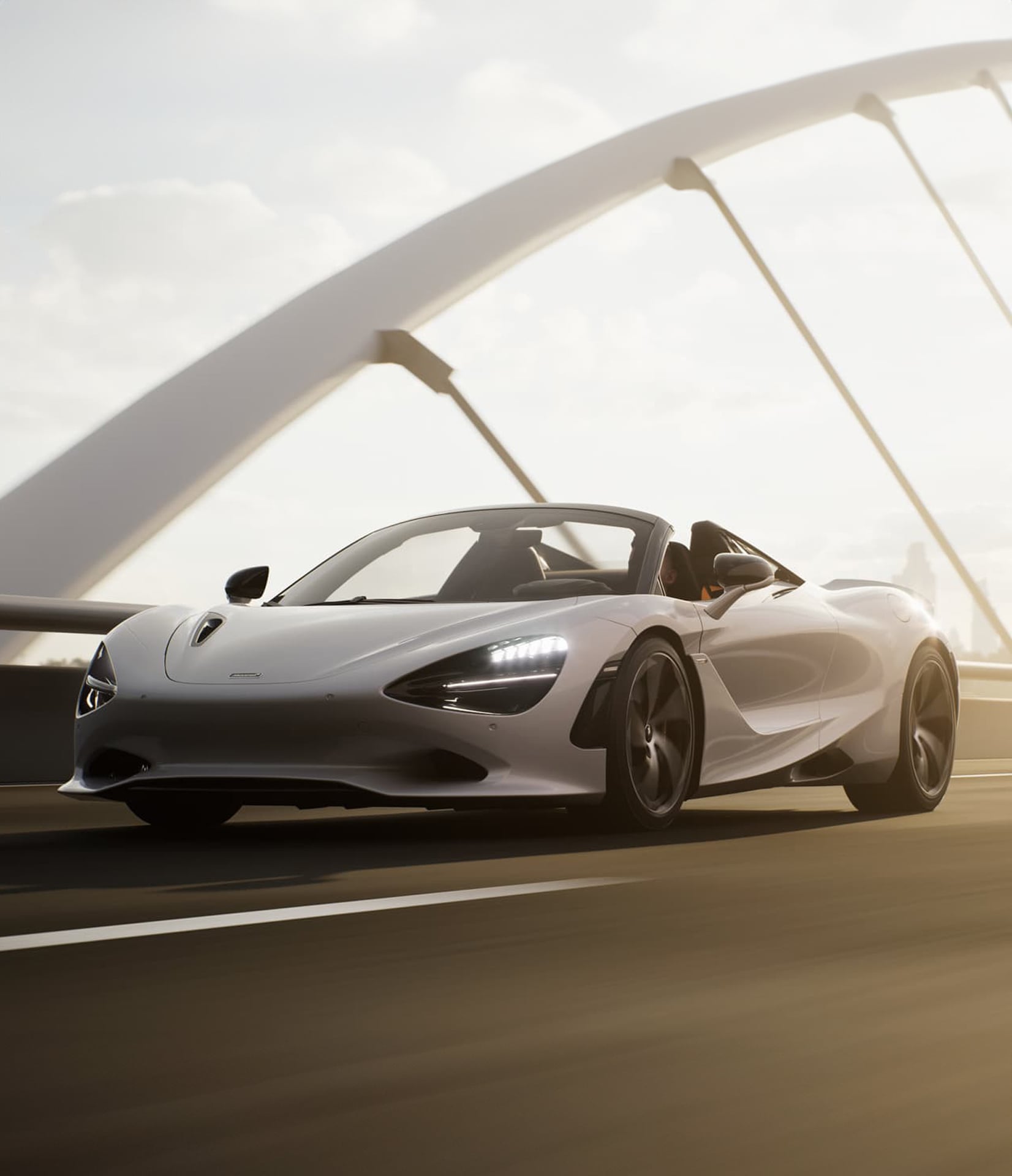
On the Road: Driving Impressions
This is where the 750S Spider reveals its character, and it’s a character that rewards attention.
The first thing you notice is the steering. McLaren’s hydraulic power-assisted rack has been recalibrated with a faster ratio than the 720S, and the result is a level of communication that borders on extraordinary. Every texture, every camber change, every micro-adjustment in surface grip feeds directly through the rim to your fingertips. During our drive, the steering never felt nervous or over-assisted — it simply felt honest. We’ve driven very few modern supercars that translate front-end grip this faithfully.
The Proactive Chassis Control III system is the engineering centrepiece. It replaces conventional anti-roll bars with a network of hydraulically interconnected dampers that can stiffen or soften individual corners in real time. The effect is a car that stays phenomenally flat through high-speed sweepers — we measured over 1.1 g of lateral grip on the stock Michelin Pilot Sport 4S tyres (245/35 R19 front, 305/30 R20 rear) — while simultaneously absorbing potholes and broken tarmac with a suppleness that defies its mission statement. On one particularly dreadful stretch of urban road, the 750S Spider rode with a composure we’d more readily associate with a Bentley Continental GT. In comfort mode, it’s genuinely daily-drivable.
The brakes deserve special mention. Carbon-ceramic discs are standard, and the pedal requires real effort — a deliberate McLaren trait that discourages lazy inputs. The initial bite is progressive rather than aggressive, with enough travel to allow modulation. It takes a few minutes to recalibrate your expectations, but once you do, the braking feel is deeply satisfying.
Throttle response in Sport and Track modes is ferocious. The flat-plane V8 builds revs with a mechanical urgency that turbocharged engines rarely achieve, and each upshift from the SSG gearbox arrives with a percussive jolt that announces the next ratio like a punctuation mark. There’s occasional wheelspin in the lower gears — the open diff doesn’t mask it — but the car never feels unruly. It informs you, clearly and without drama, that you’re approaching the limits of available traction. That transparency is the 750S Spider’s defining quality.
—
Interior and Technology
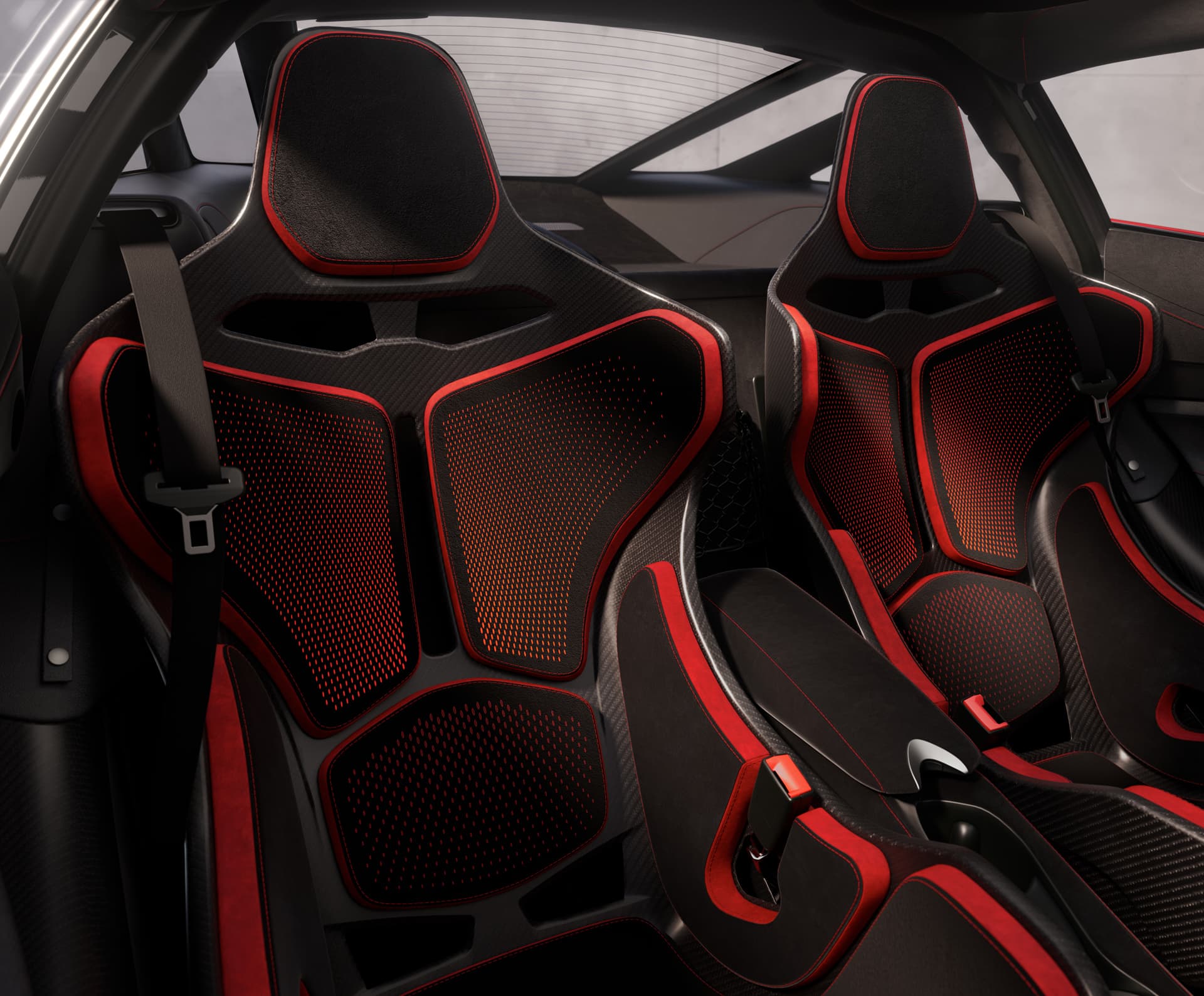
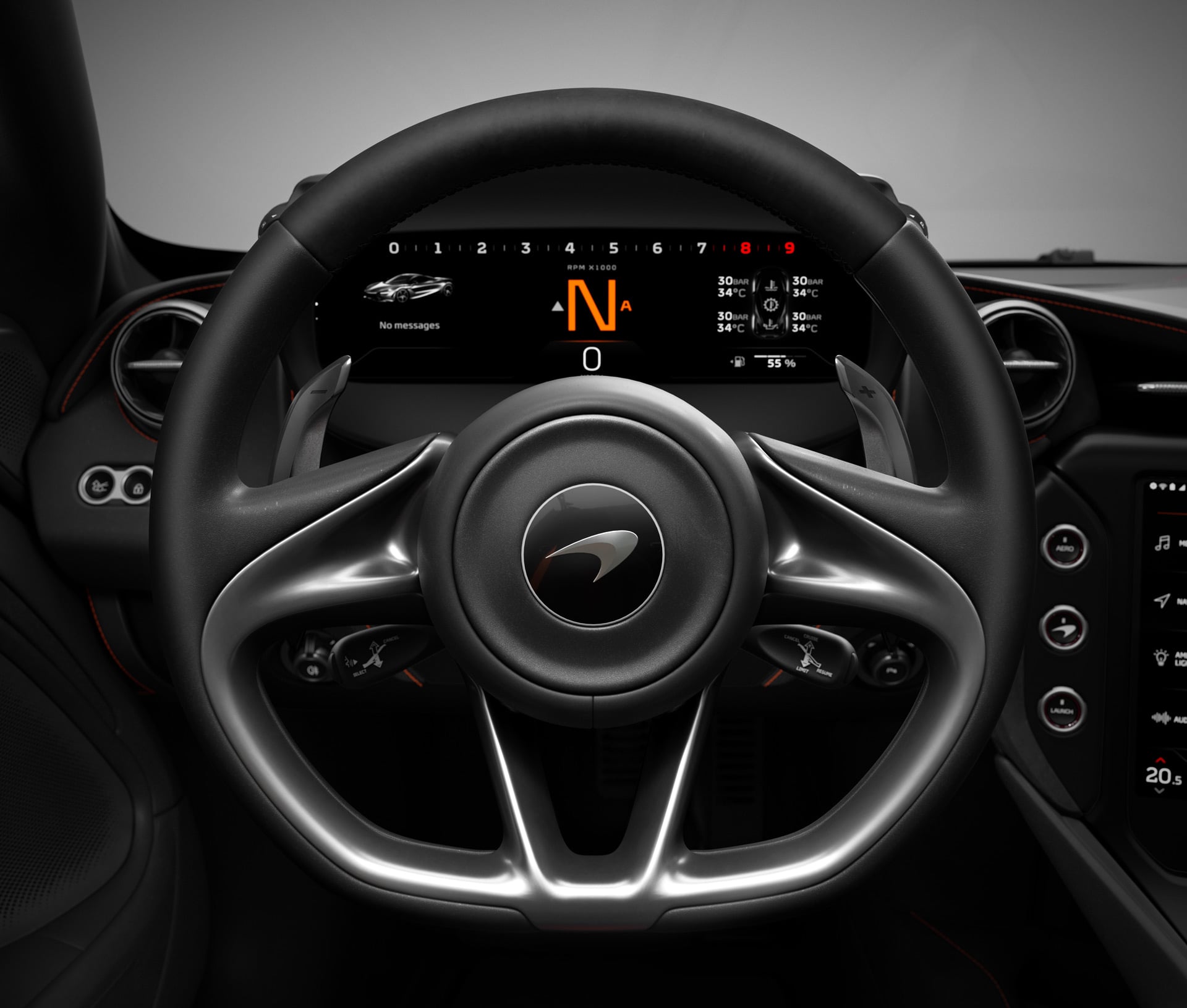
The cabin is a study in purposeful minimalism. The flat-bottomed steering wheel is free of buttons — no drive-mode switches, no infotainment toggles, just a perfectly shaped rim and a McLaren Orange start button at its centre. The paddle shifters are a "rocker" design, connected through the back of the steering wheel: push forward on one side to upshift, pull back on the other to downshift, or use either action from either paddle. It’s intuitive once learned and allows one-handed shifting, though we wouldn’t recommend it.
An 8-inch portrait-oriented touchscreen handles infotainment duties, with Apple CarPlay included. The interface is functional rather than fashionable — it lags behind Ferrari’s more polished system and Porsche’s more responsive unit. A simplified static digital gauge cluster replaces the 720S’s clever but mechanically complex rotating display, and we consider that a sensible trade. Bowers & Wilkins audio is available as an option and delivers the kind of sound quality that makes top-down motorway cruising a genuine pleasure.
Storage space totals 7.3 cubic feet: 5.3 in the front trunk and 58 litres on the engine shelf behind the cabin. It’s enough for a weekend bag and not much more, which is par for the course in this class. The dihedral doors, despite their dramatic appearance, make ingress and egress surprisingly straightforward once you learn the technique.
—
Safety and Warranty
McLaren backs the 750S Spider with a three-year, unlimited-mileage warranty — a reassuring commitment given the car’s performance envelope. The Carbon Monocage II-S monocoque provides exceptional structural rigidity, even in Spider configuration, and standard safety equipment includes front and side airbags, stability and traction control, and front and rear parking sensors with a rear-view camera.
What is absent, however, is notable. There’s no autonomous emergency braking, no lane-keeping assist, no adaptive cruise control, and no active driver-assist suite of any kind. In a $386,700 car, that’s a conspicuous omission — even if the target buyer is unlikely to miss it, the regulatory landscape is shifting, and competitors from Porsche and Ferrari offer at least some active safety features. McLaren has chosen to prioritise weight savings and mechanical simplicity. It’s a defensible philosophy, but buyers should understand what they are — and are not — getting.
—
Rivals at a Glance
| Spec | McLaren 750S Spider | Ferrari 296 GTS | Lamborghini Temerario Spyder | Porsche 911 Turbo S Cab | Aston Martin Vantage Roadster |
|---|---|---|---|---|---|
| Price (USD) | $386,700 | ~$370,000 | ~$400,000 | ~$248,000 | ~$200,000 |
| Engine | 4.0L TT V8 | 3.0L TT V6 PHEV | 4.0L TT V8 hybrid | 3.7L TT flat-6 | 4.0L TT V8 |
| Power | 740 hp | 819 hp combined | 907 hp combined | 640 hp | 656 hp |
| 0-62 mph | 2.8 s | 2.9 s | ~2.7 s | 2.6 s | 3.4 s |
| Top speed | 206 mph | 205+ mph | 211 mph | 205 mph | 195 mph |
| Drive | RWD | RWD | AWD | AWD | RWD |
| Weight | ~1,438 kg | ~1,540 kg | ~1,560 kg | ~1,710 kg | ~1,665 kg |
Ferrari 296 GTS
Closest direct rival — more peak power and badge prestige, but 100 kg heavier with hybrid complexity.
Lamborghini Temerario Spyder
More power and AWD traction, but heavier and pricier than the McLaren.
Porsche 911 Turbo S Cab
Quicker 0-60 thanks to AWD; less exotic, far more usable, ~$140k cheaper.
Aston Martin Vantage Roadster
Cheaper GT-supercar alternative — softer focus, classic V8 character.
The 750S Spider occupies a fiercely competitive segment. Here’s how it stacks up against the key players: McLaren 750S Spider Lamborghini Temerario Spyder Aston Martin Vantage Roadster ——— $386,700 ~$400,000 ~$200,000 Engine 3.0L TT V6 PHEV 3.7L TT flat-6 740 hp 907 hp combined 656 hp 0-62 mph 2.9 s 2.6 s 206 mph 211 mph 195 mph Drive RWD AWD ~1,438 kg ~1,560 kg ~1,665 kg | The Porsche 911 Turbo S Cabriolet offers astonishing value and all-weather capability but lacks the mid-engine drama. The Aston Martin Vantage Roadster is beautiful and characterful but outgunned on every performance metric. The Lamborghini Temerario Spyder is the most powerful and the most expensive, but it too relies on hybridisation. The Ferrari 296 GTS is the closest rival by price, philosophy, and mission — and it deserves its own head-to-head. —
McLaren 750S Spider vs Ferrari 296 GTS: Which Is Better?
This is the question every prospective buyer in this segment will ask, and it deserves a thorough answer.
The Ferrari 296 GTS is a brilliant machine. Its 3.0-litre twin-turbo V6, paired with an electric motor, produces a combined 819 hp — 79 more than the McLaren — and it wraps that power in one of the most beautiful bodies Ferrari has produced in a decade. It’s also roughly $16,700 cheaper at base specification. On paper, it looks like the smarter buy.
In practice, the differences are more nuanced. The 296 GTS is a hybrid, and that means battery weight. At approximately 1,540 kg kerb, it carries around 100 kg more mass than the 750S Spider. That weight isn’t felt in straight-line acceleration — the 296’s 2.9-second 0–62 time is only 0.1 seconds slower — but in the way the car changes direction. The Ferrari is fast, composed, and deeply capable, but the McLaren feels lighter on its feet. There’s a directness to the 750S’s steering and a willingness in its chassis that the 296, for all its excellence, can’t quite match.
Engine character is where the two diverge most sharply. The McLaren’s flat-plane V8 delivers a raw, mechanical snarl that builds through the rev range with genuine urgency. It sounds like a racing engine that happens to be road-legal. The Ferrari’s V6, even with its electric augmentation, has a different personality — it’s smoother, more refined, and in some ways more sophisticated, but it lacks the visceral edge the McLaren offers. Some will prefer the Ferrari’s polish; enthusiasts who prize mechanical honesty will lean toward the Woking car.
The interiors reflect different philosophies. Ferrari has invested heavily in touchscreen integration and digital cockpit design — the 296 GTS’s cabin feels modern, luxurious, and tech-forward. McLaren’s approach is spartan by comparison: the 8-inch touchscreen is adequate but not class-leading, and the button-free steering wheel will feel either refreshingly simple or frustratingly barren depending on your priorities. The Bowers & Wilkins audio option helps close the gap, but Ferrari’s cabin ambience is a step ahead.
Daily usability is surprisingly close. Both cars ride well for their performance envelope — the McLaren’s hydraulic suspension gives it an edge on rough roads — and both offer the open-air experience of a retractable hard top that operates in a comparable timeframe. The Ferrari’s front trunk is slightly more accommodating, but neither car is designed for Costco runs.
On sound, the McLaren wins. The flat-plane V8’s vocal range — from a baritone burble at idle to a howling crescendo near the redline — is simply more theatrical than the Ferrari’s V6 hybrid. With the rear window retracted and the roof stowed, the 750S Spider delivers an acoustic experience that justifies the purchase price alone.
| Spec | McLaren 750S Spider | Ferrari 296 GTS |
|---|---|---|
| Price (USD, base) | $386,700 | ~$370,000 |
| Engine | 4.0L twin-turbo V8 | 3.0L twin-turbo V6 PHEV |
| Combined power | 740 hp | 819 hp |
| Torque | 590 lb-ft | 546 lb-ft |
| 0-62 mph | 2.8 s | 2.9 s |
| Top speed | 206 mph | 205+ mph |
| Weight (kerb) | ~1,438 kg | ~1,540 kg |
| Drive | RWD | RWD |
| Roof | Retractable hard top | Retractable hard top |
> **Which one is better?** > > **Buy the McLaren 750S Spider if** you want a pure, analogue-feeling, mid-engine V8 supercar — driver-focused steering, no hybrid mass, mechanical purity, exceptional visibility. > > **Buy the Ferrari 296 GTS if** you want the badge prestige, hybrid drivetrain efficiency, slightly more outright power, and the brand-cachet that still moves the needle at the country club. > > **Our pick** is the McLaren 750S Spider — its lighter weight, sharper steering, and combustion-only V8 make it the more involving driver’s car, and the price gap is small enough that purity wins.
—
Who Should Buy the 2026 McLaren 750S Spider?
The ideal 750S Spider buyer is an enthusiast who values feel over figures. This isn’t the car for the buyer who cross-shops by spreadsheet — on raw horsepower alone, the Ferrari 296 GTS and Lamborghini Temerario both offer more. But for the driver who cares about how a steering wheel communicates, how a chassis breathes over a challenging road, and how a flat-plane V8 sounds at 8,000 rpm with the roof stowed, the McLaren has no peer.
This buyer is likely a collector — someone who already owns (or has owned) a Porsche 911, perhaps an older McLaren, and who understands that the era of the pure-combustion supercar is ending. The 750S Spider is a car to be driven, savoured, and eventually preserved as a marker of what the internal combustion engine could achieve in its final, most refined iteration. At $386,700 before options, it isn’t inexpensive, but it represents genuine value within the context of its competitive set.
It’s also a car for someone who wants to use their supercar. The compliant ride, the usable visibility through the glass buttresses, the surprisingly practical (by mid-engine standards) storage, and the approachable handling make it a machine that can be driven to dinner on a Tuesday without drama. That duality — part weapon, part gentleman’s express — is rare, and it’s what makes the 750S Spider special.
—
⚡ Our Verdict
An analogue-feeling supercar that defies the electric age
The 2026 McLaren 750S Spider isn’t the fastest supercar you can buy. It isn’t the most powerful, the most technologically advanced, or the most visually outrageous. What it is, though, is one of the most complete driving experiences available at any price — a car that combines a 740-hp twin-turbo V8 with a carbon-fibre monocoque, hydraulic suspension wizardry, and a retractable hard top, all at a kerb weight that undercuts its hybrid rivals by a hundred kilograms or more. McLaren has taken the already excellent 720S and refined it in every dimension that matters to the driver. The steering is sharper, the chassis is more composed, the power delivery is more immediate, and the ride quality is better. The result is a car that flatters the novice, rewards the expert, and never, at any point, feels like it’s working against you. It’s a supercar that trusts its driver, and that trust is returned in kind. In an age where electrification is redefining what a performance car can be, the 750S Spider is a reminder of what performance cars once were — and, at their best, still can be. —
Frequently Asked Questions
How much does the 2026 McLaren 750S Spider cost?
The 2026 McLaren 750S Spider starts at $386,700 in the United States, with an additional $5,500 destination charge. Options and personalisation through McLaren Special Operations (MSO) can push the final price well beyond $450,000.
How fast is the McLaren 750S Spider?
The 750S Spider accelerates from 0–62 mph in 2.8 seconds, reaches 0–124 mph in 7.3 seconds, and has a top speed of 206 mph (332 km/h).
Is the 750S Spider faster than the Ferrari 296 GTS?
It’s marginally quicker off the line — 2.8 seconds to 62 mph versus the Ferrari’s 2.9 seconds — and the two cars are essentially tied on top speed. The Ferrari produces more combined horsepower (819 hp vs 740 hp), but the McLaren is approximately 100 kg lighter, which largely cancels out the power deficit.
Does the McLaren 750S Spider have a hybrid system?
No. The 750S Spider is powered exclusively by a 4.0-litre twin-turbocharged flat-plane V8 with no electric motor, no battery pack, and no hybrid assist. It’s one of the last supercars in its class to offer a purely combustion-driven powertrain.
How long does the 750S Spider’s retractable roof take to open?
The retractable hard top (RHT) opens or closes in 11 seconds at speeds of up to 50 km/h (approximately 31 mph).
Is the McLaren 750S Spider a good daily driver?
Surprisingly, yes. The Proactive Chassis Control III hydraulic suspension delivers a ride quality that absorbs rough roads with composure bordering on luxury-car comfort. Visibility through the glass flying buttresses is excellent for a mid-engine car, and while cargo space is limited (7.3 cubic feet total), it’s sufficient for weekend trips.
What’s the warranty on the 2026 McLaren 750S Spider?
McLaren provides a three-year, unlimited-mileage warranty on the 750S Spider.
