

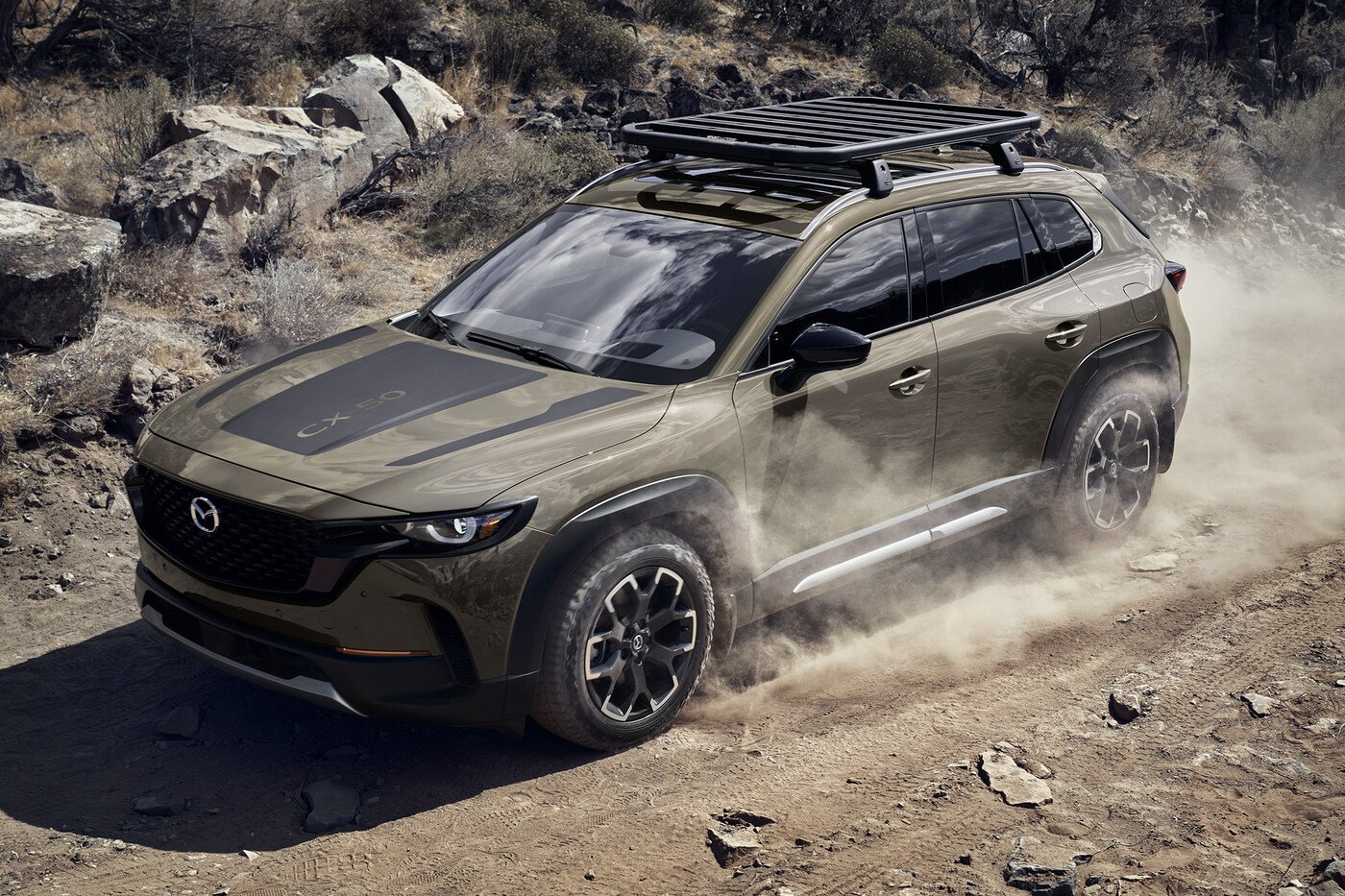
2026 Mazda CX-50 Hybrid Review: The Driver’s Compact Hybrid SUV
A sharp-driving compact hybrid SUV held back by Mazda’s aging infotainment.
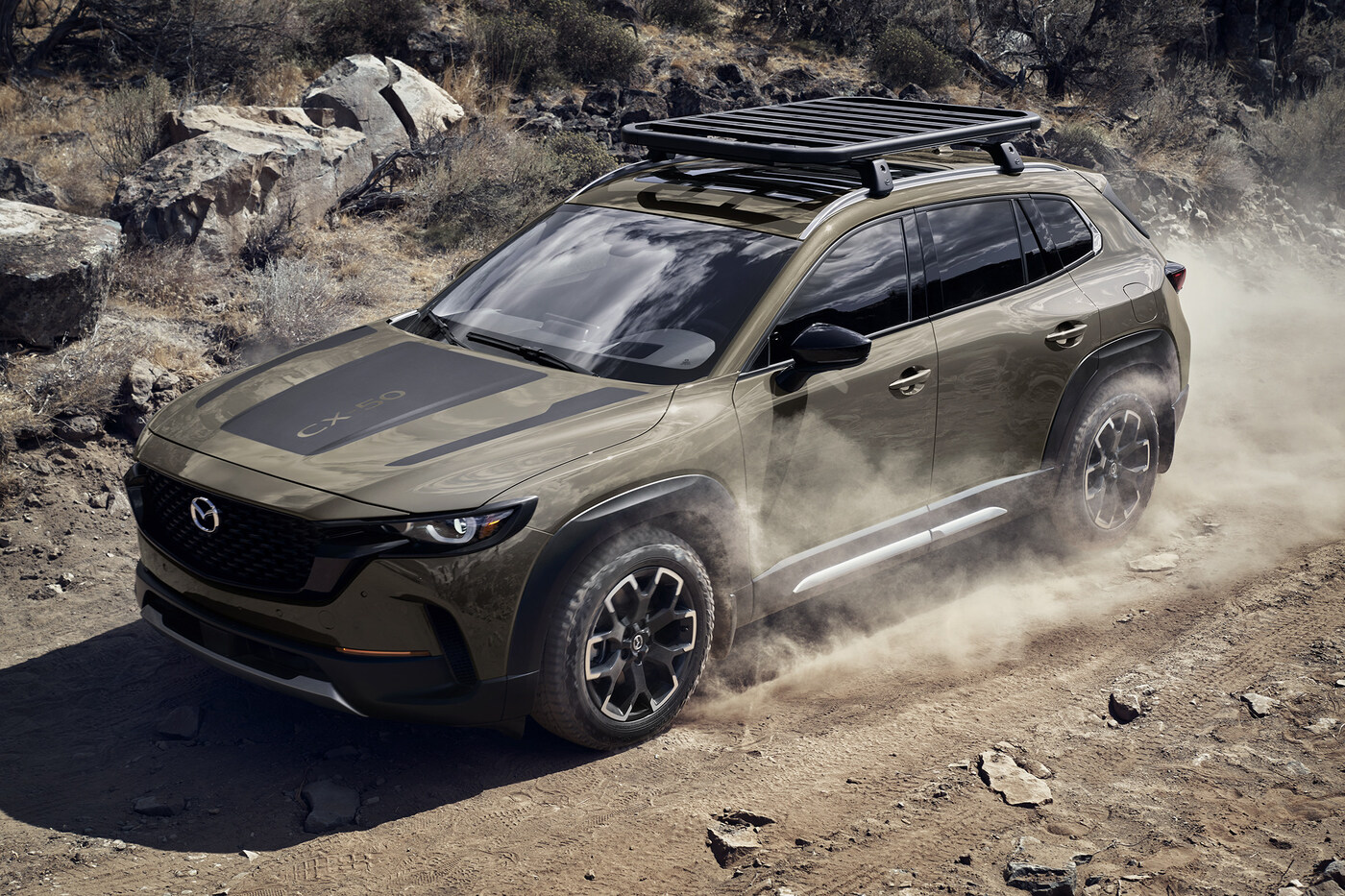
2026 Mazda CX-50 Hybrid exterior
Price
$34,750
Hybrid Battery Warranty
8 yr / 100k mi
⚡ Quick Verdict
Mazda’s taken Toyota’s proven planetary torque-split hybrid system — the same basic architecture powering millions of Camrys, RAV4s, and Priuses around the world — and dropped it into the CX-50. The outcome is a compact SUV that delivers an EPA-rated 38 MPG combined without giving up the sharp steering, sorted chassis, and genuinely premium cabin that Mazda owners have come to expect. It’s not the roomiest, most fuel-efficient, or most tech-forward option in the class. But it’s the one you’ll actually look forward to driving every single morning.
## Pricing and Trims at a Glance
✓ The Good
- +Toyota hybrid powertrain is proven, refined, and delivers 38 MPG combined
- +Signature Mazda steering feel — genuinely fun to drive around corners
- +Upscale interior with premium materials that rivals can’t match
- +AWD standard via rear electric motor with no fuel-economy penalty
- +Built in the USA at a joint Mazda-Toyota facility
✗ The Trade-offs
- −Infotainment system relies on a rotary puck controller — feels a generation behind
- −Cargo space trails every major rival at 56.3 cu ft folded
- −At 4,000 lb curb weight, it’s heavier than most compact hybrid SUVs
- −No wireless charging pad on lower trims; hybrid battery warranty shorter than Toyota’s
📑 In This Review
- Pricing and Trims at a Glance
- Powertrain and Hybrid System
- What It Is Like to Drive
- Fuel Economy in the Real World
- Interior, Tech and Comfort
- 2026 Mazda CX-50 Hybrid vs Toyota RAV4 Hybrid: Which Is Better?
- How It Compares to Other Hybrid Rivals
- Safety, Warranty and Long-Term Ownership
- Who Should Buy the 2026 Mazda CX-50 Hybrid
- Buy or Skip
- The Verdict
- Frequently Asked Questions
Mazda’s taken Toyota’s proven planetary torque-split hybrid system — the same basic architecture powering millions of Camrys, RAV4s, and Priuses around the world — and dropped it into the CX-50. The outcome is a compact SUV that delivers an EPA-rated 38 MPG combined without giving up the sharp steering, sorted chassis, and genuinely premium cabin that Mazda owners have come to expect. It’s not the roomiest, most fuel-efficient, or most tech-forward option in the class. But it’s the one you’ll actually look forward to driving every single morning.
Pricing and Trims at a Glance
| Spec | 2026 Mazda CX-50 Hybrid | 2026 Toyota RAV4 Hybrid |
|---|---|---|
| Starting MSRP | $34,750 | ~$33,000 |
| Combined HP | 219 hp | 225 hp |
| Torque | 163 lb-ft | 163 lb-ft |
| Drivetrain | AWD standard | AWD standard |
| EPA Combined MPG | 38 | 39 |
| Cargo (folded) | 56.3 cu ft | ~69 cu ft |
| Ground Clearance | 8.1 in | 8.1 in |
| Towing | 1,500 lb | 1,750 lb |
| Hybrid Battery Warranty | 8 yr / 100k mi | 10 yr / 150k mi |
Toyota RAV4 Hybrid
Same powertrain, more cargo, 1 MPG better — but a far less premium cabin.
Honda CR-V Hybrid
Class-leading cargo and efficiency, but lacks the CX-50’s driving polish.
Hyundai Tucson Hybrid
Most power and the slickest tech, though dynamics lean firmly comfort-biased.
The 2026 CX-50 Hybrid comes in three trim levels, all with standard all-wheel drive. The entry point is the Hybrid Preferred at $34,750 (plus $1,495 destination), which gets you heated front seats, wireless Apple CarPlay and Android Auto, a power liftgate, LED headlights, and Mazda’s full i-Activsense safety suite. It’s a generously equipped base model that genuinely doesn’t feel stripped back. The Hybrid Premium at $38,150 adds a Bose audio system with a subwoofer, leather-trimmed seats, a power-adjustable passenger chair, larger alloy wheels, and enough niceties to push the CX-50 into near-luxury territory. For most buyers, this trim hits the sweet spot. Top of the tree is the Hybrid Premium Plus at $40,150. That’s where our test car sat, and it justifies the spend with maroon red leather featuring black accents, ventilated front seats, heated rear seats, a panoramic moonroof with an opening front section, 19-inch alloys, and a head-up display. Add destination and you’re looking at roughly $41,645 before any options or dealer markups. For reference, a comparably loaded RAV4 Hybrid lands in a similar price bracket — but the CX-50’s cabin operates on a different level entirely.
Powertrain and Hybrid System
Under the bonnet sits a 2.5-litre naturally aspirated four-cylinder paired with Toyota’s well-established planetary torque-split hybrid arrangement. Up front, an electronically controlled continuously variable transmission (eCVT) links the petrol engine with two electric motors, while a separate 54-hp motor drives the rear axle for standard all-wheel drive. Total system output comes to 219 hp and 163 lb-ft of torque. It’s no powerhouse — we’ll cover that shortly — but it’s perfectly adequate for the job.
The battery is a 1.59 kWh nickel-metal-hydride pack tucked beneath the rear seat, so it doesn’t eat into cargo space or cabin room. This is the same fundamental Toyota hybrid hardware that’s been refined over decades in the Camry, RAV4, Highlander, and Prius. The hand-off between petrol and electric power is smooth, almost imperceptible at low speeds, and well-judged for highway merging and overtaking.
Licensing Toyota’s hybrid architecture rather than engineering one from scratch is arguably the smartest call Mazda made with this vehicle. Toyota has spent more than 25 years perfecting its hybrid system, and that maturity shows in the refinement, reliability, and real-world efficiency of the CX-50 Hybrid. Mazda gets to skip years of development headaches while delivering a powertrain owners can genuinely trust. The CX-50 Hybrid rolls off the Mazda Toyota Manufacturing (MTM) joint line in Huntsville, Alabama — the same plant that builds Toyota SUVs — so the integration of the hybrid hardware was about as smooth as these things get.
Towing capacity sits at 1,500 lb, which is fine for a small trailer or a couple of jet skis but falls short of the RAV4 Hybrid’s 1,750 lb rating. If towing matters to you, the Toyota has a slight edge.
What It Is Like to Drive
This is where the CX-50 Hybrid sets itself apart from every other compact hybrid SUV on the market. Straight away, we were struck by how well-sorted the Toyota hybrid system feels in this application. The swap between electric and petrol power is buttery smooth, and the eCVT goes about its business without the droning rubber-band feel that older CVTs were known for. The sprint to 60 mph takes an estimated 7.6 seconds — brisk it isn’t, and you do notice the roughly 4,000-lb kerb weight under hard acceleration — but the power delivery is linear and reassuring in everyday driving.
What genuinely separates the CX-50 from its rivals, though, is the chassis. Mazda has always put driving engagement front and centre, and this hybrid carries that philosophy proudly. The steering is light yet communicative, with a precision that sits a cut above what the competition manages. Turn-in is sharp, body roll is tightly controlled, and the whole package feels more like a jacked-up hatchback than a conventional compact SUV. We threw it through a series of back-road bends during our time with it, and the CX-50 felt composed and eager — something we honestly can’t say about most of its competitors. The RAV4 Hybrid, CR-V Hybrid, and Tucson Hybrid all lean toward comfort; the CX-50 leans toward the driver.
Ride quality doesn’t suffer for that sporting bent, either. The suspension takes potholes, speed humps, and rough tarmac in its stride with a solidity that feels more expensive than the price tag suggests. The cabin stays quiet at highway speeds, with minimal wind and road noise making its way in. Ground clearance is rated at 8.1 inches (206 mm), which is competitive for the class and enough for light trail work or snow-covered driveways. The driving position is notably car-like — you sit down into the CX-50 rather than perching on top of it — which adds to that sporty, connected feel behind the wheel.
Fuel Economy in the Real World
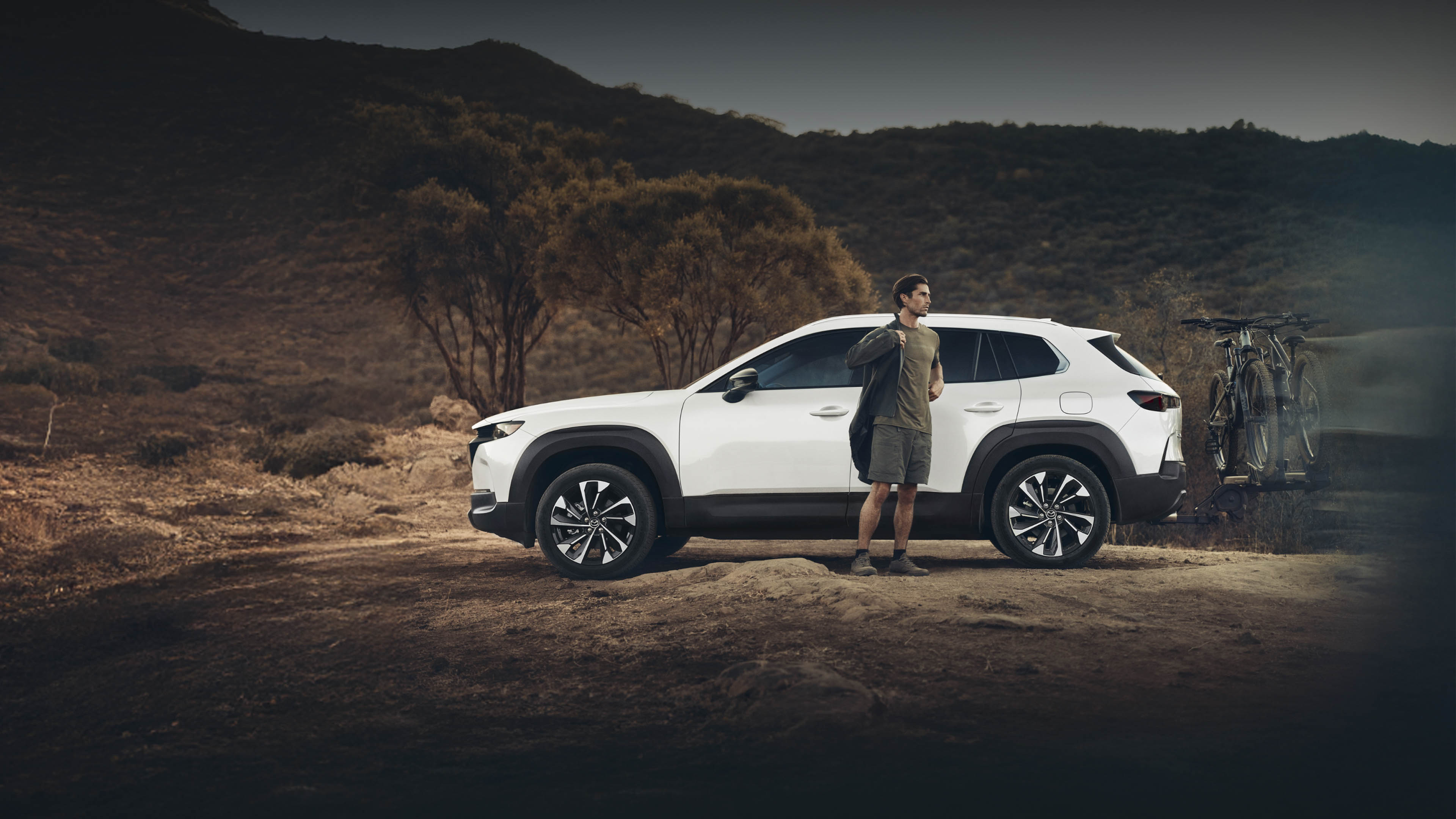
The EPA rates the 2026 CX-50 Hybrid at 39 MPG city, 37 MPG highway, and 38 MPG combined. Those figures are solid for a standard-AWD compact SUV weighing 4,000 lb. Over our week of testing during warm weather with the air-conditioning working hard, we saw approximately 36 MPG in mixed driving — a touch below the official figure but perfectly reasonable given the conditions. With milder weather and a gentler right foot, owners should have no trouble matching or beating the EPA numbers.
For context, the outgoing non-hybrid CX-50 with the 2.5-litre turbo engine returns roughly 25 MPG combined, while the base naturally aspirated model manages around 28 MPG combined. That jump to 38 MPG is a gain of 10-plus MPGs, which translates to genuine savings at the bowser. Over 15,000 miles of annual driving at $3.50 per gallon, a CX-50 Hybrid owner would save roughly $600–$800 a year compared to the turbo model. Factor in the hybrid’s lower base price versus the turbo, and the maths speaks for itself. The RAV4 Hybrid edges ahead by a single MPG combined (39 versus 38), but in practice that difference is negligible.
Interior, Tech and Comfort
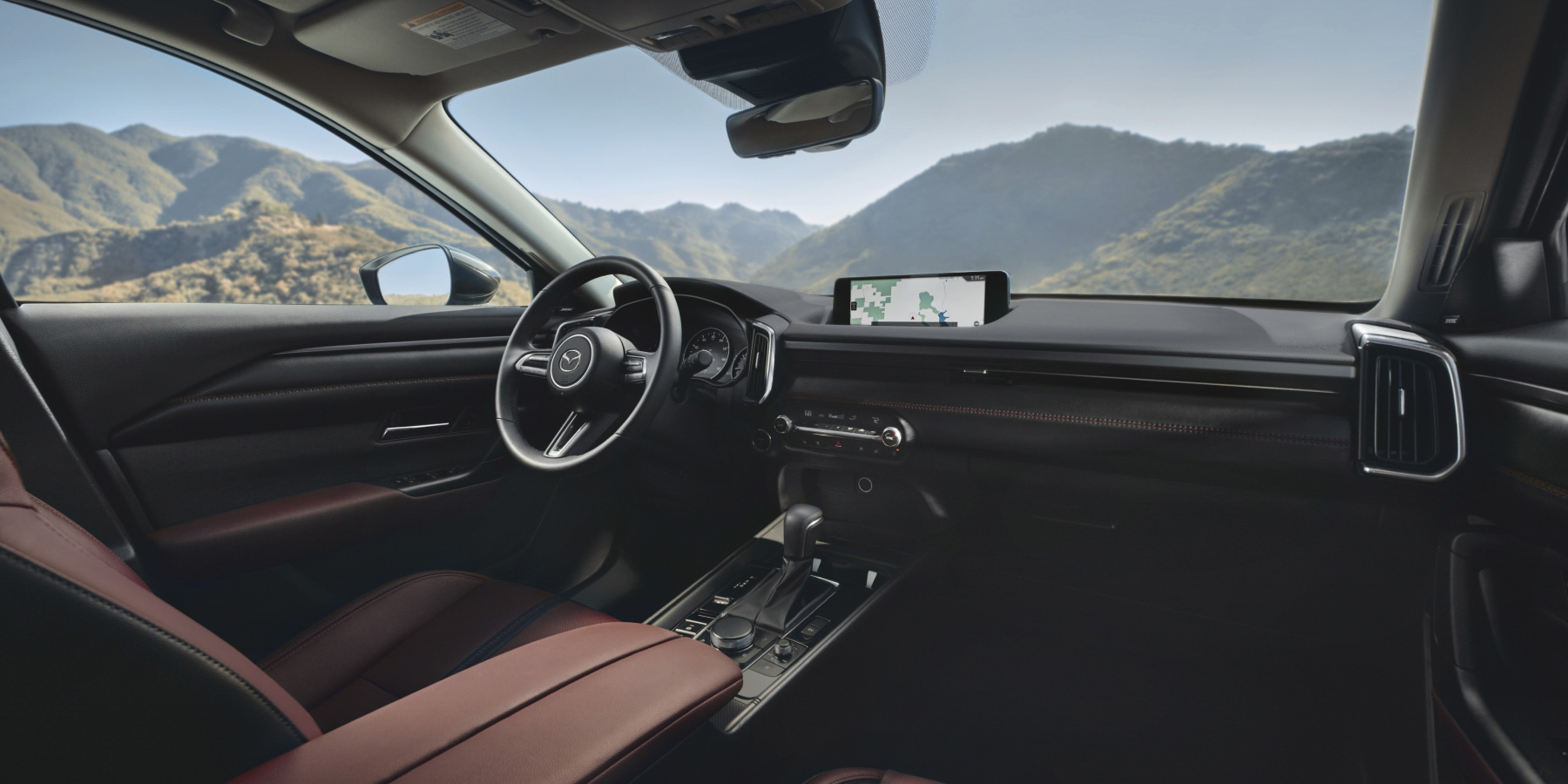
Slide into the CX-50 Hybrid Premium Plus and you’re met with an interior that punches well above its weight class. Our test car wore gorgeous maroon red leather with black accent striping, and the soft-stitched dashboard, door panels, and centre console create an atmosphere you wouldn’t feel short-changed finding in a vehicle costing $10,000 more. Mazda has quietly become one of the best in the business at interior design and material quality at this price point, and the CX-50 is a fine showcase of that ability.
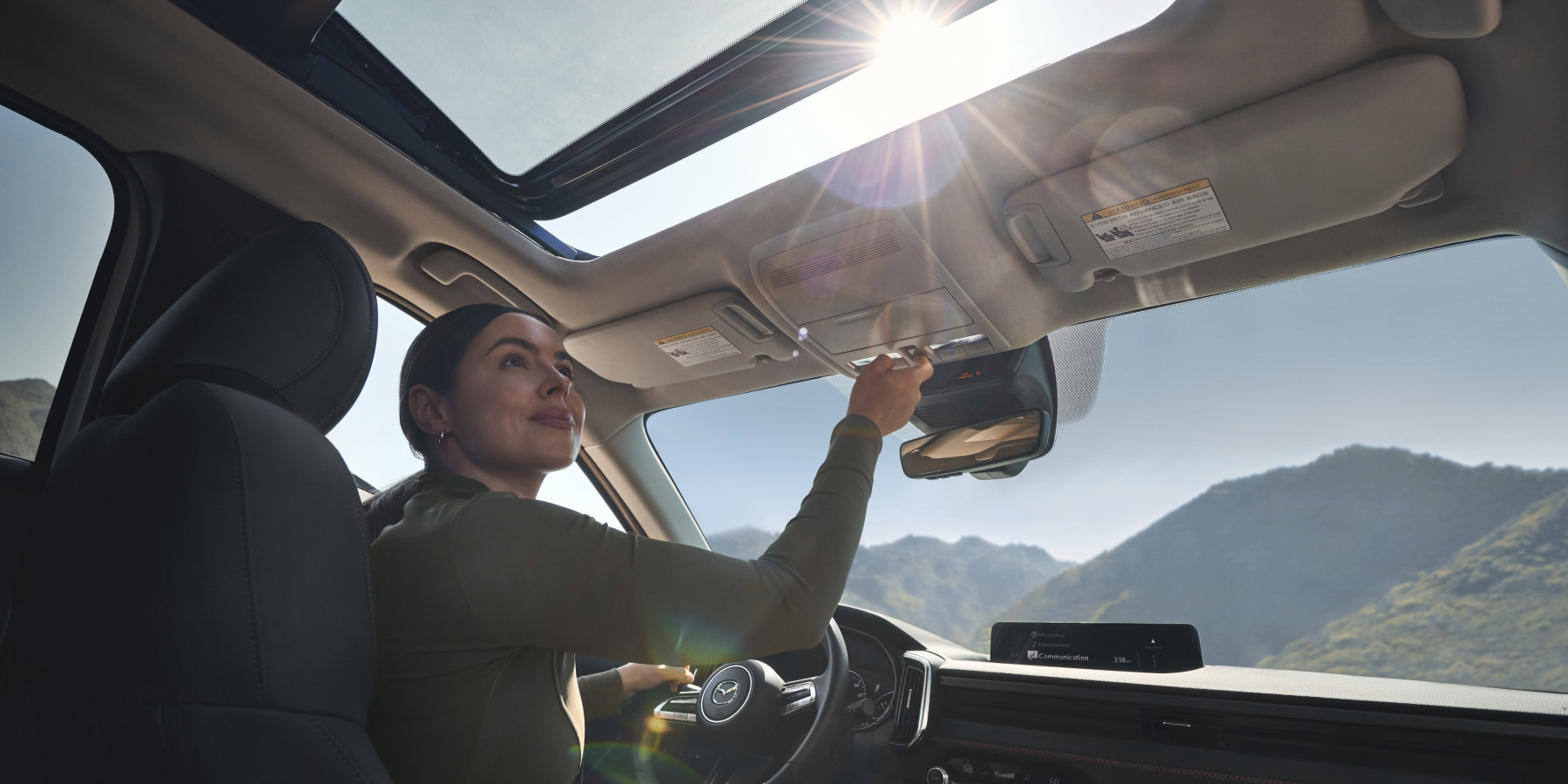
The front seats are comfortable and supportive, with heating and ventilation on the Premium Plus trim plus a power-adjustable passenger seat. The panoramic moonroof lets natural light pour into the cabin, and its front section opens for fresh air. Rear passengers score heated seats, air vents, and USB-C charging ports — thoughtful inclusions at this price. The back seat sits a touch low and the cabin is narrower than some rivals, so three adults across the rear pew will feel the squeeze. For two passengers, though, it’s perfectly comfortable.
Cargo space is where the CX-50 struggles against the competition. With the rear seats up, you get 29.2 cubic feet (827 litres); fold the 60/40 split seats using the handy cargo-area release levers and that grows to 56.3 cubic feet (1,594 litres). The RAV4 Hybrid offers roughly 69 cubic feet folded, and the CR-V Hybrid tops out at a cavernous 76.5 cubic feet. The CX-50 will handle the weekly shop, strollers, and weekend kit without fuss, but if outright cargo capacity is high on your list, the Honda and Toyota hold a clear advantage. On the upside, there’s a temporary spare tyre under the cargo floor, which we always appreciate.
Now, the elephant in the room: infotainment. The CX-50 Hybrid runs a 10.25-inch display controlled mainly by a rotary puck controller on the centre console, backed up by a handful of shortcut buttons and a volume knob. Wireless Apple CarPlay and Android Auto are standard (and they let you bypass much of the native system), but you still need the rotary controller to move through CarPlay menus. In a market where nearly every rival offers a responsive, intuitive touchscreen, this interface feels outdated and unnecessarily fiddly. The screen only works as a touchscreen when the car is stationary. Mazda has acknowledged the shortcoming and is shifting toward more modern setups in newer models, but the CX-50 is stuck with the old gear for now. The Bose audio system, at least, sounds excellent — punchy, clear, and well-matched to the cabin.

2026 Mazda CX-50 Hybrid vs Toyota RAV4 Hybrid: Which Is Better?
This is the comparison every CX-50 Hybrid shopper is going to make, and understandably so. Both vehicles share the same fundamental Toyota hybrid architecture — a 2.5-litre four-cylinder paired with a planetary torque-split eCVT system and a rear electric motor for AWD. They’re even assembled at the same factory in Huntsville, Alabama. But the driving experience, interior quality, and packaging are meaningfully different.
Starting with powertrains: the RAV4 Hybrid produces 225 hp versus the CX-50 Hybrid’s 219 hp — a negligible 6-hp gap you won’t notice in daily driving. Both deliver 163 lb-ft of torque, and both use the same eCVT and rear-motor AWD arrangement. Fuel economy favours the RAV4 by a single MPG: 39 combined against 38 combined. In the real world, that difference is essentially a rounding error.
Where the Toyota pulls ahead clearly is cargo space. The RAV4 offers approximately 69 cubic feet with the rear seats folded — roughly 13 cubic feet more than the CX-50’s 56.3 cubic feet. That’s a meaningful gap if you regularly haul bulky items, sports gear, or flat-pack furniture. The RAV4 also tows 1,750 lb to the CX-50’s 1,500 lb.
Where the Mazda wins, though, is in every surface you touch and feel. The CX-50’s cabin is dramatically more premium than the RAV4’s, with higher-grade materials, a more cohesive design, and a quieter, more polished environment. The maroon red leather on the Premium Plus trim is genuinely gorgeous. The RAV4’s interior, while functional and durable, simply can’t match the CX-50’s sense of occasion.
Then there’s the way they drive. This is where the gap is widest. The CX-50 has the sharper steering, the more composed chassis, and the more engaging personality. It feels like a car engineered to reward the person behind the wheel, whereas the RAV4 feels like a car engineered to be a dependable appliance. Neither approach is wrong — they suit different buyers — but if driving engagement matters to you, the CX-50 is the obvious pick.
On the tech front, the RAV4 runs the more modern infotainment system with a proper touchscreen that works on the move. The CX-50’s rotary controller is the single biggest frustration with the Mazda, and it’s the one area where the RAV4 feels genuinely more up to date.
| Spec | 2026 Mazda CX-50 Hybrid | 2026 Toyota RAV4 Hybrid |
|---|---|---|
| Starting MSRP | $34,750 | ~$33,000 |
| Combined HP | 219 hp | 225 hp |
| Torque | 163 lb-ft | 163 lb-ft |
| Drivetrain | AWD standard | AWD standard |
| EPA Combined MPG | 38 | 39 |
| Cargo (folded) | 56.3 cu ft | ~69 cu ft |
| Ground Clearance | 8.1 in | 8.1 in |
| Towing | 1,500 lb | 1,750 lb |
| Hybrid Battery Warranty | 8 yr / 100k mi | 10 yr / 150k mi |
Buy the CX-50 Hybrid if you want a compact hybrid SUV that rewards the driver — sharper steering, a higher-quality interior, and Mazdas premium feel.
Buy the RAV4 Hybrid if you need more cargo space, slightly better fuel economy, a longer hybrid-battery warranty, and Toyotas massive dealer/service network.
**Our pick** is the CX-50 Hybrid for buyers who actually enjoy driving, and the RAV4 Hybrid for buyers who treat their SUV purely as a tool.

How It Compares to Other Hybrid Rivals
The compact hybrid SUV segment is fiercely competitive, and the CX-50 Hybrid faces two other major rivals beyond the RAV4. The Honda CR-V Hybrid is arguably the most well-rounded option in the class, with 204 hp, a stout 247 lb-ft of torque, EPA ratings exceeding 40 MPG combined, and a cavernous 76.5 cubic feet of cargo space with the rear seats folded. It’s the pragmatist’s choice — spacious, efficient, and comfortable — but it doesn’t stir the soul the way the CX-50 does.
The Hyundai Tucson Hybrid, meanwhile, packs 231 hp and 258 lb-ft of torque — the most in the class — along with 38 MPG combined and roughly 74 cubic feet of cargo space. Its tech-forward cabin features a more modern infotainment system with a proper touchscreen, and it undercuts the CX-50 on price with a starting MSRP around $33,000. The Tucson is the value play with the most punch, though its driving dynamics lean firmly toward comfort.
Both the CR-V and Tucson are excellent vehicles, and buyers focused on cargo capacity or the latest tech may find them more compelling. But for driving enthusiasts who want a hybrid that doesn’t feel like a penalty box, the CX-50 stands alone. No other compact hybrid SUV offers this blend of steering precision, chassis composure, and interior polish. It’s the driver’s pick, full stop.
| Spec | 2026 CX-50 Hybrid | RAV4 Hybrid | CR-V Hybrid | Tucson Hybrid |
|---|---|---|---|---|
| Starting MSRP | $34,750 | ~$33,000 | ~$35,000 | ~$33,000 |
| Combined HP | 219 | 225 | 204 | 231 |
| Torque (lb-ft) | 163 | 163 | 247 | 258 |
| EPA Combined MPG | 38 | 39 | 40 | 38 |
| Cargo Folded (cu ft) | 56.3 | ~69 | 76.5 | ~74 |
| Driving Feel | Sporty | Neutral | Comfort | Comfort |
Safety, Warranty and Long-Term Ownership
The 2026 CX-50 Hybrid earns a five-star overall NHTSA safety rating, with five stars in frontal crash and side barrier testing, and four stars for rollover resistance. Over on the IIHS side, the CX-50 scored Good ratings in all six evaluated crashworthiness categories. That said, it hasn’t yet earned a Top Safety Pick or Top Safety Pick+ designation as of this writing — that could change once headlight and crash-avoidance evaluations are fully wrapped up.
Standard safety equipment includes blind-spot monitoring, rear cross-traffic alert, adaptive cruise control with stop-and-go, lane-keep assist, automatic emergency braking, and front and rear parking sensors. It’s a thorough kit that comes standard on every trim, so there’s no need to pay extra for peace of mind.
Mazda’s warranty coverage is competitive without being class-leading: 3 years / 36,000 miles bumper-to-bumper, 5 years / 60,000 miles powertrain, and 8 years / 100,000 miles for the hybrid battery. That battery warranty is adequate but trails Toyota’s 10-year / 150,000-mile hybrid battery coverage on the RAV4. Given that the CX-50 uses Toyota’s own hybrid hardware, the shorter warranty is a mild disappointment. Still, the proven nature of the Toyota hybrid system should give buyers confidence that serious issues are unlikely.
Who Should Buy the 2026 Mazda CX-50 Hybrid
There are two ideal buyers for the CX-50 Hybrid. First is the Mazda loyalist — someone who’s owned a CX-5, CX-30, or even an older Mazda3 and loves the brand’s driving character. This person has been waiting for a hybrid option that doesn’t mean switching brands or giving up the sharp, engaging driving experience that drew them to Mazda in the first place. The CX-50 Hybrid delivers exactly that: the same steering feel, the same composed chassis, the same premium cabin, now paired with 38 MPG and a proven hybrid powertrain.
The second buyer is the cross-shopper who’s been eyeing the RAV4 Hybrid but finds its interior and driving dynamics a bit uninspiring. If you don’t need maximum cargo space and you’re happy to pay a little more for a vehicle that feels genuinely premium inside and rewards you every time you turn the wheel, the CX-50 Hybrid is worth the premium. It’s the compact hybrid SUV for people who care about how their car drives — not just what it costs to fill up.
Buy or Skip
**Buy if** you want a compact hybrid SUV that doesn’t drive like an appliance, you value interior quality and materials, you trust Toyota’s proven hybrid hardware, and you’re willing to live with a dated infotainment interface in exchange for a premium ownership experience.
**Skip if** you need maximum cargo space, you insist on a modern touchscreen infotainment system, you want the longest possible hybrid battery warranty, or you need more than 1,500 lb of towing capacity.
⚡ Our Verdict
A sharp-driving compact hybrid SUV held back by Mazda’s aging infotainment.
The 2026 Mazda CX-50 Hybrid is a welcome addition to the compact hybrid SUV segment — and a smart one. By leaning on Toyota’s world-class hybrid system, Mazda has built a vehicle that delivers genuine fuel savings without sacrificing the driving engagement and interior polish that define the brand. At 38 MPG combined with standard AWD, it offers the efficiency today’s buyers want with the personality most competitors simply can’t match. The rotary-puck infotainment is the CX-50’s most obvious weakness. In a segment where the Honda CR-V and Hyundai Tucson offer slick, responsive touchscreens, Mazda’s legacy controller feels like a relic. Cargo space also trails the field, and the hybrid battery warranty could be longer. These are real drawbacks that shoppers should weigh carefully. But for buyers who care about how a vehicle drives and how it feels inside, the CX-50 Hybrid is in a class of its own. The steering is sharp, the chassis is composed, the cabin is beautiful, and the Toyota hybrid powertrain is bulletproof. Mazda finally has a hybrid worth celebrating — it just needs to fix the infotainment. **Our rating: 8.2 / 10** — A sharp-driving, fuel-efficient compact hybrid SUV held back mainly by Mazda’s aging infotainment system.
Frequently Asked Questions
Where is the 2026 Mazda CX-50 Hybrid built?
The CX-50 Hybrid is built at the Mazda Toyota Manufacturing (MTM) joint plant in Huntsville, Alabama — the same facility where several Toyota SUVs are also produced.
Is the hybrid powertrain really from Toyota?
Yes. Mazda licenses Toyota’s proven planetary torque-split hybrid system, including the eCVT and electric motors. It’s the same architecture found in the RAV4 Hybrid, Camry Hybrid, and Prius, which means it arrives with decades of refinement and a strong reliability track record.
What is the real-world fuel economy of the CX-50 Hybrid?
The EPA rates it at 38 MPG combined. During our testing in warm weather with heavy air-conditioning use, we observed approximately 36 MPG in mixed driving. Cooler climates and lighter throttle inputs should push real-world figures closer to the EPA estimate.
How much can the 2026 CX-50 Hybrid tow?
The CX-50 Hybrid is rated to tow up to 1,500 lb — enough for a small utility trailer but falling short of the RAV4 Hybrid’s 1,750 lb capacity.
Is the CX-50 Hybrid all-wheel drive?
Yes, all-wheel drive is standard on every CX-50 Hybrid. A dedicated rear electric motor drives the rear axle independently, providing AWD capability without a mechanical transfer case or driveshaft.
Is the infotainment a touchscreen?
Technically yes, but only when the vehicle is parked. While driving, you need to use the rotary puck controller on the centre console to navigate menus — including within Apple CarPlay and Android Auto. It’s the CX-50’s most dated feature and takes some getting used to.
How does it compare to the Toyota RAV4 Hybrid?
Both use the same Toyota hybrid powertrain and are built at the same Alabama factory. The CX-50 Hybrid wins on interior quality and driving engagement; the RAV4 Hybrid wins on cargo space, fuel economy (by 1 MPG), and hybrid battery warranty length. See our dedicated comparison above for the full breakdown.
