

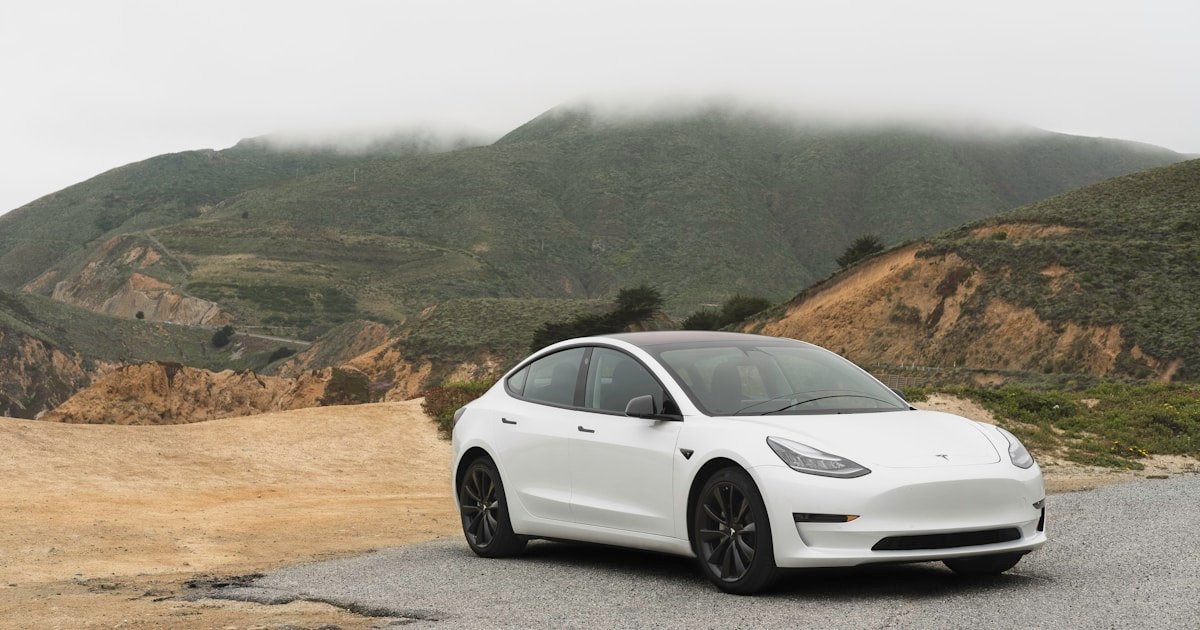
2026 Xiaomi YU7 Review: The Tesla Model Y Rival That Raises the Bar
A genuine Tesla Model Y beater, if you can get one.

2026 Xiaomi YU7 electric mid-large SUV
⚡ Quick Verdict
The Xiaomi YU7 is a compelling, high-tech electric SUV from China that directly challenges the Tesla Model Y on price, range, and features. It’s packed with premium hardware like air suspension and LiDAR, and its driver-assist tech is free for life. The major caveat is that it’s not sold in Australia, so you’d face grey-import hurdles and no local support. It’s a fascinating glimpse into the future of affordable EVs for tech-savearly adopters willing to take the risk.
We’ve seen plenty of electric SUVs hit the Chinese market, but few have caused a stir quite like the Xiaomi YU7. This is the phone giant’s second car, following the sleek SU7 sedan, and it’s a direct shot at the heart of the
✓ The Good
- +Exceptional value proposition, undercutting rivals while offering more range and features.
- +Standout CLTC range figures, especially the Max variant’s ~760 km capability.
- +Ultra-fast 10-80% charging time of approximately 12 minutes on a suitable charger.
- +Premium hardware package includes air suspension, LiDAR, and a powerful NVIDIA Thor chip as standard.
- +Free-for-life driver-assist features with no subscription fees.
✗ The Trade-offs
- −Not officially sold in Australia, with no local warranty, service, or support.
- −CLTC range figures are optimistic and will be lower in real-world Australian driving.
- −Xiaomi is a new automaker; long-term reliability and resale value are unknown.
- −Limited global charging network integration compared to Tesla’s Supercharger system.
📑 In This Review
The Xiaomi YU7 is a compelling, high-tech electric SUV from China that directly challenges the Tesla Model Y on price, range, and features. It’s packed with premium hardware like air suspension and LiDAR, and its driver-assist tech is free for life. The major caveat is that it’s not sold in Australia, so you’d face grey-import hurdles and no local support. It’s a fascinating glimpse into the future of affordable EVs for tech-savearly adopters willing to take the risk.
We’ve seen plenty of electric SUVs hit the Chinese market, but few have caused a stir quite like the Xiaomi YU7. This is the phone giant’s second car, following the sleek SU7 sedan, and it’s a direct shot at the heart of the electric SUV market. In a world where the Tesla Model Y has become the benchmark, Xiaomi has come in swinging with a vehicle that’s bigger, cheaper, and on paper, more capable. The result? Over 200,000 orders in the first three minutes at its launch. That’s not just hype; it’s a statement. For Australian buyers watching the EV space, the YU7 is a compelling, if currently distant, look at where the competition is heading.
What Is the Xiaomi YU7?
The YU7 is Xiaomi’s first SUV and its second model overall, built on the same Modena platform that underpins the SU7 sedan. It’s a five-seat, mid-large electric SUV that slots in size-wise above a Tesla Model Y but below something like a BMW iX. Its dimensions are substantial: 4,999 mm long, 1,996 mm wide, and 1,600 mm tall on a wheelbase that stretches to 3,000 mm. That’s a seriously long wheelbase for a vehicle this size, which always bodes well for interior space.
The launch frenzy in China was real—roughly 232,000 units delivered within ten months is a staggering achievement for a brand-new car from a tech company. It’s positioned as a premium yet accessible electric family car, a tool to take market share from established players. For us in Australia, the YU7 exists in a fascinating grey zone: a China-market model that generates global curiosity but isn’t available through official channels.
Range, Battery and Charging
Xiaomi offers the YU7 with a clear battery strategy. The entry-level Standard model uses a CATL Lithium Iron Phosphate (LFP) battery, which is known for its durability and cost-effectiveness. On the more expensive Pro and Max variants, you get a larger-capacity battery that delivers headline figures. The entire range runs on a 752-volt architecture, which is key to enabling its blistering charging speeds.
Let’s talk numbers. The base YU7 claims 643 km of range on the Chinese CLTC test cycle. The Max variant bumps that up to a claimed ~760 km. Now, we have to be honest: CLTC is consistently more optimistic than the WLTP cycle used in Europe and Australia. In our real-world experience, you’d expect these figures to be 15-20% lower, depending on driving style and conditions. That still means a solid 500+ km of real-world range from the Max, which is excellent.
The charging story is even more impressive. On a suitably powerful DC fast charger, the YU7 can replenish its battery from 10 to 80 percent in approximately 12 minutes. That’s genuinely game-changing for long-distance travel, assuming you can find a charger that supports it. For daily home charging on AC, you’ll be topping up overnight as with any EV.

Performance and Driving
The YU7 lineup covers a broad performance spectrum. The standard rear-wheel drive model produces 235 kW (315 hp) from its single motor, sprinting from 0–100 km/h in 5.88 seconds. That’s brisk and more than adequate for family duties. Step up to the all-wheel drive YU7 Max, and you’re in different territory entirely. It combines a 220 kW front motor with a 288 kW rear motor for a total of 508 hp. The result is a 0–100 km/h dash in a scorching 3.23 seconds and a top speed of 253 km/h. That’s proper sports sedan acceleration in a two-tonne-plus SUV.
But raw speed is only part of the story. The YU7 comes standard with what Xiaomi calls Smart Chassis 2.0—a combination of air suspension and adaptive CDC dampers. This setup can automatically adjust ride height and firmness, promising a blend of comfort and handling that fixed-suspension competitors can’t match. It’s the kind of hardware you’d typically find on a German SUV costing twice as much. The driving experience, based on Chinese reviews, is described as composed and surprisingly agile for its size, with the air suspension soaking up bumps effectively while keeping body roll in check. The steering is noted as direct, though not dripping with feedback.

Interior, Space and Practicality
That 3,000 mm wheelbase pays dividends inside. The YU7 offers generous legroom for rear passengers, making it a comfortable place for a family of four or five. The overall layout is clean and minimalist, dominated by a large central touchscreen that handles most vehicle functions. Material quality, from what we’ve seen, appears to be a step up from many Chinese competitors, with soft-touch surfaces and a generally well-assembled cabin.
As a mid-large SUV, it’s designed for practicality. While we don’t have an official boot volume figure to quote, the physical dimensions suggest a load area that should comfortably handle a family’s luggage for a weekend away or a big grocery shop. The wide body also means shoulder room is good for all occupants. It’s a straightforward, no-nonsense family cabin that prioritises space and tech over ornate design.
Technology and Driver Assistance
This is where Xiaomi leverages its tech pedigree. The YU7’s brain is an NVIDIA DRIVE AGX Thor platform, which delivers a massive 700 TOPS (Tera Operations Per Second) of computing power. This is backed by a sensor suite that includes a roof-mounted LiDAR unit and 4D millimetre-wave radar, giving it a detailed, long-range view of its surroundings.
The suite of driver-assist features—highway navigation, urban navigation, and auto parking—all come as standard, and crucially, are free for life. There’s no monthly subscription, no paid unlock. For buyers tired of Tesla’s Autopilot/FSD upselling, this is a significant draw. However, we must temper expectations. While the hardware is undeniably capable, the software’s real-world performance outside of China’s mapped cities is a big unknown. Autonomy claims always need real-world caution, and for an Australian importer, these features would be largely untested on our roads.
At a Glance: How the YU7 Compares
| Model | Price (China, approx AUD) | Range (CLTC km) | 0-100 km/h | Drive | Length (mm) |
|---|---|---|---|---|---|
| Xiaomi YU7 Standard | 233,500 yuan (~AUD 49,000) | 643 km | 5.88 s | RWD | 4,999 |
| Tesla Model Y RWD | ~263,500 yuan (~AUD 55,300) | 593 km | ~5.9 s | RWD | 4,751 |
| Zeekr 7X | ~249,900 yuan (~AUD 52,500) | ~615 km | 5.8 s | RWD | 4,788 |
Tesla Model Y
The benchmark: better service and charging network, but pricier with less range
Zeekr 7X
Bigger battery and range, also not officially sold in Australia
BYD Sealion 7
Actually on sale in Australia now: the realistic local alternative
The YU7 enters a crowded field of electric SUVs. Here’s how its entry-level model stacks up against two key rivals on the Chinese market. Price (China, approx AUD) 0-100 km/h Length (mm) :— :— :— 233,500 yuan (~AUD 49,000) 5.88 s 4,999 **Tesla Model Y RWD** 593 km RWD ~249,900 yuan (~AUD 52,500) 5.8 s 4,788 |
Xiaomi YU7 vs Tesla Model Y: Which Is Better?
This is the head-to-head the market has been waiting for. In China, the YU7 Standard undercuts the base Model Y by about 30,000 yuan (roughly AUD 6,300 converted), while offering more claimed range—643 km versus 593 km on the CLTC cycle. You’re also getting a physically larger car; the YU7’s wheelbase is over 100 mm longer, which directly translates to more interior space. On pure specs and value, the YU7 appears to have the edge.
Performance at the base level is a dead heat. Both do 0–100 km/h in around 5.9 seconds. Where Xiaomi pulls ahead is in standard equipment. That air suspension and CDC adaptive dampers are included on every YU7, whereas the Model Y has a simpler, fixed-suspension setup. The tech specs, with the 700 TOPS NVIDIA chip and LiDAR, are also more impressive on paper than Tesla’s current hardware suite.
However, the Tesla Model Y fights back with two massive strengths: its global ecosystem and proven track record. The Supercharger network is vast, reliable and tightly integrated. For an Australian, this network is a tangible, everyday benefit that a grey-import Xiaomi simply cannot offer. Tesla also has years of real-world data on the Model Y’s reliability, battery degradation, and resale value. Xiaomi, as a new automaker, is an unknown quantity on all three fronts.
The interior experience differs in philosophy. The YU7 offers a more traditional luxury feel with its air suspension and likely plusher ride. The Model Y is more spartan, focused on efficiency and a minimalist tech interface. One isn’t inherently better; it depends on whether you prioritise ride comfort or Tesla’s specific software ecosystem.
Ultimately, for a Chinese buyer, the decision is tougher. The YU7 offers more car for the money with a more premium hardware set. For an Australian, the scales tip heavily towards the Model Y. The established sales, service, and charging infrastructure make the Tesla a far less risky proposition, even if the Xiaomi looks better on a spec sheet.
Buy the Xiaomi YU7 if you’re a grey-import enthusiast who wants the latest hardware, maximum range and free-for-life tech features, and you’re willing to accept the uncertainties of a non-official car. **Skip the Xiaomi YU7 if** you value peace of mind, local warranty and service, access to a reliable nationwide fast-charging network, and proven long-term resale value.
Should You Buy a Xiaomi YU7?
Let’s be direct: for the vast majority of Australian buyers, the Xiaomi YU7 is not a practical choice today. It’s not sold here, so you’d need to navigate the complexities and risks of a grey import. There’s no local dealer network, no official warranty, and servicing would be a challenge. The advanced driver-assist features would be unproven on our roads, and parts supply could be a headache.
That said, the YU7’s existence is incredibly important. It shows what’s possible when a deep-pocketed tech giant enters the car market. It sets a new benchmark for value, packaging, and standard tech in an electric SUV. For early adopters and EV enthusiasts who follow the global market, it’s a fascinating case study and a preview of the pressure legacy carmakers are under. If—and it’s a big "if"—Xiaomi ever officially exports this car, or if a third-party importer brings it in with proper support, it could shake up the local market. Until then, it’s a compelling "what if" that makes every other EV on sale in Australia look at its pricing and features more closely.
⚡ Our Verdict
A genuine Tesla Model Y beater, if you can get one.
The Xiaomi YU7 is a formidable debut electric SUV that delivers exceptional value, impressive range, and a tech-forward package that genuinely challenges the Tesla Model Y. Its blend of air suspension, a powerful computing suite, and subscription-free driver aids at this price point is remarkable. While its China-centric availability and the unknowns of being a first-generation product are significant caveats, the YU7 is a clear signal that the future of affordable, high-tech EVs is arriving fast—and established players need to take note. For now, it remains a tantalising prospect for Australian watchers rather than a driveway reality.
Frequently Asked Questions
Is the Xiaomi YU7 available in Australia?
No, the Xiaomi YU7 is not officially sold in Australia. It is currently a China-market vehicle only. Any example in Australia would have to be privately imported, which comes with significant risks regarding warranty, service, parts, and compliance.
How much does the Xiaomi YU7 cost?
In China, the base Xiaomi YU7 Standard starts from 233,500 yuan. Using a direct conversion, that’s approximately AUD 49,000. This does not include shipping, taxes, compliance, or importation costs for the Australian market.
What is the range of the Xiaomi YU7?
On the Chinese CLTC test cycle, the range is 643 km for the Standard model and up to approximately 760 km for the Max model. These figures are optimistic compared to the WLTP cycle used in Australia, so real-world range would be lower.
Is the Xiaomi YU7 better than a Tesla Model Y?
It’s better on paper in terms of price, claimed range, and standard hardware like air suspension. However, the Tesla Model Y has the advantage of an established sales and service network in Australia, access to the Supercharger charging network, and a proven track record.
How fast is the Xiaomi YU7?
Performance varies by model. The base YU7 does 0–100 km/h in 5.88 seconds. The high-performance YU7 Max completes the sprint in just 3.23 seconds, with a top speed of 253 km/h.
Does the Xiaomi YU7 support fast charging?
Yes, very much so. Built on a 752V architecture, the YU7 can charge from 10% to 80% in approximately 12 minutes on a compatible high-power DC fast charger. This is one of its standout features.
