

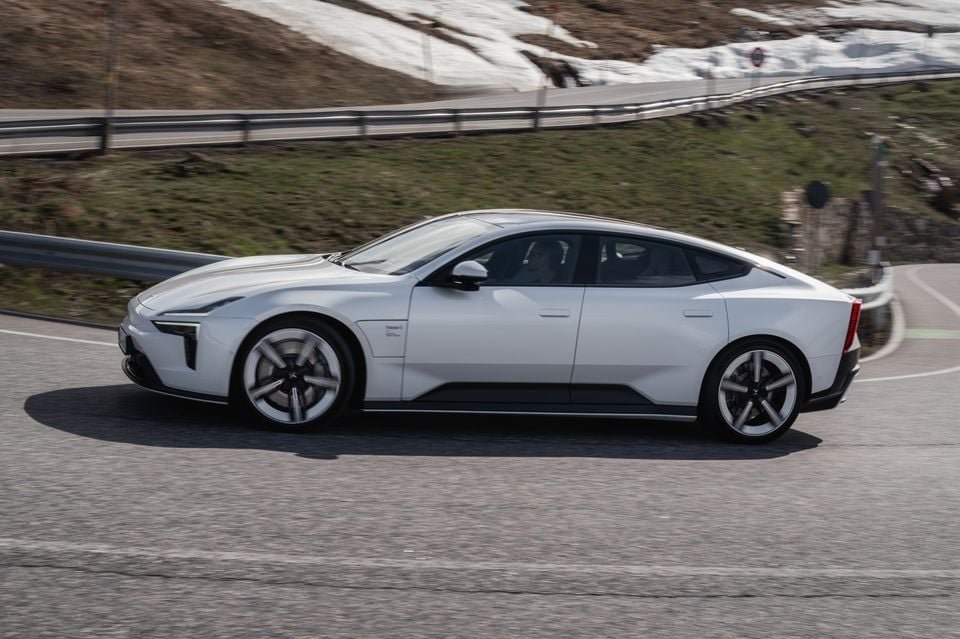
2026 Polestar 5 Review: The Electric GT Benchmark
A bonded-aluminium GT that justifies every cent of its $171K price tag
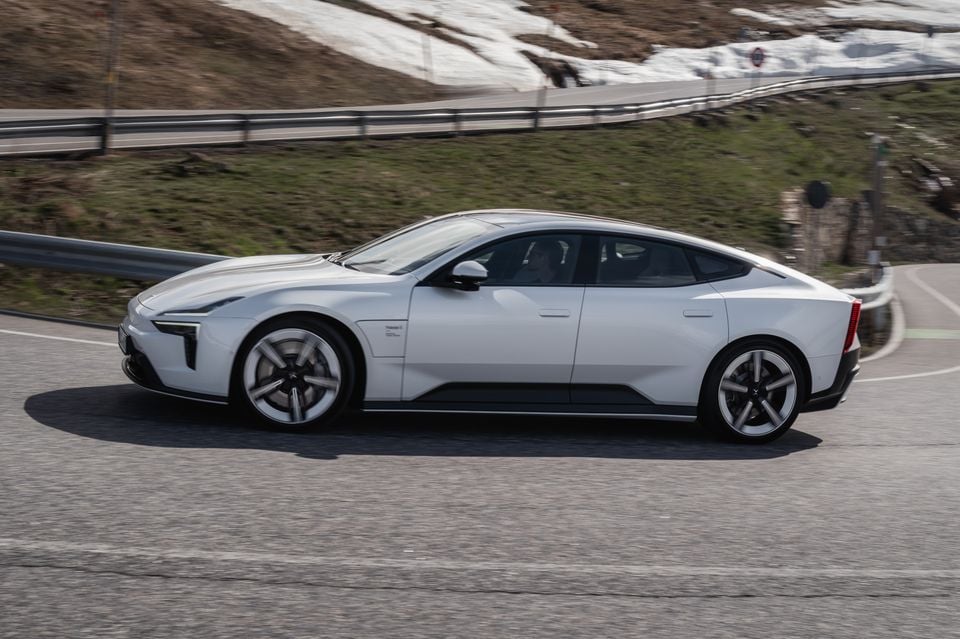
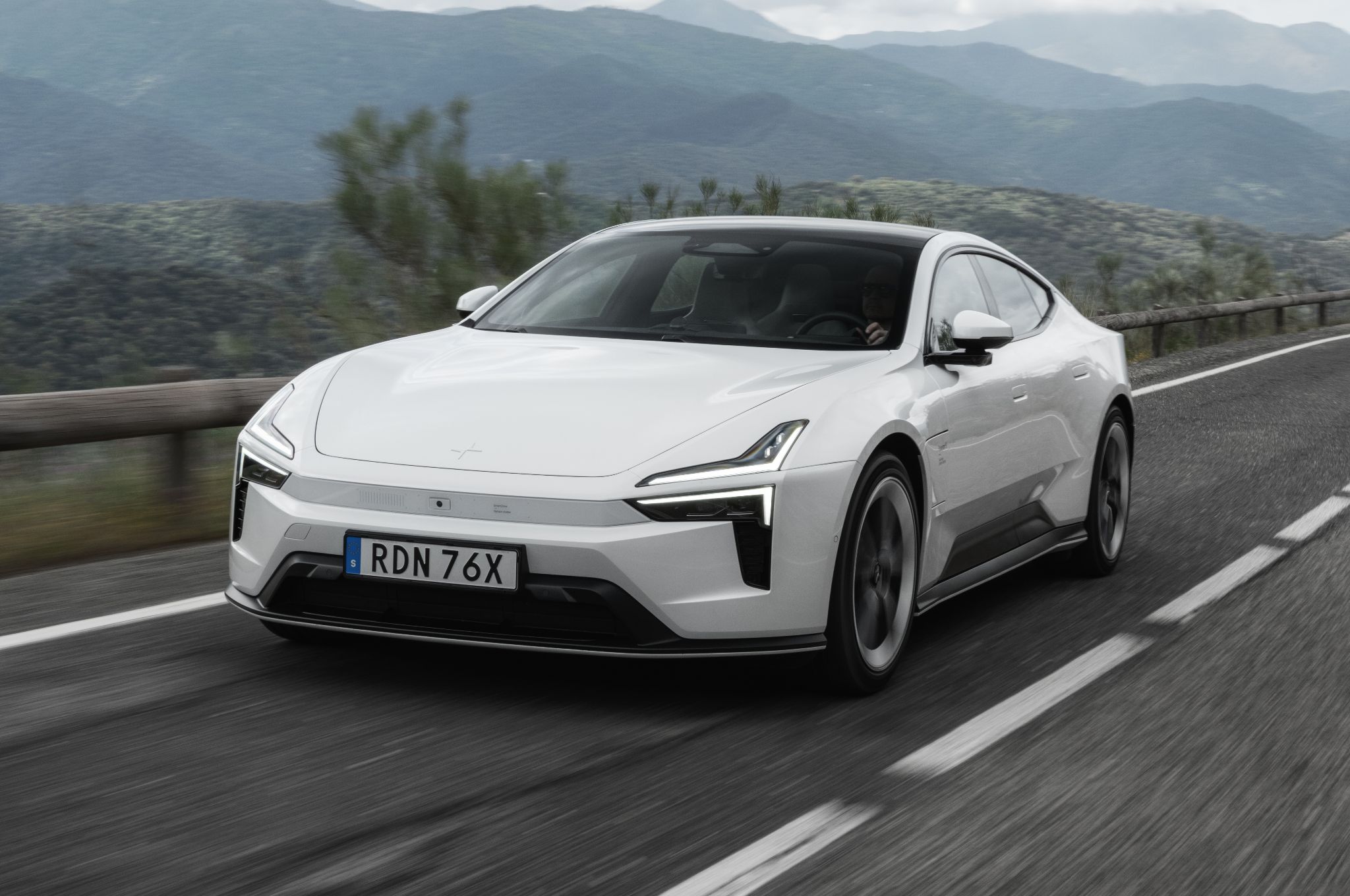
2026 Polestar 5 Dual Motor in Snow white — three-quarter dynamic press shot
⚡ Quick Verdict
: The 2026 Polestar 5 Dual Motor lands at AUD $171,000 plus on-road costs, packing 550 kW of combined output and a claimed 678 km WLTP range from its 112 kWh battery. It’s built for anyone who wants a proper long-distance electric Grand Tourer — one where rear passengers enjoy five-way massage, the chassis feels as rigid as something out of Woking, and the price undercuts a comparably specced Taycan by a meaningful margin.
—
✓ The Good
- +Bonded-aluminium chassis has supercar-grade torsional stiffness
- +Rear-seat amenity genuinely class-leading with five-way massage
- +Brake pedal blending of regen and friction is seamless
- +800V architecture delivers 10–80% in just 22 minutes
- +Ride compliance and cabin refinement are exceptional
✗ The Trade-offs
- −Steering feel narrowly trails Taycan and RS e-tron GT
- −11 kW AC charging cap is a real weakness
- −Glass roof has no sun shade — hot in Australian summers
- −365-litre boot is small for a 5.1-metre car
📑 In This Review
- At a Glance: How the Polestar 5 Compares
- Design and Exterior
- Interior and Cabin Comfort
- Performance and Driving Dynamics
- Standard vs Magnaride Suspension
- Range, Charging, and Real-World Efficiency
- Polestar 5 vs Porsche Taycan: Which Is Better?
- Safety and Driver Assistance
- Warranty and Ownership
- Who Should Buy It (and Who Should Skip)
- Verdict
- Frequently Asked Questions
The Polestar 5 has been one of the most anticipated electric cars to land in Australia in years, and now that we’ve spent serious time behind the wheel, it’s clear the Swedish-Chinese brand has built something genuinely special. This isn’t another me-too luxury EV — it’s a bonded-aluminium GT with a legitimate claim to being the best-handling car in its price bracket, and rear-seat comfort that embarrasses machines costing twice the money. At $171,000 before on-roads, it’s not cheap. But sit in the back seat for five minutes and you’ll understand where the money went.
At a Glance: How the Polestar 5 Compares
| Model | Starting Price | Power | 0-100 km/h | WLTP Range | DC Charging |
|---|---|---|---|---|---|
| Polestar 5 Dual Motor | AUD $171,000 | 550 kW | 3.9 s | 678 km | 350 kW |
| Polestar 5 Performance | From ~AUD $195,000 | 650 kW | 3.2 s | 565 km | 350 kW |
| Porsche Taycan 4S | ~AUD $175,000 | 460 kW | 3.7 s | 678 km | 320 kW |
| Audi RS e-tron GT | ~AUD $270,000 | 475 kW | 3.3 s | 488 km | 270 kW |
| BMW i5 M60 xDrive | ~AUD $215,000 | 442 kW | 3.8 s | 516 km | 205 kW |
Porsche Taycan 4S
Sharper steering and faster on a track, but smaller battery, less rear-seat space and a base interior that needs option boxes ticked.
Audi RS e-tron GT
Closely related to the Taycan on the J1 platform, but tens of thousands more expensive and not as spacious as the Polestar 5.
BMW i5 M60 xDrive
A more traditional luxury sedan rather than a true GT. Less bespoke under the skin, but a familiar BMW user experience.
Lucid Air Grand Touring
US-only for now. Class-leading real-world range and a stunning 34-inch curved 5K screen, but no Australian service network.
The Polestar 5 enters a fiercely contested luxury electric GT segment that was essentially invented by the Porsche Taycan and has since been populated by heavyweights from Audi and BMW. What sets the Swedish-Chinese contender apart is its claim to deliver bespoke bonded-aluminium construction — a manufacturing technique more commonly associated with McLaren and Aston Martin — at a price that undercuts its German rivals by a meaningful margin. In pure spec-sheet terms, the Dual Motor variant lines up almost perfectly against the Porsche Taycan 4S while costing roughly AUD $4,000 less at the base level. But the Polestar brings a larger 112 kWh battery, a longer claimed WLTP range, and a rear seat that has been engineered with genuine long-haul intent. Step up to the Performance variant and you are squarely in Audi RS e-tron GT territory, yet the Polestar remains tens of thousands of dollars cheaper. The BMW i5 M60 xDrive offers a different flavour — more traditional sedan, less sporting GT — while the Lucid Air Grand Touring remains unavailable in Australia for now. That leaves the Polestar 5 in a compelling sweet spot: more spacious than the Taycan, more affordable than the Audi, and more dynamically interesting than the BMW. Starting Price 0-100 km/h DC Charging ——— AUD $171,000 3.9 s 350 kW Polestar 5 Performance 650 kW 565 km ~AUD $175,000 3.7 s 320 kW Audi RS e-tron GT 475 kW 488 km ~AUD $215,000 3.8 s 205 kW | —
Design and Exterior
The Polestar 5 is the production realisation of the Precept concept car shown in 2020, and the lineage is immediately obvious. At 5,087 mm long and just 1,419 mm tall, it has the proportions of a proper fastback GT — long, low, and wide, with a sweeping roofline that tapers into a Kamm-style tail. It’s a genuinely striking piece of design that looks nothing like its competitors. You won’t confuse it with a Taycan from any angle.
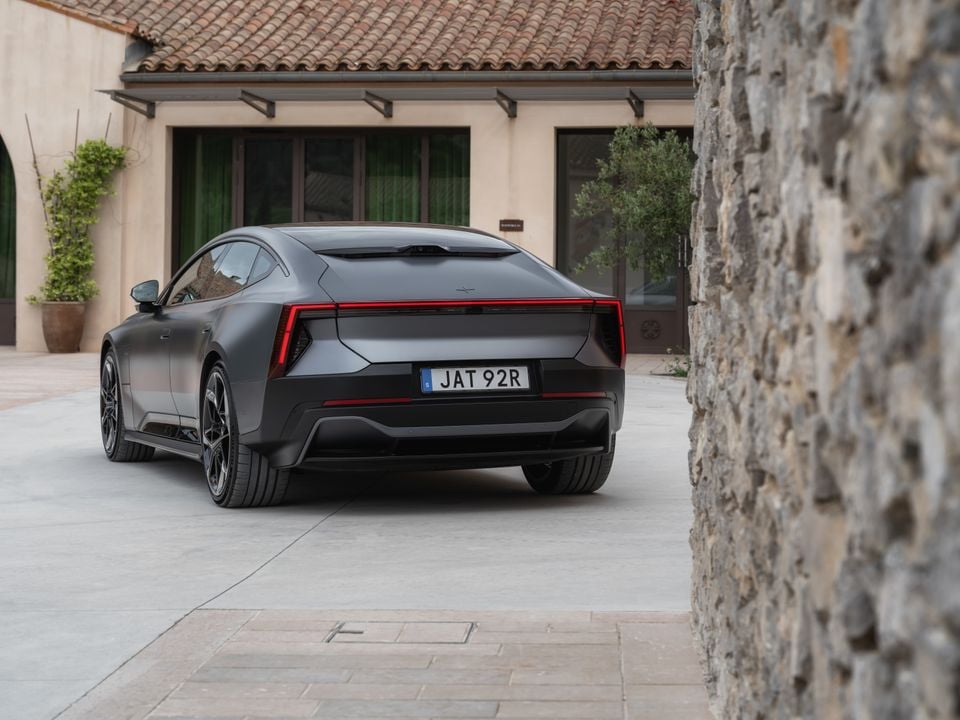
The most divisive element is the missing rear window. Polestar has replaced it with a camera-based rear-view mirror system, allowing the roofline to taper without compromise. In practice the digital mirror takes a few minutes to get used to — depth perception is different, and you find yourself instinctively glancing at the conventional mirror position before remembering. Once you’ve adjusted, though, the field of view is vastly wider than any glass window could provide. It’s a love-it-or-hate-it feature, and we reckon most owners will be fans within a week.
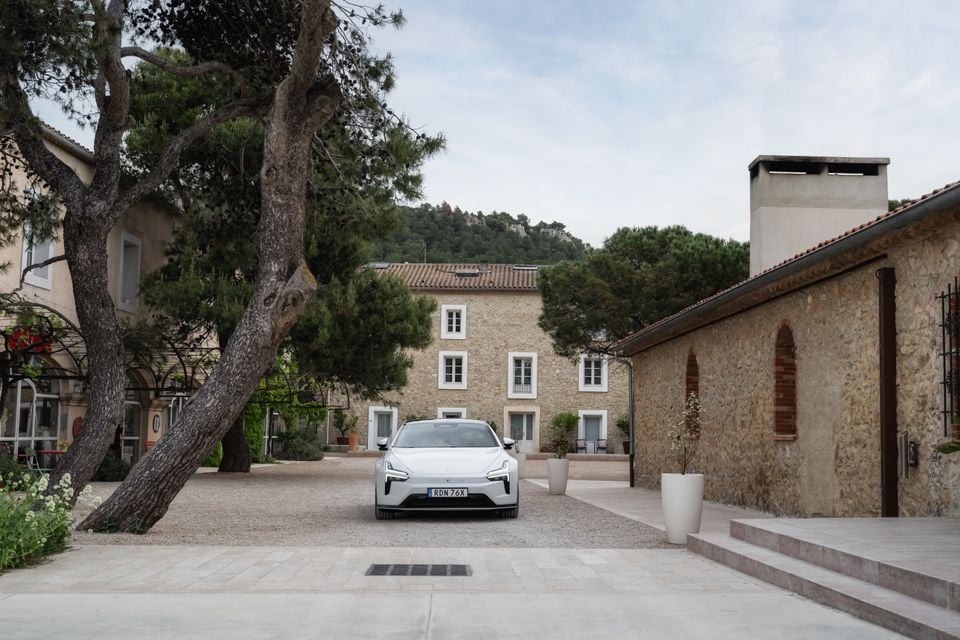
Colour choice plays a significant role in how the Polestar 5 reads visually. The snow-white finish accentuates the concept-car surfacing and makes the car appear even lower and wider, while the black option leans more aggressive and cohesive. Both work. Wheel choice is where we’d urge caution, though. The 22-inch options look sensational but introduce noticeable tyre noise and a choppier ride compared to the standard 21-inch rims. Unless aesthetics are your absolute priority, the 21s are the smarter pick for a car designed to cover continent-crossing distances.
The overall package is cohesive and distinctive in a segment where German restraint can sometimes read as conservatism. The Polestar 5 has genuine presence — on the road, in a car park, anywhere.
—
Interior and Cabin Comfort
Slide into the driver’s seat and the first thing you notice is how low you sit. Polestar has physically removed battery cells beneath the front occupants to drop the hip point, giving the Recaro sport seats a properly hunkered, cockpit-like feel. It’s a detail that speaks to the engineering depth of this car. The seats themselves are supportive without being punishing, and the optional Bridge of Weir Nappa leather — a $13,000 option — is sumptuously soft and beautifully finished.
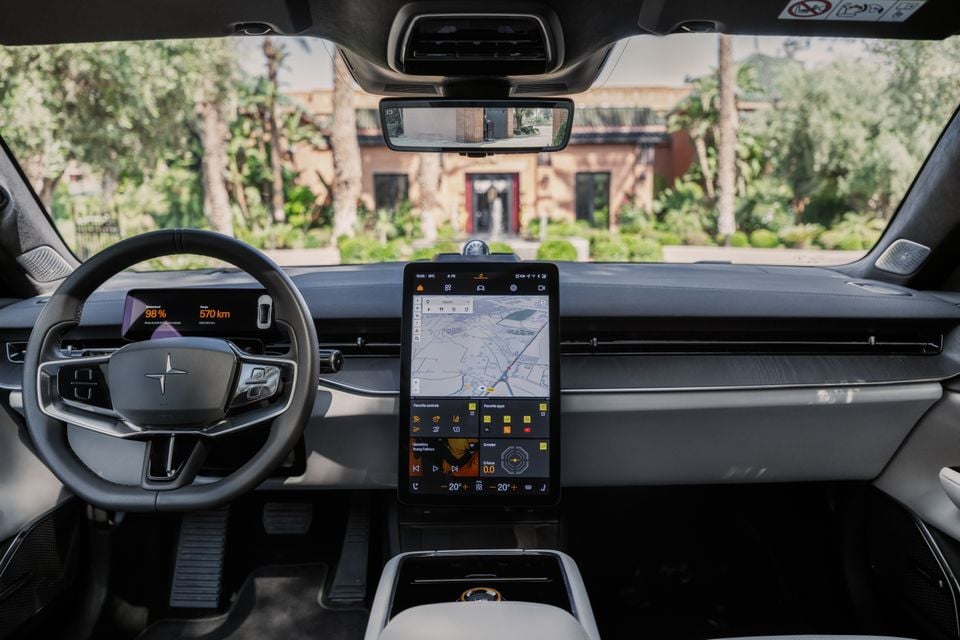
The dashboard is dominated by a 14.5-inch portrait-oriented touchscreen running Android Automotive OS with Google Built-in. Navigation via Google Maps is superb, the voice assistant is genuinely useful, and the persistent climate control bar along the bottom of the screen means temperature adjustments are always one tap away. Real column stalks for indicators, wipers, and drive selection are a welcome departure from the touch-everything trend, lending a sense of physical confidence to commonly used controls.
Material quality is a highlight. Open-pore wood, real aluminium trim, Econyl recycled-nylon carpets, flax-fibre composites, and recycled PET fabrics create a cabin that feels both premium and purposefully sustainable. The Bowers & Wilkins audio system — an $8,800 option — is outstanding, delivering rich, detailed sound that justifies the spend for anyone who values in-car audio.
The rear seat is where the Polestar 5 truly separates itself from the competition. A "foot garage" carved into the battery pack creates a natural, relaxed seating position, and legroom is comparable to that of a Porsche Panamera long-wheelbase. Rear passengers get five-way massage — one more axis than the front seats — along with heating and cooling. For a four-seat GT, this is class-leading. Full stop.
One notable omission: the standard glass roof has no retractable sun shade. In Australian summer conditions, this will be felt hard. Tinted aftermarket film will likely become a first-week modification for many owners. Also worth noting: wireless Apple CarPlay and a full digital key are confirmed for delivery via over-the-air update, but neither is available at launch.
—
Performance and Driving Dynamics
The Polestar 5 rides on what the brand calls the Polestar Performance Architecture — a bonded-aluminium platform that uses heat-cured structural adhesive in place of traditional welding across many joints. The result is a torsional stiffness figure that Polestar claims exceeds many supercars, delivered in a package weighing approximately 2,500 kg. That stiffness is the chassis’s defining quality, and you feel it in every dynamic situation.
The rear motor is a Polestar-designed in-house unit producing 450 kW and 660 Nm on its own, and it’s the heart of the driving experience. Combined with the front motor, the Dual Motor variant delivers 550 kW and sprints to 100 km/h in 3.9 seconds. The Performance steps that up to 650 kW and 3.2 seconds. Neither figure is slow, and the Dual Motor feels genuinely rapid in the real world — a seamless, linear surge of torque that never feels frantic.
The brake pedal is a masterclass in calibration. The blending of regenerative and friction braking through the Brembo four-piston front callipers is essentially indistinguishable through the pedal. There’s no lurch, no awkward handover — just consistent, progressive stopping power that inspires real confidence on a winding descent. Many EVs attempt this integration. Very few achieve it this well.
Where the Polestar 5 concedes a fractional advantage to the Porsche Taycan and Audi RS e-tron GT is in steering feel. The weighting is well-judged and the rack is precise, but the last layer of tactile feedback — the sense of the front tyres loading and communicating the road surface — isn’t quite as rich as the best in this class. It’s a small gap, not a chasm, but honesty demands we call it out.
The front end is eager to turn in, and when pushed hard, it will eventually wash into mild understeer. A deliberate lift of the throttle immediately rotates the car back onto its intended line — a natural, predictable balance that rewards an attentive driver. ESC Sport mode biases the rear axle further, allowing satisfying throttle-on rotation without ever feeling wayward. The overall dynamic character is poised, supple, and deeply confidence-inspiring.
—
Standard vs Magnaride Suspension
The Dual Motor variant rides on a passive steel-spring suspension setup that is genuinely excellent. Across our testing on a mix of highway, country, and urban roads, the ride remained composed and remarkably supple, with body control that defied the car’s 2.5-tonne kerb weight. It’s one of those rare standard setups where upgrading feels unnecessary for most buyers.
The Magnaride BWI adaptive dampers are exclusive to the Performance variant and offer Nimble, Standard, and Firm modes. They add another layer of adjustability, but the reality is that the standard suspension is so accomplished that the adaptive system only makes a meaningful difference on very poor surfaces. If your driving regularly involves rough Australian country roads, the Performance and its Magnaride dampers are worth the step-up. For everyone else, the Dual Motor on its passive suspension is the smarter, better-value package.
—
Range, Charging, and Real-World Efficiency
The Polestar 5 packs a 112 kWh NMC battery with approximately 106 kWh of usable capacity. The WLTP-rated range for the Dual Motor is a claimed 678 km — one of the longest figures in the segment — while the Performance variant, with its more aggressive power output and wheel options, is rated at approximately 565 km.
In real-world driving, particularly when pushing the car on hilly country roads, we saw consumption figures settling in the mid-20s kWh/100 km. That’s entirely respectable for a 2.5-tonne GT with this level of performance, and translates to a comfortable real-world range well above 400 km even in spirited driving.
The 800-volt architecture enables DC fast charging at a peak of 350 kW, delivering a 10 to 80 per cent charge in 22 minutes at an average rate of approximately 213 kW. That’s genuinely quick and makes long-distance touring viable without extended stops. AC charging is limited to 11 kW, though — a notable shortcoming when the Taycan offers an optional 22 kW onboard charger. For daily home charging overnight, 11 kW is perfectly adequate. For fleet or workplace scenarios with shorter charging windows, the limitation is felt.
—
Polestar 5 vs Porsche Taycan: Which Is Better?
This is the comparison most buyers in this segment will make, and for good reason. The Polestar 5 Dual Motor and the Porsche Taycan 4S occupy almost identical price territory in Australia — separated by roughly $4,000 at the base level — and both promise to be the definitive electric Grand Tourer. Having driven both extensively, we have clear views on where each car excels.
On price and value, the Polestar 5 holds a meaningful advantage. A comparably specced Taycan 4S, once you add the larger battery, premium audio, and Nappa leather, pushes well beyond $200,000. The Polestar 5 Dual Motor at $171,000, even with the Bowers & Wilkins audio and Nappa leather options ticked, remains in the mid-$190,000 range. That’s a significant saving.
Performance is closer than the numbers suggest. The Polestar’s 550 kW and 3.9-second sprint beat the Taycan 4S’s 460 kW and 3.7 seconds on paper — though the Taycan is marginally quicker to 100 km/h. In the real-world feel, the Polestar’s torque delivery is slightly more linear and less dramatic, which suits the GT brief better. Neither car is slow.
The chassis story is where the Polestar 5 genuinely surprises. Its bonded-aluminium construction delivers a level of torsional rigidity that the Taycan’s steel-and-aluminium mix can’t match, and this translates into a ride-handling balance that feels more resolved over poor surfaces. The Taycan counters with steering feel that remains the segment benchmark — more granular, more textured, more communicative. If you prioritise tactile connection, the Taycan wins. If you prioritise ride compliance and structural integrity, the Polestar takes it.
Inside, the Polestar 5 is more spacious, particularly in the rear. The foot-garage battery cut-out and five-way rear massage create a genuine four-seat luxury experience. The Taycan’s rear seats are adequate but not generous. Up front, both cabins are beautifully executed — the Taycan is more driver-focused, the Polestar more tech-forward with its portrait touchscreen and Google integration.
Charging and range favour the Polestar. Its 112 kWh battery and 350 kW DC peak give it real-world range and charging speed advantages over the Taycan 4S with its standard battery. The Taycan fights back with the option of 22 kW AC charging — a clear weakness in the Polestar’s armour.
| Spec | Polestar 5 Dual Motor | Porsche Taycan 4S |
|---|---|---|
| Starting price (AU) | $171,000 + ORC | ~$175,000 + ORC |
| Power | 550 kW | 460 kW |
| 0-100 km/h | 3.9 s | 3.7 s |
| WLTP range | 678 km | 678 km |
| Battery capacity | 112 kWh | 105 kWh |
| DC charge speed | 350 kW | 320 kW |
| AC charge speed | 11 kW | 11 kW (22 kW optional) |
| Length | 5,087 mm | 4,963 mm |
| Boot capacity | 365 L | 407 L |
<div style="background:linear-gradient(135deg,#f0f9ff,#e0f2fe); border-left:4px solid #2563eb; border-radius:12px; padding:24px 28px; margin:32px 0"> <p style="font-size:12px; font-weight:800; letter-spacing:0.14em; text-transform:uppercase; color:#1e40af; margin:0 0 10px">Which one is better?</p> <p><strong>Buy the Polestar 5 if</strong> you want the most spacious electric GT in this price band, prize ride compliance and rear-seat amenity, and like the idea of a bespoke bonded-aluminium chassis that punches above its sticker price.</p> <p><strong>Buy the Porsche Taycan if</strong> you prize the sharpest steering feel, the fastest in-class acceleration, and the option of 22 kW AC charging for fleet duty.</p> <p><strong>Our pick</strong> is the Polestar 5 Dual Motor. It is around 30 percent cheaper than a comparable Taycan, more spacious in the back, and the chassis engineering is genuinely special.</p> </div>
—
Safety and Driver Assistance
The Polestar 5 hadn’t been tested by Euro NCAP or ANCAP at the time of writing. However, the Polestar 4 achieved a full five-star Euro NCAP rating in 2025, setting a strong brand precedent and suggesting the 5 — built on a more advanced platform — should perform at least as well.
The standard ADAS suite is solid. Forward collision warning, lane-keep assist, lane change assist, lane departure warning, rear collision warning with mitigation, and cross-traffic alert with brake support are all included. Adaptive cruise control with lane centering handles highway driving competently. The forward collision warning calibration leans towards the zealous side — it chimes early and often in urban traffic — but it’s manageable. There’s no FSD-style autonomous driving capability here, and Polestar doesn’t pretend otherwise.
Security technology deserves a mention. The encrypted ultra-wideband key is relay-attack proof, and the Polestar app enables dynamic geofencing and real-time GPS tracking. Interior radar sensors detect occupant presence — useful for child-reminder alerts. The audible speed monitoring system can be silenced with a single tap on a steering wheel shortcut, which we suspect will be one of the first things most owners discover.
—
Warranty and Ownership
Polestar Australia covers the 5 with a five-year vehicle warranty and an eight-year or 160,000 km battery warranty, both of which are competitive for the segment. Over-the-air software updates will continue to enhance the car’s capabilities post-purchase, including the delivery of wireless Apple CarPlay and the digital key.
The ownership consideration that gives us pause is the service network. Polestar’s Australian footprint remains limited compared to the established dealer and service networks of Porsche and BMW. In major metropolitan areas this is manageable, but owners in regional areas should verify service accessibility before committing. The Polestar app handles connected-service functions well, but physical service capacity is the real constraint.
—
Who Should Buy It (and Who Should Skip)
**BUY** — The Polestar 5 is for the buyer who wants a genuine electric Grand Tourer with class-leading rear-seat comfort, a beautifully resolved ride, and the satisfaction of owning a chassis that uses bonded-aluminium construction normally reserved for supercars. If you cover long distances regularly, value spaciousness, and want something that looks and feels nothing like a German luxury sedan, this is your car.
**SKIP** — If you demand the sharpest possible steering feel and the most engaging driver connection in the segment, the Porsche Taycan remains the benchmark. Similarly, if you rely on fast AC charging at a workplace or fleet depot, the Polestar’s 11 kW cap is a genuine limitation. Buyers in far-north or outback Australia should also think carefully about the glass roof’s lack of a sun shade.
—
⚡ Our Verdict
A bonded-aluminium GT that justifies every cent of its $171K price tag
The 2026 Polestar 5 is a genuinely important car — not just for Polestar, but for the electric luxury GT segment as a whole. It proves that bonded-aluminium construction, a technique historically reserved for hand-built British sports cars and hypercars, can be delivered in a volume product at a price that undercuts its most obvious rival by a meaningful margin. The Dual Motor at $171,000 is the sweet spot. It delivers 550 kW of effortless performance, a claimed 678 km of WLTP range, and a rear seat so comfortable that rear passengers may never want to get out. The chassis is the star: supple over rough roads, composed through fast bends, and structurally so rigid that it gives the driver unshakeable confidence. The brake pedal blending is among the best we’ve experienced in any electric car. It’s not perfect. The steering feel, while well-weighted and precise, lacks the final layer of tactile richness that makes the Porsche Taycan so special on a mountain road. The 11 kW AC charging cap is a frustrating limitation. The boot is small for a car this long. And the glass roof will bake Australian owners in January without aftermarket tint. But taken as a whole package — the engineering, the ride, the performance, the rear-seat amenity, the design, the value proposition — the Polestar 5 Dual Motor earns a strong 4.5 out of 5. It does the GT brief properly: it’s fast, comfortable, refined, and distinctive. For the buyer cross-shopping a Taycan 4S, it’s not just an alternative — it’s the smarter buy. —
Frequently Asked Questions
How much does the 2026 Polestar 5 cost?
The Polestar 5 Dual Motor starts at AUD $171,000 plus on-road costs. The Performance variant steps up from that, with UK pricing listed at GBP 104,900 providing a rough guide.
What is the Polestar 5’s WLTP range?
The Dual Motor variant is rated at up to 678 km WLTP. The Performance, with its higher output, is rated at approximately 565 km WLTP.
How fast does the Polestar 5 charge?
DC fast charging peaks at 350 kW on the 800-volt architecture, achieving a 10 to 80 per cent charge in 22 minutes. AC charging is limited to 11 kW.
Is the Polestar 5 faster than a Porsche Taycan?
The Polestar 5 Dual Motor produces more power (550 kW vs 460 kW) but is marginally slower to 100 km/h (3.9 s vs 3.7 s). The Performance variant at 3.2 seconds is quicker than the Taycan 4S.
Does the Polestar 5 have Apple CarPlay?
Wireless Apple CarPlay is confirmed but will be delivered via an over-the-air software update after launch — it’s not available at delivery.
Is the Polestar 5 a true Grand Tourer?
Yes. Its combination of supple ride quality, long-range battery, rear-seat comfort with massage and climate control, and refined cabin make it one of the most convincing electric GTs on sale today.
What rivals should I cross-shop the Polestar 5 against?
The Porsche Taycan 4S is the primary rival. The Audi RS e-tron GT, BMW i5 M60 xDrive, and — when it arrives in Australia — the Lucid Air are also worth consideration.
