

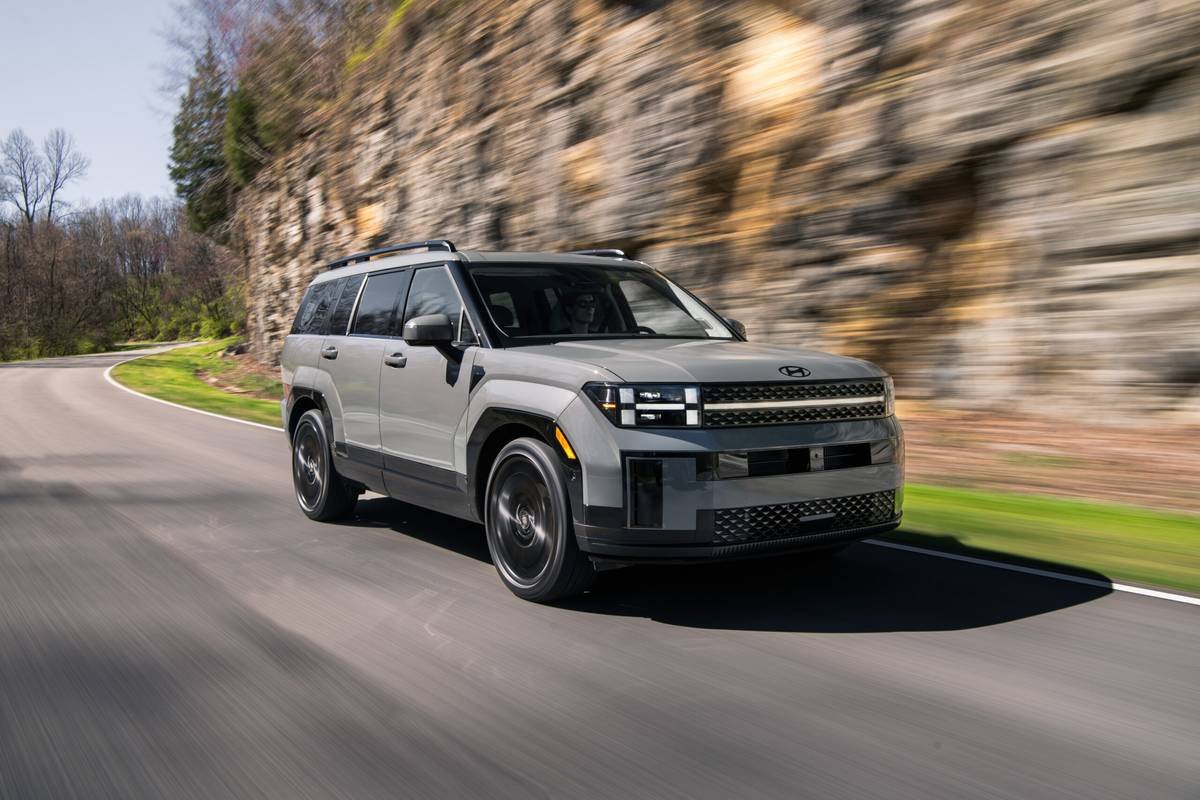
2026 Hyundai Santa Fe Review: A Smoother, Smarter Family Hauler
Bold three-row hauler gains a smoother transmission and still undercuts rivals
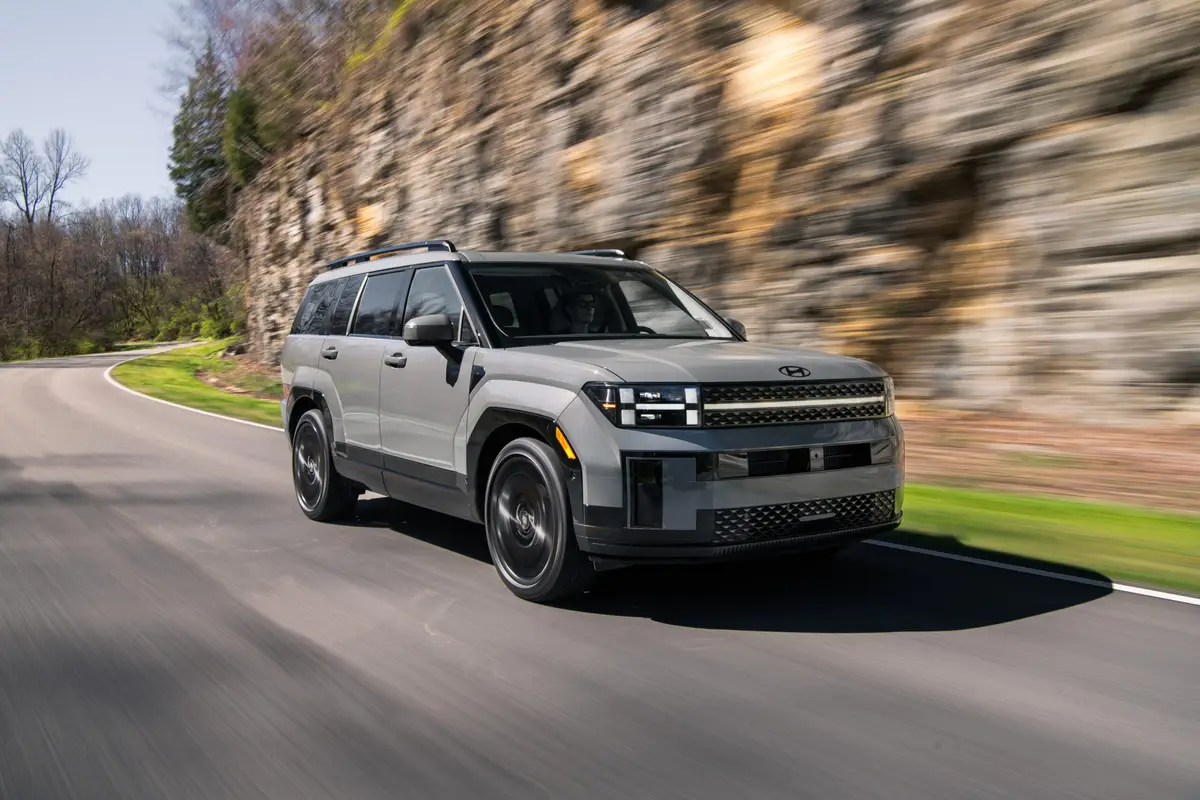
2026 Hyundai Santa Fe exterior three-quarter view
⚡ Quick Verdict
— The 2026 Hyundai Santa Fe at a Glance
✓ The Good
- +New 8-speed automatic eliminates dual-clutch quirks entirely
- +Hybrid powertrain delivers 36 mpg combined with no sacrifice
- +Class-leading 10-year/100,000-mile powertrain warranty
- +Clever storage solutions and genuinely usable third row
- +Striking boxy design stands out in a crowded segment
✗ The Trade-offs
- −Third row is snug for adults on longer trips
- −Turbo lag is noticeable when you floor the accelerator
- −XRT off-road hardware is modest — no steel skid plates
- −No Hybrid MAX equivalent for buyers wanting max power
📑 In This Review
- What’s New for 2026
- Pricing and Trims: SE to Calligraphy
- Powertrain and Driving Impressions
- Interior, Tech and Family Practicality
- XRT Trim and Light Off-Road Capability
- 2026 Hyundai Santa Fe vs Toyota Grand Highlander: Which Is Better?
- How the Santa Fe Stacks Up Against Other Rivals
- Safety, Warranty and Ownership
- Recommended Trim
- Verdict — Who Should Buy the 2026 Hyundai Santa Fe?
- Frequently Asked Questions
The 2026 Hyundai Santa Fe’s headline change is a new 8-speed automatic transmission that replaces the previous dual-clutch unit, delivering the buttery smooth low-speed behavior families deserve. It squares off against the Toyota Grand Highlander, Honda Pilot, Mazda CX-90, and its own platform-mate Kia Sorento in the fiercely competitive three-row SUV space. If you want bold styling, clever packaging, an efficient hybrid option, and Hyundai’s industry-best warranty — all for under $50,000 — the Santa Fe belongs at the top of your test-drive list. 
What’s New for 2026
Hyundai didn’t overhaul the Santa Fe for 2026. Instead, they targeted specific pain points. The biggest news? Every gas model now uses a traditional 8-speed automatic. This swap completely smooths out low-speed maneuvers and puts to rest any concerns about the old dual-clutch unit’s reliability. It’s the kind of focused update that makes a real difference in daily driving.
The safety tech gets a boost across the board. Full-speed smart cruise control, which maintains your set distance in stop-and-go traffic, is now standard on every single trim, including the base SE. You also get a smarter Forward Collision Avoidance system that can now spot cars you might hit while making a turn at an intersection. It’s a common accident scenario, and having that extra layer of protection is a solid win.
Practicality gets a nudge, too. SEL and XRT models now include USB ports for the third-row passengers. The Limited comes standard with second-row captain’s chairs, swapping the seven-seat layout for a six-seat one with easier access to the back. The XRT consolidates its off-road readiness with a dedicated Terrain Mode selector featuring Mud, Snow, and Sand settings. And if you’re eyeing the top-tier Calligraphy, you can now get it with a gorgeous Pecan Brown Nappa leather interior.
Pricing and Trims: SE to Calligraphy
Your journey with the 2026 Santa Fe starts at $36,400 for the gas-powered SE. From there, the lineup climbs through four trims to the loaded Calligraphy at $48,950. The SEL, at $38,940, is a smart $2,540 step up that adds the dual-zone climate control, third-row vents, leatherette seats, and heated front chairs most families want. The adventure-focused XRT comes in at $43,390, exclusively with all-wheel drive. It bundles its rugged tires and extra ground clearance into one package.
Luxury arrives with the $45,950 Limited, which brings a Bose stereo, 360-degree camera, and automated parking. The top-tier Calligraphy, at $48,950, piles on quilted Nappa leather, 21-inch wheels, a head-up display, and Highway Driving Assist 2. Want all-wheel drive on any trim except the XRT? That’ll be an extra $1,800.
The hybrid lineup starts at $37,750 for the SE and tops out at $50,050 for the Calligraphy. You’ll pay roughly $1,100 to $1,350 more for the hybrid over a comparable gas model. We think that premium pays for itself over time with fuel savings. Our recommended pick? The SEL Hybrid. Add the $1,800 for all-wheel drive, and you’re looking at about $41,840 for a well-equipped family hauler that sips fuel at a rate of 34 mpg combined.
| Trim | Gas (2.5T) | Hybrid (1.6T HEV) |
|---|---|---|
| SE | $36,400 | $37,750 |
| SEL | $38,940 | $40,040 |
| XRT (AWD only) | $43,390 | — |
| Limited | $45,950 | $47,050 |
| Calligraphy | $48,950 | $50,050 |
*All prices include $1,600 destination. AWD adds $1,800 on non-XRT trims.*

Powertrain and Driving Impressions
Under the hood of every gas-powered Santa Fe sits a 2.5-liter turbo four-cylinder making 277 hp and 311 lb-ft of torque. The news for 2026 is that it’s hooked up to a new 8-speed automatic instead of the old dual-clutch. We can’t overstate how much this improves the experience. The SUV now pulls away from a standstill with a creaminess the old transmission just couldn’t manage. Low-speed crawling in bumper-to-bumper traffic, a scenario where the DCT could get jerky, is now completely smooth. The transmission shifts smartly, kicks down promptly when you need power, and holds gears well on hills.
There’s still a brief moment of turbo lag if you floor it from a stop—the engine takes a heartbeat to build boost before the power arrives in a strong, linear rush. That’s the character of a small-displacement turbo engine, and once you’re used to it, the Santa Fe feels strong and confident. The best part? Switching to a conventional automatic didn’t hurt fuel economy. The all-wheel-drive gas model still gets an EPA-rated 23 mpg combined, matching the old figure. Only the XRT, with its all-terrain tires, dips slightly to 21 mpg combined.
The ride quality is supple and well-controlled. It absorbs broken pavement and highway expansion joints without letting harshness into the cabin. The brake pedal feels natural and progressive, making smooth stops easy. The steering is light and direct, though not overly talkative. For a boxy three-row SUV, the Santa Fe feels composed in corners. Body roll is kept in check, and the chassis inspires confidence without pretending to be sporty.
The hybrid option pairs a 1.6-liter turbo engine with an electric motor for a combined 231 hp and 271 lb-ft of torque, using a 6-speed automatic. It delivers a roughly 50-percent jump in efficiency—36 mpg combined with front-wheel drive and 34 mpg with all-wheel drive. For long-term ownership, this is the powertrain we’d choose. The hybrid’s character is smooth and quiet, with the electric motor filling in low-speed torque where the gas engine might hesitate.


Interior, Tech and Family Practicality
Climb inside the Santa Fe, and you’ll immediately notice how smartly Hyundai has used the space. Every model gets a standard 12.3-inch touchscreen with crisp graphics and big, easy-to-hit icons. We found it responsive and simple to use daily. Higher trims get a second 12.3-inch screen for the gauges, and together they form a wide, premium-looking panel across the dash. Wireless Apple CarPlay and Android Auto are standard on every trim—they connect quickly and reliably in our experience. You’ll also find actual buttons and knobs for the audio system, a welcome relief from all-touch controls.
This is where the Santa Fe really shines: storage. It has two glove boxes, one stacked above the other. The center console can be opened from either the front or the back, and a sliding panel lets second-row passengers grab what they need without bugging the driver. There are big door bins, console storage, and even four cupholders for the third row. Everything has a home.
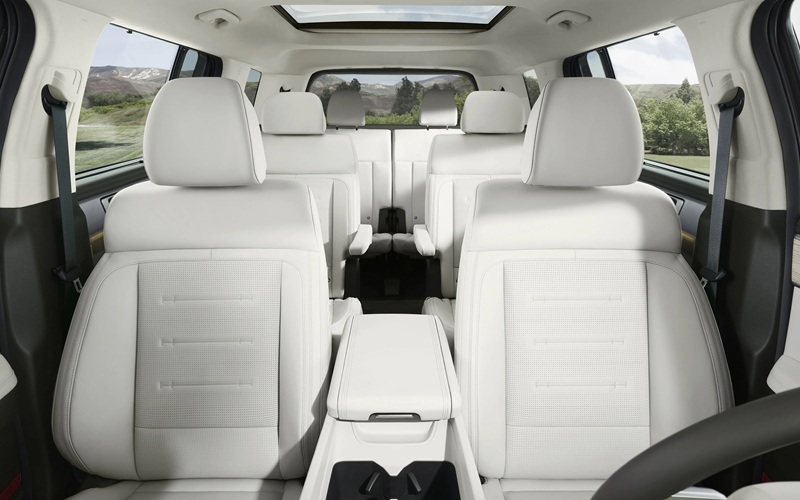
The seats are comfortable for long hauls, offering good support without creating pressure points. The second row slides and reclines generously, giving adult passengers plenty of space. Getting to the third row is easy with a single-button fold on the second-row seat. Once you’re back there, the space is usable for average-height adults on shorter trips and perfectly fine for kids on longer ones.
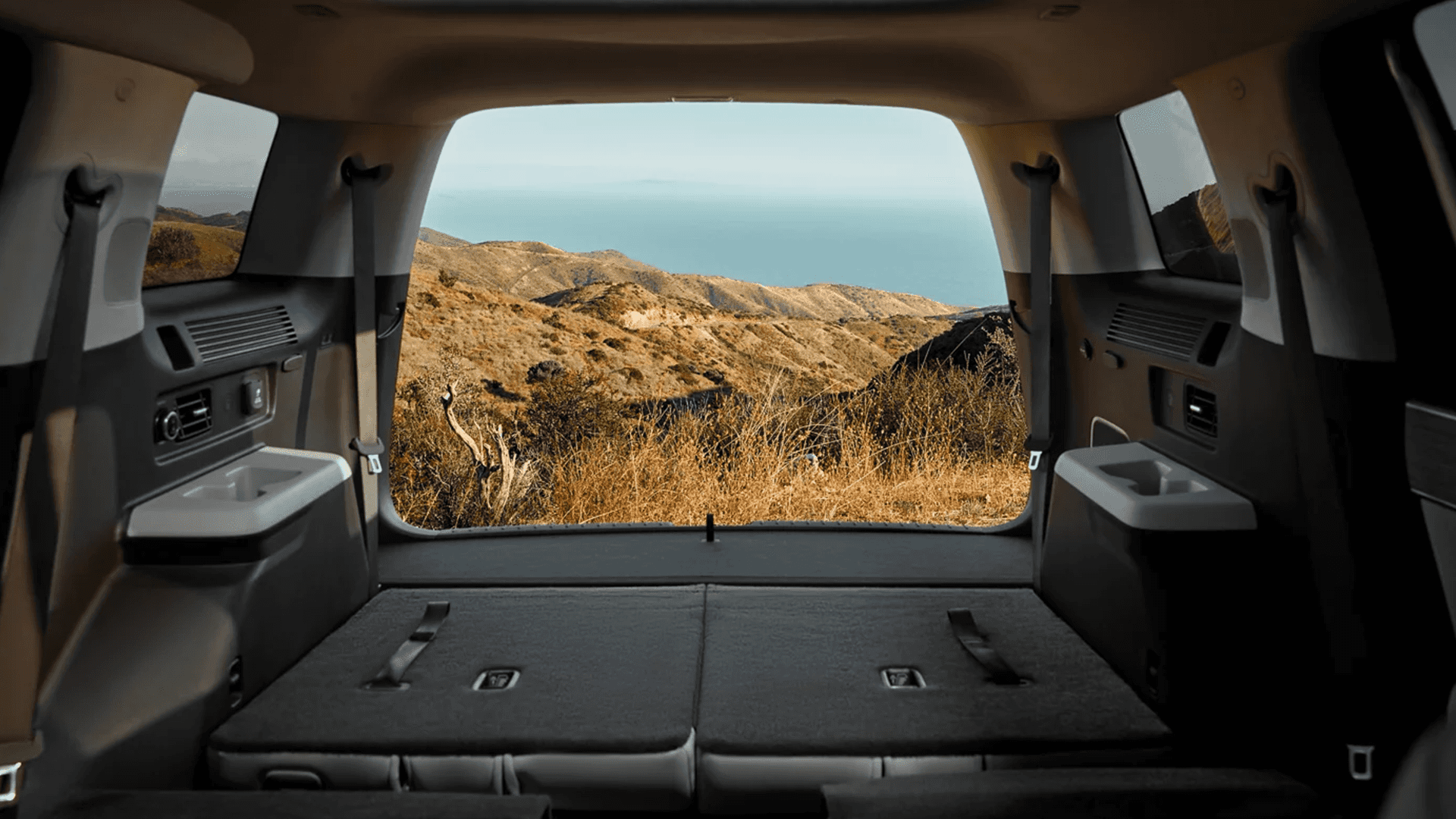
With all seats up, you get 14.6 cubic feet of cargo space. Fold the third row, and that expands to 40.5 cubic feet. Drop both rear rows, and you’re looking at about 79.6 cubic feet. The third-row seats fold flat with simple pull straps, and there are releases in the cargo area to drop the second row, creating a long, flat load floor. A hands-free liftgate that opens when you stand behind the car with the key is a small godsend when your arms are full.
For 2026, the Limited’s second-row captain’s chairs are standard, making it a six-seater. Heated and ventilated front seats are available higher up the trim ladder, and the Calligraphy now offers that rich Pecan Brown Nappa leather.
Installing car seats is straightforward, with anchors in the second and third rows. The outboard second-row anchors sit a bit deep, so you’ll need to be patient. A rear-facing infant seat fits fine, but you can’t fit two rear-facing seats in the second and third rows at the same time. It’s a limitation for families with multiple young kids.

XRT Trim and Light Off-Road Capability
The XRT is for buyers who want their family SUV to look the part of an adventurer. It sits 1.3 inches higher, wears all-terrain tires on dark 18-inch wheels, and has black exterior trim for a tougher look. For 2026, it gets a specific Terrain Mode with Mud, Snow, and Sand settings that adjust throttle, traction control, and power delivery for loose surfaces. Inside, you’ll find XRT logos on the headrests. It can also tow about 4,500 pounds—roughly 1,000 more than other Santa Fe trims.
We drove the XRT on gravel roads and mild dirt trails. The extra clearance and capable tires give you real confidence over rocks and ruts that would make you nervous in a standard model. But we wouldn’t call it a serious off-roader. The underbody protection is composite, not steel, so a hard hit could damage vital components. The spare is a compact temporary unit, not a full-size tire. And while the approach and departure angles are better, the plastic bumpers are still easy to scrape. It’s built for fire roads and trailheads, not rock crawling, and that’s perfectly okay for most people.
2026 Hyundai Santa Fe vs Toyota Grand Highlander: Which Is Better?
The Toyota Grand Highlander is the Santa Fe’s most direct and most formidable competitor. Where the Santa Fe occupies the space between compact and mid-size three-row SUVs, the Grand Highlander is a genuinely mid-size offering with a roomier third row and a broader range of powertrain options. The question is whether those advantages justify the Grand Highlander’s higher price of entry.
Starting price is where the Santa Fe pulls ahead immediately. The base 2026 Santa Fe SE begins at $36,400, roughly $5,000 less than the Grand Highlander LE’s approximately $41,260 opening bid. Even at the hybrid level, the Santa Fe Hybrid SEL undercuts the Grand Highlander Hybrid LE by several thousand dollars. For budget-conscious families, that gap is substantial.
The two take different approaches to power. The Santa Fe offers a 277-hp turbo 2.5-liter or a 231-hp hybrid. The Grand Highlander counters with a 265-hp turbo 2.4-liter, a 245-hp hybrid, and the 362-hp Hybrid MAX that has no Santa Fe equivalent. If you want max power and towing—the Hybrid MAX can haul up to 5,000 pounds—the Toyota is your choice.
Fuel economy is nuanced. The Santa Fe Hybrid returns 34 mpg combined in AWD. The Grand Highlander Hybrid gets about 36 mpg combined. However, the Santa Fe’s hybrid costs less to buy, so the total cost of ownership over five years ends up being similar.
The Grand Highlander’s third row is roomier. Adults can sit comfortably back there on longer trips, while the Santa Fe’s third row suits kids or shorter adult stints. Cargo space behind that third row also favors the Toyota, at about 20.6 cubic feet versus 14.6 for the Hyundai.
Interior tech is nearly a tie. Both have big touchscreens, wireless phone connectivity, and full driver-assist suites. We give the nod to the Santa Fe for its more intuitive infotainment, dual glove boxes, dual-access console, and hands-free liftgate. These small details add up in daily life.
Warranty is where Hyundai wins decisively. The Santa Fe’s 5-year/60,000-mile basic and 10-year/100,000-mile powertrain warranty crushes Toyota’s 3-year/36,000-mile basic and 5-year/60,000-mile powertrain coverage. Hyundai also includes 3 years/36,000 miles of free maintenance.
| Spec | 2026 Hyundai Santa Fe Hybrid SEL AWD | 2026 Toyota Grand Highlander Hybrid LE AWD |
|---|---|---|
| Starting Price | ~$41,840 | ~$45,760 |
| Powertrain | 1.6L turbo I4 + electric motor | 2.5L I4 + electric motor |
| Horsepower | 231 hp combined | 245 hp combined |
| Transmission | 6-speed automatic | eCVT |
| Combined MPG | 34 | 36 |
| Towing Capacity | ~3,500 lb | ~3,500 lb |
| Seating | 7 | 7–8 |
| Cargo Behind 3rd Row | 14.6 cu ft | ~20.6 cu ft |
| Warranty (Basic / Powertrain) | 5yr/60k / 10yr/100k | 3yr/36k / 5yr/60k |
<div style="background:linear-gradient(135deg,#f0f9ff,#e0f2fe); border-left:4px solid #2563eb; border-radius:12px; padding:24px 28px; margin:32px 0"> <p style="font-size:12px; font-weight:800; letter-spacing:0.14em; text-transform:uppercase; color:#1e40af; margin:0 0 10px">Which one is better?</p> <p><strong>Buy the Santa Fe Hybrid if</strong> you want a lower price of entry, bolder styling, smarter interior packaging, and the peace of mind that comes with Hyundai’s industry-leading warranty.</p> <p><strong>Buy the Grand Highlander if</strong> you need a genuinely roomy third row for adult passengers, want the option of a powerful Hybrid MAX drivetrain, or plan to tow closer to 5,000 pounds regularly.</p> <p><strong>Our pick</strong> is the Santa Fe Hybrid for most families — it delivers 90 percent of the Grand Highlander’s practicality at a meaningfully lower price with a warranty that is twice as long.</p> </div>

How the Santa Fe Stacks Up Against Other Rivals
The Kia Sorento Hybrid shares the Santa Fe’s platform and hits an identical 36 mpg combined, but it starts lower at $38,890 and has a slightly smaller footprint. The Honda Pilot uses a 285-hp V6 and can tow up to 5,000 pounds, but its fuel economy sits around 22 mpg combined, and there’s no hybrid option. The Mazda CX-90 Select, starting at $39,650, offers a more premium, rear-biased driving feel with 280 hp and 5,000 pounds of towing, but its third-row access is tighter and cargo space behind that row is limited. Hyundai’s own Palisade is bigger inside, with a truly roomy third row and a 287-hp V6, but it lacks the Santa Fe’s bold design and hybrid efficiency.
| Model | Starting Price | Power | Combined MPG | Tow | Seats | Standout |
|---|---|---|---|---|---|---|
| 2026 Santa Fe Hybrid SEL AWD | ~$41,840 | 231 hp | 34 | ~3,500 lb | 7 | Best warranty, bold design |
| 2026 Kia Sorento Hybrid | $38,890 | ~227 hp | 36 | ~2,000 lb | 6–7 | Same platform, lower price |
| 2026 Honda Pilot Sport FWD | $41,295 | 285 hp | ~22 | 5,000 lb | 8 | V6 power, true mid-size |
| 2026 Mazda CX-90 Select | $39,650 | 280 hp | ~25 | 5,000 lb | 8 | Premium feel, RWD bias |
| 2026 Hyundai Palisade SE FWD | $40,650 | 287 hp | ~22 | 5,000 lb | 8 | Roomiest third row |

Safety, Warranty and Ownership
The 2026 Santa Fe earns an IIHS TOP SAFETY PICK+, the institute’s highest award. It scores Good in the small-overlap front, updated moderate-overlap front, and updated side crash tests. Headlights get an Acceptable rating. NHTSA gives it a five-star overall safety rating, its top mark.
Every model comes with nine airbags and a full suite of active safety tech. This includes Forward Collision Avoidance with pedestrian and cyclist detection, now with junction-turning capability, auto emergency braking, full-speed adaptive cruise control, lane-departure steering assist with lane-centering, front and rear cross-traffic alert, parking sensors, a driver attention monitor, and blind-spot monitoring. The Limited and Calligraphy add a 360-degree camera and blind-spot camera feeds in the instrument cluster.
Hyundai’s warranty is the segment’s gold standard. Basic coverage lasts 5 years or 60,000 miles. The powertrain warranty is an exceptional 10 years or 100,000 miles. Hybrid models get the same 10-year/100,000-mile coverage on their batteries and components. You also get 3 years or 36,000 miles of complimentary scheduled maintenance and 5 years of roadside assistance with no mileage limit. Most rivals offer only 3-year/36,000-mile basic and 5-year/60,000-mile powertrain warranties.
Recommended Trim
The SE, at $36,400, is a solid budget entry. It includes the full driver-assist suite, the 12.3-inch touchscreen, rear air vents, and smart key access. But for most families, we’d recommend the SEL at $38,940. The extra $2,540 gets you dual-zone automatic climate control, third-row vents, roof rails, leatherette upholstery, heated front seats, and a power driver’s seat. These are features you’ll use every day and are hard to add later.
If your budget allows, step up to the SEL Hybrid at $40,040. The roughly $1,100 premium over the gas SEL buys you about 50 percent better fuel economy—jumping from 24 mpg combined to 36 mpg combined in front-wheel drive. The fuel savings will pay for that difference well before the warranty runs out. The SEL Hybrid is the Santa Fe’s sweet spot, and it’s the one we’d pick for our own family.
Verdict — Who Should Buy the 2026 Hyundai Santa Fe?
The 2026 Hyundai Santa Fe isn’t trying to be a true mid-size three-row SUV. It doesn’t have the Grand Highlander’s roomy third row, the Palisade’s cavernous interior, or the Pilot’s V6 towing strength. That’s by design. Instead, it’s the most compelling choice in the growing “tweener” three-row segment. It offers bold, polarizing styling, genuinely clever packaging, an efficient hybrid option, and Hyundai’s outstanding warranty, all while consistently undercutting its competitors on price.
The switch to an 8-speed automatic for 2026 erases the one major dynamic complaint we had with the old model. The driving experience is now effortlessly smooth. The interior is a masterclass in family-friendly design, with storage solutions that make other SUVs feel barren and a third row that’s perfectly usable for the school run and weekend trips.
Our 4.4 out of 5 rating reflects a vehicle that nails its core mission. It loses a few points for a third row that still asks taller adults to compromise, noticeable turbo lag off the line, and the XRT’s modest off-road gear. But those are minor issues in the context of such a well-rounded package.
If your family needs three rows, wants hybrid efficiency, values a long warranty, and appreciates styling that stands out—all without spending over $50,000—the 2026 Hyundai Santa Fe deserves a spot at the top of your list. Prices referenced are in US dollars.
Frequently Asked Questions
What’s the biggest change for the 2026 Hyundai Santa Fe?
The most significant update is the replacement of the dual-clutch automatic transmission with a conventional 8-speed automatic on all gas models. This change delivers smoother low-speed behavior, improved perceived reliability, and no fuel-economy penalty — addressing the most common criticism of the outgoing model.
Is the 2026 Santa Fe Hybrid worth the extra money?
Absolutely. The hybrid costs roughly $1,100 to $1,350 more than the comparable gas trim but returns approximately 50 percent better fuel economy — 36 mpg combined in FWD versus 24 mpg for the gas engine. For most owners, the fuel savings will offset the price premium within two to three years of ownership.
How does the Santa Fe compare to the Toyota Grand Highlander?
The Santa Fe is less expensive to buy, offers a bolder design, smarter interior storage, and a significantly longer warranty. The Grand Highlander counters with a roomier third row, a more powerful Hybrid MAX option, and Toyota’s established reputation for reliability. For most families, the Santa Fe delivers better value; if third-row space is the priority, the Grand Highlander has the edge.
Can the Santa Fe XRT handle real off-roading?
The XRT is capable on fire roads, gravel trails, and mild terrain thanks to its extra 1.3 inches of ground clearance, all-terrain tires, and Terrain Mode. However, composite underbody protection, a compact spare tire, and vulnerable plastic fascias mean it is not suited for rock crawling or serious off-road trails. Think of it as trailhead-ready, not trail-rated.
Does the 2026 Santa Fe have Apple CarPlay and Android Auto?
Yes. Wireless Apple CarPlay and Android Auto come standard on every 2026 Santa Fe trim. No cable is required, and in our experience the system pairs quickly and operates reliably with both iPhone and Android devices.
What is the 2026 Hyundai Santa Fe warranty?
Hyundai offers 5 years or 60,000 miles of basic coverage, 10 years or 100,000 miles of powertrain coverage, and 10 years or 100,000 miles of hybrid battery coverage. Additionally, buyers receive 3 years or 36,000 miles of complimentary scheduled maintenance and 5 years of roadside assistance with no mileage limit. It is the most comprehensive warranty in the segment.
How safe is the 2026 Hyundai Santa Fe?
The 2026 Santa Fe earns an IIHS TOP SAFETY PICK+ — the organization’s highest designation — with Good ratings across all crashworthiness tests. NHTSA awards it five stars overall. Every trim includes nine airbags, forward collision avoidance with junction-turning capability, full-speed adaptive cruise control, blind-spot monitoring, lane-keeping assist, and front and rear parking sensors as standard equipment.
