

2026 Mercedes-Benz GLC Electric Review: The Premium EV SUV Benchmark?
A proper electrification of Merc’s best-seller.

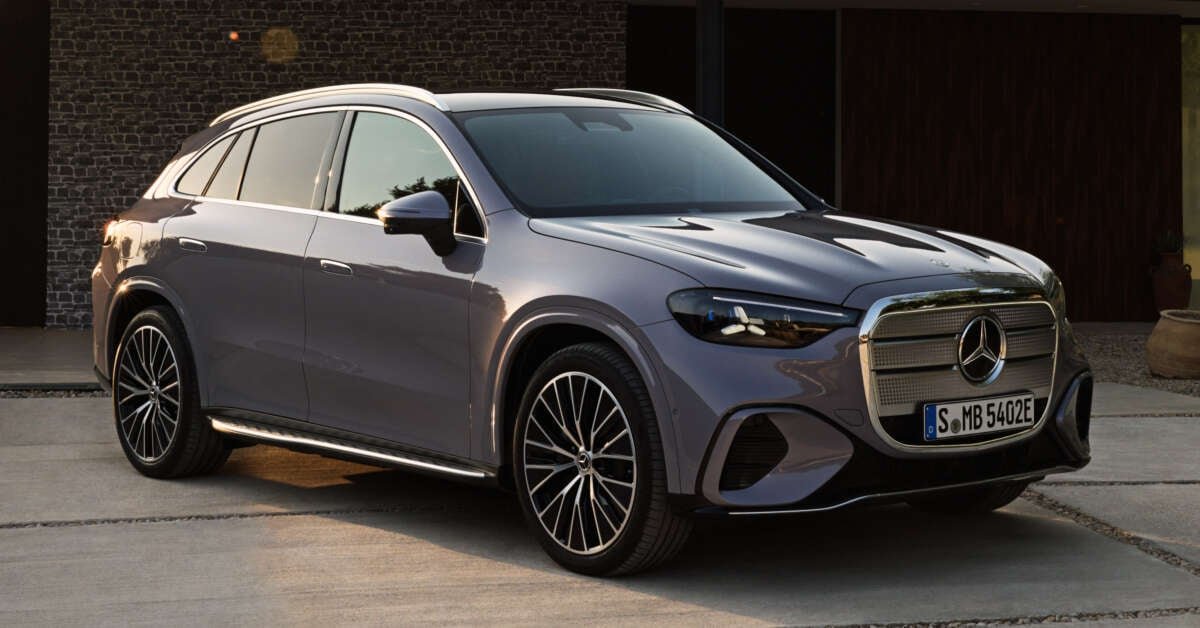
2026 Mercedes-Benz GLC Electric front three-quarter exterior
Price
Est. ~AUD $130,000
0-100 km/h
4.3 sec
Battery (usable)
94 kWh
Power
360 kW (483 hp)
⚡ Quick Verdict
— Quick Verdict
The 2026 Mercedes-Benz GLC Electric is arguably the most significant EV the three-pointed star has ever launched. It takes the brand’s global best-seller and reimagines it on a proper electric platform, pairing a genuinely impressive 713km range with 800V charging that’ll have you back on the road in minutes. The cabin is a tech showcase, the ride is properly cushy, and there’s enough space and towing ability to work as a real family hauler. BMW’s incoming iX3 is the obvious rival, but right now the GLC Electric looks like the premium electric SUV to beat.
## A Dedicated EV Platform, Finally
For Mercedes-Benz, the jump from the old EQC to this new GLC Electric is massive — not just a generational update but a wholesale rethink of the architecture underneath. The EQC arrived in 2019 as a necessary first crack at electrification, but it was always fighting against its origins: an internal combustion platform retrofitted with batteries and motors. The GLC Electric rides on the MB.EA-Medium architecture, a ground-up EV platform that ditches those compromises entirely. You notice it in the proportions, and you feel it the moment you sit inside.
✓ The Good
- +Finally, a purpose-built EV platform with massive range
- +Blistering 330kW DC charging adds 300km in 10 minutes
- +Tech-laden, spacious cabin with stunning Hyperscreen
- +Superb ride comfort with optional airmatic suspension
- +Impressive 2.4t towing capacity for an electric SUV
✗ The Trade-offs
- −Pricing will start at a steep premium in Australia
- −Noticeable road and wind noise on larger 20-inch wheels
- −Heavy kerb weight is felt in tighter corners
- −No confirmation yet on a more affordable single-motor version
- −Some advanced features locked behind options or subscriptions
📑 In This Review
- A Dedicated EV Platform, Finally
- Powertrain, Performance and the Two-Speed Gearbox
- 800V Architecture, Range and Charging
- Interior, MBUX Hyperscreen and Tech
- On-Road Manners and Airmatic Suspension
- At a Glance — How It Compares
- 2026 Mercedes-Benz GLC Electric vs BMW iX3: Which Is Better?
- 2026 GLC Electric vs BMW iX3 50 xDrive
- Safety, Warranty and Ownership
- Who Should Buy It
- Final Verdict
- Frequently Asked Questions
The 2026 Mercedes-Benz GLC Electric is arguably the most significant EV the three-pointed star has ever launched. It takes the brand’s global best-seller and reimagines it on a proper electric platform, pairing a genuinely impressive 713km range with 800V charging that’ll have you back on the road in minutes. The cabin is a tech showcase, the ride is properly cushy, and there’s enough space and towing ability to work as a real family hauler. BMW’s incoming iX3 is the obvious rival, but right now the GLC Electric looks like the premium electric SUV to beat.
A Dedicated EV Platform, Finally
For Mercedes-Benz, the jump from the old EQC to this new GLC Electric is massive — not just a generational update but a wholesale rethink of the architecture underneath. The EQC arrived in 2019 as a necessary first crack at electrification, but it was always fighting against its origins: an internal combustion platform retrofitted with batteries and motors. The GLC Electric rides on the MB.EA-Medium architecture, a ground-up EV platform that ditches those compromises entirely. You notice it in the proportions, and you feel it the moment you sit inside.
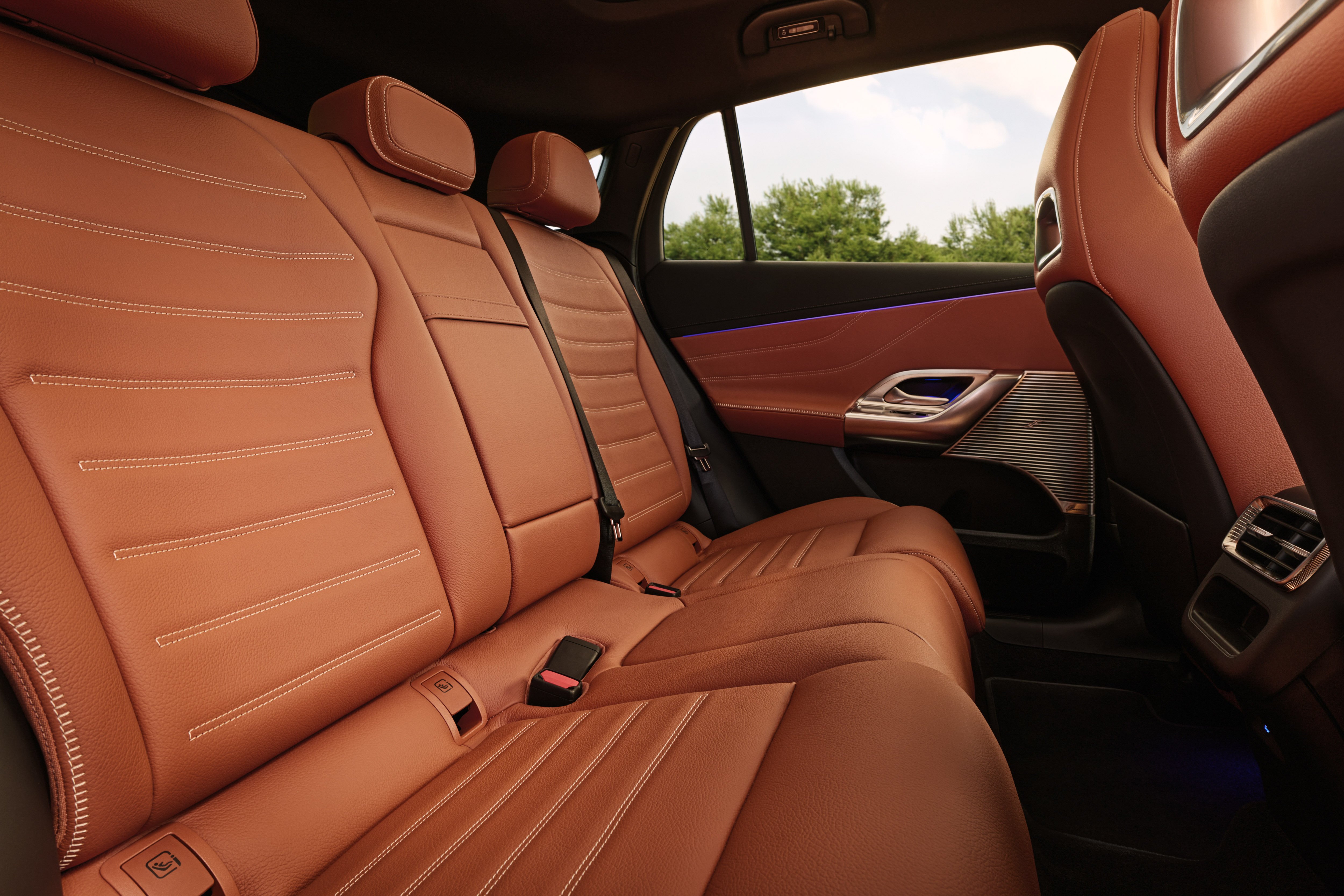
Worth noting: this doesn’t replace the petrol GLC. The two will coexist in showrooms, giving buyers a clear either/or choice. The electric version launches as the GLC 400 4MATIC, arriving loaded with intent. This is Mercedes showing what a premium electric SUV can be when it isn’t shackled to an engine bay it was never designed around. The wheelbase is 84mm longer than the combustion model’s, and that’s not just a spec-sheet number — it translates directly into more rear legroom and a noticeably roomier cabin.
Powertrain, Performance and the Two-Speed Gearbox
The dual-motor setup in the GLC 400 4MATIC Electric puts out 360 kW and a hefty 800 Nm of torque. Hooked up to an on-demand all-wheel-drive system with a disconnect clutch on the front axle, it’ll hit 100 km/h from rest in a claimed 4.3 seconds. That performance comes on in a wave of silent, linear thrust — no drama, no gear changes, just a relentless push into your seatback. The clever bit is the two-speed gearbox on the rear axle. First gear is calibrated for low-speed shove, which is especially handy when you’re pulling away with a trailer hitched up. Second ratio steps in at higher speeds to keep efficiency in check.
Once you’re cruising above a certain velocity on the highway, the system drops the front motor out of the equation entirely, effectively turning the GLC into a rear-driver to eke out every last kilometre of range. The handover is imperceptible. The regenerative braking setup can recuperate up to 300 kW, managed by a new one-box brake system that blends regen and friction braking with a consistently natural pedal feel. Dial up strong recuperation at 60 km/h and the GLC will scrub speed all the way to a controlled standstill, making one-pedal driving around town genuinely easy.

800V Architecture, Range and Charging
The 800V electrical architecture is the backbone of the GLC Electric’s EV credentials. It delivers the numbers that matter: a usable 94 kWh battery good for up to 713 km on the WLTP cycle, and DC charging that peaks at a blistering 330 kW. Find a charger that can keep up and you’ll add 303 km of range in 10 minutes flat. The 10-to-80 percent sprint takes 22 minutes. That changes the maths on long-distance travel entirely — your coffee break becomes your charging break.
For Australia, where the public charging network is growing but still inconsistent in peak output, the built-in 400V converter is a welcome piece of pragmatism. It means the GLC Electric works properly with the bulk of chargers already out there. The system is also future-proofed for Vehicle-to-Home and Vehicle-to-Grid applications. A standard multi-source heat pump scavenges waste heat from the drivetrain and battery, which is exactly what you want in cooler Aussie conditions to stop the range from dropping off when you fire up the heater.

Interior, MBUX Hyperscreen and Tech
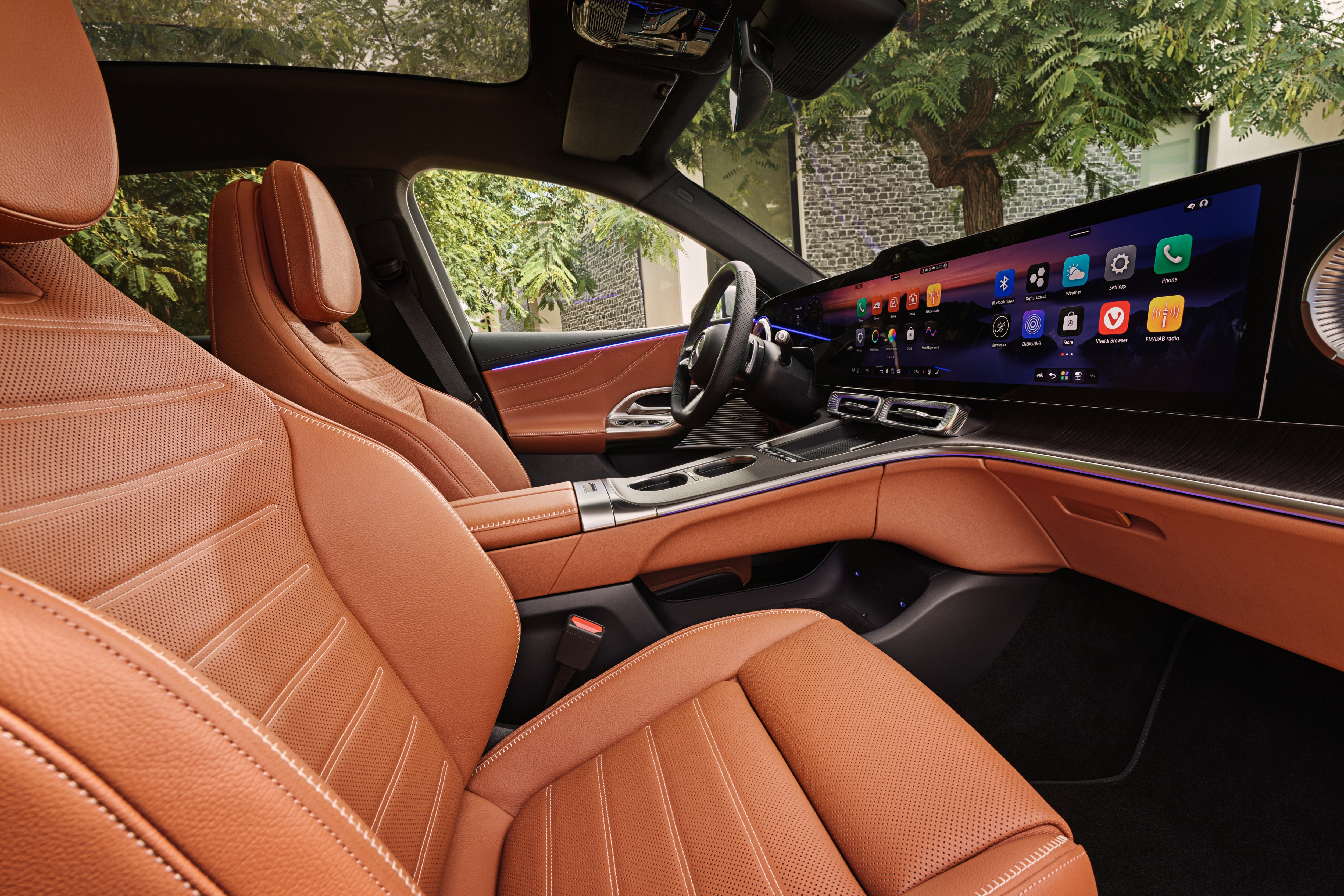
Slide into the driver’s seat and the first thing you clock is the optional MBUX Hyperscreen — a 99.3 cm curved glass panel that stretches from A-pillar to A-pillar. It’s a genuinely striking centrepiece, backed by over 1,000 matrix LEDs, and it sets the tone for the entire cabin. Underneath it runs the new MBOS operating system, which Mercedes says can handle 254 trillion operations per second. That feeds a multi-agent AI system tapping into ChatGPT, Microsoft Bing, and Google Gemini, giving you three distinct virtual assistant personalities to play with.
There’s more to the tech than one massive screen, though. The Sky Control panoramic roof has nine switchable zones that go from fully transparent to opaque at the press of a button — brilliant for managing harsh Australian sun on a long drive. You can spec nappa leather or a Vegan Society-certified alternative at no extra cost, which is a nice touch. Mercedes has also listened to owners and brought back the tactile rockers on the steering wheel, ditching the frustrating haptic touchpads. The whole cabin walks a fine line between futuristic and genuinely usable, and the extended wheelbase pays dividends in visibility and space.
On-Road Manners and Airmatic Suspension
We came away from our time behind the wheel thinking of the GLC Electric as a supremely comfortable grand tourer, especially on the optional airmatic air suspension. Over a test route mixing highways, suburban streets, and tight mountain passes, this setup was outstanding. It rounds off bumps and road imperfections with a quiet, cushioning compliance that’s a genuine benchmark. The intelligent ride height system taps into Google Maps data to drop the body on motorways for better aero, and it can even flag potholes detected by cars ahead. That’s clever stuff.
The three drive modes — Eco, Comfort, and Sport — give the car noticeably different characters. Comfort is plush and a touch floaty through bends, while Sport tightens the body control without turning the ride brittle. The rear-steer system, with 4.5 degrees of lock, shrinks the turning circle to just over 11 metres, so this big SUV pivots around in car parks far more nimbly than you’d expect. Noise suppression is generally very good, though we did pick up some road roar on the 20-inch wheels and a bit of wind rustle around the large side mirrors.
At a Glance — How It Compares
| Feature | GLC 400 4MATIC Electric | BMW iX3 50 xDrive | Tesla Model Y Long Range | Audi Q6 e-tron quattro |
|---|---|---|---|---|
| Price (from) | Est. ~AUD $130,000 | Est. ~AUD $120,000 | AUD $68,900 | Est. ~AUD $115,000 |
| Power | 360 kW (483 hp) | 350 kW (469 hp) | 250 kW (335 hp) | 285 kW (382 hp) |
| Torque | 800 Nm | 650 Nm | 493 Nm | 580 Nm |
| 0-100 km/h | 4.3 sec | 4.9 sec | 5.0 sec | 5.9 sec |
| Battery (usable) | 94 kWh | 108.7 kWh | 60 kWh | 94.9 kWh |
| WLTP Range | Up to 713 km | Up to 805 km | ~530 km | Up to 625 km |
| Peak DC Charging | 330 kW | 400 kW | 250 kW | 270 kW |
| Drive | AWD (on-demand) | AWD | RWD | AWD |
| Notable Tech | MBUX Hyperscreen, 800V, Airmatic | Panoramic iDrive, 800V | Minimalist interior, Supercharger network | Single integrated screen, 800V |
BMW iX3 50 xDrive
Bigger 108.7 kWh battery and 400 kW charging give the iX3 the headline range and recharge edge.
Tesla Model Y Long Range
Far more affordable but less premium inside and slower charging at 250 kW.
Audi Q6 e-tron quattro
Similar luxury feel and PPE-platform tech but slower 0-100 and lower peak DC.
Porsche Macan 4
Sportier feel and Porsche badge cachet, but pricier and more compact inside.
The premium electric SUV segment is heating up fast. Here’s how the GLC Electric lines up against its key rivals on paper. GLC 400 4MATIC Electric Tesla Model Y Long Range :— :— Est. ~AUD $130,000 AUD $68,900 360 kW (483 hp) 250 kW (335 hp) 800 Nm 493 Nm 4.3 sec 5.0 sec 94 kWh 60 kWh Up to 713 km ~530 km 330 kW 250 kW AWD (on-demand) RWD MBUX Hyperscreen, 800V, Airmatic Minimalist interior, Supercharger network
2026 Mercedes-Benz GLC Electric vs BMW iX3: Which Is Better?
This is the head-to-head that’ll define the segment. Both are mid-size premium electric SUVs from German arch-rivals, both sit on fresh 800V platforms, and both land within months of each other. On paper, they’re remarkably close. The Mercedes edges it on power — 360 kW versus 350 kW — translating to a quicker dash to 100 km/h: 4.3 seconds against 4.9. The BMW fights back with a substantially larger 108.7 kWh battery, claiming a superior 805 km WLTP range to the Merc’s 713 km.
Charging speed is another key battleground. The iX3 peaks at 400 kW, though in practice the real-world difference over the Merc’s already rapid 330 kW may come down to minutes. Where they really split apart is in character. BMW is positioning the iX3 as the sportier driver’s choice with its Adaptive M suspension, while Mercedes is doubling down on luxury — the airmatic ride, the Hyperscreen theatre, and a cabin that prioritises opulence over outright engagement.
Inside, the tech philosophies diverge sharply. Mercedes goes all-in with the Hyperscreen as a dramatic, pillar-to-pillar display. BMW’s Panoramic iDrive is layered and more driver-focused. Both are seriously advanced. On the road, we’d expect the BMW to deliver sharper steering feel and more engagement through bends, while the Mercedes — particularly on airmatic — will lean into that serene, magic-carpet ride. The GLC also tows more: 2.4 tonnes versus the BMW’s 2.0 tonnes.

2026 GLC Electric vs BMW iX3 50 xDrive
| Feature | Mercedes-Benz GLC Electric | BMW iX3 50 xDrive |
|---|---|---|
| Power | 360 kW (483 hp) | 350 kW (469 hp) |
| Torque | 800 Nm | 650 Nm |
| 0-100 km/h | 4.3 sec | 4.9 sec |
| Battery (usable) | 94 kWh | 108.7 kWh |
| WLTP Range | Up to 713 km | Up to 805 km |
| Peak DC Charging | 330 kW | 400 kW |
| Boot Space | 570 L + 128 L frunk | 520 L + ? frunk |
| Towing Capacity | 2,400 kg | 2,000 kg |
| Key Suspension | Optional Airmatic | Standard Adaptive M |
>>> CALLOUT **Buy the GLC Electric if…** you want cabin luxury, the Hyperscreen’s visual drama, and a ride that floats over Australian roads without breaking a sweat. **Buy the BMW iX3 if…** maximum range is non-negotiable and you’d rather have a sportier, more driver-focused SUV. **Our pick is…** The Mercedes-Benz GLC Electric. It blends luxury, tech, and real-world usability more convincingly — the superior towing capacity and, we suspect, a more comfortable daily ride give it the edge. >>> ENDCALLOUT
Safety, Warranty and Ownership
Mercedes-Benz has a strong safety track record, and the GLC Electric follows suit. Standard kit includes 11 airbags, autonomous emergency braking, lane-keep assist, driver monitoring, speed limit assist, and adaptive cruise control. Step up to higher-spec models and you get the blind-spot brake-steer system, which can fire the opposite-side brakes to help pull you back into your lane if you start making a dodgy lane change.
The GLC Electric hasn’t been crash-tested by Euro NCAP or ANCAP yet, but every Mercedes-Benz assessed by Euro NCAP since 2016 has earned a five-star rating. We’d expect nothing less here. Ownership coverage runs to a 3-year unlimited-kilometre vehicle warranty, with the high-voltage battery separately covered for 8 years or 160,000 km, guaranteeing at least 70 percent capacity retention across that period.
Who Should Buy It
This is the EV for buyers who want the badge, the comfort, and the familiarity of a Mercedes-Benz SUV, just with a modern, zero-emission drivetrain underneath. It’s a natural upgrade for current GLC owners ready to go electric, and it’s a strong fit for families who’ll use the 570-litre boot, 128-litre frunk, and 2.4-tonne towing capacity. Tech enthusiasts will get a kick out of the MBUX Hyperscreen and its AI assistants. If a quiet, comfortable, refined driving experience is what you value most, this is the one.
On the flip side, if budget is front of mind you’ll want to shop elsewhere — the GLC Electric will carry a serious price premium. After the longest possible range? The BMW iX3 claims 805 km and may suit you better. Performance purists chasing the raw, track-ready feel of something like a Model Y Performance will find the Merc too focused on luxury. This is an investment in polished, high-tech motoring, not a value play.
⚡ Our Verdict
A proper electrification of Merc’s best-seller.
The 2026 Mercedes-Benz GLC Electric isn’t just an electrified GLC with a battery swapped in — it’s a statement about where the brand is heading. It takes the core GLC recipe — comfort and space with genuine premium cachet — and translates it properly into the electric era with a dedicated platform that doesn’t cut corners. Pair the serene airmatic ride with genuinely fast 800V charging and a cabin that feels a generation ahead of the old car, and you’ve got something special. It lands in a fiercely contested segment, but its well-rounded character gives it a strong hand. This is a serious investment in technology and refinement that finally does justice to Mercedes’s best-selling nameplate in electric form. For luxury EV buyers, it sets a compelling new benchmark. We give the 2026 Mercedes-Benz GLC Electric an 8.7 out of 10.
Frequently Asked Questions
What is the WLTP range of the 2026 Mercedes-Benz GLC Electric?
The GLC 400 4MATIC Electric claims a maximum WLTP range of 713 kilometres. Your real-world figure will depend on driving style, ambient temperature, and how fast you’re going, but that headline number is competitive for the class.
How fast is the Mercedes-Benz GLC Electric?
Mercedes claims 0 to 100 km/h in 4.3 seconds for the GLC 400 4MATIC Electric, courtesy of its 360 kW dual-motor powertrain. That’s properly quick for a mid-size SUV.
What is the maximum DC charging speed for the GLC Electric?
Peak DC charging hits 330 kW. On the right charger, that’s enough to add roughly 303 kilometres of range in just 10 minutes. The 10-to-80 percent top-up takes around 22 minutes.
Can the Mercedes-Benz GLC Electric tow?
It does, and impressively so. The braked towing capacity is 2,400 kg, supported by a 100 kg-rated pop-out hitch, ESP trailer stabilisation, and a dedicated trailer manoeuvring assist system.
How long is the warranty?
Mercedes-Benz covers the vehicle for 3 years with unlimited kilometres. The high-voltage battery gets a separate 8-year or 160,000 km warranty, whichever comes first, with a guarantee of at least 70 percent capacity retention.
What is the expected price in Australia?
Australian pricing hasn’t been locked in yet. Based on UK figures, we’re expecting the GLC 400 4MATIC Electric to start somewhere between AUD$115,000 and AUD$135,000 before on-road costs when it arrives in Australia, likely in the first half of 2026.
