

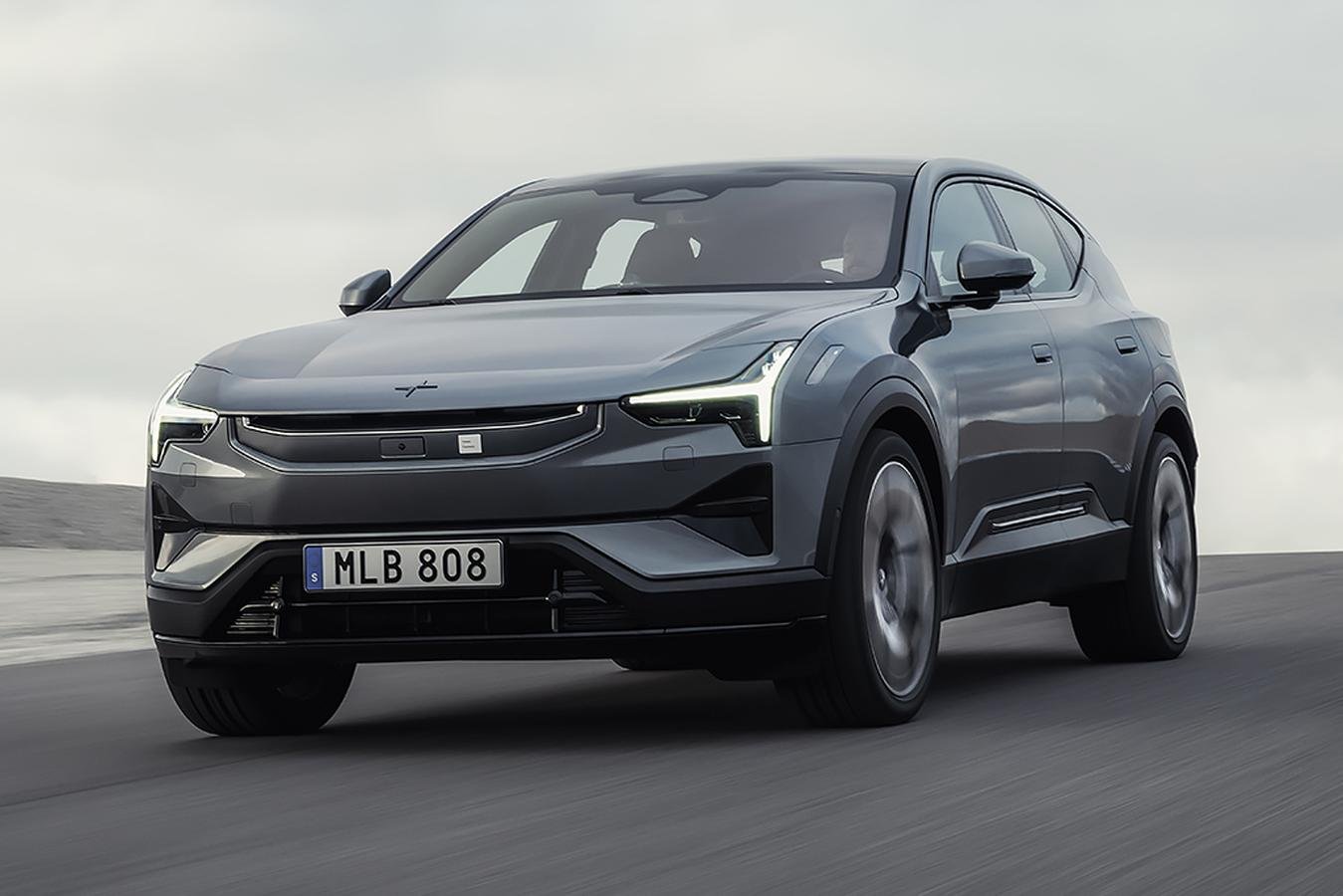
2026 Polestar 3 Review: Tech Overhaul Cements Its Luxury EV Bid
A tech-rich driver’s SUV that trades peak range for polish.

2026 Polestar 3 dual motor electric SUV exterior three-quarter
Price
$131,100
0-100 km/h
4.7 s
Powertrain
Dual Motor AWD
⚡ Quick Verdict
: The 2026 Polestar 3 isn’t just a tickle-up; it’s been fundamentally re-engineered where it counts. The jump to 800-volt architecture, a supercomputer for a brain, and chassis tweaks wrapped in that stunning cabin make it a serious luxury EV contender. It gives away the long-range crown to the BMW iX3, but if you care more about how a car rides, its tech, and how it engages you on a twisty road, the updated Polestar 3 presents a compelling, rounded argument.
## Introduction
The electric luxury SUV space is chock-full of talent. BMW’s iX3 has set a new standard for range, while Audi and Porsche bring serious performance chops. Polestar’s answer isn’t a clean-sheet model, but a substantial mid-life overhaul for its flagship. This isn’t about new bumpers; it’s a ground-up rethink of the electrical and computing gear, aimed at closing the gap and, in some areas, jumping ahead. We’ve spent plenty of time with the updated 2026 Polestar 3 Dual Motor to see if this tech-heavy bet pays off against the BMW iX3, Audi Q6 e-tron, and Mercedes-Benz EQE SUV.
✓ The Good
- +Dramatically faster 350 kW charging and a more efficient, rear-biased dual-motor powertrain.
- +Standard dual-chamber air suspension delivers a sublime, controlled ride over Aussie roads.
- +NVIDIA brain makes infotainment and active safety systems feel cutting-edge and responsive.
- +Handsome, minimalist design still turns heads; interior quality and rear space are superb.
- +Excellent 5-year warranty, servicing, and roadside assistance package for peace of mind.
✗ The Trade-offs
- −Maximum WLTP range now trails key rivals like the BMW iX3 by over 100 miles.
- −Climate controls remain fiddly within the touchscreen interface.
- −Boot space, while adequate, is smaller than direct competitors like the iX3.
- −Light interior colour options may prove high-maintenance for family use.
📑 In This Review
- Introduction
- Design and Exterior
- Performance and Driving Dynamics
- Range, Battery and Efficiency
- 800V Charging Architecture
- Interior, Tech and Practicality
- Safety and Driver Assistance
- At a Glance: How the Polestar 3 Stacks Up
- 2026 Polestar 3 vs BMW iX3: Which Is Better?
- Warranty, Servicing and Ownership
- Who Should Buy the 2026 Polestar 3?
- Final Verdict
- Frequently Asked Questions
: The 2026 Polestar 3 isn’t just a tickle-up; it’s been fundamentally re-engineered where it counts. The jump to 800-volt architecture, a supercomputer for a brain, and chassis tweaks wrapped in that stunning cabin make it a serious luxury EV contender. It gives away the long-range crown to the BMW iX3, but if you care more about how a car rides, its tech, and how it engages you on a twisty road, the updated Polestar 3 presents a compelling, rounded argument.
Introduction
The electric luxury SUV space is chock-full of talent. BMW’s iX3 has set a new standard for range, while Audi and Porsche bring serious performance chops. Polestar’s answer isn’t a clean-sheet model, but a substantial mid-life overhaul for its flagship. This isn’t about new bumpers; it’s a ground-up rethink of the electrical and computing gear, aimed at closing the gap and, in some areas, jumping ahead. We’ve spent plenty of time with the updated 2026 Polestar 3 Dual Motor to see if this tech-heavy bet pays off against the BMW iX3, Audi Q6 e-tron, and Mercedes-Benz EQE SUV.
The reason for the update is straightforward. The original Polestar 3 launched with heaps of style and substance but copped feedback about its charging speed and computing muscle. For 2026, the engineers have ditched the 400-volt system, fitted a much more powerful computer, and fettled the chassis. The result promises to be more efficient, faster-charging, sharper to drive, and way smarter—all while keeping the elegant Scandinavian design that first grabbed our attention.
Design and Exterior
Visually, the 2026 update follows the "if it ain’t broke" rule. Polestar hasn’t touched the exterior sheet metal, and we reckon that’s a good call. The grille-less face, "Thor’s Hammer" LED headlights, and taut, coupe-like roofline are still among the sharpest designs in the segment. It sits with a sleeker, more elegant stance than the more upright BMW iX3, and our test car’s Magnesium paint was a perfect match for its minimalist lines.
The unchanged design is a nod to how right they got it the first time. While rivals chase aggressive vents and fussy creases, the Polestar 3’s smooth surfaces and confident proportions still look modern and premium. The 22-inch wheels on our Dual Motor test car filled the arches nicely, giving it an athletic stance without going overboard. It’s a design that speaks softly, and it’s ageing with a grace that flashier rivals might find hard to match.

Performance and Driving Dynamics
The heart of the update is the new 800-volt system, which brings more than just quicker charging. The dual-motor setup now makes a combined 536 bhp (roughly 400 kW), a 10% bump over before. The power delivery is now biased to the rear, a change that keen drivers will notice. It rockets from 0-100 km/h in a claimed 4.7 seconds and heads on to a top speed of 225 km/h—numbers that just pip the BMW iX3 on paper.
On the road, this translates to a properly engaging experience. The acceleration is forceful and immediate, with a solid kick in the back that feels more urgent than some rivals. More importantly, the rear-led power bias gives it a playful, agile feel when you power out of corners, belying its 2.6-tonne kerb weight. Polestar has also fitted new anti-roll bars and tweaked the steering, so turn-in is sharper and body control is better. It’s no lightweight sports car, but for a big family SUV, its composure and eagerness to change direction are genuinely impressive.
This athletic character is beautifully contrasted by its ride quality. The standard dual-chamber air suspension is a standout, soaking up Aussie road imperfections with a quiet, thump-free compliance that conventional suspensions (like the one on the BMW iX3) can’t match. It glides over expansion joints and corrugations, keeping harshness away from passengers. This blend of sharp handling and serene comfort is the Polestar 3’s defining trait and a huge reason to pick it over its competitors.

Range, Battery and Efficiency
The most talked-about change is the axing of the long-range single-motor variant. The maximum WLTP range is now 634 km for the Dual Motor, down from the old model’s headline 700+ km figure. That means it trails the BMW iX3’s claimed 800 km by a fair margin. But context matters. Polestar claims a 6% efficiency boost across the board, thanks to the 800V system (lighter cables) and clever energy management.
A neat efficiency trick is the front motor’s ability to fully disconnect when it’s not needed, effectively turning the Dual Motor into a rear-wheel-drive car for highway cruising. Our testing suggests real-world range will comfortably sit north of 500 km in temperate conditions, which is plenty for most weekly duties. The regen braking system offers two selectable levels (Medium and High) and a solid one-pedal driving mode that brings you to a complete stop, making town driving effortlessly efficient.

800V Charging Architecture
The shift to 800V is the update’s headline act. Peak DC fast-charging speed leaps from 250 kW to 350 kW, meaning a 10-80% top-up can happen in just 22 minutes under ideal conditions. This completely changes the car’s long-distance touring ability, making top-up stops genuinely brief. The onboard AC charger stays at 11 kW, which is fine for overnight home charging.
It’s worth noting that while the BMW iX3 boasts a 400 kW peak, the real-world charging network in Australia currently maxes out at 350 kW. This puts the Polestar 3 on a par with its key rival for practical charging speeds on today’s infrastructure. The faster charging speed, combined with the improved efficiency, largely sorts out the worries about the smaller battery capacity.

Interior, Tech and Practicality
Inside, it’s evolution, not revolution. The centrepiece is still the 14.5-inch portrait touchscreen running Google’s Automotive OS. It’s crisp, responsive, and comes with native apps like Google Maps and Assistant. For 2026, it’s powered by the NVIDIA Drive AGX Orin processor—a massive jump from 30 to 254 TOPS of computing power. This makes the system feel instantly snappy and ready for future software updates.
Our main bugbear remains: key climate controls are still buried in the touchscreen, needing a distracting tap or two to adjust. A couple of physical buttons would be a welcome addition. Elsewhere, the cabin is a masterclass in minimalist luxury, with high-quality materials and top-notch build. The wireless charging pad now has a cooling vent to stop your phone from overheating—a thoughtful touch. Rear passengers get a limousine-like experience, with loads of legroom, heated seats, their own climate control, and USB-C ports. The 484-litre boot (plus a small front trunk for cables) is practical enough for family duties, though it gives away 36 litres to the BMW iX3.
Safety and Driver Assistance
The Polestar 3’s safety credentials are top-shelf. It holds a five-star Euro NCAP rating, with a standout 93% score in child occupant protection—the highest of any passenger car in nine years. For 2026, the faster NVIDIA brain lets active safety systems make decisions eight times more quickly, boosting features like automatic emergency braking.
The optional Pilot Pack adds a sophisticated Level 2 system called Pilot Assist for motorway lane-centring. It also includes a clever lane change assist function: indicate, and the car will check the blind spot and steer itself into the adjacent lane when it’s safe. It’s a smooth and confidence-inspiring system on long drives.
At a Glance: How the Polestar 3 Stacks Up
| Specification | 2026 Polestar 3 Dual Motor | BMW iX3 50 xDrive | Audi Q6 e-tron quattro | Mercedes EQE 500 SUV |
|---|---|---|---|---|
| Price (from, AUD) | $131,100 | ~$130,000 | ~$135,000 | ~$145,000 |
| Powertrain | Dual Motor AWD | Dual Motor AWD | Dual Motor AWD | Dual Motor AWD |
| Power (approx.) | 400 kW (536 bhp) | 350 kW (469 bhp) | 340 kW (456 bhp) | 350 kW (469 bhp) |
| 0-100 km/h | 4.7 s | 4.9 s | 4.9 s | 4.9 s |
| WLTP Range | 634 km | ~800 km | ~625 km | ~550 km |
| DC Peak Charging | 350 kW | 400 kW | 270 kW | 170 kW |
| Boot Capacity | 484 L | 520 L | 526 L | 520 L |
| Warranty (Veh/Bat) | 5 yr / 8 yr | 5 yr / 8 yr | 5 yr / 8 yr | 5 yr / 10 yr |
BMW iX3 50 xDrive
Class-leading WLTP range and 400 kW DC charging, but no air suspension and a busier ride than the Polestar
Audi Q6 e-tron quattro
PPE platform sibling to the Macan Electric; sharper interior tech but lower DC peak
Mercedes EQE 500 SUV
Lounge-focused cabin and the smoothest ride, but trails on range, charging speed and value
Porsche Macan Electric
The sportiest drive in the class and a premium badge, but smaller and pricier per spec
The 2026 Polestar 3 enters a fiercely competitive segment. Here’s how its key metrics compare to its main German rivals on paper. 2026 Polestar 3 Dual Motor Audi Q6 e-tron quattro :— :— $131,100 ~$135,000 Dual Motor AWD Dual Motor AWD 400 kW (536 bhp) 340 kW (456 bhp) 4.7 s 4.9 s 634 km ~625 km 350 kW 270 kW 484 L 526 L 5 yr / 8 yr 5 yr / 8 yr
2026 Polestar 3 vs BMW iX3: Which Is Better?
This is the key comparison for the segment. The BMW iX3 has arrived with a massive 800 km WLTP range claim and 400 kW charging, setting a new bar for endurance. The Polestar 3 counters with a focus on driving polish, ride comfort, and in-car tech smarts. Your choice depends on what you value more: ultimate road-trip range or daily driving refinement.
Starting with price, both are closely matched in Australia. The Polestar 3 Dual Motor starts at $131,100, while the headline iX3 50 xDrive is expected to land around $130,000. The Polestar justifies its price with more standard kit, most notably the sublime dual-chamber air suspension that the BMW misses out on.
In terms of performance, the Polestar holds the power advantage (536 bhp vs 469 bhp) and is a fraction quicker to 100 km/h. More subjectively, its rear-biased power delivery and sharper steering give it a more engaging, athletic feel from behind the wheel. The BMW is brutally effective but feels more neutral and planted.
The ride and chassis comparison is where the Polestar really stands out. Its dual-chamber air suspension provides a magic-carpet ride that soaks up imperfections with silent grace. The iX3’s conventional suspension, while well-tuned, can’t match this level of compliance and feels fidgety by comparison over broken surfaces. For Australian roads, the Polestar’s ride is a big advantage.
Inside, both offer minimalist, high-tech cabins. The Polestar’s Google-based system is arguably more intuitive out of the box, while BMW’s iDrive is a known, slick quantity. The Polestar’s rear legroom is more generous, feeling truly limousine-like. The BMW, however, fights back with a slightly larger boot (520 L vs 484 L).
| Specification | 2026 Polestar 3 Dual Motor | BMW iX3 50 xDrive |
|---|---|---|
| Price from (AUD) | $131,100 | ~$130,000 |
| Battery (usable) | 106 kWh | ~100 kWh |
| WLTP Range | 634 km | ~800 km |
| 0-100 km/h | 4.7 s | 4.9 s |
| Top speed | 225 km/h | 210 km/h |
| DC peak charge | 350 kW | 400 kW |
| AC onboard | 11 kW | 11 kW |
| Boot capacity | 484 L | 520 L |
| Warranty (vehicle/battery) | 5 yr / 8 yr | 5 yr / 8 yr |
Buy the 2026 Polestar 3 if you value rear-biased driving feel, dual-chamber air suspension, Scandinavian-minimalist interior, and a sub-$135k AUD price tag on the Dual Motor.
Buy the BMW iX3 if outright range and DC peak charging matter more than ride comfort – its 800 km claim and 400 kW capability are class-leading right now.
**Our pick** for Australian buyers right now is the Polestar 3 Dual Motor – the air-spring ride, sharper rear-biased dynamics, and free five-year servicing make it the more rounded daily driver, even with the 166 km range deficit on paper.
Warranty, Servicing and Ownership
Polestar’s ownership package is a strong point. The vehicle is covered by a 5-year, unlimited-kilometre warranty, while the battery gets an 8-year/160,000 km warranty guaranteeing at least 70% state of health.
Even better, Polestar throws in complimentary scheduled servicing for 5 years or 100,000 km. Service intervals are a generous 24 months or 30,000 km. This comes with 5 years of complementary roadside assistance, offering top-notch long-term peace of mind that undercuts many rivals.
Who Should Buy the 2026 Polestar 3?
This is the perfect SUV for the design-conscious family that prioritises a serene, comfortable, and tech-forward daily drive. It’s for buyers who dig minimalist elegance over flashy badges and who value driving engagement as much as passenger comfort. The outstanding safety credentials also make it a top pick for those carrying precious cargo.
However, it might not be the first choice for the dedicated road-tripper who measures success by kilometres between stops. If your life demands the absolute maximum range and the fastest possible top-up times on the rare 400 kW charger, the BMW iX3’s numbers are hard to look past. For everyone else, the Polestar 3’s blend of talents is exceptionally compelling.
⚡ Our Verdict
A tech-rich driver’s SUV that trades peak range for polish.
The 2026 Polestar 3 is a cracker of a mid-life update. It has surgically fixed its predecessor’s shortcomings—charging speed and computing power—while doubling down on its strengths: design, ride quality, and driving enjoyment. The loss of the ultra-long-range variant is a calculated gamble, one that hands the paper range war to BMW but frees Polestar to focus on delivering a more polished, efficient, and engaging all-round package. Against its German rivals, it carves out a distinct and desirable identity. It’s more fun and comfortable than the iX3, more tech-advanced than the Q6 e-tron, and more driver-focused than the EQE SUV. While the boot is a touch smaller and the climate controls annoy, these are small quibbles in an otherwise supremely well-executed luxury electric SUV. For these reasons, we award the 2026 Polestar 3 a strong **4.3 out of 5**.
Frequently Asked Questions
How much does the 2026 Polestar 3 cost in Australia?
The 2026 Polestar 3 range kicks off at $116,700 for the single-motor Rear model. The Dual Motor variant we tested starts at $131,100, while the top-spec Performance model begins at $146,700. All prices are Manufacturer’s List Price (MLP) excluding on-road costs.
What is the real-world range of the 2026 Polestar 3?
While the official WLTP range for the Dual Motor is 634 km, your actual range will depend on how you drive, how fast you go, and the weather. Based on our testing and its improved efficiency, owners can expect a usable range comfortably above 500 km in moderate conditions with a sensible right foot.
How fast does the Polestar 3 charge?
The updated 800V system allows for a peak DC fast-charging speed of 350 kW. This means a 10-80% charge can happen in as little as 22 minutes under ideal conditions. The onboard AC charger is 11 kW, which is perfect for an overnight charge at home.
Is the Polestar 3 safer than the BMW iX3?
Both are exceptionally safe vehicles with five-star Euro NCAP ratings. The Polestar 3 holds the record for the highest child occupant protection score (93%) in nine years. Its new NVIDIA processor also lets its active safety systems react eight times faster than before, putting it right at the forefront of safety tech.
Does the Polestar 3 come with a free service plan?
Yep, it’s a big plus. Polestar includes complimentary scheduled servicing for 5 years or 100,000 km, whichever comes first. Services are due every 24 months or 30,000 km.
Can you tow with the Polestar 3?
The 2026 Polestar 3 has a maximum towing capacity of 2,000 kg when properly equipped, so it’s up for towing small trailers, boats, or caravans.
What is the warranty on the Polestar 3 battery?
The high-voltage battery is covered by an 8-year or 160,000 km warranty (whichever comes first), which guarantees a minimum of 70% battery capacity retention over that period.
