

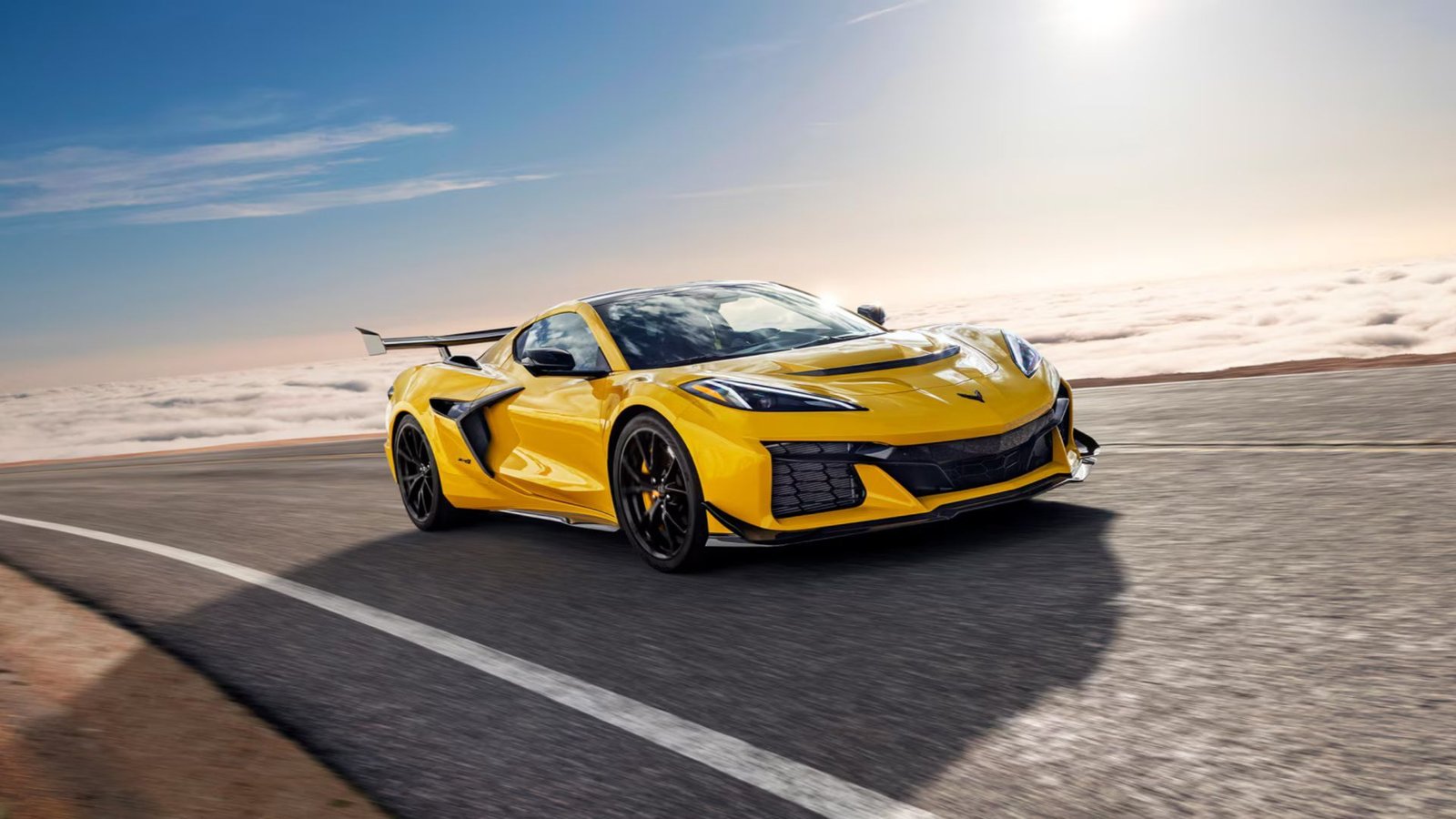
2026 Chevrolet Corvette ZR1 Review: 1,064 hp Bargain Supercar
The value supercar that rewrote the rulebook
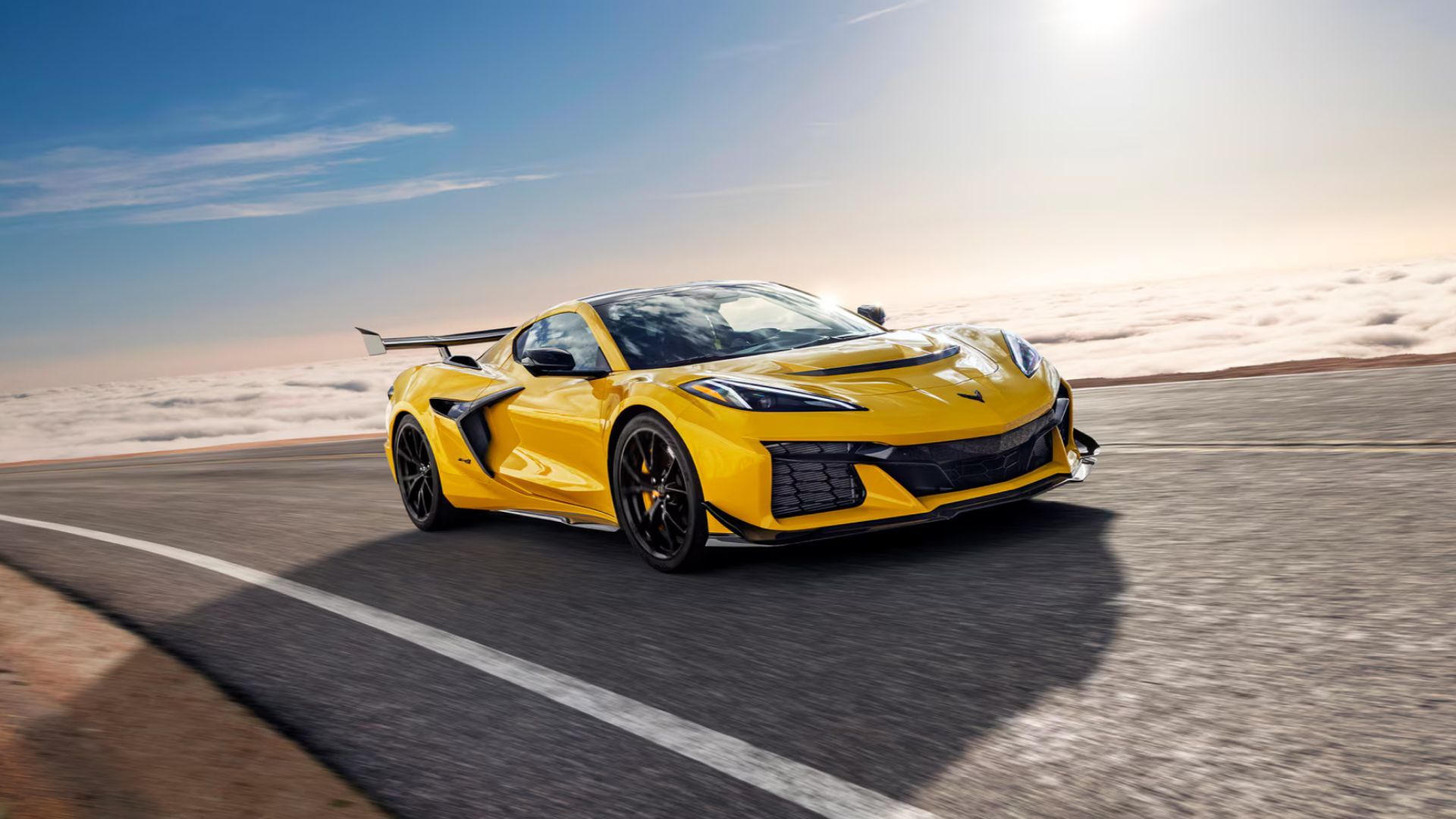
2026 Chevrolet Corvette ZR1 front three-quarter studio shot
⚡ Quick Verdict
— The Quick Verdict
✓ The Good
- +Staggering 1,064 hp at a price that embarrasses European rivals
- +Flat-plane crank twin-turbo V8 delivers exotic character with brutal output
- +Verified 233 mph top speed and sub-10-second quarter mile
- +2026 cabin refresh finally makes the interior feel current-generation
- +ZTK aero package offers genuine, measurable downforce advantage on track
✗ The Trade-offs
- −Rear-wheel drive only — no all-weather safety net for wet or cold climates
- −First-year warranty void on resale makes early flipping a costly gamble
- −Interior quality gap to Italian and German rivals remains noticeable
- −Fuel economy at 14 mpg combined will hurt at Australian pump prices
📑 In This Review
- Design and Aerodynamics
- Engine, Performance and the LT7 V8
- On the Track and Road
- Interior, Tech and Cabin
- Safety and Warranty
- At a Glance: How the ZR1 Compares
- 2026 Chevrolet Corvette ZR1 vs Porsche 911 Turbo S: Which Is Better?
- Which one is better?
- Pricing and Value
- Who Should Buy It (and Who Should Skip)
- Verdict
- Frequently Asked Questions
The 2026 Chevrolet Corvette ZR1 is the most potent production car General Motors has ever put its name to. We’re talking 1,064 horsepower from a 5.5-litre twin-turbo flat-plane crank V8, a 2.3-second dash to 100 km/h with the ZTK package, and a verified top speed of 233 mph. It does all of this at an estimated Australian landing price of roughly AU$300,000 — a figure that makes the Porsche 911 Turbo S, Ferrari 296 GTB, and McLaren 750S look like exercises in excess. You get genuine hypercar-level straight-line performance wrapped in a chassis that can actually cope with the output. The catch? It’s rear-wheel drive only, the interior still trails European exotics, and living with four-figure horsepower on public roads is a compromise. If you can stomach those trade-offs, the ZR1 is the performance bargain of the decade. There’s nothing else quite like the 2026 Chevrolet Corvette ZR1. It produces 1,064 hp, tops out at 233 mph, and lands in Australia for roughly AU$300,000 — less than half the price of its closest rivals. We spent time with the car on road and track to find out whether General Motors has genuinely delivered a hypercar-beater or whether the numbers only tell part of the story.
Design and Aerodynamics
The C8 Corvette’s mid-engine silhouette was already a dramatic departure for the nameplate when it launched, and the ZR1 simply dials up the aggression. The proportions are textbook mid-engine stuff: a short front overhang, a cab-forward greenhouse, and a wide, muscular rear haunch that houses the twin-turbo V8. Park it next to a standard Stingray, though, and the visual difference is immediate.
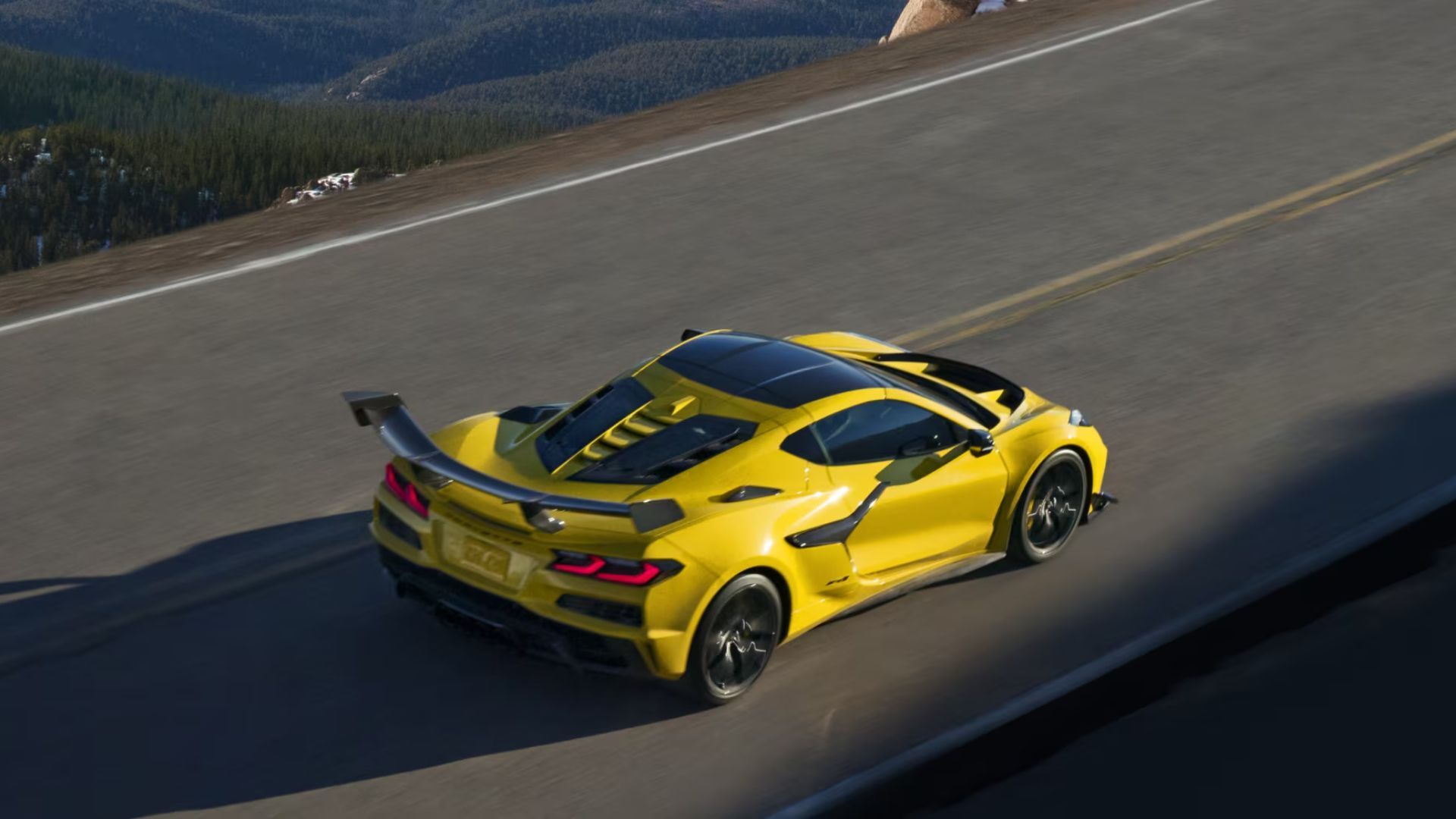
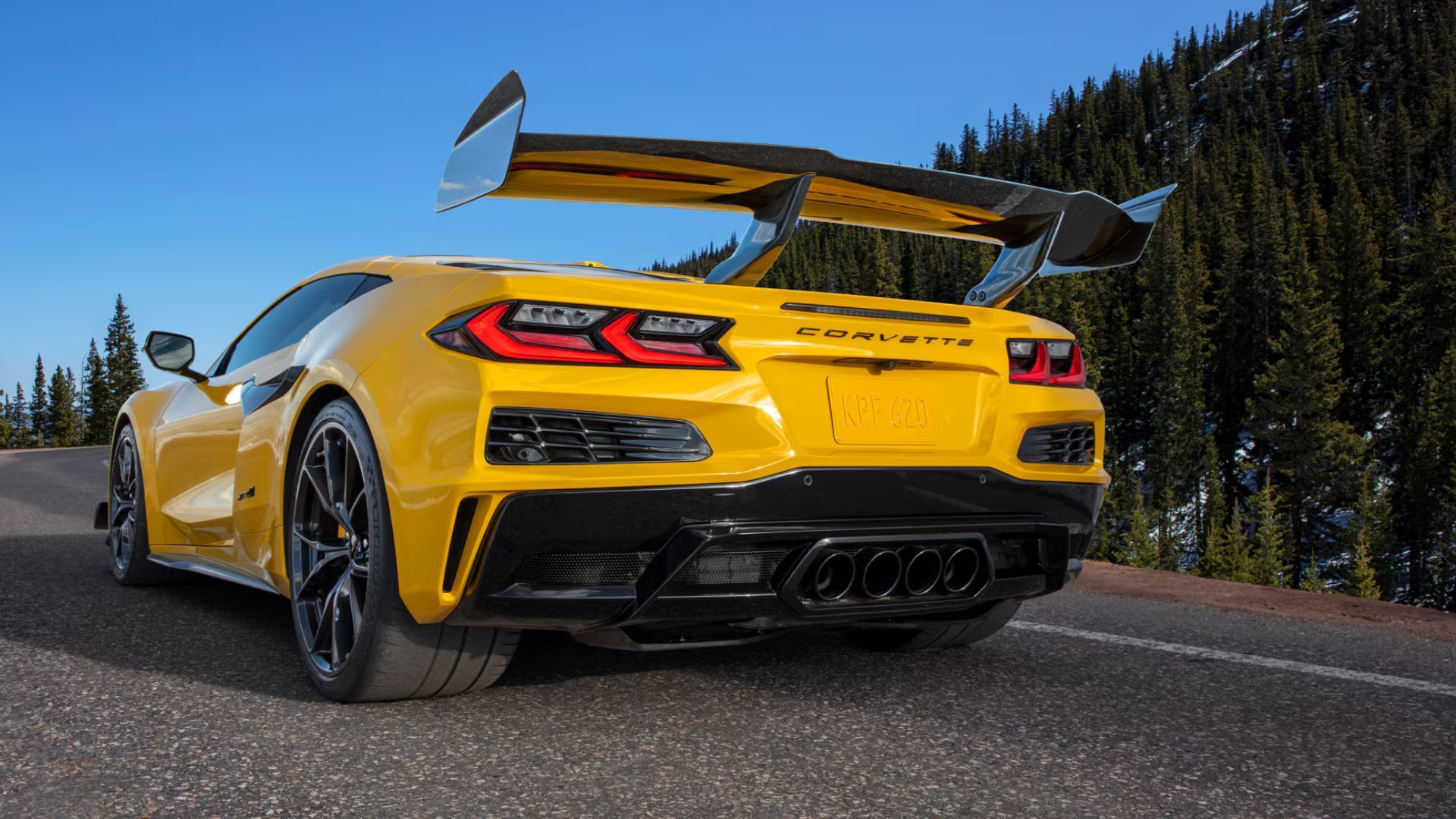
The ZTK Performance Package is the centrepiece of the look. It bolts on a prominent carbon-fibre front splitter, aggressive side strakes, and a towering adjustable rear wing — every one of those elements doing actual aerodynamic work rather than just looking the part. Chevrolet says the ZTK-equipped ZR1 produces more than 1,200 pounds (about 544 kg) of downforce at top speed, a number that puts it in proper supercar territory and well beyond what most road-registered vehicles manage. The underbody runs dedicated aero deflectors that funnel air beneath the car efficiently, working alongside the rear diffuser to create a low-pressure zone that pins the ZR1 to the tarmac.
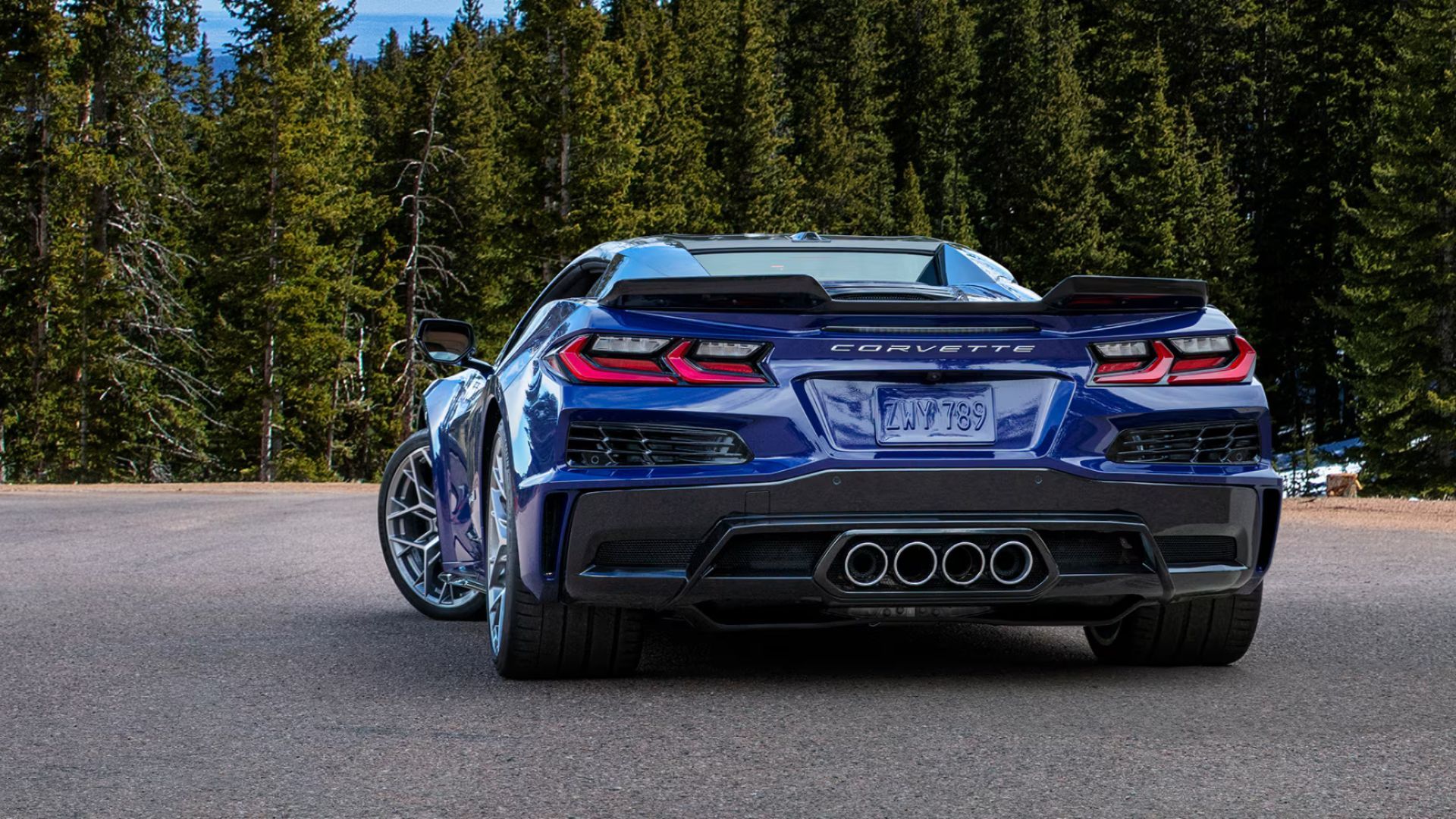
Even without the ZTK package, the standard ZR1 is no shrinking violet. Wider rear bodywork swallows larger tyres, the front intake openings are noticeably bigger to feed the twin-turbo setup’s appetite for cooling air, and the back end is dominated by four exhaust outlets. The front compartment — a frunk on the standard C8 — has been ditched entirely in favour of a central cooling radiator, a concession to the LT7’s thermal requirements. That tells you a lot about the engineering priorities here: every available surface has been repurposed for performance.
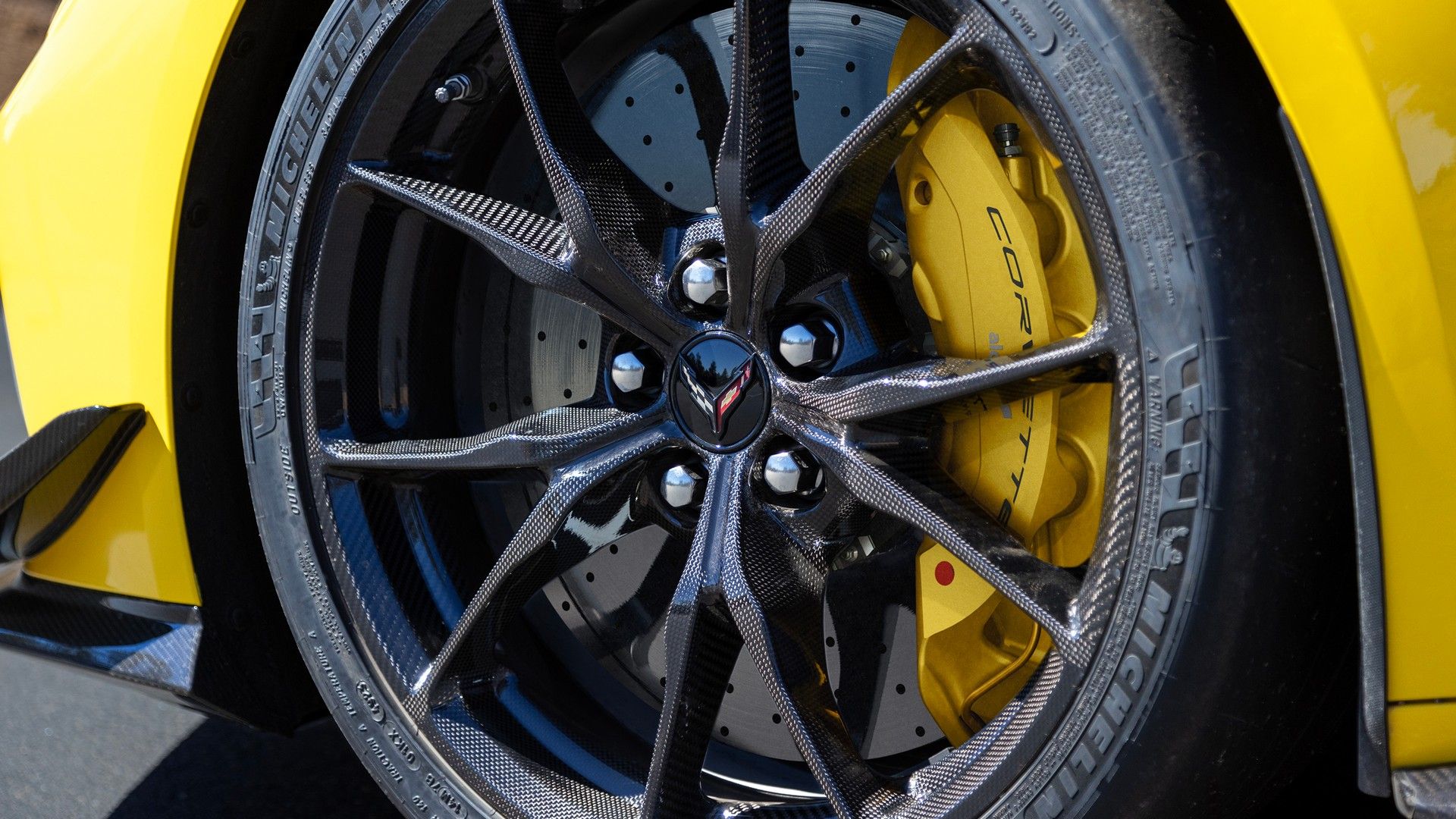
Wheels are forged aluminium, lighter than the standard C8 items, wrapped in Michelin Pilot Sport Cup 2 R rubber on the ZTK variant. Behind them sit the brakes — standard Brembo carbon-ceramic rotors with the ZTK option upgrading to 10-piston front calipers, which Chevrolet claims are the largest ever fitted to a production Corvette. The ZR1 reads as a car that’s been given every tool it needs and wears each one without apology.
Engine, Performance and the LT7 V8
This is the whole reason the ZR1 exists. The LT7 is a 5.5-litre twin-turbocharged flat-plane crank V8 — the first forced-induction engine in Corvette history — and it churns out 1,064 horsepower at 7,000 rpm along with 828 lb-ft (1,123 Nm) of torque at 6,000 rpm. Those figures aren’t estimates or projections; they’re verified production specs for an engine that shares bore spacing and family lineage with the naturally aspirated LT6 in the Z06. Chevrolet calls the pair "Gemini engines," a nod to the rocket program, and has hidden more than 50 small rocket-shaped engravings throughout the LT7 as Easter eggs — on pistons, conrods, and hidden cast surfaces.
The engineering story here is genuinely fascinating. The LT7’s pistons have a significantly dished crown compared to the LT6, dropping the compression ratio from around 12.5:1 to approximately 9.8:1 to cope with the forced induction. The turbochargers themselves are the largest fitted to any production car, and their packaging is remarkably tight — the exhaust manifold feeds directly into the turbine housing with almost no gap. The engineers describe the combustion gases as "still on fire" when they hit the turbo blades. Those turbines spin at 137,000 rpm, with outer tip speeds reaching Mach 1.7 — faster than the speed of sound.
The upshot is a powerplant making 50 percent more horsepower than the Z06 from identical displacement. The flat-plane crank arrangement means the LT7 revs with an urgency and vocal character that conventional cross-plane V8s simply can’t replicate — the exhaust note is sharper, higher-pitched, and far more reminiscent of a race engine than a traditional Detroit V8. It is, by any standard, an exotic engine wearing a bowtie badge.
Hooked up to GM’s eight-speed dual-clutch transmission — mounted behind the engine in the traditional transaxle position — the LT7 delivers acceleration figures that read like typographical errors. The ZR1 hits 0–60 mph in 2.3 seconds with the ZTK package (2.5 seconds without) and covers the quarter mile in 9.6 seconds at 150 mph. Top speed has been verified at 233 mph (375 km/h) during a run at the Papenburg test facility in Germany, conducted by GM president Mark Reuss in a completely stock, low-wing car on Michelin Pilot Sport 4S tyres — not the track-focused Cup 2 Rs. That car also carried a passenger and a laptop. For context, Formula 1 cars reach roughly 214 mph on the main straight at Circuit of the Americas. The ZR1 gets closer to that than any production car we can think of.
What makes the LT7 truly stand out is its tractability. The turbochargers spool with startling urgency, delivering a power curve that feels less like a turbocharged engine and more like a naturally aspirated unit with an infinite torque reserve. The flat-plane crank’s higher-revving nature keeps the engine alert and responsive through the mid-range, so it never feels like it’s relying solely on low-end boost. It’s a deeply impressive piece of engineering — world-class, no question.
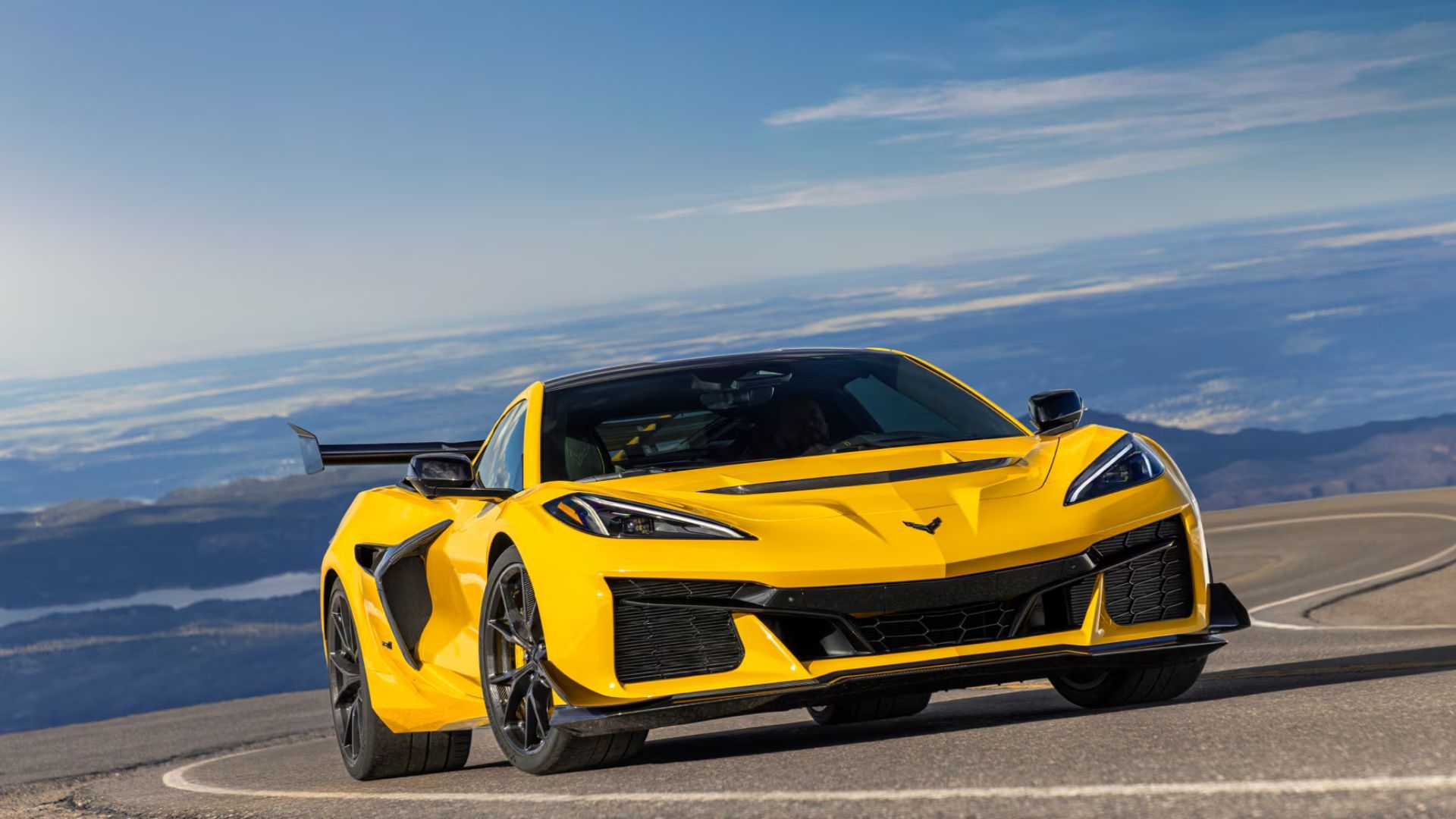
On the Track and Road
The mid-engine C8 platform was always going to be a strong foundation for a 1,064-hp supercar, and the ZR1 capitalises on that layout with real confidence. The steering delivers meaningful feedback through the rim — not quite at the hydraulic purity of a McLaren, but noticeably better than most electrically assisted systems at this money. Turn-in is sharp, and the mid-engine weight distribution gives you the kind of natural balance that front- or rear-engine layouts simply can’t replicate.
With the ZTK package fitted, the suspension stiffens substantially, and this is where the car splits into two distinct personalities. On track, the chassis comes alive. The Cup 2 R tyres are the key — they unlock the ZR1’s full lateral grip potential and let the driver deploy the engine’s output without the electronics constantly stepping in. Chevrolet’s Performance Traction Management system offers multiple modes, and in its most permissive track setting it permits enough slip to feel alive without letting the car bite. The stability systems are tuned with real sophistication; this isn’t a blunt instrument.
The brakes are one of the ZR1’s standout strengths. The standard carbon-ceramic rotors — upgraded to 10-piston calipers with the ZTK — deliver stopping power that inspires genuine confidence. Deep trail-braking into corners feels controlled and progressive, and the pedal stays firm even after repeated hard use. It’s the kind of braking performance that lets you carry more speed into a turn because you know you can scrub it when you need to.
The eight-speed dual-clutch handles the ZR1’s torque well, and in automatic mode it makes sensible decisions about gear selection. It doesn’t quite match the lightning-precision of a McLaren’s unit or the shift quality of Ferrari’s latest boxes, but for a car at this price point it’s more than competent. We found manual mode was rarely necessary — the programming is smart enough to manage the engine’s output effectively.
Living with a 1,064-hp rear-wheel-drive supercar day to day is, predictably, a compromise. The ZR1 is firmer than a standard Stingray, the Cup 2 R tyres generate noticeable road noise, and the low ground clearance demands vigilance over speed bumps and driveways. Visibility is reasonable by mid-engine standards — the rear window is small but usable, and the 2026 cabin updates improve the sightline from the driver’s seat. In comfort settings, the ZR1 is livable for weekend trips and spirited road drives. It isn’t, and was never meant to be, a daily commuter. But the chassis is composed enough that it won’t punish you for covering distance.
Interior, Tech and Cabin
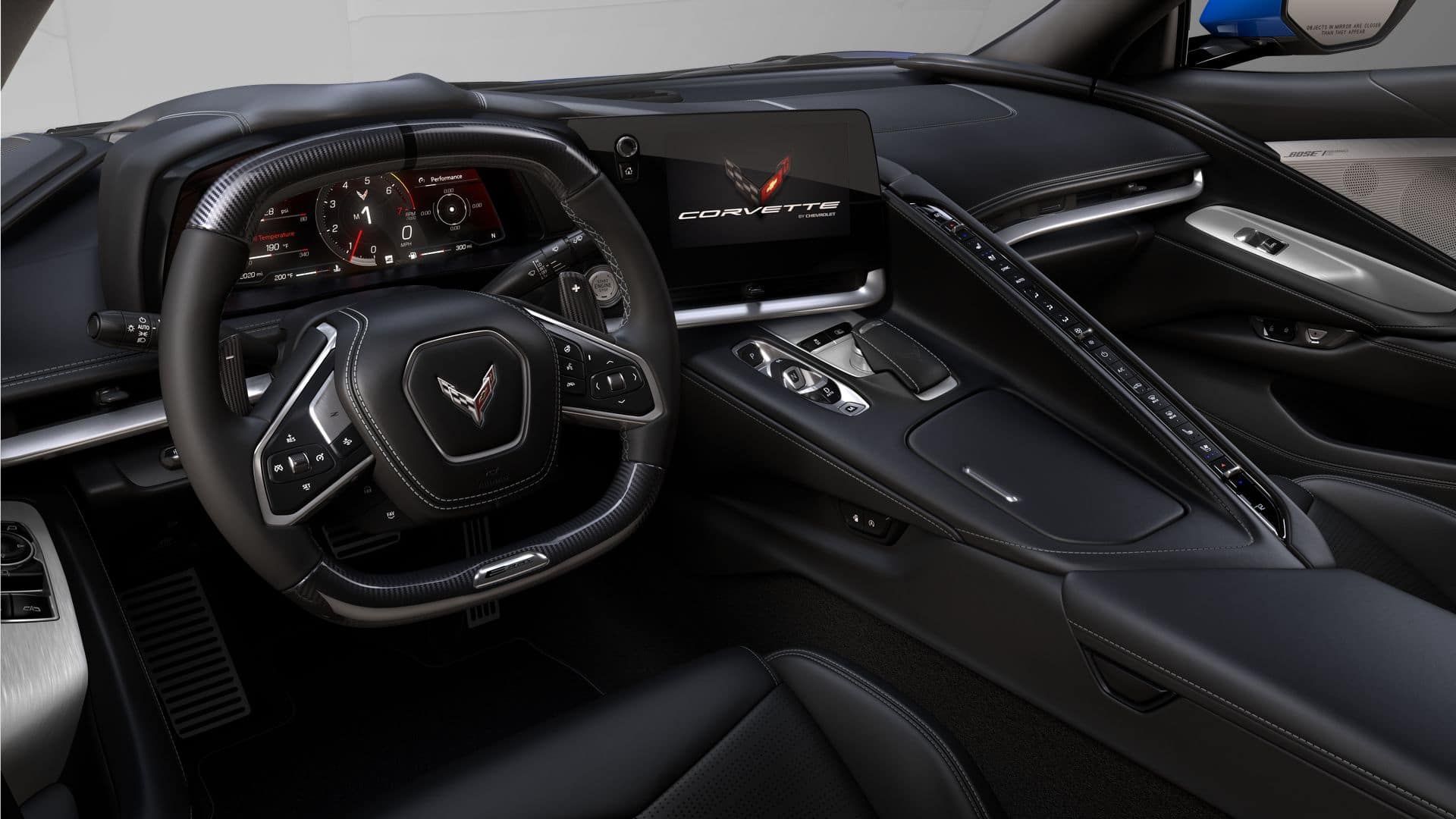
The 2026 model year brings the most significant interior overhaul the C8 Corvette has received. The central touchscreen is larger and more responsive, paired with a new second driver information display behind the steering wheel. The button layout has been tidied up — earlier C8 models copped criticism for their somewhat cluttered console, and the revision tackles that head-on. The cockpit still wraps around the driver in that signature fighter-jet-inspired layout, but it now feels more cohesive and less fussy.
Seats offer strong lateral bolstering — essential given the ZR1’s cornering abilities — without being so aggressive that longer drives become a chore. Materials have improved over earlier C8 models, with nicer surface treatments and better tactile quality on frequently touched areas. That said, the interior doesn’t match the craftsmanship or material richness of a Ferrari 296 GTB or a McLaren 750S. At AU$300,000, the ZR1’s cabin reads as competent rather than luxurious. It’s a functional performance cockpit, and it delivers on that brief without pretending to be something it’s not.
Ergonomics are strong. The squared-off steering wheel provides excellent control, the driving position is low and purposeful, and the forward sightlines are acceptable for a mid-engined car. The Bose premium audio system delivers punchy, clear sound, and wireless Apple CarPlay and wireless Android Auto are both standard — a welcome inclusion that eliminates cable clutter.
Cargo space totals 9.1 cubic feet across the front and rear compartments, though the ZR1’s front boot has been sacrificed for that additional cooling radiator. The rear compartment behind the engine offers practical storage for a weekend bag or two, but this isn’t a car that’ll swallow a fortnight’s luggage. There’s also a convertible variant for buyers who prefer open-air driving.
Safety and Warranty
The 2026 Corvette ZR1 comes standard with automatic emergency braking, lane-keep assist, forward collision alert, and GM’s StabiliTrak electronic stability control system. Side Blind Zone Alert and rear cross-traffic alert are available as options — useful additions given the ZR1’s limited rearward visibility. These are meaningful safety technologies for a car capable of 233 mph, and their inclusion as standard rather than optional equipment deserves a nod.
The ZR1 doesn’t carry an ANCAP or Euro NCAP crash rating. That’s standard for the supercar and exotic segment — safety bodies don’t typically crash-test low-volume, high-performance vehicles, and the same applies to every rival mentioned in this review. Buyers who prioritise third-party safety validation won’t find any available here.
GM’s warranty covers the ZR1 for three years or 36,000 miles (roughly 58,000 km), whichever comes first, on a bumper-to-bumper basis. Equivalent warranty terms will apply through local GM dealers in Australia. There is, however, a notable catch: GM has confirmed that the warranty is voided on first-year resale of the ZR1. This policy is aimed at discouraging dealer markups and rapid flipping — a common practice in the US market for high-demand performance cars. It’s a significant consideration for buyers who may want to sell within the first 12 months, as the lack of warranty transferability directly hits resale value.
At a Glance: How the ZR1 Compares
| Model | Price (AUD est.) | Power | 0-100 km/h | Top Speed | Layout |
|---|---|---|---|---|---|
| 2026 Chevrolet Corvette ZR1 | ~$300,000 | 1,064 hp | 2.3 s | 233 mph | Mid-engine V8 TT |
| 2026 Porsche 911 Turbo S | ~$520,000 | 701 hp | 2.4 s | 200 mph | Rear-engine hybrid flat-6 |
| Ferrari 296 GTB | ~$640,000 | 819 hp | 2.9 s | 205 mph | Mid-engine hybrid V6 |
| McLaren 750S | ~$580,000 | 740 hp | 2.7 s | 206 mph | Mid-engine V8 TT |
| Lamborghini Temerario | ~$680,000 | 907 hp | 2.7 s | 215 mph | Mid-engine hybrid V8 TT |
Porsche 911 Turbo S
Closest rival on acceleration; AWD and 2+2 practicality, but costs AU$220k more for less power.
Ferrari 296 GTB
Hybrid V6 with Italian theatre; ZR1 beats it on the strip and undercuts it by AU$340k.
McLaren 750S
Lighter, sharper, more focused; ZR1 punches harder in a straight line for half the money.
Lamborghini Temerario
New hybrid V8 TT; closer on paper, but pricing still favours the Corvette.
The 2026 Chevrolet Corvette ZR1 does not merely compete in the supercar segment — it redefines the value equation within it. With 1,064 hp at an estimated Australian landing price of roughly AU$300,000, the ZR1 is the only production car delivering four-figure horsepower below AU$500,000. Every rival — the Porsche 911 Turbo S, Ferrari 296 GTB, McLaren 750S, and Lamborghini Temerario — costs at least AU$220,000 more while producing significantly less power. The ZR1’s value thesis is not nuanced; it is blunt, and it is compelling. Price (AUD est.) 0-100 km/h Layout ——— ~$300,000 2.3 s Mid-engine V8 TT 2026 Porsche 911 Turbo S 701 hp 200 mph ~$640,000 2.9 s Mid-engine hybrid V6 McLaren 750S 740 hp 206 mph ~$680,000 2.7 s Mid-engine hybrid V8 TT |
2026 Chevrolet Corvette ZR1 vs Porsche 911 Turbo S: Which Is Better?
This is the comparison that matters most for Australian buyers stepping into the supercar market. The ZR1 and the 911 Turbo S represent two fundamentally different philosophies aimed at the same buyer — someone who wants a weapon-grade road car with genuine track credentials. The question is which approach delivers more for the money, and whether money even matters when you’re choosing between two of the most capable performance cars on sale today.
Start with the price gap, because it’s enormous. The ZR1 lands at roughly AU$300,000 in Australia; the 911 Turbo S commands approximately AU$520,000. That’s a AU$220,000 delta — enough to buy a well-equipped BMW M3 on top of the Corvette. At this level of performance, both cars are already stratospherically expensive by mainstream standards, but the gap between them represents an entire secondary vehicle. For value-conscious buyers, the maths are difficult to ignore.
Power and acceleration tell a fascinating story. The ZR1 produces 1,064 hp; the 911 Turbo S generates 701 hp combined from its hybrid flat-six. That’s a 363-hp advantage for the Corvette — a 52 percent power surplus. Yet both cars reach 100 km/h in approximately 2.3 to 2.4 seconds. The 911 Turbo S claws back the deficit through its all-wheel-drive traction advantage and the instant torque fill of its hybrid system. The ZR1 relies on raw power and mechanical grip alone. On a standing start, the difference is negligible. From a rolling start at highway speeds, the ZR1’s additional horsepower starts to assert itself decisively. At the top end, the ZR1 pulls to 233 mph versus the 911’s 200 mph — a substantial 33-mph gap.
The drivetrain philosophies couldn’t be more different. The ZR1 employs a 5.5-litre flat-plane crank V8 with twin turbochargers driving the rear wheels through an eight-speed dual-clutch transmission. It’s, at its core, a traditional performance layout — engine power to the rear axle, no hybrid assistance, no front-axle drive. The 911 Turbo S pairs a 3.6-litre twin-turbo flat-six with an electric motor integrated into the PDK gearbox, sending power to all four wheels. The Porsche’s system is more technologically complex, more efficient, and more versatile. The Corvette’s is simpler, more visceral, and more demanding of the driver.
Daily usability is where the 911 Turbo S pulls ahead convincingly. The Porsche offers 2+2 seating — the rear seats are small but functional for children or short-journey adults — and its ingress and egress are markedly easier than the ZR1’s low-slung, wide-silled cockpit. Visibility is superior in the 911, its ride quality is more compliant in comfort settings, and the all-wheel-drive system means it’s genuinely usable in wet weather, cold mornings, and even light snow. For buyers who need their supercar to function as a year-round vehicle, the 911 Turbo S is the obvious choice. The ZR1 is a fair-weather weapon that demands respect in anything less than dry conditions.
On track, the argument flips. The ZR1’s ZTK package generates over 1,200 pounds of downforce at top speed — a figure the 911 Turbo S can’t approach without aftermarket modification. The Corvette’s brakes are larger and more thermally resistant, its rear-drive chassis rewards skilled driving with adjustability that the Porsche’s all-wheel-drive system inherently limits, and the mid-engine weight distribution provides a natural balance advantage over the 911’s rear-engine layout. For dedicated track use, the ZR1 with ZTK is the sharper instrument.
Brand prestige and resale value are Porsche’s trump card. The 911 Turbo S holds its value with legendary tenacity — it’s one of the strongest-depreciating models in the supercar segment and consistently ranks among the best vehicles in the market for long-term residual value. The Corvette ZR1, by contrast, is a wildcard. Historical ZR1s have depreciated significantly, though the C8 generation’s genuine supercar credentials and this model’s extraordinary performance may alter that pattern. For buyers who treat their supercar as a financial asset, the 911 Turbo S is the safer bet.
The ownership experience differs in texture and expectation. Chevrolet dealerships are more widely distributed, service costs are generally lower, and parts availability — while unlikely to be immediate for the ZR1 specifically — is fundamentally more accessible than Ferrari or McLaren ownership. Porsche ownership, meanwhile, offers a more curated, premium experience with meticulous attention to customer service, but at a cost that reflects the brand’s positioning.
| Spec | 2026 Corvette ZR1 | 2026 Porsche 911 Turbo S |
|---|---|---|
| Price (AUD est.) | ~$300,000 | ~$520,000 |
| Engine | 5.5L twin-turbo flat-plane V8 | 3.6L twin-turbo flat-6 hybrid |
| Power | 1,064 hp | 701 hp combined |
| Torque | 828 lb-ft (1,123 Nm) | 590 lb-ft (800 Nm) |
| 0-100 km/h | 2.3 s (ZTK) | 2.4 s |
| Top Speed | 233 mph (375 km/h) | 200 mph (322 km/h) |
| Layout | Mid-engine RWD | Rear-engine AWD |
| Transmission | 8-speed DCT | 8-speed PDK |
| Seats | 2 | 2+2 |
Which one is better?
Buy the Corvette ZR1 if you want the most raw performance per dollar on planet Earth, prefer V8 character, and don’t mind compromises in practicality or daily usability. **Buy the 911 Turbo S if** you want all-weather capability, 2+2 practicality, world-class build quality, predictable residuals, and a daily-driveable supercar. **Our pick** is the Corvette ZR1. The Porsche is the more polished tool, but the ZR1 delivers 50 percent more power for 60 percent of the price — the value gap is impossible to ignore.
Pricing and Value
The 2026 Chevrolet Corvette ZR1 is estimated to land in Australia at approximately AU$300,000 to AU$340,000, depending on specification. The base model starts at US$196,395 in the United States, with a fully optioned ZTK-equipped example reaching approximately US$224,095. Australian pricing will factor in the Luxury Car Tax, import duties, compliance costs, shipping, and dealer margins — a combination that pushes the final figure higher but keeps it well under the AU$400,000 mark.
For Australian buyers, the value proposition is extraordinary. The Lotus Emira V6 — the closest thing to a new entry-level exotic — costs approximately AU$200,000 with 400 hp. The Audi R8 GT has been retired from production, though used examples can be found at various price points. A used Audi R8 V10 or Lamborghini Huracan offers older technology at comparable or higher prices. The BMW M4 CSL, at roughly AU$200,000, is a focused track tool but delivers 543 hp — less than half the ZR1’s output — in a front-engine, rear-drive package with a fundamentally different character.
The ZR1 sits in a category of one. There’s no other production car available in Australia, new or recent, that delivers 1,064 hp for anything close to AU$300,000. It’s a genuine performance anomaly — a car that makes the entire AU$250,000–AU$700,000 supercar segment uncomfortable by existing at the bottom of that range with the highest output.
Who Should Buy It (and Who Should Skip)
✓ Buy the ZR1 if
you are a track-day enthusiast who wants a production car capable of sub-10-second quarter-mile times. Buy it if you love V8 character and want the most dramatic interpretation of that architecture available today. Buy it if you prioritise power-per-dollar above all else, because nothing else in the market comes close. Buy it if you are a performance collector and this model year represents a defining moment in the Corvette’s history. Buy it if you already own a comfortable daily driver and want a weekend weapon that delivers genuine supercar — bordering on hypercar — performance for a fraction of what the competition charges.
✗ Skip the ZR1 if
you need all-wheel drive for year-round driving or live in a region where wet or cold weather is frequent. Skip it if you prioritise grand-touring refinement over raw capability — the ZR1 is firm, loud, and uncompromising. Skip it if you are a die-hard Porsche or Ferrari loyalist who values brand heritage and proven resale above raw performance figures. Skip it if you will regularly drive it in rain, snow, or on poor-quality roads. And skip it if you cannot secure an allocation — availability will be limited, and the wait list will be long.
The ZR1 is built for a specific buyer, and that buyer will love it unconditionally.
⚡ Our Verdict
The value supercar that rewrote the rulebook
The 2026 Chevrolet Corvette ZR1 isn’t simply the most powerful Corvette ever built — it’s a statement of engineering audacity from General Motors. A 1,064-hp twin-turbo flat-plane crank V8, a verified 233-mph top speed, a mid-engine chassis that can genuinely harness the output, and all of it delivered at a price that makes European exotics look like exercises in brand taxation. The ZR1 earned Road & Track’s 2026 Performance Car of the Year, and it’s easy to see why. It isn’t perfect — the interior still has room for improvement, the rear-drive-only layout demands respect, and daily usability is limited. But at roughly AU$300,000, the ZR1 delivers a level of performance that was the exclusive domain of seven-figure hypercars only a decade ago. It’s the value supercar of the decade, and it may be the most significant Corvette ever made.
Frequently Asked Questions
How much is the 2026 Corvette ZR1 in Australia?
The estimated Australian landed price is approximately AU$300,000 to AU$340,000, depending on specification. That covers import duties, Luxury Car Tax, compliance costs, and shipping from the United States. The ZTK performance package and additional options will push the price higher. In the US, the ZR1 starts at US$196,395.
Is the Corvette ZR1 faster than the Porsche 911 Turbo S?
The ZR1 accelerates to 100 km/h in 2.3 seconds with the ZTK package, compared to 2.4 seconds for the 911 Turbo S — a marginal difference. The ZR1’s top speed of 233 mph, though, significantly exceeds the 911’s 200 mph, and its 363-hp power advantage becomes more pronounced at higher speeds. On a standing start, the Porsche’s all-wheel-drive traction largely neutralises the power gap.
What is the top speed of the 2026 Corvette ZR1?
The verified top speed is 233 mph (375 km/h), achieved at the Papenburg test facility in Germany in a completely stock car. For context, Formula 1 cars reach approximately 214 mph on the main straight at Circuit of the Americas. The ZR1 is among the fastest production cars in the world.
Does the Corvette ZR1 come with carbon ceramic brakes?
Yes. The standard ZR1 is equipped with Brembo carbon-ceramic brakes. The optional ZTK Performance Package upgrades to 10-piston front calipers, which Chevrolet claims are the largest brakes ever fitted to a production Corvette. The braking performance is one of the ZR1’s most impressive attributes.
How many seats does the Corvette ZR1 have?
The ZR1 is a two-seat sports car. Unlike the Porsche 911 Turbo S, which offers 2+2 seating, the Corvette has no rear seats. There are coupe and convertible variants available.
What is the warranty on the 2026 Corvette ZR1?
GM provides a three-year or 36,000-mile (roughly 58,000 km) bumper-to-bumper warranty in the United States. Equivalent terms apply through local GM dealers in Australia. Notably, GM voids the warranty on first-year resale of the ZR1, a policy designed to discourage rapid flipping and dealer markups.
Is the ZR1 worth the money compared to a Ferrari 296 GTB?
The ZR1 produces 1,064 hp versus the 296 GTB’s 819 hp, and costs approximately AU$300,000 versus AU$640,000 — less than half the price for nearly 25 percent more power. The Ferrari offers a more refined interior, a hybrid drivetrain, and the prestige of the prancing horse badge. If raw performance per dollar is your priority, the ZR1 wins comfortably. If brand cachet, interior quality, and hybrid technology matter more, the 296 GTB is the stronger choice.
