

2026 MG4 Facelift Review: Better Inside, Still the Bargain King
Sharper inside, still the best-value electric hatchback

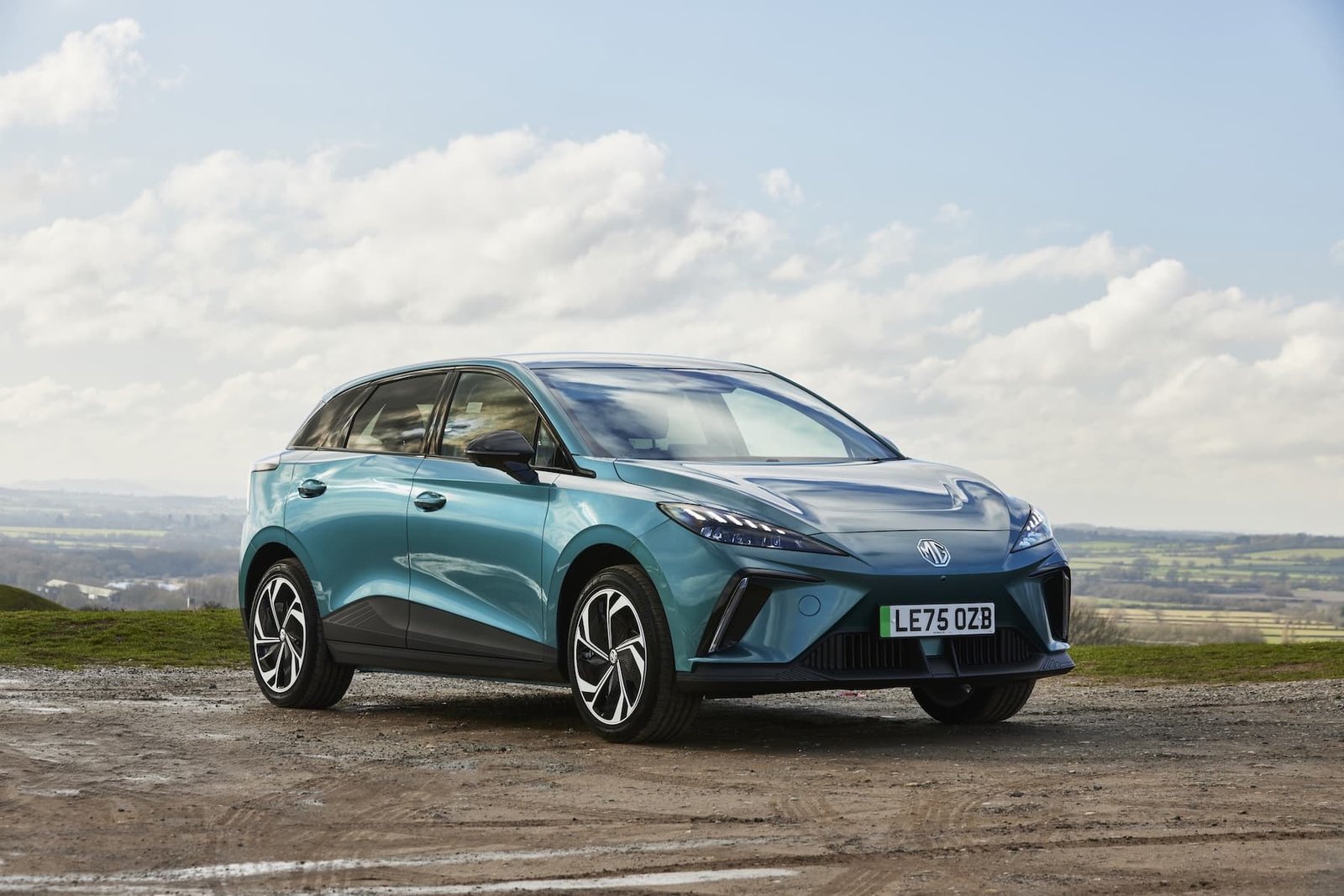
2026 MG4 facelift front three-quarter studio shot
Price
£32,995
Battery
77 kWh
Power
241 hp
⚡ Quick Verdict
The 2026 MG4 facelift tackles the cabin quality and tech shortfalls that held the original car back. You get a new 12.8-inch touchscreen running a Snapdragon 8155 chip, proper physical climate controls and softer materials across the dash and doors. Range on the £32,995 Extended Range climbs to 338 miles WLTP, and the £29,995 Premium Long Range slots just under the £30k mark. The rear-wheel-drive layout and light steering still set it apart from every rival at this price, and it remains the most fun electric hatchback you can buy for the money. The hitch is that, as a Chinese-built import, it misses the £3,750 UK EV grant. MG offsets that with £1,500 cashback and 0% finance, though, and a seven-year warranty plus a five-star Euro NCAP rating round out the package. After maximum range per pound, an engaging drive and one of the best cabins south of £35k? Put the updated MG4 on your shortlist.
—
## Why the 2026 MG4 Facelift Matters
✓ The Good
- +Massive cabin upgrade with proper physical climate controls
- +Rear-wheel-drive handling genuinely fun on British B-roads
- +338-mile WLTP range from £32,995 Extended Range trim
- +Seven-year warranty crushes VW and Renault rivals
- +£1,500 cashback plus 0% finance offsets grant ineligibility
✗ The Trade-offs
- −Exterior styling barely changed — looks dated next to rivals
- −Not eligible for the £3,750 UK EV grant
- −Only one USB-C port in the entire back row
- −Brakes lack feel when driving spiritedly into corners
📑 In This Review
- Why the 2026 MG4 Facelift Matters
- What Is New for 2026: Trim by Trim
- Inside the 2026 MG4: A Genuine Step Up
- On the Road: Still the Most Engaging EV Hatchback Under £30k
- At a Glance: How the 2026 MG4 Stacks Up
- 2026 MG4 vs Volkswagen ID.3: Which Is Better?
- Safety and Warranty
- Charging and Range in the Real World
- Who Should Buy the 2026 MG4?
- Buy this if:
- Skip this if:
- Our Verdict
The 2026 MG4 facelift tackles the cabin quality and tech shortfalls that held the original car back. You get a new 12.8-inch touchscreen running a Snapdragon 8155 chip, proper physical climate controls and softer materials across the dash and doors. Range on the £32,995 Extended Range climbs to 338 miles WLTP, and the £29,995 Premium Long Range slots just under the £30k mark. The rear-wheel-drive layout and light steering still set it apart from every rival at this price, and it remains the most fun electric hatchback you can buy for the money. The hitch is that, as a Chinese-built import, it misses the £3,750 UK EV grant. MG offsets that with £1,500 cashback and 0% finance, though, and a seven-year warranty plus a five-star Euro NCAP rating round out the package. After maximum range per pound, an engaging drive and one of the best cabins south of £35k? Put the updated MG4 on your shortlist. —
Why the 2026 MG4 Facelift Matters
The original MG4 arrived in 2022 and promptly shook up the affordable EV segment. It was a compact hatchback with genuine range, rear-wheel-drive handling and a price that had rival brands scrambling. Over 50 awards followed, a tally that would make any established nameplate envious, and MG was suddenly a name people took seriously again on the driveway.
Fast-forward to 2026, and the competition is stacked. The Renault 5 has landed, the new Nissan Leaf brings a bigger battery and European-built grant eligibility, the refreshed Volkswagen ID.3 is more polished than ever, and the BYD Dolphin and Cupra Born are both hungry for buyers. The MG4 couldn’t coast on a loyal fanbase alone. It needed a real step forward.
MG’s answer is a facelift targeting four areas: technology, refinement, performance and range. The styling has barely changed, as we’ll get into, but the substance underneath has moved on. Prices have crept up, sure, but so has the hardware. The question we set out to answer: has the 2026 MG4 done enough to keep its spot as the best-value electric hatchback you can buy? We spent a solid stretch behind the wheel to find out.
What Is New for 2026: Trim by Trim
MG has trimmed the line-up for 2026, cutting the old smaller-battery Standard Range from the premium range altogether. In its place sits a separate MG4 Urban line-up from £23,495, aimed at buyers who want outright affordability more than headline range. The Urban Long Range claims 258 miles from its battery, which is fine for the money, but it’s not the car we’re reviewing here.
The core MG4 range starts with the Premium Long Range at £29,995, which slips comfortably under that psychological £30k line. It pairs a 64 kWh LFP battery with rear-wheel drive and 228 horsepower, up from 201 hp previously, for a WLTP range of 280 miles. Step up to the Premium Extended Range at £32,995 and you get a 77 kWh battery, 241 hp and 338 miles WLTP. That’s more poke than the old Trophy Long Range, and it costs roughly ten per cent less.
At the top sits the MG4 XPower, now £33,995 after a significant price cut. It keeps the 64 kWh battery but adds a second motor for all-wheel drive, pushing out 429 hp and 600 Nm of torque for a 3.8-second dash to 62 mph. The trade-off is range: 239 to 251 miles WLTP depending on spec, and considerably less if you’re leaning on that performance regularly. Because MG builds its cars in China, none of these models qualify for the full £3,750 UK Electric Car Grant. To make up for that, MG offers £1,500 cashback alongside 0% finance with zero deposit, a package that keeps the MG4 competitive against grant-eligible rivals like the Nissan Leaf.

Inside the 2026 MG4: A Genuine Step Up
If this facelift earns its badge anywhere, it’s inside the cabin. Climb into the 2026 MG4 and the improvement hits you straight away, starting the moment you pull the door shut. The door handle surround is now finished in soft-touch fabric, which immediately sets a more upmarket tone than the hard plastics of the old car. The dashboard has been thoroughly reworked too.
The centrepiece is a new 12.8-inch HD touchscreen running a Qualcomm Snapdragon 8155 processor, a proper bit of silicon that makes the infotainment feel quick and responsive in a way the old system never managed. It sits above a 10.25-inch digital driver display that handles instrumentation cleanly. Wireless Apple CarPlay and Android Auto come standard, along with a wireless charging pad on the centre console. But here’s where MG has really won us over: below the main screen, there’s a dedicated physical climate-control panel with tactile buttons for fan speed, temperature and demisting. In an era where every manufacturer seems hell-bent on burying basic functions three menus deep in a touchscreen, this is a breath of fresh air. You can adjust the cabin temperature without glancing away from the road. A physical rotary volume knob with an integrated home button sits alongside, and the steering wheel picks up programmable shortcut buttons. We set ours up for drive-mode and regen-mode switching, which turned out to be properly handy on the move.
The new rotary gear selector on the centre console replaces the old setup, and the start procedure is refreshingly simple: press the brake pedal, twist the selector, and you’re off. No separate start button needed. Storage up front is generous, with USB-C ports for both charging and data transfer. MG’s updated MG Pilot system also deserves a mention. It now lets you build a custom ADAS profile: switch off the lane-keeping assist, silence the traffic-sign recognition bongs, save the lot, and then activate it with a single swipe-down gesture from the top of the screen next time you drive. If you spend your time on narrow, poorly signposted rural roads, and that’s a fair chunk of the country, this is a proper quality-of-life improvement.
The redesigned seats deserve a callout as well. They have a wider squab and better lateral support, and they stayed comfortable over several hours of mixed driving. Door cards are trimmed in soft-touch fabric instead of bare plastic, and even the cup-holder surround gets a nicer-feeling material. The net effect is a cabin that feels like it belongs in a car costing several thousand pounds more. There are caveats, mind you. Rear-seat space is adequate rather than generous; the relatively high floor means your knees sit a touch high, and the chunky new front seats eat into rearward visibility from the back row. Our biggest gripe, though, is the single USB-C port in the rear. Two or three passengers back there fighting over one charging socket feels like an oversight in 2026.
One small thing you won’t unsee once you’ve spotted it: the sensor array on the windscreen sits noticeably off-centre. It’s a minor packaging compromise, but once your eye catches it, you’ll keep clocking it.

On the Road: Still the Most Engaging EV Hatchback Under £30k
The MG4’s defining characteristic has always been its rear-wheel-drive layout, and that hasn’t changed for 2026. In a class full of front-driven rivals, separating steering from propulsion gives the MG4 a feel that’s genuinely engaging on a twisty road. The steering is light but honest, which makes the car feel lighter than its kerb weight suggests. Turn into a bend and there’s real composure: grip is good, the chassis is balanced, and the car flows down a country lane with an eagerness that took us by surprise. It’s not a sports car, but "sports car light" kept coming to mind. This thing punches well above its weight when the road gets interesting.
There are five drive modes — Eco, Normal, Sport, Snow and Custom — and four regenerative-braking modes selectable via a programmable steering-wheel shortcut: Adaptive, Low, Medium and Strong. We defaulted to Strong for everyday driving. It’s not quite full one-pedal operation, but it’s close enough that you can handle most junctions and roundabouts on the accelerator alone. Where the MG4 does show its budget roots is the brakes. Push hard into a corner and ask for some trail-braking, and the pedal just doesn’t give you the progressive feel a keener driver is after. Around town and for regular stops they’re fine, but on a spirited B-road run they could do with more feedback.
Refinement is where the 2026 facelift makes its presence felt most noticeably. There’s less wind noise around the door mirrors at motorway speeds, less suspension thump over broken surfaces, and less road roar on coarse tarmac. MG has clearly packed in more sound-deadening throughout the cabin, and the improvement is something you can feel immediately. Combined with the softer interior trim, the new MG4 feels more mature and more polished, like a car from the class above. It’s not a hot hatchback, but it’s still the most engaging electric hatchback you can buy at this price.

At a Glance: How the 2026 MG4 Stacks Up
| Spec | 2026 MG4 Premium Extended Range | VW ID.3 Pro S | Renault Megane E-Tech | Nissan Leaf 75 kWh |
|---|---|---|---|---|
| Price (UK from) | £32,995 | ~£38,000 | ~£32,000 | £32,250 |
| Eligible for £3,750 EV grant | No | Yes | Yes | Yes |
| Battery | 77 kWh | 77 kWh | 60 kWh | 75 kWh |
| WLTP range | 338 mi | 347 mi | 280 mi | 375 mi |
| Peak DC charging | 150 kW | 170 kW | 130 kW | 150 kW |
| Power | 241 hp | 282 hp | 218 hp | 214 hp |
| Drive layout | RWD | RWD | FWD | FWD |
| Warranty (years) | 7 | 3 | 3 | 3 |
| Boot (L) | 363 | 385 | 440 | 437 |
Volkswagen ID.3 Pro S
Closest direct rival. Grant-eligible, slightly faster charging, bigger boot — but pricier and less engaging to drive than the MG4.
Renault Megane E-Tech
Sharper styling and fashionable cabin, but smaller battery and FWD layout dial back the driving fun.
Nissan Leaf 75 kWh
Made in Europe so it qualifies for the £3,750 grant. Long range on paper, but FWD and less driver-focused than the MG4.
The affordable electric hatchback segment has never been more competitive. The MG4 now faces the Volkswagen ID.3, the Renault Megane E-Tech and the new Nissan Leaf — all of which offer broadly similar range and pricing but take very different approaches to design, driving dynamics and brand appeal. Here is how the headline figures compare. 2026 MG4 Premium Extended Range Renault Megane E-Tech —————————————————– £32,995 ~£32,000 No Yes 77 kWh 60 kWh 338 mi 280 mi 150 kW 130 kW 241 hp 218 hp RWD FWD 7 3 363 440 On paper, the MG4 looks competitive but not dominant. It matches the ID.3 on battery capacity, sits in the middle of the range table and undercuts almost everything on price — particularly once you factor in MG’s cashback and finance offers. Where it genuinely separates itself is the combination of rear-wheel drive, a seven-year warranty and that sub-£33k price point with 338 miles of range. No other car in this class bundles those three things together.
2026 MG4 vs Volkswagen ID.3: Which Is Better?
If you’re cross-shopping an electric hatchback in the £30k to £35k bracket, this is probably the comparison that matters most. The Volkswagen ID.3 is the established benchmark, the car that showed a mainstream brand could build an appealing, mass-market EV hatchback. The MG4 is the challenger that undercuts it on price, matches it on range and, whisper it, might actually be more enjoyable to drive. Choosing between them isn’t straightforward, so let’s break it down.
**Price and the grant question** is where things get complicated. The MG4 Extended Range lists at £32,995, but because it’s built in China, it doesn’t qualify for the £3,750 UK Electric Car Grant. The Volkswagen ID.3 Pro S, built in Europe, does. However, MG is offsetting the gap with £1,500 cashback and 0% finance with zero deposit. Factor those incentives in and the MG4 lands at roughly £31,495 on the road, while the ID.3 Pro S after the government grant comes to approximately £34,250. That’s a gap of nearly £2,750 in the MG4’s favour, and it’s not pocket change.
**Range and battery** are closely matched. Both cars pack 77 kWh batteries and both post WLTP figures in the mid-330s to mid-340s: 338 miles for the MG4, 347 miles for the ID.3. In real-world driving with the heater, heated seats and a motorway commute running, we’d expect both to comfortably manage around 250 miles in single-digit winter temperatures. The difference between them is negligible.
**Charging** is where the ID.3 claws back ground. It peaks at 170 kW on a DC fast charger and does 10 to 80 per cent in roughly 30 minutes. The MG4 peaks at 150 kW and takes closer to 40 minutes for the same job. If you rely on public rapid chargers for regular long trips, that ten-minute gap adds up over a year. Both cars charge at 11 kW on AC and both offer vehicle-to-load (V2L) as standard.
**Interior quality and infotainment** was once a clear win for Volkswagen, but the 2026 MG4 has closed the gap considerably. The new 12.8-inch touchscreen with its Snapdragon 8155 processor is properly responsive, and the physical climate controls are something the ID.3’s largely touch-based cabin just can’t match. Day-to-day, the MG4 feels more intuitive. You don’t have to dig through menus to adjust the fan or clear the windscreen. Both offer wireless Apple CarPlay and Android Auto.
**Driving feel** is the most subjective area, but it’s also where the MG4 has a clear edge in character. Its rear-wheel-drive layout and lighter steering give it a playful, engaging quality on a B-road that the ID.3, despite also being rear-driven, matches on paper but not in practice. The ID.3 feels like a comfortable European hatchback that happens to run on electricity. The MG4 feels like it was engineered to be enjoyed. If you’re a keen driver, the MG4 wins here.
**Warranty** isn’t even close. MG covers the MG4 for seven years and 80,000 miles, with an eight-year, 150,000-mile battery warranty. Volkswagen gives you three years and 60,000 miles. If you plan to keep the car beyond a standard PCP cycle, the MG4’s cover is a real financial safety net.
**Boot space and practicality** give the ID.3 a modest advantage. Its 385-litre boot is 22 litres larger than the MG4’s 363 litres, and the Volkswagen’s rear packaging is slightly more family-friendly overall. Neither car will let you down on a school run or a road trip, but the ID.3 is the marginally more practical choice.
| Spec | 2026 MG4 Extended Range | VW ID.3 Pro S |
|---|---|---|
| Price (after discounts/grant) | ~£31,495 | ~£34,250 |
| Battery | 77 kWh | 77 kWh |
| WLTP range | 338 mi | 347 mi |
| Peak DC charging | 150 kW | 170 kW |
| 10-80% time | ~40 min | ~30 min |
| Power | 241 hp | 282 hp |
| 0-62 mph | ~7.7 s | 7.3 s |
| Boot | 363 L | 385 L |
| Warranty | 7 yrs / 80,000 mi | 3 yrs / 60,000 mi |
Buy the MG4 if: you want the best outright value, the reassurance of a seven-year warranty, engaging rear-wheel-drive dynamics, and you’re comfortable with MG’s cashback and finance deal bridging the grant gap.
Buy the ID.3 if: you want grant eligibility on the list price, need slightly faster DC charging for regular long-distance use, prefer a bigger boot and more family-friendly packaging, and lean towards the established reputation of the Volkswagen badge.
**Our pick:** if you’re focused on running costs, warranty peace of mind and the most smiles per mile for your money, the MG4 Extended Range with its cashback deal is hard to look past. If charging speed, boot space and the reassurance of a European-built car with grant eligibility on the sticker matter more, the ID.3 Pro S remains a cracking choice. Both are excellent cars. The right one comes down to how you rank those priorities.

Safety and Warranty
The MG4 retains its five-star Euro NCAP rating from 2022, which remains current. The breakdown reads 83 per cent for adult occupant protection, 80 per cent for child occupant protection and 78 per cent for safety assist. Standard kit includes autonomous emergency braking, lane-keep assist, traffic-sign recognition, blind-spot monitoring and rear cross-traffic alert. For a car at this price, that’s a solid safety package.
Where the MG4 really stands out, though, is warranty cover. MG offers a seven-year, 80,000-mile vehicle warranty that’s fully transferable to subsequent owners, paired with an eight-year, 150,000-mile battery warranty. It’s one of the strongest packages in the segment and a clear point of difference against the three-year cover you get from both Volkswagen and Renault. Planning to hold on to your electric hatchback beyond a standard three-year PCP cycle, or buying used? The MG4’s warranty provides real long-term peace of mind.

Charging and Range in the Real World
The 64 kWh LFP battery in the Premium Long Range charges at a peak rate of 150 kW on DC, managing a 10 to 80 per cent top-up in roughly 25 minutes. The larger 77 kWh unit in the Extended Range matches that 150 kW peak but, owing to its greater capacity, takes closer to 40 minutes for the same job. Both charge at 11 kW on AC as standard, and both feature vehicle-to-load (V2L) capability, which is handy for powering camping gear, laptops or even small tools from the car’s battery.
In real-world terms, we’d expect the Extended Range model to manage around 250 miles in single-digit winter temperatures with the heated seats, heated steering wheel and air conditioning all running. That’s a usable figure for most daily routines and even moderate longer trips, and it means less time at public chargers than you’d spend with a shorter-range alternative. The longer range is, in effect, a convenience feature. It buys you time between charges and takes the mental load out of planning every trip around a charging stop.
Who Should Buy the 2026 MG4?
Buy this if:
– You want the most engaging drive in the affordable EV hatchback class, with rear-wheel dynamics that genuinely surprise. – You value long-term ownership confidence backed by a seven-year, 80,000-mile vehicle warranty. – You need 300-plus miles of WLTP range without cracking the £33k barrier. – You’d rather have physical controls in the cabin than poke through touch menus, and you appreciate a seven-year warranty over the standard three.
Skip this if:
– You need a car that qualifies for the £3,750 UK EV grant on the sticker price without having to faff around with cashback deals. – You regularly cover long motorway runs where faster DC charging speeds, like the ID.3’s 170 kW, would save meaningful time. – You need a boot above 380 litres for regular family duties. The ID.3 and Leaf both offer more. – You want modern exterior styling. The MG4’s unchanged looks feel increasingly dated next to the Renault 5 and the new Nissan Leaf.
⚡ Our Verdict
Sharper inside, still the best-value electric hatchback
The 2026 MG4 facelift does exactly what it set out to do. The cabin overhaul is the star of the show: the new touchscreen, physical climate controls, softer materials and redesigned seats lift the interior from adequate to properly competitive. Refinement has taken a real step forward as well, with less wind noise, less road roar and a generally more mature feel on the move. Performance and range are both up across the board, and the rear-wheel-drive layout continues to deliver a driving experience nothing else at this price can match. The exterior, admittedly, hasn’t moved on much. Park it next to a Renault 5 or the new Nissan Leaf and the MG4’s 2022-era design shows its age. And the grant ineligibility remains a hurdle in showroom conversations, even if the £1,500 cashback and 0% finance largely neutralise the financial hit. MG has worked hard to make the numbers stack up, and for buyers willing to look past the badge and the styling, they do. **We rate the 2026 MG4 facelift 4.2 out of 5** — a meaningful step forward that keeps the best-value electric hatchback firmly in the game, even as the competition around it has never been tougher. —
FAQs
How much does the 2026 MG4 cost in the UK?
The 2026 MG4 Premium Long Range starts at £29,995, the Extended Range is £32,995 and the XPower comes in at £33,995. MG also sells a separate MG4 Urban range from £23,495 aimed at budget-focused buyers. Cashback and 0% finance incentives are available across the full range.
What is the real-world range of the 2026 MG4 Extended Range?
Based on our time with the car, the Extended Range model with its 77 kWh battery should manage around 250 miles in winter conditions with the heater, heated seats and air conditioning all running. In milder weather with a lighter right foot, expect figures closer to 280 to 300 miles.
Is the 2026 MG4 better than a Volkswagen ID.3?
That comes down to your priorities. The MG4 is cheaper after incentives, more enjoyable to drive with its rear-wheel-drive layout, and backed by a seven-year warranty. The ID.3 charges faster, has a slightly bigger boot and benefits from grant eligibility on its list price. Both are strong choices.
Does the 2026 MG4 qualify for the £3,750 UK EV grant?
No. Because MG builds its vehicles in China, the MG4 doesn’t qualify for the UK Electric Car Grant. To make up for that, MG offers £1,500 cashback alongside 0% finance with zero deposit, which largely closes the gap against grant-eligible rivals.
How fast does the 2026 MG4 charge?
Both the 64 kWh and 77 kWh batteries peak at 150 kW on DC fast chargers. The 64 kWh model does 10 to 80 per cent in roughly 25 minutes, while the 77 kWh model takes around 40 minutes. AC charging runs at 11 kW across the range.
What warranty does the 2026 MG4 come with?
The MG4 gets a seven-year, 80,000-mile vehicle warranty that’s fully transferable, plus an eight-year, 150,000-mile battery warranty. It’s one of the longest warranties in the electric hatchback segment.
Is the MG4 XPower worth the extra money?
The XPower’s 3.8-second 0 to 62 mph time is impressive, but its 239 to 251 mile WLTP range is noticeably lower and the car doesn’t feel entirely in its element when you push its performance. For most buyers, the Extended Range at £32,995 offers a better balance of range, performance and value.
