

2026 Tesla Cybertruck Review — The Electric Pickup That Finally Justifies Its Price
A polarising masterpiece that finally has a price to match its tech

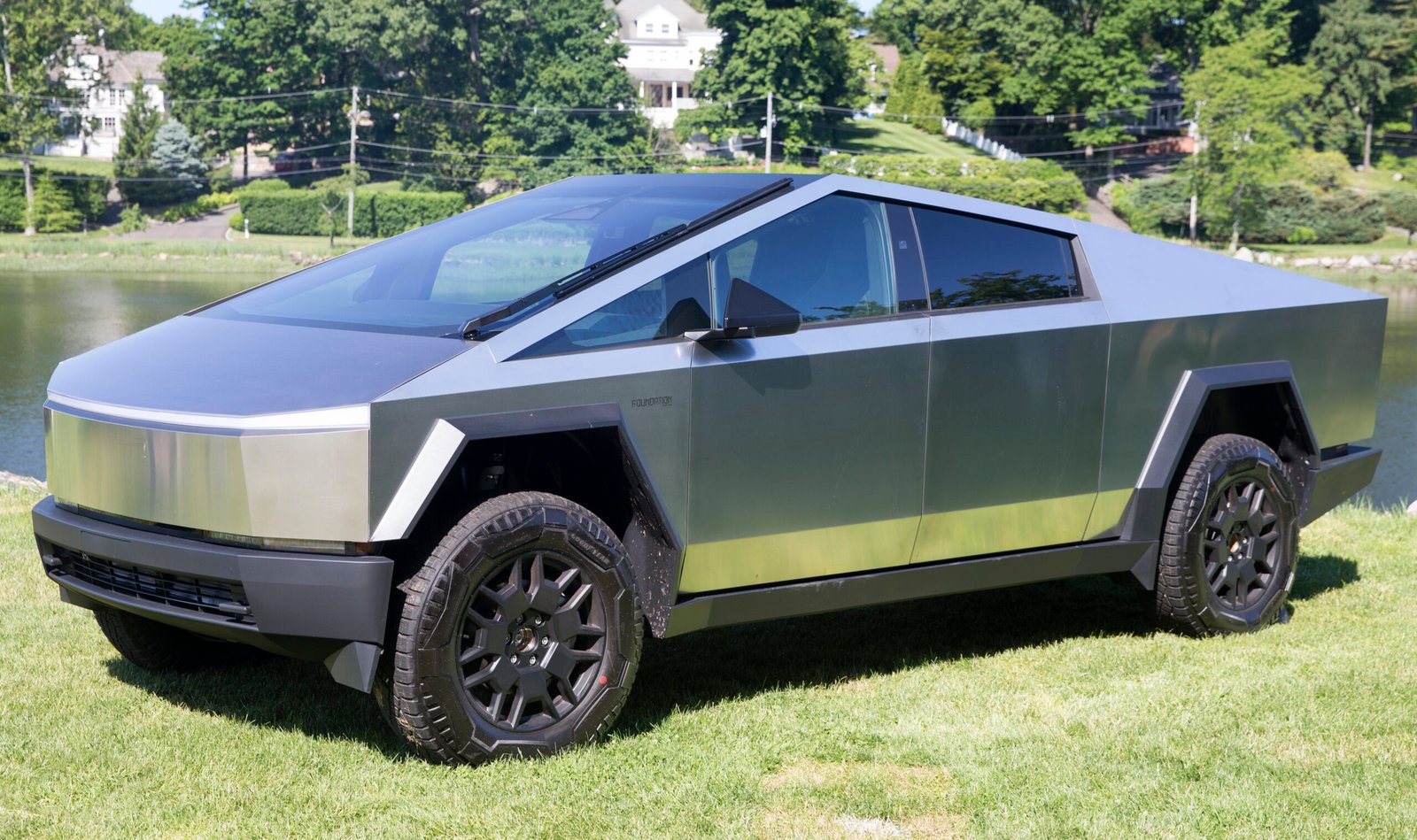
2026 Tesla Cybertruck front three-quarter in unpainted stainless steel finish
⚡ Quick Verdict
:
After a year and a half, we can tell you the 2026 Cybertruck is the most tech-packed electric ute you can buy. The new Standard AWD model, landing at around AUD $105k, finally makes the price tag palatable. Steer-by-wire and four-wheel steering make it feel half its size, it’s the safest pickup ever tested, and the Supercharger network is still the gold standard for hassle-free travel. Just be ready for edges that can cut you, looks that divide a crowd, and build quality that doesn’t quite feel like a six-figure vehicle.
—
✓ The Good
- +Steer-by-wire and four-wheel steering make it easier to drive than a Model Y
- +Safest pickup truck ever tested — IIHS Top Safety Pick+ and NHTSA five-star
- +17-inch 120 Hz display with class-leading software and FSD Supervised capability
- +123 kWh battery delivers 400-450 km real-world mixed driving range
- +Supercharger network access eliminates range anxiety on long road trips
- +New Standard AWD trim at ~AUD $105k sharpens the value proposition considerably
✗ The Trade-offs
- −Sharp stainless-steel panel edges pose a genuine skin-contact hazard daily
- −Rear visibility is essentially zero with tonneau cover closed
- −Build quality and panel gaps remain inconsistent after 18 months of ownership
- −Static-electricity shocks on every exit from raw stainless contact
- −Tonneau cover is near-waterproof but still leaks in heavy downpours
📑 In This Review
- At a Glance
- Design and First Impressions
- Interior and Technology
- Performance and Drive Experience
- Range, Battery, and Charging
- 2026 Tesla Cybertruck vs Rivian R1T: Which Is Better?
- Cargo, Towing, and Practicality
- Safety and Warranty
- Quirks, Ownership, and Long-Term Issues
- Who Should Buy the 2026 Tesla Cybertruck?
- BUY IF:
- SKIP IF:
- Verdict
- Frequently Asked Questions
After a year and a half, we can tell you the 2026 Cybertruck is the most tech-packed electric ute you can buy. The new Standard AWD model, landing at around AUD $105k, finally makes the price tag palatable. Steer-by-wire and four-wheel steering make it feel half its size, it’s the safest pickup ever tested, and the Supercharger network is still the gold standard for hassle-free travel. Just be ready for edges that can cut you, looks that divide a crowd, and build quality that doesn’t quite feel like a six-figure vehicle. — The Cybertruck is the last one standing. While Ford’s shelved the F-150 Lightning and Ram’s put its electric 1500 on ice, Tesla’s angular beast is the only mainstream electric pickup you can actually order new right now. Rivian’s R1T is a brilliant thing, but its presence here is limited. So for anyone dead-set on a new, fully electric truck, the Cybertruck is it. The range now has three clear steps. At the top, the Cyberbeast tri-motor belts out 845 hp and cracks the 0-100 km/h sprint in 2.7 seconds for roughly AUD $130k or more. Our long-termer, the Premium AWD dual-motor, sits between $95k and $110k. The real news is the new Standard AWD, starting at about $105k. It saves you $10k–$15k by dropping the air suspension, the premium audio, ventilated seats, and a few other niceties. But here’s the crucial bit: it keeps the same 447 kW dual-motor setup, the 523 km EPA range, and that game-changing steer-by-wire and four-wheel steering. The clever engineering is finally within reach without needing a massive budget. | Model | Price (AUD approx.) | Power | 0-100 km/h | Range (WLTP/EPA) | Towing | |—|—|—|—|—|—| | 2026 Tesla Cybertruck AWD | ~$95,000–$110,000 | 447 kW (600 hp) | 4.3 s | 523 km (EPA) | 5,000 kg | | 2026 Tesla Cyberbeast | ~$130,000+ | 630 kW (845 hp) | 2.7 s | 515 km (EPA) | 5,000 kg | | Rivian R1T Dual Motor | ~$108,000 | 397 kW (533 hp) | 3.6 s | 435 km (EPA) | 5,000 kg | | Ford F-150 Lightning | Discontinued (used only) | 420 kW (563 hp) | ~4.0 s | 370 km (EPA) | 4,535 kg | | GMC Hummer EV Pickup | ~$165,000+ | 746 kW (1,000 hp) | ~3.0 s | 560 km (EPA) | 3,855 kg | —
At a Glance
| Model | Price (AUD approx.) | Power | 0-100 km/h | Range (WLTP/EPA) | Towing |
|---|---|---|---|---|---|
| 2026 Tesla Cybertruck AWD | ~$95,000–$110,000 | 447 kW (600 hp) | 4.3 s | 523 km (EPA) | 5,000 kg |
| 2026 Tesla Cyberbeast | ~$130,000+ | 630 kW (845 hp) | 2.7 s | 515 km (EPA) | 5,000 kg |
| Rivian R1T Dual Motor | ~$108,000 | 397 kW (533 hp) | 3.6 s | 435 km (EPA) | 5,000 kg |
| Ford F-150 Lightning | Discontinued (used only) | 420 kW (563 hp) | ~4.0 s | 370 km (EPA) | 4,535 kg |
| GMC Hummer EV Pickup | ~$165,000+ | 746 kW (1,000 hp) | ~3.0 s | 560 km (EPA) | 3,855 kg |
Rivian R1T Dual Standard
Closest direct rival — faster 0-60, larger frunk, better build, but lacks Supercharger access and IIHS TSP+
2026 Tesla Cyberbeast
The in-house performance flagship — 2.7 s to 100 km/h and same safety credentials, at a hefty premium
GMC Hummer EV Pickup
More extreme, more expensive, and less efficient — wins on novelty, loses on value
Design and First Impressions
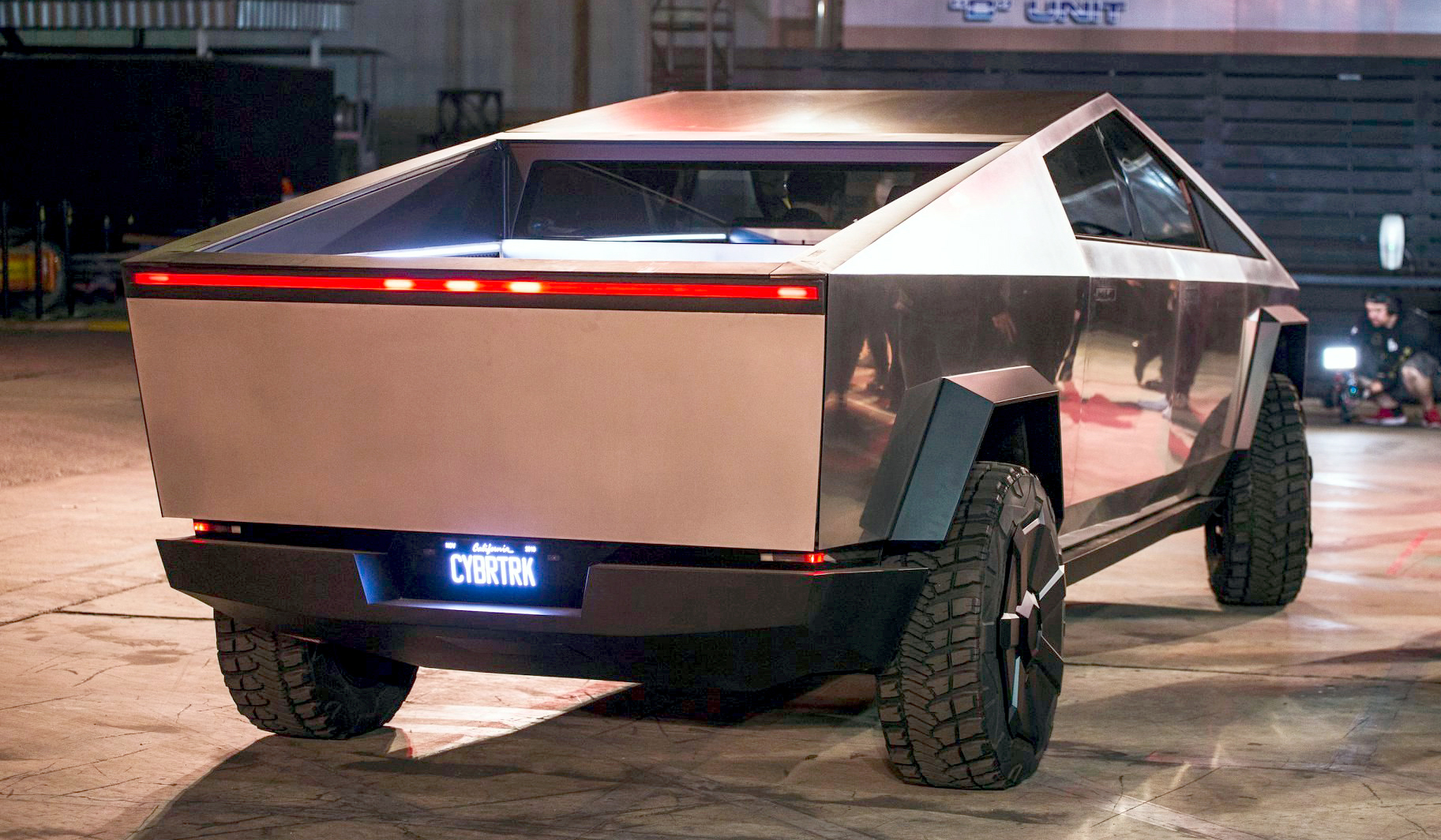
Let’s not sugarcoat it: the Cybertruck is the most divisive vehicle we’ve ever driven. It looks like nothing else on the road—a wedge of raw stainless steel with edges sharp enough to open a letter and proportions that make a Ford Ranger look dainty. People either love it or loathe it; there’s no middle ground. Mates who scoff at the photos often change their tune after a passenger ride, but that first, visceral reaction is a powerful thing. From the rear, the angle most other drivers see, it’s particularly blunt. We’ve honestly mistaken ours for a skip bin in a car park, which says a lot.
That unpainted stainless body is its defining feature and its biggest ownership headache. On the plus side, after 19,000 km on Aussie and American roads, we haven’t got a single stone chip on the panels or armoured glass. That’s exceptional for any vehicle, let alone a ute this big. The downside is those panels are legitimately hazardous in spots. The corners where the tray meets the cabin are razor-sharp; we’ve clipped our head getting in more than once. Closing the frunk brings two sharp edges together in a way that makes you very careful with your fingers. You develop a constant, low-grade awareness of the steel around you, something you never think about in any other car.
Build quality is still hit-and-miss. Our early VIN has wonky wheel covers that need occasional twisting back into place, and a piece of exterior trim has snapped off. Its replacement is already coming loose. The tyre valve is hidden completely behind the wheel cover, so checking pressure means removing a filthy cover every single time. On a $40k car, you’d shrug. On a $100k-plus truck, it’s tougher to stomach, and it’s the main thing that lets the side down when you’re cross-shopping.
—
Interior and Technology
Once you’re past those fingerprint-magnet stainless doors, the cabin feels both futuristic and genuinely useful. The centrepiece is a massive 17-inch touchscreen, the biggest Tesla’s ever fitted, running at a smooth 120 Hz. It’s incredibly responsive, and the software behind it remains the best infotainment system going. Everything from the air-con to the drive modes lives on that display, and after a day or two, it’s second nature.
The steering yoke finally makes sense here. Because the steer-by-wire system means you never cross your hands, the variable ratio lets you go from lock to lock with minimal wrist movement. Pair that with four-wheel steering, and driving this leviathan becomes almost comically easy. We’ll cover that more shortly, but the yoke works well here. Tesla’s ditched all the stalks, too. Indicators, lights, wipers—they’re all buttons on the wheel. It takes a day to get used to, then it feels normal.
The rest of the cabin is spacious with a few quirks. The dash stretches a good 1.2 metres from the wheel to the base of the windscreen, so cleaning the inside glass properly requires a special tool. We use a long-handled window wand. The 15-speaker sound system with active noise cancellation is, frankly, one of the best factory audio setups we’ve heard in any car, at any price. Music is rich and detailed. The ANC, delivered via an update, is more subtle; our testing showed a marginal difference, though future software might improve it. Front seats are heated and cooled, though the cooling is gentle enough you sometimes check if it’s on. Rear passengers get a 9.4-inch entertainment screen, heated seats, USB-C ports, and a household power outlet. The middle seat is wide enough for three adults to sit reasonably comfortably on a road trip. The only issue? Rear passengers kept hitting the window switches with their elbows, so we now lock them as standard.
—

Performance and Drive Experience
The Cybertruck cracks 0-100 km/h in 4.3 seconds in our Premium AWD trim. That’s absurd for a vehicle over 3,000 kg, and it feels even quicker because the cabin is so well-insulated and the power delivery is instant. One-pedal driving is strong and intuitive, just like in any Tesla. There are no gear stalks; the truck guesses your direction from context when you brake, and you can swipe the screen to change it. Sounds odd on paper. Works perfectly in practice.
What really transforms the driving experience is the steer-by-wire and four-wheel steering combination. We spent a lot of time in the smaller Rivian R1T before getting the Cybertruck. Yet the Tesla is easier to park, simpler to manoeuvre in tight spots, and pulls off U-turns more easily. The rear axle turns the same way at low speed, shrinking the turning circle dramatically. We regularly do U-turns across two lanes where a normal truck would need a three-point turn or a wider road. The steering is lighter than a Model Y—you give the yoke less input for the same effect—and the variable ratio means it feels agile in town and stable on the highway. It’s hard to overstate how much this changes the game for a vehicle this size.
Ride quality on the air suspension is excellent. You can choose between high, medium, low, and entry ride heights, and the differences are meaningful for off-roading, loading, and highway efficiency. The suspension has relaxed and focused modes, and we lived in relaxed mode almost all the time because the Cybertruck’s main job is comfortable cruising, not carving corners. Full Self-Driving Supervised (v14.x) is available and works well, with one big caveat: the truck exhibits “phantom dodging.” It makes sudden swerves for tyre marks, painted lines, or other non-hazards. This behaviour is more pronounced than in our Model Y on the same software, and we had to take over more often on a long road trip. The system has improved massively since launch, and only Summon and Smart Summon are missing from the FSD feature set. But that phantom-dodging is a real issue if you plan to rely on autonomy.
—

Range, Battery, and Charging
The 123 kWh battery delivers an EPA-rated 523 km in AWD trim. In our real-world mix of city driving, highway runs, and the occasional blast down a backroad, we consistently see 400 to 450 km of usable range. That’s a solid number for a truck this size and weight, more than enough for daily duties and moderate road trips without stress. Towing cuts range by about half, turning a 400 km highway cruise into a 200 km exercise in finding chargers. We wish Tesla offered an 800 km version; the 800V architecture could handle it, and it would answer the biggest question traditional ute buyers have.
Charging is where Tesla’s ecosystem shines. The Cybertruck uses the NACS plug and has full access to the Supercharger network. Peak DC charging hits 250 kW on V3 Superchargers and up to 325 kW on newer V3.5 hardware, with brief bursts toward 500 kW on the emerging V4 network. In reality, a 10-80% top-up on a V3 takes about 35-40 minutes, which is competitive for a battery this size. Charging at home with the 11.5 kW onboard charger means a full overnight refill from near-empty takes roughly 11-12 hours on a suitable wallbox. For Aussies importing one, you’ll need an adapter for the local CCS2 network, though Tesla’s own Supercharger rollout here is growing steadily.
—

2026 Tesla Cybertruck vs Rivian R1T: Which Is Better?
This is the showdown everyone wants to see. The Rivian R1T and Tesla Cybertruck are the only two electric utes you can genuinely order new in 2026, and they take completely different paths to the same goal. The R1T is handsome, conventional, and well-built. The Cybertruck is radical, polarising, and packed with tech the R1T doesn’t have. Your choice boils down to what you value most.
On price, it’s closer than you’d think. The Rivian R1T Dual Standard starts at about US$72,285 (roughly AUD $108k before on-road costs and import duties). The new Tesla Cybertruck Standard AWD lands at about US$70,000 (roughly AUD $105k). For Aussie buyers, both sit in that $100k–$115k window, depending on spec and import costs. The top-spec Cyberbeast and R1T Quad-Motor push well past $130k, but at the volume-selling level, these two are basically price-matched.
Performance favors the Rivian in a drag. The R1T Dual Standard hits 0-100 km/h in 3.6 seconds versus the Cybertruck AWD’s 4.3 seconds. You’ll notice that in a race, but it’s irrelevant in daily driving, where both feel insanely quick for their size. The Cyberbeast claws it back with a 2.7-second sprint, but that’s a different price bracket.
Where the Cybertruck pulls decisively ahead is charging infrastructure. Tesla’s Supercharger network is the largest, most reliable, and most widespread fast-charging network on the planet. The R1T relies on a patchwork of third-party CCS networks that, while im proving, can be inconsistent, especially out in the sticks. For anyone planning real road trips in an electric ute, this advantage alone could be the deciding factor.
Safety is another clear win for the Cybertruck. It’s the only pickup ever to earn the IIHS Top Safety Pick+ rating, and it also has an NHTSA five-star overall score. The stainless-steel exoskeleton acts as a structural crash cage, and it aced every crash-avoidance test at 12, 25, and 37 mph in daylight and dark. The Rivian R1T hasn’t matched those safety accolades.
Range is more nuanced. The Cybertruck AWD is rated at 523 km versus the R1T Dual Standard’s 435 km. In practice, that’s about 400-450 km for the Tesla and 340-380 km for the Rivian—a meaningful, but not massive, gap. Both can tow up to 5,000 kg in higher trims, and both suffer the same roughly 50% range penalty when doing so.
Cargo practicality is where the R1T fights back. Its frunk is bigger and more usable, its tray is a simple rectangle without the Cybertruck’s tapered depth (728 mm at the front, 505 mm at the rear), and the whole layout is more intuitive for anyone who’s owned a ute before. The Cybertruck’s tray has clever bits—sub-tray storage, an L-track system, dimmable lights, and 120V/240V outlets—but the sloping floor and the difficulty of reaching cargo from the side when it’s stacked high are real compromises.
On-road feel is subjective. The Cybertruck’s steer-by-wire and four-wheel steering make it feel smaller, lighter, and more agile than the R1T despite being physically bigger. The Rivian uses a conventional hydraulic steering rack, which gives more direct feedback but needs more effort and more turns to park. After lots of time in both, we found the Cybertruck definitively easier to live with in cities and car parks. The R1T, though, has a more connected, more traditionally “truck-like” feel that some drivers will prefer.
Build quality and interior refinement go to the Rivian without debate. The R1T’s panel gaps are tighter, its materials feel more premium in places, and it doesn’t have sharp stainless edges that can cut you. After 18 months with the Cybertruck, we’ve got rattles, a broken trim piece, and recurring alignment issues that’d be unacceptable at this price. The R1T, by all reports, doesn’t suffer from the same quality-control issues.
<div style="background:linear-gradient(135deg,#f0f9ff,#e0f2fe); border-left:4px solid #2563eb; border-radius:12px; padding:24px 28px; margin:32px 0"> <p style="font-size:12px; font-weight:800; letter-spacing:0.14em; text-transform:uppercase; color:#1e40af; margin:0 0 10px">Which one is better?</p> <p><strong>Buy the Cybertruck if</strong> you want the safest electric pickup ever tested, prefer the steer-by-wire driving experience, value the Supercharger network, and don’t mind polarising looks.</p> <p><strong>Buy the Rivian R1T if</strong> you want a more conventional truck layout, larger frunk, faster 0-60, better build quality, and a more discreet road presence.</p> <p><strong>Our pick</strong> is the Cybertruck AWD — the safety, charging, and software combination is unmatched in the segment, and the new lower-priced trim makes it the value play.</p> </div>
| Specification | Cybertruck AWD | Rivian R1T Dual Standard |
|---|---|---|
| Price (AUD approx.) | ~$105,000 | ~$108,000 |
| Power | 447 kW (600 hp) | 397 kW (533 hp) |
| 0-100 km/h | 4.3 s | 3.8 s |
| Range (EPA) | 523 km | 435 km |
| Battery | 123 kWh | 135 kWh |
| Towing | 5,000 kg | 4,990 kg |
| Charging peak | 325 kW | 220 kW |
| Length | 5,683 mm | 5,514 mm |
| Safety rating | IIHS TSP+ / NHTSA 5-star | NHTSA 5-star |
—
Cargo, Towing, and Practicality
The Cybertruck’s tray measures 1,852 mm (six feet) with the tailgate up, expanding to 2,438 mm (eight feet) with it down. The tray depth tapers from 728 mm at the front to 505 mm at the rear, so a standard 6-foot length of timber won’t sit flat with the cover closed if placed at the shallow end. The upside is that taller items—a chair, a bike, some boxes—can angle up into the deeper front section and still fit under the closed cover. Under the tray floor is a storage compartment with dividers, handy for tools and recovery gear. The L-track system on the tray walls takes a wide range of aftermarket tie-downs, and we’ve used a bed-divider rack a lot for mixed loads.
Power in the tray is a standout: two 120V outlets and one 240V outlet, enough to run jobsite tools, camping gear, or even charge another EV. The tonneau cover is powered and nearly waterproof—it kept our gear dry in heavy rain but isn’t completely sealed; we’ve seen light moisture get in during downpours. Aftermarket seal kits are available. Towing capacity is 5,000 kg for the AWD and 3,400 kg for the Standard, with payloads of 1,134 kg and 910 kg respectively. The frunk is powered, fits a weekend bag or a small esky, and has a bench seat for tailgating—a nice touch. Rear visibility with the tonneau closed is basically zero; the mirror shows only the inside of the cover, so you rely entirely on the rear camera feed on the big screen. We reckon Tesla should’ve made that mirror a digital display, and a bed-view camera for keeping an eye on cargo while driving is a glaring omission.
—
Safety and Warranty
The 2026 Tesla Cybertruck is the only pickup in history to earn the IIHS Top Safety Pick+ rating. It also has an NHTSA five-star overall safety score (four-star for rollover). In crash-avoidance testing, it aced every scenario at 12, 25, and 37 mph in both daylight and at night. The stainless-steel exoskeleton works as a structural crash cage, distributing impact forces through the body panels in a way a normal stamped-steel ute body can’t. For a vehicle that draws this much attention, this safety record is a quiet, unassailable strength that no rival currently matches.
Warranty is standard Tesla: four years or 80,000 km for the basic vehicle, eight years or 192,000 km for the battery and drivetrain, with roadside assist during the basic period. FSD Supervised is an optional subscription or one-time buy, and it gets better via over-the-air updates. The warranty terms are competitive, though we note that our build-quality issues—rattles, loose trim, alignment problems—have all been fixed under warranty by Tesla service. At least the cost of those annoyances has been on the manufacturer, not us.
—
Quirks, Ownership, and Long-Term Issues
Every car has its quirks. The Cybertruck has more than most, and some are unique. The sharp stainless edges are the most talked about, and for good reason: they’re a daily hazard. We’ve got into a habit of ducking when getting in, avoiding certain angles when loading the tray, and staying clear of the tailgate corners. You don’t think about this in any other vehicle. The static shocks are another Cybertruck special—sliding off the vegan-leather seat and touching bare stainless on exit gives you a zap every single time. Our fix is to touch the bodywork before stepping out, grounding ourselves. It works, but you shouldn’t have to do it.
After 18 months and about 19,000 km, we’ve developed a rattle somewhere behind the dash trim, a broken exterior piece that its replacement is already working loose, and a frunk that sometimes sticks partway open before finally releasing after 15-20 seconds. Leaves collect in the seams between the stainless panels, especially around the tray, and are almost impossible to get out without taking things apart. The train-horn sound Tesla gave the Cybertruck is less audible to other drivers than a normal horn; we’ve had people not realize we were honking. On the plus side, over-the-air updates have brought real improvements: the active noise cancellation, while subtle, arrived as a free software update, and Tesla’s improved the frunk sensor to reduce the risk of closing on fingers. The ute today is meaningfully better than the one we took delivery of 18 months ago, and that OTA improvement is something no traditional maker can match.
—
Who Should Buy the 2026 Tesla Cybertruck?
The ideal buyer wants an electric pickup—not a crossover, not a sedan, but an actual ute with a tray, towing capacity, and work-ready utility—and values technology, safety, and the Tesla ecosystem more than conventional looks and build quality. If you’re a Tesla owner stepping up from a Model 3 or Y and want the company’s most advanced vehicle, the Cybertruck delivers with its steer-by-wire, four-wheel steering, FSD capability, and Supercharger access. If you’re a ute buyer who’s been waiting for an electric option that hasn’t been cancelled, this is literally the only new-production choice left.
The new Standard AWD is the value pick. At roughly AUD $105k, it keeps the same powertrain, the same 523 km range, the same steering tech, and the same safety credentials as the Premium. What you lose—air suspension, half the speakers, ventilated seats, the rear screen, sub-tray storage, and L-tracks—are comfort and polish items many buyers won’t miss. If Tesla drops the price further as production scales, it’ll become a near-uncontested recommendation in the electric ute segment.
That said, some people should steer clear. If you tow over 5,000 kg regularly, the halved range under load and the modest battery capacity will frustrate you. If you can’t stand the polarising design—and the attention and reactions it gets from other drivers and pedestrians—this isn’t the ute for you. If you need clear rearward visibility for checking kids in car seats or monitoring traffic without relying on a camera, the Cybertruck’s opaque rear window and sealed tonneau will be a daily annoyance. And if build quality, tight panel gaps, and the absence of sharp edges are non-negotiable at this price, the Rivian R1T is the more honest choice.
BUY IF:
– You want the safest electric pickup truck ever tested, with IIHS Top Safety Pick+ and NHTSA five-star credentials – You value the Tesla ecosystem — Supercharger network access, FSD Supervised, and continuous OTA improvement – You prioritise driving ease: steer-by-wire and four-wheel steering make this the most manoeuvrable full-size truck on the market – You are comfortable with a radical design language and the attention — positive and negative — that comes with it
SKIP IF:
– You tow heavy loads frequently and need more than 200-250 km of real-world towing range – You cannot tolerate inconsistent build quality, sharp panel edges, or rattles on a six-figure vehicle – You require clear rearward cabin visibility without relying on a camera feed – You prefer a conventional truck aesthetic and want to blend into traffic unnoticed
—
⚡ Our Verdict
A polarising masterpiece that finally has a price to match its tech
After 18 months and roughly 19,000 km, the 2026 Tesla Cybertruck remains one of the most contradictory vehicles we’ve evaluated. It’s the most technologically advanced pickup on sale and the one with the most visible quality-control shortcomings. It’s the safest ute ever crash-tested and the one most likely to draw blood from its own bodywork. It drives smaller than a Model Y and looks larger than almost anything else on the road. We rate it 8.2 out of 10—a strong score that reflects the genuine brilliance of the engineering while acknowledging the real frustrations of the execution. What’s changed the equation in 2026 is the Standard AWD trim. At roughly AUD $105k, the Cybertruck is no longer an early-adopter curiosity at a premium price; it’s a competitive electric ute at a competitive price, with the best safety record, the best charging network, and the best software in the segment. The build-quality issues—the rattles, the panel gaps, the sharp edges—remain a black mark on a vehicle at this price, and they stop the Cybertruck from scoring higher. But no other electric pickup offers this combination of technology, safety, and driving ease. With the F-150 Lightning gone and the RAM electric ute shelved, the Cybertruck isn’t just the most interesting electric truck on sale—it’s increasingly the only one that matters. —
Frequently Asked Questions
How much does the 2026 Tesla Cybertruck cost in Australia?
The Cybertruck isn’t officially sold through Tesla Australia and must be privately imported. Approximate pricing puts the Standard AWD at AUD $100,000-$105,000, the Premium AWD at $95,000-$110,000 depending on spec, and the Cyberbeast tri-motor at $130,000 or more. All figures are estimates and subject to exchange rates, import duties, and compliance costs.
What is the real-world range of the Tesla Cybertruck?
In our 18 months of mixed driving—city, highway, and backroads—the Cybertruck AWD consistently delivers 400 to 450 km on a full charge. The EPA-rated figure is 523 km. When towing, expect range to drop by about half, to around 200-250 km depending on the load and conditions.
Is the Cybertruck safe?
Yes. The 2026 Tesla Cybertruck is the only pickup ever to earn the IIHS Top Safety Pick+ rating and holds an NHTSA five-star overall score (four-star for rollover). Its stainless-steel exoskeleton acts as a structural crash cage, and it aced every crash-avoidance test at multiple speeds in daylight and at night. It hasn’t yet been rated by ANCAP for the Australian market.
Tesla Cybertruck vs Rivian R1T — which should I buy?
Buy the Cybertruck if you prioritize safety credentials (IIHS TSP+), the Supercharger network, steer-by-wire driving ease, and Tesla’s FSD software ecosystem. Buy the Rivian R1T if you prefer a more conventional truck layout, need a larger frunk, want faster 0-100 acceleration, value tighter build quality, and prefer a more discreet road presence. Our pick is the Cybertruck AWD for its unmatched safety, charging, and software combination.
Does the Cybertruck come with Full Self-Driving?
Standard Autopilot is included with every Cybertruck. Full Self-Driving (Supervised) is an optional subscription or one-time purchase. In our testing, FSD v14.x works well on the Cybertruck but shows occasional “phantom dodging”—sudden swerves for non-obstacles like tyre marks or road lines—more pronounced than on the Model Y with the same software.
How long does it take to charge the Cybertruck?
On a Tesla V3 Supercharger at its peak 250 kW, a 10-80% session takes roughly 35-40 minutes. On a home wallbox at the Cybertruck’s 11.5 kW AC rate, a full top-up from near-empty takes about 11-12 hours. Newer V3.5 and V4 Superchargers can deliver higher peak rates (up to 325 kW), cutting DC charging times further.
Will Tesla release a longer-range Cybertruck?
Tesla hasn’t officially confirmed a longer-range Cybertruck variant, though the 800V-class battery architecture could support a 500-mile (800 km) version. The current maximum is 523 km EPA across all trims. We think a longer-range model would address the biggest objection from traditional ute buyers, especially those who tow, and expect Tesla to offer one eventually as battery tech and production costs evolve.
