

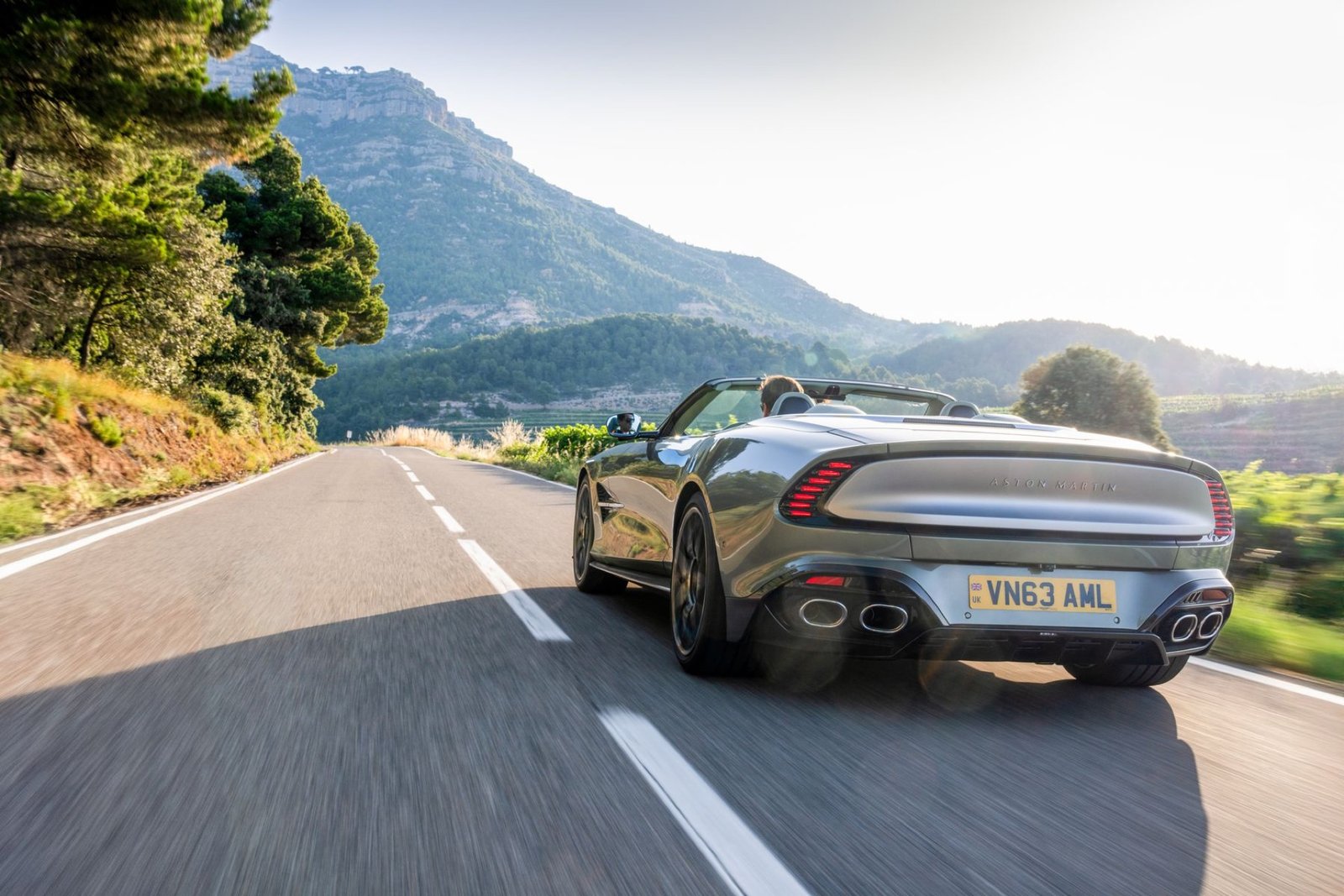
2026 Aston Martin Vanquish Volante Review: The V12’s Swan Song
A magnificent eulogy for the front-engine V12
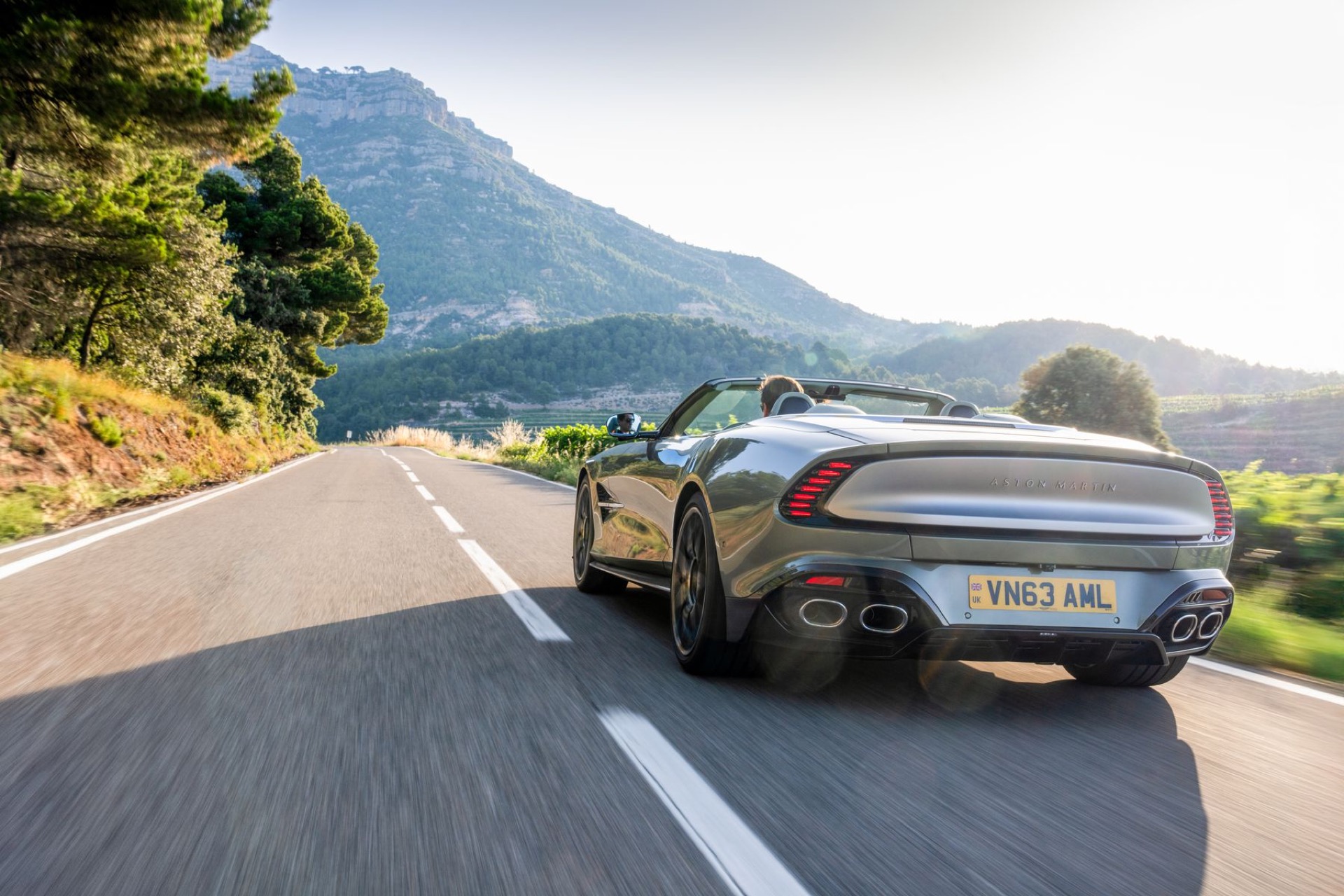
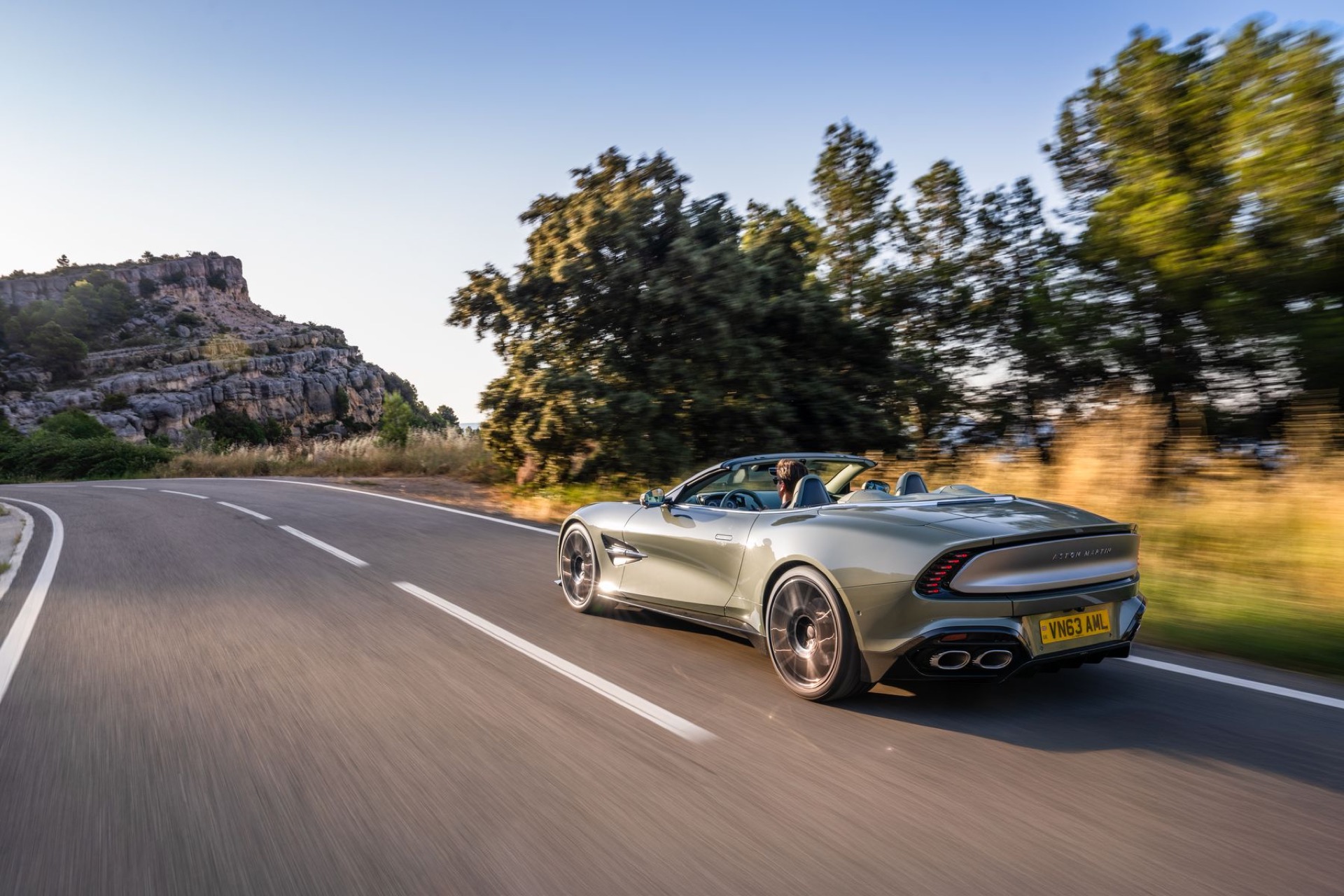
2026 Aston Martin Vanquish Volante side profile with roof down
Price
£345,000
0-100 km/h
3.3 s
Power
824 hp
⚡ Quick Verdict
: The 2026 Aston Martin Vanquish Volante is a £345,000 love letter to the front-engine V12 convertible — a class of car that may not exist in a decade. It pairs 824 horsepower with a sumptuous open-top GT cabin and a 214-mph top speed that makes it the fastest car of its type on the planet. It has practical flaws — the boot is tiny, the cabin is shared with cheaper Astons — but for the buyer who wants a petrol-burning masterpiece before the world moves on, there is genuinely nothing else like it.
—
✓ The Good
- +Staggering 824-hp twin-turbo V12 with 738 lb-ft of torque
- +Fastest front-engine open-top car in the world at 214 mph
- +Genuinely comfortable GT ride in soft mode
- +Gorgeous exterior styling with sensational proportions
- +First production car with Apple CarPlay Ultra integration
- +Standard carbon-ceramic brakes on all four corners
✗ The Trade-offs
- −Boot space is minuscule — smaller than the Vantage
- −Interior largely shared with entry-level Vantage
- −Digital gauge cluster feels wrong at this price point
- −Legroom is genuinely tight for anyone over 6’2"
📑 In This Review
- Why the Vanquish Volante Matters
- What Is the 2026 Aston Martin Vanquish Volante?
- Engine, Performance and Sound
- At a Glance — Vanquish Volante vs Key Rivals
- Aston Martin Vanquish Volante vs Ferrari 12Cilindri Spider: Which Is Better?
- Which one is better?
- Inside the Cabin: Luxury, Tech and Apple CarPlay Ultra
- Ride, Handling and Real-World Driving
- Practicality, Space and Living With It Daily
- Safety, Warranty and Ownership
- Pricing, Options and What You Actually Pay
- Who Should Buy the Vanquish Volante?
- Buy it if you:
- Skip it if you:
- Final Verdict
- Frequently Asked Questions
Every now and then, a car arrives that feels less like a new model and more like a closing chapter. The 2026 Aston Martin Vanquish Volante is exactly that. It’s the convertible version of the most powerful series-production Aston Martin ever built, and it belongs to a breed that’s disappearing fast: the front-engine, V12, rear-wheel-drive drop-top. Think about what’s happened to the segment. Mid-mounted engines have swallowed nearly everything. Ferrari’s range is dominated by turbocharged V8s and hybridised V6s. The Corvette has its V8 behind the seats now. The number of manufacturers still offering a turbocharged or naturally aspirated V12 in a front-engine grand tourer? You could count them on one hand and have fingers left over. The Vanquish Volante exists because someone inside Gaydon decided the combustion V12 deserved a proper send-off — not a quiet retirement. The Vanquish name carries real weight. The original 2001 car signalled Aston Martin’s modern renaissance, the first genuinely new V12 GT from the brand in a generation. The second-gen ran briefly from 2012 to 2016 before the nameplate went dark for eight years. When the third-generation coupe surfaced for 2024, it was clearly a statement. The Volante, arriving for 2026, tears the roof off that statement. Its only direct rival is the Ferrari 12Cilindri Spider — another front-engine V12 convertible, another love letter to a dying configuration. Together, they’re the last two cars of their kind available new from a showroom. Everything else in the open-top GT space has either gone mid-engine, gone hybrid, or gone extinct. —
Why the Vanquish Volante Matters
We’re living through a period where the car world is changing faster than most of us can keep up with. Electrification, downsizing, platform-sharing — the forces reshaping the industry don’t care much for tradition. And yet here we are, with a 5.2-litre twin-turbo V12 convertible that weighs nearly 1,800 kilograms and does 345 km/h. The Vanquish Volante is an act of defiance, plain and simple.
Top Gear called the Vanquish "the most Aston Martin car Aston Martin makes," and that nails something important about this machine. It’s the distillation of a century-old brand identity into a single car. Front engine, rear drive, twelve cylinders, two seats, beautiful bodywork. That’s the formula that’s defined Aston Martin for decades, and this may be the last time we see it executed at this level.
The timing matters. Regulations are tightening. Electrification mandates are looming. The window for cars like this is closing, and both Aston Martin and Ferrari clearly know it. The Vanquish Volante and the 12Cilindri Spider aren’t just new models — they’re likely farewell tours for their respective engine configurations. evo magazine described the Vanquish as "a car that burns its fuel more exquisitely than efficiently," and honestly, we couldn’t put it better ourselves.
—
What Is the 2026 Aston Martin Vanquish Volante?
The Vanquish Volante is the open-top variant of Aston Martin’s range-topping grand tourer. In the current line-up, it sits above the Vantage and the DB12 as the undisputed flagship. Excluding the limited-run Valour, Vulcan, and Valkyrie, this is as high as the production range goes.
It’s a two-door, two-seat convertible with a K-Fold power soft top that deploys or retracts in roughly 14 seconds. The K-Fold mechanism uses a multi-layered fabric roof that folds neatly into a dedicated compartment behind the cabin, rather than the retractable hardtops some rivals prefer. The benefit is a cleaner boot lid line when the roof is up and faster deployment than most folding metal alternatives. The downside, as we’ll get to, is that the mechanism eats into an already small boot.
The third-generation Vanquish is noticeably larger than the car it replaced. The wheelbase has grown by 80 millimetres, and the overall footprint is now comparable to a medium-sized SUV. That growth was driven by the architecture: a front-mounted V12 positioned almost entirely behind the front axle line, paired with a rear-mounted ZF eight-speed transaxle that helps achieve near-perfect weight distribution. It’s a front-engine car in the most literal sense — the engine dictates the front axle’s placement, but drive goes exclusively to the rear wheels.
The Volante adds roughly 91 kilograms over the coupe, bringing total kerb weight to around 1,770 kilograms. For context, that’s heavier than a Ferrari Roma Spider but lighter than a Bentley Continental GT Speed Convertible. Carbon-fibre body panels over an aluminium structure keep things in check, though "in check" is relative when you’re dealing with a car this size.
—
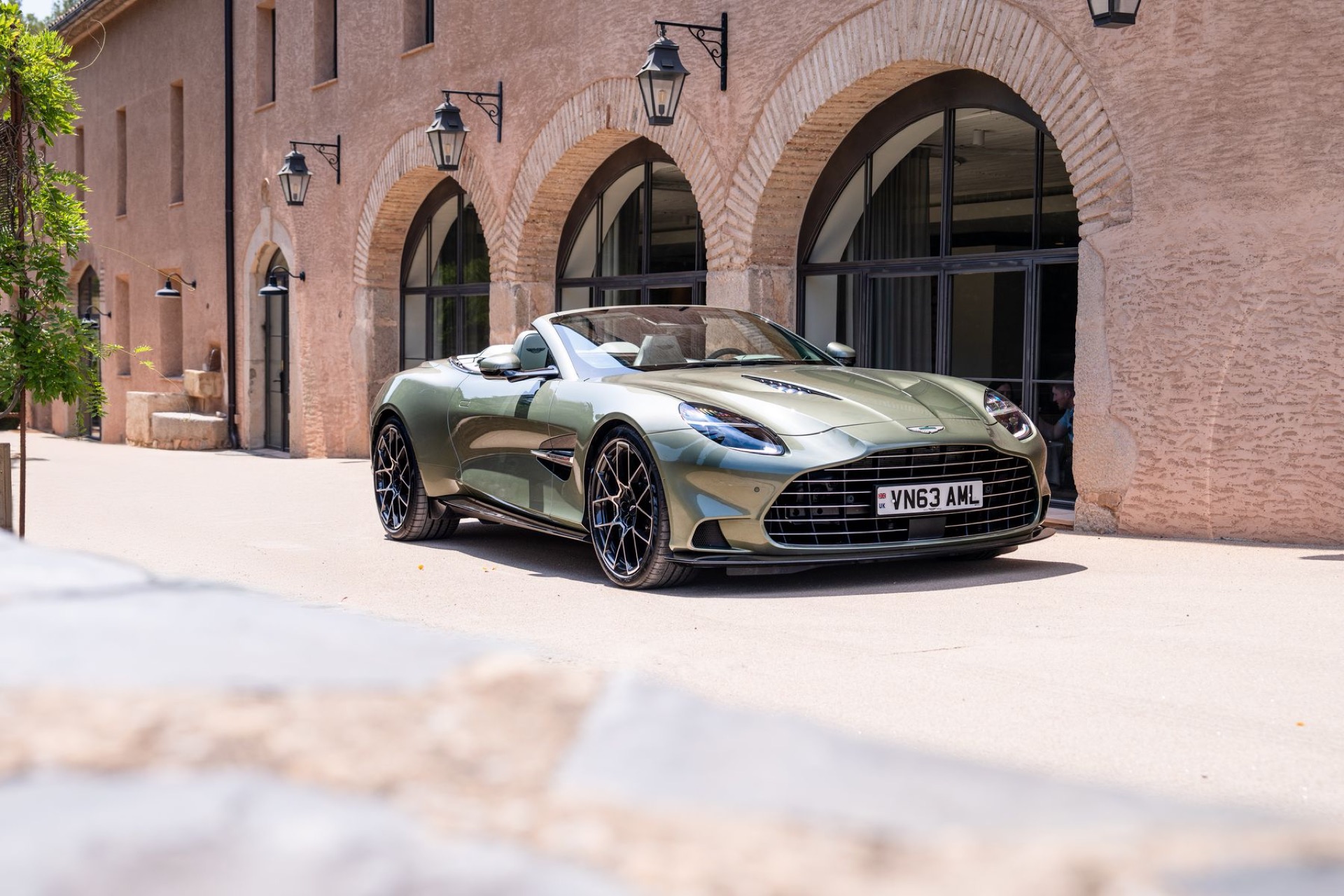
Engine, Performance and Sound
The heart of the Vanquish Volante is a 5.2-litre twin-turbocharged V12 producing 824 horsepower and a flat 1,000 Newton-metres of torque — 738 lb-ft in the old money. These are numbers that speak for themselves. This is the most powerful series-production Aston Martin engine ever fitted to a car, and it gives the Vanquish a power-to-weight ratio exceeding 400 horsepower per tonne, even with the Volante’s extra mass.
The engine is an evolution of the V12 architecture Aston Martin has been refining since the early 2000s, but the changes read like a hot-rodder’s shopping list. The cylinder block has been reinforced to handle higher combustion pressures. The twin turbochargers spool faster, with revised turbine wheels that cut lag to near-irrelevance. Fuel injectors flow at a higher rate to match the increased air charge. Camshafts, con-rods, cylinder heads, and intake ports have all been reworked for better breathing and combustion. The result is an engine that pulls from low revs with the relentless shove of a locomotive, yet still spins willingly toward its 7,000-rpm redline.
The performance figures tell one part of the story: 0 to 100 km/h in 3.3 seconds and a top speed of 345 km/h (214 mph). That top speed is significant — it makes the Vanquish Volante the fastest front-engine open-top production car on the planet. The Ferrari 12Cilindri Spider tops out at roughly 320 km/h. The Bentley Continental GT Speed Convertible manages 335 km/h. Neither can match the Aston at the top end.
Where the Vanquish concedes ground is off the line. The combination of rear-wheel drive and 1,770 kg means traction management limits full power delivery until approximately 137 km/h (85 mph). Launch after launch, the electronics are working overtime to stop the 325-section rear tyres from converting expensive rubber into smoke. The 0-100 sprint of 3.3 seconds is therefore deliberately traction-limited — quick, but not in the sub-3.0-second territory that all-wheel-drive rivals or lighter mid-engine cars manage.
Then there’s the sound. We could write a thousand words about this engine’s voice and still not do it justice. On start-up, the starter motor whirs with a mechanical whine that’s startlingly reminiscent of a small aircraft engine — a brief, glorious overture before the twelve cylinders fire into life. The optional titanium exhaust (saving 10.5 kg and adding roughly £12,000 to the price) liberates an even more aggressive note. At idle, the V12 burbles with a deep-chested resonance that vibrates through the seat. At full load, it builds from a baritone growl into a howling, multi-layered shriek that no speaker system could ever replicate. This is what you’re paying for. The noise alone justifies a significant chunk of the price.
The 8-speed ZF automatic transaxle sits at the rear, contributing to weight distribution and keeping the driveshaft tunnel out of the cabin. Gear changes are smooth in GT mode and properly snappy in Sport and Sport Plus. It’s not a dual-clutch — Aston went with a conventional torque-converter automatic for refinement — but it responds quickly enough to paddle inputs that most drivers won’t notice the difference.
—
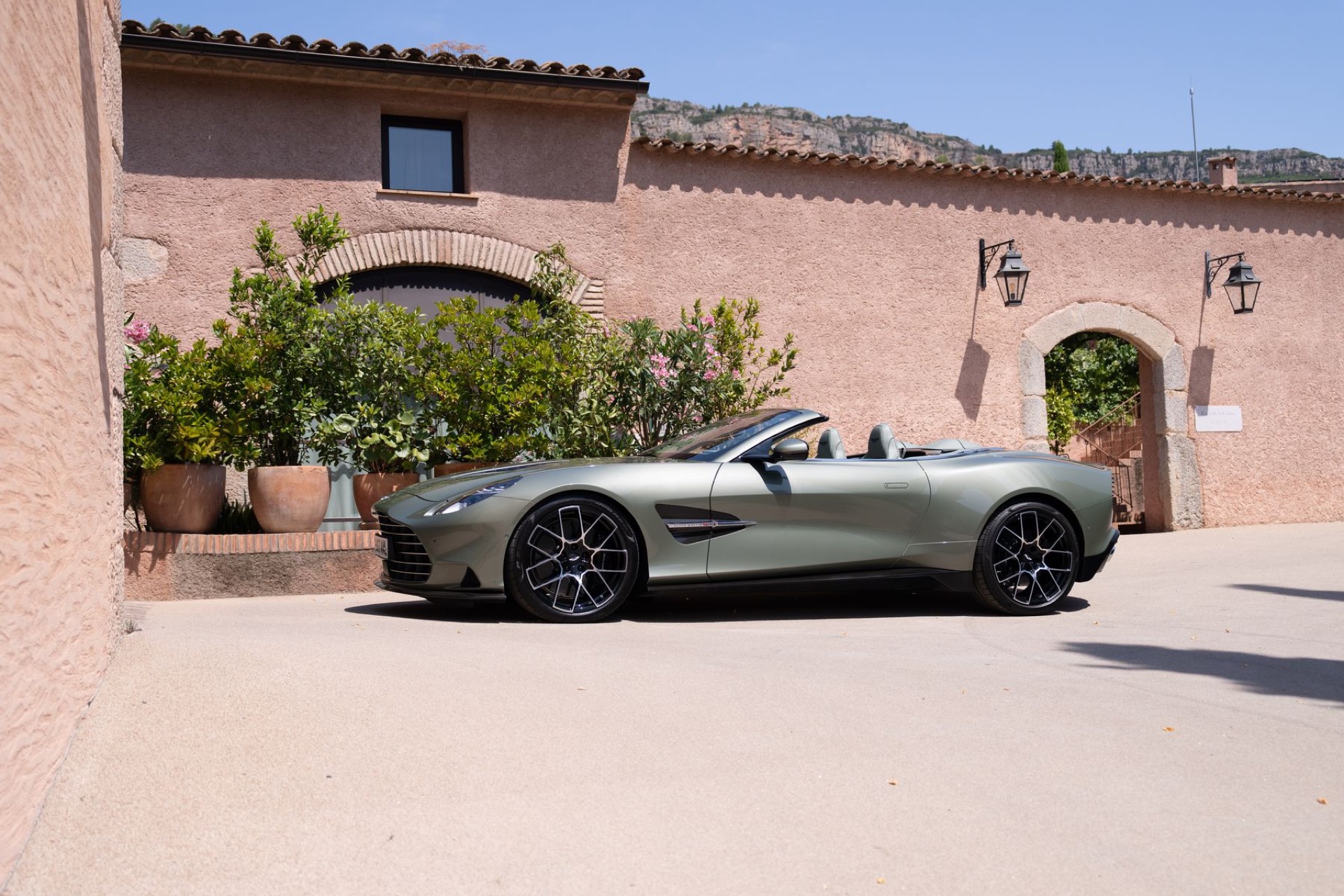
At a Glance — Vanquish Volante vs Key Rivals
| Specification | Aston Martin Vanquish Volante | Ferrari 12Cilindri Spider | Bentley Continental GT Speed Convertible | Mercedes-AMG SL 63 |
|---|---|---|---|---|
| Starting Price (UK) | £345,000 | £366,500 | £254,000 | £150,000 |
| Engine | 5.2L twin-turbo V12 | 6.5L NA V12 | 4.0L twin-turbo V8 PHEV | 4.0L twin-turbo V8 |
| Power | 824 hp | 830 hp | 771 hp combined | 577 hp |
| Torque | 738 lb-ft | 500 lb-ft | 738 lb-ft | 590 lb-ft |
| 0-100 km/h | 3.3 s | 2.95 s | 3.2 s | 3.6 s |
| Top Speed | 345 km/h (214 mph) | 320 km/h | 335 km/h | 315 km/h |
| Drivetrain | RWD | RWD | AWD | RWD |
| Transmission | 8-spd ZF auto | 8-spd dual-clutch | 8-spd DCT | 9-spd MCT |
Ferrari 12Cilindri Spider
The naturally aspirated screamer rival — quicker to 100 km/h but slower outright and pricier
Bentley Continental GT Speed Convertible
Cheaper AWD luxury alternative — more isolation, less drama, and a hybridised V8 vs Aston’s pure V12
Mercedes-AMG SL 63
Half the price but never feels as special — Aston wins on theatre, exclusivity and V12 soundtrack
The Vanquish Volante occupies a peculiar niche. It’s a front-engine, V12, rear-wheel-drive convertible priced above £340,000. Its only true structural rival is the Ferrari 12Cilindri Spider. The Bentley Continental GT Speed Convertible and Mercedes-AMG SL 63 compete on price and grand-touring intent, but they use different engines, different drivetrains, and arguably occupy a different philosophical space. The Bentley is heavier, more luxurious, and all-wheel-drive. The Mercedes is significantly cheaper and less exclusive. Neither offers a V12. Aston Martin Vanquish Volante Bentley Continental GT Speed Convertible —— £345,000 £254,000 5.2L twin-turbo V12 4.0L twin-turbo V8 PHEV 824 hp 771 hp combined 738 lb-ft 738 lb-ft 3.3 s 3.2 s 345 km/h (214 mph) 335 km/h RWD AWD 8-spd ZF auto 8-spd DCT —
Aston Martin Vanquish Volante vs Ferrari 12Cilindri Spider: Which Is Better?
If you’re shopping for a front-engine V12 convertible in 2026, your choice comes down to two cars. There is no third option. The Aston Martin Vanquish Volante and the Ferrari 12Cilindri Spider are the last of their kind — two open-top GTs powered by twelve-cylinder engines mounted ahead of the driver, sending their fury to the rear wheels alone. They cost roughly the same (Ferrari asks about £21,500 more in the UK), they target the same buyer, and they both carry the emotional weight of being probable farewell tours for their engine configurations. This is the comparison that matters.
The most obvious difference is under the bonnet. The Aston’s 5.2-litre twin-turbo V12 produces 824 hp and a mammoth 738 lb-ft of torque. The Ferrari’s 6.5-litre naturally aspirated V12 makes 830 hp but only 500 lb-ft, and it makes that peak power at a frenetic 9,250 rpm, compared to the Aston’s more relaxed 7,000-rpm redline. This is the fundamental philosophical divide. The Aston is a torque monster that delivers its punch from low in the rev range, pulling you forward with a relentless, wave-like surge. The Ferrari is a screamer — it needs to be revved hard to access its performance, and when you do, it rewards you with a naturally aspirated wail that builds in intensity as the tachometer sweeps toward five figures. Neither approach is wrong. They just produce very different driving experiences.
In outright performance terms, the numbers are close but favour different metrics. The Ferrari is quicker off the line, reaching 100 km/h in 2.95 seconds versus the Aston’s 3.3 seconds — its lighter weight and higher-revving launch character giving it an advantage in the initial sprint. The Aston is faster at the top end, reaching 345 km/h against the Ferrari’s roughly 320 km/h. On a long, open autobahn or a private airstrip, the Aston pulls away. In a drag race, the Ferrari arrives first. On real roads, both are absurdly quick, and the gap between 2.95 and 3.3 seconds won’t matter to anyone except pub-argument enthusiasts.
Where the two diverge more meaningfully is in driving character. The Aston Martin is unapologetically a GT car first and a supercar second. In GT mode, the ride is genuinely soft and comfortable — the Bilstein DTX adaptive dampers smooth out imperfections with a suppleness that wouldn’t embarrass a Continental Bentley. The steering is accurate but not hyperactive. The seating position is upright enough for long stints. You could drive the Vanquish Volante from London to Monte Carlo and arrive relaxed. The Ferrari, by contrast, feels more like a supercar that happens to have a long bonnet and an open roof. The seating position is lower, the ride is firmer in all modes, and the steering is more immediate and communicative. It rewards the driver who wants to attack corners, not just cruise through them. The Ferrari occasionally overshoots the GT brief. The Aston nails it.
Inside, the Aston feels like a different class of car. The leather is richer, the cabin is quieter with the roof up, and the overall ambiance — machine-turned aluminium speaker grilles, dark chrome switchgear, optional semi-aniline leather and cashmere headliner — evokes a four-seater Rolls-Royce more than a two-seat sports car. The Ferrari’s cabin is more focused and minimalist, with a driver-centric layout that prioritises function over indulgence. The 12Cilindri’s interior is beautiful in a technical way; the Vanquish’s is beautiful in an artisanal way. At this price, the Aston feels more like a luxury item, the Ferrari more like a precision instrument.
Pricing is surprisingly close. In the UK, the Vanquish Volante starts at £345,000; the Ferrari 12Cilindri Spider at £366,500. The Aston is cheaper, though both manufacturers make it easy to add six figures in options. On the resale front, Ferrari’s brand cachet and more limited production numbers will likely give the 12Cilindri stronger residual values, but the Aston’s relative rarity and the emotional resonance of the Vanquish nameplate should hold it in good stead. Ownership experience differs too: Ferrari’s dealer network is larger and more established globally, but Aston Martin’s Q personalisation programme offers a level of bespoke configuration that Maranello doesn’t directly match at this price point.
| Spec | Aston Martin Vanquish Volante | Ferrari 12Cilindri Spider |
|---|---|---|
| Starting Price (UK) | £345,000 | £366,500 |
| Engine | 5.2L twin-turbo V12 | 6.5L naturally aspirated V12 |
| Power | 824 hp | 830 hp |
| Torque | 738 lb-ft (1,000 Nm) | 500 lb-ft (678 Nm) |
| Redline | ~7,000 rpm | 9,500 rpm |
| 0-100 km/h | 3.3 s | 2.95 s |
| Top Speed | 345 km/h (214 mph) | 320+ km/h |
| Drivetrain | RWD | RWD |
| Roof Mechanism | K-Fold soft top, 14 s | Retractable hard top, 14 s |
Which one is better?
Buy the Vanquish Volante if you prize torque-rich GT cruising, daily usability, a more luxurious cabin and the brutal sound of a twin-turbo British V12. **Buy the Ferrari 12Cilindri Spider if** you live for naturally aspirated screaming engines, track-focused responsiveness, and the unmistakable Maranello badge. **Our pick** is the Aston — it nails the GT brief that the Ferrari occasionally overshoots, and the styling is genuinely sensational.
—
Inside the Cabin: Luxury, Tech and Apple CarPlay Ultra
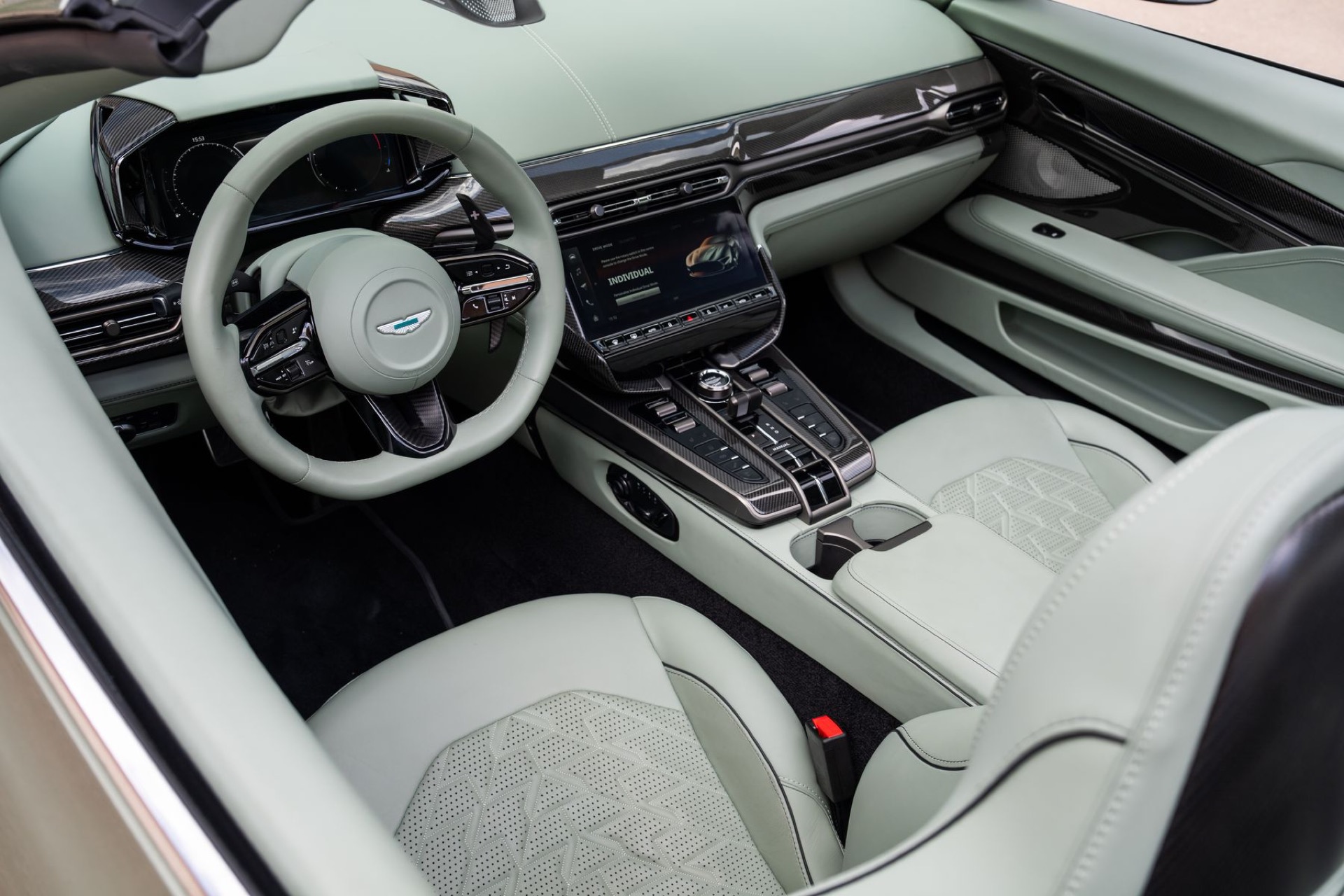
The Vanquish Volante’s cabin is dominated by two 10.25-inch high-resolution screens: one serving as the digital instrument cluster, flanked by carbon-fibre "wings," and the other mounted centrally as the primary infotainment touchscreen. The infotainment runs Aston Martin’s own proprietary operating system, a notable departure from the Mercedes-Benz-derived systems used in previous-generation Astons. The interface is clean, responsive, and logically laid out, though it lacks the customisability depth you’ll find in some German rivals.
The headline tech feature is Apple CarPlay Ultra. The Vanquish Volante is one of the first production vehicles to ship with this system, which goes well beyond conventional CarPlay by integrating navigation, climate control, and other vehicle functions into both the central screen and the digital gauge cluster. Turn-by-turn directions appear in the driver’s line of sight without requiring a glance at the central screen. It’s a genuine step forward for in-car Apple integration, and it works well.
Audio comes courtesy of a 15-speaker premium sound system — that’s 7.5 speakers per occupant, a ratio that borders on the absurd. The machine-turned aluminium speaker grilles on the dashboard and doors are a lovely design touch, and the system delivers rich, detailed sound that’s more than capable of competing with the V12’s own acoustic contributions when the roof is down. The standard Sport Plus leather seats strike an excellent balance between support and comfort, holding the driver firmly through corners without the constriction of the optional carbon-fibre race buckets. For a GT car that’ll spend most of its life on public roads, the standard seats are the right call.
There are criticisms, though. The cabin is, in many respects, a direct lift from the Aston Martin Vantage — the brand’s entry-level model. The steering wheel, switchgear, door cards, and overall dashboard architecture are essentially identical. While the materials in the Vanquish are substantially upgraded — optional semi-aniline leather, cashmere headliner, ambient lighting, the carbon-fibre trim — the underlying design language is shared. At £345,000, you’ve got every right to expect a more bespoke interior. The digital gauge cluster, while functional, also feels at odds with the car’s hand-built, artisanal ethos; at this price, we’d welcome the option of analogue instruments. And the climate and audio control knobs are identical in shape and size, which makes distinguishing between them tricky at night — a minor ergonomic quirk that still feels like it should’ve been sorted at this level.
—

Ride, Handling and Real-World Driving
The Vanquish Volante rides on Bilstein DTX adaptive dampers capable of reacting to road inputs one thousand times per second. In GT mode, the result is a ride that’s genuinely, properly comfortable. This isn’t one of those supercars that claims to have a "comfort" setting but still jolts you over every expansion joint. The Aston floats over imperfections with a softness that belies its 1,770-kg kerb weight. Wind the dampers to Sport or Sport Plus, and body control tightens significantly — the car corners flat, resists pitch under braking, and responds to steering inputs with an agility that makes you momentarily forget you’re piloting something the size of a Range Rover Evoque.
Standard carbon-ceramic brakes on all four corners provide immense stopping power and resistance to fade, which is essential given the speeds this car can reach. The tyres — 275-section fronts and 325-section rears — provide a substantial contact patch, but the traction control system earns its keep. In a straight line, the electronics won’t permit full boost delivery until approximately 137 km/h; below that speed, the sheer volume of torque threatens to overwhelm the rear rubber even in dry conditions. There’s no active aerodynamics — no air brake, no deployable rear wing, no venturi tunnels. The Vanquish relies entirely on brute power fed to fat rear tyres and an intelligent stability system. It works, and it suits the car’s character.
Despite its weight, the Vanquish Volante doesn’t feel ponderous in corners. The Bilstein dampers manage weight transfer with impressive composure, and the rear-mounted transaxle helps balance the mass distribution. The steering, while not as razor-sharp as a mid-engine supercar’s, is accurate and well-weighted. The overall driving experience is one of a car tuned for confidence and composure rather than outright aggression — an athlete in a tailored suit, not a gymnast in a leotard.
—
Practicality, Space and Living With It Daily
This is where the Vanquish Volante’s fairy tale runs into a harsh reality. Despite its SUV-like exterior dimensions, the cabin is tight. Legroom is at a premium, and anyone taller than about 6’2" (188 cm) will find their knees uncomfortably close to the dashboard. The seating position, while adjustable, can’t compensate for a cabin that prioritises mechanical packaging over occupant space.
The boot is minuscule. It’ll fit roughly one carry-on suitcase, and not a large one. The Volante’s boot is even smaller than the coupe’s, because the K-Fold soft-top mechanism consumes a significant portion of the available storage volume when stowed. Here’s the kicker: the Vanquish Volante’s boot is smaller than that of the Vantage, the brand’s entry-level car. The culprit is the rear-mounted ZF transaxle, which occupies the space that would otherwise be available for luggage. For a car positioned as a grand tourer — traditionally defined by the ability to cover long distances with luggage for two — this is a genuine limitation. Weekend trips are fine. A two-week European holiday isn’t happening unless you ship your bags separately.
Fuel economy, paradoxically, isn’t a major concern. Despite its 824-hp output, the Vanquish Volante returns roughly 13–14 mpg in city driving and up to 19 mpg on the highway. For a twelve-cylinder engine of this output, those figures are remarkably civilised. You won’t buy this car for its efficiency, but it won’t bankrupt you at the pumps any faster than a performance SUV.
—
Safety, Warranty and Ownership
The Vanquish Volante comes equipped with a full suite of advanced driver-assistance systems, including blind-spot monitoring, autonomous emergency braking, forward and rear cross-traffic alert, adaptive cruise control, lane-keeping assist, and a 3D surround-view camera system. These systems work well and add a layer of modern safety to a car that’s fundamentally about old-fashioned driving pleasure. As a low-volume production vehicle, the Vanquish is exempt from Euro NCAP crash testing, so there’s no official safety rating.
Standard carbon-ceramic brakes on all four corners are a significant safety feature in themselves, providing fade-free stopping power even under repeated high-speed deceleration. The warranty covers three years with unlimited mileage, supplemented by a 10-year anti-perforation corrosion warranty. Aston Martin’s dealer network, while smaller than Ferrari’s, offers a concierge-style ownership experience, and the Q by Aston Martin personalisation programme lets buyers commission bespoke colours, materials, and finishes to a degree few manufacturers match.
—
Pricing, Options and What You Actually Pay
In the United Kingdom, the Vanquish Volante starts at £345,000. In the United States, expect a base price of roughly $460,000. In Australia, where taxes and on-road costs bite hard, a well-specced example will comfortably clear AU$700,000 and could approach AU$800,000 with options.
And the options are where things get truly eye-watering. In the Canadian market, the base MSRP is $561,600 — already a substantial sum. But add the Q satin paint ($23,400), the Inspire monochrome extended leather interior ($13,000), contrast stitching ($3,400), satin dark chrome trim ($3,100), 21-inch copper-bronze wheels ($7,000), the upper and lower exterior carbon packs ($45,000 combined), the titanium exhaust ($17,300), and the most expensive interior option we’ve ever encountered on a production car — the interior carbon pack with metal fibres woven into the carbon ($32,900) — and the as-tested price climbs to a staggering $717,600 Canadian. Even the branded Aston Martin umbrella costs $600. The delivery fee alone is $6,800.
At these prices, rationality has long since left the building. You don’t buy a $717,600 convertible because it makes financial sense. You buy it because it represents something — a sensory experience, a statement of taste, a connection to a tradition of twelve-cylinder motoring that’s vanishing before our eyes.
—
Who Should Buy the Vanquish Volante?
Buy it if you:
– Want the last front-engine V12 convertible from a heritage British marque – Prize sound, theatre and old-school GT cruising over outright lap times – Already own a daily driver and are buying for weekends, events and short trips – Value exclusivity and Aston’s Q personalisation over Ferrari’s volume
Skip it if you:
– Need any meaningful boot space — even a small SUV out-luggages this – Are over 6’2" — legroom is genuinely tight – Want a naturally aspirated soundtrack at 9,250 rpm — go Ferrari – Will only ever drive in traffic — the GT magic only emerges on open roads
—
⚡ Our Verdict
A magnificent eulogy for the front-engine V12
The 2026 Aston Martin Vanquish Volante is a magnificent contradiction. It’s an enormous car with a tiny boot. It’s a grand tourer that can’t carry enough luggage for a grand tour. It’s a flagship that shares its dashboard with the entry-level model. And it’s, despite all of this, one of the most emotionally compelling cars on sale today. The V12 engine is the centrepiece, and it justifies the existence of the entire car. Eight hundred and twenty-four horsepower delivered through a twin-turbocharged twelve-cylinder masterpiece that sounds like nothing else on the road. The starter motor alone — that whirring, aviation-inspired overture — is worth the price of admission. Bolted to a rear-mounted eight-speed transaxle, driven through fat rear tyres, and controlled by dampers that react a thousand times per second, this engine propels the Vanquish Volante to a top speed of 214 mph, making it the fastest front-engine open-top production car in the world. That’s a record that may never be broken, because the category itself might not survive another generation. At prices ranging from £345,000 in the UK to well over $700,000 as-tested in Canada, the Vanquish Volante is absurdly expensive. A Vantage offers 80 percent of the performance for a fraction of the price. But the Vanquish isn’t about performance per pound. It’s about burning its fuel more exquisitely than any car needs to. It’s a eulogy and a love letter to the front-engine V12 — a class of car that may not exist in a decade. For the buyer who understands that, who values the noise and the theatre and the sheer improbability of this machine, there is genuinely nothing else like it. We hope we’re wrong about the V12’s future. But if we’re not, the Vanquish Volante is one hell of a farewell. —
Frequently Asked Questions
How much does the 2026 Aston Martin Vanquish Volante cost?
The Vanquish Volante starts at £345,000 in the UK, approximately $460,000 in the US, and $561,600 CAD in Canada. A fully loaded as-tested example reached $717,600 CAD, with options including $32,900 for the interior carbon pack and $17,300 for the titanium exhaust.
What is the top speed of the Vanquish Volante?
The Vanquish Volante has a top speed of 345 km/h (214 mph), making it the fastest front-engine open-top production car in the world. That surpasses the Ferrari 12Cilindri Spider’s roughly 320 km/h and the Bentley Continental GT Speed Convertible’s 335 km/h.
How fast does the Vanquish Volante go 0 to 60 mph?
The Vanquish Volante reaches 0 to 100 km/h (0 to 62 mph) in 3.3 seconds. The rear-wheel-drive layout and 1,770-kg kerb weight mean traction management limits full power delivery until roughly 137 km/h, which prevents a sub-3.0-second launch despite the 824-hp output.
Is the Vanquish Volante faster than the Ferrari 12Cilindri Spider?
It depends on the metric. The Aston has a higher top speed (345 km/h versus roughly 320 km/h), but the Ferrari is quicker off the line, reaching 100 km/h in 2.95 seconds against the Aston’s 3.3 seconds. At the top end, the Aston wins; from a standing start, the Ferrari arrives first.
How big is the boot in the Aston Martin Vanquish Volante?
The boot is minuscule — it’ll fit roughly one carry-on suitcase and little else. The Volante’s boot is smaller than the coupe’s due to the K-Fold soft-top mechanism, and it’s even smaller than the boot in Aston Martin’s entry-level Vantage, because the rear-mounted transaxle takes up much of the available space.
What engine does the 2026 Vanquish Volante have?
The Vanquish Volante is powered by a 5.2-litre twin-turbocharged V12 producing 824 hp and 738 lb-ft of torque. It’s an evolution of the Aston Martin V12 architecture first introduced in the early 2000s, with a strengthened cylinder block, more reactive turbochargers, higher-flow fuel injectors, and revised camshafts, con-rods, cylinder heads, and intake ports.
Is the Vanquish Volante a good daily driver?
In GT mode, the Vanquish Volante rides with genuine comfort — the Bilstein DTX dampers smooth out road imperfections convincingly. However, the tight cabin, minuscule boot, and limited legroom for taller occupants make it a challenging daily proposition. It’s best suited as a second or third car for weekend drives, events, and short trips rather than a primary daily driver.
