

2026 Kia Sportage Hybrid Review: The Compact SUV to Beat

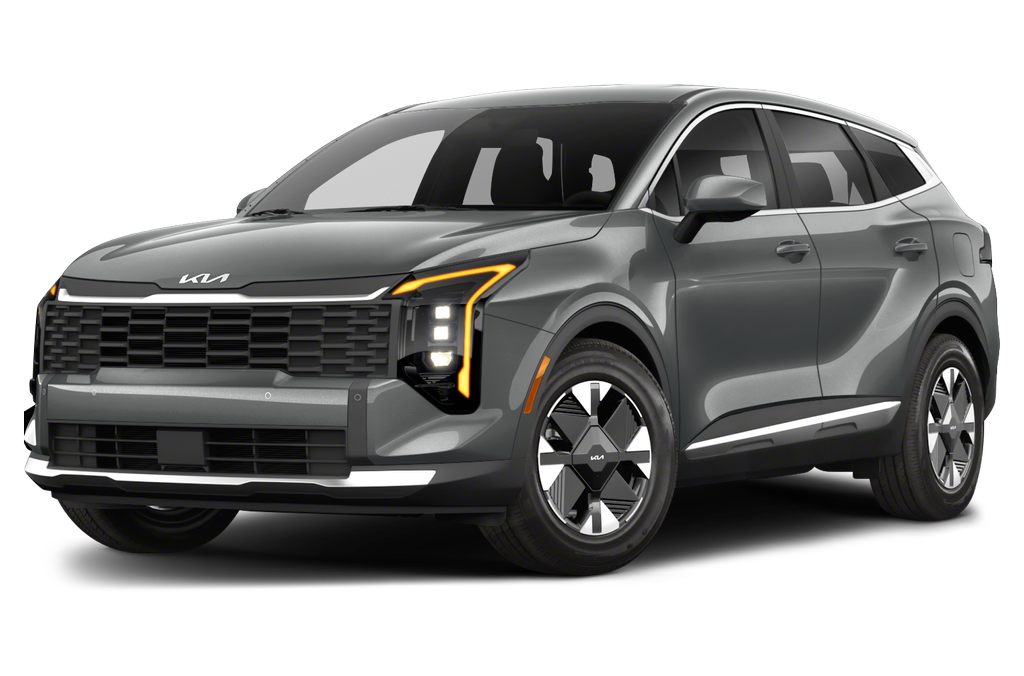
2026 Kia Sportage Hybrid facelift front three-quarter exterior
Price
~$31,735
Combined Power
232 hp
⚡ Quick Verdict
The 2026 Kia Sportage Hybrid gets a sharper face, a smoother drivetrain, and the same practical, roomy cabin that turned its predecessor into a bestseller. The six-speed automatic hybrid is quieter and more responsive than anything with a CVT bolted to it, and the warranty remains the strongest in the segment. If you’re after a compact family SUV that balances efficiency, comfort, and value, the Sportage Hybrid deserves to sit at the top of your shopping list.
—
## What Is the 2026 Kia Sportage?
✓ The Good
- +Smooth, refined hybrid with a proper six-speed automatic instead of a CVT
- +Class-leading 5-year/60,000-mile warranty with 10-year powertrain coverage
- +Spacious cabin with generous rear legroom and a large boot
- +Bold new front-end styling gives it genuine showroom presence
- +Competitive pricing undercuts key hybrid rivals at entry level
- +Some desirable features locked behind the top trim only
- +No diesel option limits appeal for high-mileage or towing buyers
- +Touch-sensitive climate controls are a minor ergonomic regression
- +Tow rating lags behind key competitors
✗ The Trade-offs
- −Some desirable features locked behind the top trim only
- −No diesel option limits appeal for high-mileage or towing buyers
- −Touch-sensitive climate controls are a minor ergonomic regression
- −Tow rating lags behind key competitors
📑 In This Review
- What Is the 2026 Kia Sportage?
- Design and Exterior
- Interior, Tech and Practicality
- Engine, Hybrid System and Driving Impressions
- Fuel Economy and Running Costs
- 2026 Kia Sportage vs Toyota RAV4 Hybrid: Which Is Better?
- At a Glance: How the Sportage Stacks Up
- Safety and Warranty
- Who Should Buy the 2026 Kia Sportage?
- Verdict
- Frequently Asked Questions
The 2026 Kia Sportage Hybrid gets a sharper face, a smoother drivetrain, and the same practical, roomy cabin that turned its predecessor into a bestseller. The six-speed automatic hybrid is quieter and more responsive than anything with a CVT bolted to it, and the warranty remains the strongest in the segment. If you’re after a compact family SUV that balances efficiency, comfort, and value, the Sportage Hybrid deserves to sit at the top of your shopping list. —
What Is the 2026 Kia Sportage?
The Kia Sportage has been the Korean brand’s biggest seller globally for years now, and the 2026 update is the most substantial mid-cycle refresh the nameplate’s ever received. This isn’t a new set of badges and a colour swap. Kia has redesigned the front end, tidied up the powertrain line-up, and polished the cabin — all without messing with the formula that’s made the Sportage one of the most recommended compact SUVs going around.
The most obvious change is up front. The outgoing model’s angular, swept-back headlights are gone, replaced with a more upright, squared-off treatment that deliberately mirrors the design language of Kia’s EV3 and EV9 electric vehicles. It’s a bold call, and it works — the Sportage looks more assertive and more premium sitting in traffic. Under the skin, Kia has made the big decision to drop the diesel engine entirely. The 2026 Sportage is petrol-only at its core: a conventional 1.6-litre turbocharged unit putting out 150 hp in base trim, and a 1.6-litre turbocharged hybrid producing a combined 232 hp in the version we’ve been testing. A plug-in hybrid is confirmed for down the track.
Market positioning? The Sportage Hybrid lands right in the thick of the compact SUV segment, going head-to-head with the Toyota RAV4 Hybrid, Honda CR-V Hybrid, and its mechanical twin, the Hyundai Tucson Hybrid. Pricing in the US starts from around $31,735 including destination, while UK buyers will find entry-level models from approximately £30,000. That puts it squarely in the middle of the competitive set — it’s no longer the budget play it once was, but the standard equipment and warranty still make a strong case on value.
For families, commuters, and anyone curious about hybrids, the 2026 Sportage represents a meaningful step forward for an already strong package. The question is whether the changes go far enough, and whether the hybrid is the one to pick. We spent plenty of time behind the wheel to find out.
—
Design and Exterior
Walk up to the 2026 Sportage and the first thing you’ll clock is the new face. Kia’s designers have ditched the swooping, angular look of the old car and gone for something more upright, more vertical, and noticeably more squared-off. The new headlight signature, the reshaped grille, and the beefier lower bumper all draw clear inspiration from Kia’s EV range — the EV3 and EV9 specifically. It works. The previous Sportage was already a striking-looking thing, but the facelift gives it a more confident, planted stance that feels a step upmarket without losing its personality.
Move around to the side, though, and the changes are much more subtle. The profile is essentially carried over, with the most noticeable difference being a handful of new wheel designs that continue the squared-off theme. The roofline, the glasshouse, and the overall silhouette are recognisably the same car. At the rear, the tweaks are even more restrained — a slightly reshaped reflector in the lower bumper and some revised detailing in the light clusters. It’s fair to say Kia spent the bulk of its design budget on the front end.
That’s not necessarily a bad thing. The outgoing Sportage’s side and rear proportions were already well-sorted and contemporary, and there’s an argument for not fixing what wasn’t broken. But if you’re expecting a ground-up redesign, you’ll notice the transformation is front-heavy. Park the new and old models side by side in certain colours and at certain angles, and you’d struggle to tell them apart from behind.
What matters on the road is the overall effect. The new front end gives the Sportage a more grown-up, assertive look that holds its own against the latest RAV4, the CR-V, and the Tucson. Wheel sizes range from 17 inches on the base trim to 19 inches on the range-topping SX-Prestige, and the bigger alloys in particular complement the new face nicely. It’s one of the sharper-looking compact SUVs on the market right now, and the facelift has only tightened that up.
—

Interior, Tech and Practicality
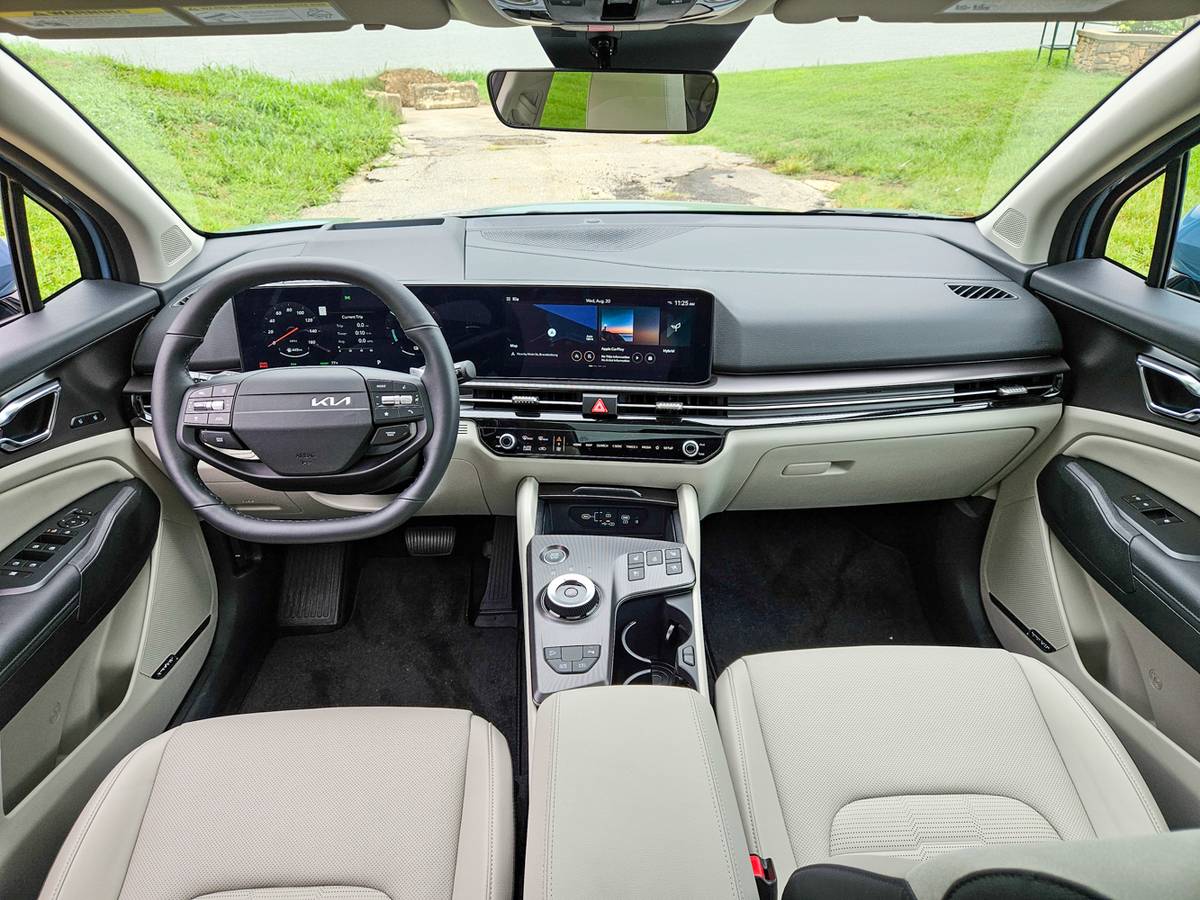
Slide into the 2026 Sportage and the cabin will feel immediately familiar if you’ve spent time in the outgoing model — but with welcome improvements. The centrepiece is still the dual 12.3-inch curved displays that sweep across the dashboard, housing both the digital instrument cluster and the central infotainment screen. The bezels around those screens have been slimmed down for 2026, which gives the whole setup a cleaner, more modern look. Wireless Apple CarPlay and Android Auto are now standard across the range, which is a genuine upgrade for anyone who previously had to plug in every time they jumped in.
Kia’s also tackled some of the material quality gripes we had with the pre-facelift cabin. The glossy black plastic that used to cover the centre console has been swapped for a textured material that resists fingerprints and scratches much better. The steering wheel boss — always a weak point in earlier Sportage models — now feels solid and properly finished. The new wheel itself is a tactile improvement, with a thicker rim and better-quality leather. These are incremental changes, but together they lift the cabin noticeably.
Not every change lands, though. The climate control panel uses touch-sensitive haptic buttons instead of physical ones, and while they’re always visible (unlike some competitors that bury them in a touchscreen), they lack the satisfying click of a proper button. You do still get physical knobs for temperature adjustment, which is a sensible compromise, but the move toward haptics is a trend we’d happily see reversed. The infotainment system responds reasonably well, though some features are buried in submenus that take more taps than they should.
Where the Sportage genuinely shines is practicality. Rear-seat space is properly generous — legroom is abundant, headroom is great even for taller passengers, and the seat bases are long enough to give real under-thigh support. Three adults can sit across the back in reasonable comfort, and the mostly flat centre tunnel helps the middle passenger’s feet. Fitting a bulky rear-facing child seat is straightforward, with the raised seat line and wide-opening rear doors making ISOFIX anchor points easy to reach. Boot space comes in at 39.5 cubic feet (roughly 591 litres) with the rear seats up, expanding to 73.7 cubic feet (approximately 1,780 litres) with them folded flat. That’s a touch bigger than the RAV4 Hybrid and competitive with the CR-V. In practice, we found the boot swallowed a family’s worth of luggage — seven large suitcases, to be exact — though the shape of the cargo bay means you need to be thoughtful about how you stack things. An electric tailgate is standard on upper trims, and the hands-free proximity opening works reliably in our experience, though the remote parking feature that comes bundled with it can be temperamental.
—

Engine, Hybrid System and Driving Impressions
The headline powertrain for the 2026 Sportage is the 1.6-litre turbocharged hybrid, and it’s excellent. The system pairs a 1.6-litre turbo petrol engine with an electric motor for a combined 232 hp and 271 lb-ft of torque (figures may vary slightly by market — Kia quotes up to 240 hp in some regions). Here’s the key bit: unlike most of its hybrid rivals, the Sportage Hybrid uses a conventional six-speed automatic transmission instead of a CVT or e-CVT.
This matters. CVT-equipped hybrids — the RAV4 Hybrid included — tend to produce a droning, disconnected sensation under hard acceleration, where engine revs climb independently of road speed. The Sportage’s six-speed auto delivers a much more natural experience. The engine revs rise and fall with actual gear changes, and the transition between electric and petrol power is smooth and largely imperceptible. It feels like driving a well-sorted conventional automatic that happens to be more efficient. In our testing, the hybrid pulled strongly from standstill, hitting 100 km/h in approximately 7.2 seconds — brisk enough for a family SUV and roughly a second quicker than a standard petrol Sportage. The quarter-mile time of around 15.4 seconds is genuinely impressive for this class.
On the road, the Sportage Hybrid rides with a composed, slightly firm edge that sets it apart from softer rivals. The suspension is tuned more toward body control than outright plushness, which means you do feel sharper bumps and potholes more than you would in, say, a CR-V. But the trade-off is that the Sportage corners with genuinely flat body roll — surprising for a car weighing over 1,700 kg in hybrid, all-wheel-drive form. It’s not a sports car, and the steering lacks the last degree of feel, but it handles twisty roads with more composure than you’d expect from a family hauler.
Motorway refinement is strong. The cabin is well-insulated from wind and road noise, the adaptive cruise control works smoothly (standard on all but the base manual petrol), and the hybrid system switches between electric and petrol modes at cruising speed without fuss. The regenerative braking is well-calibrated too — lift off the accelerator and the car slows naturally without the grabby, artificial feel that plagues some hybrids. Our only real dynamic complaint is rearward visibility: the shallow rear window and thick C-pillars create noticeable blind spots, making the surround-view camera system (locked to the top trim) feel more like a necessity than a luxury.
—
Fuel Economy and Running Costs
The hybrid powertrain is where the Sportage makes its strongest case on running costs. In US EPA testing, the front-wheel-drive Sportage Hybrid achieves an estimated 41 mpg city and 44 mpg highway, for a combined figure of around 42 mpg. Opt for all-wheel drive and those numbers drop to an estimated 35 mpg city and 36 mpg highway — still competitive, but the efficiency penalty of the mechanical AWD system is noticeable. In our real-world mixed driving, we saw figures in the mid-to-high 30s with the AWD model, which is broadly in line with what we’d expect.
Against the Toyota RAV4 Hybrid’s EPA-rated 41 mpg combined (FWD), the Sportage is essentially a match. The Honda CR-V Hybrid comes in slightly behind at around 40 mpg combined. Where the Sportage pulls ahead is the ownership story: Kia’s warranty coverage is substantially more generous than anything Toyota or Honda offer, which means lower long-term risk and potentially better residual values for buyers who keep their cars for five years or more.
Service intervals are competitive with the segment, and the hybrid system’s conventional six-speed automatic should prove cheaper to maintain over the long term than the e-CVT systems used by rivals. Insurance groups and road tax will vary by market and trim, but overall the Sportage Hybrid sits comfortably in the middle of the pack for running costs — made more appealing by that class-leading warranty.
—

2026 Kia Sportage vs Toyota RAV4 Hybrid: Which Is Better?
This is the comparison that matters most for buyers in this segment. The Toyota RAV4 Hybrid has been the default pick in the compact hybrid SUV class for years, and the 2026 model — now hybrid-only — strengthens Toyota’s commitment to electrification. But the 2026 Kia Sportage Hybrid arrives with genuine advantages that challenge the RAV4’s dominance.
**Price:** The Sportage Hybrid undercuts the RAV4 Hybrid at the entry level. In the US, the Sportage Hybrid starts from around $31,735, while the RAV4 Hybrid begins closer to $33,000. In the UK, the spread is similar, with the Sportage opening at approximately £30,000 against the RAV4’s higher starting point. For budget-conscious buyers, the Kia offers more kit for less money at the base level.
**Powertrain and performance:** The Sportage Hybrid’s 232 hp combined output edges ahead of the RAV4 Hybrid’s 226 hp (FWD) and 236 hp (AWD). More importantly, the Kia’s six-speed automatic transmission delivers a fundamentally more satisfying driving experience than Toyota’s e-CVT. There’s no droning under acceleration, no elastic-band sensation — just clean, predictable shifts. In straight-line performance, the Sportage Hybrid is marginally quicker to 100 km/h, but the real difference is how it feels: more connected, more natural, more like a conventional car.
**Transmission feel:** This deserves its own callout because it’s the single biggest dynamic differentiator between the two. The RAV4 Hybrid’s e-CVT is efficient and reliable, but it produces a characteristic drone under hard acceleration that many drivers find off-putting. The Sportage’s six-speed auto simply doesn’t do this. If transmission refinement matters to you — and for plenty of drivers it does — the Kia has a clear edge.
**Cargo and practicality:** The Sportage Hybrid offers 39.5 cubic feet of cargo space with the rear seats up, compared to the RAV4’s 37.8 cubic feet. With seats folded, the gap widens: 73.7 cubic feet for the Kia versus 70.4 for the Toyota. Rear legroom also favours the Sportage, and the boot is more squared-off and usable. For families who regularly load prams, sports gear, or luggage, the Kia is the more practical pick.
**Warranty:** This is where Kia’s advantage becomes overwhelming. The Sportage is covered by a 5-year/60,000-mile bumper-to-bumper warranty in the US, with a 10-year/100,000-mile powertrain warranty on top. Toyota offers just 3 years/36,000 miles bumper-to-bumper and 5 years/60,000 miles on the powertrain. In the UK, Kia’s standard 7-year/100,000-mile warranty dwarfs Toyota’s 3-year coverage (extendable to 5 years with servicing). For peace of mind alone, the Kia is the stronger buy.
**Reliability and resale:** This is where the RAV4 fights back. Toyota’s hybrid system has been refined over more than two decades, and the RAV4’s reliability record is exemplary. It also holds its value better than almost anything in the segment, which means lower depreciation costs over a typical ownership period. Kia has improved enormously on reliability — and the long warranty covers much of the risk — but the Toyota badge still carries more weight on the used market.
**On-road feel:** The Sportage rides slightly firmer than the RAV4, which means better body control in corners but a touch more road imperfection intrusion. The RAV4 is softer and more cosseting on rough surfaces. Neither car is sporty, but the Kia handles with more composure, while the Toyota prioritises ride comfort. The steering in both is light and easy, though neither offers much in the way of feedback.
| Spec | Kia Sportage Hybrid (AWD) | Toyota RAV4 Hybrid (AWD) |
|---|---|---|
| Engine | 1.6L Turbo + Electric Motor | 2.5L 4-cyl + Electric Motor |
| Combined Power | 232 hp | 236 hp |
| Combined Torque | 271 lb-ft | — |
| Transmission | 6-speed automatic | e-CVT |
| Combined MPG (EPA) | ~36 mpg (AWD) | ~40 mpg (AWD) |
| Cargo (seats up) | 39.5 cu ft | 37.8 cu ft |
| Cargo (seats down) | 73.7 cu ft | 70.4 cu ft |
| Warranty (US) | 5yr/60k + 10yr/100k powertrain | 3yr/36k + 5yr/60k powertrain |
| Starting Price (US) | ~$31,735 | ~$33,000 |
> **Buy the Kia Sportage Hybrid if** you want a smoother transmission experience, a larger cargo area, a more generous warranty, and a lower starting price. > > **Buy the Toyota RAV4 Hybrid if** you prioritise proven long-term reliability, stronger resale value, and a softer, more comfort-oriented ride. > > **Our pick:** The Kia Sportage Hybrid. It drives better, costs less, carries more, and is backed by the best warranty in the business. The RAV4’s resale advantage is real, but the Sportage offers a more complete package for the majority of buyers.
—
At a Glance: How the Sportage Stacks Up
| Spec | Kia Sportage Hybrid (AWD) | Toyota RAV4 Hybrid (AWD) |
|---|---|---|
| Engine | 1.6L Turbo + Electric Motor | 2.5L 4-cyl + Electric Motor |
| Combined Power | 232 hp | 236 hp |
| Combined Torque | 271 lb-ft | — |
| Transmission | 6-speed automatic | e-CVT |
| Combined MPG (EPA) | ~36 mpg (AWD) | ~40 mpg (AWD) |
| Cargo (seats up) | 39.5 cu ft | 37.8 cu ft |
| Cargo (seats down) | 73.7 cu ft | 70.4 cu ft |
| Warranty (US) | 5yr/60k + 10yr/100k powertrain | 3yr/36k + 5yr/60k powertrain |
| Starting Price (US) | ~$31,735 | ~$33,000 |
Toyota RAV4 Hybrid
Smoother ride and legendary resale, but droney e-CVT and shorter warranty
Honda CR-V Hybrid
Best-in-class refinement and interior, less powerful hybrid
Hyundai Tucson Hybrid
Mechanical twin with bolder design but slightly less cargo space
The compact hybrid SUV segment has never been more competitive. Here’s how the 2026 Kia Sportage Hybrid measures up against its closest rivals on the numbers that matter most. Kia Sportage Hybrid Honda CR-V Hybrid —— ~$31,735 ~$33,000 1.6T + Electric 2.0L + Electric 232 hp 204 hp ~42 mpg ~40 mpg 39.5 cu ft 39.3 cu ft 5 yr / 60,000 mi 3 yr / 36,000 mi The Sportage Hybrid leads the field in warranty coverage, matches or beats its rivals on cargo space, and offers the most powerful hybrid in the segment at this price. The Honda CR-V Hybrid counters with a smoother ride and arguably the best interior in the class, while the Tucson Hybrid shares the Sportage’s mechanical DNA but wraps it in different sheet metal. The RAV4 remains the safe choice, but the Sportage is the smarter one. —
Safety and Warranty
The 2026 Kia Sportage has earned an IIHS 2025 TOP SAFETY PICK+ rating — the institute’s highest award — for models built after May 2025. It scored Good ratings across small overlap front, updated moderate overlap, and updated side crash tests. In Europe, the Sportage platform holds a Euro NCAP five-star rating, with scores of 87% for adult occupant protection, 87% for child occupant protection, 66% for pedestrian protection, and 90% for safety assist. Those are strong numbers that put the Sportage among the safest compact SUVs you can buy.
Standard safety equipment includes forward collision avoidance with pedestrian detection, lane-keeping assist, driver attention warning, and adaptive cruise control on all but the entry-level manual petrol model. Upper trims add a surround-view monitor, parking collision avoidance, and blind-spot monitoring. The active safety suite is well-specced and works without being overly intrusive in everyday driving — though we did find the various audible warnings a touch too eager at times.
Where Kia genuinely separates itself from the competition is warranty coverage. In the US, every Sportage comes with a 5-year/60,000-mile bumper-to-bumper warranty and a 10-year/100,000-mile powertrain warranty — the latter being unmatched by any mainstream rival. Toyota offers 3 years/36,000 miles bumper-to-bumper and 5 years/60,000 miles on the powertrain. Honda matches Toyota. In the UK, Kia’s standard 7-year/100,000-mile warranty continues to be the industry benchmark. For buyers who plan to keep their car beyond the typical three-year lease cycle, this warranty provides genuine peace of mind and tangible resale value.
—
Who Should Buy the 2026 Kia Sportage?
**The family commuter** who needs a spacious, comfortable, and efficient SUV for the school run and the daily commute. The Sportage Hybrid’s quiet cabin, generous rear-seat space, and competitive fuel economy make it an ideal weekday workhorse, while the large boot handles weekend family duties with ease. The long warranty means you can buy it and largely forget about it for half a decade.
**The value-driven hybrid shopper** who wants the best possible combination of power, efficiency, and standard equipment for the money. The Sportage Hybrid undercuts the RAV4 and CR-V at the entry level while offering more horsepower, more cargo space, and a more satisfying driving experience. It’s the segment’s strongest value proposition, full stop.
**The RAV4 considerer** who’s been told the Toyota is the default choice but suspects there might be something better. There is. The Sportage Hybrid drives more naturally thanks to its six-speed automatic, carries more luggage, offers a vastly superior warranty, and costs less to buy. The RAV4’s resale advantage is real, but for most buyers who keep their car for five to seven years, the Kia’s total ownership proposition is stronger.
—
⚡ Our Verdict
Final Take
The 2026 Kia Sportage Hybrid is one of the best compact SUVs you can buy today. The facelift has given it a more confident, contemporary face that lines up with Kia’s electric future, while the mechanical package underneath remains as strong as ever. The hybrid powertrain, with its smooth six-speed automatic and punchy 232 hp output, is a genuine pleasure to drive — and a meaningful improvement over the CVT-equipped competition. The cabin is spacious, practical, and materially improved over the pre-facelift model, even if the move toward touch-sensitive climate controls is a step in the wrong direction. Boot space is generous, rear-seat room is among the best in the class, and the standard technology package — including wireless smartphone mirroring and dual curved displays — is competitive with cars costing a good deal more. Is it perfect? No. The tow rating is modest, some key features are locked to the expensive top trim, and the elimination of the diesel will disappoint buyers with specific high-mileage or towing needs. But for the vast majority of compact SUV buyers — families, commuters, hybrid-curious shoppers — the Sportage Hybrid delivers everything they need and then some. We rate the 2026 Kia Sportage Hybrid **8.6 out of 10**. It drives well, sips fuel, swallows luggage, and is backed by the best warranty in the business. The RAV4 has met its match. —
Frequently Asked Questions
Is the 2026 Kia Sportage Hybrid reliable?
Kia’s reliability has come a long way over the past decade, and the Sportage Hybrid benefits from a well-proven 1.6-litre turbocharged engine paired with an electric motor and a conventional six-speed automatic transmission. It doesn’t yet have the decades-long track record of Toyota’s hybrid system, but early ownership data is encouraging, and Kia’s 10-year/100,000-mile powertrain warranty in the US provides a substantial safety net.
How much does the 2026 Kia Sportage cost?
In the US, pricing starts from approximately $31,735 including destination for the base petrol model, with hybrid variants beginning at a similar entry point depending on trim. In the UK, the range runs from approximately £30,000 to £42,000 for the top-spec hybrid. Standard equipment is generous across the range, with the dual 12.3-inch curved display, wireless Apple CarPlay and Android Auto, and LED lighting included on every model.
What is the fuel economy of the 2026 Kia Sportage Hybrid?
The front-wheel-drive Sportage Hybrid achieves an EPA-estimated 41 mpg city and 44 mpg highway, for a combined figure of approximately 42 mpg. The all-wheel-drive model is rated at approximately 35 mpg city and 36 mpg highway. Real-world results will vary depending on driving conditions, but we found figures in the mid-to-high 30s realistic for the AWD model in mixed driving.
Is the 2026 Kia Sportage better than the Toyota RAV4?
It depends on your priorities. The Sportage Hybrid offers a more satisfying transmission (six-speed automatic vs e-CVT), more cargo space, a longer warranty, and a lower starting price. The RAV4 counters with a proven reliability record and stronger resale values. For most buyers, we think the Sportage Hybrid is the better all-round package.
Does the 2026 Kia Sportage have all-wheel drive?
Yes. All-wheel drive is available as an option on both the petrol and hybrid variants of the 2026 Sportage. Front-wheel drive is the standard configuration. The hybrid AWD model pairs the 1.6-litre turbo engine with an electric motor driving the rear axle for added traction in slippery conditions.
How big is the boot in the 2026 Kia Sportage?
The Sportage Hybrid offers 39.5 cubic feet (approximately 591 litres) of cargo space with the rear seats in place, expanding to 73.7 cubic feet (approximately 1,780 litres) with the rear seats folded flat. That makes it one of the biggest boots in the compact SUV class, comfortably ahead of the Toyota RAV4 Hybrid and the Honda CR-V Hybrid.
Is the 2026 Kia Sportage a good family car?
Absolutely. The Sportage offers generous rear-seat space with excellent legroom and headroom, a large and practical boot, easy child-seat installation with accessible ISOFIX points, and a comfortable, quiet ride for long trips. The long warranty, competitive fuel economy, and strong safety ratings — including an IIHS TOP SAFETY PICK+ — make it one of the best family SUVs in its class.
