

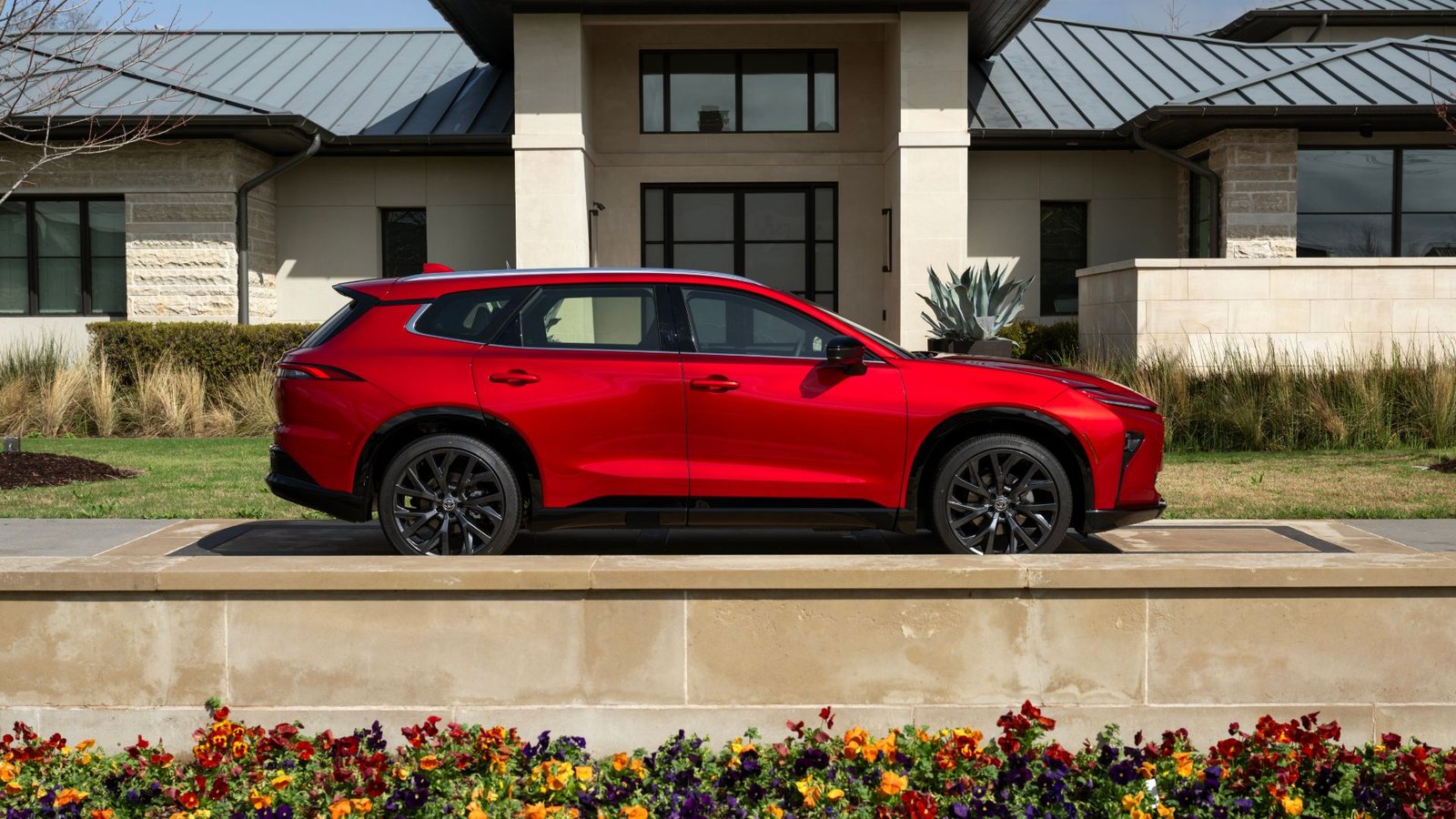
2026 Toyota Crown Signia Review: Lexus Refinement, 38 MPG, Toyota Price
Lexus-grade comfort at Toyota money with 38 mpg
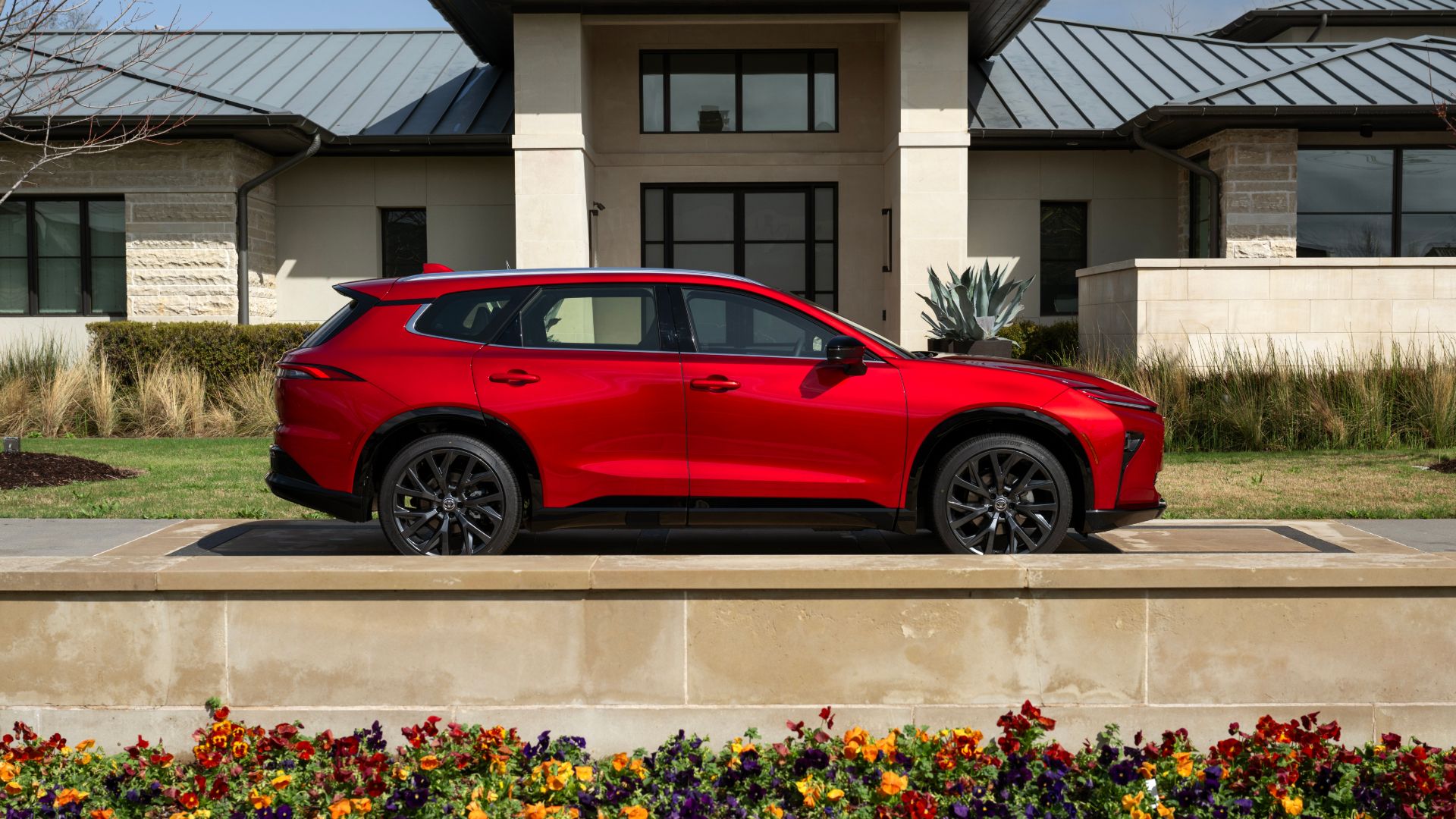
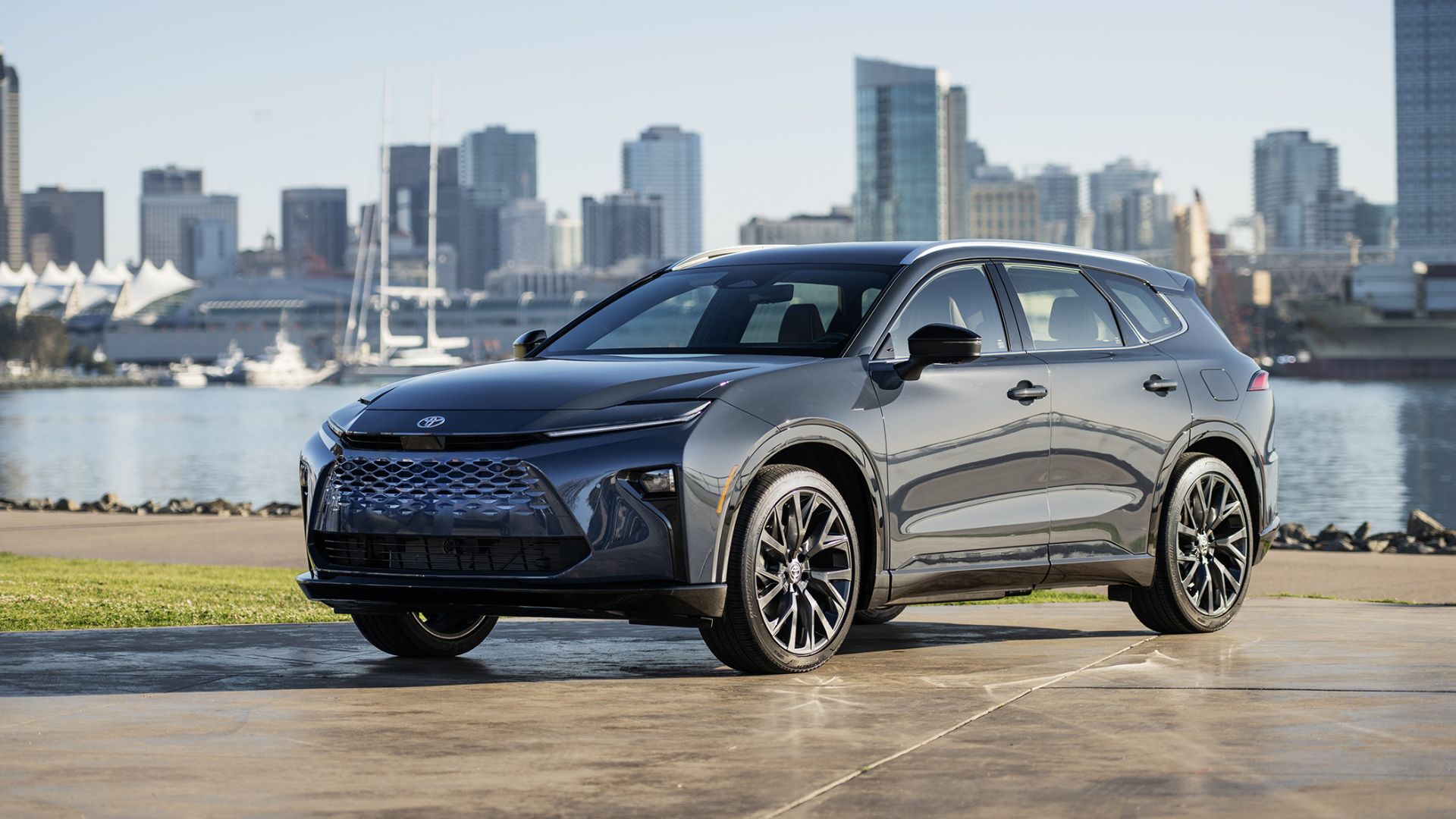
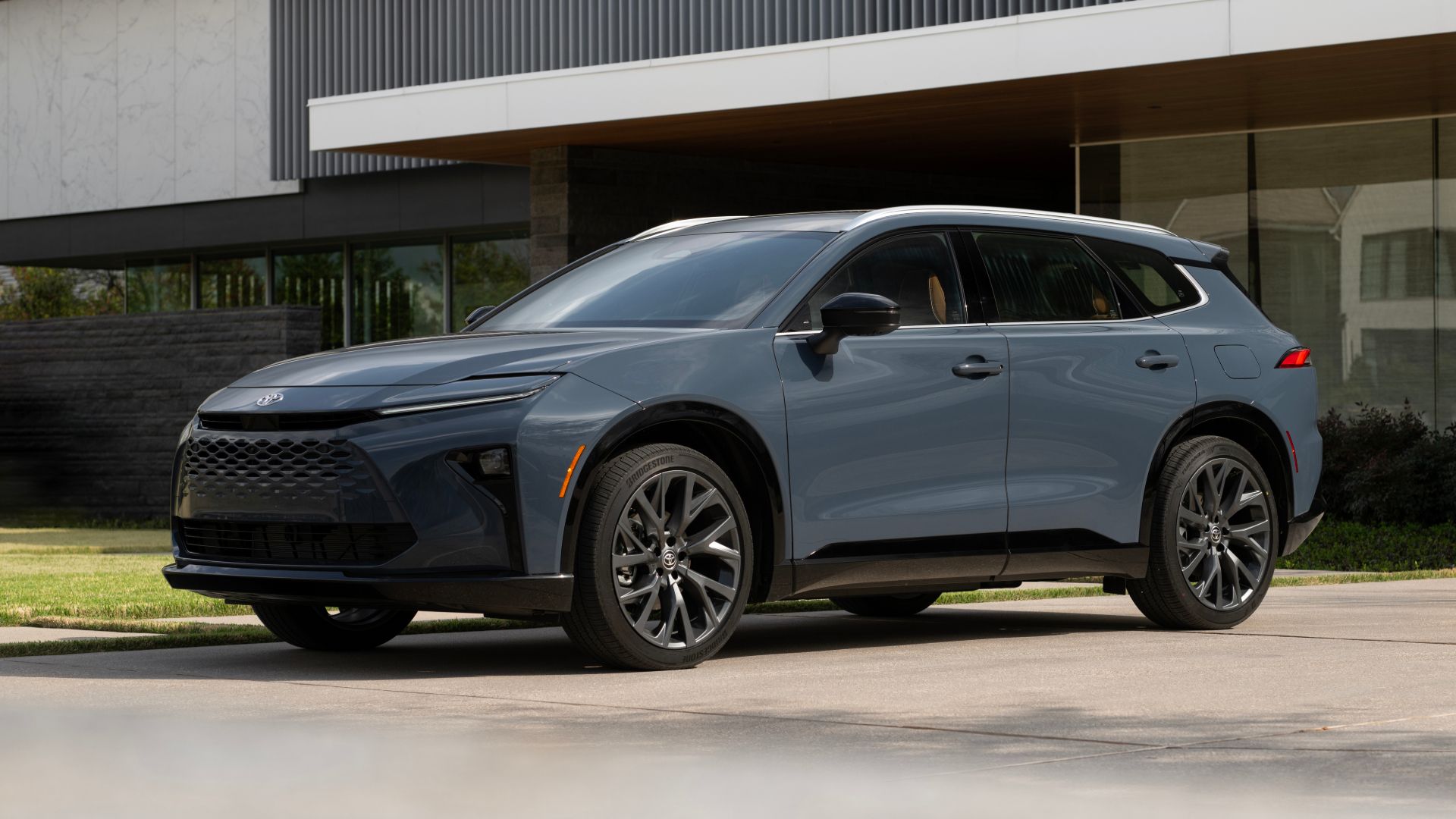
2026 Toyota Crown Signia Limited in Finish Line Red – front three-quarter studio shot
Price
$48,890
Hybrid battery warranty
10 yr / 150k mi
Powertrain
2.5L hybrid AWD
✓ The Good
- +Lexus-level interior quality and seat comfort at Toyota pricing
- +Outstanding 38 mpg combined with standard all-wheel drive
- +Whisper-quiet cabin at 53.8 dB, among the best in class
- +Generous standard equipment including heated and ventilated leather seats
- +New two-tone roof option sharpens the already sleek wagon design
✗ The Trade-offs
- −Fourth-gen hybrid less refined than Toyota’s newer fifth-gen system
- −CVT drone under hard acceleration is noticeable
- −Tow rating of only 2,700 lb trails both the RAV4 and the Outback
- −No spare tire and limited cargo height due to low roofline
📑 In This Review
- Quick Verdict
- What Is the 2026 Toyota Crown Signia?
- Pricing and Trim Walk
- Hybrid Powertrain and Real-World Economy
- Driving Impressions
- Interior, Tech and Cargo
- At a Glance: How the Crown Signia Compares
- 2026 Toyota Crown Signia vs Subaru Outback: Which Is Better?
- Safety and Warranty
- Who Should Buy the 2026 Crown Signia?
- Buy or Skip?
- Verdict
META: The 2026 Toyota Crown Signia hybrid delivers Lexus-grade comfort and 38 mpg combined from $44,490. Full review with pricing, rivals, and real-world economy. SLUG: 2026-toyota-crown-signia-review RATING: 4.2 RATING_HEADLINE: Lexus-grade comfort at Toyota money with 38 mpg PROS: – Lexus-level interior quality and seat comfort at Toyota pricing – Outstanding 38 mpg combined with standard all-wheel drive – Whisper-quiet cabin at 53.8 dB, among the best in class – Generous standard equipment including heated and ventilated leather seats – New two-tone roof option sharpens the already sleek wagon design CONS: – Fourth-gen hybrid less refined than Toyota’s newer fifth-gen system – CVT drone under hard acceleration is noticeable – Tow rating of only 2,700 lb trails both the RAV4 and the Outback – No spare tire and limited cargo height due to low roofline
Quick Verdict
The 2026 Toyota Crown Signia is a mid-size hybrid crossover wagon that delivers near-luxury refinement, standard all-wheel drive, and an EPA-rated 38 mpg combined for roughly $44,500 to start. It sits above the RAV4 and below the Lexus RX in Toyota’s line-up, aimed squarely at empty-nesters and professionals who want a quiet, efficient, premium-feeling daily without the Lexus price tag. The headline figure is that 38 mpg combined, paired with a cabin that genuinely holds its own against Lexus for comfort and materials quality. There’s one catch, though: Toyota’s fitted the Signia with its fourth-generation hybrid system rather than the newer fifth-gen unit in the latest RAV4, which means slightly lower efficiency and a more noticeable drone when you bury the throttle.
What Is the 2026 Toyota Crown Signia?
The Crown Signia is Toyota’s upmarket alternative to the RAV4 — a five-passenger crossover built on wagon-proportioned bones with a distinctly premium personality. Launched as a 2025 model and riding the same TNGA-K platform as the RAV4, the Signia stretches 4,930 mm overall, roughly 330 mm longer than its more mainstream sibling. That gives it a planted, low-slung stance that reads more premium estate than compact crossover. For 2026, the standout addition is a two-tone black roof option on the Limited trim, available in Storm Cloud, Oxygen White, Finish Line Red, or Bronze Age, which sharpens the Signia’s look and sets it apart visually.
In Toyota’s hierarchy, the Crown Signia fills the gap between a loaded RAV4 Limited and the Lexus RX 350h. Its most direct rival is the Subaru Outback, which shares the same wagon body language, standard all-wheel drive, and family-haul mission. The Lexus RX 350h, Honda Passport TrailSport, and Mazda CX-70 PHEV also compete for the same $45,000 to $55,000 budget. What sets the Signia apart is a standard feature list that reads like a luxury-car spec sheet: heated and ventilated leather seats, heated rear seats, dual 12.3-inch displays, and wireless CarPlay and Android Auto, all included from the base XLE without a single option box ticked.
Pricing and Trim Walk
Toyota keeps the Crown Signia line-up refreshingly simple: two trims, one powertrain, no confusion. The XLE starts at $44,490 MSRP before the $1,495 destination charge ($45,985 delivered). The Limited starts at $48,890 ($50,385 delivered). Both share the identical 2.5-litre hybrid system, all-wheel drive, and Toyota Safety Sense 3.0 suite, so the $4,400 difference comes down entirely to comfort, technology, and style upgrades.
The XLE is lavishly equipped by segment standards. You get real leather seats that are both heated and ventilated up front, heated rear seats, a 12.3-inch touchscreen with wireless Apple CarPlay and Android Auto, a 12.3-inch digital instrument cluster, a leather-wrapped heated steering wheel, a hands-free power liftgate, smart key entry with remote start, and an eight-way power driver’s seat with lumbar and memory — all standard. That level of gear would cost thousands in option packs on most competitors.
The Limited adds a fixed panoramic glass roof, an 11-speaker 800-watt JBL premium audio system with subwoofer, 21-inch alloy wheels (versus 19s), a digital rearview mirror, rain-sensing wipers, auto-levelling headlights, a 360-degree surround-view camera, phone-as-key capability, and puddle lamps. New for 2026, the Limited also unlocks that two-tone black roof option. We reckon the Limited is worth the jump: the panoramic roof transforms cabin airiness, the JBL system is a meaningful upgrade, and the digital rearview mirror compensates for the Signia’s somewhat restricted rearward visibility. A fully loaded Limited with the Advanced Package and accessories tops out around $54,829 as tested — roughly $5,000 above a loaded RAV4 Limited and about $3,500 below a Lexus RX 350h entry point.
Hybrid Powertrain and Real-World Economy
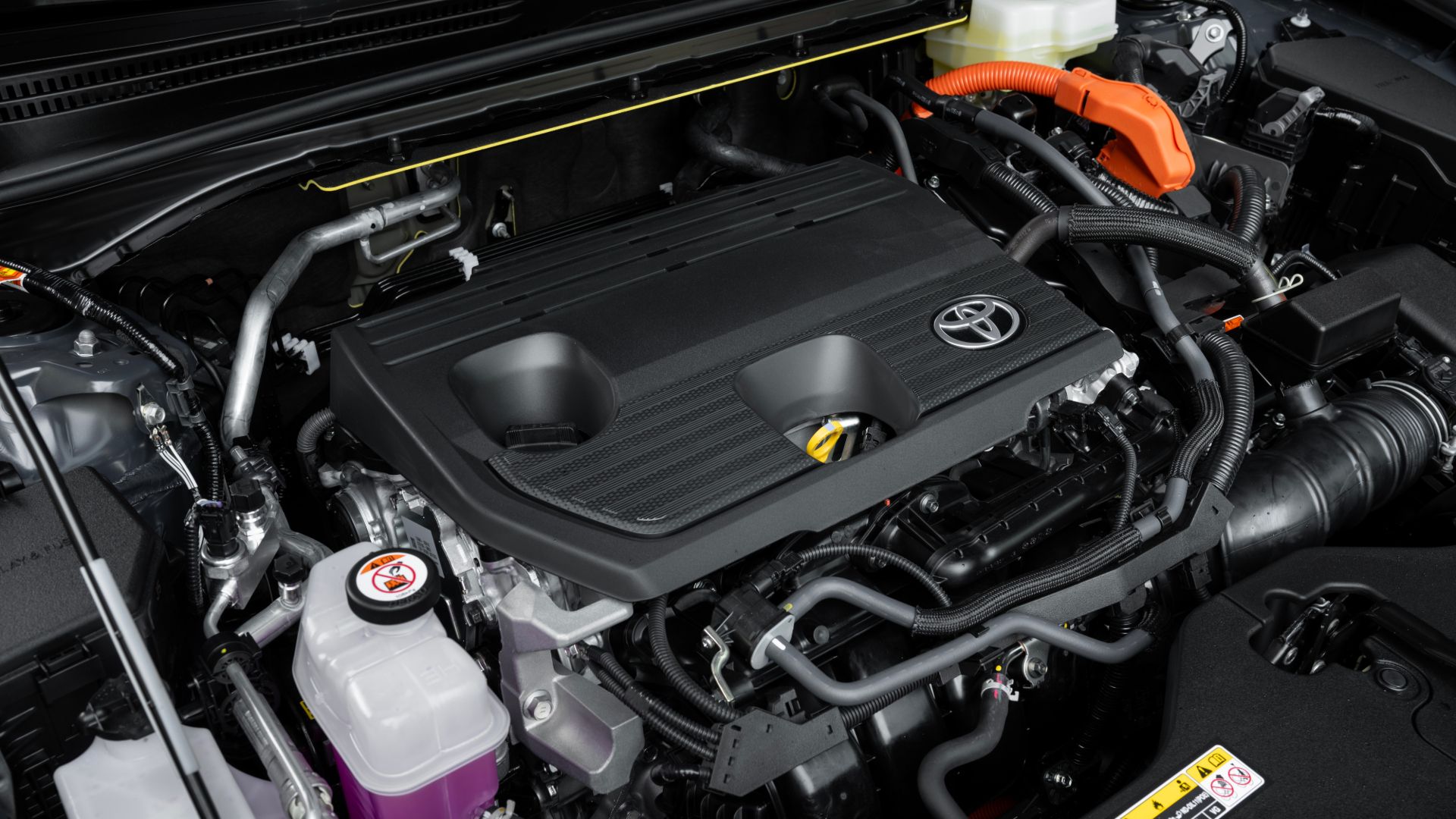
The Crown Signia runs Toyota’s fourth-generation hybrid system: a 2.5-litre Atkinson-cycle four-cylinder paired with two electric motors for a combined 240 horsepower. All-wheel drive is standard, with the rear axle driven by a dedicated electric motor and no mechanical connection to the front — no driveshaft, no transfer case, no added weight. The transmission is an electronically controlled CVT (eCVT), the same proven planetary-gear arrangement Toyota has deployed across millions of hybrids.
The EPA rates the Crown Signia at 39 mpg city, 37 highway, and 38 combined. Over our week of mixed driving — urban commutes, suburban errands, and a weekend highway road trip covering 576 kilometres — we saw approximately 37 mpg, essentially matching the combined figure. Lighter-footed, city-biased weeks pushed the trip computer above 39 mpg. For a nearly 1,800-kilogram, all-wheel-drive mid-size crossover, those numbers are outstanding.
At low speeds, the powertrain is smooth and unobtrusive, pulling away silently in EV mode through parking lots and light traffic. The transition between electric and hybrid operation is smooth under gentle throttle, and there’s adequate reserve for confident highway merging. Where the system shows its age compared to Toyota’s fifth-generation hybrid — found in the latest RAV4 — is under hard acceleration. Floor the throttle for a passing manoeuvre and the eCVT holds the engine at high RPM, producing a noticeable drone that’s the one persistent reminder this isn’t a luxury powertrain. We’d have preferred Toyota equip the Signia with its latest hybrid hardware; the fifth-gen system is both more efficient and smoother. Still, for the vast majority of driving involving normal acceleration and steady-state cruising, the fourth-gen system is admirably efficient and perfectly competent.
Driving Impressions
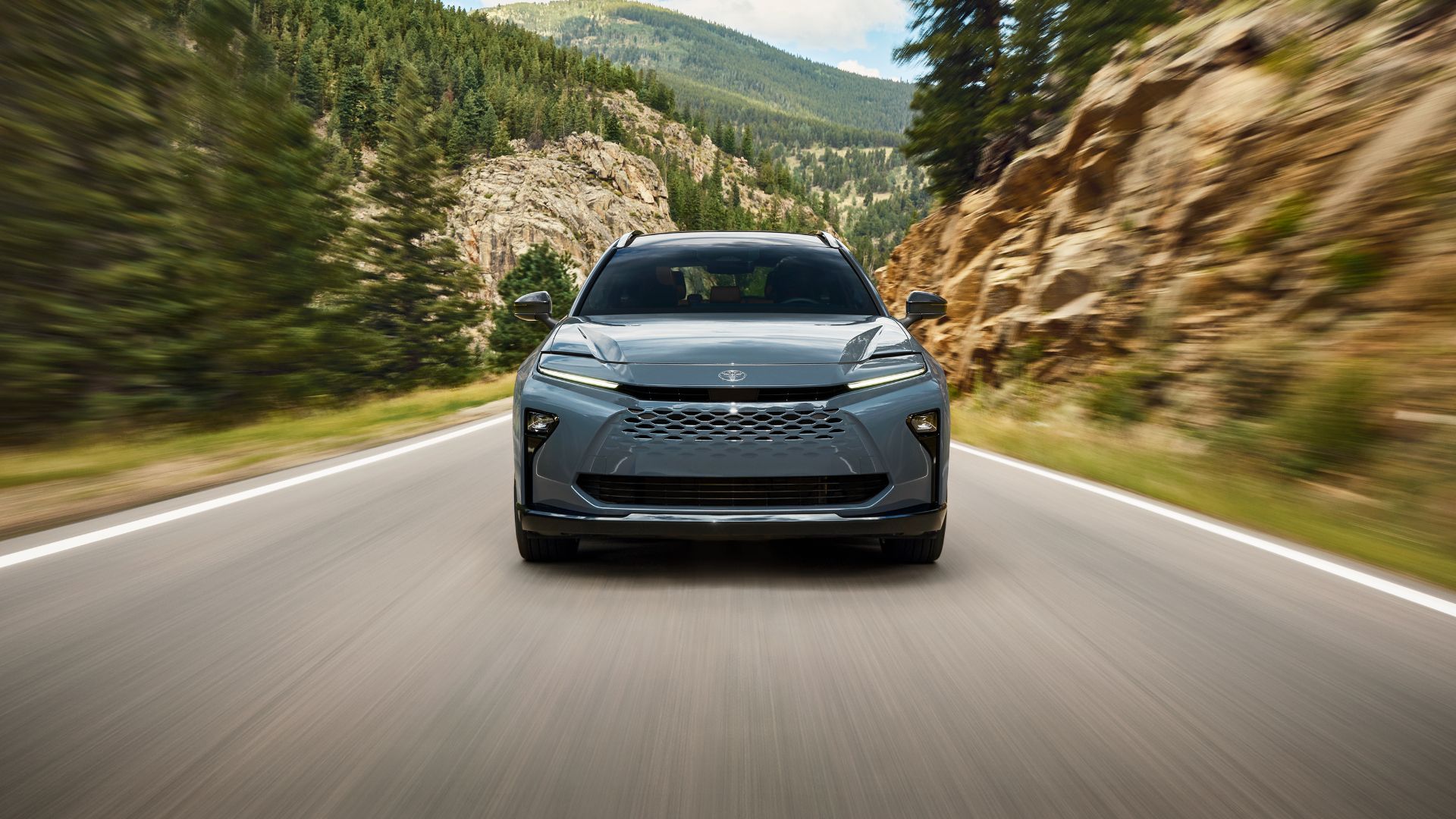
The Crown Signia’s mission statement is clear from the first few kilometres: this is a highway cruiser, not an adventure wagon. The ride quality is plush and composed, dispatching expansion joints and patched pavement with a Lexus-like serenity that genuinely surprises at this price point. Even on the Limited’s 21-inch alloys, the suspension never turns harsh, and we suspect the XLE’s 19-inch wheels deliver an even more cushioned ride.
Noise isolation is a standout. At a steady 90 km/h, the cabin registered 53.8 dB on our sound level meter — one of the lowest readings in the two-row mid-size crossover class. Wind noise is well suppressed, and road noise from the tyres is minimal even on coarse surfaces. Combine that hush with the supremely comfortable leather seats and you’ve got a recipe for genuinely relaxing multi-hour highway stints.
Steering is light and accurate, tuned for effortless parking-lot manoeuvres and relaxed highway lane changes rather than spirited driving. Body control is competent without encouraging aggressive cornering. The brake pedal deserves praise: the regen-to-friction blending is more linear and natural than many competitors, avoiding the wooden, disconnected feel that plagues some hybrid systems.
Against the Subaru Outback, the character difference is stark. The Outback Wilderness is a genuinely capable soft-roader with 241 mm of ground clearance, all-terrain tyres, and X-MODE drive modes. The Crown Signia, at 170 mm of clearance with road-biased tyres, is a paved-road vehicle. But on that pavement, it’s dramatically quieter, smoother, and more refined. If your weekends involve trailheads at the end of gravel roads, the Outback is your wagon. If they involve highway drives to the coast, the Signia is the better companion.
Interior, Tech and Cargo
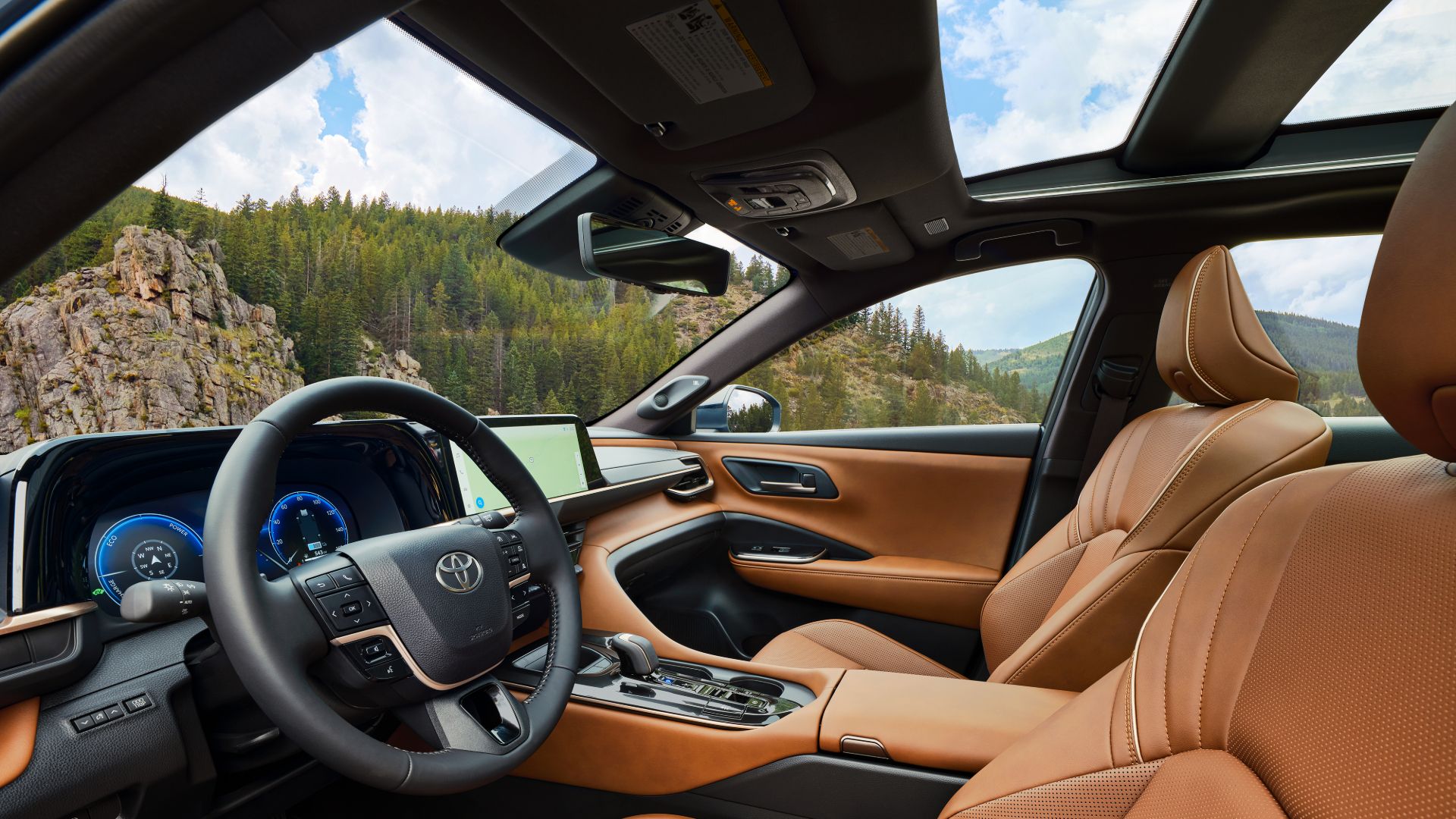
Step inside the Crown Signia and the Lexus comparisons become impossible to ignore. The cabin is trimmed in real leather on both trims, with soft-touch plastics on the upper dashboard, leatherette on the armrests and door panels, and distinctive bronze accents around the air vents and centre console that lend a warm, upscale personality. Material quality is a clear step above the RAV4 — not quite matching the RX in every detail, but close enough that most passengers wouldn’t know the difference without reading a badge.
The tech centrepiece is a 12.3-inch touchscreen with wireless Apple CarPlay and Android Auto. This isn’t the latest-generation Toyota software found in the updated RAV4 — performance is slightly slower — but during our week it proved fully functional for daily use. Physical climate controls are retained below the screen, which we’re grateful for. The Limited’s JBL 11-speaker, 800-watt system delivers satisfying, bass-forward sound that fills the cabin impressively.
The panoramic fixed glass roof on the Limited dramatically enhances the cabin’s sense of airiness, though it doesn’t open. Front seats are exceptional — eight-way power with lumbar, memory, and standard heating and ventilation — ranking among the most comfortable in any Toyota product. Rear-seat space is a genuine surprise: despite the low roofline, legroom is generous. With a 173 cm driver’s seat position, a 175 cm rear passenger enjoys over 250 mm of surplus knee room. Rear heated seats, USB ports, and air vents are standard across both trims.
Cargo is rated at 730 litres behind the second row and 1,948 litres with the 60/40-split rear seats folded. Those figures are adequate but trail the Outback’s 919 and 2,144 litres. The load floor is low at 737 mm, and with seats folded it extends roughly two metres — long enough for skis or flat-pack furniture. The trade-off for the sleek profile is cargo height: at 686 mm, taller items may not fit. Notably, there’s no spare tyre — only a repair kit lives under the floor.
At a Glance: How the Crown Signia Compares
| Spec | 2026 Toyota Crown Signia Limited | 2026 Subaru Outback Touring XT | 2026 Lexus RX 350h | 2026 Honda Passport TrailSport |
|---|---|---|---|---|
| Starting price | $48,890 | ~$44,000 | ~$52,375 | ~$48,000 |
| Powertrain | 2.5L hybrid AWD | 2.4T flat-4 AWD | 2.5L hybrid AWD | 3.5L V6 AWD |
| Combined power | 240 hp | 260 hp | 246 hp | 285 hp |
| Fuel economy (combined) | 38 mpg | 25 mpg | 36 mpg | 21 mpg |
| Cargo (seats up) | 25.8 cu ft | 32.5 cu ft | 29.6 cu ft | 41.2 cu ft |
| Warranty (basic) | 3 yr / 36k mi | 3 yr / 36k mi | 4 yr / 50k mi | 3 yr / 36k mi |
| Hybrid battery warranty | 10 yr / 150k mi | n/a | 10 yr / 150k mi | n/a |
Subaru Outback Wilderness
Wins on off-road capability, tow rating, and raw cargo – loses to the Signia on fuel economy and cabin refinement.
Lexus RX 350h
Slightly plusher cabin and bigger 14-in screen, but $3,500 more and 2 mpg thirstier than the Crown Signia.
Honda Passport TrailSport
More muscle and ground clearance, but pays the price at the pump – 17 mpg less than the Crown Signia in mixed driving.
The Crown Signia competes across a diverse set, but the single most cross-shopped rival remains the Subaru Outback. Below, we stack the Signia Limited against the Outback, the Lexus RX 350h, and the Honda Passport TrailSport. 2026 Toyota Crown Signia Limited 2026 Lexus RX 350h — — $48,890 ~$52,375 2.5L hybrid AWD 2.5L hybrid AWD 240 hp 246 hp 38 mpg 36 mpg 25.8 cu ft 29.6 cu ft 3 yr / 36k mi 4 yr / 50k mi 10 yr / 150k mi 10 yr / 150k mi
2026 Toyota Crown Signia vs Subaru Outback: Which Is Better?
This is the comparison that matters most. The Subaru Outback is, by a wide margin, the most frequently cross-shopped vehicle against the Crown Signia. Both are five-passenger, all-wheel-drive wagons masquerading as crossovers, both serve the family-haul mission, and both sit in a broadly overlapping price band. The choice between them ultimately comes down to what you value more: refinement or ruggedness.
Let’s start with price. The Crown Signia Limited starts at $48,890 MSRP; the Outback Touring XT starts at approximately $44,000 — a gap of nearly $5,000 in Subaru’s favour. That’s real money, and it buys the Outback buyer higher ground clearance, more cargo space, and genuine off-road hardware. The Signia counters with a standard feature set the Outback can’t match: heated and ventilated leather seats, heated rear seats, dual 12.3-inch displays, and a cabin that measured 53.8 dB at 90 km/h — one of the quietest in the class. Whether those luxury touches justify the premium depends entirely on how you spend your driving hours.
The powertrain philosophies could hardly be more different. The Signia’s 2.5-litre hybrid produces 240 combined horsepower and returns 38 mpg combined by EPA measurement. The Outback Touring XT’s 2.4-litre turbocharged flat-four makes 260 horsepower but manages only 25 mpg combined. Over 24,000 annual kilometres at current fuel prices, the Signia saves roughly $1,000 per year in fuel — a figure that erodes the Outback’s purchase-price advantage within five years. The Outback is quicker to 100 km/h (approximately 6.1 seconds versus 7.1), but that acceleration edge is paid for at every fill-up.
Interior quality is where the Signia pulls decisively ahead. The cabin is trimmed in genuine leather with bronze accent pieces, soft-touch materials throughout, and a hushed atmosphere that rivals Lexus. The Outback’s interior is durable and well-built — it shrugs off muddy boots and dog claws — but it’s a utilitarian space by comparison. The Signia’s seats are more comfortable, its cabin is dramatically quieter, and its technology feels a generation ahead of Subaru’s Starlink system.
Cargo is where the Outback fights back. With 32.5 cubic feet behind the rear seats and 75.6 cubic feet folded, the Outback offers substantially more usable space. Its taller, more upright bay accommodates bulkier items, and its roof rails are more robust for crossbar-mounted cargo boxes and kayaks. The Signia counters with a longer, flatter load floor — roughly two metres with seats folded — useful for skis and flat-pack furniture, but the volume advantage belongs to Subaru.
Off-road ability isn’t close. The Outback Wilderness offers 241 mm of ground clearance, all-terrain tyres, skid plates, and X-MODE with hill descent control. The Signia’s 170 mm and road-biased tyres make it a paved-road vehicle. Tow ratings follow the same pattern: the Outback Wilderness pulls 1,588 kilograms versus the Signia’s 1,225. On safety, both are strong — the 2025 Crown earned an IIHS Top Safety Pick, and both vehicles offer comprehensive active-safety suites. Brand cachet tilts toward Toyota for resale value (64.5 percent retained at five years), while Subaru’s fiercely loyal community gives it a lifestyle-brand appeal all its own.
| Spec | 2026 Toyota Crown Signia Limited | 2026 Subaru Outback Wilderness / Touring XT |
|---|---|---|
| Starting MSRP | $48,890 | ~$44,000 |
| Combined output | 240 hp | 260 hp |
| EPA combined economy | 38 mpg | 25 mpg |
| 0-60 mph | ~7.1 s | ~6.1 s |
| Cargo (seats up) | 25.8 cu ft | 32.5 cu ft |
| Cargo (seats down) | 68.8 cu ft | 75.6 cu ft |
| Ground clearance | 6.7 in | 9.5 in (Wilderness) |
| Max tow rating | 2,700 lb | 3,500 lb |
| Hybrid battery warranty | 10 yr / 150k mi | n/a |
<div style="background:linear-gradient(135deg,#f0f9ff,#e0f2fe); border-left:4px solid #2563eb; border-radius:12px; padding:24px 28px; margin:32px 0"> <p style="font-size:12px; font-weight:800; letter-spacing:0.14em; text-transform:uppercase; color:#1e40af; margin:0 0 10px">Which one is better?</p> <p><strong>Buy the Crown Signia if</strong> you live on paved roads, do most of your driving in urban and suburban traffic, and value Lexus-grade refinement, 38 mpg combined, and a whisper-quiet cabin over off-road ability.</p> <p><strong>Buy the Subaru Outback if</strong> you actually leave the tarmac on weekends, need 3,500 lb of tow capacity, want more raw cargo, and prefer Subaru’s rugged, utilitarian character to Toyota’s pseudo-luxury polish.</p> <p><strong>Our pick</strong> depends on your weekends — Crown Signia for the 95% of buyers who stay on the road, Outback Wilderness for the 5% who genuinely use the dirt-road capability they keep saying they want.</p> </div>
Safety and Warranty
Every 2026 Crown Signia includes Toyota Safety Sense 3.0 as standard: pre-collision warning with automatic emergency braking (including pedestrian and cyclist detection), adaptive cruise control, lane-departure alert with steering assist, lane-tracing assist, automatic high beams, and road-sign assist. Blind-spot monitoring, rear cross-traffic alert, safe-exit assist, and a rear-seat reminder are also standard on both trims. The 2025 Crown earned an IIHS Top Safety Pick with all Good crash-test ratings, and the mechanically identical 2026 model is expected to repeat. NHTSA has not yet rated the 2026 Signia, though the related Crown sedan carries a five-star overall score.
Toyota’s warranty coverage includes a three-year/60,000-kilometre basic warranty, a five-year/100,000-kilometre powertrain warranty, and a 10-year/240,000-kilometre hybrid battery warranty. Additionally, ToyotaCare provides two years or 40,000 kilometres of complimentary scheduled maintenance covering oil changes, tyre rotations, and inspections — a perk that saves owners several hundred dollars during early ownership.
Who Should Buy the 2026 Crown Signia?
The ideal Crown Signia buyer is someone who’s outgrown the RAV4 — not in terms of needing more seats, but in terms of wanting more refinement. Empty-nesters downsizing from a three-row Highlander or 4Runner who no longer need the extra capacity but aren’t ready to sacrifice comfort. Professionals in their forties and fifties who want an efficient, luxurious daily driver without a Lexus monthly payment. The Signia delivers roughly 90 percent of the Lexus RX experience for about 85 percent of the price, and for many buyers that maths is irresistible.
There’s a strong practical case as well. At 38 mpg combined with standard all-wheel drive, the Signia is one of the most fuel-efficient mid-size crossovers available. For commuters covering 24,000 to 32,000 kilometres annually, the savings over a conventional turbocharged SUV add up quickly. Combined with Toyota’s projected 64.5 percent five-year resale value — among the best in the industry — the Crown Signia is as financially sound as it is comfortable.
Buy or Skip?
BUY IF: – You want Lexus-grade cabin refinement without the Lexus monthly payment – Fuel efficiency is a priority and 38 mpg combined in a mid-size AWD crossover appeals to you – You spend the vast majority of your driving time on paved roads and highways – Standard heated and ventilated leather seats and premium tech features matter to you
SKIP IF: – You need more than 2,700 lb of towing capacity for a boat or utility trailer – You regularly drive off-pavement and need genuine ground clearance and all-terrain capability – A plug-in hybrid option is a priority — the Signia is conventional hybrid only – CVT drone under hard throttle will bother you in daily driving
⚡ Our Verdict
Lexus-grade comfort at Toyota money with 38 mpg
The 2026 Toyota Crown Signia earns a 4.2 out of 5. It isn’t a perfect vehicle — the fourth-generation hybrid system is showing its age, the tow rating is modest, and the cargo bay trails key rivals. Taken as a complete package, though, it delivers something genuinely rare in the mid-size crossover segment: the feeling of a luxury vehicle at a mainstream price. The cabin is quiet, comfortable, and trimmed with materials that wouldn’t look out of place in a Lexus showroom. The 38 mpg combined fuel economy is outstanding for a vehicle of this size, and Toyota’s reputation for reliability and resale provides the long-term confidence that justifies the premium over a loaded RAV4. The single best reason to buy the Crown Signia is its value proposition — particularly the XLE’s standard heated and ventilated leather seats, heated rear seats, dual 12.3-inch displays, and full safety suite for under $46,000 delivered. No competitor matches that level of equipment at that price without requiring a lengthy options sheet. The biggest caveat is the powertrain: Toyota’s decision to use the older fourth-generation hybrid rather than the smoother, more efficient fifth-generation system is a missed opportunity that slightly diminishes the Signia’s otherwise polished character. Looking ahead, Toyota appears committed to the Crown nameplate as its premium crossover identity. As the hybrid system inevitably upgrades to the fifth generation — and potentially gains a plug-in variant — the Signia’s already compelling formula will only strengthen. For now, it remains one of the best arguments in the showroom for buyers who want to spend Toyota money and drive away feeling like they spent Lexus money.
FAQ
Is the 2026 Toyota Crown Signia a plug-in hybrid?
No. The 2026 Crown Signia uses a conventional hybrid powertrain with a 2.5-litre four-cylinder engine and two electric motors. There’s no plug-in hybrid variant available. It charges its battery entirely through regenerative braking and the engine, so you’ll never need to plug it in.
How much does the 2026 Crown Signia cost?
The 2026 Crown Signia XLE starts at $44,490 MSRP ($45,985 with the $1,495 destination charge). The Limited starts at $48,890 MSRP ($50,385 delivered). A fully loaded Limited with the Advanced Package and accessories tops out around $54,829.
What is the real-world fuel economy of the Crown Signia hybrid?
The EPA rates the Crown Signia at 38 mpg combined (39 city / 37 highway). During our week of mixed driving covering 576 kilometres, we saw approximately 37 mpg, matching the EPA’s combined figure. Lighter-footed, city-biased driving weeks pushed that number above 39 mpg.
Is the Toyota Crown Signia better than a Subaru Outback?
It depends on your priorities. The Crown Signia offers a significantly quieter and more refined cabin, superior fuel economy (38 mpg versus 25 mpg combined), and standard luxury features like heated and ventilated leather seats. The Subaru Outback costs roughly $5,000 less, provides more cargo space (32.5 versus 25.8 cubic feet), tows more (3,500 versus 2,700 lb), and offers genuine off-road capability with up to 241 mm of ground clearance in Wilderness trim. For paved-road driving, the Signia is the more refined choice. For buyers who regularly leave the tarmac, the Outback is the smarter buy.
How much cargo space does the 2026 Crown Signia have?
The Crown Signia offers 730 litres of cargo space behind the rear seats and 1,948 litres with the 60/40-split rear seats folded. The load floor extends roughly two metres with the seats down. Note that the panoramic roof on the Limited may reduce the cargo figure by approximately 85 litres compared to the XLE.
Does the 2026 Crown Signia tow?
Yes, but modestly. The Crown Signia is rated to tow a maximum of 2,700 pounds — adequate for a small utility trailer or personal watercraft but less than the RAV4’s 3,500-pound rating and the Subaru Outback Wilderness’s 3,500-pound capacity.
What is the warranty on the Crown Signia hybrid battery?
The Crown Signia’s hybrid battery is covered under Toyota’s hybrid system warranty for 10 years or 150,000 miles, whichever comes first. This is in addition to the standard three-year/36,000-mile basic warranty, five-year/60,000-mile powertrain warranty, and two years or 25,000 miles of complimentary ToyotaCare maintenance.
