

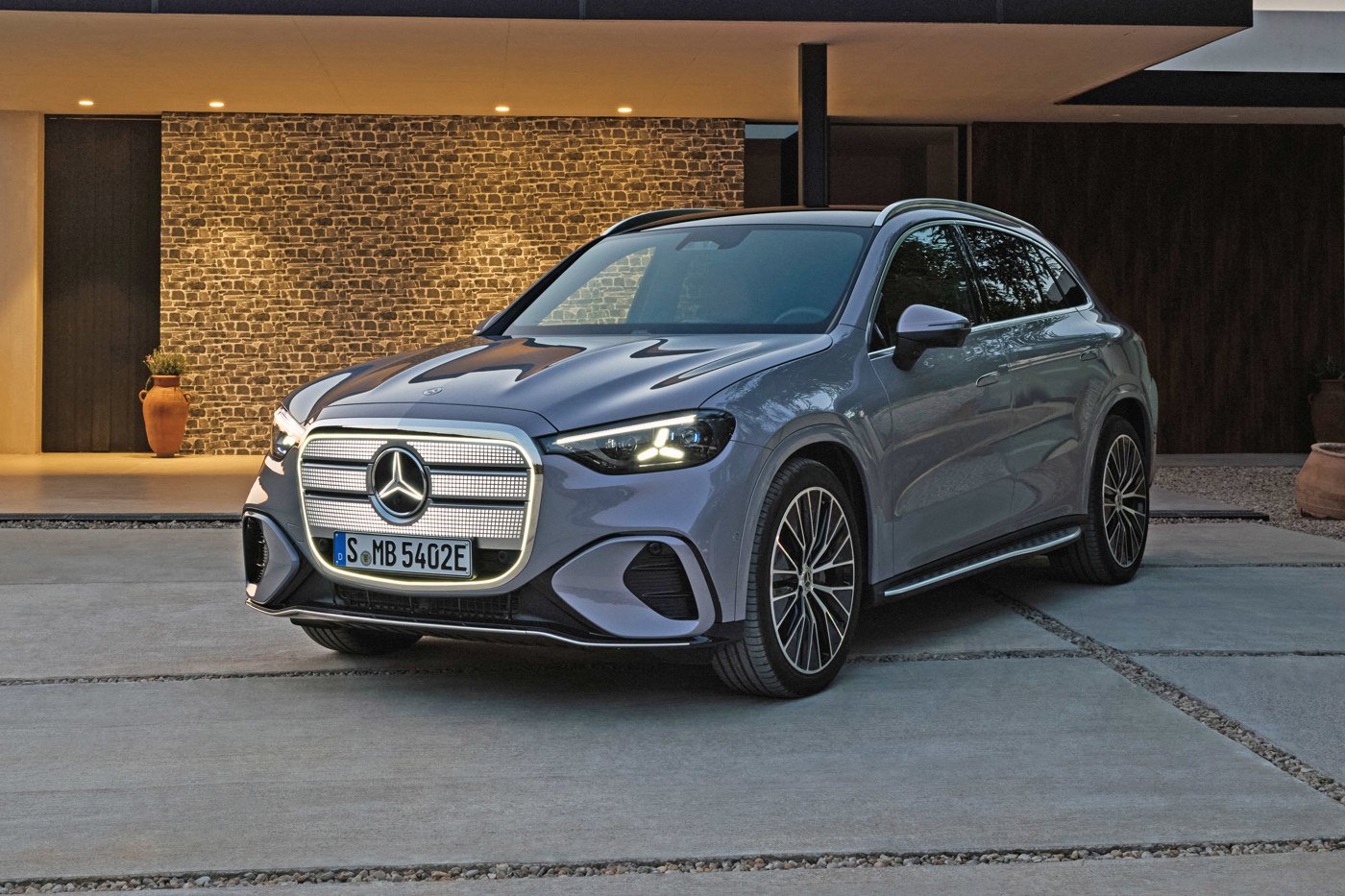
2026 Mercedes GLC Electric Review: Electric Luxury Redefined?
Luxury done right in the electric age
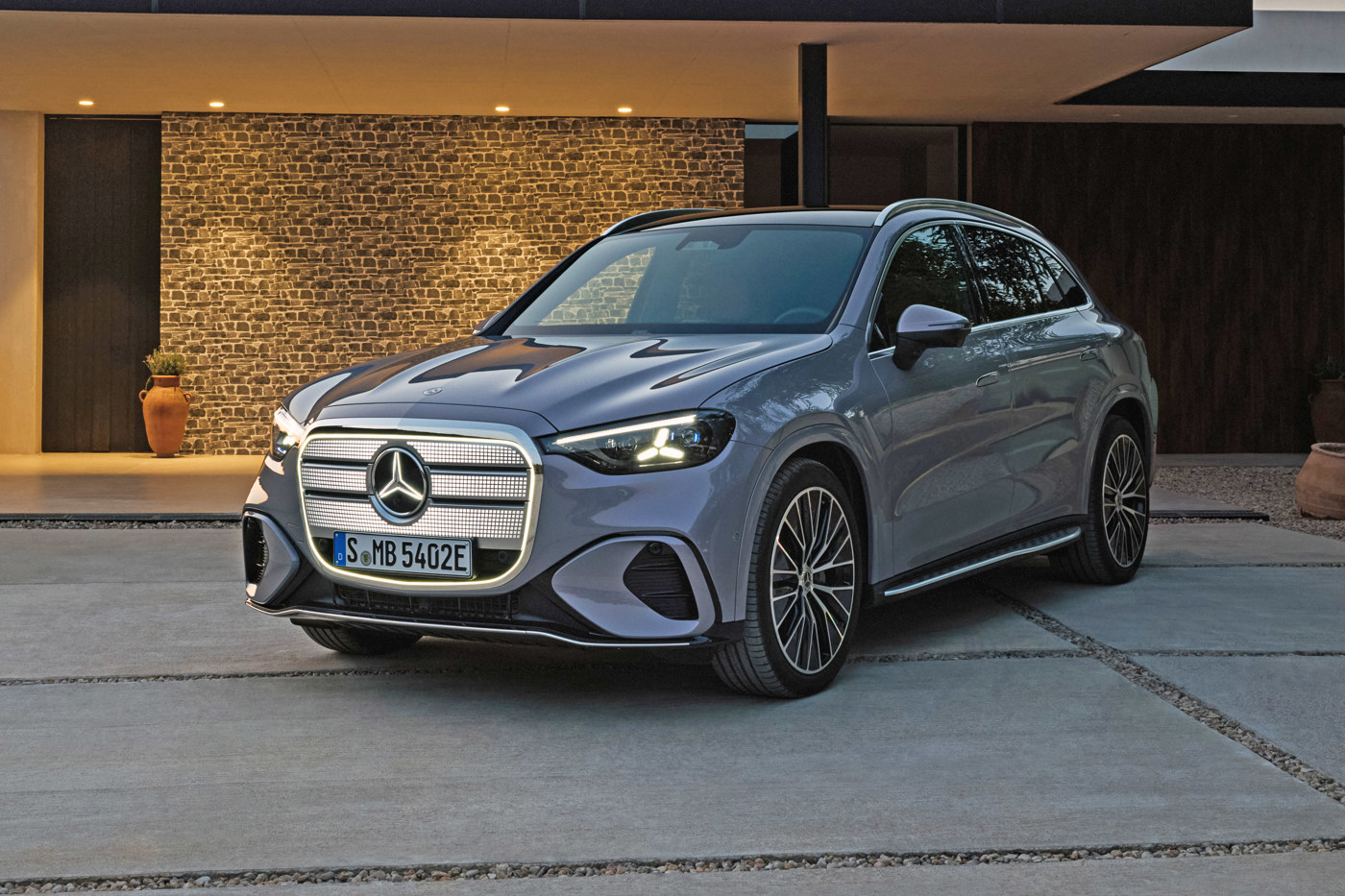
2026 Mercedes-Benz GLC 400 4MATIC Electric in launch silver
Price
£60,350
Battery (usable)
94 kWh
Power
489 hp
⚡ Quick Verdict
The 2026 Mercedes-Benz GLC Electric nails what it sets out to do: deliver proper S-Class-level comfort in a practical electric SUV. It’s quiet, it’s fast enough, and the cabin is genuinely stunning. The BMW iX3 offers more range on paper and charges a touch quicker, but the Mercedes fights back with a more opulent interior and a calmer, more relaxed drive. If you care more about arriving refreshed than carving corners, this is the one to shortlist.
✓ The Good
- +Unmatched cabin luxury and the stunning 39.1-inch MBUX Hyperscreen
- +Supremely comfortable and refined ride, especially with AIRMATIC suspension
- +Excellent real-world range and ultra-fast 330 kW DC charging
- +Class-leading towing capacity of up to 2,400 kg
- +Spacious, practical interior with a huge frunk
✗ The Trade-offs
- −High starting price that climbs steeply with options
- −Some may find the Hyperscreen and tech overwhelming
- −Not as dynamically sharp or sporty as the BMW iX3
- −Aero-style wheel design is polarising
📑 In This Review
- At a Glance: Quick Specs
- Design and First Impressions
- Interior, MBUX Hyperscreen and Materials
- Practicality and Family Use
- Range, Charging and Efficiency
- On the Road: Driving and Refinement
- Mercedes GLC Electric vs BMW iX3: Which Is Better?
- Head-to-head: Mercedes GLC Electric vs BMW iX3
- Safety, Warranty and Ownership
- Rivals at a Glance
- Who Should Buy the Mercedes GLC Electric?
- Final Verdict
- Frequently Asked Questions
The 2026 Mercedes-Benz GLC Electric nails what it sets out to do: deliver proper S-Class-level comfort in a practical electric SUV. It’s quiet, it’s fast enough, and the cabin is genuinely stunning. The BMW iX3 offers more range on paper and charges a touch quicker, but the Mercedes fights back with a more opulent interior and a calmer, more relaxed drive. If you care more about arriving refreshed than carving corners, this is the one to shortlist. Mercedes has been on the back foot in the electric SUV space. The original EQC never quite landed, and rivals like the BMW iX3 have had the segment largely to themselves. So when the covers came off the new GLC Electric, we were keen to find out whether Stuttgart’s latest effort could genuinely challenge for the class crown. After spending proper time behind the wheel, we reckon it can — and then some.
At a Glance: Quick Specs
| Spec | GLC Electric | BMW iX3 | Porsche Macan Electric | Volvo EX60 |
|---|---|---|---|---|
| Starting price (UK) | £60,350 | £58,755 | ~£80,000+ (est.) | TBC |
| Battery (usable) | 94 kWh | TBC | ~100 kWh (Turbo) | TBC |
| WLTP range | Up to 406 miles | Up to ~500 miles | Up to 641 km (Turbo) | Up to ~400 miles |
| DC charge peak | 330 kW | 400 kW | 270 kW | TBC |
| 10–80% time | ~22-24 min | ~21 min | 21 min | TBC |
| 0–62 mph | 4.4 s | ~4.9 s | 3.3 s (Turbo) | TBC |
| Power | 489 hp | 469 hp | 639 PS (Turbo) | TBC |
| Boot space | 570 L | Up to 1,750 L (max) | TBC | TBC |
| Frunk | 128 L | 58 L | Yes | TBC |
| Towing | Up to 2,400 kg | Up to 2,000 kg | TBC | TBC |
BMW iX3 (Neue Klasse)
The technical headline-maker. Longer range, faster 10–80% charge, sharper driver focus. The natural cross-shop
Porsche Macan Electric
The emotional rival. 800V, 3.3 s in Turbo trim, optional rear-axle steering. Pricier and less practical
Volvo EX60
The calm, safety-led family alternative. Less drama, more reassurance. Watch the launch price closely
The battle for premium electric SUV supremacy is fierce. Here’s how the new Mercedes stacks up against its key rivals on paper. GLC Electric Porsche Macan Electric :— :— £60,350 ~£80,000+ (est.) 94 kWh ~100 kWh (Turbo) Up to 406 miles Up to 641 km (Turbo) 330 kW 270 kW ~22-24 min 21 min 4.4 s 3.3 s (Turbo) 489 hp 639 PS (Turbo) 570 L TBC 128 L Yes Up to 2,400 kg TBC
Design and First Impressions
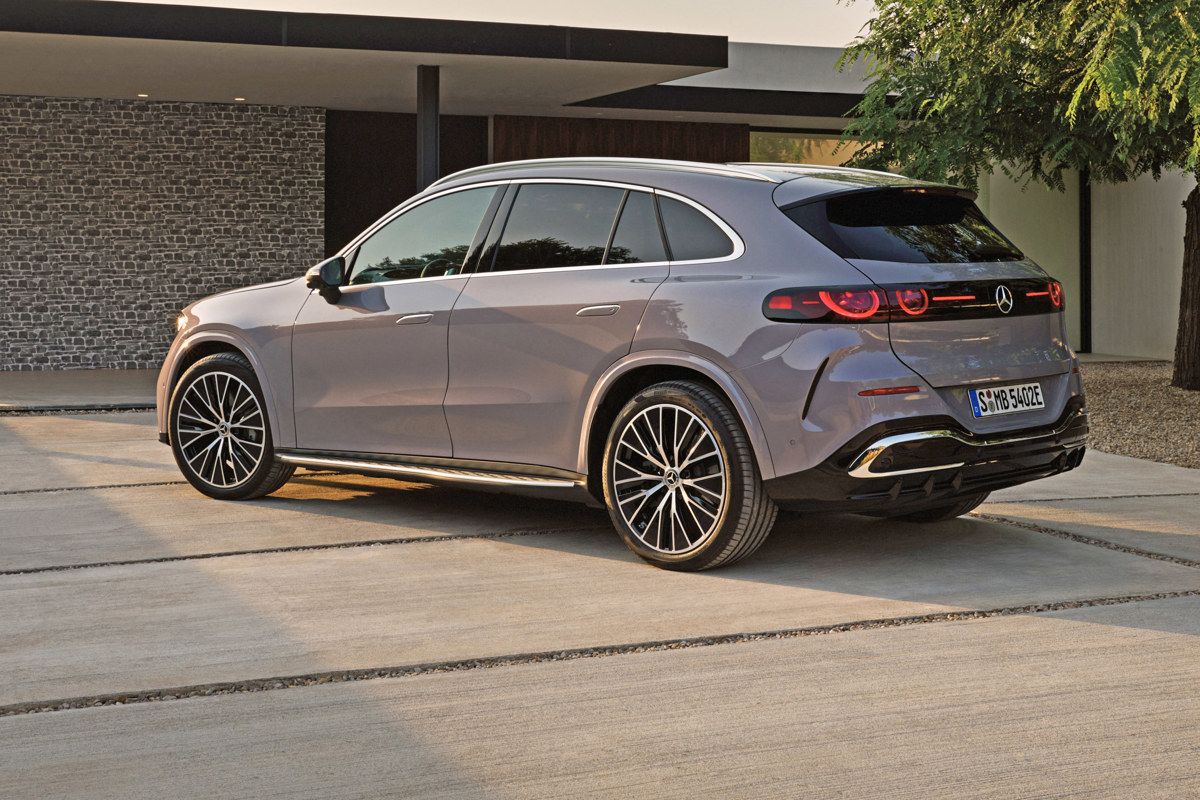
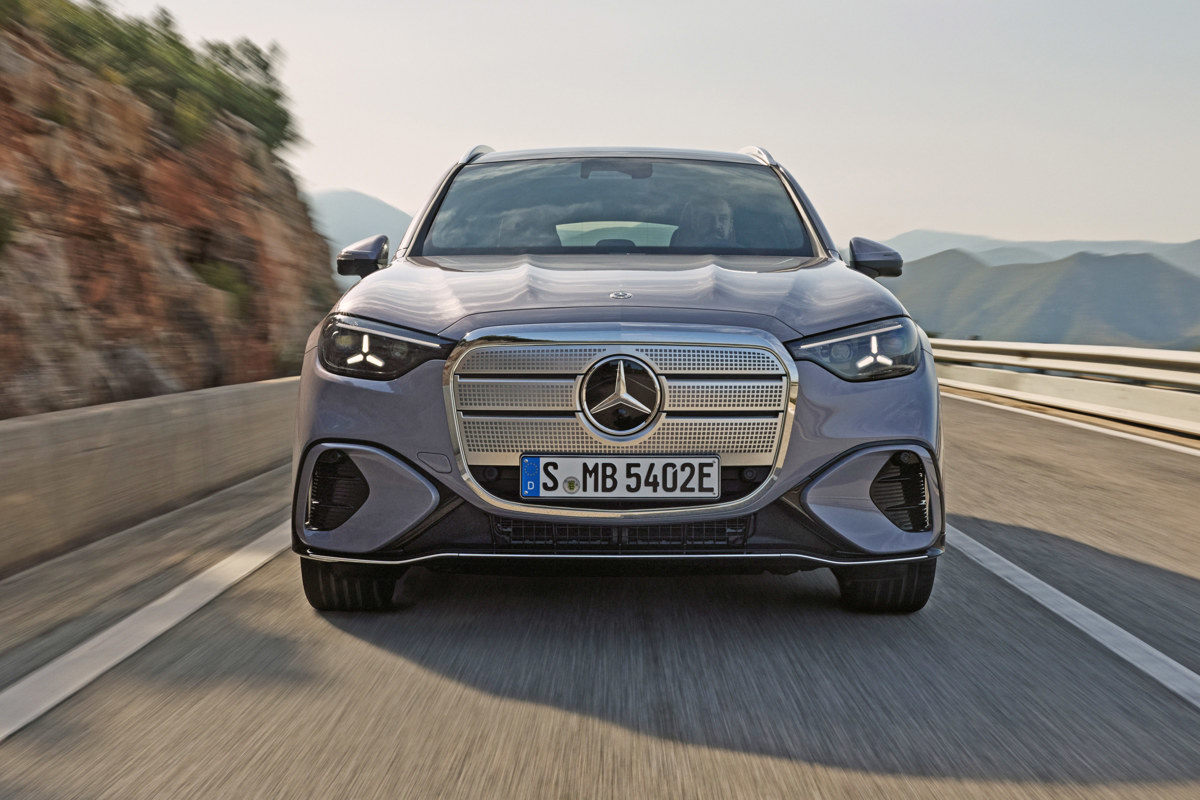
Merc’s decision to make the GLC Electric look like a conventional GLC — rather than a quirky, future-blob crossover — was the right call. The previous EQC tried too hard to look "electric" and ended up looking a bit awkward. This one is upright, muscular, and unmistakably a Mercedes-Benz SUV. If you’re coming out of a diesel GLC, you’ll feel right at home. That’s exactly the point.
The front end blends familiar Mercedes design cues with a few EV-specific details. There’s a subtle light signature in the headlights that echoes the three-pointed star, and our launch car wore the optional illuminated grille, which lights up at night without looking too showy. Along the sides, the flush-fitting door handles tuck in at speed to reduce drag, and the squared-off wheel arches give it a planted, purposeful stance.
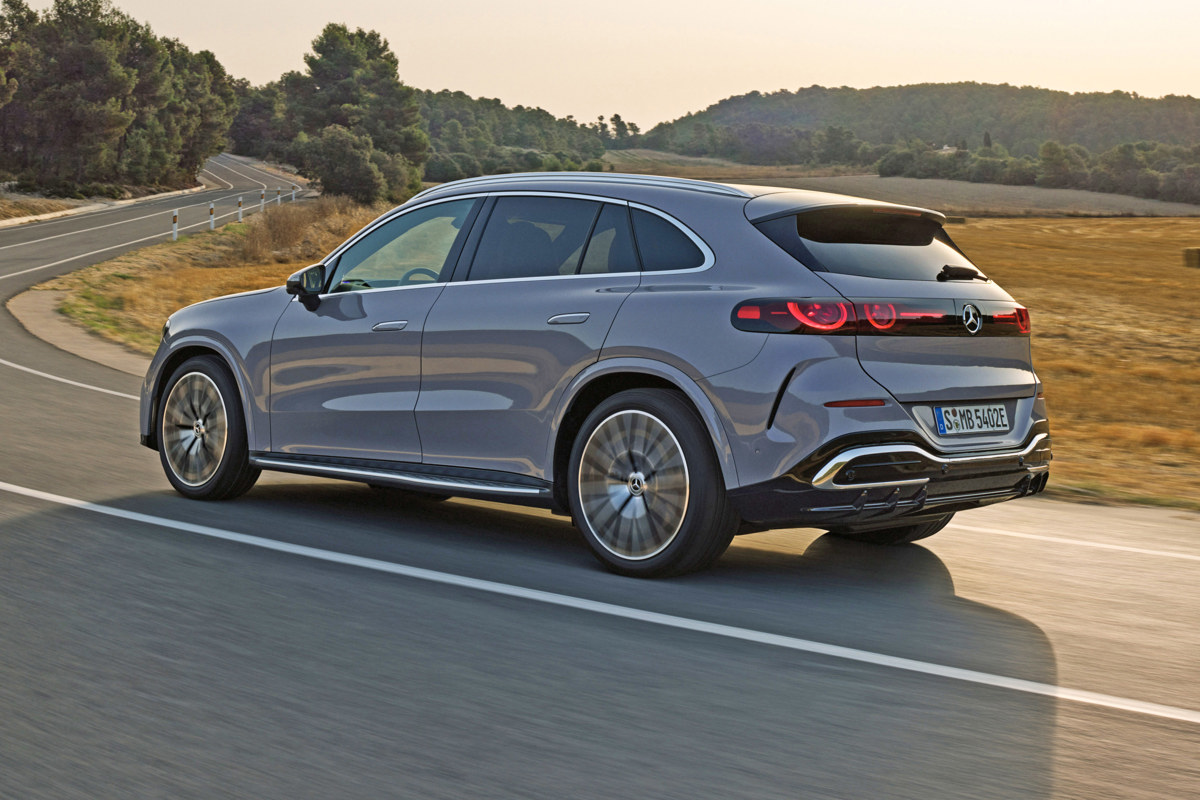
The wheels are worth talking about. Our test car had the optional aero-style inserts, which help range but look a bit odd up close. Honestly, we’d stick with the standard alloys — they suit the car better. Where the GLC Electric looks best is from the rear three-quarter angle. It’s taut, well-proportioned, and has that solid, premium presence you want from a car at this price point. Mercedes hasn’t tried to reinvent the wheel here; it’s built something that looks like it’ll still feel right in five years.
Interior, MBUX Hyperscreen and Materials
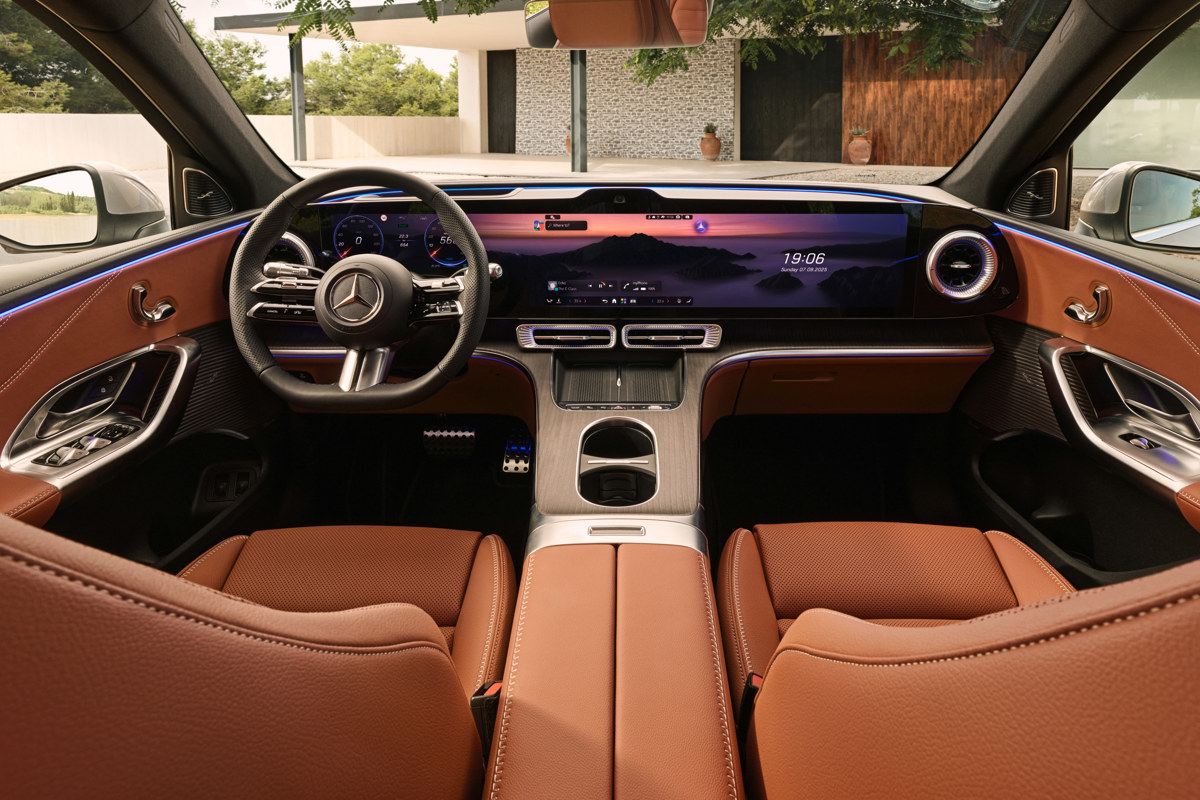
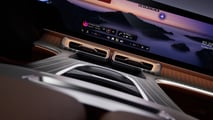
Climb inside and you’ll understand why this car exists. The 39.1-inch MBUX Hyperscreen dominates the dashboard — it stretches from one A-pillar to the other in a single, unbroken slab of glass. It’s the biggest continuous display Mercedes has ever put in a production car, and the effect is genuinely dramatic. The screen uses 1,000 individually controlled matrix-backlight LEDs, so contrast and clarity are outstanding. Your passenger gets their own zone too, with access to streaming apps like YouTube and Disney+ through the built-in app store.
What saves it from being just a gimmick is the physical controls Mercedes has retained. The centre console still has a beautifully weighted volume roller, proper buttons for the drive modes and hazard lights, and a parking camera shortcut. The switchgear is knurled metal — cold, heavy, and satisfying. Our car had a cross-sawn wood-effect trim that looked properly expensive. It’s a clever balance: enough tech to feel futuristic, enough analogue touchpoints to feel like a Mercedes should.
The standard equipment is generous. There’s a panoramic glass roof, ambient lighting, ventilated wireless phone charging pads, and seats with an almost absurd amount of adjustment — including extendable thigh support. Mercedes is also offering a Vegan Package for the first time, with Vegan Society-certified interior materials if you’d rather skip the leather. Overall, the cabin is quieter and more cocooning than anything BMW offers in the iX3. It’s less of a driver’s cockpit and more of a private lounge, and we mean that as a compliment.
Practicality and Family Use
This isn’t a concept or a design study — it’s a family car, and Mercedes has thought about the details. The boot gives you 570 litres with a flat floor, plus underfloor storage for your charging cables. The rear seats split 40/20/40, and there’s a quick-release lever in the boot so you can drop them without walking around to the side doors. That middle 20% section folds independently, which is handy for skis or a long box while two rear passengers stay seated.
Rear legroom is properly generous. A 180cm driver and a 180cm rear passenger can sit comfortably behind each other, with enough headroom and good foot room under the front seats. That last bit matters — some EVs raise the floor to accommodate the battery and rob rear passengers of leg space. Mercedes has packaged the cabin well here. Three adults across the back seat won’t love a long trip, but it’s manageable for shorter runs, and each outer passenger gets their own air vent and USB-C port.
The 128-litre frunk is a standout. It’s one of the biggest in the class and fits a couple of carry-on bags or a week’s worth of charging cables without eating into boot space. Towing is another strong suit: the GLC Electric is rated to pull up to 2,400 kg, which beats the BMW iX3’s 2,000 kg and makes it a realistic option for hauling a caravan or a decent-sized trailer.

Range, Charging and Efficiency
Under the floor sits a 94 kWh usable battery pack wired into an 800-volt electrical architecture. Mercedes claims up to 406 miles on the WLTP cycle, though that figure drops a bit with larger wheels or higher-spec trims. On our launch drive in cool, damp UK weather, the onboard computer was showing around 350 miles of real-world range from a 90% charge. That’s a solid, honest number, and it tracks with what we’d expect from a premium EV in those conditions.
The charging story is equally strong. That 800V setup allows a DC peak of 330 kW, which means you can theoretically add 180 miles of range in 10 minutes if the charger and conditions play ball. The 10-to-80% sprint takes roughly 22 to 24 minutes. For overnight charging at home, you get an 11 kW AC charger as standard, with a 22 kW unit available as an option if you’ve got the three-phase supply to support it.
Every GLC Electric comes with a heat pump fitted as standard — no optional extra, no box to tick. That’s important because a heat pump makes a real difference to cold-weather range, and we’re glad Mercedes didn’t try to charge extra for it. Put the rapid charging and the heat pump together, and range anxiety becomes a non-issue for the vast majority of owners. Whether you’re commuting 40 km a day or driving interstate, this car is built to keep you moving.
On the Road: Driving and Refinement
Comfort mode is where the GLC Electric lives best, and it’s spectacular. Our car had the optional AIRMATIC air suspension — a £2,500 option borrowed from the S-Class — and honestly, we’d call it essential. It floats over broken tarmac and speed bumps with a composure that borders on the absurd. There’s no jarring, no crashing, just a smooth, quiet waft that makes every trip feel like a first-class flight. The cabin stays eerily quiet at all speeds.
The powertrain is tuned for refinement over theatrics. You get 489 hp and 810 Nm of torque, which is more than enough to pin you back in your seat, but it’s delivered in a smooth, linear wave rather than a violent kick. Mercedes has dialled out the neck-snapping throttle response you get in some fast EVs. Instead, the GLC Electric builds speed almost silently, more like a jet gathering momentum on a runway. It’s rapid, but it never feels ragged or uncivilised.
Regenerative braking is controlled via paddles on the steering wheel, and the calibration is spot-on. The strongest setting lets you drive with one pedal comfortably, and the transition between regen and friction braking is smooth enough that you barely notice it. Where this car differs most from the BMW iX3 is in its attitude. The Mercedes wants you to relax. In Sport mode, things tighten up a bit, but it’s still fundamentally a comfort machine — think Range Rover waft rather than sports-car bite. For long motorway runs and relaxed country driving, there aren’t many electric cars we’d rather be in.
Mercedes GLC Electric vs BMW iX3: Which Is Better?
This is the question most buyers will be asking themselves. On paper, these two are close. On the road, they feel like different cars aimed at different people.
The Mercedes, starting at £60,350, is all about luxury. The Hyperscreen steals the show inside, and the materials throughout the cabin feel a cut above. With air suspension fitted, the ride quality is in a different league — it’s softer, quieter, and more isolating than the BMW. This is a car designed to reduce fatigue and make every kilometre feel effortless.
The BMW iX3, from £58,755, takes a sportier line. Its cabin is well-built and tech-heavy, but it’s more driver-focused in layout and feel. Underneath, the iX3 has the stronger spec sheet on paper: up to 500 miles of claimed range, 400 kW DC charging, and a 10-to-80% time of 21 minutes. Its 469 hp delivers brisk performance, and the chassis is set up for more engagement through corners. It wants you involved in the driving.
On practicality, the iX3’s boot can expand to 1,750 litres with the seats down, comfortably beating the Merc’s 570 litres. But the Mercedes counters with a larger 128-litre frunk (versus 58 litres) and a 2,400 kg towing capacity that beats the BMW’s 2,000 kg. The choice ultimately comes down to what matters most to you: cosseting luxury and comfort, or longer range and a sportier drive.
<div style="background:linear-gradient(135deg,#f0f9ff,#e0f2fe); border-left:4px solid #2563eb; border-radius:12px; padding:24px 28px; margin:32px 0"> <p style="font-size:12px; font-weight:800; letter-spacing:0.14em; text-transform:uppercase; color:#1e40af; margin:0 0 10px">Which one is better?</p> <p><strong>Buy the Mercedes GLC Electric if</strong> you want a true luxury cabin, comfort-led refinement, a massive Hyperscreen, and the longest list of premium niceties in the class.</p> <p><strong>Buy the BMW iX3 if</strong> you want the longest range, fastest 10–80% charge, sharper driver focus and the most ambitious new-platform tech statement of 2026.</p> <p><strong>Our pick</strong> for buyers who do mostly motorway miles and value comfort over a back-road thrash is the Mercedes; for everyone else, the iX3 is the rational call.</p> </div>
Head-to-head: Mercedes GLC Electric vs BMW iX3
| Spec | Mercedes GLC Electric | BMW iX3 |
|---|---|---|
| Starting price (UK) | £60,350 | £58,755 |
| Power | 489 hp | 469 hp |
| 0–62 mph | 4.4 s | ~4.9 s |
| Battery (usable) | 94 kWh | TBC |
| WLTP range | Up to 406 miles | Up to ~500 miles |
| DC peak | 330 kW | 400 kW |
| 10–80% charge | ~22-24 min | ~21 min |
| Boot (max) | 570 L + 128L frunk | Up to 1,750 L + 58L frunk |
| Towing | Up to 2,400 kg | Up to 2,000 kg |
Safety, Warranty and Ownership
Euro NCAP hasn’t tested the GLC Electric yet, but a five-star rating is almost a given. Every Mercedes tested since 2016 has scored five stars, and this car comes loaded with the latest driver assistance kit. You get active brake assist, lane keep assist, blind-spot monitoring, and a system that can apply corrective steering to help avoid a side collision — that last one comes as standard on Premium Plus and above.
On the ownership front, Mercedes offers a three-year, unlimited-kilometre warranty on the vehicle itself and an eight-year or 100,000-mile warranty on the high-voltage battery, guaranteed to hold at least 70% state of health. The brand’s dealer and service network across Australia is well-established, and service plans are available to lock in maintenance costs. It’s a reassuring package for a car at this price.
Rivals at a Glance
| Spec | GLC Electric | BMW iX3 | Porsche Macan Electric | Volvo EX60 |
|---|---|---|---|---|
| Starting price (UK) | £60,350 | £58,755 | ~£80,000+ (est.) | TBC |
| Battery (usable) | 94 kWh | TBC | ~100 kWh (Turbo) | TBC |
| WLTP range | Up to 406 miles | Up to ~500 miles | Up to 641 km (Turbo) | Up to ~400 miles |
| DC charge peak | 330 kW | 400 kW | 270 kW | TBC |
| 10–80% time | ~22-24 min | ~21 min | 21 min | TBC |
| 0–62 mph | 4.4 s | ~4.9 s | 3.3 s (Turbo) | TBC |
| Power | 489 hp | 469 hp | 639 PS (Turbo) | TBC |
| Boot space | 570 L | Up to 1,750 L (max) | TBC | TBC |
| Frunk | 128 L | 58 L | Yes | TBC |
| Towing | Up to 2,400 kg | Up to 2,000 kg | TBC | TBC |
BMW iX3 (Neue Klasse)
The technical headline-maker. Longer range, faster 10–80% charge, sharper driver focus. The natural cross-shop
Porsche Macan Electric
The emotional rival. 800V, 3.3 s in Turbo trim, optional rear-axle steering. Pricier and less practical
Volvo EX60
The calm, safety-led family alternative. Less drama, more reassurance. Watch the launch price closely
The premium electric SUV segment is getting crowded, and that’s good news for buyers. The GLC Electric enters a field with some serious competition, each with its own take on what a luxury EV should be. The Porsche Macan Electric is the emotional pick — faster, sharper, and considerably more expensive. It’s the one you buy with your heart. The Volvo EX60, still on the way, promises Scandinavian minimalism and a safety-first approach. Then there’s the BMW iX3, the direct rival with more range and a sportier edge. Every one of these cars defines a different idea of the electric family SUV.
Who Should Buy the Mercedes GLC Electric?
If you’re stepping out of a petrol or diesel Mercedes SUV and you want the same badge, the same comfort, and the same sense of occasion — but with zero tailpipe emissions — this is your car. The GLC Electric is built for people who value a calm, luxurious cabin over razor-sharp handling. You probably spend a lot of time on the motorway, and you want a car that makes those hours feel shorter.
It also works brilliantly for families who need real-world practicality: decent rear space, a genuinely useful frunk, and the ability to tow 2,400 kg. If you’ve always admired the S-Class but need something more versatile, the GLC Electric captures that same effortless luxury in a package that’ll handle school runs and road trips without breaking a sweat.
⚡ Our Verdict
Luxury done right in the electric age
The 2026 Mercedes-Benz GLC Electric is a genuinely impressive machine. It takes everything that makes a Mercedes special — the comfort, the craftsmanship, the sense of occasion — and translates it into an electric SUV without cutting corners. The ride is outstanding, the cabin is one of the best we’ve sat in at any price, and the range and charging specs are properly competitive. It gives away a bit of dynamic edge to the BMW iX3, but in terms of pure, relaxed luxury, nothing in this class comes close. With a rating of 4.7 out of 5.0, it’s one of the best electric vehicles you can buy right now. Yes, it’s a $100,000-plus car in Australia, and it feels every cent of that. But for buyers who want their electric SUV to be a proper luxury machine first and an EV second, the GLC Electric sets the standard. It hasn’t just moved the goalposts — it’s built a whole new pitch.
Frequently Asked Questions
What is the WLTP range of the 2026 Mercedes GLC Electric?
Mercedes claims up to 406 miles (673 km) on the WLTP cycle for the GLC 400 4MATIC Electric. That number will vary depending on which wheels you spec and which trim level you choose.
How fast does the Mercedes GLC Electric charge?
Thanks to its 800-volt architecture, the GLC Electric can DC fast charge at up to 330 kW. That gets you from 10 to 80 percent in roughly 22 to 24 minutes, or around 180 miles of range added in 10 minutes under ideal conditions.
How much does the 2026 Mercedes GLC Electric cost in the UK?
UK pricing kicks off at £60,350 for the Sport trim and climbs to £73,350 for the fully loaded Premier Edition. Australian pricing hasn’t been confirmed yet.
Is the Mercedes GLC Electric better than the BMW iX3?
It depends what you’re after. The Mercedes has a more luxurious cabin and a calmer, more comfortable ride. The BMW counters with a longer claimed range, faster charging, and a sportier character behind the wheel.
Can the Mercedes GLC Electric tow?
Absolutely. The GLC Electric is rated for up to 2,400 kg braked towing, which is class-leading. That’s enough for a good-sized caravan or a decent trailer.
Does the Mercedes GLC Electric have a heat pump?
Yes, every GLC Electric comes with a heat pump as standard. It’s a proper standard-fit item, not a cost option, and it helps maintain range when temperatures drop.
When does the Mercedes GLC Electric arrive in the UK?
UK deliveries are scheduled to start in the first half of 2026. Australian timing hasn’t been locked in yet.
