

2026 Cupra Born Review: Electric Hot Hatch Reborn

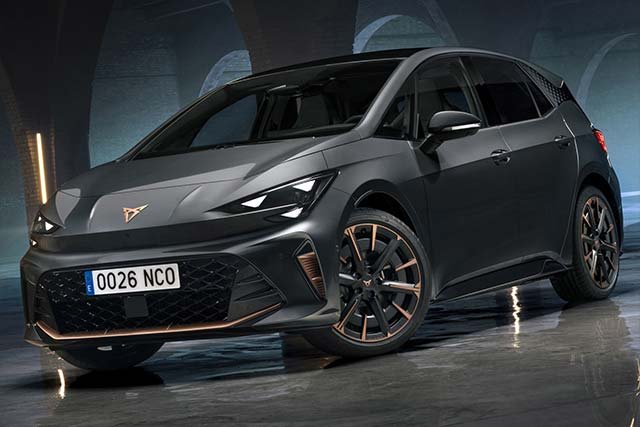
2026 Cupra Born facelift front three-quarter with shark-nose front end and matrix LED headlights
0-100 km/h
~5.6 s
Battery
79 kWh (net)
Power
326 hp
⚡ Quick Verdict
:
Cupra’s 2026 facelift takes the Born from likeable to properly compelling. The smarter cabin, faster charging, lighter base model and sharper styling address almost every gripe we had with the original. If you’re after the sportiest hatch on the MEB platform — backed by a warranty that actually means something — the updated Born deserves a spot right at the top of your shortlist.
## Introduction
✓ The Good
- +Dramatically improved cabin materials and infotainment with Android Automotive OS
- +Physical steering-wheel buttons replace the widely criticised haptic pads
- +Lighter entry-level model with 50 kWh battery should delight keen drivers
- +79 kWh battery now charges at up to 185 kW
- +Strong 5-year / 90,000-mile warranty plus class-leading Euro NCAP score
✗ The Trade-offs
- −Big 79 kWh battery no longer available on cheaper trims
- −Ride may be too firm for buyers seeking a comfortable cruiser
- −Boot remains a modest 385 litres
📑 In This Review
Cupra’s 2026 facelift takes the Born from likeable to properly compelling. The smarter cabin, faster charging, lighter base model and sharper styling address almost every gripe we had with the original. If you’re after the sportiest hatch on the MEB platform — backed by a warranty that actually means something — the updated Born deserves a spot right at the top of your shortlist.
Introduction
We’ve been fans of the Cupra Born since it first turned up in 2021. It injected some much-needed character into the sensible MEB hatchback family, pairing rear-drive balance with punchy styling and a badge that carried real hot-hatch credibility. Judging by the sales figures, plenty of buyers felt the same way — the Born has quietly become one of Cupra’s strongest sellers across Europe.
Now, roughly four years on from that debut, the first meaningful facelift has landed. Cupra hasn’t tried to reinvent the wheel here. The updates are broad — new face, reworked interior, restructured trim range, quicker charging — yet the car’s core identity as the sporty, driver-focused MEB hatchback stays firmly in place.
Underneath, the Born still shares its Volkswagen Group MEB architecture with the Volkswagen ID.3, Audi Q4 e-tron and the rest of that sprawling electric family. That means rear-wheel drive as standard (all-wheel drive remains off the menu), a structural battery pack in the floor and a low centre of gravity that electric hatches exploit brilliantly. Where the Born sets itself apart is in attitude: sharper styling, sportier tuning and a cabin that now looks and feels the part.
We spent time with a pre-production VZ test car and the broader refreshed range, putting in enough kilometres to form strong early impressions. Here’s what’s changed:
– Completely redesigned front end with a shark-nose profile and three-triangle LED lighting signature – Revised cabin with soft-touch materials, a 12.9-inch infotainment display and physical steering-wheel buttons – Android Automotive OS with native Google Maps and Waze – Restructured line-up: Born (V1), Born Plus (V2), Born Endurance and Born VZ – Entry-level Born sheds roughly 190 kg thanks to its smaller 50 kWh battery – 79 kWh battery now peaks at 185 kW charging (up from 135 kW) – Paddle-controlled regenerative braking and one-pedal driving – Digital key supporting up to five phones – Illuminated rear CUPRA badge and five new alloy wheel designs – Launch colour: Timanfaya Grey
Design and Exterior
The biggest change sits up front, where Cupra’s given the Born what it calls a shark-nose design. The previous car’s face was already distinctive, but this one pushes things further: a deeper, more sculpted bumper with aero vents set lower than before, each finished with the copper detailing that’s become a Cupra trademark. The central bonnet indent reinforces that predatory look, channelling air towards the windscreen while giving the nose genuine visual depth.
That three-triangle LED daytime running light signature — one of the most recognisable in the EV space — has been kept and quietly refined. It still looks sharp and modern, and it gives the Born an identity that stands out in a car park full of generically styled electric hatches. Higher trims get matrix LED headlamps with adaptive beam patterns.
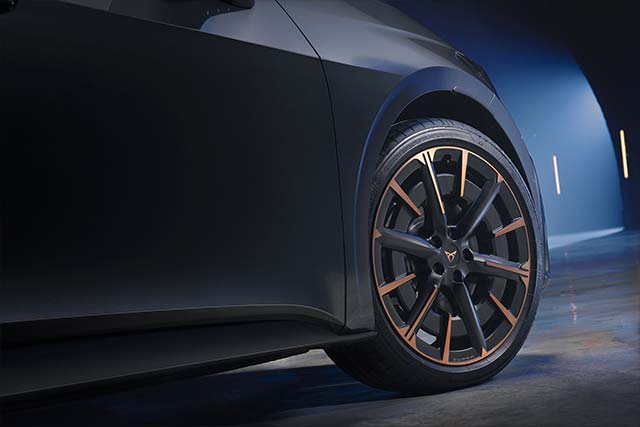
Along the sides, the bodywork picks up crisper creases that catch the light more aggressively, and a new aero shark fin sweeps up towards the roofline, lending the silhouette a slightly more coupé-like stance. Five fresh alloy wheel designs are available across the range. The range-topping VZ we tested wore 20-inch Firestorm alloys with copper-coloured inserts — they look spectacular, though we reckon the ride might benefit from stepping down a size. Copper detailing also appears on the wing mirrors and lower door trims, pulling the whole exterior palette together.
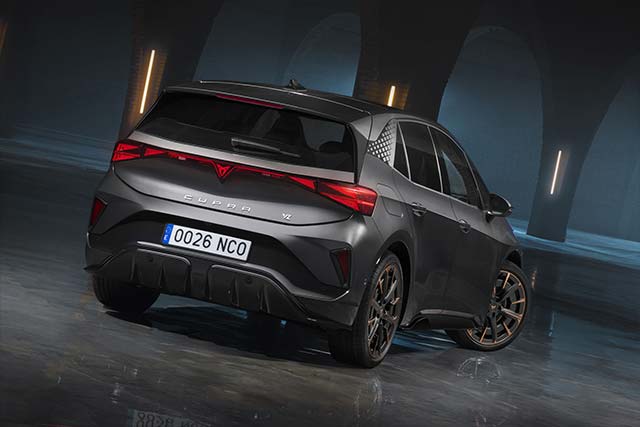
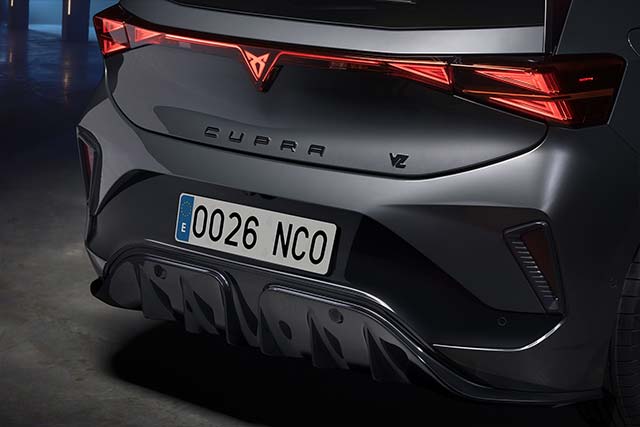
Round back, the standout addition is an illuminated CUPRA badge stretching across the full width of the tailgate. It looks properly dramatic at night and gives the Born a rear-end presence the old car simply didn’t have. The launch colour, Timanfaya Grey, is a volcanic hue named after the famous Lanzarote volcano — it suits the Born’s angular lines perfectly and photographs beautifully in flat light.
Interior and Tech
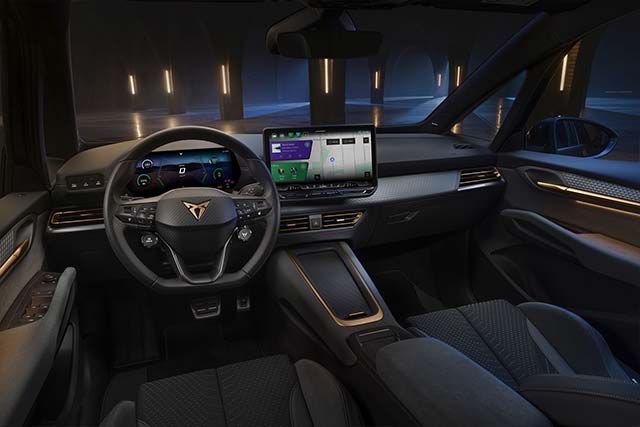
Step inside and the transformation hits you immediately. The old Born’s cabin was its weakest link: scratchy plastics on the doors, cheap-feeling switchgear and an infotainment system that felt a generation behind what the competition was offering. Cupra’s addressed virtually every one of those complaints.
The dashboard is now trimmed in soft-touch materials with sustainable accents, and — importantly — the door cards have been upgraded too. Designers specifically pointed them out during our preview. The front doors now feel genuinely premium, and while the rears aren’t quite as plush, they’re a huge improvement over the outgoing car’s hard plastic. Copper accents on the centre console and door pulls add a welcome touch of character without tipping into novelty territory.
The infotainment display has grown to 12.9 inches, running Android Automotive OS natively. That means Google Maps and Waze are baked in without needing a phone connection, and the system responded crisply throughout our time with the pre-production car. A 10.25-inch digital instrument cluster sits behind the steering wheel and can spread to full width for a more immersive driver-focused view. One of the best changes is the return of physical buttons on the steering wheel. The outgoing Born’s haptic-touch pads were one of the most criticised ergonomic decisions in the entire MEB family, and their replacement with proper, clicky buttons is a clear response to customer feedback. It’s a small change that makes a disproportionate difference to daily usability.
Cupra’s also sorted the window switch situation — previously, you had to toggle between front and rear windows using a single set of controls, which was endlessly confusing. The new car gets proper individual switches for all four windows, exactly as it should be. The light controls have been made smaller and neater, too. A 15-watt cooled wireless charging pad sits ahead of the gear selector, keeping your phone topped up without overheating on warm days.
The front sports seats in the VZ are properly bucketed, offering excellent lateral support and trimmed in Seaqual yarn — a material made from upcycled marine waste, including reclaimed fishing nets. Lesser trims get a slightly less aggressive version of the same seat, but all are comfortable and well-shaped. A digital key system supports up to five phones, and ADAS settings can be toggled with a single downward swipe from the top of the touchscreen — a neat shortcut that avoids digging through menus. CUPRA Sound, an artificial sound system inspired by Formula E rather than a fake engine note, is available on the top two trims.
The rear seats gain new air vents and improved door trims. Boot space stays at 385 litres with a useful under-floor compartment, which is adequate rather than generous. It’s the one area where the Born still trails some rivals.
Powertrain, Range and Charging
Cupra’s simplified and clarified the Born’s trim structure for 2026, and the logic is much easier to follow. At the entry point sits the Born (V1), pairing a 170 hp electric motor with a 50 kWh battery pack. That combination delivers a WLTP range of approximately 249 miles, and because the smaller battery is physically lighter, this model weighs roughly 190 kg less than its big-battery siblings. We’ll come back to why that matters when we talk about the driving experience.
Step up to the Born Plus (V2) and you get 190 hp, a 58 kWh battery and a claimed range of around 280 miles — a solid middle-ground option for buyers wanting more range without the price premium of the larger pack. The Born Endurance swaps to the 79 kWh battery with 228 hp, while the Born VZ sits at the summit with 326 hp, the same 79 kWh pack and an estimated WLTP range in excess of 600 km (373 miles). That’s a marginal improvement over the outgoing VZ, and we’d expect final homologation figures to nudge the number slightly higher still.
One consequence of the restructured line-up is that the 79 kWh battery is no longer available on the cheaper trims. If you want the longest range, you’ll need to step up to Endurance or VZ. That mirrors the approach Volkswagen’s taken with the updated ID.3, and while it simplifies production, it does mean buyers on a tighter budget are limited to the smaller packs.
Charging speeds have improved across the board. The 79 kWh battery now accepts up to 185 kW on a DC rapid charger, up from 135 kW previously. That makes a real difference on a long journey: a 10-to-80 per cent top-up should take well under 30 minutes at a suitably powerful charger. The smaller 50 kWh and 58 kWh packs charge at around 135 kW, which is still perfectly competitive for their capacity.
Driving Impressions
We should be upfront: the cars we drove were pre-production prototypes, and final calibration — particularly of the suspension, throttle mapping and driver-assistance systems — may differ slightly from the production models that reach showrooms. That said, our early impressions were overwhelmingly positive.
The entry-level Born, with its 50 kWh battery and 190 kg weight saving, is the one we’re most excited about. Rear-wheel drive and a lighter kerbweight is a combination that’s produced some of the greatest hot hatches in history, and even in pre-production form, the base Born felt notably more agile and responsive than the heavier variants. The steering, while still filtered through the MEB platform’s electric rack, felt sharper and more communicative than the outgoing car’s. We reckon this will be the keen driver’s pick of the range.
The VZ, with its 326 hp, is the headline act. It covers 0-100 km/h in roughly 5.6 seconds, and while that figure isn’t earth-shattering in a world of dual-motor SUVs, it feels genuinely rapid in a car of this size and weight. Engaging sport mode via the copper-trimmed drive-mode button sharpens the throttle response and layers in some CUPRA Sound through the speakers — an artificial soundtrack that, mercifully, draws from Formula E rather than trying to mimic a petrol engine. It’s subtle enough to enhance the experience without becoming tiresome.
The paddle-controlled regenerative braking system deserves a mention. Rather than toggling through menus, you simply pull a paddle to increase regen or push to decrease it, with a firm pull engaging full one-pedal driving. It’s intuitive, satisfying and makes fine-tuning your driving style on the move genuinely easy. Weight distribution, courtesy of the floor-mounted battery, stays close to 50:50, and the car felt planted and balanced through the corners we sampled.
Ride quality, on the VZ’s 20-inch wheels at least, sits firmly on the firm side of the spectrum. This is a sporty hatchback and it rides like one. Buyers after a cosseting, wafting EV experience might find it too stiff, but if you appreciate a car that communicates what the road surface is doing, the Born delivers. We’ll hold off on final judgement until we drive UK-specification production cars on British tarmac.
Cupra Born 2026 vs Volkswagen ID.3: Which Is Better?
This is the comparison that matters. The Cupra Born and the Volkswagen ID.3 share the same MEB platform, the same battery packs, the same electric motors and much of the same underlying engineering. Choosing between them comes down to personality, pricing, warranty and how you want your electric hatchback to make you feel.
On price, the two are expected to be closely matched at the entry level. The new smaller-battery Volkswagen ID.3 starts from around £30,860 in the UK, while the equivalent base Born (V1) is anticipated to slip in just under £30,000 before any government EV grants. At the top of the range, the Born VZ and the ID.3 GTX compete head to head, with final pricing for both still to be confirmed at the time of writing. Historically, Cupra’s undercut its Volkswagen sibling slightly, and we expect that pattern to continue.
Where the Born pulls ahead is in outright power at the top of the range. The VZ produces 326 hp, comfortably outgunning the ID.3 GTX’s 286 hp. Both share the 79 kWh battery and both claim ranges in excess of 360 miles on the WLTP cycle, so there’s little to choose between them on endurance. Charging speed, though, favours the Cupra: the Born’s 79 kWh pack peaks at 185 kW, versus 175 kW for the ID.3. In real-world terms, the difference is marginal — perhaps a minute or two on a long rapid-charge stop — but it’s there.
Cabin character is where the two diverge most obviously. The Born leans into its sporty positioning with copper accents, bucket-style seats, darker trim materials and a more driver-focused ambience. The ID.3, particularly in its updated 2026 form, opts for a calmer, more family-friendly atmosphere with lighter tones and less aggressive seat shapes. Both benefit from the same 12.9-inch infotainment upgrade and Android Automotive OS, so the technology is essentially identical. The question is whether you want your MEB hatchback to feel like a hot hatch or a comfortable all-rounder.
Warranty coverage is a significant differentiator. Cupra offers a 5-year / 90,000-mile warranty as standard, which is substantially more generous than the Volkswagen ID.3’s 3-year / 60,000-mile cover. For buyers planning to keep their car beyond the typical three-year PCP cycle, the Cupra’s warranty provides considerably more peace of mind. Both brands offer an 8-year battery warranty.
On the road, the Born’s sportier tuning translates into sharper steering responses, firmer suspension and a more connected feel through the wheel. The ID.3, by contrast, prioritises comfort: its ride is softer, its steering lighter and its overall demeanour more relaxed. Neither approach is wrong — they simply target different buyers. If you enjoy driving, the Born is the more engaging companion. If you want to arrive at your destination feeling unruffled, the ID.3 makes a strong case for itself.
Cupra Born VZ vs VW ID.3 GTX — head-to-head specs:
| Spec | Cupra Born VZ | VW ID.3 GTX |
|---|---|---|
| Power | 326 hp | 286 hp |
| Torque | 545 Nm | 545 Nm |
| Battery | 79 kWh (net) | 79 kWh (net) |
| WLTP range | >600 km (~373 mi) TBC | >600 km (~373 mi) TBC |
| Max DC charge | 185 kW | 175 kW |
| 0-100 km/h | ~5.6 s | ~5.7 s |
| Drive | RWD | RWD |
| Boot | 385 L | 385 L |
| Warranty | 5 yr / 90,000 mi | 3 yr / 60,000 mi |
WHICH ONE IS BETTER? Buy the Cupra Born if you want a sportier, sharper-driving electric hatchback with a longer warranty and more power at the top of the range. Buy the Volkswagen ID.3 if you prefer a softer, more comfort-oriented ride and plan to lease rather than own long-term. Our pick is the Cupra Born — the extra warranty alone justifies the choice, and the sportier character gives it a genuine personality advantage over its otherwise-identical sibling.
At a Glance: How It Stacks Up Against Rivals
| Spec | Cupra Born VZ | VW ID.3 GTX |
|---|---|---|
| Power | 326 hp | 286 hp |
| Torque | 545 Nm | 545 Nm |
| Battery | 79 kWh (net) | 79 kWh (net) |
| WLTP range | >600 km (~373 mi) TBC | >600 km (~373 mi) TBC |
| Max DC charge | 185 kW | 175 kW |
| 0-100 km/h | ~5.6 s | ~5.7 s |
| Drive | RWD | RWD |
| Boot | 385 L | 385 L |
| Warranty | 5 yr / 90,000 mi | 3 yr / 60,000 mi |
Volkswagen ID.3 GTX
MEB sibling — softer ride, shorter warranty, slightly slower DC charging
MG4 XPower
Quickest of the bunch, AWD, but smallest range and less polished cabin
BYD Dolphin
Value champion — refined and well-built, but slower and less powerful
Renault Megane E-Tech
Stylish design-led alternative with a classy cabin and smaller battery
The Born doesn’t exist in a vacuum. The affordable electric hot-hatch segment is getting crowded, with credible alternatives arriving from established European brands and ambitious Chinese newcomers alike. The MG4 XPower offers all-wheel drive and blistering acceleration for less money; the BYD Dolphin brings impressive tech and build quality at a remarkably competitive cost; and the Renault Megane E-Tech remains a stylish, well-rounded option for buyers who prioritise design. Here’s how the range-topping Cupra Born VZ compares against its closest competitors on paper: Price (est.) Battery Verdict ——— ~£42,000 TBC 79 kWh Best all-rounder; sharpest looks, strongest warranty VW ID.3 GTX 286 hp >370 mi ~£36,500 64 kWh Quickest here by far; cheapest; shorter range BYD Dolphin 204 hp 265 mi ~£36,000 60 kWh Stylish and comfortable; smaller battery | Each of these cars has a distinct personality. The MG4 XPower is the performance bargain of the group; the BYD Dolphin is the value champion; and the Megane E-Tech is the design-led choice. The Born VZ occupies a sweet spot, offering genuine hot-hatch pace, the longest range in this company and a warranty that none of the others can match.
Safety and Warranty
The Born retains the Euro NCAP five-star safety rating awarded to the outgoing model. The tested scores remain impressive: 93 per cent for adult occupant protection, 89 per cent for child occupant protection, 73 per cent for vulnerable road users and 80 per cent for safety assist. Those figures keep it among the safest electric hatchbacks on sale, and the suite of driver-assistance systems — including adaptive cruise control, lane-keeping assist, autonomous emergency braking and the new ADAS shortcut swipe on the touchscreen — adds practical, everyday safety tech.
Warranty coverage is where the Born genuinely distinguishes itself from most rivals. Cupra’s standard 5-year / 90,000-mile warranty is one of the most generous in the segment, comfortably exceeding the Volkswagen ID.3’s 3-year / 60,000-mile cover and the 3-year warranties offered by MG, BYD and Renault. For buyers planning to hold onto their car beyond the typical three-year finance term, that extra coverage represents genuine financial protection against unexpected repair costs.
The battery pack is covered by a separate 8-year warranty, which is broadly in line with industry standards. Cupra guarantees the battery will retain at least 70 per cent of its original capacity over that period, offering reassurance for long-term ownership.
Who Should Buy It?
**Buy it if** you want a genuinely sporty electric hatchback that doesn’t sacrifice range or practicality for the sake of driving excitement. The Born’s combination of sharp styling, engaging rear-drive handling, the longest range in its class and a five-year warranty make it a compelling proposition for anyone who finds the Volkswagen ID.3 a touch too bland. The entry-level 50 kWh model, with its significant weight saving, could be the most fun-to-drive affordable EV on the market.
**Skip it if** you prioritise a plush, comfort-oriented ride above all else — the Born’s sporty suspension tuning may prove too firm for some, especially on the VZ’s 20-inch wheels. The 385-litre boot is also modest by class standards, and buyers who need maximum luggage space may prefer something larger. If the lowest possible purchase price is your primary concern, the BYD Dolphin and MG4 both undercut the Born significantly.
**Wait for** official UK pricing for the entry-level V1, which Cupra has yet to confirm. Full WLTP range figures for the Endurance and VZ models are also still to be finalised, and could nudge upward from the current estimates. Finally, we’d strongly recommend waiting for the first independent road tests of the production VZ before placing an order — our pre-production impressions were very positive, but final calibration may differ.
⚡ Our Verdict
Final Take
The 2026 Cupra Born facelift is a thorough, intelligent update to what was already a likeable car. Rather than chasing dramatic change, Cupra methodically addressed every weakness of the original — the cheap-feeling cabin, the frustrating window switches, the haptic steering-wheel pads, the sluggish infotainment — while amplifying its strengths: the sharp styling, the sporty character and the rear-wheel-drive balance that makes it feel genuinely involving to drive. The restructured line-up is clever, too. The lighter entry-level Born with its 50 kWh battery should prove irresistible to keen drivers who value agility over range, while the VZ remains one of the most characterful electric hot hatches on sale. The upgrade to 185 kW charging on the 79 kWh battery is a meaningful improvement that brings the Born in line with the best in class. Where there’s still room to grow, it’s largely in areas Cupra can’t control alone. The boot remains modest, the ride may prove too firm for some tastes and the lack of an all-wheel-drive option limits its appeal in certain markets. But these are minor criticisms of a car that gets the fundamentals so right. If you’re shopping for an electric hatchback that feels like it was designed by people who genuinely enjoy driving, the 2026 Cupra Born deserves to be very near the top of your list. Our early verdict: 4.4 out of 5.
Frequently Asked Questions
How much does the 2026 Cupra Born cost in the UK?
Cupra hasn’t confirmed full UK pricing for the updated range just yet. The entry-level Born (V1) with the 50 kWh battery is expected to start under £30,000 before any government EV grants, while the range-topping VZ is anticipated to sit around £42,000. We’ll update this page as soon as official figures are announced.
How far can the new Cupra Born go on a single charge?
Range depends on the battery you choose. The base Born (V1) with its 50 kWh pack is rated at approximately 249 miles on the WLTP cycle, the Born Plus (V2) with 58 kWh achieves around 280 miles, and the 79 kWh Endurance and VZ models are estimated at over 373 miles. Final homologation figures may improve these numbers slightly.
How fast does the Cupra Born VZ accelerate?
The VZ covers 0-100 km/h in roughly 5.6 seconds, making it one of the quicker electric hatchbacks in its class. Its 326 hp rear-mounted motor delivers strong in-gear acceleration and a satisfying surge of torque from low speeds.
How quickly does the Cupra Born charge?
The 79 kWh battery (fitted to the Endurance and VZ) now charges at up to 185 kW on a DC rapid charger, allowing a 10-to-80 per cent top-up in well under 30 minutes. The smaller 50 kWh and 58 kWh packs charge at approximately 135 kW, which remains competitive for their capacity.
How does the Cupra Born compare to the Volkswagen ID.3?
The Born and ID.3 share the same MEB platform, batteries and motors, but they target different buyers. The Born is sportier, sharper to drive, more powerful at the top of the range and backed by a 5-year / 90,000-mile warranty. The ID.3 is softer-riding, more comfort-focused and comes with a shorter 3-year / 60,000-mile warranty. Pricing is expected to be closely matched.
What is the Cupra Born’s Euro NCAP safety rating?
The Born retains a five-star Euro NCAP rating, with individual scores of 93 per cent for adult occupant protection, 89 per cent for child occupant protection, 73 per cent for vulnerable road users and 80 per cent for safety assist.
Does the Cupra Born have one-pedal driving?
Yes. The 2026 Born features paddle-controlled regenerative braking, allowing the driver to adjust regen intensity on the move using the steering-wheel paddles. Pulling the left paddle fully engages one-pedal driving mode, which brings the car to a complete stop without touching the brake pedal.
